China has launched an increasing number of new international air cargo routes largely thanks to the country's industrial transformation and upgrading, the joint building of the Belt and Road Initiative, and the development of cross-border e-commerce.
At Nantong Xingdong International Airport, a batch of about 19 tons of goods will be exported overseas on a full freighter heading to South Korea's Incheon International Airport. After the route was officially opened in June this year, it has been operating three times a week.
"Sixty percent of the goods on this flight are cross-border e-commerce goods, mainly daily necessities. This year, our cross-border e-commerce cargo volume is expected to reach about 4,000 tons, and '9610' ('cross-border trade e-commerce' export model) products have increased significantly, up about 150 percent year on year," said Zhang Zhufeng, deputy general manager of Jiangsu Nantong Hutong Airport Logistics Development.
The customs supervision code "9610" represents the "cross-border trade e-commerce" model. This model is tailored for B2C (business-to-consumer) orders in cross-border e-commerce involving small packages, multiple product names and high-frequency shipments.
Data showed that in November alone, 11 new international air cargo routes were opened nationwide, with more than 30 round-trip flights added each week.
The number of cargo flights to Southeast Asia, Central and West Asia, South Asia, Europe, and the Americas have more than doubled compared with 2019.
"Airlines have opened new routes and deployed more transport capacity based on their estimates on market demand. By expanding international all-cargo routes, China's share of air logistics capacity has continued to increase, demonstrating its ability to independently respond to the industrial and supply chains," said Qi Qi, an expert of the High-Quality Development Research Center under the Civil Aviation Administration of China (CAAC).
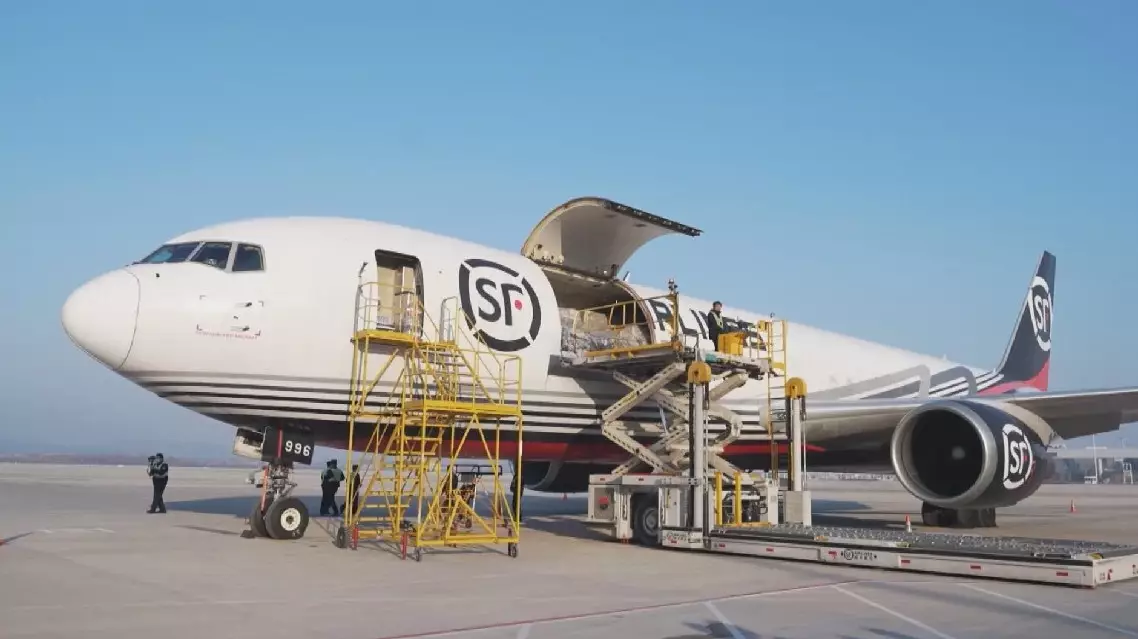
China launches more int'l air freight routes amid soaring cargo demand