SINGAPORE, Dec. 9, 2024 /PRNewswire/ -- A newly published collaborative study[1] in the Journal of Hepatology, featuring HistoIndex – a global leader in stain-free digital pathology solutions for managing fibrotic diseases – alongside Merck & Co., MSD, Virginia Commonwealth University (VCU), The National Institutes of Health (NIH) and a panel of distinguished international liver pathologists showcased how Artificial Intelligence (AI) is revolutionizing the evaluation of liver fibrosis in metabolic dysfunction-associated steatohepatitis (MASH).
MASH, a condition often linked to obesity and type 2 diabetes, causes liver inflammation and fibrosis. Accurate staging of fibrosis is crucial for diagnosing MASH and determining treatment options. In addressing the inherent variability in fibrosis staging, HistoIndex's AI digital pathology platform has been shown to enhance the reliability of clinical trial outcomes by offering a more objective approach in evaluating fibrosis.
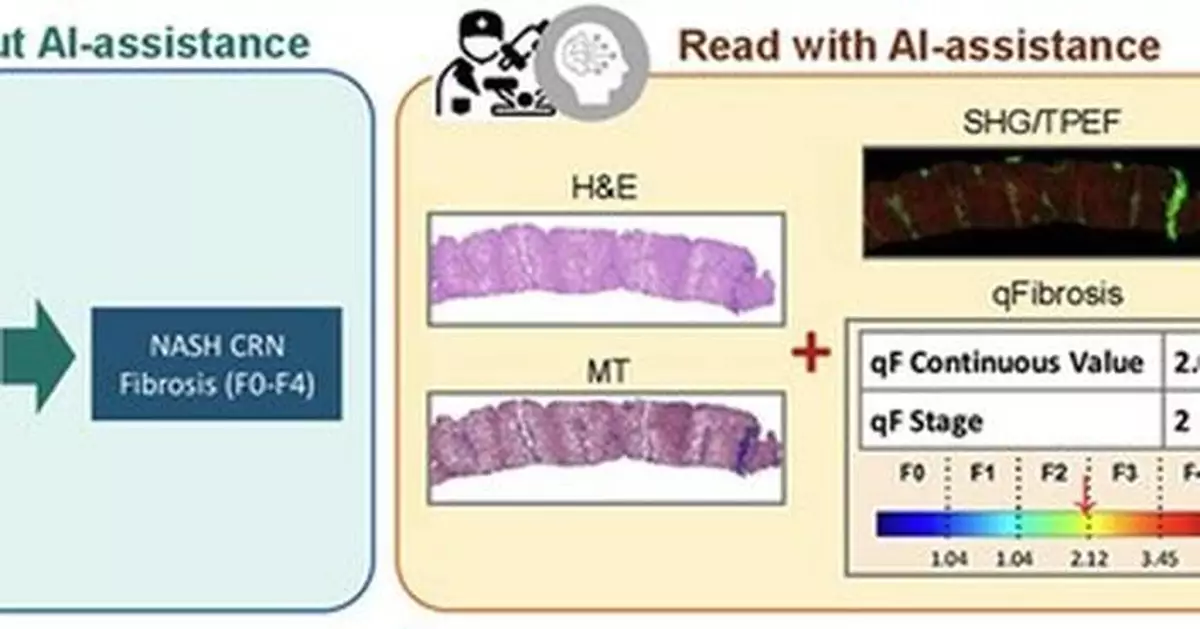
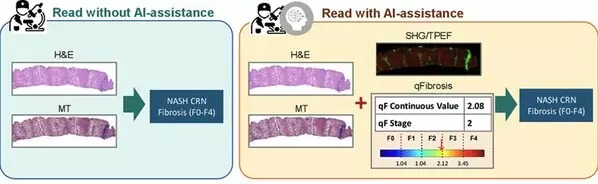
The study, which analyzed 120 digitized histology slides from two separate Phase 2b MASH clinical trials (NCT03517540, NCT03912532), revealed that AI assistance significantly improved inter-pathologist agreement on fibrosis staging, particularly for early-stage fibrosis (F0-F2). Compared to traditional methods, the HistoIndex's stain-free digital pathology platform using Second Harmonic Generation/Two Photon Excitation Fluorescence (SHG/TPEF) provided a more consistent, accurate and detailed assessment of fibrosis severity across the disease spectrum (Figure 1). Thus, enabling pathologists to address the long-standing challenge of intra- and inter-pathologist variability in MASH biopsy evaluation.
"I am excited about the findings of this study, which highlight how AI-assisted SHG/TPEF imaging and quantitative fibrosis scoring have improved inter-pathologist agreement, especially for early-stage fibrosis (F0-F2)." said Dr. Arun Sanyal, M.D., Professor of Medicine, Physiology and Molecular Pathology at Virginia Commonwealth University School of Medicine, and Principal Investigator of the study. "This increased accuracy not only enhances confidence in staging but also has the potential to streamline clinical trial processes and reduce the need for third-pathologist adjudication."
"Witnessing the journey of this study from concept to fruition has been incredibly rewarding, made possible by the collaboration across global teams." said Dr. Gideon Ho, CEO of HistoIndex, "The findings, especially the improvement in inter-pathologist agreement with AI-assistance, are set to transform both clinical trial assessments that transcend into precise and personalized care for MASH patients."
This study marks a significant step forward in leveraging AI to aid pathologists in both MASH clinical trials and routine patient care, offering a promising pathway for improving consistency and accuracy in diagnosing and managing MASH as a global health challenge.
About MASH
Metabolic dysfunction-associated steatohepatitis (MASH) is a progressive form of Metabolic dysfunction-associated steatotic liver disease (MASLD) characterized by steatosis and inflammation, which can lead to fibrosis (scarring), cirrhosis, liver failure, and an increased risk of liver cancer. The presence of ballooned hepatocytes (enlarged and damaged liver cells) is a key feature distinguishing MASH from simple steatosis. Pathologist assessments of liver biopsy remain the gold standard for diagnosing and assessing the severity of MASH. Histological categorial scoring systems are often used as surrogate endpoints to evaluate drug efficacy in clinical trials. These endpoints are limited in capturing the complex and heterogeneous nature of the disease. As a result, there is a growing need for more accurate and reliable tools, such as AI-based digital pathology solutions, to improve the assessment of treatment response and disease severity in MASH.
About HistoIndex
Founded in 2010, HistoIndex pioneers in stain-free, fully automated imaging solutions for visualizing and quantifying fibrosis in biological tissues. By combining cutting-edge biophotonic technology with AI-based analysis, HistoIndex provides innovative tools to improve the assessment of fibrosis changes and drug efficacy. HistoIndex's breakthrough digital pathology solutions are currently used in accelerating clinical research, expediting pharmaceutical drug development, and transforming medical standards.
References:
[1] "Utility of AI digital pathology as an aid for pathologists scoring fibrosis in MASH" DOI: 10.1016/j.jhep.2024.11.032 |
[2] Adapted from Graphical Abstract in "Utility of AI digital pathology as an aid for pathologists scoring fibrosis in MASH" by Desiree Abdurrachim et al. |
[1] "Utility of AI digital pathology as an aid for pathologists scoring fibrosis in MASH" DOI: 10.1016/j.jhep.2024.11.032
[2] Adapted from Graphical Abstract in "Utility of AI digital pathology as an aid for pathologists scoring fibrosis in MASH" by Desiree Abdurrachim et al.
** The press release content is from PR Newswire. Bastille Post is not involved in its creation. **
BRIDGING CLINICAL RESEARCH AND CLINICAL CARE WITH AI-AIDING PATHOLOGISTS TOOL
Polymer-based crusting technology helps reduce water use and repeated spraying on landfill and solid waste stockpiles, haul roads, and unpaved roads in dry, high-temperature environments.
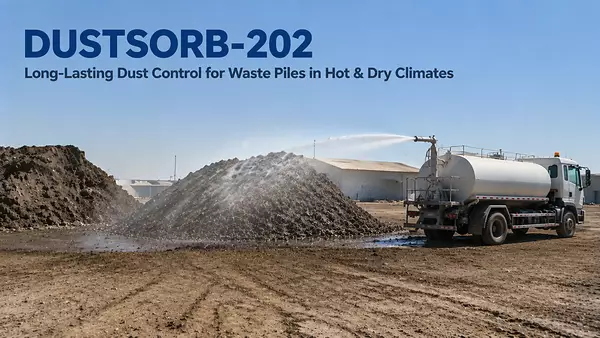
LOS ANGELES, Aug. 26, 2026 /PRNewswire/ -- Qingdao SOCO New Material Co., Ltd. today announced the launch of DUSTSORB-202, a polymer-based dust control solution designed for long-term dust suppression on waste management stockpiles, landfill material piles, solid waste yards, unpaved roads, and other static dust sources.
The product was developed for operators facing persistent dust challenges across outdoor storage, material handling, and unpaved road environments, particularly in hot, dry, and windy climates where conventional water spraying often provides only short-term dust suppression and requires frequent reapplication.
Outdoor industrial and material handling environments, stockpiles, haul roads, and exposed surfaces can dry out quickly under high temperatures, intense sunlight, and low humidity. Once surfaces lose moisture, fine particles can become airborne again, creating persistent dust challenges and requiring frequent watering. This can drive up water consumption, labor requirements, vehicle use, and overall site operating costs.
DUSTSORB-202 addresses this challenge through polymer-based particle bonding and three-dimensional crusting technology. After dilution and application, the solution penetrates deep into the treated material, strengthening the bonding between fine particles throughout the treated zone. As it dries, it forms a three-dimensional consolidated layer that helps lock loose particles in place, resist wind erosion, and reduce dust release.
Dust management is becoming a broader operational issue across industrial and material handling environments, especially in regions where water availability, community impact, and operating efficiency all matter, said a SOCO spokesperson. DUSTSORB-202 was designed to help operators move beyond frequent water spraying and toward longer-lasting dust control and surface stabilization.
According to SOCO's application guidance, DUSTSORB-202 is suitable for static and exposed dust sources, including waste stockpiles, solid waste yards, coal storage areas, mine roads, unpaved roads, construction sites, bare soil areas, slopes, helipads, and other exposed surfaces. For waste stockpile applications, the product is typically diluted at 1:30 to 1:50 and applied by water truck, spray equipment, or fixed sprinkler systems at approximately 2.5 to 3.0 L/m² of working solution, depending on site conditions.
For road applications, the recommended application rate is determined based on factors such as soil layer characteristics, soil and road material type, surface conditions, traffic intensity, and local climate. The appropriate dosage and dilution ratio should therefore be evaluated according to specific site conditions to achieve effective and durable dust control.
DUSTSORB-202 has been applied across a range of demanding environments, including mining stockpiles and exposed slopes. In mining applications, the product helps control dust from exposed ore and material stockpiles under hot, dry, and windy conditions. On exposed slopes, it helps bind loose soil particles, reduce wind-driven dust and erosion, and provide longer-lasting surface stabilization. These applications demonstrate the versatility of DUSTSORB-202 for both material stockpiles and exposed ground surfaces where conventional water spraying may require frequent reapplication.
Compared with conventional calcium chloride-based dust control, DUSTSORB-202 is designed to provide longer-lasting dust suppression with less reliance on hygroscopic salts. Its polymer-based consolidation technology helps stabilize exposed surfaces and reduce the need for frequent reapplication, supporting lower maintenance requirements and more efficient long-term dust management.
Key advantages include:
- Long-lasting three-dimensional crusting and particle-binding dust control
- Strong resistance to wind erosion and particle release
- Non-corrosive formulation for safer equipment and surface application
- Non-toxic formulation suitable for routine dust control operations
- Effective in dry, hot, and windy outdoor environments
- Reduced dependence on repeated water spraying
- Compatible with water trucks, spray equipment, and fixed sprinkler systems
- Versatile applications across mining, roads, stockpiles, construction sites, slopes, waste handling areas, and other exposed surfaces
DUSTSORB-202 is part of SOCO's DUSTSORB dust control product series, developed to address challenging dust-control needs across industrial and outdoor environments. As a key product in the series, DUSTSORB-202 is designed for long-lasting dust suppression on stockpiles, roads, slopes, and other exposed surfaces. The DUSTSORB series also includes products for dynamic and localized dust control, supporting a broad range of industrial applications and operating conditions.
About Qingdao SOCO New Material Co., Ltd.
Founded in 2009, SOCO® Group is a technology-driven manufacturer specializing in water-absorbing and retention solutions for agricultural and industrial applications. The company focuses on application-led research and development, developing customized solutions tailored to specific operating needs across industrial and infrastructure settings. Through continued product development and collaboration with global partners, SOCO® supports customers with solutions designed to improve water management, resource efficiency, and project performance.
** This press release is distributed by PR Newswire through automated distribution system, for which the client assumes full responsibility. **
SOCO Introduces DUSTSORB-202--Dust Control Solution for Waste Management Stockpiles and Roads