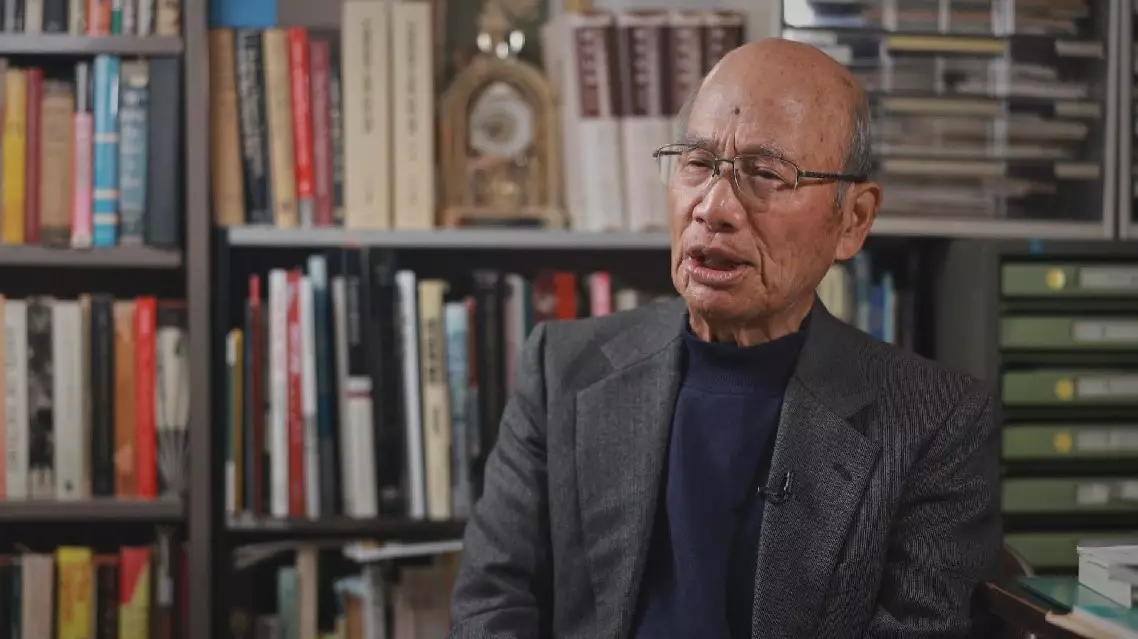
As China prepares to observe the 11th National Memorial Day for the Victims of the Nanjing Massacre on Dec 13, Japanese historian Tokushi Kasahara is urging his fellow citizens to confront the dark legacy of this atrocity, saying that remaining unacknowledged of this history is shameful for Japanese people.
His recent paper, "Historical Evidence: The Site and Photographs of the Nanjing Massacre—Based on the Diary and Memoirs of a Japanese Army Artilleryman", has sparked renewed interest in Japan's wartime history.
Kasahara, a prominent figure in the study of the Nanjing Massacre, has dedicated decades to uncovering the truth. His meticulous collection of historical evidence - photographs, videos, and personal accounts - has arisen from numerous field investigations, each revealing the chilling realities of the past.
His extensive research, rooted in a commitment to uncovering the truths of the history, has led to the publication of over a dozen influential works, including "One Hundred Days in the Nanjing Refugee Zone" and "The Nanjing Incident".
Yet, the acknowledgment of the Nanjing Massacre has faced formidable resistance within Japan. The 1980s marked the rise of denialist sentiments, intensifying through the following decade as nationalist factions sought to distort historical narratives.
However, numerous historical materials have emerged to remind people of the massacre, demonstrating the existence of Japanese war crimes.
In 2015, the Documents of the Nanjing Massacre were inscribed on the Memory of the World Register by the International Advisory Committee of UNESCO's Memory of the World Program, a significant step toward recognizing this historical atrocity.
"The Nanjing Massacre is a fact. The whole world knows about it, yet only Japan does not teach its children about this. Only the Japanese people remain unaware of this history, and it is Japan's shame. Therefore, I write to inform the Japanese public of the correct history and facts. Only when the Japanese people know the truth, reflect on ourselves and acknowledge the past aggression against China can we build a foundation for friendly relations," Kasahara said.
Now, at 80 years old, Kasegawa is still working on his commitment, collaborating with global scholars to find more facts of the massacre and develop new history textbooks telling the truth.
The Nanjing Massacre, which lasted for more than 40 days following the Japanese troops' capture of Nanjing, the then Chinese capital, on Dec 13, 1937, left more than 300,000 Chinese civilians and unarmed soldiers in Nanjing dead and 20,000 women raped.
Unacknowledged atrocity of Nanjing Massacre is shameful reality for Japan: scholar