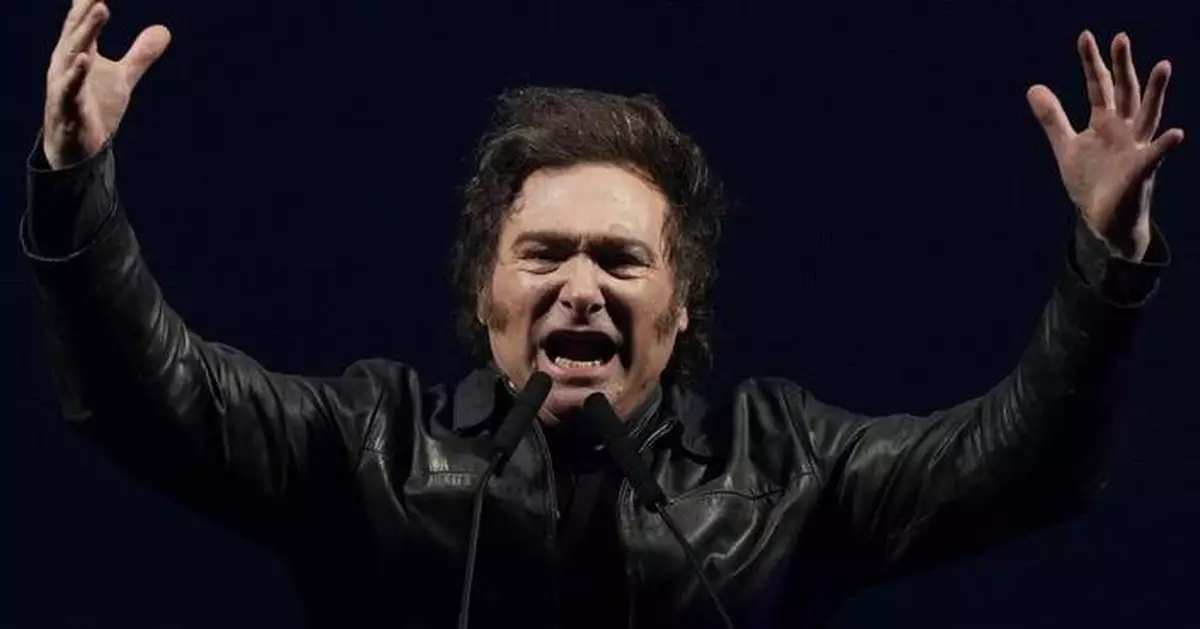
BUENOS AIRES, Argentina (AP) — When libertarian President Javier Milei assumed office one year ago, Argentine supermarkets were marking price increases on an almost daily basis. Middle-class families tried to spend their rapidly depreciating pesos as quickly as they got them, and economists warned the country was teetering on the brink of hyperinflation.
It was popular outrage over this upside-down economy that fueled the rise of Milei, a self-declared “anarcho-capitalist” and former TV pundit who rode to power on vows to “blow up” the central bank, take an axe to the bloated government and kill sky-high inflation.
Click to Gallery
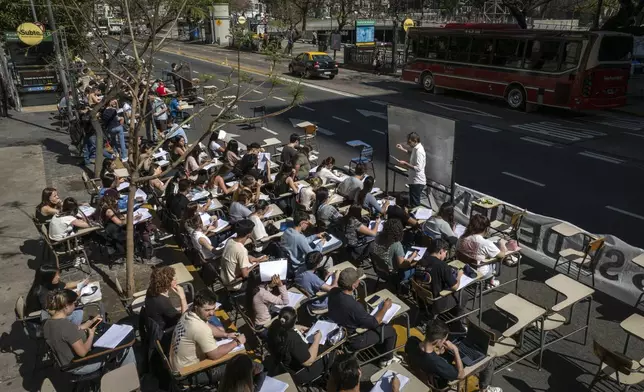
FILE - Economics students hold class outside Argentina's University of Buenos Aires to protest President Javier Milei's veto of higher funding for public universities, in Buenos Aires, Oct. 16, 2024. (AP Photo/Victor R. Caivano, File)
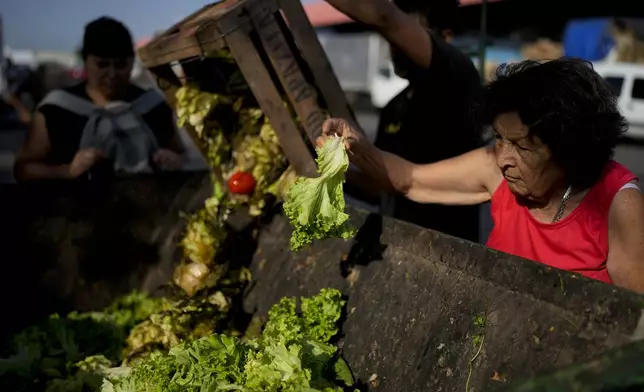
FILE - A woman culls through produce discarded by vendors at a market on the outskirts of Buenos Aires, Argentina, Jan. 10, 2024. Argentine President Javier Milei has scrapped price controls and slashed subsidies, causing prices to skyrocket in a country that already had among the world's highest inflation rates. (AP Photo/Natacha Pisarenko, File)
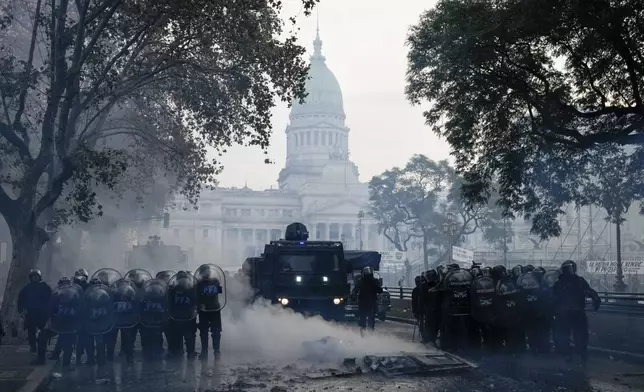
FILE - Police clear the streets during clashes with anti-government protesters outside Congress, where lawmakers debate a reform bill promoted by President Javier Milei in Buenos Aires, Argentina, June 12, 2024. (AP Photo/Rodrigo Abd, File)
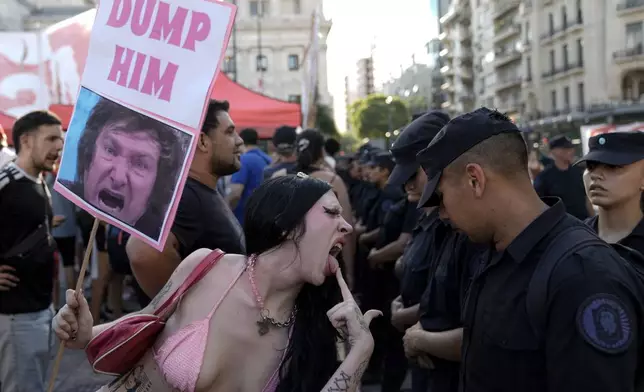
FILE - An anti-government protester taunts police guarding Congress where lawmakers are debating a bill promoted by Argentine President Javier Milei, in Buenos Aires, Argentina, Feb. 1, 2024. The bill includes a broad range of economic, administrative, criminal and environmental reforms. (AP Photo/Rodrigo Abd, File)
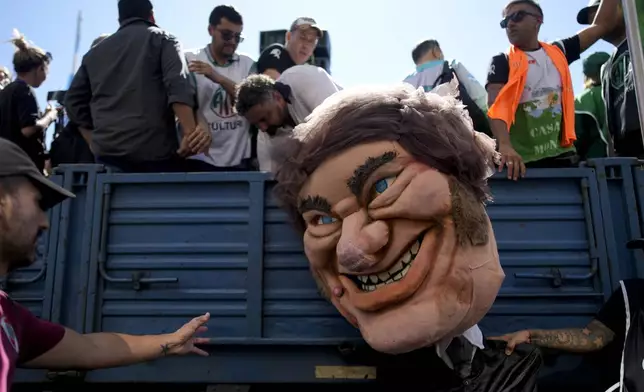
FILE - A demonstrator holds a giant doll depicting President Javier Milei during a protest demanding the reincorporation of state workers laid off as part of state economic downsizing measures in Buenos Aires, Argentina, April 5, 2024. (AP Photo/Natacha Pisarenko, File)

FILE - Argentine President Javier Milei and Vice President Victoria Villarruel attend a police ceremony honoring fallen officers, in Buenos Aires, Argentina, July 2, 2024. (AP Photo/Natacha Pisarenko, File)

FILE - Argentina's President Javier Milei, left, hugs Brazilian former President Jair Bolsonaro during CPAC Brasil 2024, a conservative event, in Balneario Camboriu, Santa Catarina state, Brazil, July 7, 2024. (AP Photo/Heuler Andrey, File)

FILE - Argentine President Javier Milei, right, and El Salvador's President Nayib Bukele point from a balcony during Bukele's visit to the government house in Buenos Aires, Argentina, Sept. 30, 2024. (AP Photo/Natacha Pisarenko, File)
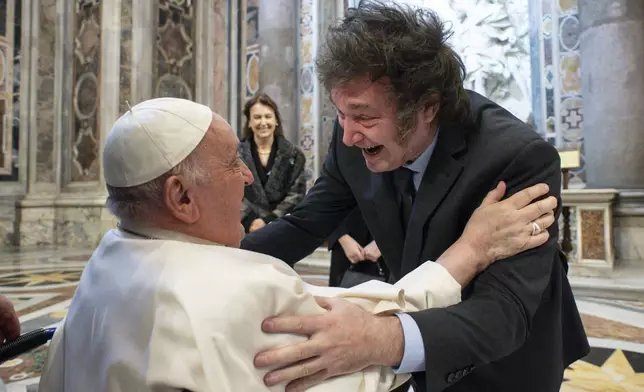
FILE - Argentine President Javier Milei greets Pope Francis prior to the start of the canonization Mass of Argentine first female saint, María Antonia de Paz y Figueroa also known as "Mama Antula", in St. Peter's Basilica at The Vatican, Feb. 11, 2024. (Vatican Media via AP, File)
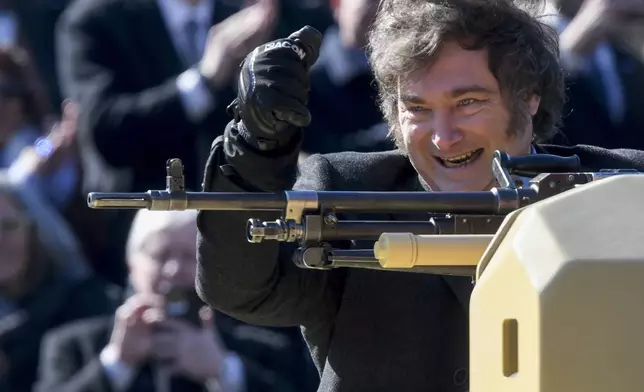
FILE - Argentine President Javier Milei stands on an armored tank during a military parade celebrating Independence Day in Buenos Aires, Argentina, July 9, 2024. (AP Photo/Gustavo Garello, File)
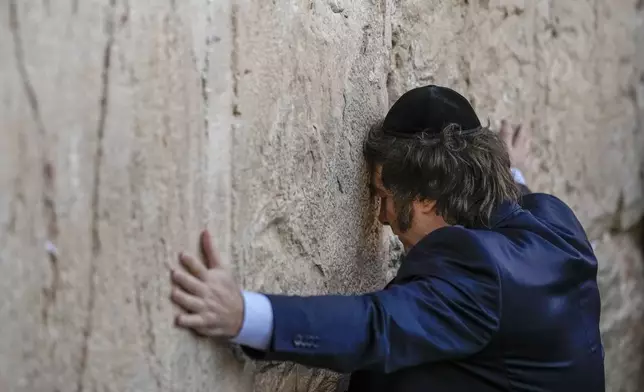
FILE- Argentine President Javier Milei prays at the Western Wall in Jerusalem's Old City, Feb. 6, 2024. Although born and raised Roman Catholic, Milei has increasingly shown public interest in Judaism and expressed intentions to convert. (AP Photo/Leo Correa, File)
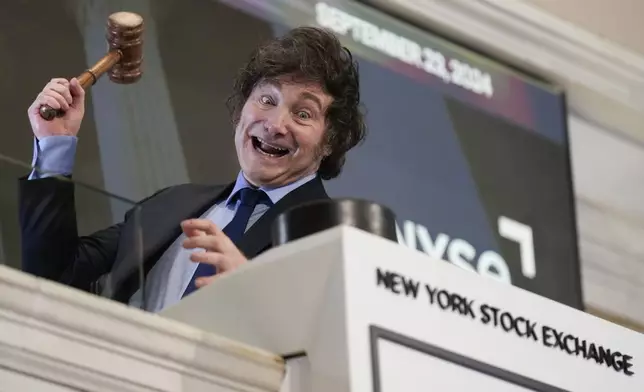
FILE - Argentina's President Javier Milei poses for pictures after ringing the opening bell at the New York Stock Exchange in New York, Sept. 23, 2024. (AP Photo/Seth Wenig, File)
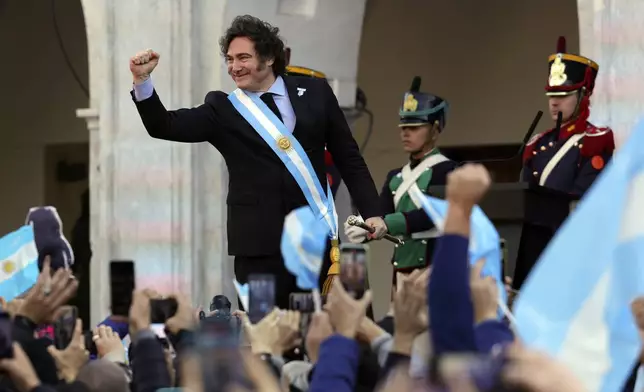
FILE - Argentine President Javier Milei attends a ceremony celebrating the 214th anniversary of the May Revolution, which marked the beginning of the country's independence from Spain, in Cordoba, Argentina, May 25, 2024. (AP Photo/Nicolas Aguilera, File)
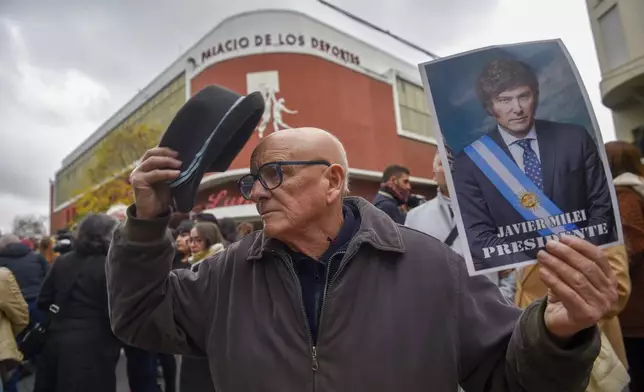
FILE - Supporters of Argentine President Javier Milei arrive at a stadium for the presentation of his book titled "Capitalism, Socialism and the Neoclassical Trap" in Buenos Aires, Argentina, May 22, 2024. (AP Photo/Gustavo Garello, File)
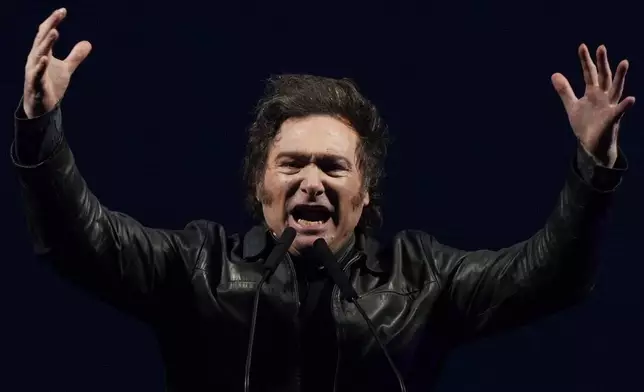
FILE - Argentine President Javier Milei addresses supporters during a rally in Buenos Aires, Argentina, Sept. 28, 2024. (AP Photo/Natacha Pisarenko, File)
It was an almost impossible job, and Milei's lack of government experience, unkempt hairdo, sexual boasts and missionary-like zeal for his dead dog, the Rolling Stones and the free market didn't inspire much confidence in a country with a history of failed economic reforms.
“It wasn’t a given that he could govern Argentina when he took office,” said Marcelo J. García, Americas director at geopolitical risk firm Horizon Engage. "He was Mr. Nobody."
On taking power, Milei implemented a series of austerity measures, including slashing energy and transportation subsidies, laying off tens of thousands of government workers, freezing public infrastructure projects and imposing wage and pension freezes below inflation.
It has been brutal. Unemployment has climbed, economic activity has declined and poverty has surged.
But now signs have emerged that Argentina’s bizarre and long mismanaged economy is starting to look a little more normal.
Monthly inflation has plummeted, bonds have rallied and the closely watched gap between the black market dollar and the official rate has shrunk as much as 44%. Argentina's country-risk index, an influential measure of the risk of default, is at its lowest point in five years.
“He reaches the anniversary at the best moment of his administration," García said.
Inflation, Argentina's perpetual scourge and Milei's top priority upon coming to office, slowed from a monthly rate of 25.5% in December 2023 to just 2.7% in October — its lowest level in three years.
“Inflation has gone down faster than what everyone has expected," said Ignacio Labaqui, a Buenos Aires-based senior analyst at risk consultancy Medley Global Advisors. “That’s something that validates his narrative and sustains his popularity.”
In a sign of Milei's long way to go — and the unmitigated shambles he inherited — Argentina's annual inflation rate remains at 193%.
But Argentines are paying closer attention to month-to-month inflation, taking the sharp decline as a sign that Milei’s fiscal shock therapy is paying off.
“Last year it was a shock to the system, I couldn’t keep up with the prices,” said 34-year-old deli worker Jazmin Quintana. “I’m not saying I like the guy, I find his personality very weird and aggressive, but I admit — if he continues on this route I’ll be very happy.”
A stronger peso is also boosting confidence. The black market dollar price has dropped since July, narrowing its gap with the official rate of 980.
Chileans, once accustomed to bargain-hunting in Argentina, are now surprised to see the traffic reversed. Shoppers unable to afford iPhones and kitchen appliances in Argentina arrive at Chilean border towns by the busload to get the most bang from their buck. The customs office shut down briefly last month because officials were overwhelmed.
Underpinning the currency appreciation is a new tax amnesty to lure Argentines to declare their hidden U.S. dollar savings — longs squirreled away in offshore bank accounts and under mattresses. Ahead of the first-phase deadline on Oct. 31, the scheme drew some $19 billion into Argentina’s banks, the tax agency reported, boosting scarce foreign exchange reserves.
But a strong peso also carries risks — squeezing domestic industry by making exports more costly, deterring investors and raising fears of a crash. Foreign visitors are warned of higher prices as peak tourism season begins.
“The prices are INSANE,” reads a popular Reddit post about travel in Argentina, filled with cautionary tales of $50 dinners and $100 T-shirts.
Argentina's first budget surplus in 12 years has come at a steep cost. Milei halted inflation increases for university budgets, leaving some universities struggling to keep their lights on and elevators running. He downgraded the culture ministry, closed the national theater institute, shuttered a state-funded news agency and defunded scientific research.
He suspended public works projects, leaving cities littered with white-elephant structures. An estimated 200,000 construction workers lost their jobs in the last year, says the Argentine Chamber of Construction.
The brutal austerity has deepened Argentina's recession, with consumer spending falling 20% percent in the past year and poverty rates soaring to a two-decade high of 52.9% in the second half of last year.
Argentina’s retirees are perhaps the most potent symbol of the strife inflicted by Milei’s fiscal shock.
Some of the government’s biggest savings came from holding down the real value of pensions. The average minimum monthly pension is just $300.
“We have always been in bad shape, but now things are even harsher,” said Rubén Cocurullo, 76, among dozens of pensioners protesting at the social welfare office in Buenos Aires last week. “Do they want to kill us?"
In a country with a long history of raucous street protests, it's striking that the mass unrest pundits predicted last year has not materialized.
That his approval ratings have held up at some 50% is also a sign of how desperately Argentines wanted change after years of crisis.
“Strangely enough, there comes a time in all societies, when the cost of a fiscal adjustment becomes less than the cost of continuing with inflation,” said Sebastián Mazzuca, an Argentine political scientist at Johns Hopkins University. “It’s like a fire. There are badly injured people, but the fire was put out, wasn’t it?”
It helps Milei that Argentina's left-leaning Peronist opposition is in disarray, with former President Alberto Fernández charged with beating his ex-wife while in office.
Many also attribute the social peace to Milei’s expectation management. He warned that things would get worse before they got better.
But now, as an ebullient Milei declares his government the most successful in history and assures Argentines they’ll soon collect on the economic revival he pledged would follow the pain, the bar is getting higher even as risks remain.
To fulfill his promise of transforming the heavily regulated nation into one of the world’s freest economies, Milei needs to lift strict currency controls. That requires a fresh infusion of cash or a new deal with the International Monetary Fund, which would relieve pressure on the billions of dollars in debt repayments due next year.
Foreign investors, as well as the IMF, to which Argentina owes an unprecedented $44 billion, have expressed excitement about Milei’s changes. But, still haunted by Argentina’s 2001 crisis — which culminated in the largest foreign-debt default in modern history — they’re cautious.
“Argentina still seems to be mired in a major ‘wait and see’ period,” said consulting firm Zuban Córdoba and Associates in a report on Milei’s first year.
The radical populist hopes to profit from his budding bromances with President-elect Donald Trump and tech billionaire Elon Musk. As president of the biggest shareholder of the IMF in 2018, Trump was key to Argentina securing a record $56 billion loan package.
The three men dined and danced together at Trump's Mar-a-Lago club in Florida last month. Milei claims his brutal cost-cutting inspired Trump and Musk to plan their so-called Department of Government Efficiency.
Last week the Conservative Political Action Conference brought its traveling program to Buenos Aires, where Milei and right-wing political figures railed against socialism, praised Trump and pledged to battle what they saw as the global scourge of liberal “woke-ism.”
“Everyone assumed that we were going to fail politically," Milei told the cheering crowd. “Today they admit, through gritted teeth, that they are surprised.”
Associated Press reporter Debora Rey contributed to this report.
Follow AP’s coverage of Latin America and the Caribbean at https://apnews.com/hub/latin-america
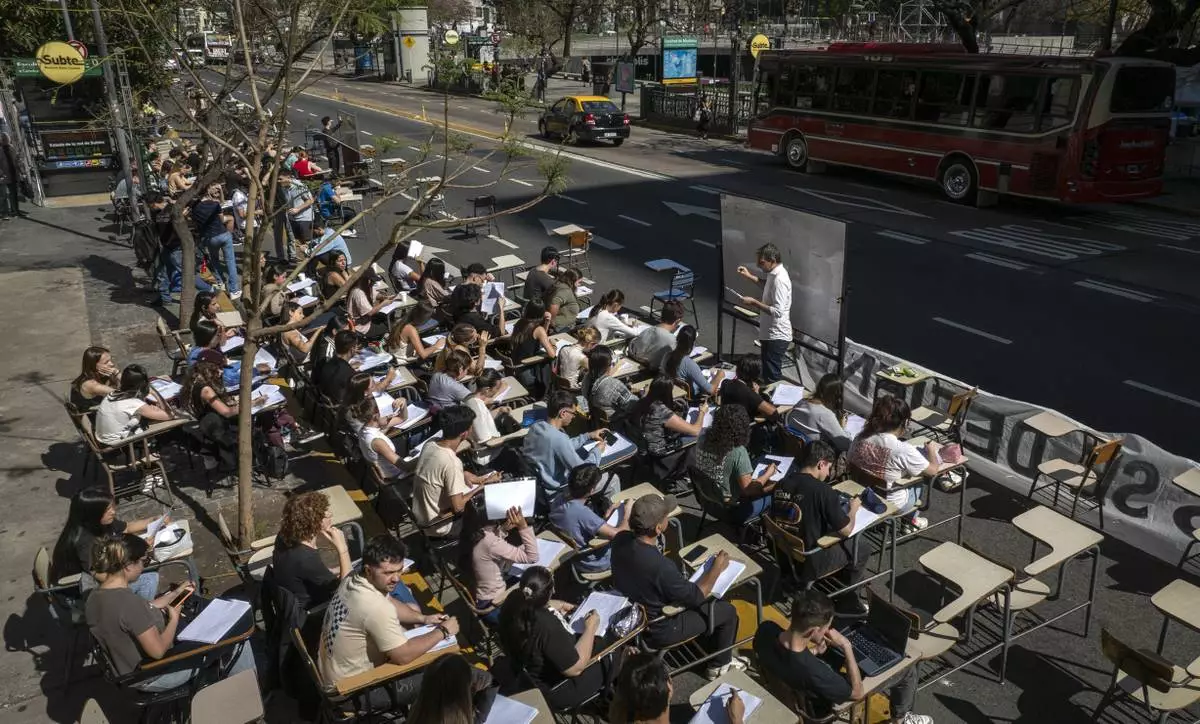
FILE - Economics students hold class outside Argentina's University of Buenos Aires to protest President Javier Milei's veto of higher funding for public universities, in Buenos Aires, Oct. 16, 2024. (AP Photo/Victor R. Caivano, File)
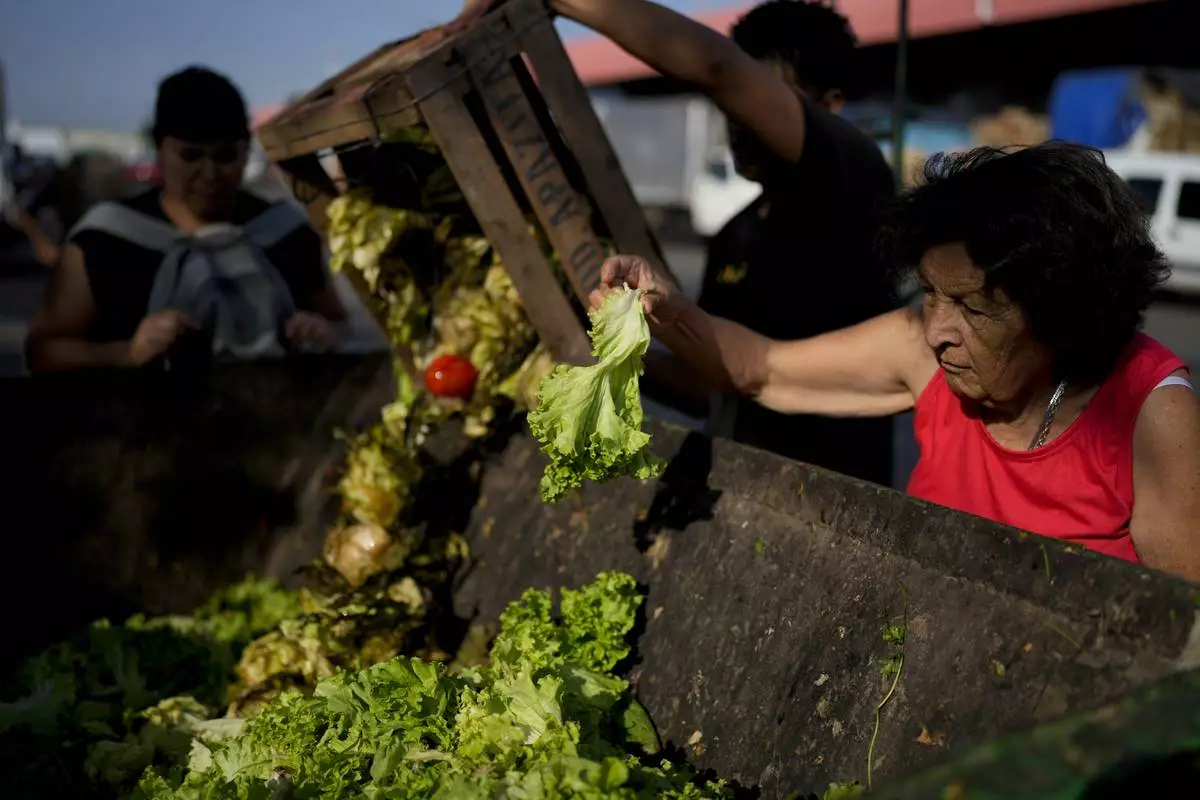
FILE - A woman culls through produce discarded by vendors at a market on the outskirts of Buenos Aires, Argentina, Jan. 10, 2024. Argentine President Javier Milei has scrapped price controls and slashed subsidies, causing prices to skyrocket in a country that already had among the world's highest inflation rates. (AP Photo/Natacha Pisarenko, File)
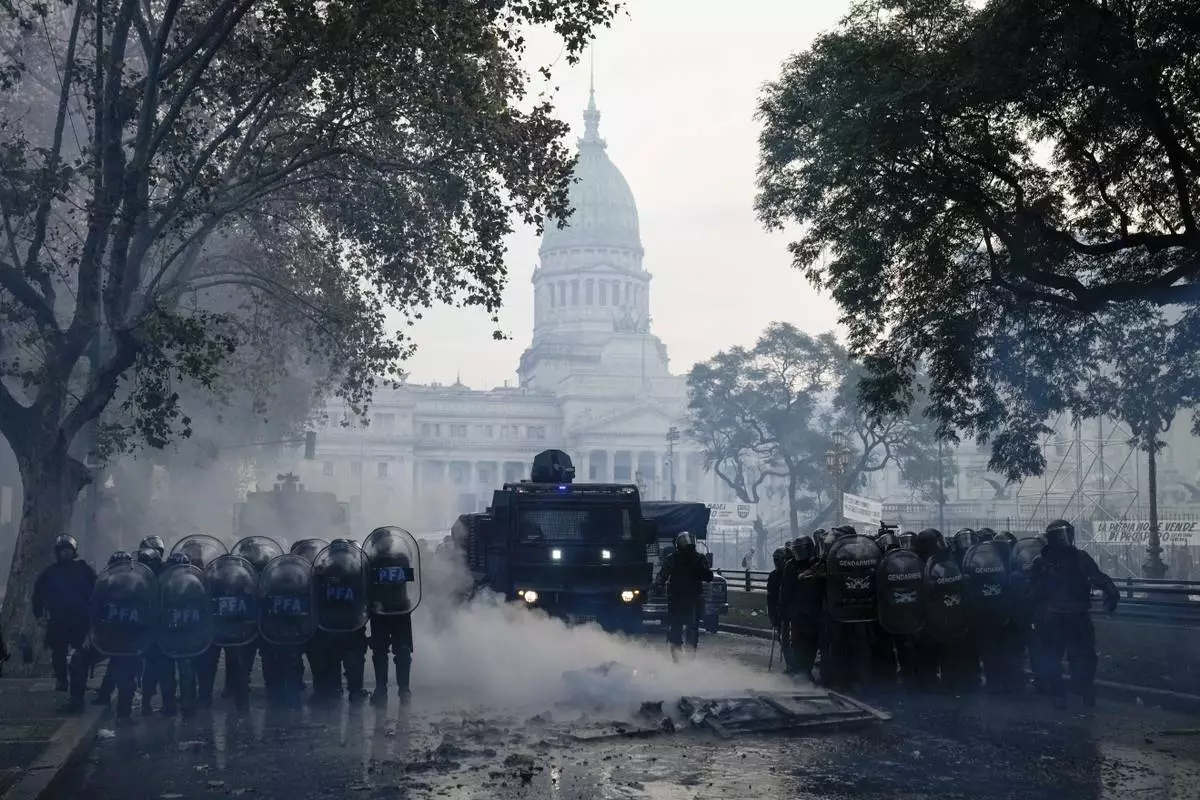
FILE - Police clear the streets during clashes with anti-government protesters outside Congress, where lawmakers debate a reform bill promoted by President Javier Milei in Buenos Aires, Argentina, June 12, 2024. (AP Photo/Rodrigo Abd, File)
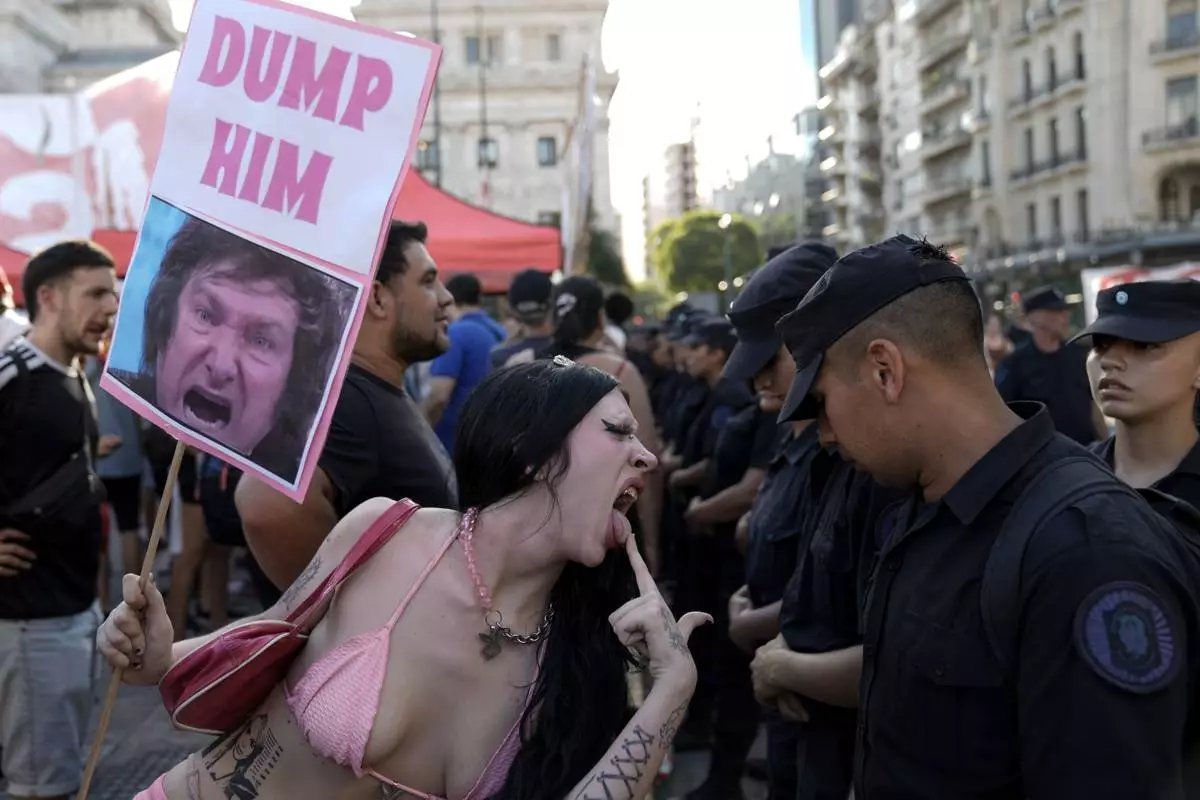
FILE - An anti-government protester taunts police guarding Congress where lawmakers are debating a bill promoted by Argentine President Javier Milei, in Buenos Aires, Argentina, Feb. 1, 2024. The bill includes a broad range of economic, administrative, criminal and environmental reforms. (AP Photo/Rodrigo Abd, File)
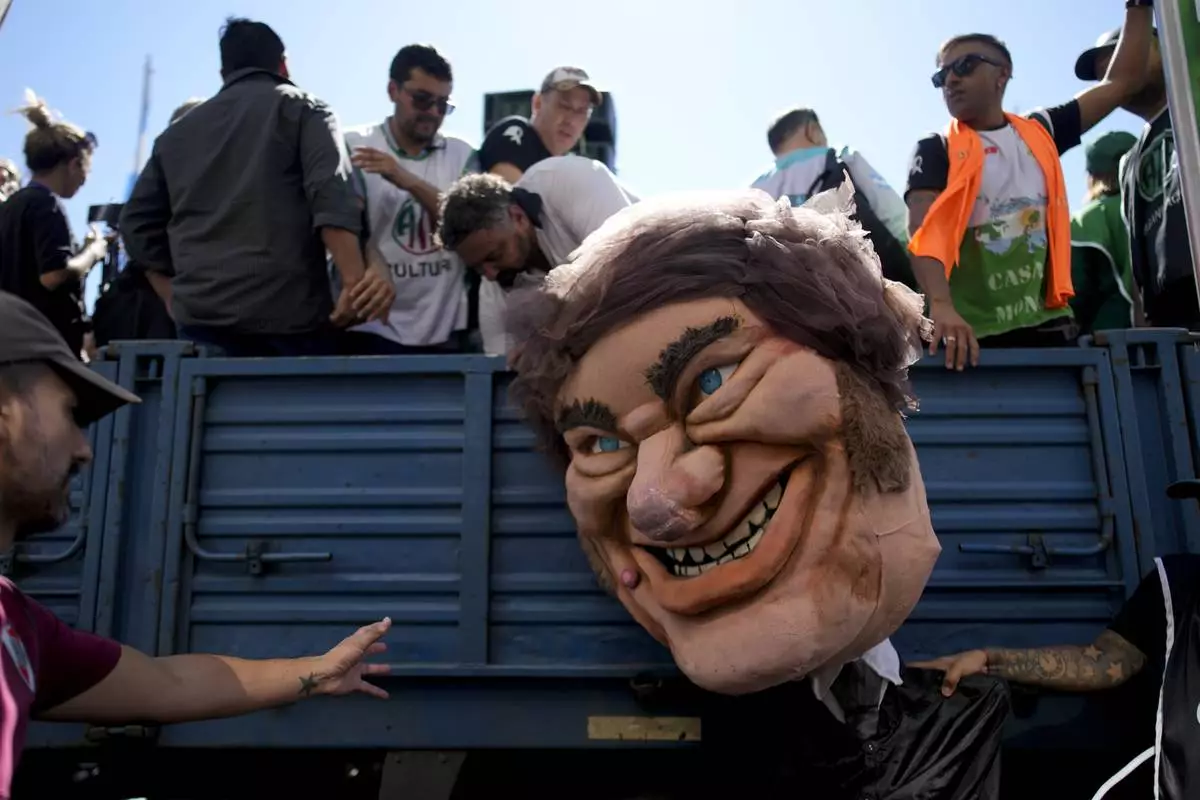
FILE - A demonstrator holds a giant doll depicting President Javier Milei during a protest demanding the reincorporation of state workers laid off as part of state economic downsizing measures in Buenos Aires, Argentina, April 5, 2024. (AP Photo/Natacha Pisarenko, File)
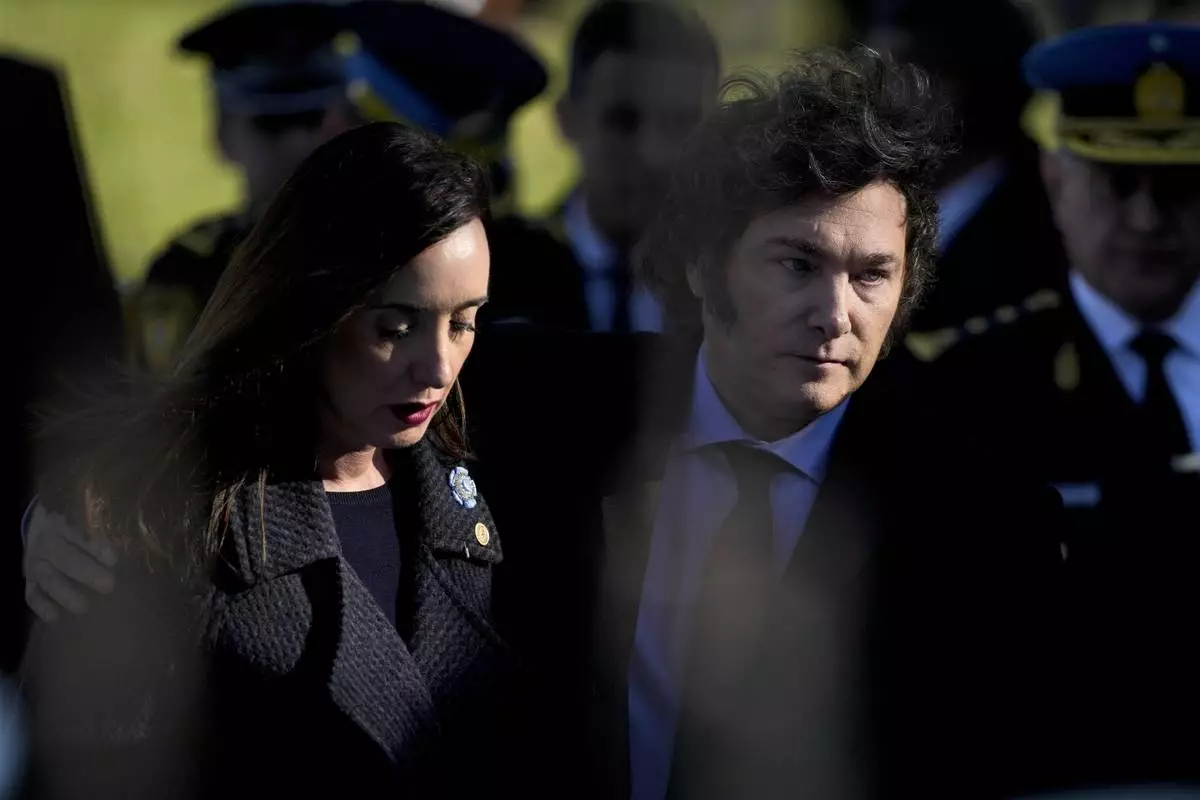
FILE - Argentine President Javier Milei and Vice President Victoria Villarruel attend a police ceremony honoring fallen officers, in Buenos Aires, Argentina, July 2, 2024. (AP Photo/Natacha Pisarenko, File)

FILE - Argentina's President Javier Milei, left, hugs Brazilian former President Jair Bolsonaro during CPAC Brasil 2024, a conservative event, in Balneario Camboriu, Santa Catarina state, Brazil, July 7, 2024. (AP Photo/Heuler Andrey, File)

FILE - Argentine President Javier Milei, right, and El Salvador's President Nayib Bukele point from a balcony during Bukele's visit to the government house in Buenos Aires, Argentina, Sept. 30, 2024. (AP Photo/Natacha Pisarenko, File)
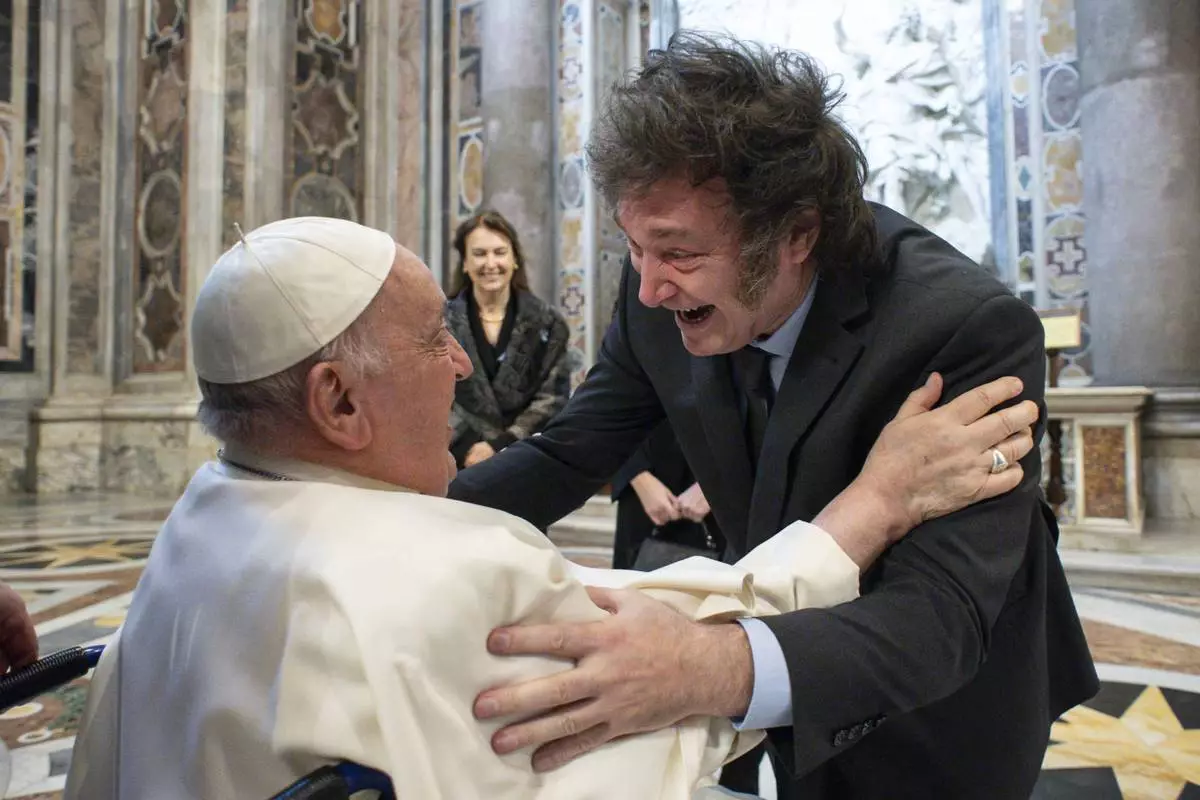
FILE - Argentine President Javier Milei greets Pope Francis prior to the start of the canonization Mass of Argentine first female saint, María Antonia de Paz y Figueroa also known as "Mama Antula", in St. Peter's Basilica at The Vatican, Feb. 11, 2024. (Vatican Media via AP, File)
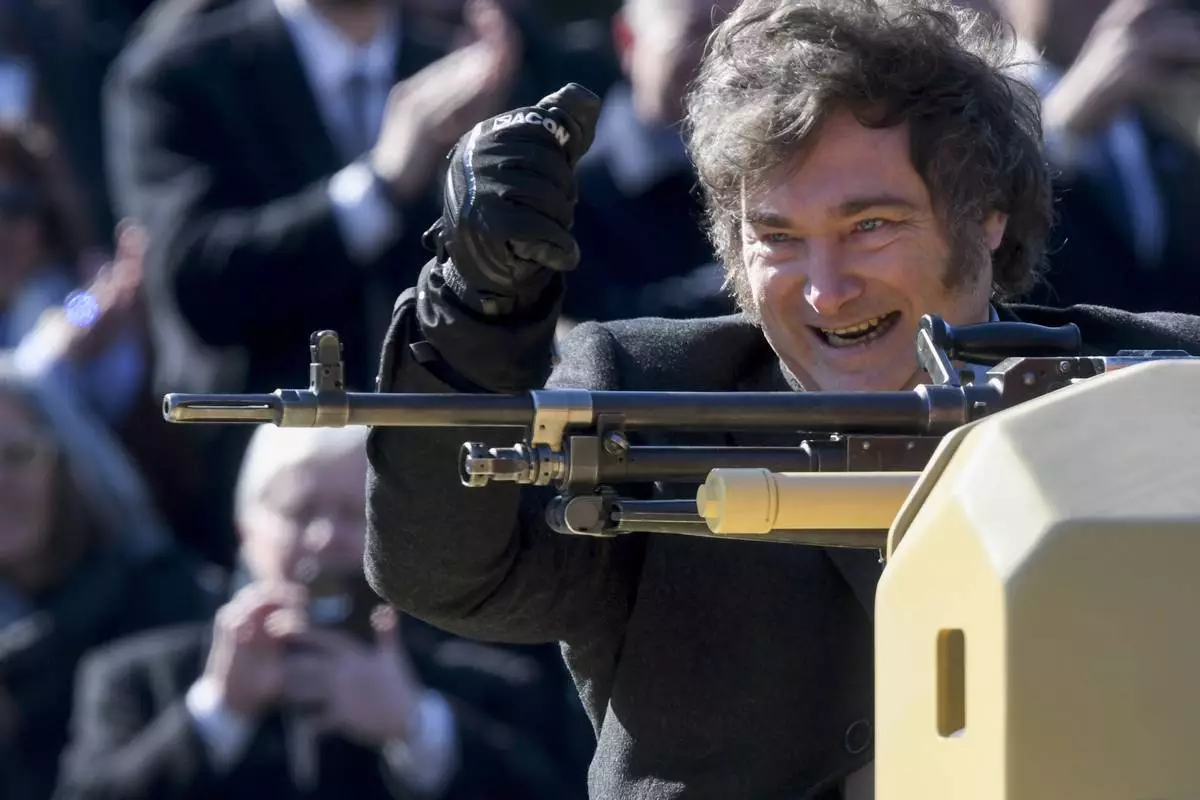
FILE - Argentine President Javier Milei stands on an armored tank during a military parade celebrating Independence Day in Buenos Aires, Argentina, July 9, 2024. (AP Photo/Gustavo Garello, File)

FILE- Argentine President Javier Milei prays at the Western Wall in Jerusalem's Old City, Feb. 6, 2024. Although born and raised Roman Catholic, Milei has increasingly shown public interest in Judaism and expressed intentions to convert. (AP Photo/Leo Correa, File)
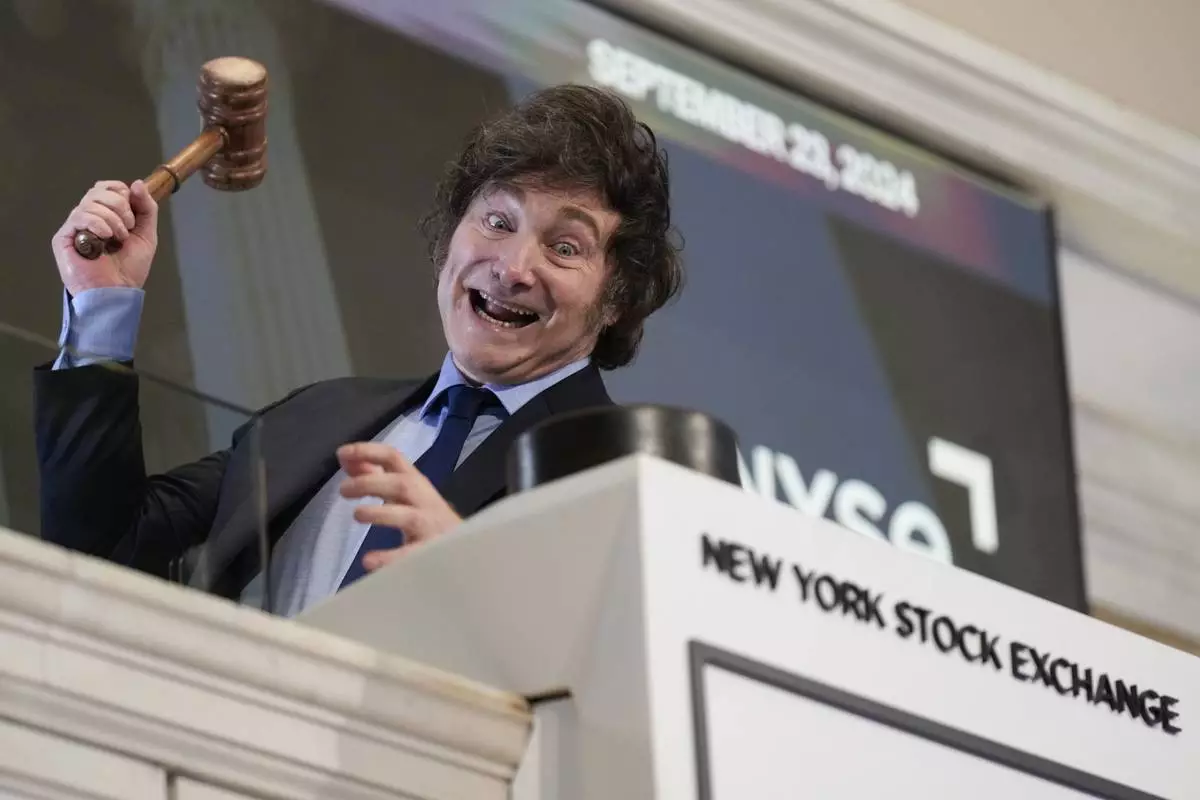
FILE - Argentina's President Javier Milei poses for pictures after ringing the opening bell at the New York Stock Exchange in New York, Sept. 23, 2024. (AP Photo/Seth Wenig, File)
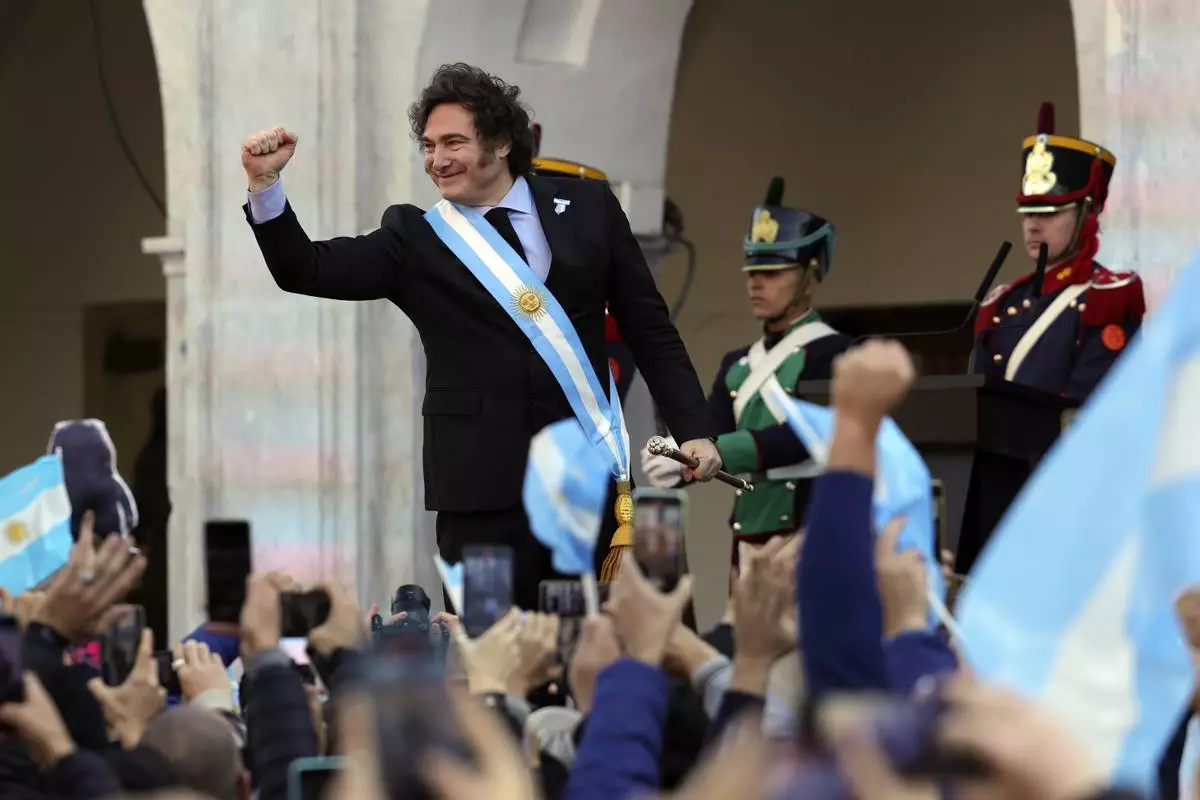
FILE - Argentine President Javier Milei attends a ceremony celebrating the 214th anniversary of the May Revolution, which marked the beginning of the country's independence from Spain, in Cordoba, Argentina, May 25, 2024. (AP Photo/Nicolas Aguilera, File)
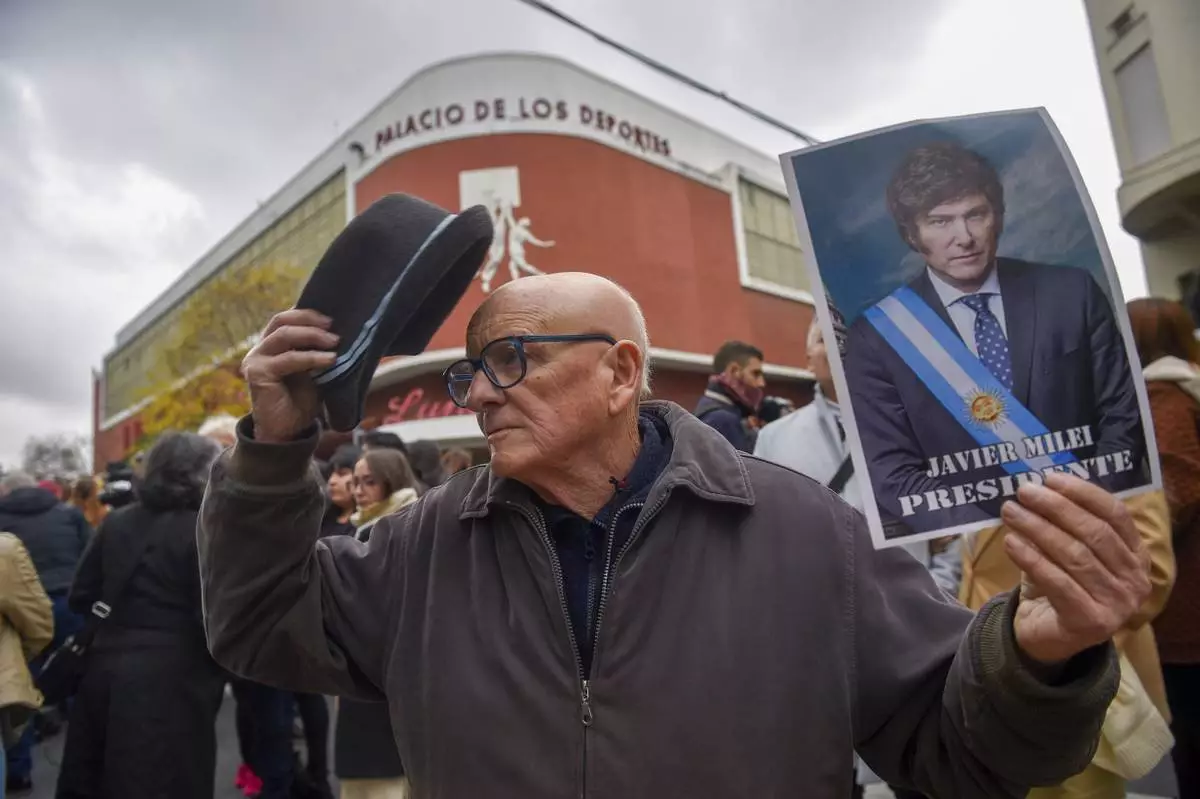
FILE - Supporters of Argentine President Javier Milei arrive at a stadium for the presentation of his book titled "Capitalism, Socialism and the Neoclassical Trap" in Buenos Aires, Argentina, May 22, 2024. (AP Photo/Gustavo Garello, File)
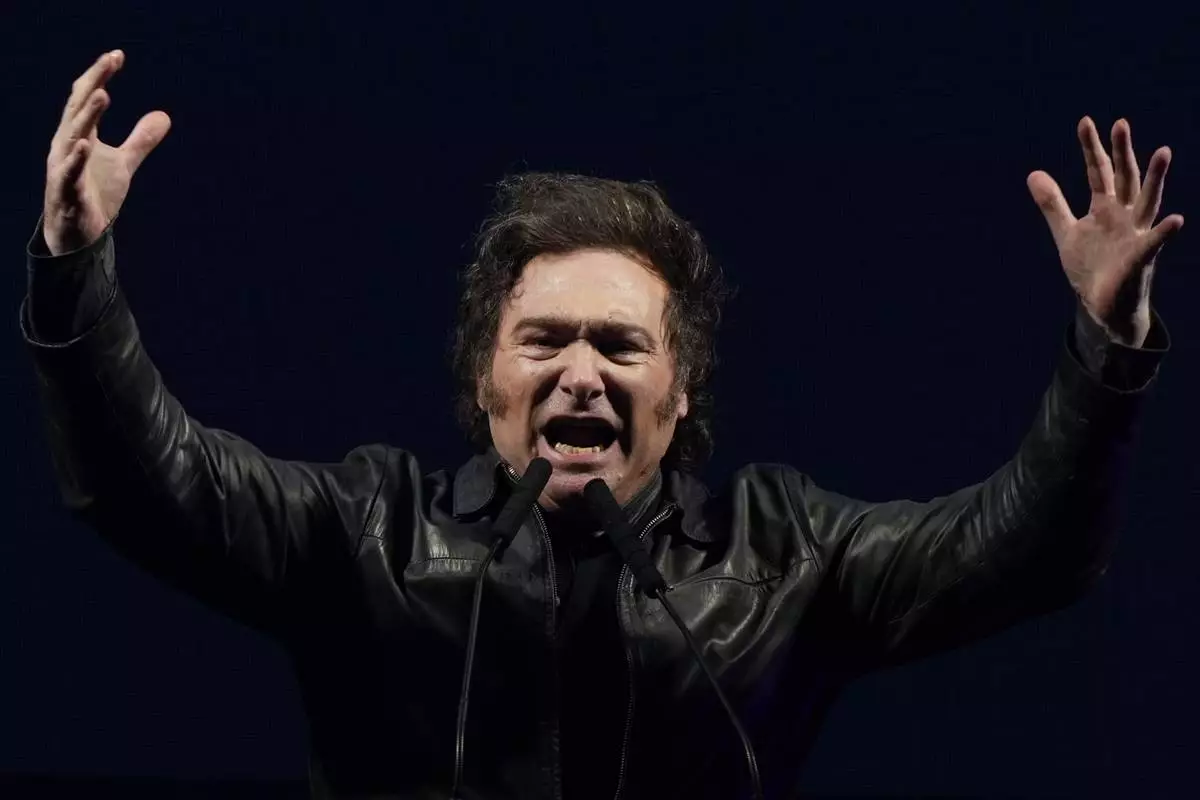
FILE - Argentine President Javier Milei addresses supporters during a rally in Buenos Aires, Argentina, Sept. 28, 2024. (AP Photo/Natacha Pisarenko, File)