NASARAWA, Nigeria (AP) — Growing demand for the lithium used in batteries for electric vehicles and energy storage has created a new frontier for mining in Nigeria.
But it’s led to exploitation of children who are often poor and take work in small, illegal mines to support themselves and their families.
Click to Gallery
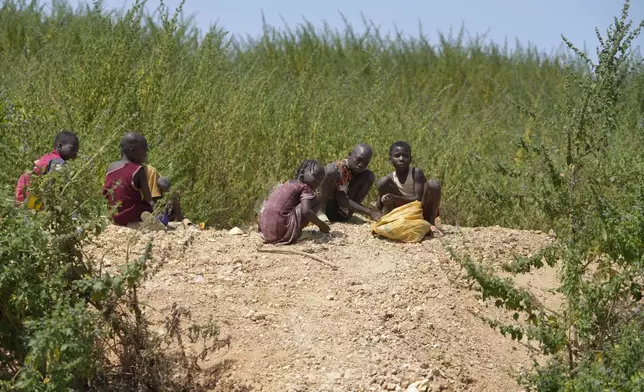
Juliet Samaniya, 6, chips at a rock with other children at an illegal lithium mining site in Paseli, Nigeria, Tuesday, Nov 5, 2024. (AP Photo/Sunday Alamba)
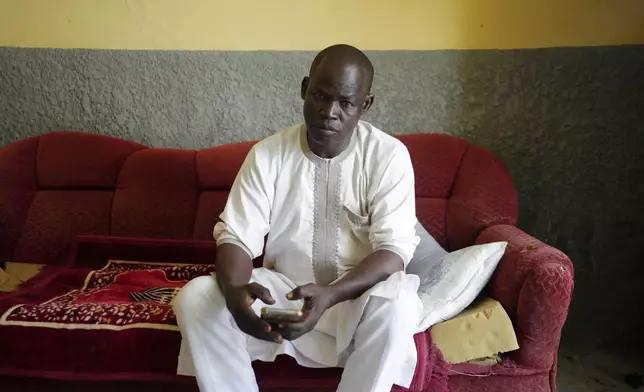
Aliyu Ibrahim, a lithium merchant, speaks with The Associated Press about his business in Nasarawa, Nigeria, Tuesday, Nov 5, 2024. (AP Photo/Sunday Alamba)
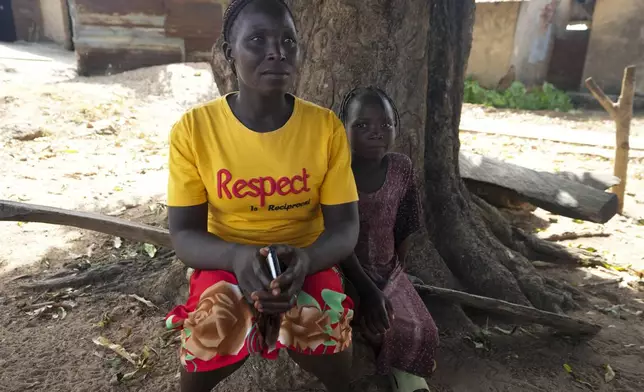
Abigail Samaniya, left, mother of Juliet Samaniya, right, 6, sit together as they speak with The Associated Press in Paseli, Nigeria, Tuesday, Nov 5, 2024. (AP Photo/Sunday Alamba)
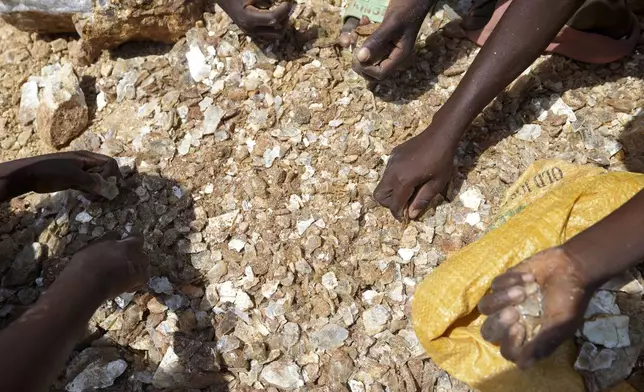
Juliet Samaniya, 6, works with other children at an illegal lithium mining site in Paseli, Nigeria, Tuesday, Nov 5, 2024. (AP Photo/Sunday Alamba)
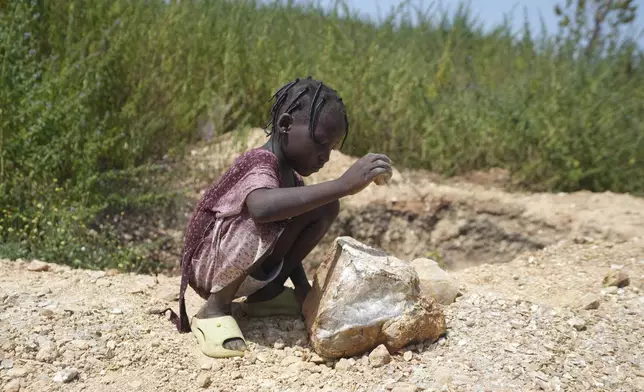
Juliet Samaniya, 6, chips at a rock with a stone tool at an illegal lithium mining site in Paseli, Nigeria, Tuesday, Nov 5, 2024. (AP Photo/Sunday Alamba)
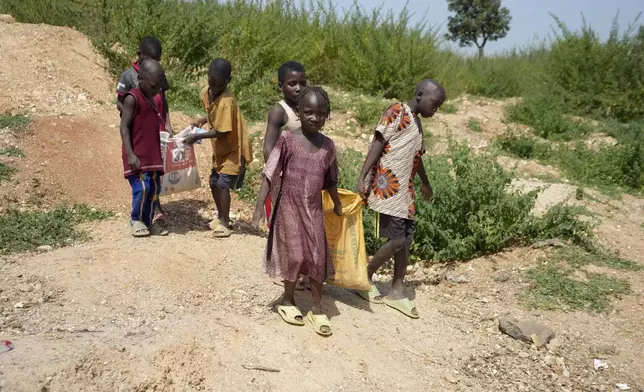
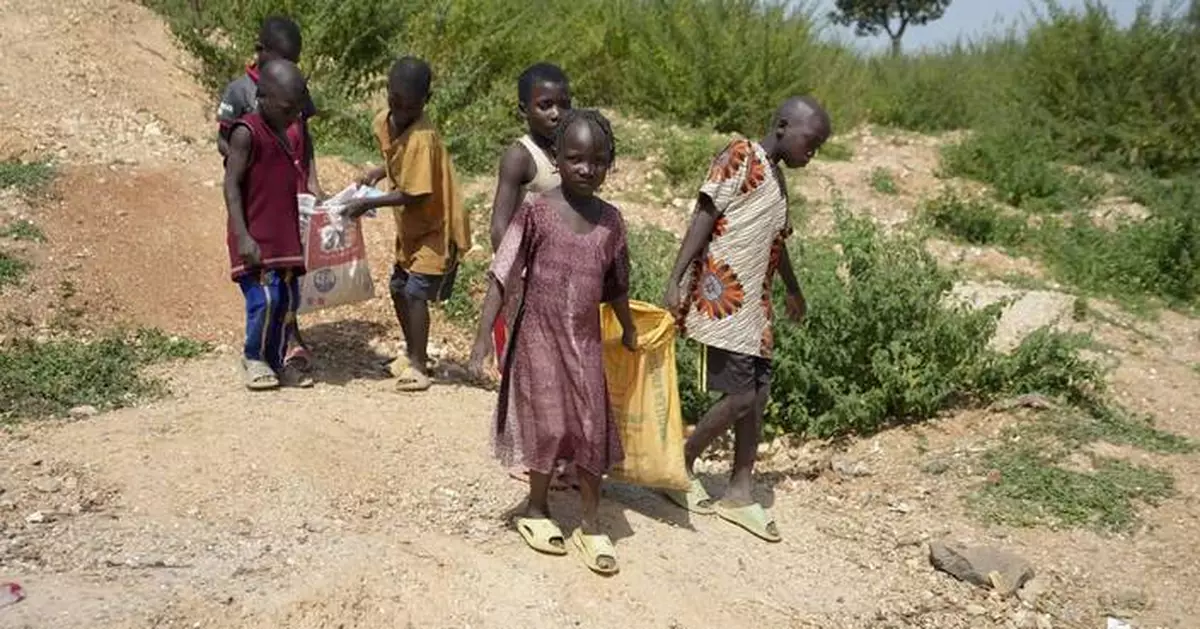
Juliet Samaniya, 6, carries a bag of lithium with other children at an illegal mining site in Paseli, Nigeria, Tuesday, Nov 5, 2024. (AP Photo/Sunday Alamba)
The Associated Press recently traveled to the deep bush of Pasali, near the federal capital of Abuja in Nasarawa state, to follow and interview miners operating illegal mines, including some where children work. AP also witnessed negotiations and an agreement to purchase lithium by a Chinese company with no questions about the source of the lithium or how it was obtained.
The International Labour Organization estimates more than 1 million children work in mines and quarries worldwide, a problem particularly acute in Africa, where poverty, limited access to education and weak regulations add to the problem. Children, working mostly in small-scale mines, work long hours at unsafe sites, crushing or sorting rocks, carrying heavy loads of ore, and exposing themselves to toxic dust that can cause respiratory problems and asthma.
Some takeaways from AP's report:
Lithium mining began in Pasali a decade ago, transforming a remote and slumbering community into a bustling site for small-scale illegal mining, said Shedrack Bala, a 25-year-old who began working in the mines at age 15 and now owns his own pit. Dozens of mines now dot the area, all unlicensed.
The mining methods are primitive and dangerous. Miners use chisels and heavy hammers to break through rocks, descending several feet into dark pits. In some old but still viable mines, they crawl through narrow passages snaking between unstable mud walls before starting to dig. For new mines, the ground is blasted open with dynamite.
Bashir Rabiu, now 19, started in the pits as an underage worker. AP journalists watched as he wriggled around at the bottom of a pit, where miners can be at risk if dynamite explodes prematurely. They also face danger of suffocating in narrow tunnels that connect pits, or burial from wall collapse.
Rabiu hauled up raw lithium ore and passed it to six children, all younger than 10. Wearing rubber slippers and dust-stained shorts and shirts, the children hunched over rubble and chipped away with crude stone tools to extract valuable fragments.
A team of six children can sort and bag up to 10 25-kilogram bags of lithium-rich rock a day. For working from early morning to late evening, the children typically share 4,000 naira (about $2.42), according to Bala and others who use them.
None of the children in the group AP saw was attending school. Only two ever had. One, a 5-year-old boy, stopped when he was orphaned. The other was a 6-year-old girl who was pulled out of school by her family, who felt they couldn't afford to send two children to school and prioritized her 11-year-old brother.
The illegal mining thrives on informal networks of buyers and sellers who operate without much fear of the government. Aliyu Ibrahim, a lithium merchant in Nasarawa, owns unlicensed mines and also buys lithium ore from other illegal sites. At his warehouse, he told AP that his business flourishes by paying officials to look the other way. Ibrahim said he then sells his lithium in bulk to Chinese companies.
Ibrahim said he knows that children are working at his mines and others he buys from, but he said many of the children are orphans or poor. He said the work helps them survive.
AP accompanied miners from Pasali illegal mines to Chinese-owned RSIN Nigeria Limited, where a sales agreement was reached without questions about the source of the minerals or the conditions under which they were extracted. Sellers were asked to leave samples to test for lithium content. A price list from the buyers offered 200,000 naira (about $119) for a metric ton of minerals containing up to 3% lithium.
RSIN Nigeria Limited did not respond to repeated requests for comment. But in a statement to AP, the Chinese embassy in Abuja said Chinese mining companies in Nigeria “operate in line with local laws and regulations.”
Philip Jakpor, a Nigerian activist, said his nonprofit Renevlyn Development Initiative has documented widespread child labor practices across Nasarawa state.
“Revenue generation seems to have trumped the need to protect human rights,” Jakpor said. “We expect those operating in the upper spheres of the supply chain to adopt responsible models that prevent abusive conditions in mineral extraction.”
Juliane Kippenberg, associate director of children’s rights at Human Rights Watch, said global demand for lithium is expected to grow rapidly in coming years and it's imperative for governments to protect human rights and press corporations to do the same.
Segun Tomori, a spokesperson for the Ministry of Mining and Solid Minerals Development, said ongoing reforms such as amending the Minerals and Mining Act are aimed at minimizing the use of child labor. Tomori also said social safety programs such as school feeding initiatives are being revamped to keep children in school and combat child labor. He also cited a program to add mining marshals announced this year to clamp down on illegal mining.
The Associated Press’ climate and environmental coverage receives financial support from multiple private foundations. AP is solely responsible for all content. Find AP’s standards for working with philanthropies, a list of supporters and funded coverage areas at AP.org.
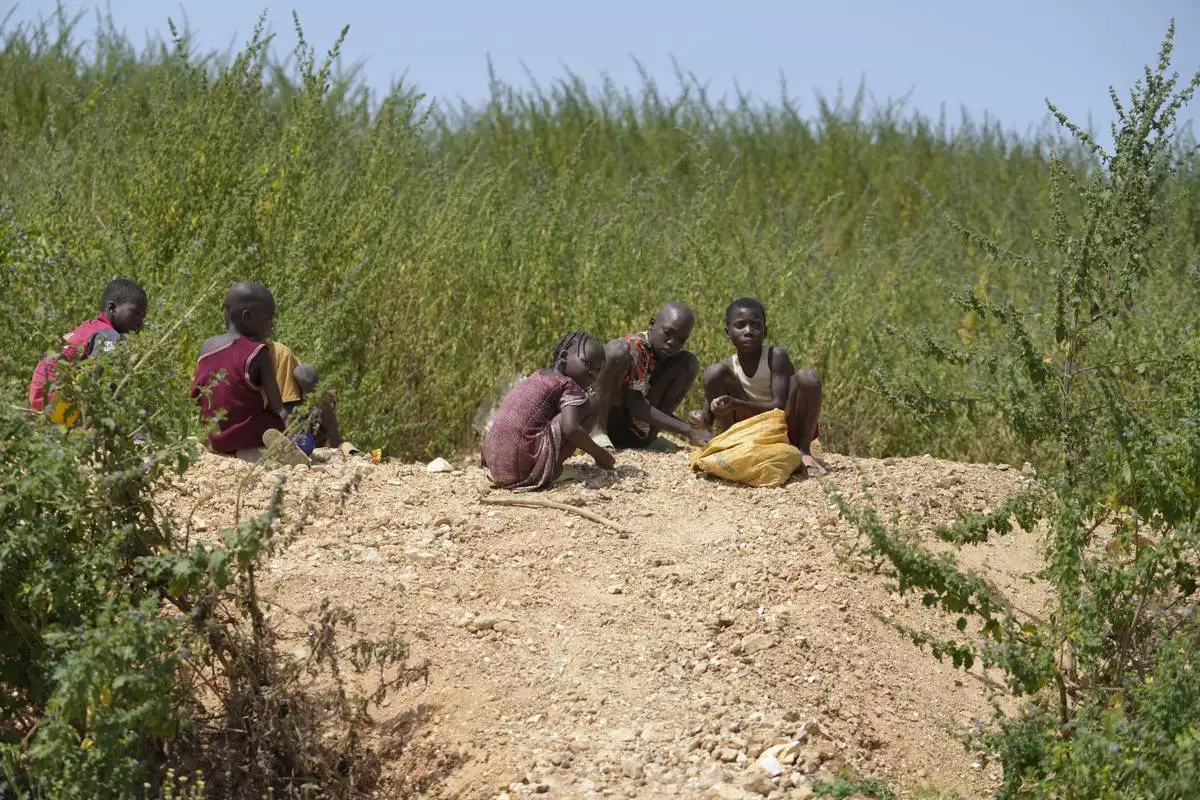
Juliet Samaniya, 6, chips at a rock with other children at an illegal lithium mining site in Paseli, Nigeria, Tuesday, Nov 5, 2024. (AP Photo/Sunday Alamba)
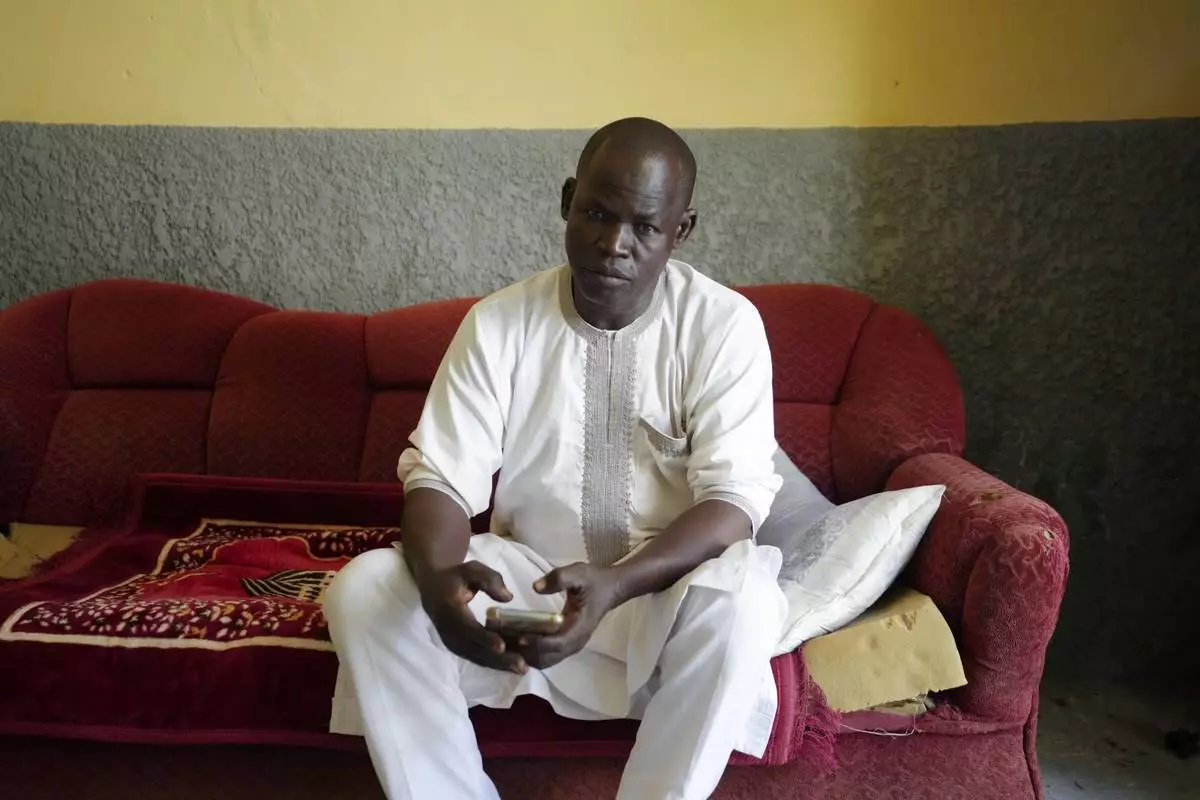
Aliyu Ibrahim, a lithium merchant, speaks with The Associated Press about his business in Nasarawa, Nigeria, Tuesday, Nov 5, 2024. (AP Photo/Sunday Alamba)
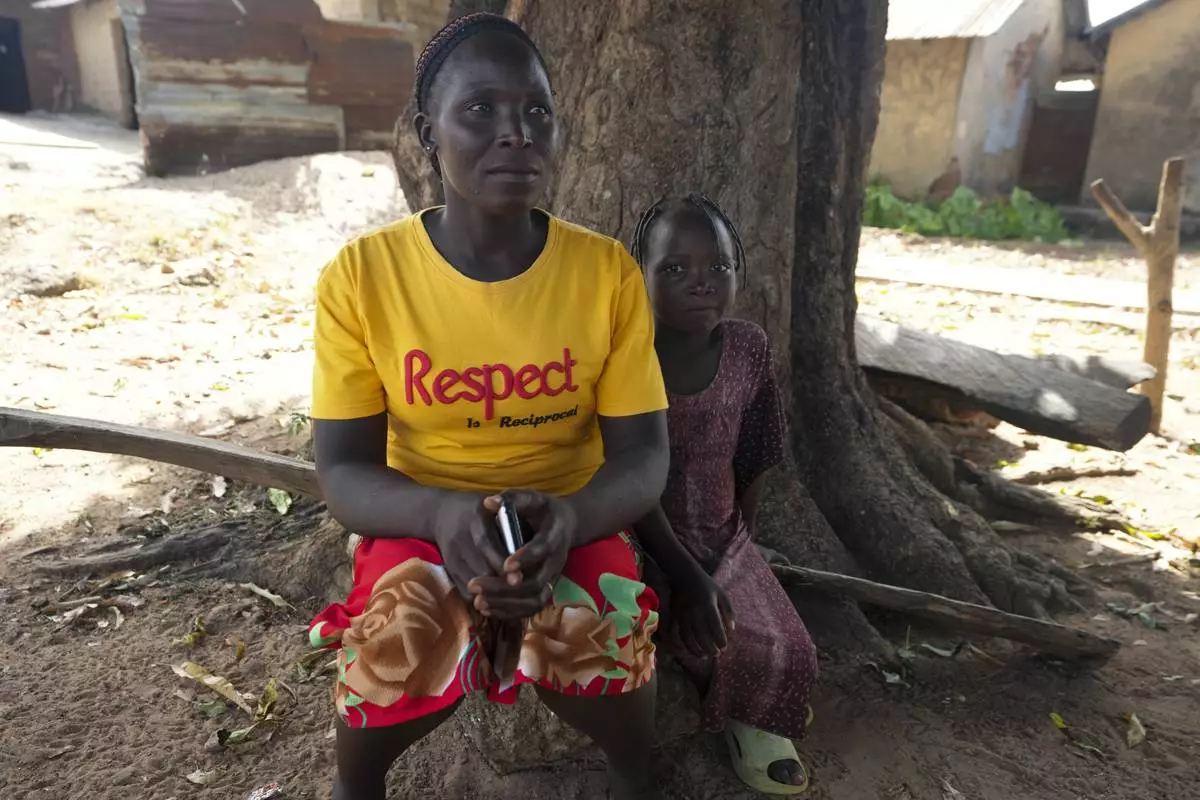
Abigail Samaniya, left, mother of Juliet Samaniya, right, 6, sit together as they speak with The Associated Press in Paseli, Nigeria, Tuesday, Nov 5, 2024. (AP Photo/Sunday Alamba)
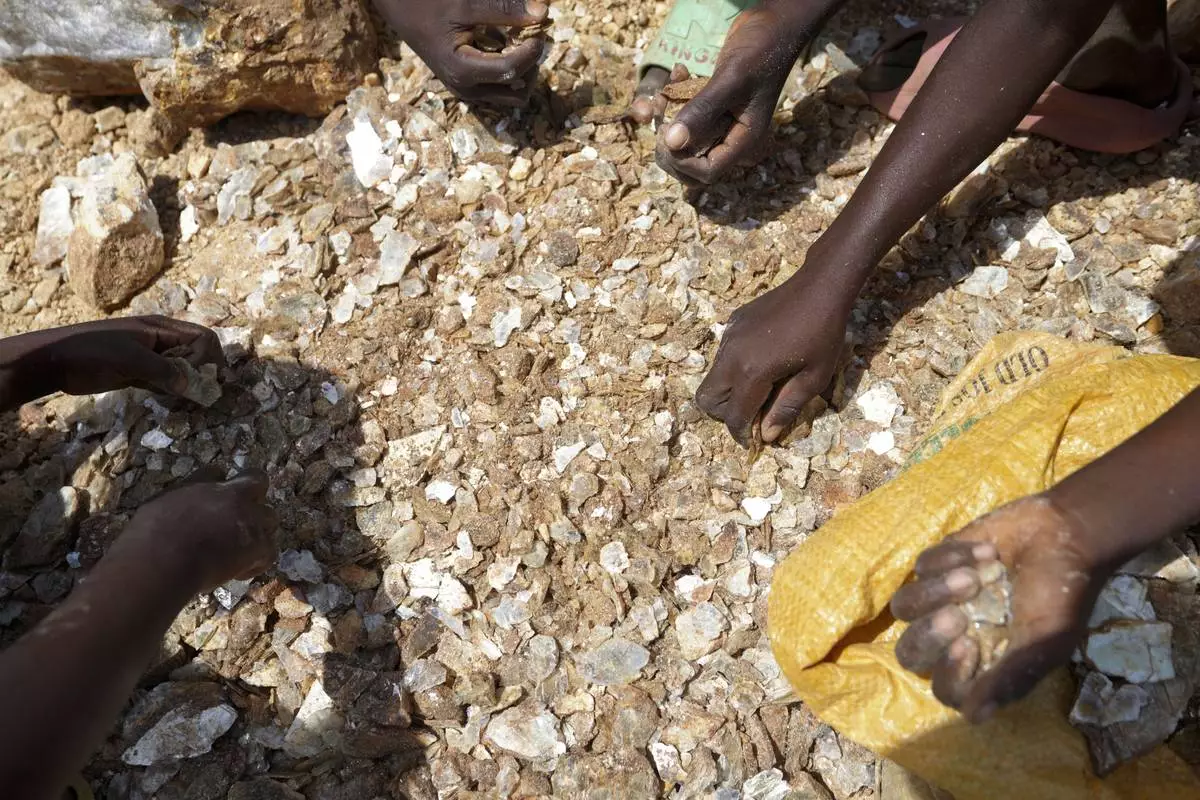
Juliet Samaniya, 6, works with other children at an illegal lithium mining site in Paseli, Nigeria, Tuesday, Nov 5, 2024. (AP Photo/Sunday Alamba)
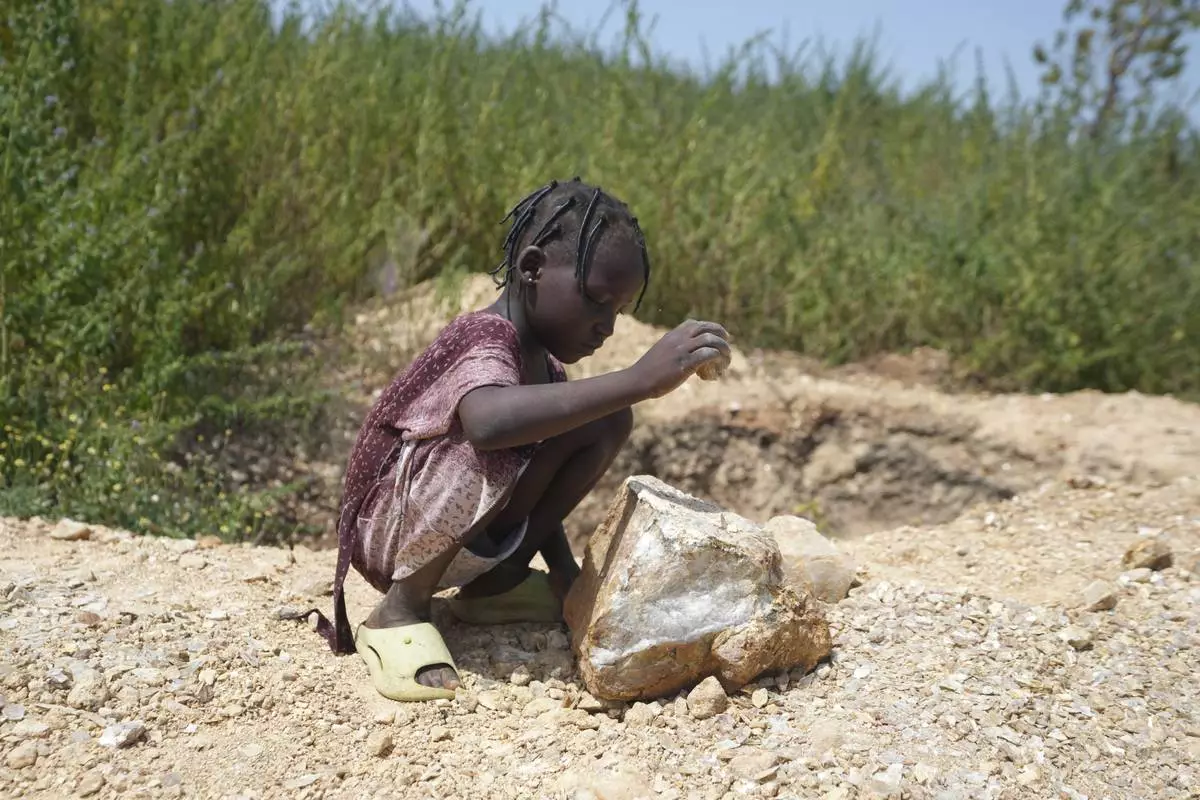
Juliet Samaniya, 6, chips at a rock with a stone tool at an illegal lithium mining site in Paseli, Nigeria, Tuesday, Nov 5, 2024. (AP Photo/Sunday Alamba)
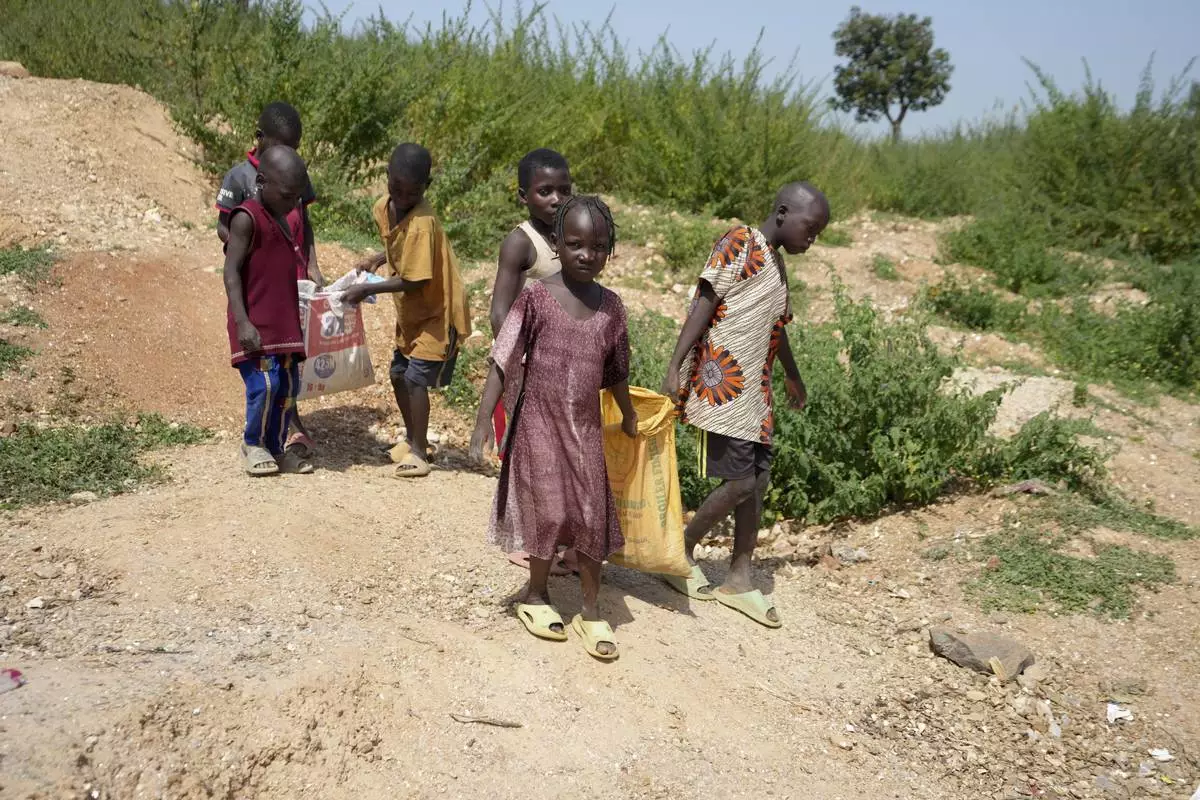
Juliet Samaniya, 6, carries a bag of lithium with other children at an illegal mining site in Paseli, Nigeria, Tuesday, Nov 5, 2024. (AP Photo/Sunday Alamba)