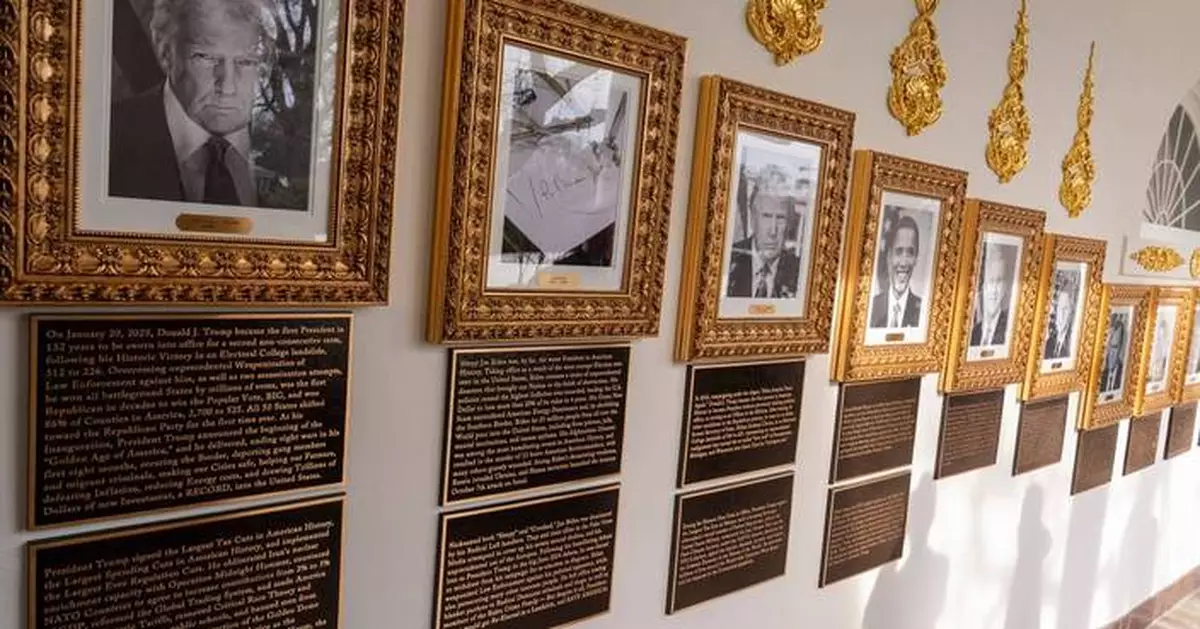
WASHINGTON (AP) — President Donald Trump has affixed partisan plaques to the portraits of all U.S. commanders in chief, himself included, on his Presidential Walk of Fame at the White House, describing Joe Biden as “sleepy,” Barack Obama as “divisive” and Ronald Reagan as a fan of a young Trump.
The additions, first seen publicly Wednesday, mark Trump's latest effort to remake the White House in his own image, while flouting the protocols of how presidents treat their predecessors and doubling down on his determination to reshape how U.S. history is told.
Click to Gallery
New plaques of explanatory text have been placed underneath presidential portraits on the Colonnade at the White House, Wednesday, Dec. 17, 2025, in Washington. (AP Photo/Alex Brandon)
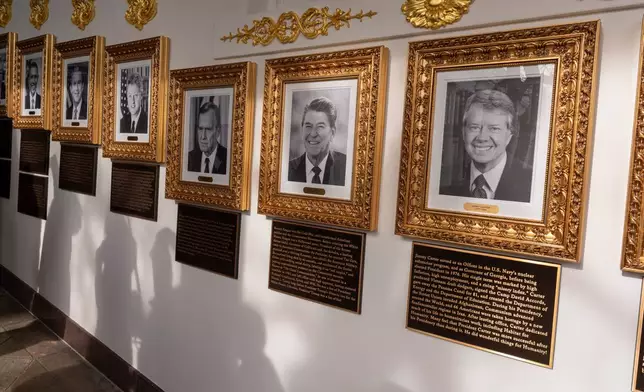
New plaques of explanatory text have been placed underneath presidential portraits on the Colonnade at the White House, Wednesday, Dec. 17, 2025, in Washington. (AP Photo/Alex Brandon)
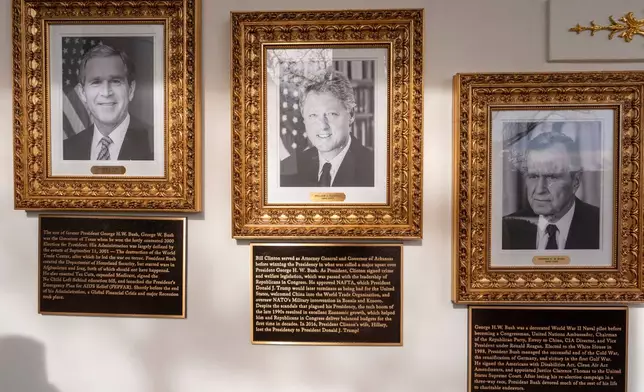
New plaques of explanatory text have been placed underneath presidential portraits on the Colonnade at the White House, Wednesday, Dec. 17, 2025, in Washington. (AP Photo/Alex Brandon)
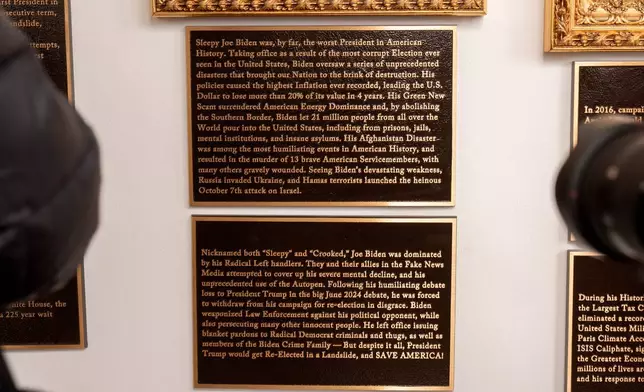
New plaques of explanatory text are seen beneath a framed portrait in the space for former President Joe Biden on the Presidential Walk of Fame on the Colonnade of the White House, Wednesday, Dec. 17, 2025, in Washington. (AP Photo/Mark Schiefelbein)
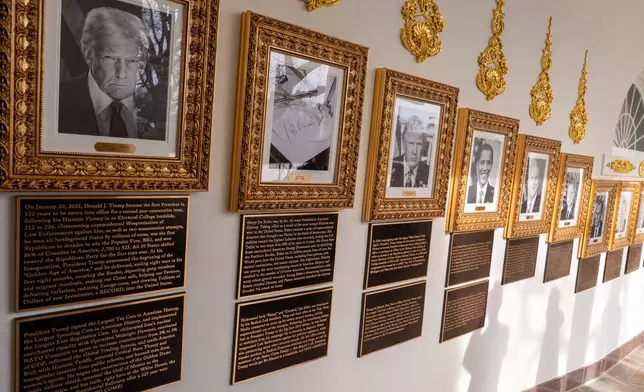
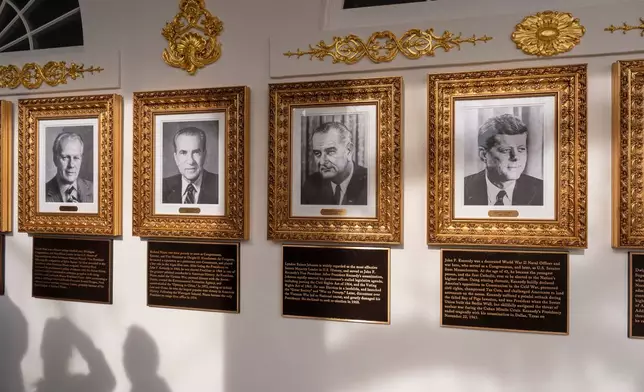
New plaques of explanatory text have been placed underneath presidential portraits on the Colonnade at the White House, Wednesday, Dec. 17, 2025, in Washington. (AP Photo/Alex Brandon)
“The plaques are eloquently written descriptions of each President and the legacy they left behind,” White House press secretary Karoline Leavitt said in a statement describing the installation in the colonnade that runs from the West Wing to the residence. “As a student of history, many were written directly by the President himself.”
Indeed, the Trumpian flourishes include the president’s typical bombastic language and haphazard capitalization. They also highlight Trump's fraught relationships with his more recent predecessors.
An introductory plaque tells passersby that the exhibit was “conceived, built, and dedicated by President Donald J. Trump as a tribute to past Presidents, good, bad, and somewhere in the middle.”
Besides the Walk of Fame and its new plaques, Trump has adorned the Oval Office in gold and razed the East Wing in preparation for a massive ballroom. Separately, his administration has pushed for an examination of how Smithsonian exhibits present the nation’s history, and he is playing a strong hand in how the federal government will recognize the nation's 250th anniversary in 2026.
Here's a look at how Trump's colonnade exhibit tells the presidential story.
Joe Biden is still the only president in the display not to be recognized with a gilded portrait. Instead, Trump chose an autopen, reflecting his mockery of Biden’s age and assertions that Biden was not up to the job.
Biden, who defeated Trump in the 2020 election and dropped out of the 2024 election before their pending rematch, is introduced as “Sleepy Joe” and “by far, the worst President in American History” who “brought our Nation to the brink of destruction.”
Two plaques blast Biden for inflation and his energy and immigration policy, among other things. The text also blames Biden for Russian President Vladimir Putin's invasion of Ukraine and asserts falsely that Biden was elected fraudulently.
Biden’s post-White House office had no comment on his plaque.
The 44th president is described as “a community organizer, one term Senator from Illinois, and one of the most divisive political figures in American History."
The plaque calls Obama's signature domestic achievement “the highly ineffective ‘Unaffordable Care Act."
And it notes that Trump nixed other major Obama achievements: “the terrible Iran Nuclear Deal ... and ”the one-side Paris Climate Accords."
An aide to Obama also declined comment.
George W. Bush, who notably did not speak to Trump when they were last together at former President Jimmy Carter's funeral, appears to win approval for creating the Department of Homeland Security and leading the nation after the terrorist attacks of Sept. 11, 2001.
But the plaque decries that Bush “started wars in Afghanistan and Iraq, both of which should not have happened.”
An aide to Bush didn’t return a message seeking comment.
The 42nd president, once a friend of Trump's, gets faint praise for major crime legislation, an overhaul of the social safety net and balanced budgets.
But his plaque notes Clinton secured those achievements with a Republican Congress, the help of the 1990s “tech boom” and “despite the scandals that plagued his Presidency.”
Clinton's recognition describes the North American Free Trade Agreement, another of his major achievements, as “bad for the United States” and something Trump would “terminate” during his first presidency. (Trump actually renegotiated some terms with Mexico and Canada but did not scrap the fundamental deal.)
His plaque ends with the line: “In 2016, President Clinton's wife, Hillary, lost the Presidency to President Donald J. Trump!”
An aide to Clinton did not return a message seeking comment.
The broadsides dissipate the further back into history the plaques go.
Republican George H.W. Bush, who died during Trump's first term, is recognized for his lengthy resume before becoming president, along with legislation including the Clean Air Act and Americans With Disabilities Act — despite Trump's administration relaxing enforcement of both. The elder Bush's plaque does not note that he, not Clinton, first pushed the major trade law that became NAFTA.
Lyndon Johnson’s plaque credits the Texas Democrat for securing the Civil Rights Act of 1964 and Voting Rights Act of 1965 (seminal laws that Trump’s administration interprets differently than previous administrations). It correctly notes that discontent over Vietnam led to LBJ not seeking reelection in 1968.
Democrat John F. Kennedy, the uncle of Trump's health secretary, Robert F. Kennedy Jr., is credited as a World War II “war hero” who later used “stirring rhetoric” as president in opposition to communism.
Republican Richard Nixon’s plaque states plainly that the Watergate scandal led to his resignation.
While Trump spared most deceased presidents of harsh criticism, he jabbed at one of his regular targets, the media — this time across multiple centuries: Andrew Jackson’s plaque says the seventh president was “unjustifiably treated unfairly by the Press, but not as viciously and unfairly as President Abraham Lincoln and President Donald J. Trump would, in the future, be.”
With two presidencies, Trump gets two displays. Each is full of praise and superlatives — “the Greatest Economy in the History of the World.” He calls his 2016 Electoral College margin of 304-227 a “landslide.”
Trump's second-term plaque notes his popular vote victory — something he did not achieve in 2016 — and concludes with “THE BEST IS YET TO COME.”
Meanwhile, the introductory plaque presumes Trump’s addition will be a White House fixture once he is no longer president: “The Presidential Walk of Fame will long live as a testament and tribute to the Greatness of America.”
Barrow reported from Atlanta.
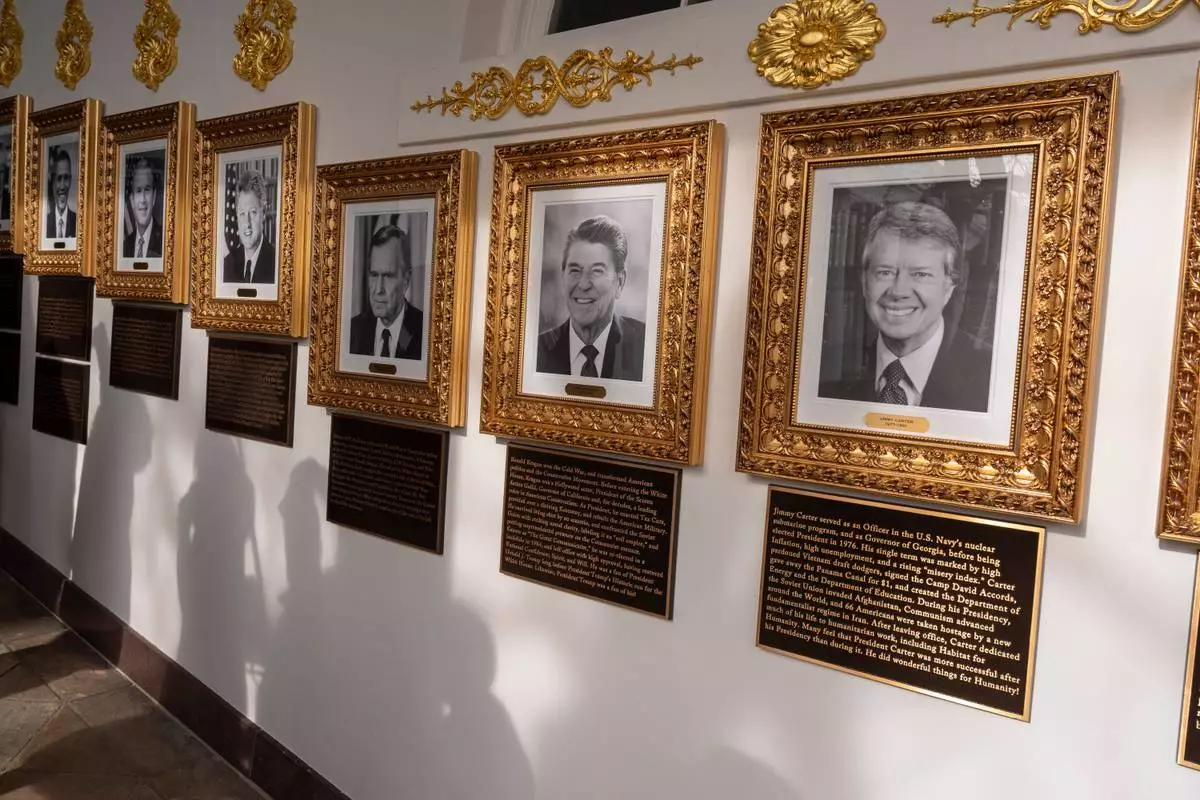
New plaques of explanatory text have been placed underneath presidential portraits on the Colonnade at the White House, Wednesday, Dec. 17, 2025, in Washington. (AP Photo/Alex Brandon)
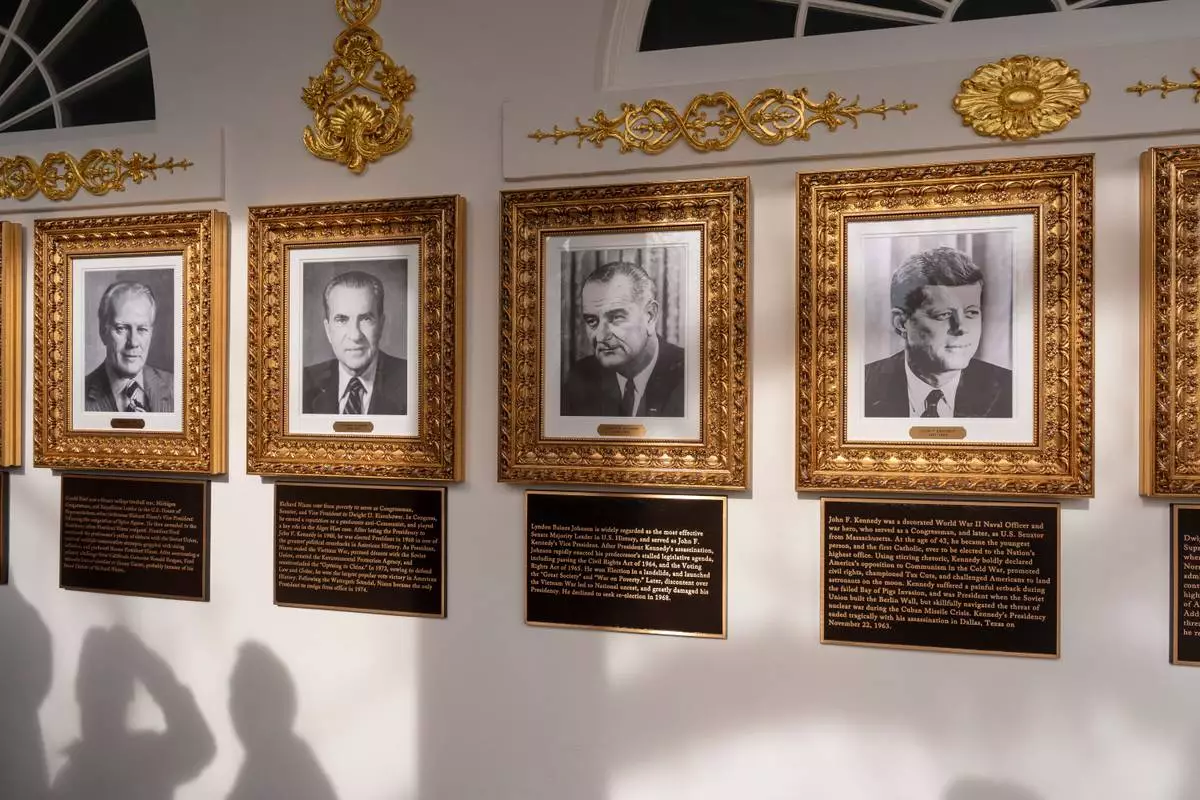
New plaques of explanatory text have been placed underneath presidential portraits on the Colonnade at the White House, Wednesday, Dec. 17, 2025, in Washington. (AP Photo/Alex Brandon)
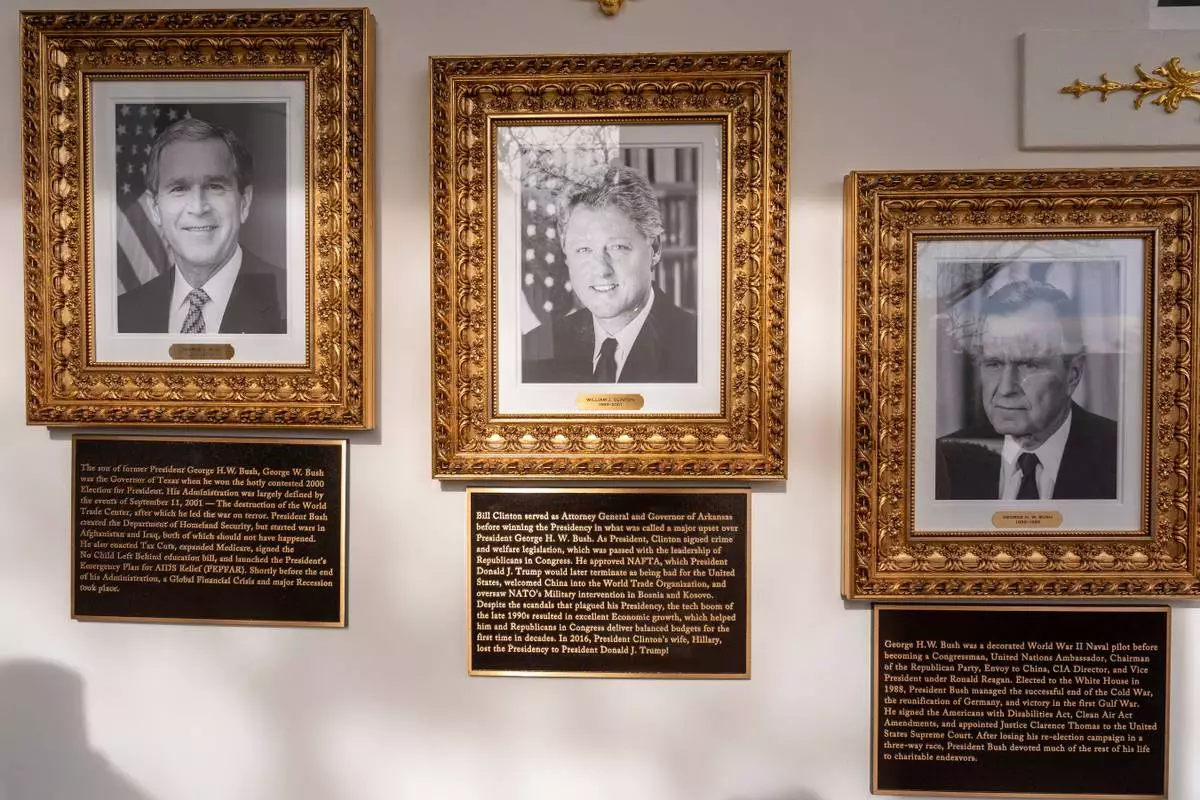
New plaques of explanatory text have been placed underneath presidential portraits on the Colonnade at the White House, Wednesday, Dec. 17, 2025, in Washington. (AP Photo/Alex Brandon)
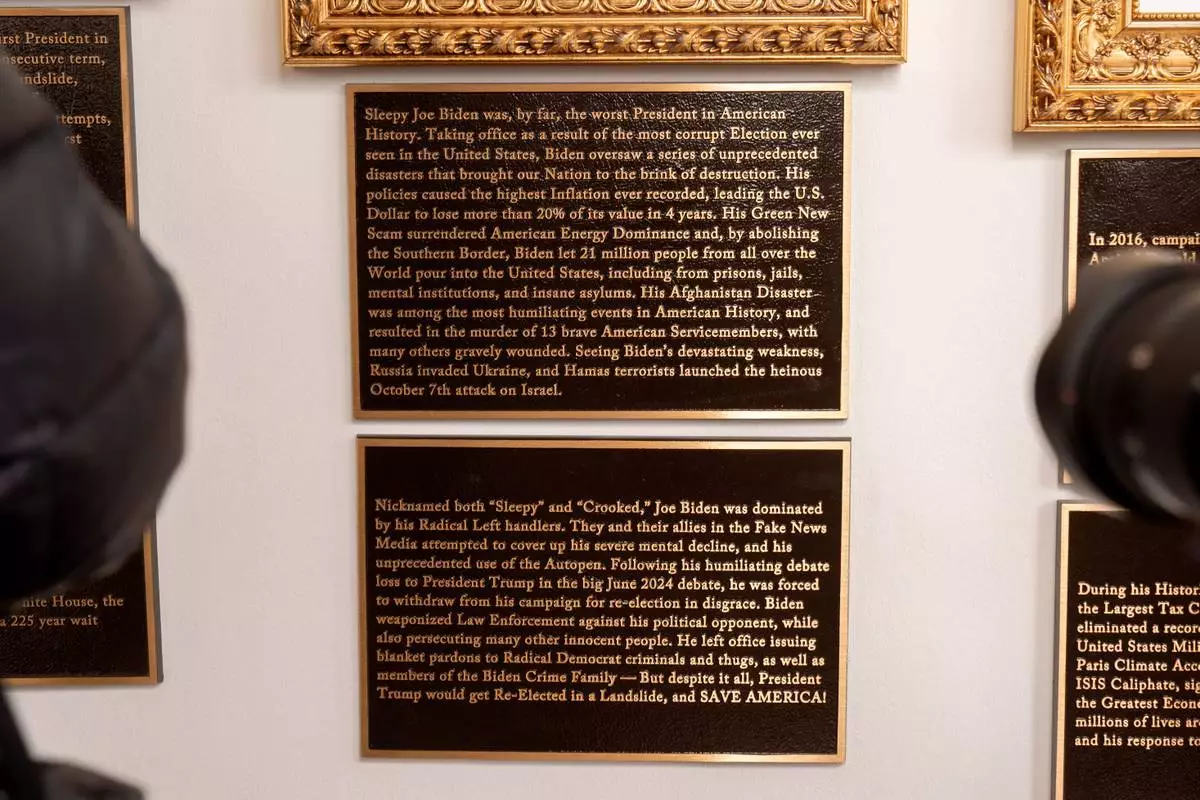
New plaques of explanatory text are seen beneath a framed portrait in the space for former President Joe Biden on the Presidential Walk of Fame on the Colonnade of the White House, Wednesday, Dec. 17, 2025, in Washington. (AP Photo/Mark Schiefelbein)
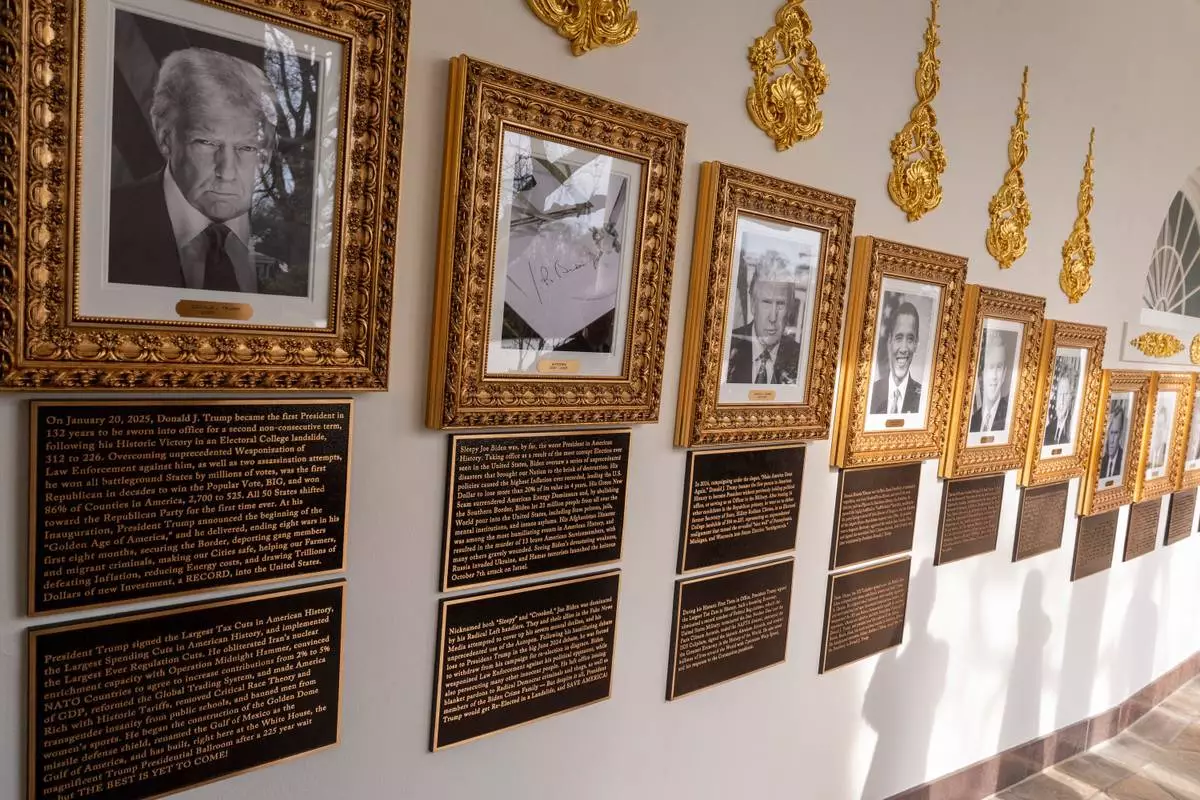
New plaques of explanatory text have been placed underneath presidential portraits on the Colonnade at the White House, Wednesday, Dec. 17, 2025, in Washington. (AP Photo/Alex Brandon)