Skip to Content Facebook Feature Image

Trump keeps telling America he's winning in Iran. He's less clear in explaining how the war ends

News

Trump keeps telling America he's winning in Iran. He's less clear in explaining how the war ends
News

News

Trump keeps telling America he's winning in Iran. He's less clear in explaining how the war ends

2026-03-12 06:10 Last Updated At:06:20

WASHINGTON (AP) — Facing jittery global markets and drooping poll numbers since launching a war with Iran, President Donald Trump has cycled from calls for “unconditional surrender” to sounding amenable to an end state in which Iran trades one hard-line ayatollah for another.

Shifting comments from the Republican president and his top aides are adding to the precariousness of the 12-day-old conflict, which is impacting nearly every corner of the Middle East and causing economic tremors around the globe. With neither side budging, the war is now on an unpredictable path and a credible endgame is unclear.

More Images
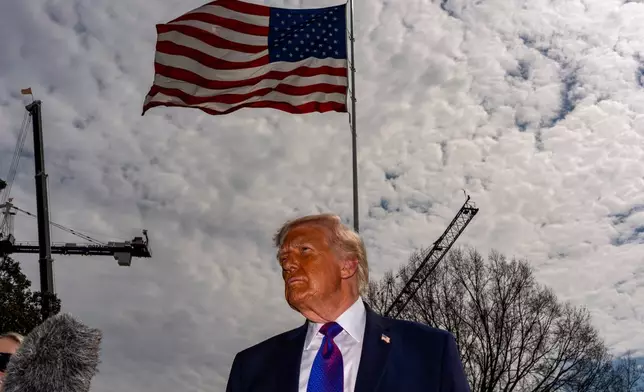
President Donald Trump speaks with reporters before departing on Marine One from the South Lawn of the White House, Wednesday, March 11, 2026, in Washington. (AP Photo/Alex Brandon)
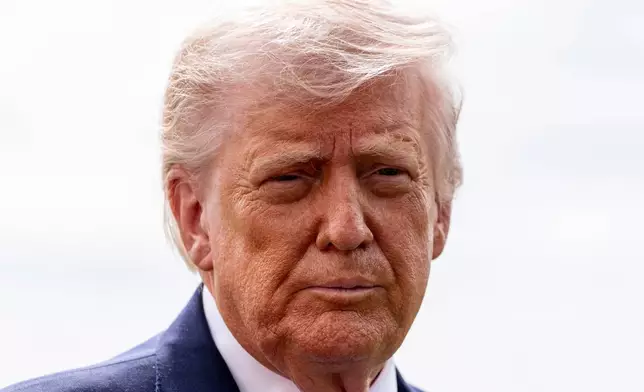
President Donald Trump speaks with reporters before departing on Marine One from the South Lawn of the White House, Wednesday, March 11, 2026, in Washington. (AP Photo/Alex Brandon)
President Donald Trump speaks with reporters before departing on Marine One from the South Lawn of the White House, Wednesday, March 11, 2026, in Washington. (AP Photo/Alex Brandon)

President Donald Trump speaks with reporters before departing on Marine One from the South Lawn of the White House, Wednesday, March 11, 2026, in Washington. (AP Photo/Alex Brandon)

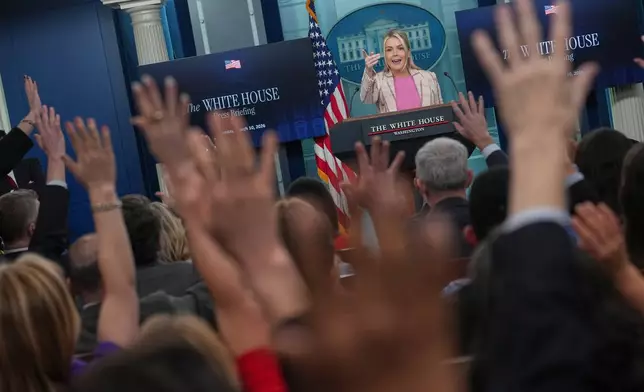
White House press secretary Karoline Leavitt speaks with reporters in the James Brady Press Briefing Room at the White House, Tuesday, March 10, 2026, in Washington. (AP Photo/Julia Demaree Nikhinson)
White House press secretary Karoline Leavitt speaks with reporters in the James Brady Press Briefing Room at the White House, Tuesday, March 10, 2026, in Washington. (AP Photo/Julia Demaree Nikhinson)

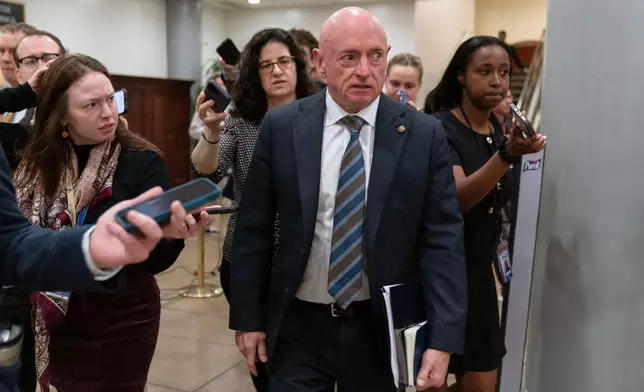
Mark Kelly, D-Ariz., leaves after a closed door briefing on the Iran war before the Senate Armed Services Committee at the Capitol Tuesday, March 10, 2026, in Washington. (AP Photo/Jose Luis Magana)
Mark Kelly, D-Ariz., leaves after a closed door briefing on the Iran war before the Senate Armed Services Committee at the Capitol Tuesday, March 10, 2026, in Washington. (AP Photo/Jose Luis Magana)

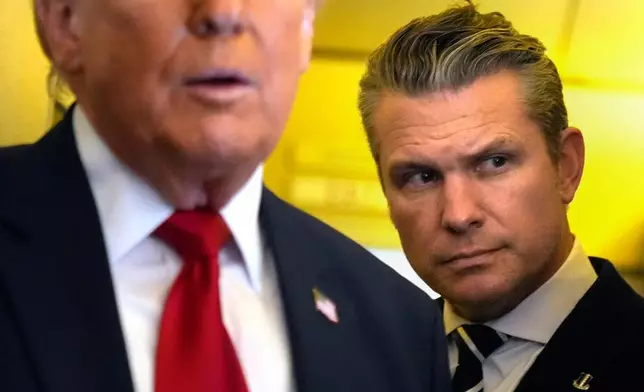
Defense Secretary Pete Hegseth listens as President Donald Trump speaks to reporters while traveling aboard Air Force One en route from Dover Air Force Base, Del., to Miami, Saturday, March 7, 2026. (AP Photo/Mark Schiefelbein)
Defense Secretary Pete Hegseth listens as President Donald Trump speaks to reporters while traveling aboard Air Force One en route from Dover Air Force Base, Del., to Miami, Saturday, March 7, 2026. (AP Photo/Mark Schiefelbein)

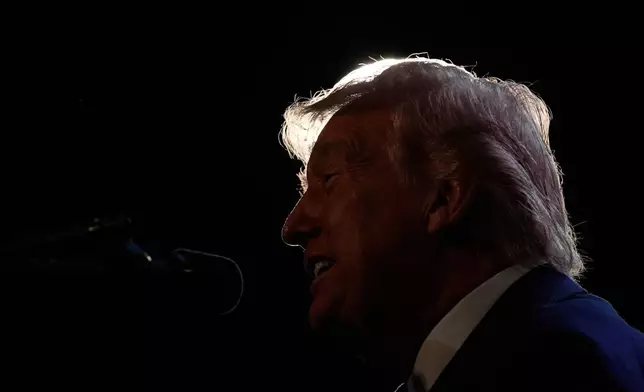
President Donald Trump speaks at the Republican Members Issues Conference, Monday, March 9, 2026, at Trump National Doral Miami in Doral, Fla. (AP Photo/Mark Schiefelbein)

President Donald Trump speaks at the Republican Members Issues Conference, Monday, March 9, 2026, at Trump National Doral Miami in Doral, Fla. (AP Photo/Mark Schiefelbein)

Defense Secretary Pete Hegseth said Tuesday it was up to Trump “whether it’s the beginning, the middle or the end” of the war. Trump, during the course of one speech at a House Republican gathering Monday, went from calling the war a “short-term excursion” that could end soon to proclaiming “we haven’t won enough."

“We have hit them harder than virtually any country in history has been hit, and we’re not finished yet,” Trump told reporters at the White House on Wednesday.

The vacillation has fueled criticism from those who say Trump lacks a clear goal. “They didn’t have a plan," Sen. Mark Kelly, D-Ariz., told reporters. "They have no timeline. And because of that, they have no exit strategy.”

Since ordering the Iran bombardment, Trump has continually shifted his timelines and goals for the war.

Over the past few days, Trump has called for the “unconditional surrender" of Iran's leaders, while suggesting he had already succeeded in achieving his objective of decimating Iran’s military.

At the same time, Trump's team has sought to soothe anxious Americans that the war will not be long and drawn out even as the president has insisted he has not ruled out the option of using U.S. ground troops.

The U.S. military says it has effectively destroyed the Iranian navy and made huge strides in defanging Iran’s ability to launch missiles and drones at its neighbors. Yet the critical Strait of Hormuz, through which roughly 20% of the world’s oil passes on a typical day, remains essentially closed to business, and Iranian leaders are unbowed.

The Revolutionary Guard said Iran would not allow “a single liter of oil” through the vital waterway until the United States stopped its bombing campaign. Ali Larijani, Iran’s top national security official, offered a menacing message on Tuesday after Trump had threatened to attack Iran “TWENTY TIMES HARDER” if Tehran stopped oil flowing through the strait.

“The sacrificial nation of Iran doesn’t fear your empty threats,” Larijani wrote on X. “Even those bigger than you couldn’t eliminate Iran. Be careful not to get eliminated yourself.”

Trump ally Newt Gingrich, a former Republican House speaker, said the administration should have moved on securing the strait on Day One of the conflict.

“If they can’t keep it open, this war will in fact be an American defeat before very long, because the entire world, including the American people, will react to the price of oil if the strait stay closed very long,” Gingrich said in an appearance on Fox Business.

Trump has struggled to make his case to Americans about why preemptive action against Iran was necessary and how it squared with his pledge to keep the United States out of the “forever wars” of the past two decades. Thus far, seven U.S. troops have been killed and about 140 injured in the retaliatory salvos from Iran.

One of several reasons Trump has offered to justify launching the war was that he had a “feeling” that Iran was getting set to attack the U.S.

White House press secretary Karoline Leavitt slightly amended that position, telling reporters that the president “had a feeling” that was “based on fact.”

But Pentagon officials have told congressional staffers in private briefings that the U.S. does not have intelligence indicating that Iran was planning to preemptively attack the U.S.

Recent polling shows Trump's decision to attack Iran has not come with the rallying-around-the-flag effect that has typically accompanied the start of recent U.S. wars.

About half of voters in Quinnipiac and Fox News polls said the U.S. military action in Iran makes the U.S. “less safe,” while only about 3 in 10 in each poll said it made the country safer. A CNN poll found about half of U.S. adults thought the military action would make Iran “more of a threat” to the U.S., while only about 3 in 10 thought it would lessen the danger.

In that CNN poll, about 6 in 10 U.S. adults said they trusted Trump “not much” or “not at all” to make the right decisions about the U.S. use of force in Iran.

European allies are treading carefully after British Prime Minister Keir Starmer and Spanish Prime Minister Pedro Sánchez faced the wrath of Trump, who deemed them not sufficiently supportive in backing his war of choice.

Trump on Wednesday lashed out again at Spain, which has said it will not allow the U.S. to use jointly operated bases in southern Spain in any strikes not covered by the U.N. charter.

“I think they've been very bad — not good at all,” Trump said. “We may cut off trade with Spain.”

Even German Chancellor Friedrich Merz, who has been broadly supportive of the U.S.-Israeli campaign against Iran, said on Tuesday that “more questions arise with every day of war.”

Trump has chosen to deflect responsibility for the bombing of a girl's school in southern Iran on the first day of the conflict, killing at least 165 people.

Trump on Saturday blamed the attack on Iran, saying its security forces are "very inaccurate" with munitions.

On Monday, after the investigative group Bellingcat posted verified video that showed a U.S. Tomahawk cruise missile hitting a Revolutionary Guard facility near the school, causing the explosion, Trump again insisted it could have been Iran's fault but said that he would accept whatever a U.S. investigation into the matter might find.

The president erroneously claimed that Tehran had access to Tomahawks, a U.S.-manufactured weapon system that is only available to the U.S. and a few close allies.

Asked by a reporter, Leavitt did not directly answer why Trump falsely asserted that Iran has access to the U.S.-made missile.

Instead, she responded in part that “the president has a right to share his opinions with the American public” while noting “he has said he’ll accept the conclusion of that investigation.”

Senate Minority Leader Chuck Schumer, D-N.Y., told reporters that Trump's claim “is beyond asinine.”

“Again, he says whatever pops into his head no matter what the truth is," Schumer said. “And we all know he lies, but on something as formidable as this, it’s appalling.”

Sen. Kevin Cramer, R-N.D., was among Trump allies gently making the case that it was important for the administration to clarify what happened to the school.

Cramer said the military must “do everything you can to eliminate those mistakes going forward.”

“But you also can’t undo it," he added.

This story has been corrected to show seven, not eight, U.S. troops have been killed.

Associated Press writers Geir Moulson in Berlin and Joey Cappelletti, Ben Finley and Linley Sanders contributed to this report.
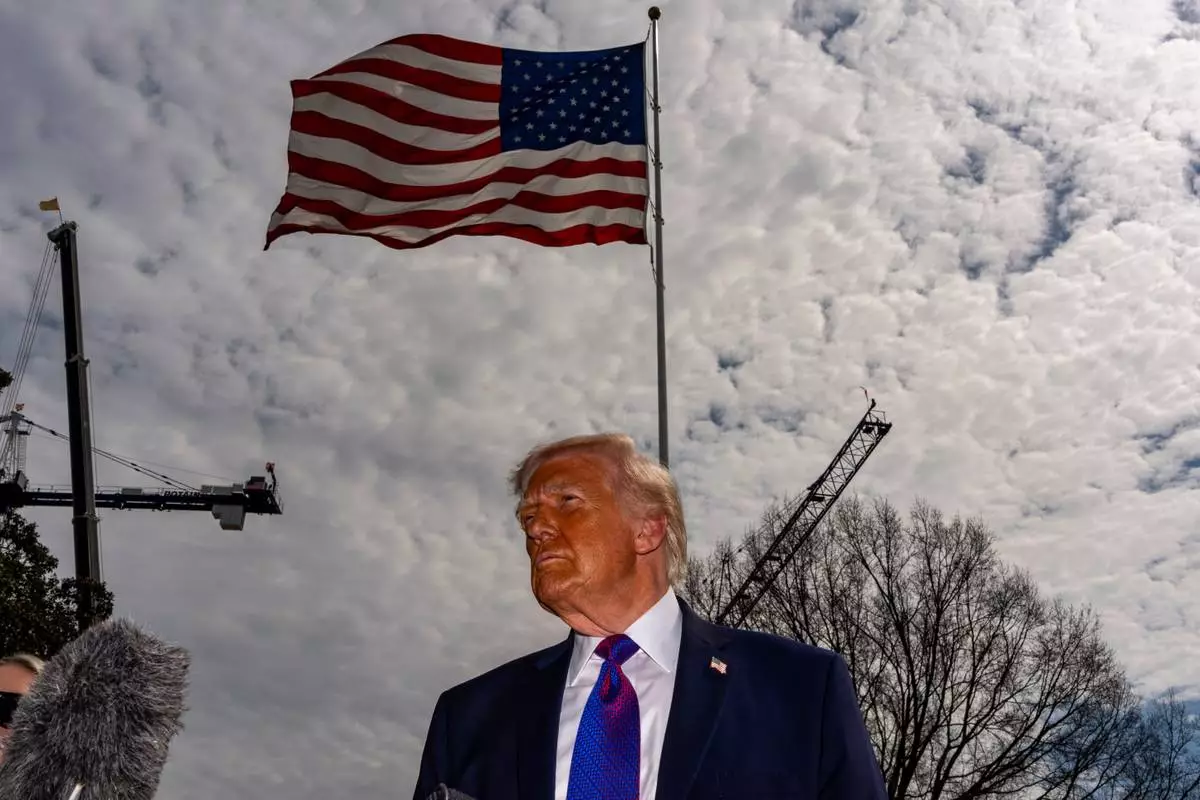
President Donald Trump speaks with reporters before departing on Marine One from the South Lawn of the White House, Wednesday, March 11, 2026, in Washington. (AP Photo/Alex Brandon)
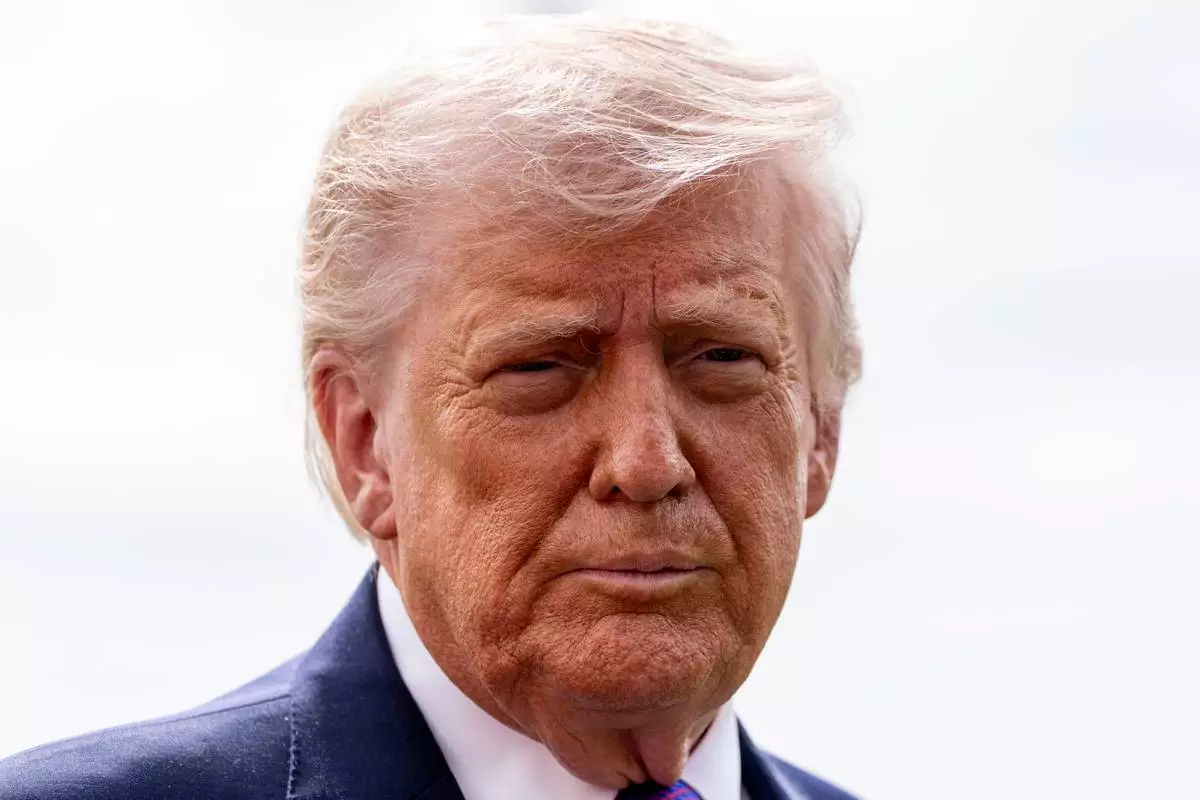
President Donald Trump speaks with reporters before departing on Marine One from the South Lawn of the White House, Wednesday, March 11, 2026, in Washington. (AP Photo/Alex Brandon)

President Donald Trump speaks with reporters before departing on Marine One from the South Lawn of the White House, Wednesday, March 11, 2026, in Washington. (AP Photo/Alex Brandon)

President Donald Trump speaks with reporters before departing on Marine One from the South Lawn of the White House, Wednesday, March 11, 2026, in Washington. (AP Photo/Alex Brandon)

White House press secretary Karoline Leavitt speaks with reporters in the James Brady Press Briefing Room at the White House, Tuesday, March 10, 2026, in Washington. (AP Photo/Julia Demaree Nikhinson)

White House press secretary Karoline Leavitt speaks with reporters in the James Brady Press Briefing Room at the White House, Tuesday, March 10, 2026, in Washington. (AP Photo/Julia Demaree Nikhinson)

Mark Kelly, D-Ariz., leaves after a closed door briefing on the Iran war before the Senate Armed Services Committee at the Capitol Tuesday, March 10, 2026, in Washington. (AP Photo/Jose Luis Magana)

Mark Kelly, D-Ariz., leaves after a closed door briefing on the Iran war before the Senate Armed Services Committee at the Capitol Tuesday, March 10, 2026, in Washington. (AP Photo/Jose Luis Magana)

Defense Secretary Pete Hegseth listens as President Donald Trump speaks to reporters while traveling aboard Air Force One en route from Dover Air Force Base, Del., to Miami, Saturday, March 7, 2026. (AP Photo/Mark Schiefelbein)

Defense Secretary Pete Hegseth listens as President Donald Trump speaks to reporters while traveling aboard Air Force One en route from Dover Air Force Base, Del., to Miami, Saturday, March 7, 2026. (AP Photo/Mark Schiefelbein)

President Donald Trump speaks at the Republican Members Issues Conference, Monday, March 9, 2026, at Trump National Doral Miami in Doral, Fla. (AP Photo/Mark Schiefelbein)

President Donald Trump speaks at the Republican Members Issues Conference, Monday, March 9, 2026, at Trump National Doral Miami in Doral, Fla. (AP Photo/Mark Schiefelbein)
The ongoing American-Israeli war with Iran, for all its complexity and global effects, boils down to a single question: Who can take the pain the longest? A surge in oil prices points to what may be Iran’s most effective weapon and the United States’ biggest vulnerability in continuing the campaign: Damaging the world economy.

Wednesday’s major developments include Iranian attacks against commercial ships around the Strait of Hormuz and Dubai International Airport, escalating a campaign of squeezing the oil-rich Gulf region as global energy concerns mount.

The U.S. campaign of airstrikes in Iran is now in its 12th day with no end in sight. A U.S. commander says artificial intelligence has helped the military hit more than 5,500 targets in the country. An Israeli intelligence assessment also indicates that Iran’s new supreme leader, Ayatollah Mojtaba Khamenei, was wounded at the start of the war.

Witnesses in Tehran said they heard loud airstrikes and heavy anti-aircraft fire Wednesday, and columns of smoke made the sky overcast as a layer of gray dust settled over the city. The air is filled with the distinctive smell of burnt powder and gasoline. They spoke on condition of anonymity to avoid reprisal.

The Israeli military is also striking Iran and its militant ally Hezbollah in Lebanon, where more than 800,000 people have been displaced by the fighting.

Here's the latest:

Drone attacks were launched late Wednesday toward the cities of Erbil and Sulaymaniyah. One intercepted drone fell near the Divan Hotel in the Saad Abdullah Conference Hall complex in Erbil, a venue for high-level political meetings.

In southern Iraq, an oil vessel flying the Australian flag was struck near Khor Al-Zubair Port, according to two Iraqi navy officials who spoke on condition of anonymity because they were not authorized to comment publicly.

The attack occurred in a loading area within Iraqi territorial waters, the officials said, adding that 25 members of the crew were rescued. It was not immediately clear whether any others remained unaccounted for.

Videos circulating online showed a large vessel engulfed in flames, with massive plumes of fire and thick black smoke billowing into the sky.

No group immediately claimed responsibility for the attacks.

— By Stella Martany and Qassim Abdul-Zahra

“Trump is doing what I called for three days ago, after needlessly sowing additional chaos and uncertainty,” U.S. Senate Minority Leader Chuck Schumer said in a statement Wednesday. He added that Trump has “already created a lot more problems than this will solve – from the Strait of Hormuz blockade to his poorly planned and reckless war.″

Trump said Wednesday he’ll tap the oil reserve “and then we’ll fill it up.” He didn’t specify how many barrels of oil the U.S. would release.

Trump frequently criticized former President Joe Biden for tapping the oil reserve to try to lower gas prices.

Fire crews were working to contain a blaze Wednesday at the fuel storage tanks at Oman’s Port of Salalah, amid days of Iranian attacks, according to the Oman News Agency.

Kuwait’s foreign ministry condemned what it said was Iran’s targeting of the port and the fuel tanks, saying hitting such economic facilities was a “dangerous escalation” that threatened global trade. Videos showed thick plumes of black smoke and large flames rising from the fuel tanks.

The president said that after the strikes with Israel last summer on Iran’s nuclear program: “We obliterated it. They don’t have nuclear potential.”

But, Trump said, without offering specifics, that Iran “started again.”

“That’s why we got to finish it, right? We don’t want to go back every two years.”

Trump, along with others in his administration, have said as they justified the strikes on Iran that the country was weeks away from a nuclear weapon — despite claiming last summer’s strikes had destroyed the program.

Speaking at an event in Kentucky, the president said the U.S. has won the war in Iran but isn’t ready to end it.

“We don’t want to leave early, do we? We’ve got to finish the job,” the president said.

He said the U.S. knocked out 58 naval ships and eliminated Iran’s air force.

“You never like to say too early, ‘We won,’” he said. “We won.”

Iran’s U.N. Ambassador Amir Saeid Iravani said the resolution adopted by the Security Council on Wednesday, which does not mention that U.S. and Israeli strikes launched the war, “deliberately ignores the root causes of the current crisis.”

“The very purpose of this biased and politically motivated text, which was pushed by Israeli regime and the United States, is clear: to reverse the roles and positions of victim and aggressor,” Iravani told the 15-member council.

During an interview Wednesday with WKRC Local 12 in Cincinnati, Trump was asked about tapping the reserve and said, “Well, we’ll do that and then we’ll fill it up.”

He added, “Right now we’ll reduce it a little bit, and that brings the prices down.” He didn’t specify how many barrels of oil the U.S. would release.

Trump frequently criticized the administration of former President Joe Biden for tapping the reserve to try and bring down gas prices.

The Russian proposal failed to reach the nine votes needed to pass.

The one-page text makes no mention of Iran, Israel, the U.S. or the Gulf states — all countries involved in the conflict — but simply urges military activities to cease. It also condemns attacks on civilians and civilian infrastructure.

Russia, China, Pakistan and Somalia were the only countries that supported the draft resolution. Other nations called it hypocritical for Russia to call for end of hostilities despite its own war with Ukraine.

Vassily Nebenzia, Russia’s U.N. ambassador, had urged its adoption calling it “an impartial document” aimed at “de-escalating the situation.”

Even before the Iranian ambassador got to speak, Mike Waltz, the U.S. ambassador to the United Nations, said Tehran’s diplomat would present lies during the Security Council session on its actions in the region.

Waltz said Iran’s repeated claims that it is only targets U.S. military bases in the Gulf is a lie.

“These attacks were so brutal and so indiscriminate, as Iran shoots in all directions, that nations that previously had serious disagreements have now joined together,” he said. “They’ve now spoken as one voice.”

Simultaneous blasts rocked the Lebanese capital's densely populated southern suburbs — an area known as Dahiyeh — where large fires and plumes of smoke could be seen Wednesday evening.

The Israeli military said it would respond aggressively after Hezbollah fired dozens of rockets at the same time into northern Israel, in one of the largest attacks in the current conflict. Israel struck what it said was infrastructure belonging to the militant group.

The exchange marks an apparent escalation in the past week of fighting, which has killed more than 600 people in Lebanon and displaced about 800,000 others in the small country.

After abstaining from the U.N. Security Council resolution that demanded a halt to Iran’s attack on Gulf countries, the Chinese and Russian ambassadors defended their position, saying that the Bahrain proposal was “extremely unbalanced” in not mentioning the strikes against Tehran that began this war.

“It muddies up the cause and effect. And if someone who is not well-versed in international affairs reads this then this person will be left with the impression that Tehran, on its own volition, and out of malice, conducted an unprovoked attack on Arab states,” Russia’s U.N. Ambassador Vassily Nebenzia said during a Security Council session Wednesday.

Both Nebenzia and China’s U.N. envoy Fu Cong said they attempted to negotiate with Bahrain and the U.S. to include the initial strikes from Israel and the U.S. on Feb. 28 that launched the war, but the final resolution text ended up “unbalanced.”

“We’re basically talking about weeks, and not months, of supply,” said Bruce Bullock, director of the Maguire Energy Institute at Southern Methodist University.

Bullock said the 400 million barrels of crude oil are meant as a short-term bridge while markets wait to see how the war unfolds. If the conflict drags on or the Strait of Hormuz stays blocked, reserves may need to be released more slowly, he said.

But if the war ends soon, he added, the extra supply could trigger a sharp drop in oil prices.

Even as leaders in Iran say it’s “not possible” for the country to participate in this year’s World Cup, the U.S. president is indicating Iran’s team is still welcome in the United States.

Trump met privately with soccer chief Gianni Infantino on Tuesday at the White House, according to the FIFA president’s Instagram account.

During the meeting, Trump “reiterated that the Iranian team is, of course, welcome to compete in the tournament in the United States,” Infantino wrote in the Instagram post.

A White House official, speaking on condition of anonymity to discuss private conversations, confirmed Trump’s message to Infantino about Iran’s participation.

Since June, Iran has been subject to a travel ban into the U.S. as part of the Trump administration’s immigration crackdown. But athletes and coaches from the target nations are exempt, which means the Iranian team would be allowed in.

The U.S. is hosting the tournament with Canada and Mexico from June 11 to July 19.

▶ Read more

Shortly after ending their daily fast for Ramadan, displaced Palestinians sheltering west of Gaza City said they received phone calls from apparent Israeli military personnel ordering them to get out of the area within five minutes.

“They called us and told us to evacuate. We cannot breathe. And now they set our tents on fire. Where can we go?” said Ibtessal al-Shanbary, who escaped with a backpack and whatever small belongings she could hastily grab from her tent.

Anssar camp was struck three times Wednesday evening, witnesses said; the first two were warning strikes, and the last one was a major strike that sparked a huge fire and sent plumes of smoke into the sky.

The Israeli military did not immediately respond to a request for comment.

The 13-0 vote in the U.N.’s most powerful body reflects the isolated position Iran finds itself in, as it fires missiles and drones in retaliation for the ongoing U.S.-Israeli strikes.

China and Russia — two Iranian allies — abstained from the Wednesday’s vote, allowing it to be approved without using their powerful veto block it.

The draft resolution, supported by more than 130 member states, condemns Iran’s attacks on Bahrain, Jordan, Kuwait, Oman, Qatar, Saudi Arabia and the United Arab Emirates as a violation of international law and “a serious threat to international peace and security.”

“The message is clear,” said Bahrain’s U.N. Ambassador Jamal Alrowaiei. “The international community is resolute in rejecting these Iranian attacks against sovereign countries that are threatening the stability of the peoples, especially in a region of strategic importance to global economy, energy, security, and security of global trade.”

The U.S. president said to reporters while making a stop in Ohio that the U.S. “knocked out twice their leadership” in Iran, and added: “Now they have a new group coming up. Let’s see what happens to them.”

Hezbollah launched dozens of rockets at Israel on Wednesday night, the Israeli military said. One rocket hit a house near the town of Karmiel, lightly injuring two people, according to Israeli rescue services.

The Israeli military said it responded with a large wave of strikes targeting Hezbollah in the densely populated southern Beirut neighborhood of Dahiyeh.

The war with Iran has quickly tested America’s ability to combat the swarms of cheap drones that have become a staple of the modern battlefield after Ukraine and Russia demonstrated how effective they could be.

Experts and defense leaders stress that the U.S. military has been able to shoot down the majority of Iran’s drones and take out much of its drone capabilities. But critics said too often missiles that cost millions of dollars were used to down small drones that cost tens of thousands.

The U.S. is bringing an anti-drone system to the Middle East that has been tested in Ukraine, which had proposed a deal with the U.S. last year to offer its drone expertise. Such an agreement is yet to be made.

American forces are facing a steep learning curve as they scramble to deploy more cost-efficient defenses against Iran’s Shahed drones, which fly low and buzz like mopeds before smashing into their targets.

▶ Read more

Louisiana Sen. John Kennedy said that all indications point to the U.S. being responsible for a strike near a school in Iran that killed more than 165 people. He added that he has faith that the Trump administration “will take the appropriate steps.”

“This was a terrible thing that happened,” said Kennedy. “And it looks like it’s our missiles.”

Kennedy added that no matter the response from the U.S. if they are responsible for the strike, “the kids are still dead.”

“And I’m really sorry. But we will learn from it,” said Kennedy.

An eyewitness driving to Tehran described columns of smoke from bomb and missile explosions rising into the air across different parts of the capital, making the sky overcast, with a distinctive smell of burnt powder and gasoline.

Along the highway, people in civilian vehicles stopped cars for inspections. The witness spoke on condition of anonymity because of concern over repercussions.

A layer of gray dust has settled over the city and vehicle traffic was unusually light.

With Lebanon engulfed in another Israeli-Hezbollah conflict, the 29 nations condemned “in the strongest terms Hezbollah’s reckless decision to join the Iranian attacks against Israel.”

The statement also urged Israel “to abstain from attacks against civilian infrastructure and heavily populated areas and to respect the Lebanese sovereignty and its territorial integrity.” The countries called on all sides to uphold international law protecting civilians.

France’s U.N. Ambassador Jerome Bonnafont read the statement, surrounded by diplomats supporting it, mostly from European countries. The U.S., Russia and China did not sign.

Ambassador Ahmad Arafa told an emergency meeting of the U.N. Security Council that Israel “shows no respect for the laws of war and persists in its attacks on Lebanon” while Hezbollah also keeps attacking despite a government ban on its illegal military and security activities.

“We will not accept a return to the past,” he said. “The Lebanese people do not want war, and the Lebanese government is moving forward in implementing its decisions and will not backtrack.”

But Arafa said the priority today is stopping the war and protecting the Lebanese people, and he reiterated the government’s readiness to enter negotiations with Israel under international auspices for a truce, a halt to all its military operations and the withdrawal of its forces to internationally recognized borders.

Saying Lebanon is facing “an extremely dangerous moment and a humanitarian catastrophe,” Arafa urged international support and assistance “to help ease the burden of this crisis.”

U.N. Ambassador Mike Waltz told an emergency meeting of the U.N. Security Council that the United States supports the Lebanese government’s decision to prohibit Hezbollah’s military and security activities, and the government’s order for the group to immediately disarm.

The U.S. also welcomes Lebanon’s ban on all activities of Iran’s Islamic Revolutionary Guard Corps, he said.

“The world must come together now in supporting Lebanon’s efforts to exercise its sovereignty across every inch of Lebanese territory,” Waltz said.

He said the U.S. is responding to Hezbollah’s “recklessness” by providing humanitarian aid to hundreds of thousands of displaced Lebanese.

The retiring North Carolina senator told reporters Wednesday that he still wants to see the outcome of an investigation into who was responsible for a strike near a school in Iran that killed more than 165 people, mostly kids.

But he added that “the worst thing we can do, if, in fact, it was a horrible outcome from an American strike, is to try to pretend that it didn’t happen.”

“We shouldn’t gloss over it if we made a mistake,” Tillis said. “We should admit it and move on.”

Tillis added, however, that Iran bore responsibility for the school’s location, which was next to a Revolutionary Guard base and close to barracks for a naval unit.

Ninety-one children — nearly one in seven dead — were among the 634 people killed by Israeli fire since fighting broke out last week, Lebanon’s Health Ministry said. At least 47 women have been killed and more than 1,500 people wounded.

That’s up from 570 people the ministry reported killed as of Tuesday.

More than 800,000 people have been displaced, mostly from southern Lebanon and the capital’s southern suburbs, according to the Lebanese government, which is strapped for cash and has struggled to secure adequate shelter and aid for evacuees.

Israel’s widespread strikes in Lebanon are intensifying, while Iran-backed Hezbollah vows to keep firing missiles and drones into Israel and refuses to disarm.

Some 2,733 of these “trajectories” came from Israel along with 323 air attacks, while 1,387 came from Lebanon, United Nations peacekeeping chief Jean-Pierre Lacroix told the U.N. Security Council.

Each of those approximately 4,120 firings from both Israel and Hezbollah could represent multiple projectiles, he added.

Lacroix noted several incidents jeopardizing the safety and security of UNIFIL positions and peacekeepers, including serious injuries to a Ghanaian soldier.

The International Energy Agency’s decision to prop up the world’s oil supply sends “a clear signal aimed at lowering global prices,” French President Emmanuel Macron said after a video meeting by the Group of Seven leaders on the economic impact of the Iran war.

“We will take all necessary measures to encourage maximum production from all producers during this period,” he added.

Paris currently holds the rotating presidency of the G7 — France, the United States, Canada, Germany, Italy, Japan and the United Kingdom — a group of wealthy democracies with large, advanced economies.

A man, left, carries the body of his son, Kassem Younis, who was killed in an Israeli airstrike, during his funeral procession in the southern village of Chehabiyeh, Lebanon, Wednesday, March 11, 2026. (AP Photo/Mohammed Zaatari)

A man, left, carries the body of his son, Kassem Younis, who was killed in an Israeli airstrike, during his funeral procession in the southern village of Chehabiyeh, Lebanon, Wednesday, March 11, 2026. (AP Photo/Mohammed Zaatari)

This image released by the Royal Thai Navy shows Thai cargo ship, Mayuree Naree, that was struck and set ablaze in the Strait of Hormuz Wednesday, March 11, 2026. (Royal Thai Navy via AP)

This image released by the Royal Thai Navy shows Thai cargo ship, Mayuree Naree, that was struck and set ablaze in the Strait of Hormuz Wednesday, March 11, 2026. (Royal Thai Navy via AP)

Mourners attend the funeral procession for senior Iranian military officials and some civilians killed during the U.S.-Israel campaign, in Tehran, Iran, Wednesday, March 11, 2026. (AP Photo/Vahid Salemi)

Mourners attend the funeral procession for senior Iranian military officials and some civilians killed during the U.S.-Israel campaign, in Tehran, Iran, Wednesday, March 11, 2026. (AP Photo/Vahid Salemi)

Flames rise from an Israeli airstrike in Dahiyeh, Beirut's southern suburbs, Wednesday, March 11, 2026. (AP Photo/Hassan Ammar)

Flames rise from an Israeli airstrike in Dahiyeh, Beirut's southern suburbs, Wednesday, March 11, 2026. (AP Photo/Hassan Ammar)

People take cover in an underground bomb shelter as air raid sirens warn of incoming Iranian missile strike, in Ramat Gan, Israel, Wednesday, March 11, 2026. (AP Photo/Oded Balilty)

People take cover in an underground bomb shelter as air raid sirens warn of incoming Iranian missile strike, in Ramat Gan, Israel, Wednesday, March 11, 2026. (AP Photo/Oded Balilty)

Rescue workers gather at the site where Israeli airstrikes hit apartments in Beirut, Lebanon, Wednesday, March 11, 2026. (AP Photo/Hussein Malla)

Rescue workers gather at the site where Israeli airstrikes hit apartments in Beirut, Lebanon, Wednesday, March 11, 2026. (AP Photo/Hussein Malla)

A man waves an Iranian flag as a crowd attends the funeral procession for senior Iranian military officials and civilians killed during the U.S.-Israel campaign in Tehran, Iran, Wednesday, March 11, 2026. (AP Photo/Vahid Salemi)

A man waves an Iranian flag as a crowd attends the funeral procession for senior Iranian military officials and civilians killed during the U.S.-Israel campaign in Tehran, Iran, Wednesday, March 11, 2026. (AP Photo/Vahid Salemi)

Flames rise from an Israeli airstrike in Dahiyeh, Beirut's southern suburbs, Wednesday, March 11, 2026. (AP Photo/Hassan Ammar)

Flames rise from an Israeli airstrike in Dahiyeh, Beirut's southern suburbs, Wednesday, March 11, 2026. (AP Photo/Hassan Ammar)

Oil tankers and cargo ships line up in the Strait of Hormuz as seen from Khor Fakkan, United Arab Emirates, Wednesday, March 11, 2026. (AP Photo/Altaf Qadri)

Oil tankers and cargo ships line up in the Strait of Hormuz as seen from Khor Fakkan, United Arab Emirates, Wednesday, March 11, 2026. (AP Photo/Altaf Qadri)

A boy runs inside cement pipe turned into a bomb shelter as air raid sirens warn of incoming Iranian missile strike in Michmoret, Israel, Tuesday, March 10, 2026. (AP Photo/Ariel Schalit)

A boy runs inside cement pipe turned into a bomb shelter as air raid sirens warn of incoming Iranian missile strike in Michmoret, Israel, Tuesday, March 10, 2026. (AP Photo/Ariel Schalit)

A man passes in front of a destroyed building that housed a branch of Al-Qard Al-Hassan, a non-bank financial institution run by Hezbollah, which was hit by an Israeli airstrike in Dahiyeh, Beirut's southern suburbs, Lebanon, Tuesday, March 10, 2026. (AP Photo/Hussein Malla)

A man passes in front of a destroyed building that housed a branch of Al-Qard Al-Hassan, a non-bank financial institution run by Hezbollah, which was hit by an Israeli airstrike in Dahiyeh, Beirut's southern suburbs, Lebanon, Tuesday, March 10, 2026. (AP Photo/Hussein Malla)

Protesters wave Iranian flags and hold a portrait of the late Iran's Supreme Leader Ayatollah Ali Khamenei and his son Ayatollah Mojtaba Khamenei to support his selection as the new Iran's Supreme Leader in Baghdad, Monday, March 9, 2026. (AP Photo/Hadi Mizban)

Protesters wave Iranian flags and hold a portrait of the late Iran's Supreme Leader Ayatollah Ali Khamenei and his son Ayatollah Mojtaba Khamenei to support his selection as the new Iran's Supreme Leader in Baghdad, Monday, March 9, 2026. (AP Photo/Hadi Mizban)

A displaced woman holds a child as another stands beside her between rows of tents at the Camille Chamoun Sports City Stadium, which has been turned into a shelter for people displaced by Israeli airstrikes in southern Lebanon and Dahiyeh, Beirut's southern suburbs, in Beirut, Lebanon, Tuesday, March 10, 2026. (AP Photo/Hassan Ammar)

A displaced woman holds a child as another stands beside her between rows of tents at the Camille Chamoun Sports City Stadium, which has been turned into a shelter for people displaced by Israeli airstrikes in southern Lebanon and Dahiyeh, Beirut's southern suburbs, in Beirut, Lebanon, Tuesday, March 10, 2026. (AP Photo/Hassan Ammar)

Smoke rise from an Israeli airstrike in Dahiyeh, Beirut's southern suburbs, Lebanon, Tuesday, March 10, 2026. (AP Photo/Bilal Hussein)

Smoke rise from an Israeli airstrike in Dahiyeh, Beirut's southern suburbs, Lebanon, Tuesday, March 10, 2026. (AP Photo/Bilal Hussein)

Recommended Articles