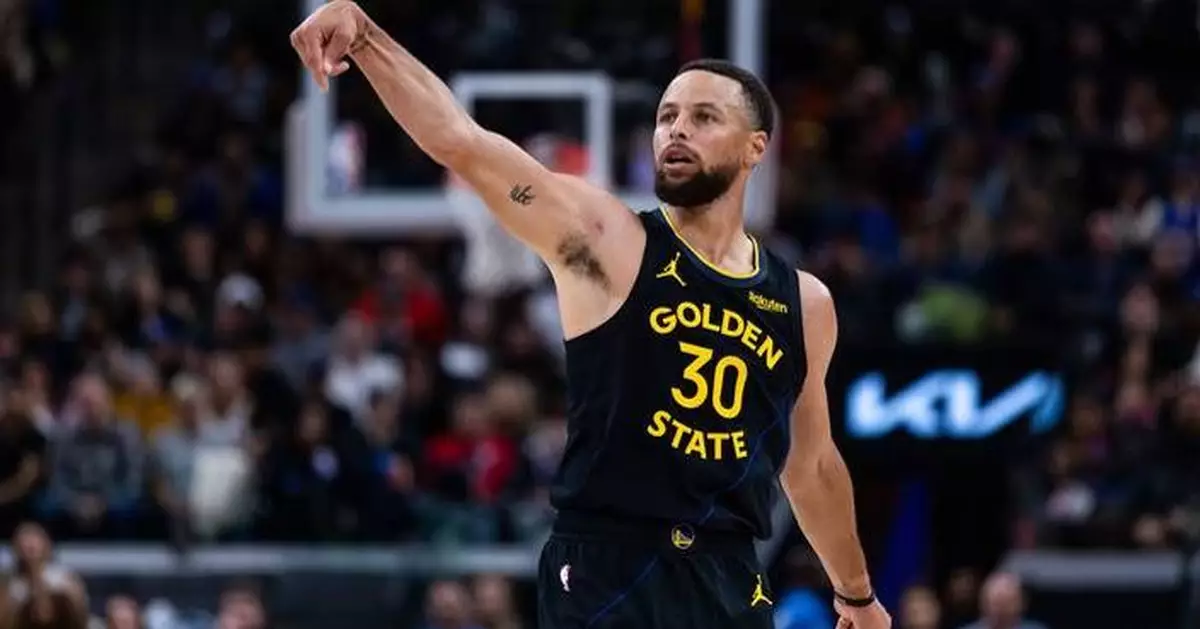
Merry Christmas! No, wait, these are the NBA conference finals. Easy mistake.
If these games — San Antonio at Oklahoma City, and Cleveland at New York — make you want to put on holiday sweaters, have some eggnog and unwrap gifts, there's a reason. Those matchups were part of the NBA's schedule on Dec. 25 this season.
Click to Gallery
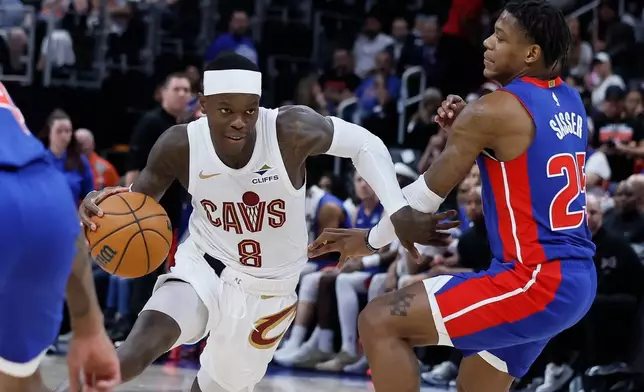
Cleveland Cavaliers guard Dennis Schroder (8) drives against Detroit Pistons guard Marcus Sasser during the second half of Game 7 in a second-round NBA basketball playoffs series, Sunday, May 17, 2026, in Detroit. (AP Photo/Duane Burleson)
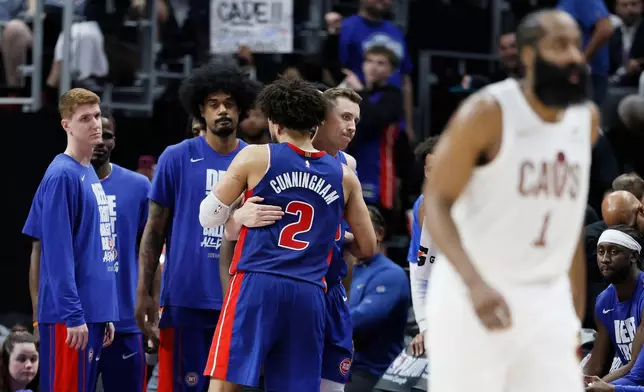
Detroit Pistons guard Cade Cunningham (2) is hugged by Duncan Robinson as Kevin Huerter, left, and Tolu Smith wait late in the fourth quarter of a loss to the Cleveland Cavaliers during Game 7 in a second-round NBA basketball playoffs series Sunday, May 17, 2026, in Detroit. (AP Photo/Duane Burleson)
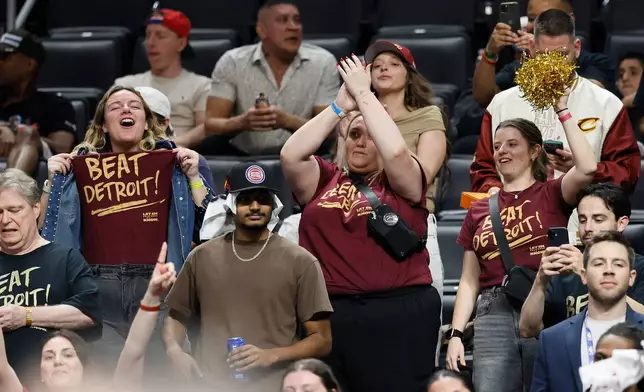
Cleveland Cavaliers fans celebrate a win over the Detroit Pistons during the fourth quarter of in Game 7 in a second-round NBA basketball playoffs series Sunday, May 17, 2026, in Detroit. (AP Photo/Duane Burleson)
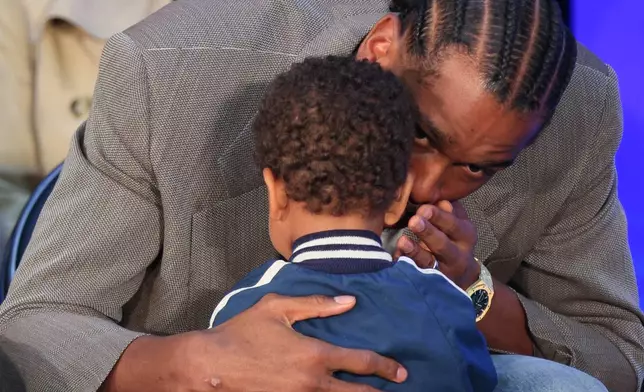
Oklahoma City Thunder guard Shai Gilgeous-Alexander whispers to his son Ares Alexander before a news conference after Gilgeous-Alexander was named the NBA basketball MVP, Sunday, May 17, 2026, in Oklahoma City. (AP Photo/Nate Billings)
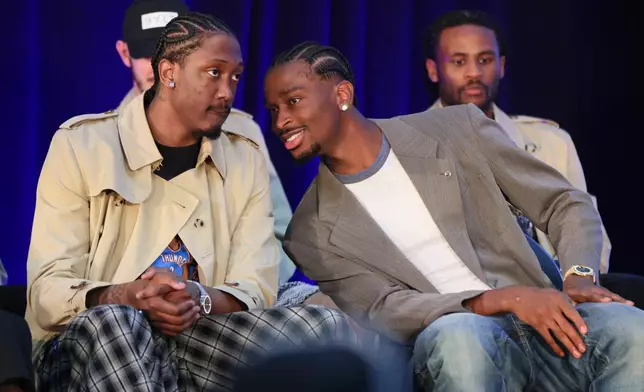
Oklahoma City Thunder guard Shai Gilgeous-Alexander, right, talks to guard Jalen Williams, left, before a news conference after Gilgeous-Alexander was named the NBA basketball MVP as guard Cason Wallace, back right, looks on, Sunday, May 17, 2026, in Oklahoma City. (AP Photo/Nate Billings)
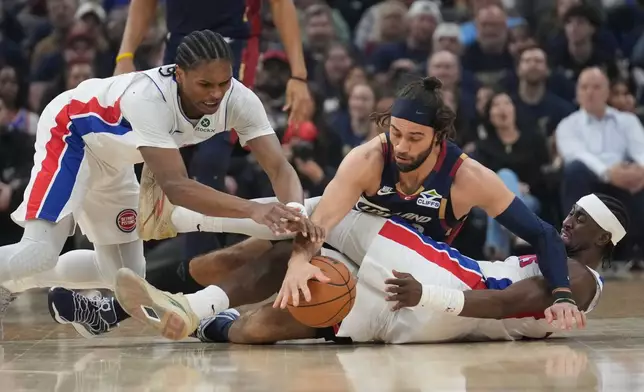
Detroit Pistons' Ausar Thompson, left, and Cleveland Cavalirs' Max Strus, center, reach for the ball over Caris LeVert, right, in the first half of Game 6 of a second-round NBA basketball playoffs series Friday, May 15, 2026, in Cleveland. (AP Photo/Sue Ogrocki)
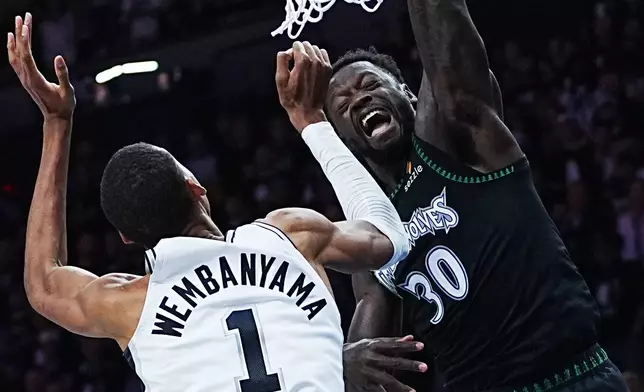
Minnesota Timberwolves forward Julius Randle (30) scores over San Antonio Spurs forward Victor Wembanyama (1) during the first half of Game 6 of an NBA basketball second-round playoffs series in Minneapolis, Friday, May 15, 2026. (AP Photo/Abbie Parr)
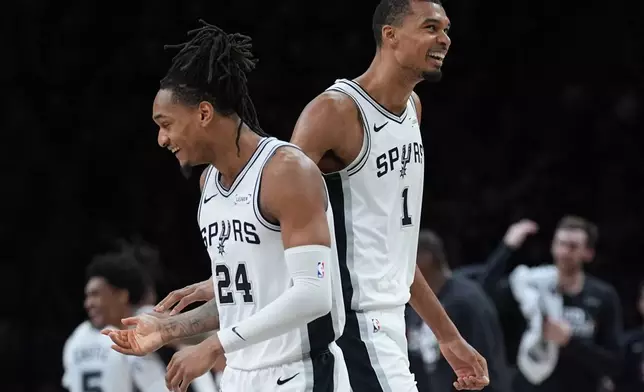
San Antonio Spurs guard Devin Vassell (24) and forward Victor Wembanyama (1) celebrate a score against the Minnesota Timberwolves during the first half of Game 6 of an NBA basketball second-round playoffs series in Minneapolis, Friday, May 15, 2026. (AP Photo/Abbie Parr)
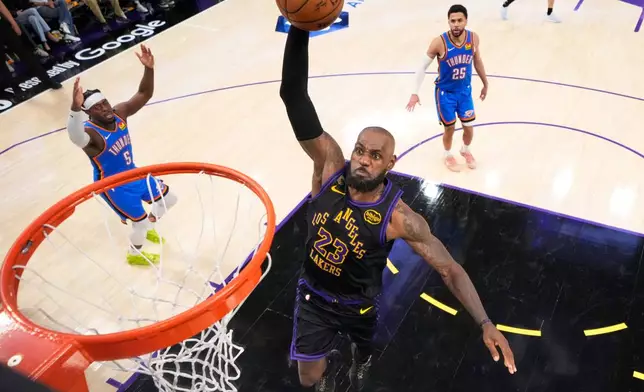
Los Angeles Lakers forward LeBron James, center, goes up for a dunk as Oklahoma City Thunder guard Luguentz Dort, left, and guard Ajay Mitchell watch during the second half of Game 4 in a second-round NBA basketball playoffs series Monday, May 11, 2026, in Los Angeles. (AP Photo/Mark J. Terrill)
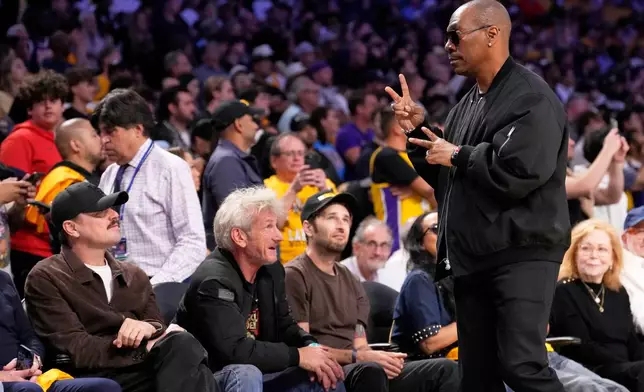
Actor Eddie Murphy, right, gestures as he walks off the court while actor Leonardo DiCaprio, left, and Sean Penn, second from left, watch during the second half of Game 4 in a second-round NBA basketball playoffs series between the Los Angeles Lakers and the Oklahoma City Thunder, Monday, May 11, 2026, in Los Angeles. (AP Photo/Mark J. Terrill)
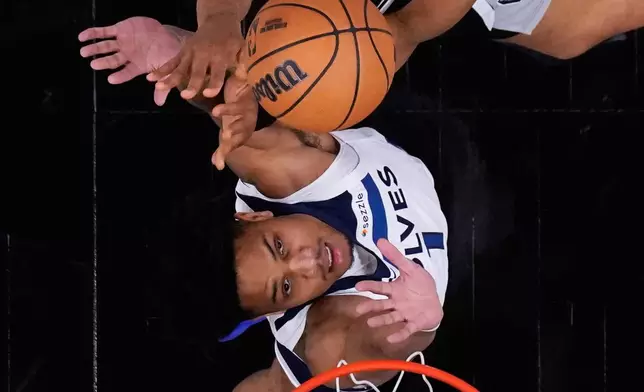
San Antonio Spurs forward Keldon Johnson, top, drives to the basket against Minnesota Timberwolves guard Terrence Shannon Jr. (1) during the first half of Game 5 of an NBA basketball second-round playoffs series in Minneapolis, Tuesday, May 12, 2026. (AP Photo/Eric Gay)
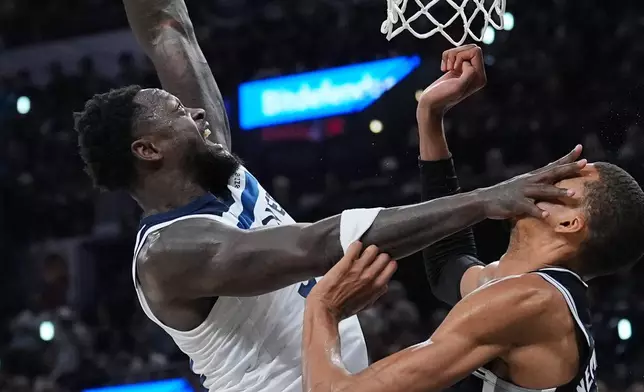
Minnesota Timberwolves forward Julius Randle (30) drives to the basket against San Antonio Spurs forward Victor Wembanyama (1) during the second half of Game 5 of an NBA basketball second-round playoffs series in Minneapolis, Tuesday, May 12, 2026. (AP Photo/Eric Gay)
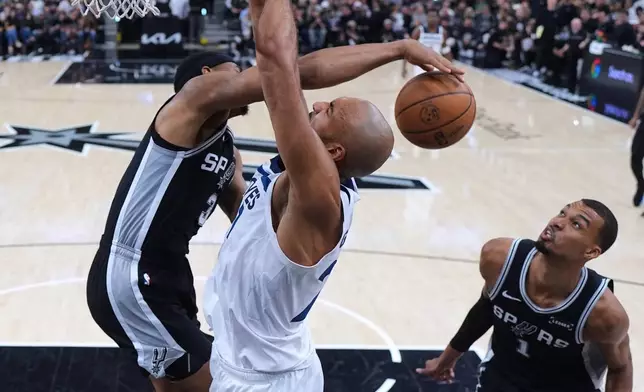
Minnesota Timberwolves center Rudy Gobert, center, is blocked by San Antonio Spurs forward Keldon Johnson (3) as forward Victor Wembanyama (1) looks on during the second half of Game 5 of an NBA basketball second-round playoffs series in Minneapolis, Tuesday, May 12, 2026. (AP Photo/Eric Gay)
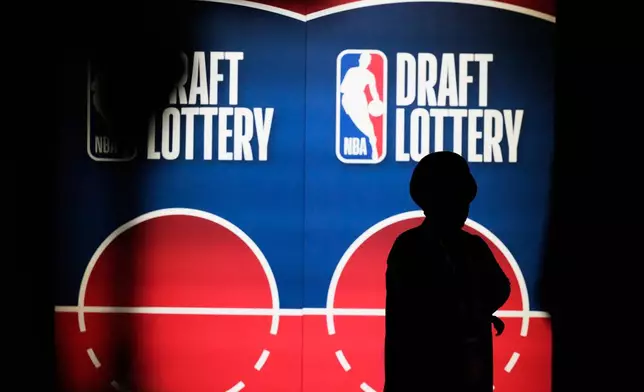
A person attends the NBA basketball draft lottery in Chicago, Sunday, May 10, 2026. (AP Photo/Nam Y. Huh)
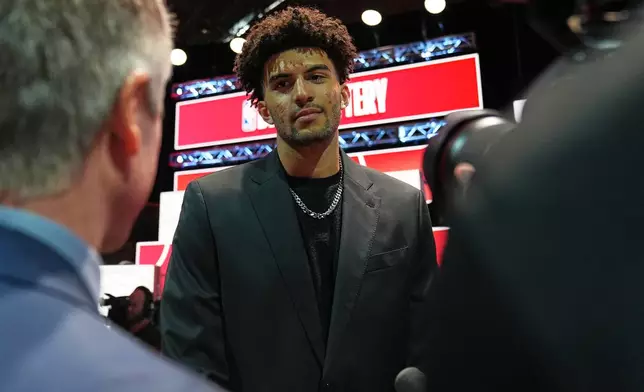
Duke forward Cameron Boozer talks to media during the NBA basketball draft lottery in Chicago, Sunday, May 10, 2026. (AP Photo/Nam Y. Huh)
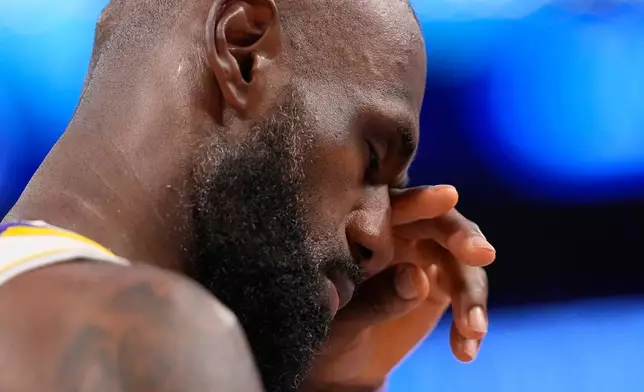
Los Angeles Lakers forward LeBron James wipes his eye in the closing minutes in the second half of Game 3 in a second-round NBA basketball playoffs series against the Oklahoma City Thunder, Saturday, May 9, 2026, in Los Angeles. (AP Photo/Mark J. Terrill)
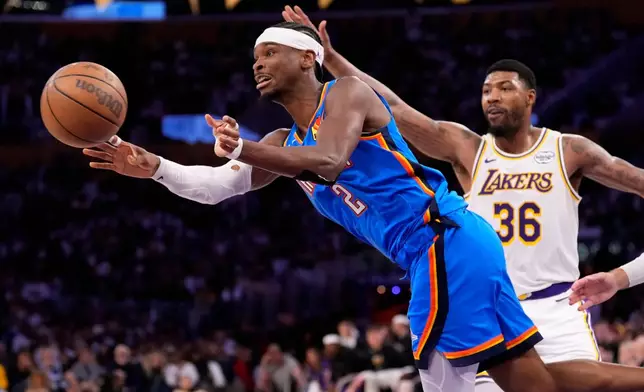
Oklahoma City Thunder guard Shai Gilgeous-Alexander, left, passes as Los Angeles Lakers guard Marcus Smart defends during the second half of Game 3 in a second-round NBA basketball playoffs series Saturday, May 9, 2026, in Los Angeles. (AP Photo/Mark J. Terrill)
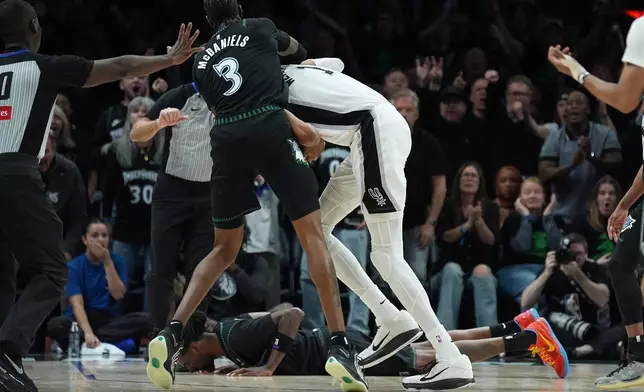
Minnesota Timberwolves center Naz Reid (11) falls to the court after he was fouled by San Antonio Spurs forward Victor Wembanyama (1) as he and forward Jaden McDaniels (3) battled for a rebound during the first half of Game 4 of an NBA basketball second-round playoffs series in Minneapolis, Sunday, May 10, 2026. (AP Photo/Abbie Parr)
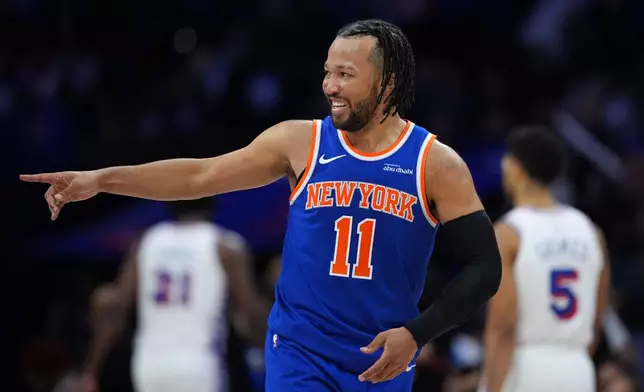
New York Knicks' Jalen Brunson reacts after scoring during the second half of Game 4 against the Philadelphia 76ers in a second-round NBA basketball playoffs series Sunday, May 10, 2026, in Philadelphia. (AP Photo/Matt Slocum)
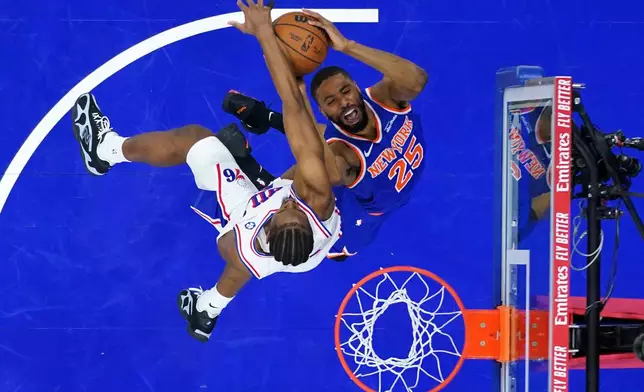
New York Knicks' Mikal Bridges, right, goes up for a shot against Philadelphia 76ers' Tyrese Maxey during the second half of Game 3 in a second-round NBA basketball playoff series Friday, May 8, 2026, in Philadelphia. (AP Photo/Matt Slocum)
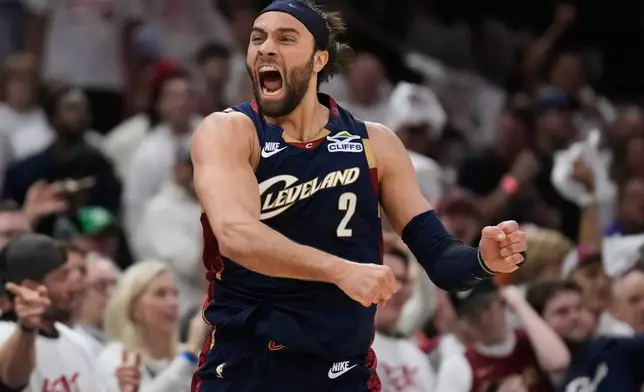
Cleveland Cavaliers guard Max Strus (2) celebrates a turnover by the Detroit Pistons in the first half of Game 3 of a second-round NBA playoffs basketball series Saturday, May 9, 2026 in Cleveland. (AP Photo/Sue Ogrocki)
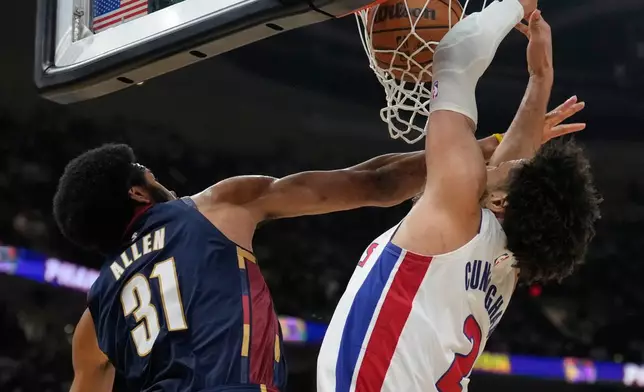
Detroit Pistons guard Cade Cunningham (2) dunks as Cleveland Cavaliers center Jarrett Allen (31) defends in the second half of Game 3 of a second-round NBA playoffs basketball series Saturday, May 9, 2026 in Cleveland. (AP Photo/Sue Ogrocki)
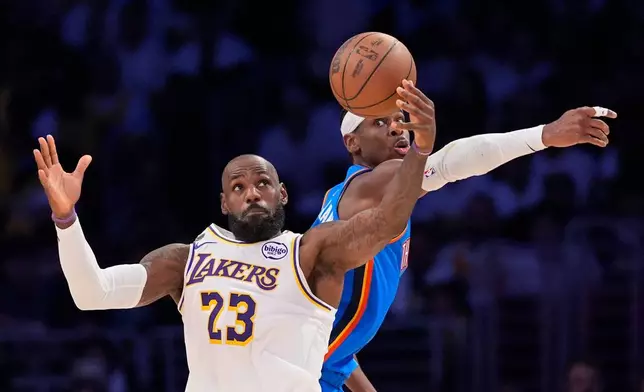
Los Angeles Lakers forward LeBron James, left, takes a pass as Oklahoma City Thunder guard Shai Gilgeous-Alexander defends during the first half of Game 3 in a second-round NBA basketball playoffs series Saturday, May 9, 2026, in Los Angeles. (AP Photo/Mark J. Terrill)
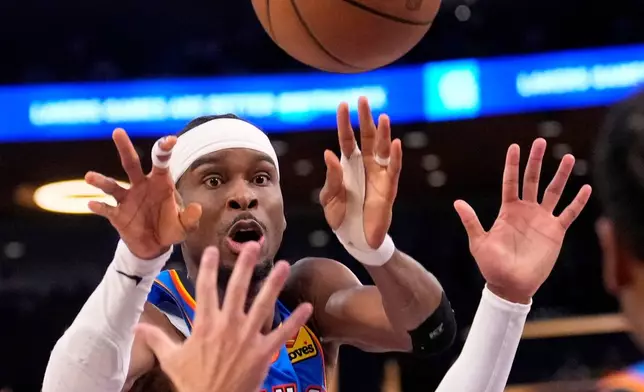
Oklahoma City Thunder guard Shai Gilgeous-Alexander passes the ball during the second half of Game 3 in a second-round NBA basketball playoffs series against the Los Angeles Lakers, Saturday, May 9, 2026, in Los Angeles. (AP Photo/Mark J. Terrill)
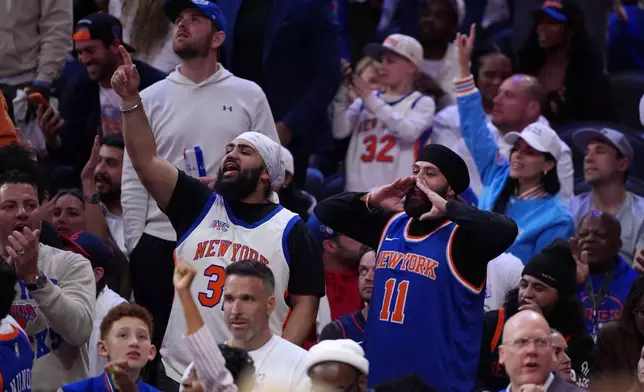
New York Knicks' fan react during the second half of Game 3 in a second-round NBA basketball playoff series against the Philadelphia 76ers Friday, May 8, 2026, in Philadelphia. (AP Photo/Matt Slocum)
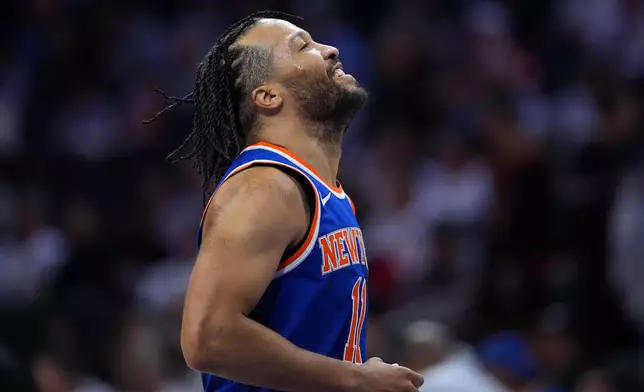
New York Knicks' Jalen Brunson reacts during the second half of Game 3 in a second-round NBA basketball playoff series against the Philadelphia 76ers Friday, May 8, 2026, in Philadelphia. (AP Photo/Matt Slocum)
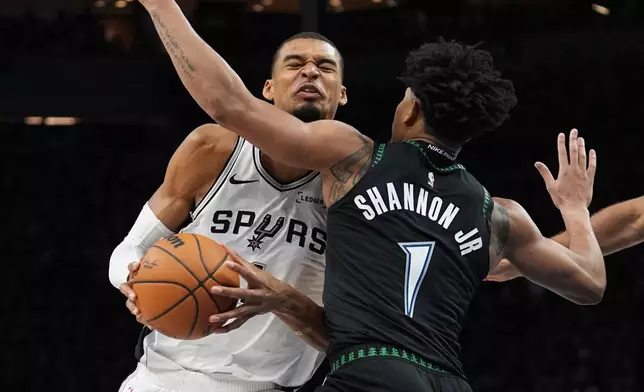
San Antonio Spurs forward Victor Wembanyama, left, is fouled by Minnesota Timberwolves guard Terrence Shannon Jr. (1) as he drives to the basket during the second half of Game 3 of a NBA basketball second-round playoff series in Minneapolis, Friday, May 8, 2026. (AP Photo/Abbie Parr)
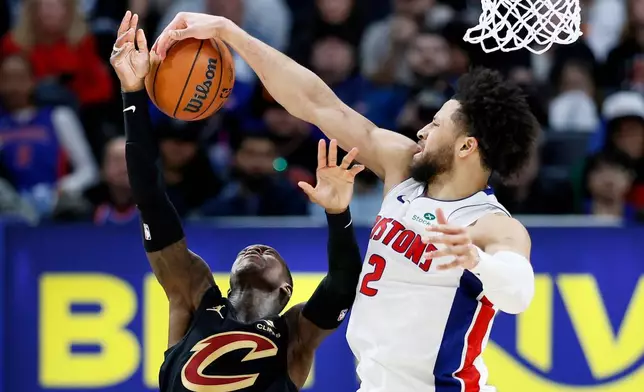
Detroit Pistons guard Cade Cunningham (2) blocks a shot attempted by Cleveland Cavaliers guard Dennis Schroder (8) during the second half in Game 2 of a second-round NBA playoffs basketball series, Thursday, May 7, 2026, in Detroit. (AP Photo/Duane Burleson)
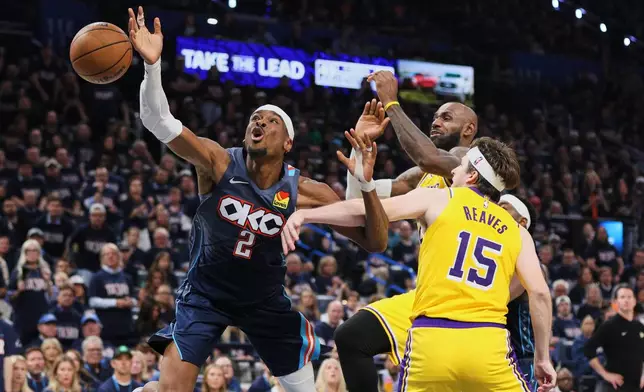
Oklahoma City Thunder's Shai Gilgeous-Alexander (2) is fouled driving to the basket by Los Angeles Lakers' Austin Reaves (15) as LeBron James, right rear, follows behind on the play in the second half of Game 2 in a second-round NBA basketball playoffs series Thursday, May 7, 2026, in Oklahoma City. (AP Photo/Nate Billings)
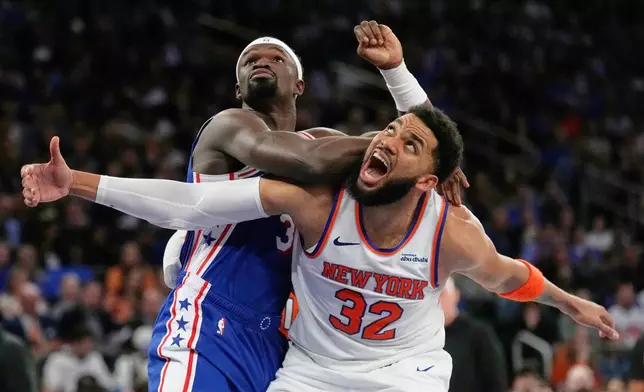
Philadelphia 76ers' Adem Bona, top, fouls New York Knicks' Karl-Anthony Towns during the second half of Game 1 in a second-round NBA basketball playoffs series Monday, May 4, 2026, in New York. (AP Photo/Seth Wenig)
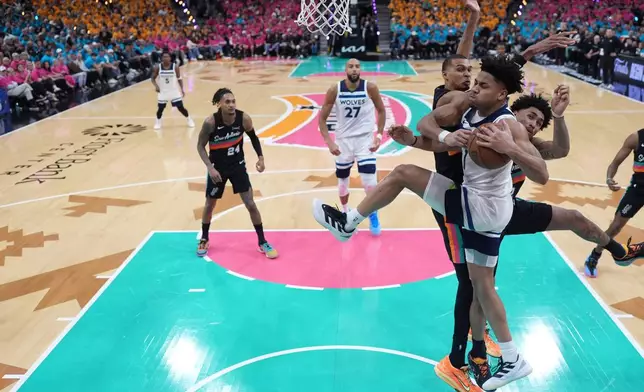
Minnesota Timberwolves guard Terrence Shannon Jr. (1), front, handles the ball as San Antonio Spurs guard Dylan Harper (2), middle, and forward-center Victor Wembanyama (1), back, defend during the second half in Game 1 of a second-round NBA playoffs basketball series in San Antonio, Monday, May 4, 2026. (AP Photo/Eric Gay)
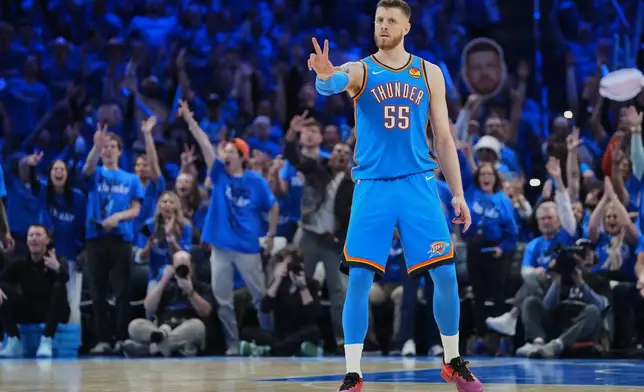
Oklahoma City Thunder center Isaiah Hartenstein (55) and fans celebrate a basket in the second half of Game 1 in a second-round NBA basketball playoffs series against the Los Angeles Lakers Tuesday, May 5, 2026 in Oklahoma City. (AP Photo/Kyle Phillips)
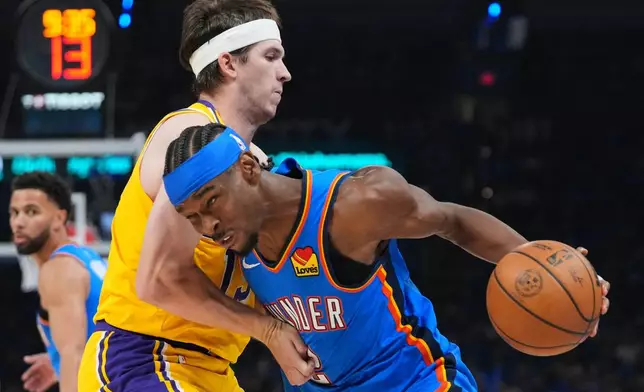
Oklahoma City Thunder guard Shai Gilgeous-Alexander, right, drives to the basket as Los Angeles Lakers guard Austin Reaves, left, defends second half of Game 1 in a second-round NBA basketball playoffs series Tuesday, May 5, 2026 in Oklahoma City. (AP Photo/Kyle Phillips)
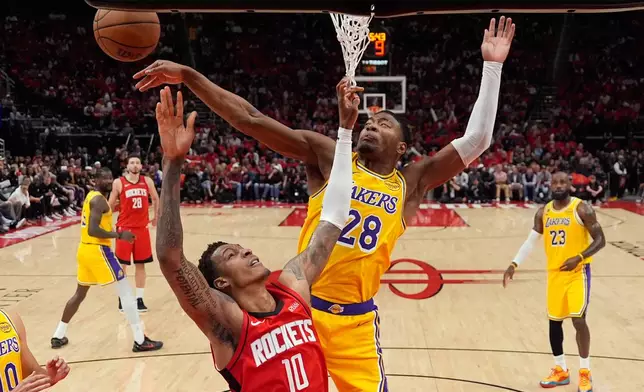
Los Angeles Lakers forward Rui Hachimura (28) blocks a shot by Houston Rockets forward Jabari Smith Jr. (10) during the first half of Game 6 of a first-round NBA playoffs basketball series in Houston, Friday, May 1, 2026. (AP Photo/Ashley Landis)
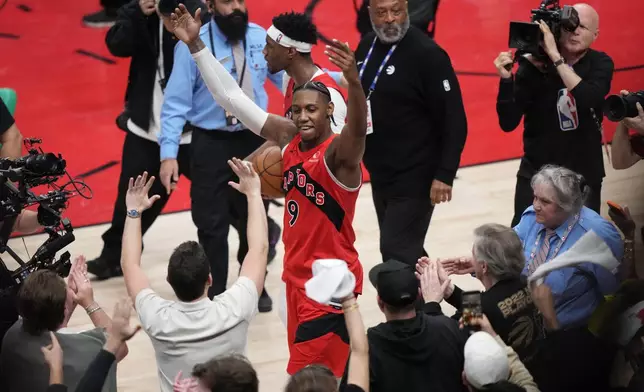
Toronto Raptors' RJ Barrett (9) celebrates with fans after a win over the Cleveland Cavaliers in Game 6 in the first round of an NBA basketball playoffs series in Toronto, Friday, May 1, 2026. (Nathan Denette/The Canadian Press via AP)
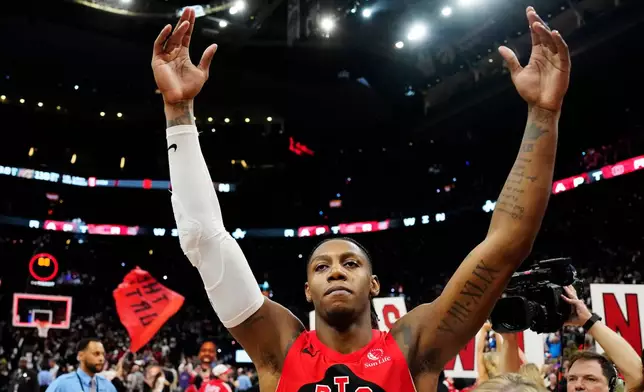
Toronto Raptors' RJ Barrett (9) celebrates after defeating the Cleveland Cavaliers in overtime of Game 6 in the first round of an NBA basketball playoffs series in Toronto on Friday, May 1, 2026. (Frank Gunn/The Canadian Press via AP)
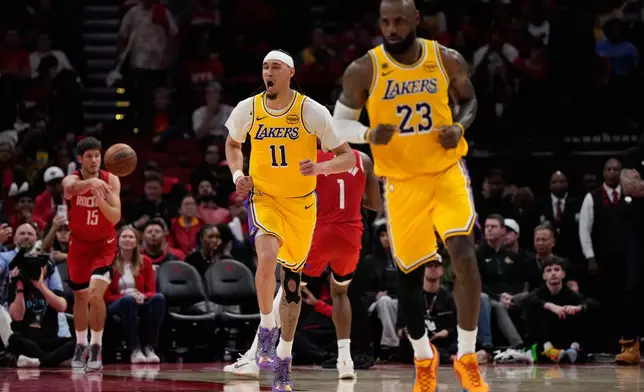
Los Angeles Lakers center Jaxson Hayes (11) celebrates during the second half of Game 6 of a first-round NBA playoffs basketball series against the Houston Rockets in Houston, Friday, May 1, 2026. (AP Photo/Ashley Landis)
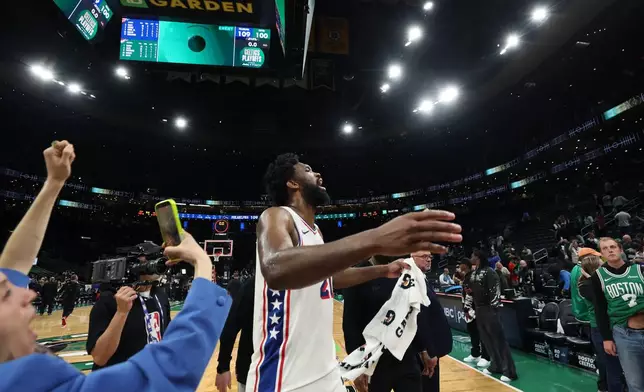
Philadelphia 76ers' Joel Embiid celebrates following his team's victory over the Boston Celtics after the Game 7 in a first-round NBA basketball playoffs series, Saturday, May 2, 2026 in Boston. (AP Photo/Jim Davis)
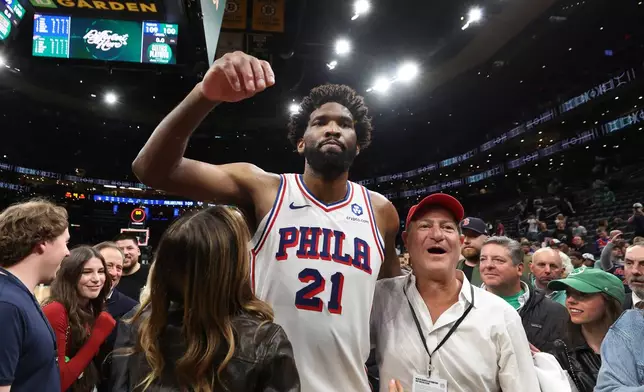
Philadelphia 76ers' Joel Embiid celebrates following his team's victory over the Boston Celtics after the Game 7 in a first-round NBA basketball playoffs series, Saturday, May 2, 2026 in Boston. (AP Photo/Jim Davis)
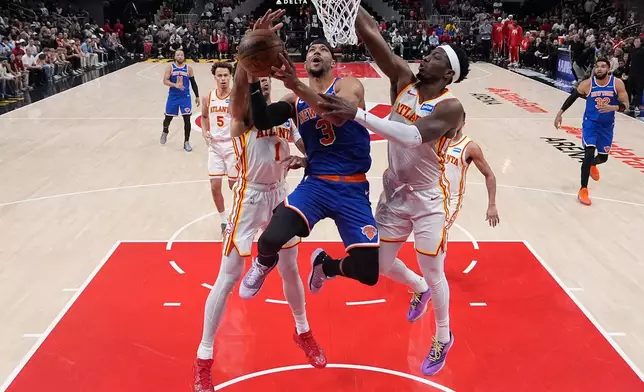
New York Knicks guard Josh Hart (3) shoots during Game 6 in a first-round NBA basketball playoffs series Thursday, April 30, 2026, in Atlanta. (AP Photo/Brynn Anderson)
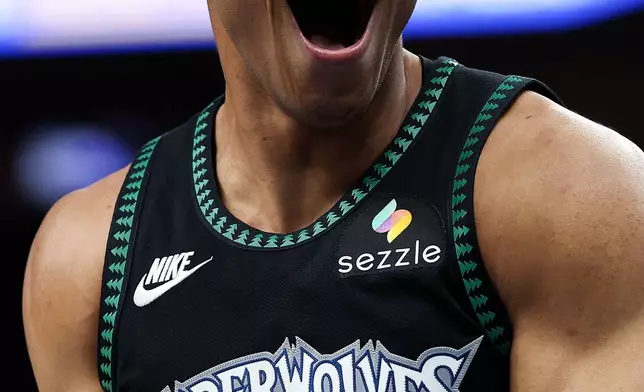
Minnesota Timberwolves guard Jaylen Clark (22) celebrates a basket against the Denver Nuggets during the second half of Game 6 of a first-round NBA basketball playoffs series, Thursday, April 30, 2026, in Minneapolis. (AP Photo/Matt Krohn)
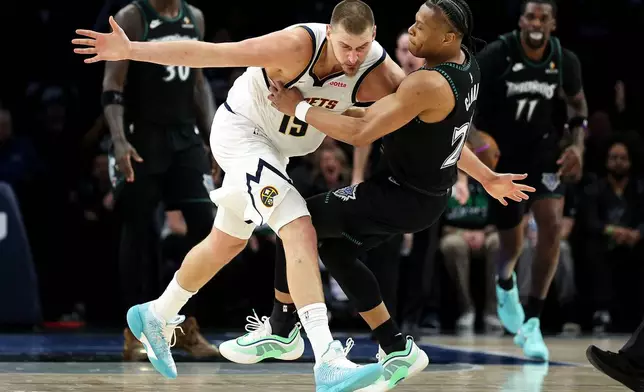
Denver Nuggets center Nikola Jokic, left, and Minnesota Timberwolves guard Jaylen Clark (22) get into an altercation during the second half of Game 6 of a first-round NBA basketball playoffs series, Thursday, April 30, 2026, in Minneapolis. (AP Photo/Matt Krohn)
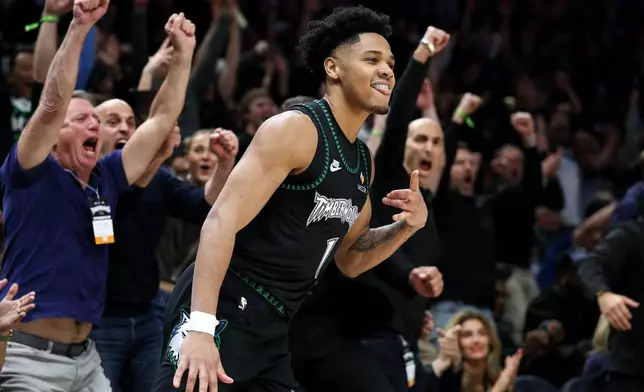
Minnesota Timberwolves guard Terrence Shannon Jr. (1) celebrates his three-point basket against the Denver Nuggets during the second half of Game 6 of a first-round NBA basketball playoffs series, Thursday, April 30, 2026, in Minneapolis. (AP Photo/Matt Krohn)
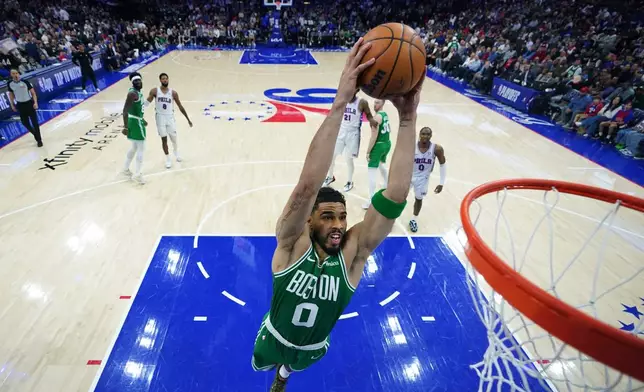
Boston Celtics' Jayson Tatum goes up for a dunk during the second half of Game 6 in a first-round NBA basketball playoff series against the Philadelphia 76ers Thursday, April 30, 2026, in Philadelphia. (AP Photo/Matt Slocum)
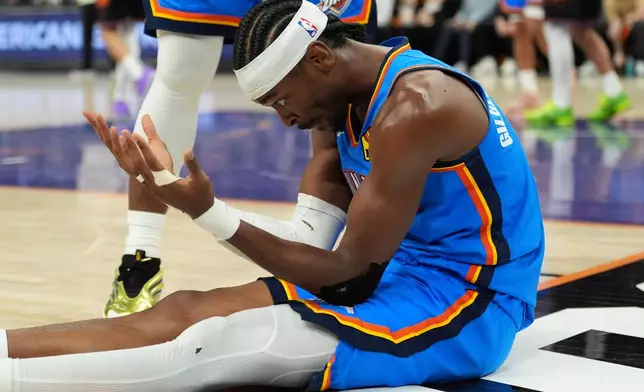
Oklahoma City Thunder guard Shai Gilgeous-Alexander celebrates a scores against the Phoenix Suns during the second half of Game 4 in a first-round NBA playoffs basketball series, Monday, April 27, 2026, in Phoenix. (AP Photo/Ross D. Franklin)
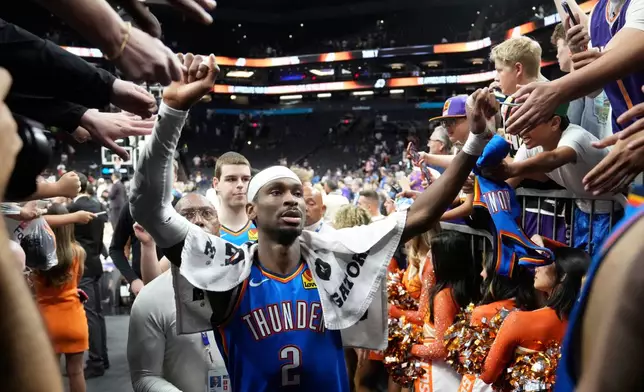
Oklahoma City Thunder guard Shai Gilgeous-Alexander celebrates with fans after Game 4 in a first-round NBA playoffs basketball series against the Phoenix Suns, Monday, April 27, 2026, in Phoenix. (AP Photo/Ross D. Franklin)
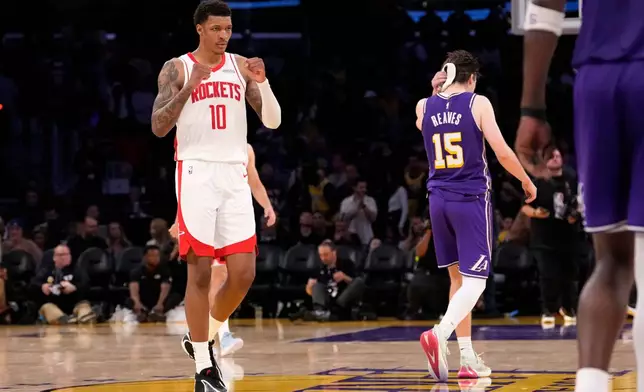
Houston Rockets forward Jabari Smith Jr., left, celebrates as Los Angeles Lakers guard Austin Reaves walks off after the Rockets defeated the Lakers in Game 5 of a first-round NBA playoffs basketball series Wednesday, April 29, 2026, in Los Angeles. (AP Photo/Mark J. Terrill)
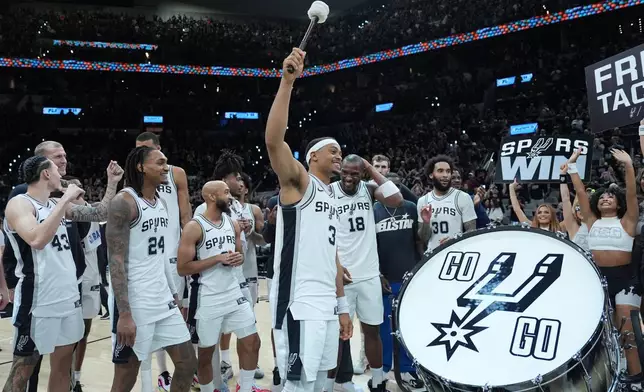
San Antonio Spurs forward/guard Keldon Johnson (3) celebrates with teammates after Game 5 of a first-round NBA playoffs basketball series against the Portland Trail Blazers in San Antonio, Tuesday, April 28, 2026. (AP Photo/Eric Gay)
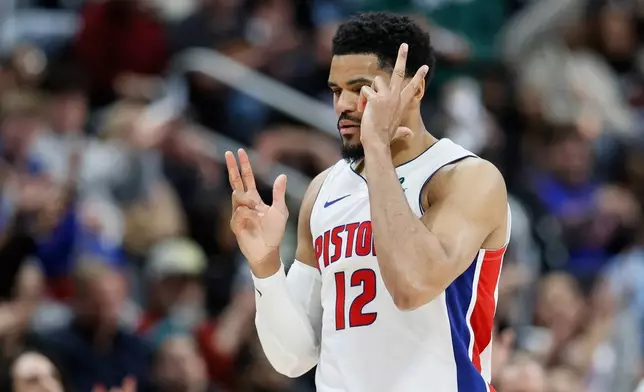
Detroit Pistons forward Tobias Harris (12) celebrates after scoring against the Orlando Magic during the fourth quarter in Game 5 of a first-round NBA basketball playoffs series Wednesday, April 29, 2026, in Detroit. (AP Photo/Duane Burleson)
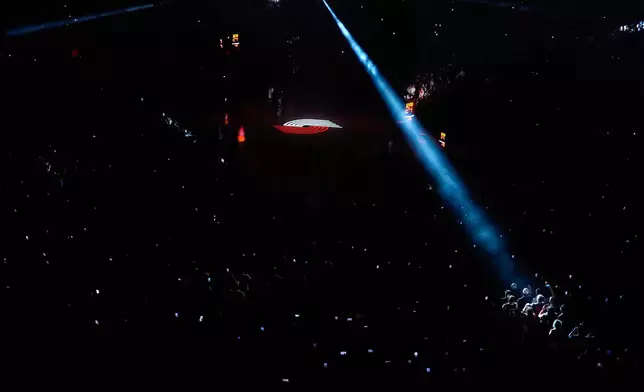
Fans watch Portland Trail Blazers player introductions before Game 4 of a first-round NBA basketball playoffs series against the San Antonio Spurs, in Portland, Ore., Sunday, April 26, 2026. (AP Photo/Jenny Kane)
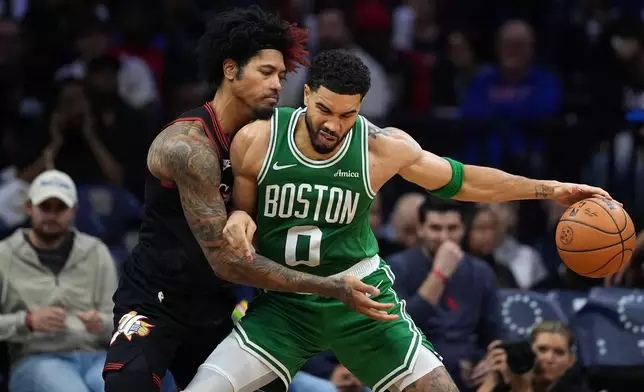
Boston Celtics' Jayson Tatum, right, tries to get past Philadelphia 76ers' Kelly Oubre Jr. during the second half of Game 4 in a first-round NBA basketball playoffs series Sunday, April 26, 2026, in Philadelphia. (AP Photo/Matt Slocum)
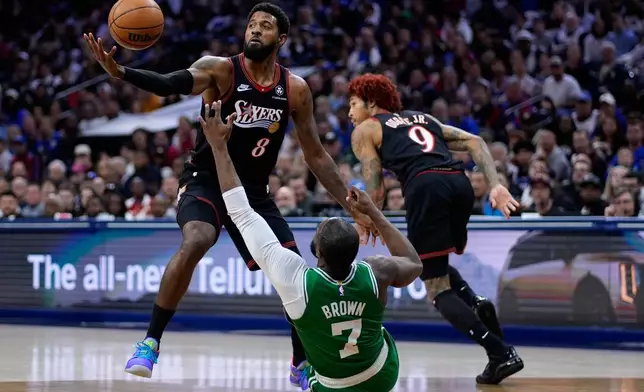
Philadelphia 76ers' Paul George (8) and Boston Celtics' Jaylen Brown (7) reach for a loose ball during the first half of Game 4 in a first-round NBA basketball playoffs series Sunday, April 26, 2026, in Philadelphia. (AP Photo/Matt Slocum)
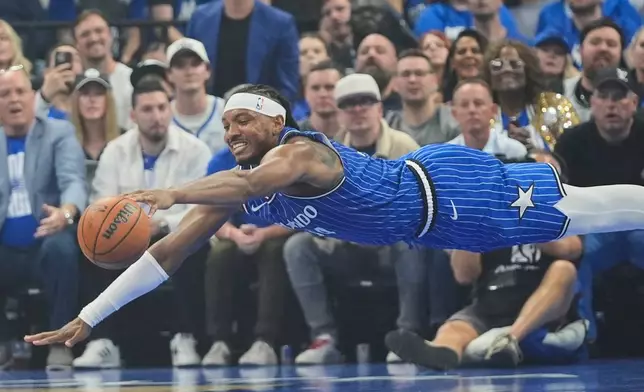
Orlando Magic center Wendell Carter Jr. dives for a loose ball during the first half in Game 4 of a first-round NBA basketball playoff series against the Detroit Pistons, Monday, April 27, 2026, in Orlando, Fla. (AP Photo/John Raoux)
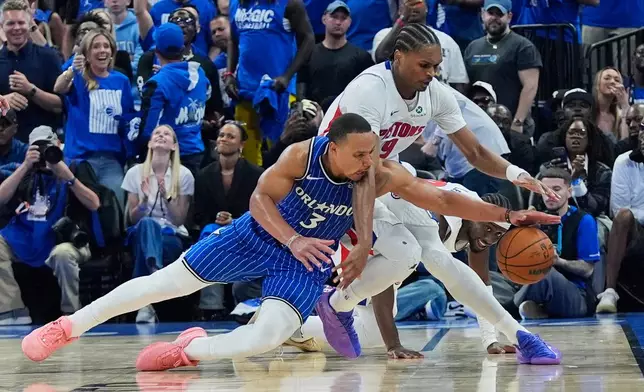
Orlando Magic guard Desmond Bane (3) goes after a loose ball against Detroit Pistons guard Ausar Thompson during the second half in Game 4 of a first-round NBA basketball playoff series, Monday, April 27, 2026, in Orlando, Fla. (AP Photo/John Raoux)
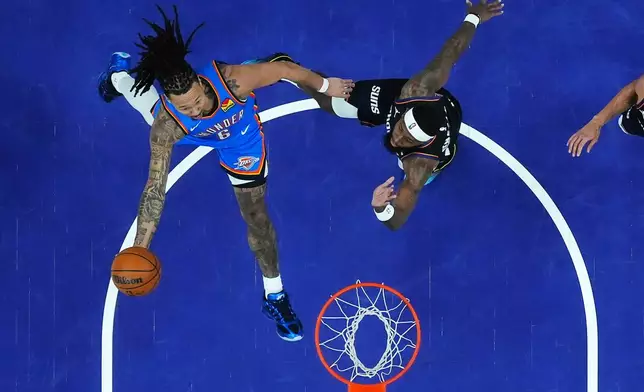
Oklahoma City Thunder forward Jaylin Williams (6) scores against Phoenix Suns forward Royce O'Neale during the second half of Game 3 of a first-round NBA playoffs basketball series, Saturday, April 25, 2026, in Phoenix. (AP Photo/Ross D. Franklin)
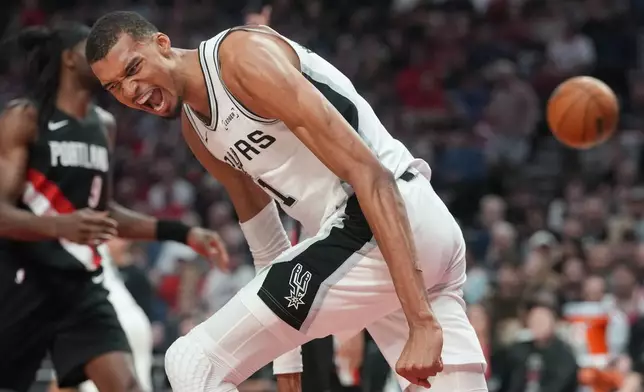
San Antonio Spurs center Victor Wembanyama reacts after a shot during the first half in Game 4 of a first-round NBA basketball playoffs series against the Portland Trail Blazers, in Portland, Ore., Sunday, April 26, 2026. (AP Photo/Jenny Kane)
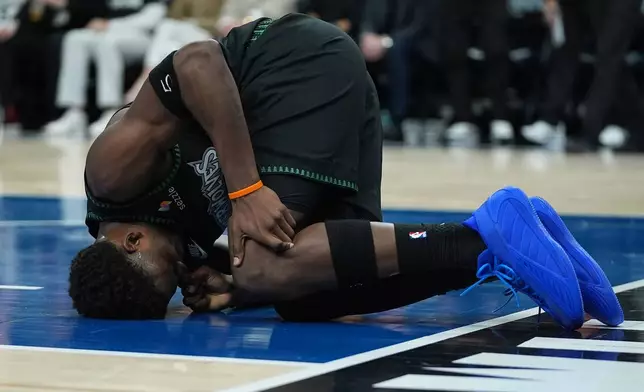
Minnesota Timberwolves guard Anthony Edwards kneels on the court after sustaining an injury during the first half of Game 4 of a first-round NBA basketball playoff series against the Denver Nuggets, Saturday, April 25, 2026, in Minneapolis. (AP Photo/Abbie Parr)
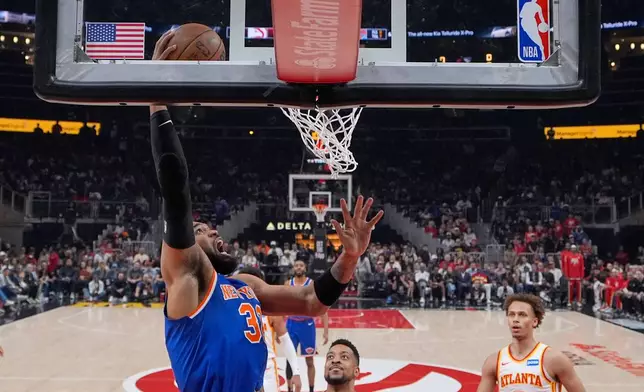
New York Knicks center Karl-Anthony Towns (32) shoots against Atlanta Hawks forward Onyeka Okongwu (17) during the first half of Game 4 in a first-round NBA playoffs basketball series Saturday, April 25, 2026, in Atlanta. (AP Photo/Brynn Anderson)
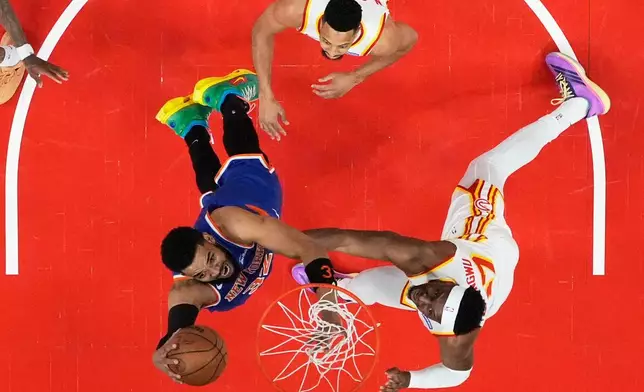
New York Knicks center Karl-Anthony Towns (32) shoots against Atlanta Hawks forward Onyeka Okongwu (17) during the first half of Game 4 in a first-round NBA playoffs basketball series Saturday, April 25, 2026, in Atlanta. (AP Photo/Brynn Anderson)
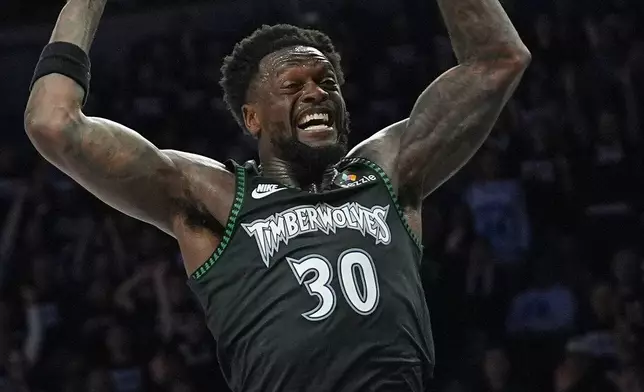
Minnesota Timberwolves forward Julius Randle dunks during the second half of Game 4 of a first-round NBA basketball playoff series against the Denver Nuggets, Saturday, April 25, 2026, in Minneapolis. (AP Photo/Abbie Parr)
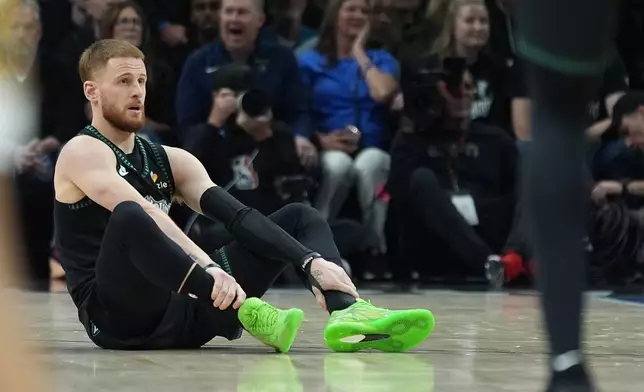
Minnesota Timberwolves guard Donte DiVincenzo (0) sits on the court after sustaining an injury during the first half of Game 4 of a first-round NBA basketball playoff series against the Denver Nuggets, Saturday, April 25, 2026, in Minneapolis. (AP Photo/Abbie Parr)
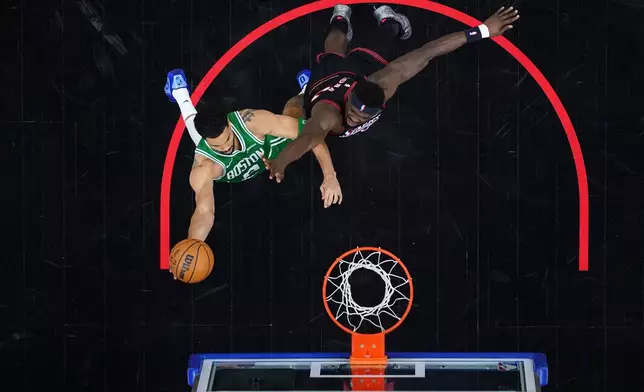
Boston Celtics' Jayson Tatum, left, goes up for a shot past Philadelphia 76ers' Adem Bona during the second half of Game 3 in a first-round NBA playoffs basketball series Friday, April 24, 2026, in Philadelphia. (AP Photo/Matt Slocum)
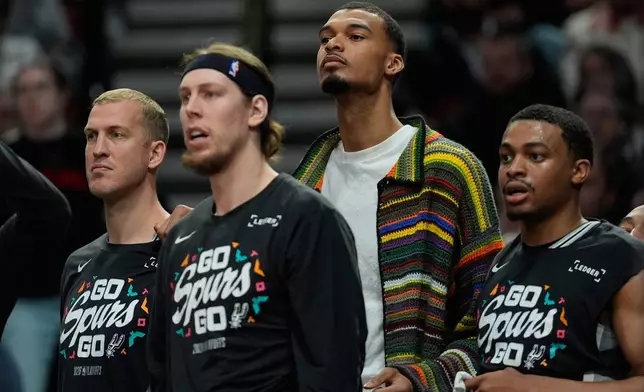
San Antonio Spurs forward Victor Wembanyama, center, wears street cloths on the bench as he sits out Game 3 of a first-round NBA playoffs basketball series against the Portland Trail Blazers in Portland, Ore, Friday, April 24, 2026. (AP Photo/Jenny Kane)
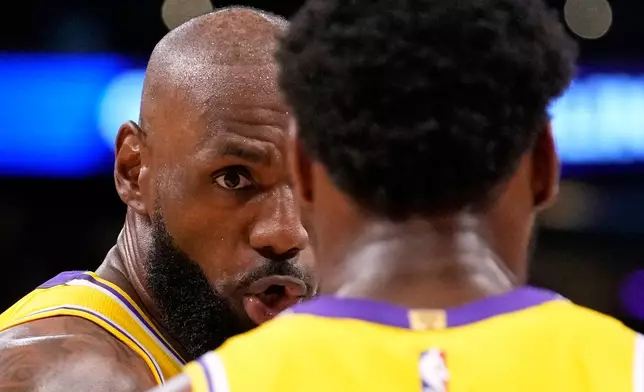
Los Angeles Lakers forward LeBron James, left, talks to guard Bronny James during the first half in Game 1 of a first-round NBA playoffs basketball series against the Houston Rockets, Saturday, April 18, 2026, in Los Angeles. (AP Photo/Mark J. Terrill)
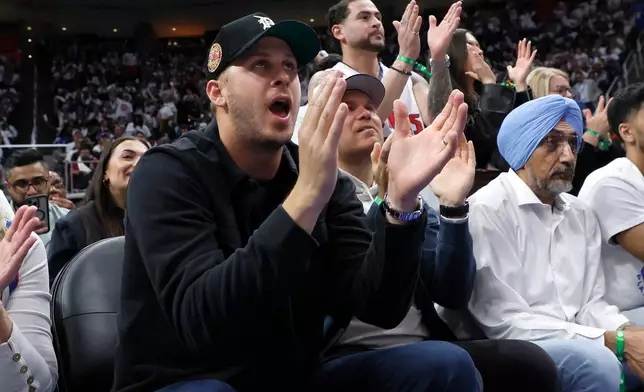
Detroit Lions quarterback Jared Goff cheers on the Detroit Piston during the second half in Game 2 of a first-round NBA basketball playoffs series against the Orlando Magic Wednesday, April 22, 2026, in Detroit. (AP Photo/Duane Burleson)
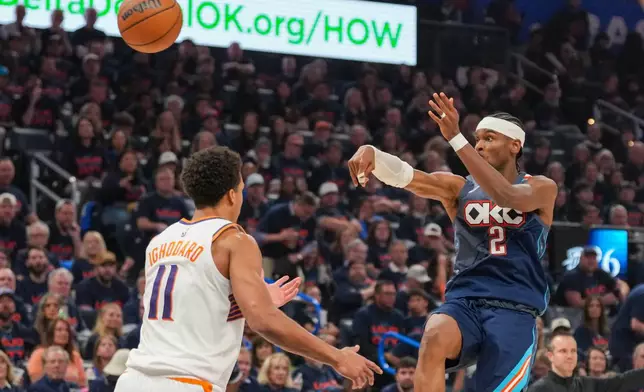
Oklahoma City Thunder guard Shai Gilgeous-Alexander (2) passes over Phoenix Suns forward Oso Ighodaro (11) during the second half in Game 2 of a first-round NBA playoffs basketball series Wednesday, April 22, 2026, in Oklahoma City. (AP Photo/Kyle Phillips)
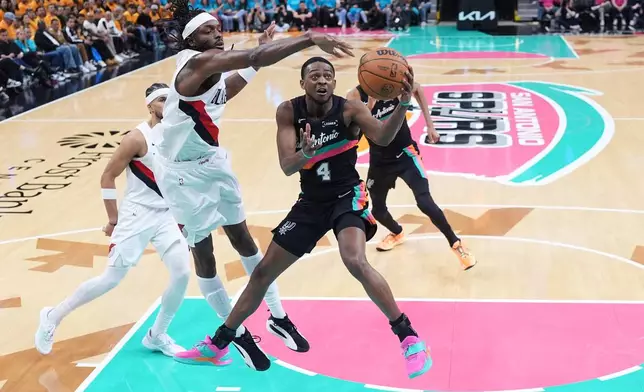
San Antonio Spurs guard De'aaron Fox (4) drives to the basket past Portland Trail Blazers forward Jerami Grant, left, during the second half in Game 1 of a first-round NBA playoffs basketball series in San Antonio, Sunday, April 19, 2026. (AP Photo/Eric Gay)
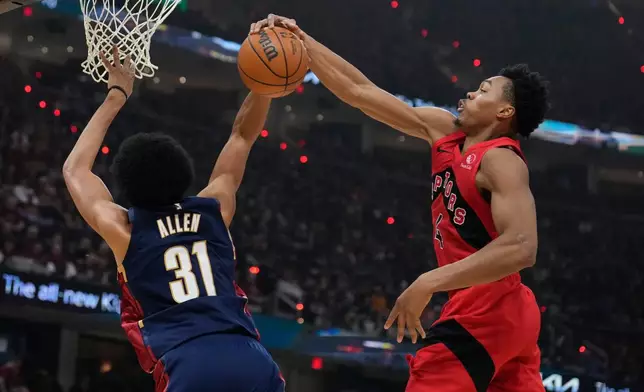
Toronto Raptors forward Scottie Barnes (4) blocks a shot by Cleveland Cavaliers center Jarrett Allen (31) in the second half in Game 2 of a first-round NBA basketball playoffs series in Cleveland, Monday, April 20, 2026. (AP Photo/Sue Ogrocki)
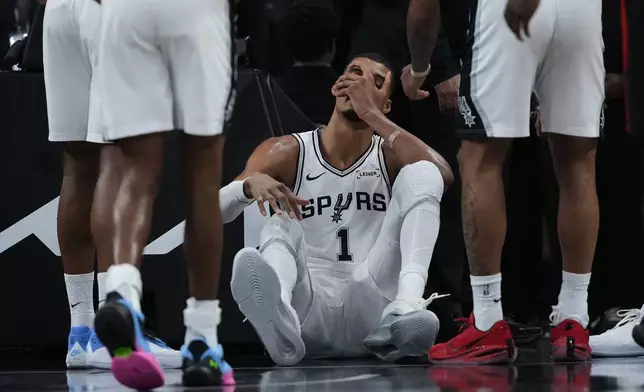
San Antonio Spurs forward Victor Wembanyama (1) sits on the court after a hard fall during the first half in Game 2 of a first-round NBA playoffs basketball series against the Portland Trail Blazers in San Antonio, Tuesday, April 21, 2026. (AP Photo/Eric Gay)
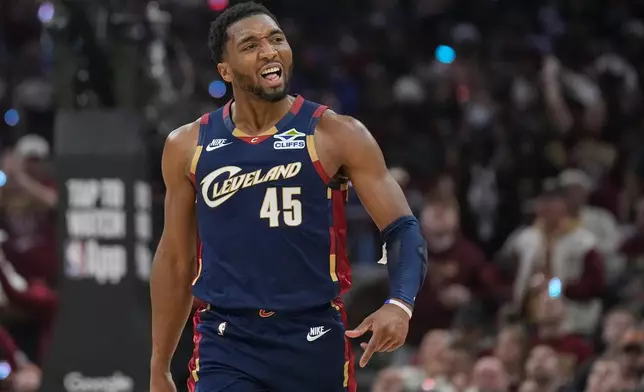
Cleveland Cavaliers guard Donovan Mitchell (45) gestures to the crowd in the first half in Game 2 of a first-round NBA basketball playoffs series against the Toronto Raptors in Cleveland, Monday, April 20, 2026. (AP Photo/Sue Ogrocki)
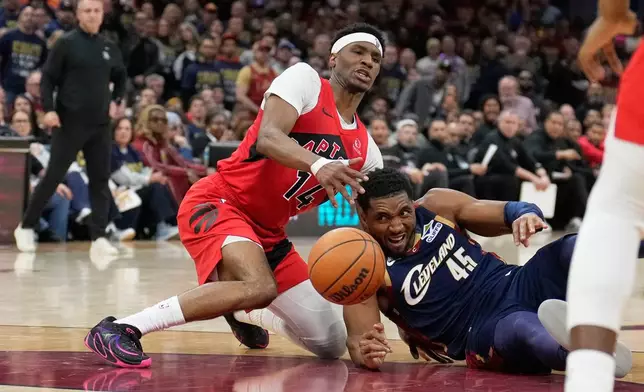
Toronto Raptors guard Ja'kobe Walter (14) and Cleveland Cavaliers guard Donovan Mitchell (45) reach for the ball in the second half in Game 2 of a first-round NBA basketball playoffs series in Cleveland, Monday, April 20, 2026. (AP Photo/Sue Ogrocki)
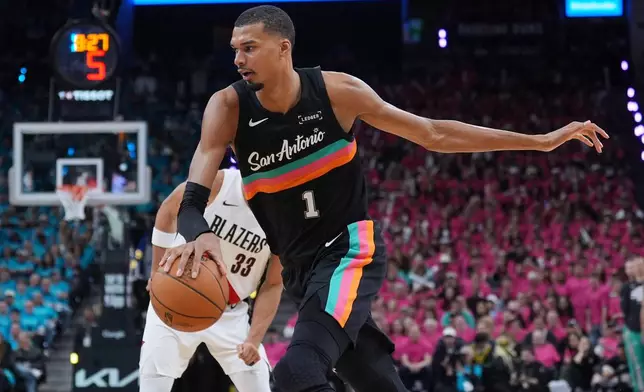
San Antonio Spurs forward Victor Wembanyama (1) drives past Portland Trail Blazers forward Toumani Camara (33) during the second half in Game 1 of a first-round NBA playoffs basketball series in San Antonio, Sunday, April 19, 2026. (AP Photo/Eric Gay)
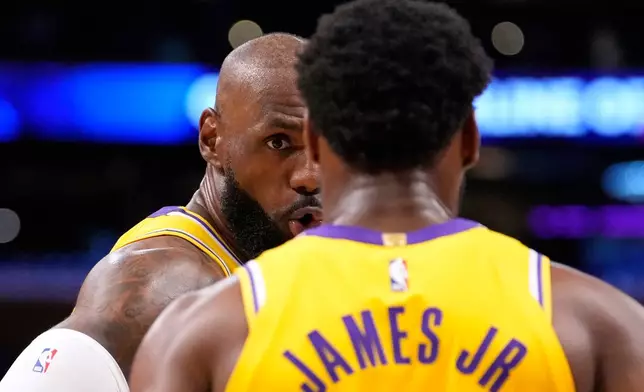
Los Angeles Lakers forward LeBron James, left, talks to his son guard Bronny James during the first half in Game 1 of a first-round NBA playoffs basketball series against the Houston Rockets, Saturday, April 18, 2026, in Los Angeles. (AP Photo/Mark J. Terrill)
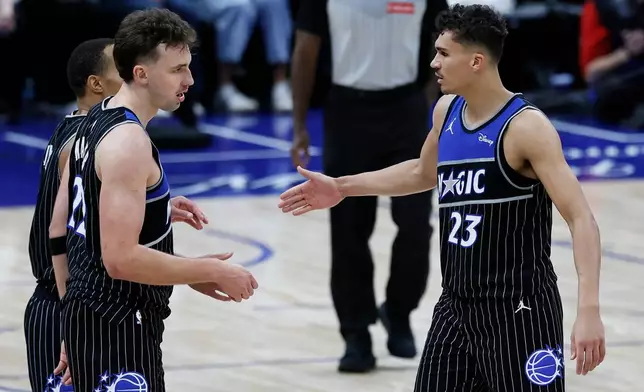
Orlando Magic forward Franz Wagner (22) and forward Tristan da Silva (23) celebrate after a win over the Detroit Pistons in Game 1 of a first-round NBA basketball playoffs series, Sunday, April 19, 2026, in Detroit. (AP Photo/Duane Burleson)
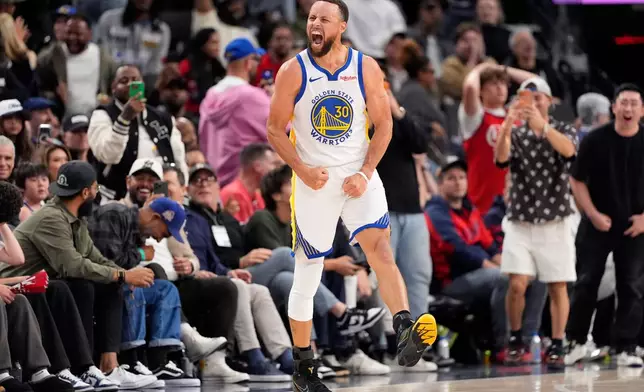
Golden State Warriors guard Stephen Curry celebrates after scoring during the second half of an NBA play-in tournament basketball game against the against the Los Angeles Clippers, Wednesday, April 15, 2026, in Inglewood, Calif. (AP Photo/Mark J. Terrill)
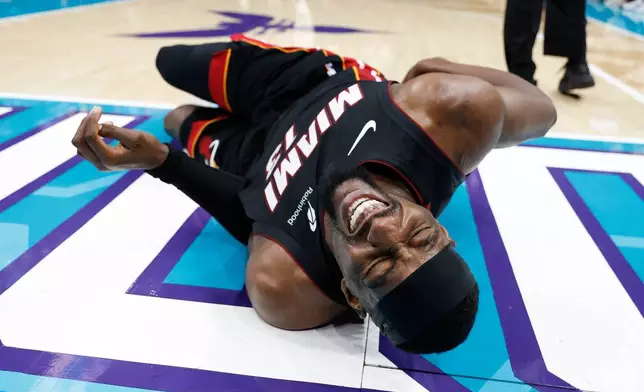
Miami Heat center Bam Adebayo (13) lies on the court during the first half of an NBA play-in tournament basketball game against the Charlotte Hornets in Charlotte, N.C., Tuesday, April 14, 2026. (AP Photo/Nell Redmond)
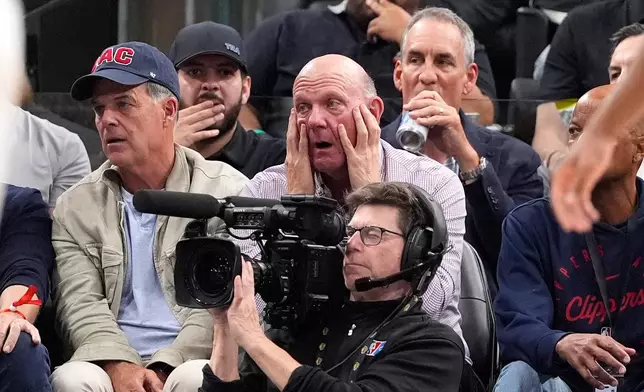
Los Angeles Clippers owner Steve Ballmer watches in the closing minutes of an NBA play-in tournament basketball game between the Clippers and the Golden State Warriors Wednesday, April 15, 2026, in Inglewood, Calif. (AP Photo/Mark J. Terrill)
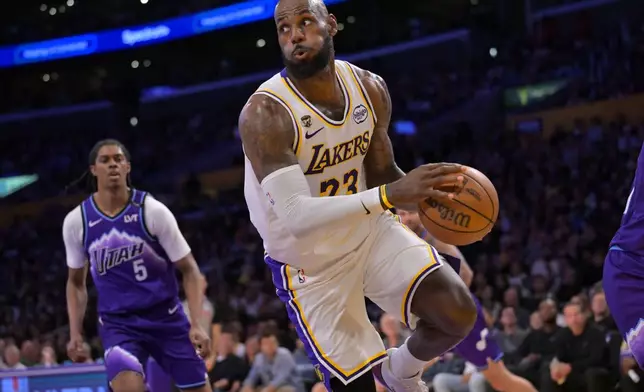
Los Angeles Lakers forward LeBron James looks to make a pass during the first half of an NBA basketball game against the Utah Jazz, Sunday, April 12, 2026, in Los Angeles. (AP Photo/Jayne Kamin-Oncea)
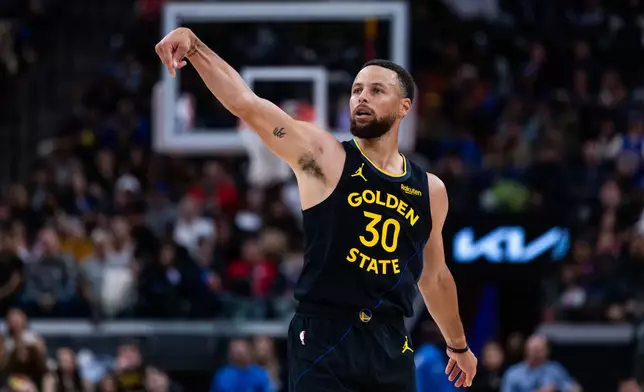
Golden State Warriors guard Stephen Curry (30) shoots against the Los Angeles Clippers during the second half of an NBA basketball game, Sunday, April 12, 2026, in Inglewood, Calif. (AP Photo/Ethan Swope)
And now, they're also the matchups for the conference finals.
Oklahoma City and San Antonio will play in the Western Conference finals, that series beginning Monday on the Thunder's home floor. And Cleveland — a 31-point Game 7 winner in Detroit on Sunday — will play New York in the Eastern Conference finals, starting Tuesday at Madison Square Garden.
— Game 1, San Antonio at Oklahoma City, 8:30 p.m. EDT (NBC, Peacock)
— Odds: Oklahoma City by 6.5.
The Spurs went 4-1 against the Thunder (the teams played five times because of the NBA Cup) during the regular season. If the series goes the full seven games, it will mark only the second instance in the last 30 years of two teams meeting 12 times in the same season (Golden State and Houston did it last season).
— Game 1, Cleveland at New York, 8 p.m. EDT (ESPN)
— Odds: New York by 6.5.
The Knicks started the season with a win over the Cavaliers; they went on to edge Cleveland by one game in the race for the No. 3 seed in the Eastern Conference — so, the first 82 games maybe do matter! New York went 2-1 against Cleveland in the regular season, and the Cavaliers' win came after the trade that brought them James Harden.
— Cavaliers 125, Pistons 94 to win series 4-3. Donovan Mitchell is finally in the conference finals.
— East No. 3 New York vs. No. 4 Cleveland (all times 8 p.m. EDT) — Tuesday, at New York; Thursday, at New York; Saturday, at Cleveland; May 25, at Cleveland; May 27, at New York (if necessary); May 29, at Cleveland (if necessary); May 31, at New York (if necessary).
— West No. 1 Oklahoma City vs. No. 2 San Antonio (all times 8:30 p.m. EDT, except where noted) — Monday, at Oklahoma City; Wednesday, at Oklahoma City; Friday, at San Antonio; Sunday, at San Antonio, 8 p.m. EDT; May 26, at Oklahoma City (if necessary); May 28, at San Antonio (if necessary); May 30, at Oklahoma City, 8 p.m. EDT (if necessary).
— The Oklahoma City-San Antonio winner will have home-court advantage in the NBA Finals.
SGA is the MVP again.
Oklahoma City's Shai Gilgeous-Alexander is the NBA's Most Valuable Player for the second consecutive year, the league announced Sunday night. Gilgeous-Alexander held off Denver's Nikola Jokic and San Antonio's Victor Wembanyama for the trophy.
And the voting provided a big hint about the first-team All-NBA squad still to be announced — with the Los Angeles Lakers' Luka Doncic and Detroit's Cade Cunningham looking like they'll join the MVP finalists on that team.
Other awards handed out so far:
— Defensive Player of the Year: Wembanyama.
— Clutch Player of the Year: Gilgeous-Alexander.
— Sixth Man of the Year: Keldon Johnson, San Antonio.
— Sportsmanship Award: Derrick White, Boston.
— Most Improved Player: Nickeil Alexander-Walker, Atlanta.
— Rookie of the Year: Cooper Flagg, Dallas.
— Executive of the Year: Brad Stevens, Boston.
— Twyman-Stokes Teammate of the Year: DeAndre Jordan, New Orleans.
— Hustle Award: Moussa Diabaté, Charlotte.
Among the announcements still to come:
— Coach of the Year: San Antonio's Mitch Johnson, Detroit's J.B. Bickerstaff or Boston's Joe Mazzulla.
— Social Justice Champion Award: Miami's Bam Adebayo San Antonio's Harrison Barnes, Boston's Jaylen Brown, Detroit's Tobias Harris or Cleveland's Larry Nance Jr.
— The All-NBA, All-Defensive and All-Rookie teams.
Defending champion Oklahoma City (-160) is favored to win the NBA title, according to oddsmakers.
The Thunder are followed by San Antonio (+300), New York (+550), and Cleveland (+2500). The Cavaliers were +8000 before their Game 7 win on Sunday night in Detroit.
— Monday: Western Conference finals begin on NBC and Peacock.
— Tuesday: Eastern Conference finals begin on ESPN and ABC.
— June 3: Game 1, NBA Finals on ABC. (Other finals dates: June 5, June 8, June 10, June 13, June 16 and June 19).
— June 23: Round 1, NBA draft.
— June 24: Round 2, NBA draft.
“Let me tell you something — this guy is a huge inspiration, not only for his country but for people who love the game. I can't say I've seen anyone play the way he does. ... He gets buckets. He gets assists. He gets wins." — Hall of Famer Chris Bosh on Canada's Shai Gilgeous-Alexander, now a two-time NBA MVP.
— The last four teams standing were a 1 seed (Oklahoma City), a 2 seed (San Antonio), a 3 seed (New York) and a 4 seed (Cleveland). This is the second consecutive season that the Eastern Conference final has seen the No. 3 seed vs. the No. 4 seed; Indiana, the fourth seed, beat the third-seeded Knicks 4-2 last season.
— Cleveland is the second team ever to win Game 7 by 20 or more after losing Game 6 by 20 or more. The other was Orlando in the 1995 East final against Indiana.
AP NBA: https://apnews.com/nba
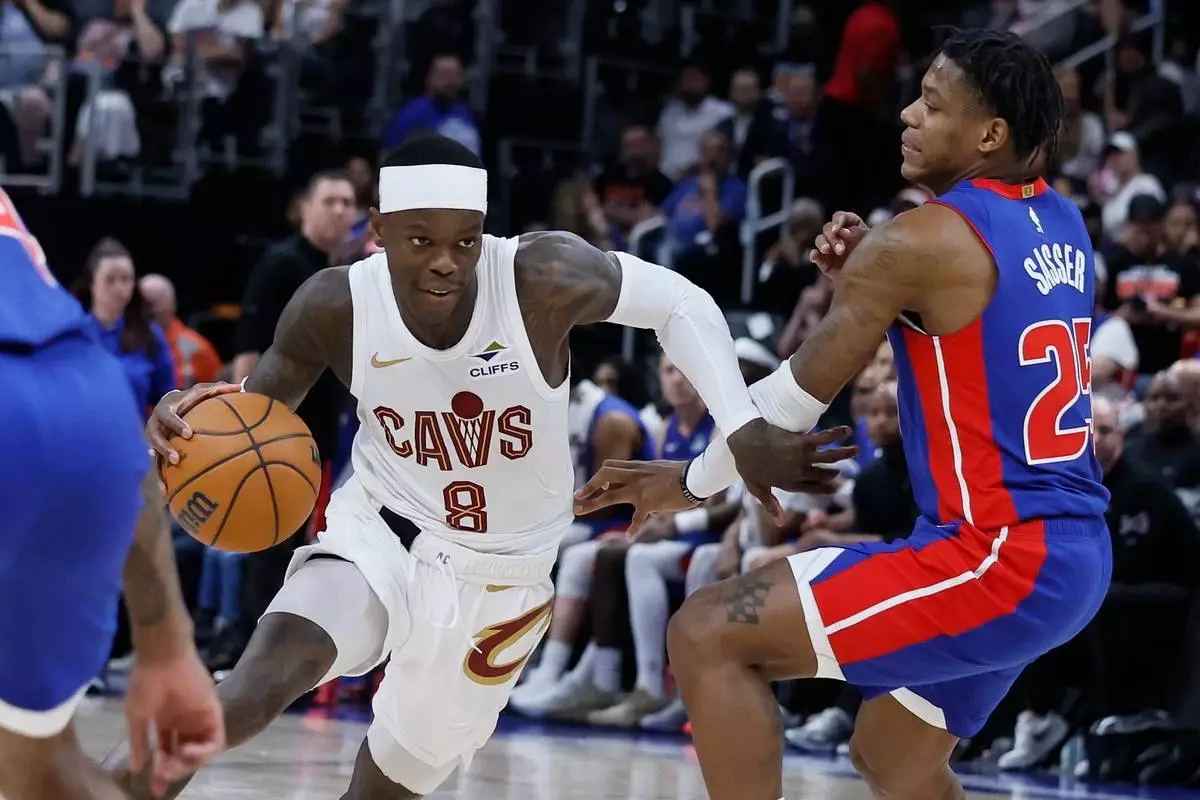
Cleveland Cavaliers guard Dennis Schroder (8) drives against Detroit Pistons guard Marcus Sasser during the second half of Game 7 in a second-round NBA basketball playoffs series, Sunday, May 17, 2026, in Detroit. (AP Photo/Duane Burleson)
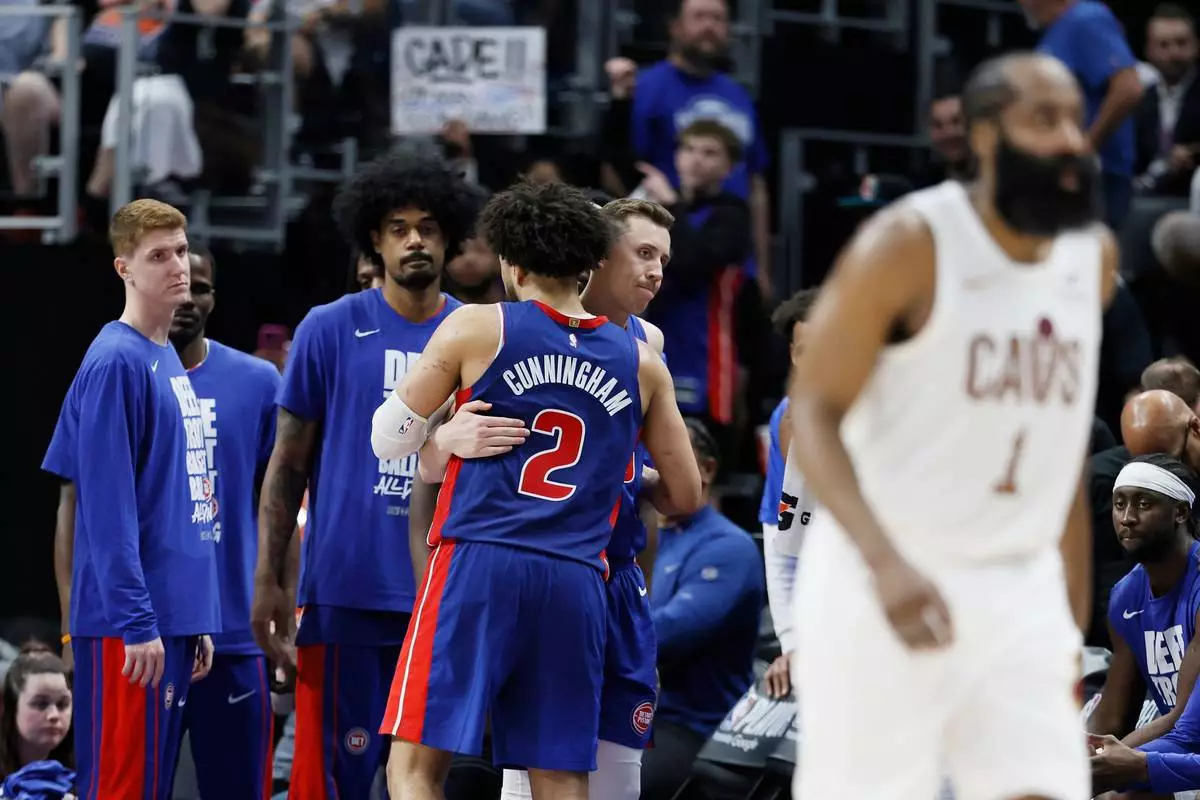
Detroit Pistons guard Cade Cunningham (2) is hugged by Duncan Robinson as Kevin Huerter, left, and Tolu Smith wait late in the fourth quarter of a loss to the Cleveland Cavaliers during Game 7 in a second-round NBA basketball playoffs series Sunday, May 17, 2026, in Detroit. (AP Photo/Duane Burleson)
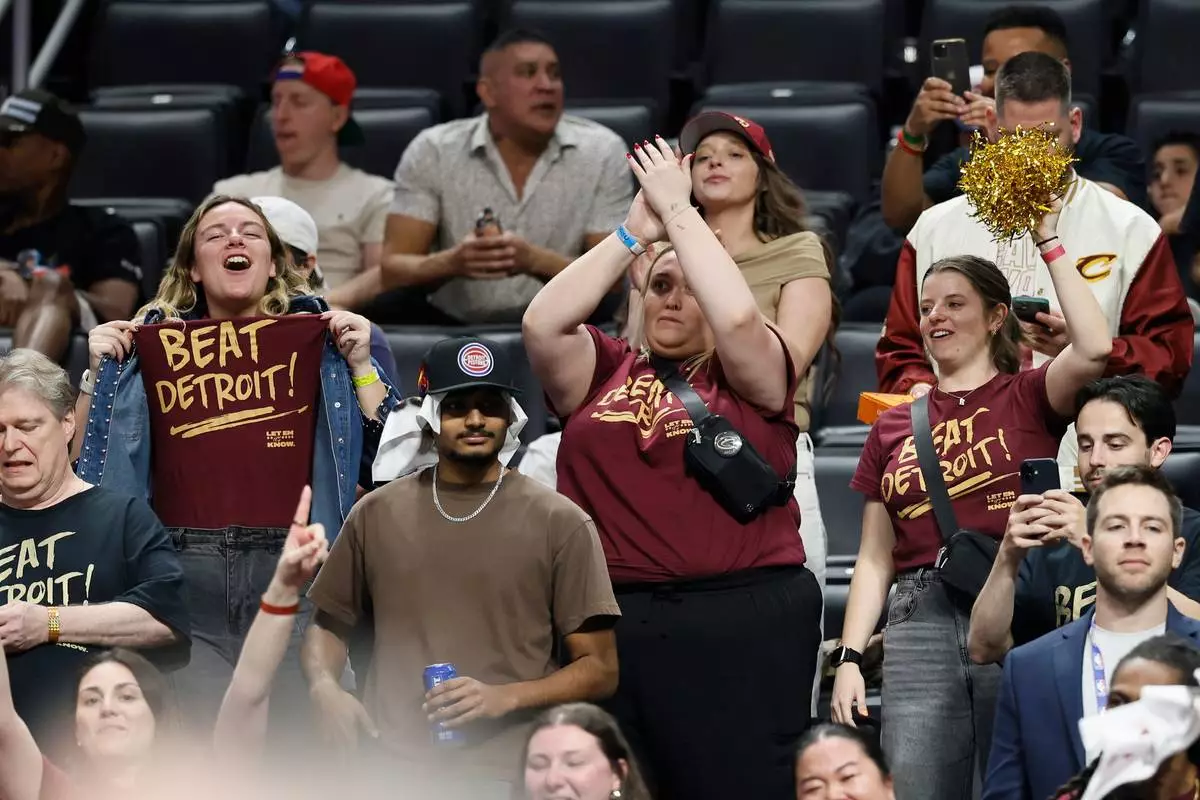
Cleveland Cavaliers fans celebrate a win over the Detroit Pistons during the fourth quarter of in Game 7 in a second-round NBA basketball playoffs series Sunday, May 17, 2026, in Detroit. (AP Photo/Duane Burleson)
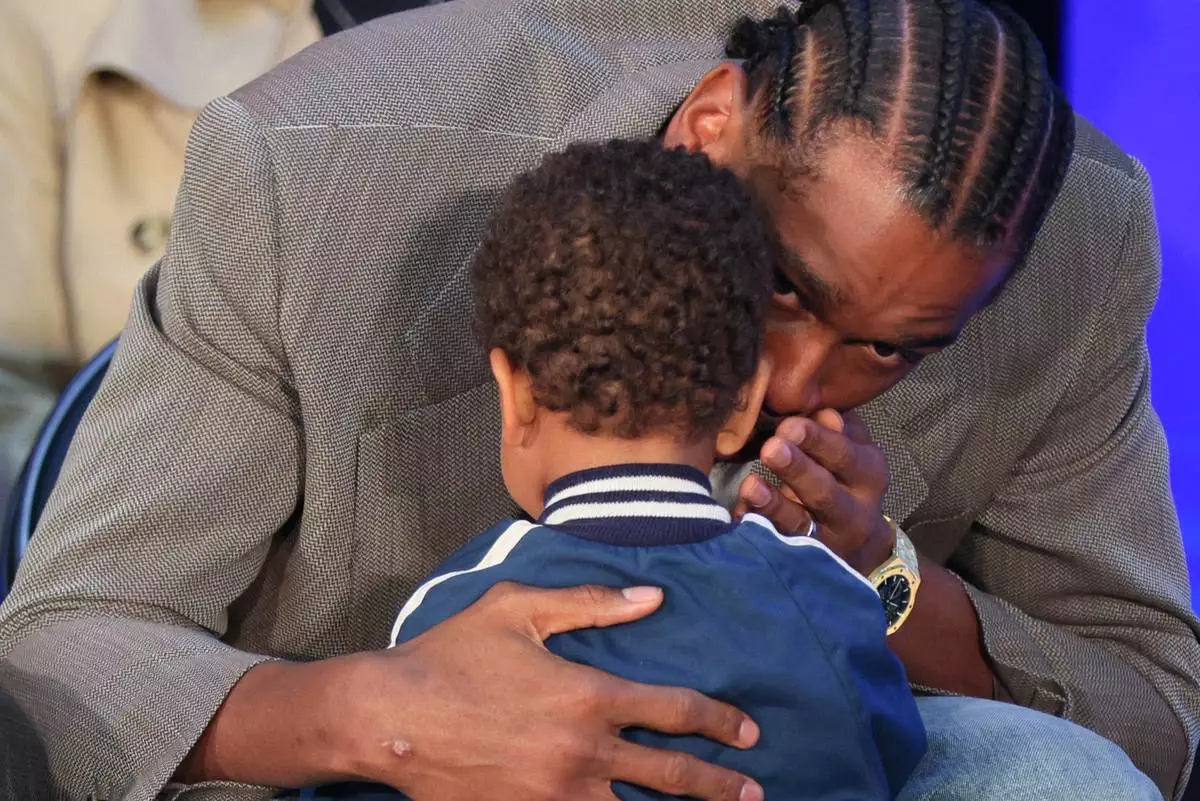
Oklahoma City Thunder guard Shai Gilgeous-Alexander whispers to his son Ares Alexander before a news conference after Gilgeous-Alexander was named the NBA basketball MVP, Sunday, May 17, 2026, in Oklahoma City. (AP Photo/Nate Billings)
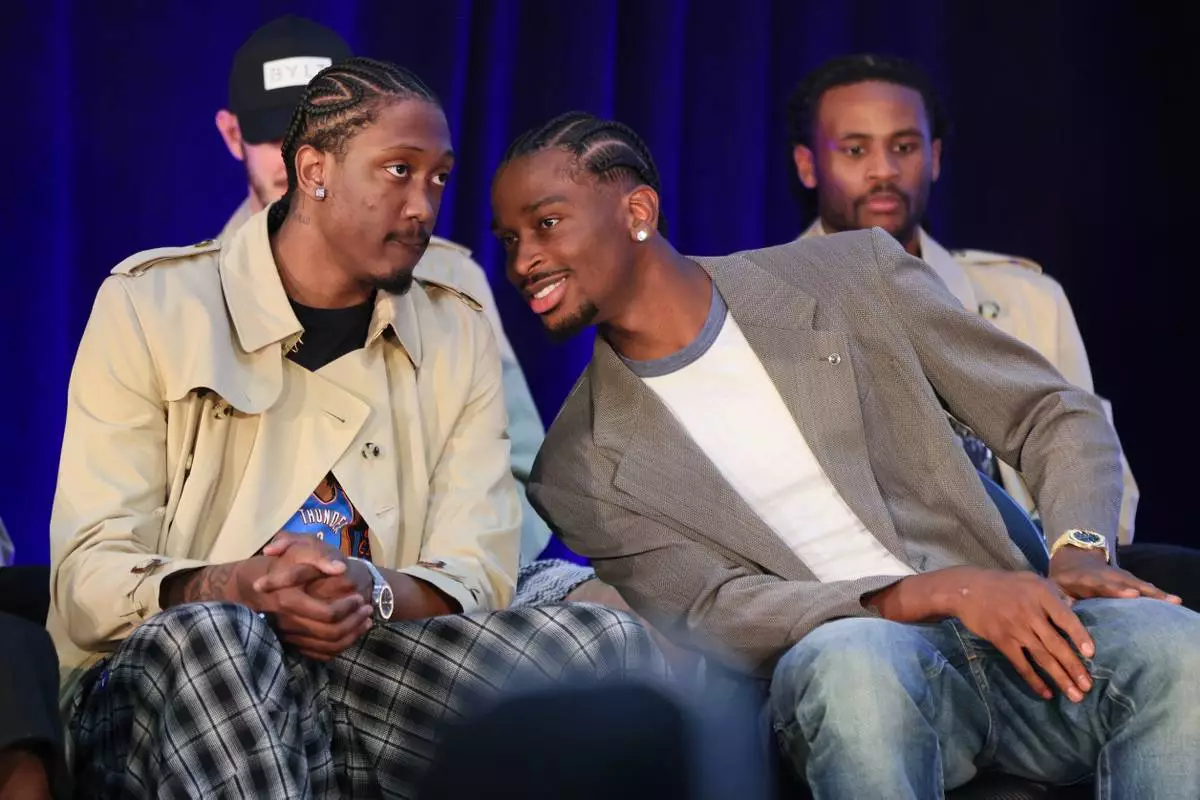
Oklahoma City Thunder guard Shai Gilgeous-Alexander, right, talks to guard Jalen Williams, left, before a news conference after Gilgeous-Alexander was named the NBA basketball MVP as guard Cason Wallace, back right, looks on, Sunday, May 17, 2026, in Oklahoma City. (AP Photo/Nate Billings)
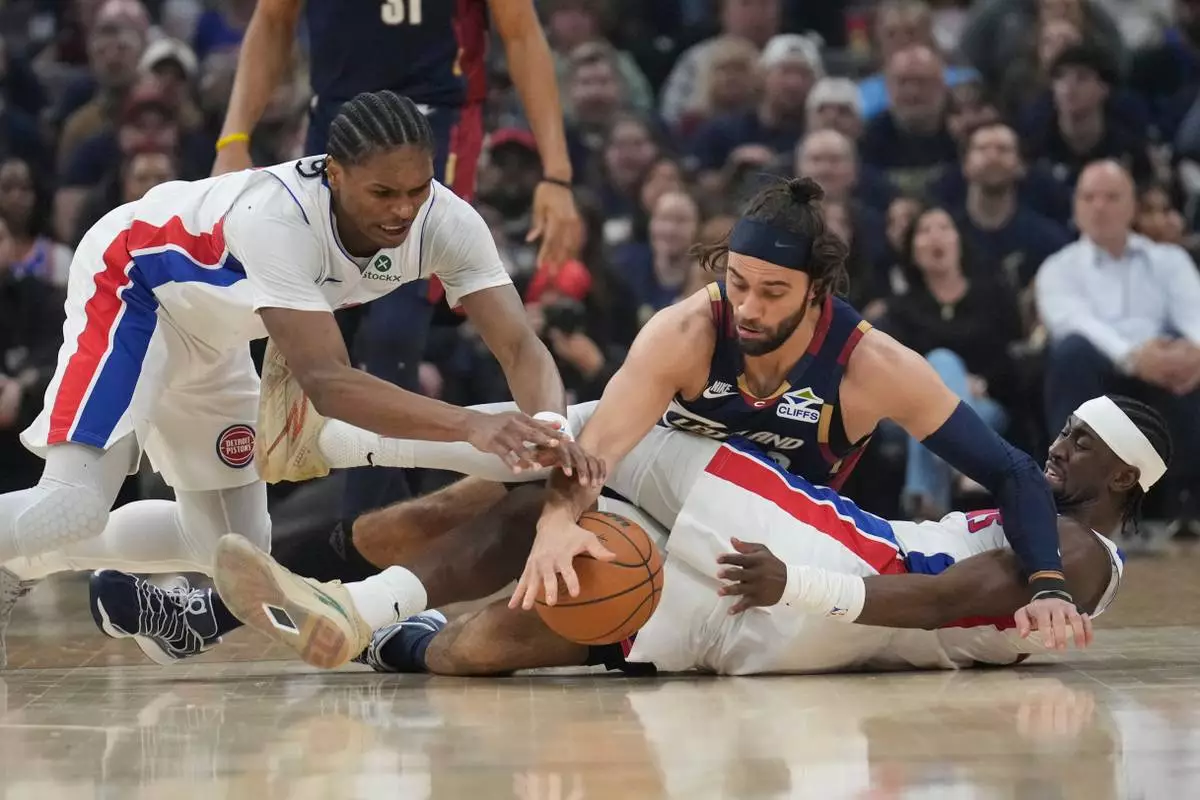
Detroit Pistons' Ausar Thompson, left, and Cleveland Cavalirs' Max Strus, center, reach for the ball over Caris LeVert, right, in the first half of Game 6 of a second-round NBA basketball playoffs series Friday, May 15, 2026, in Cleveland. (AP Photo/Sue Ogrocki)
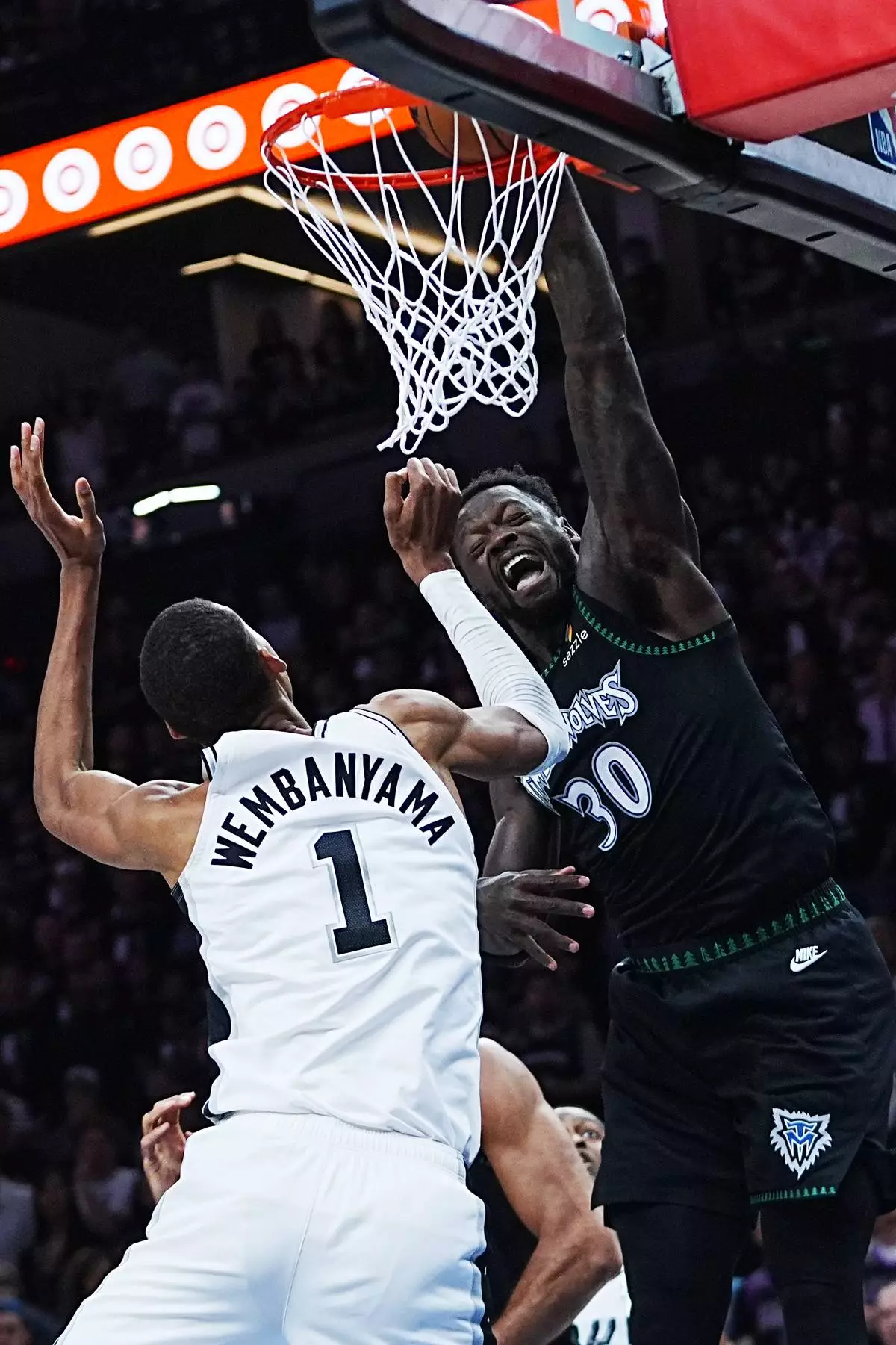
Minnesota Timberwolves forward Julius Randle (30) scores over San Antonio Spurs forward Victor Wembanyama (1) during the first half of Game 6 of an NBA basketball second-round playoffs series in Minneapolis, Friday, May 15, 2026. (AP Photo/Abbie Parr)
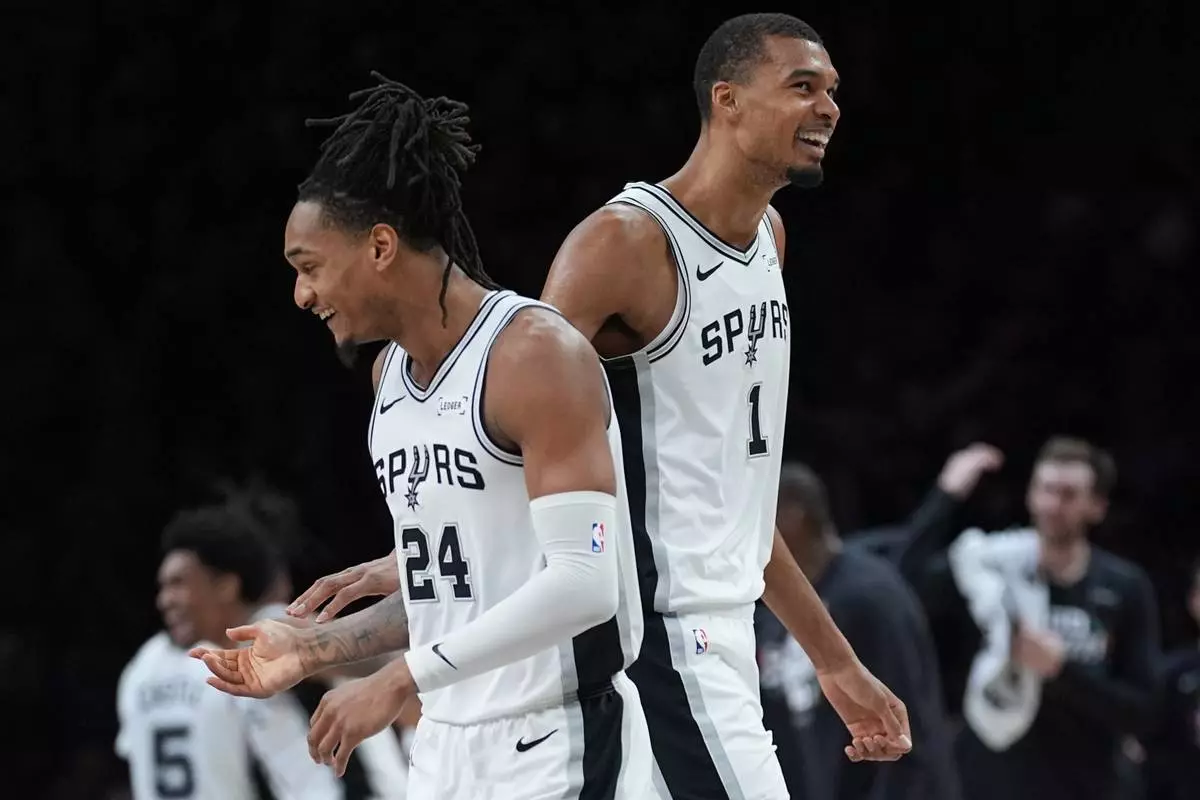
San Antonio Spurs guard Devin Vassell (24) and forward Victor Wembanyama (1) celebrate a score against the Minnesota Timberwolves during the first half of Game 6 of an NBA basketball second-round playoffs series in Minneapolis, Friday, May 15, 2026. (AP Photo/Abbie Parr)
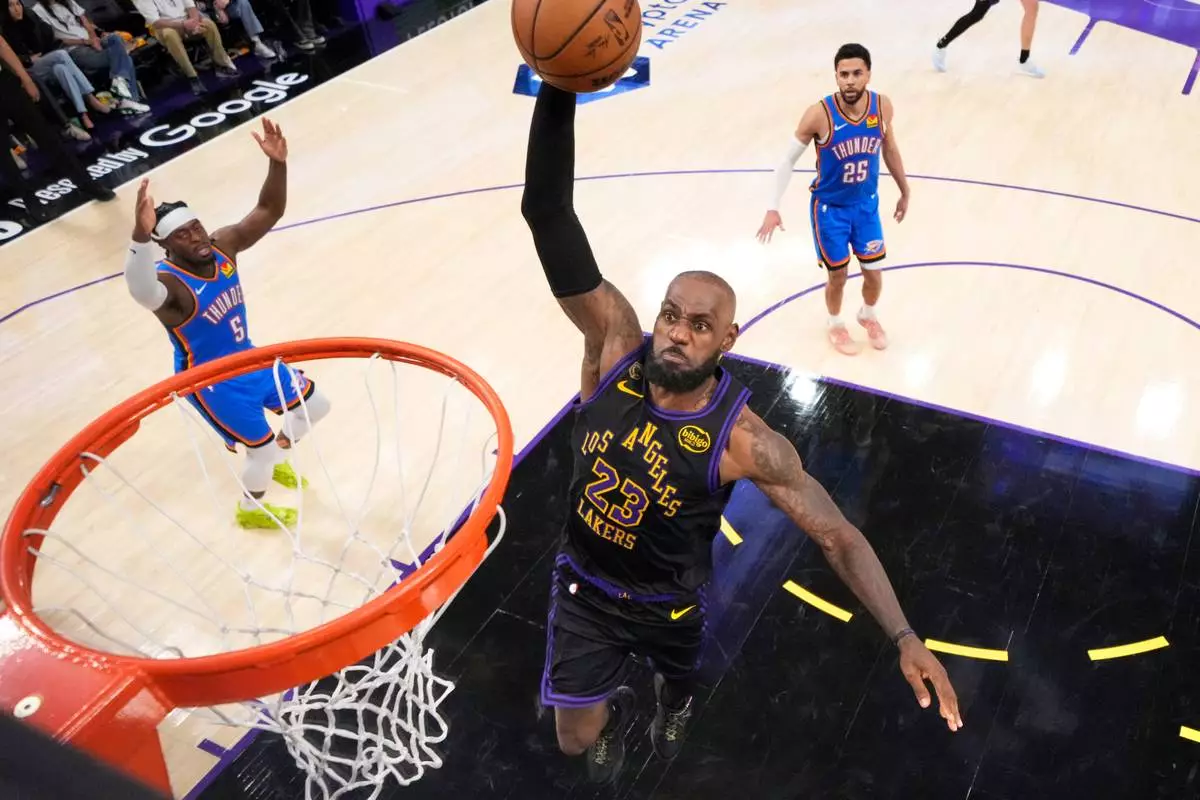
Los Angeles Lakers forward LeBron James, center, goes up for a dunk as Oklahoma City Thunder guard Luguentz Dort, left, and guard Ajay Mitchell watch during the second half of Game 4 in a second-round NBA basketball playoffs series Monday, May 11, 2026, in Los Angeles. (AP Photo/Mark J. Terrill)
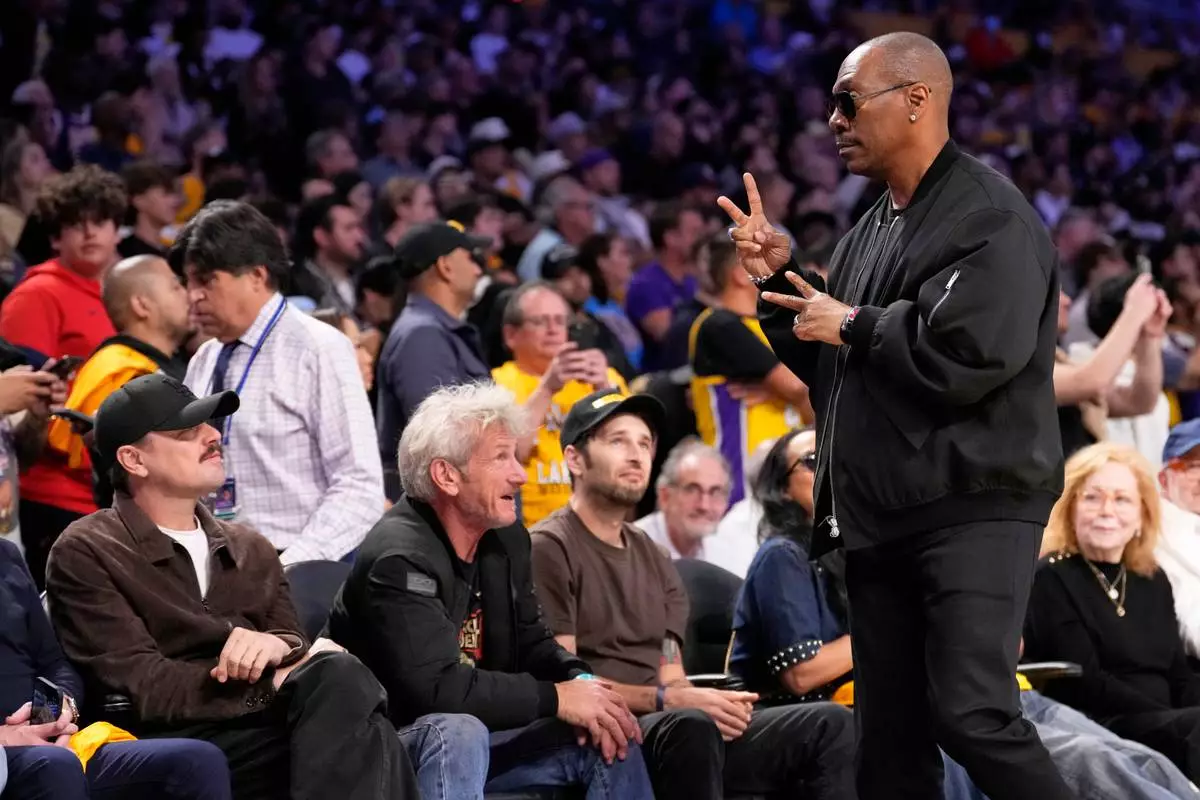
Actor Eddie Murphy, right, gestures as he walks off the court while actor Leonardo DiCaprio, left, and Sean Penn, second from left, watch during the second half of Game 4 in a second-round NBA basketball playoffs series between the Los Angeles Lakers and the Oklahoma City Thunder, Monday, May 11, 2026, in Los Angeles. (AP Photo/Mark J. Terrill)
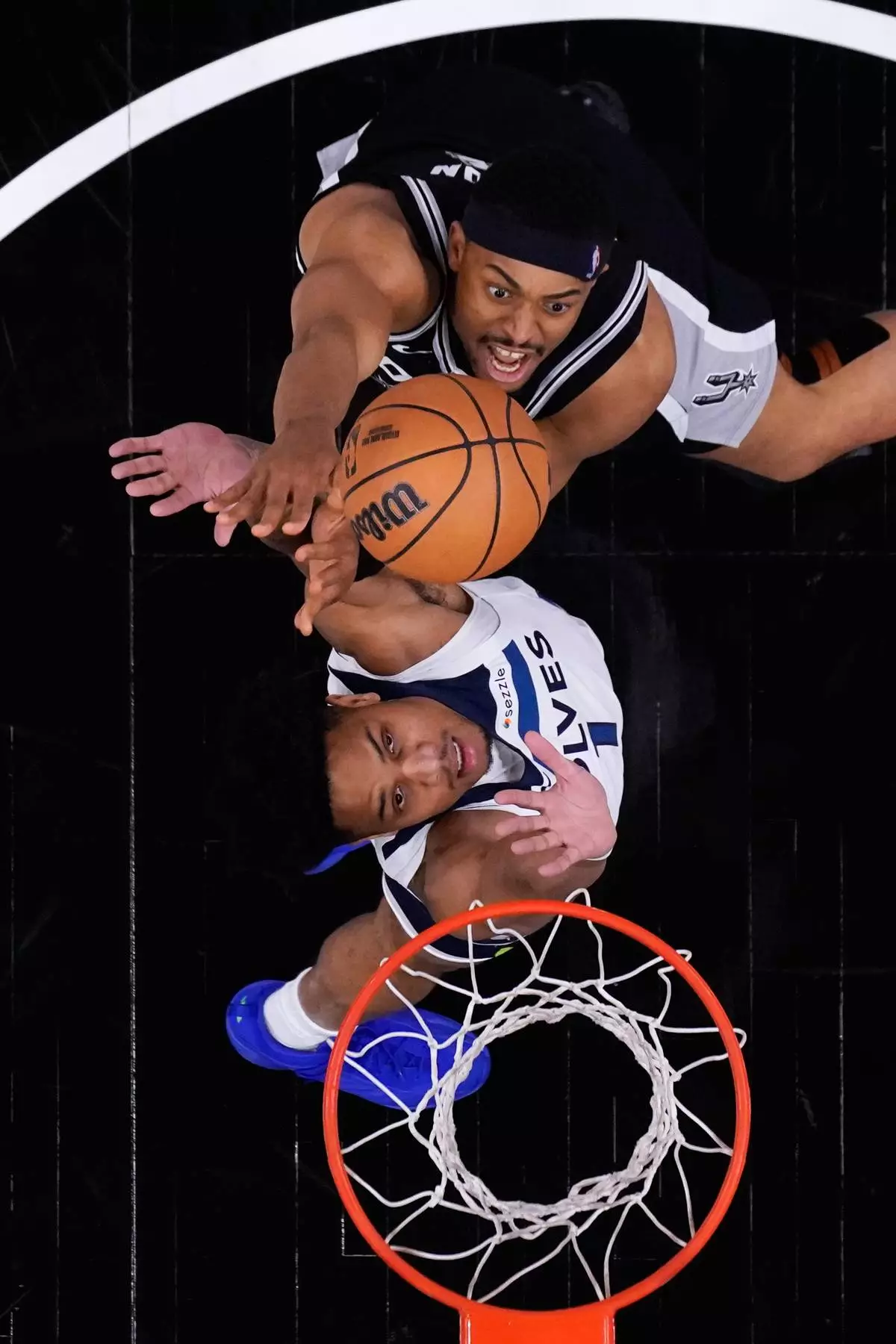
San Antonio Spurs forward Keldon Johnson, top, drives to the basket against Minnesota Timberwolves guard Terrence Shannon Jr. (1) during the first half of Game 5 of an NBA basketball second-round playoffs series in Minneapolis, Tuesday, May 12, 2026. (AP Photo/Eric Gay)
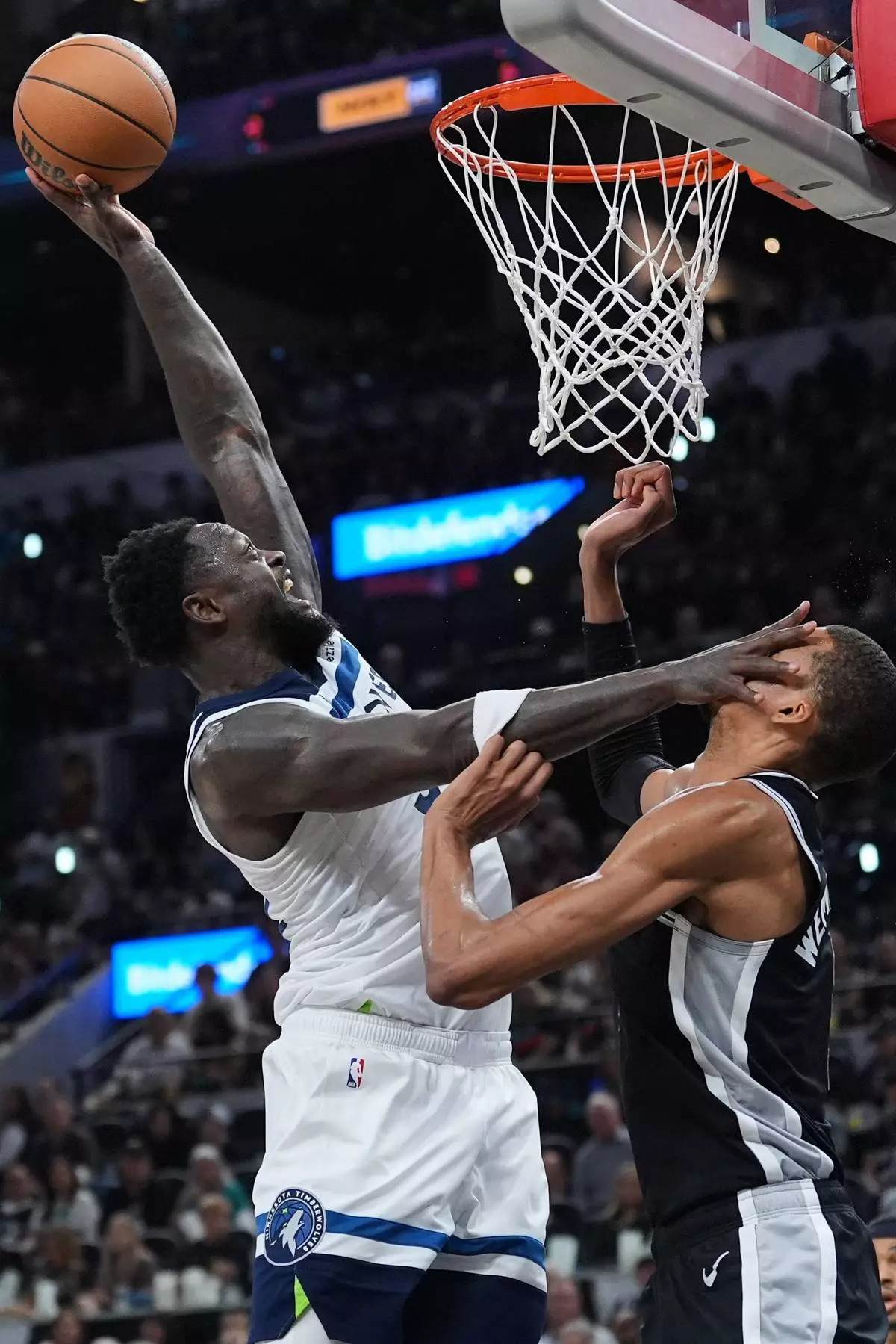
Minnesota Timberwolves forward Julius Randle (30) drives to the basket against San Antonio Spurs forward Victor Wembanyama (1) during the second half of Game 5 of an NBA basketball second-round playoffs series in Minneapolis, Tuesday, May 12, 2026. (AP Photo/Eric Gay)
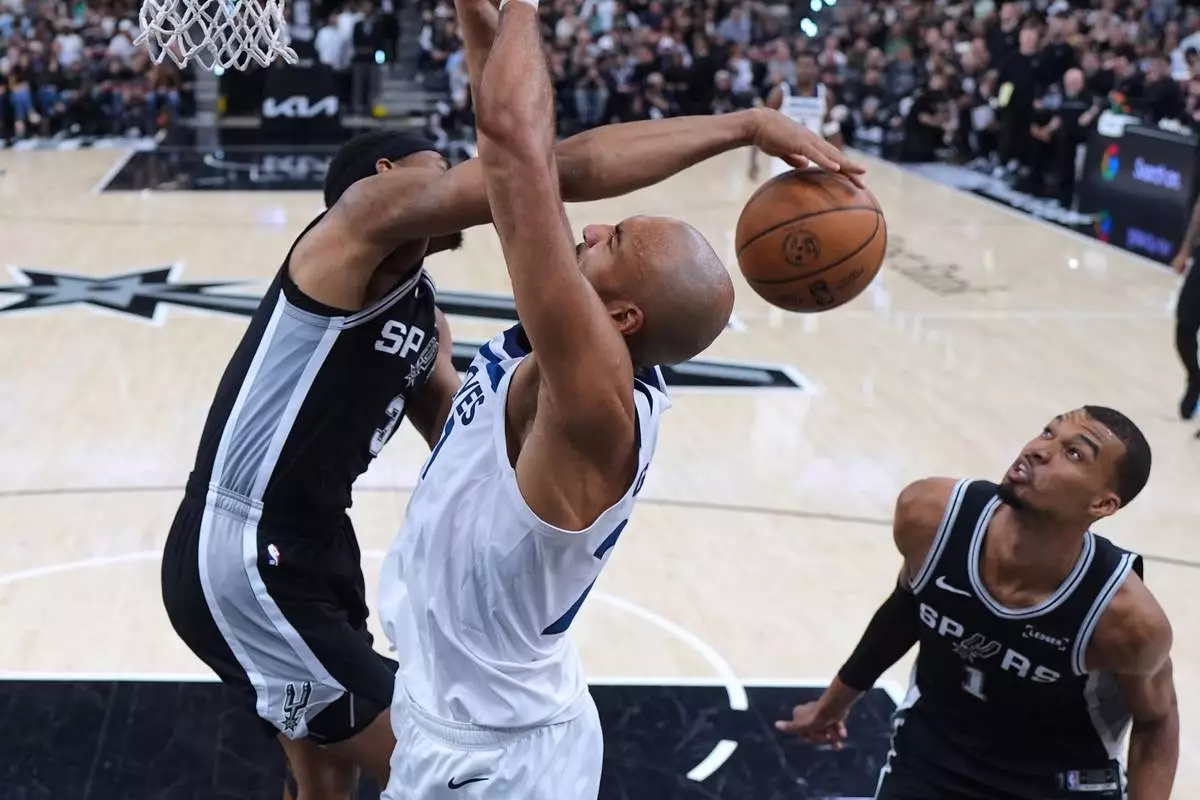
Minnesota Timberwolves center Rudy Gobert, center, is blocked by San Antonio Spurs forward Keldon Johnson (3) as forward Victor Wembanyama (1) looks on during the second half of Game 5 of an NBA basketball second-round playoffs series in Minneapolis, Tuesday, May 12, 2026. (AP Photo/Eric Gay)
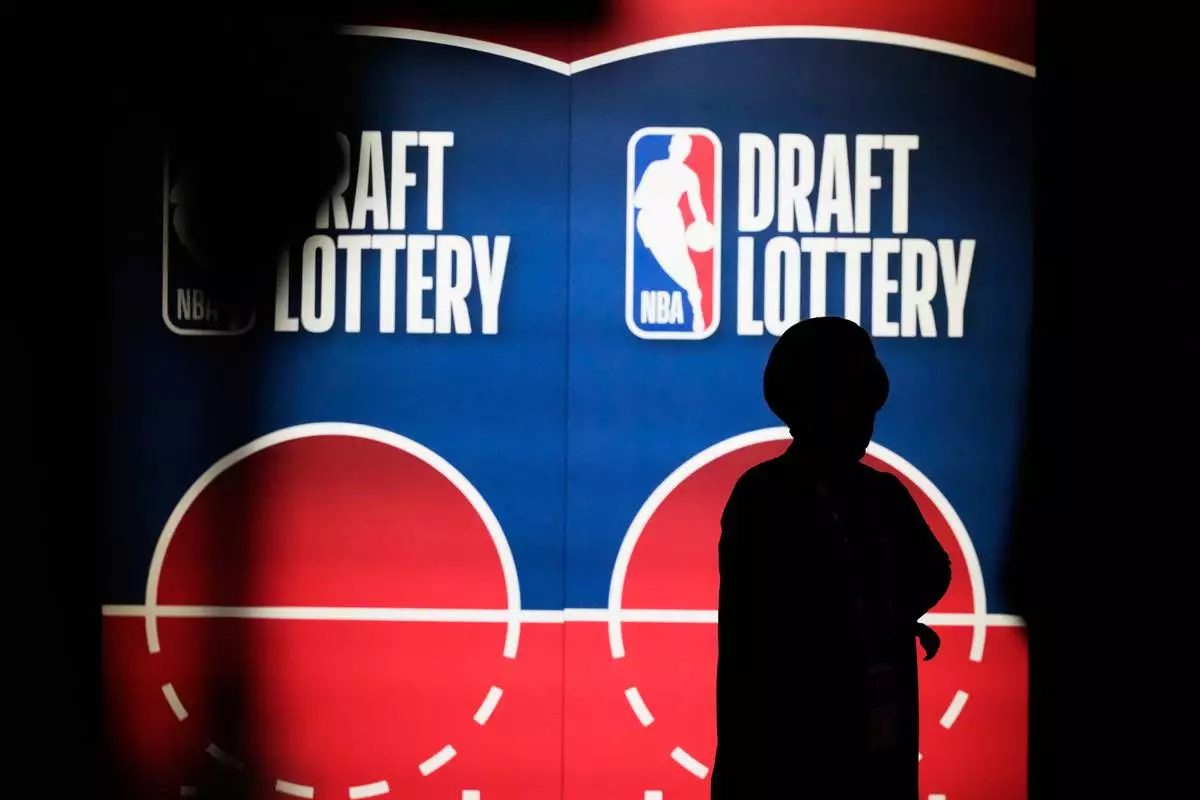
A person attends the NBA basketball draft lottery in Chicago, Sunday, May 10, 2026. (AP Photo/Nam Y. Huh)
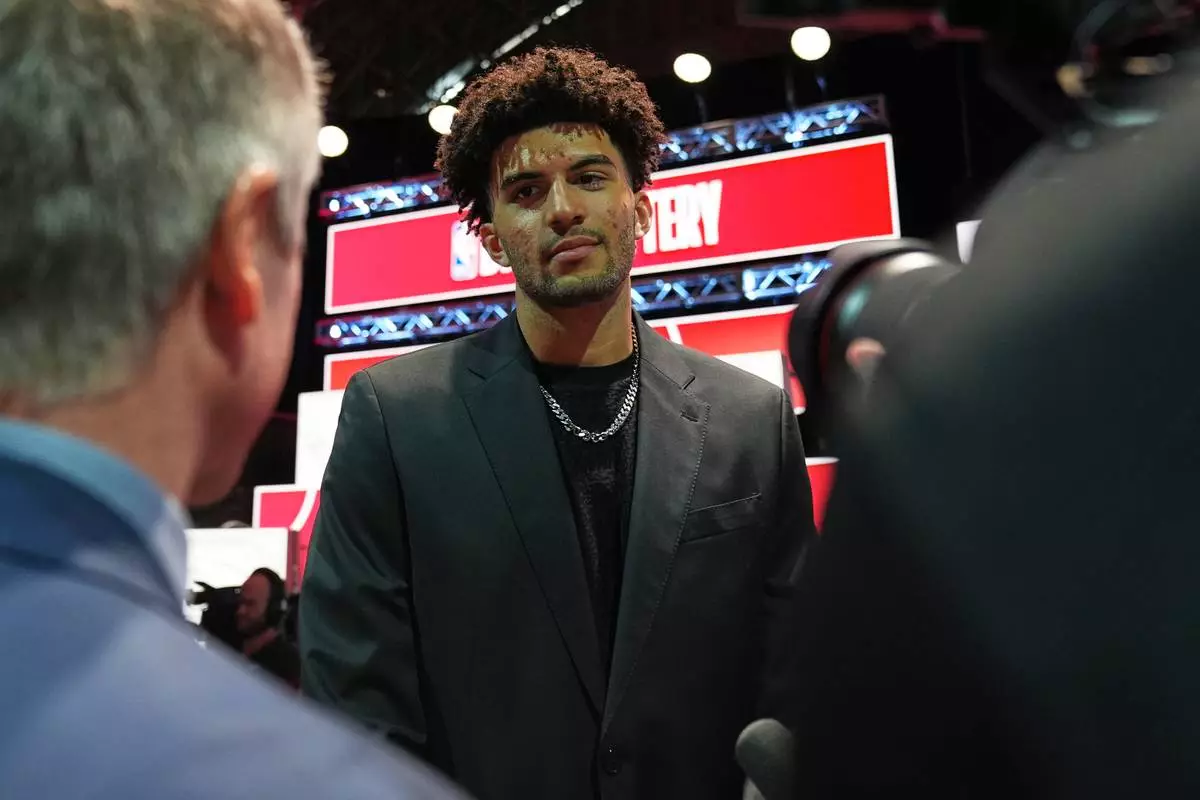
Duke forward Cameron Boozer talks to media during the NBA basketball draft lottery in Chicago, Sunday, May 10, 2026. (AP Photo/Nam Y. Huh)
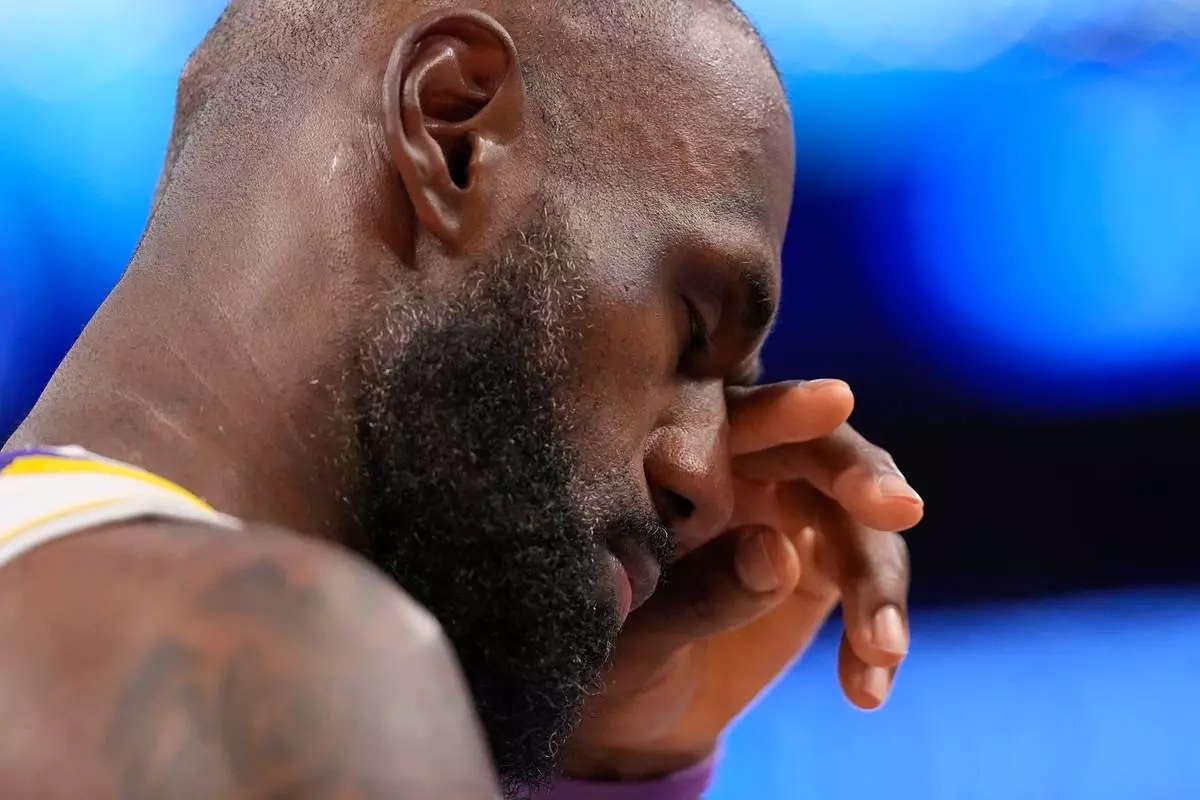
Los Angeles Lakers forward LeBron James wipes his eye in the closing minutes in the second half of Game 3 in a second-round NBA basketball playoffs series against the Oklahoma City Thunder, Saturday, May 9, 2026, in Los Angeles. (AP Photo/Mark J. Terrill)
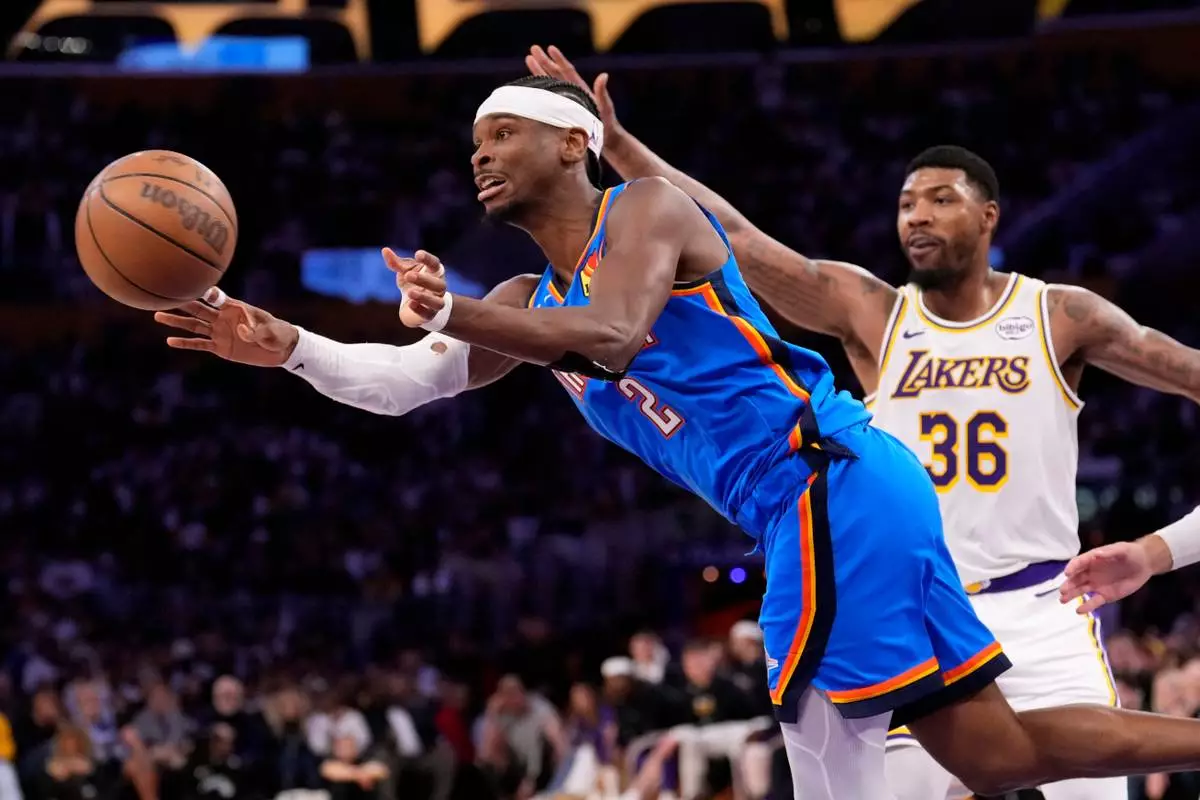
Oklahoma City Thunder guard Shai Gilgeous-Alexander, left, passes as Los Angeles Lakers guard Marcus Smart defends during the second half of Game 3 in a second-round NBA basketball playoffs series Saturday, May 9, 2026, in Los Angeles. (AP Photo/Mark J. Terrill)
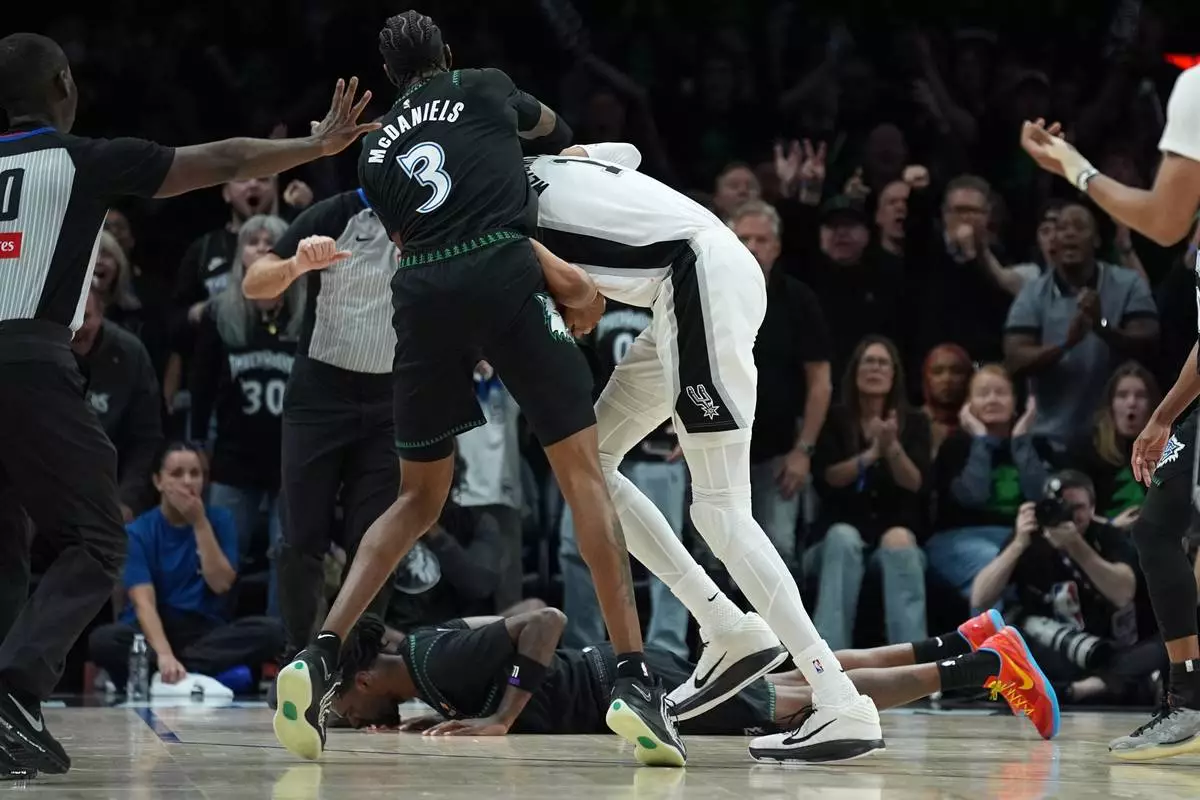
Minnesota Timberwolves center Naz Reid (11) falls to the court after he was fouled by San Antonio Spurs forward Victor Wembanyama (1) as he and forward Jaden McDaniels (3) battled for a rebound during the first half of Game 4 of an NBA basketball second-round playoffs series in Minneapolis, Sunday, May 10, 2026. (AP Photo/Abbie Parr)
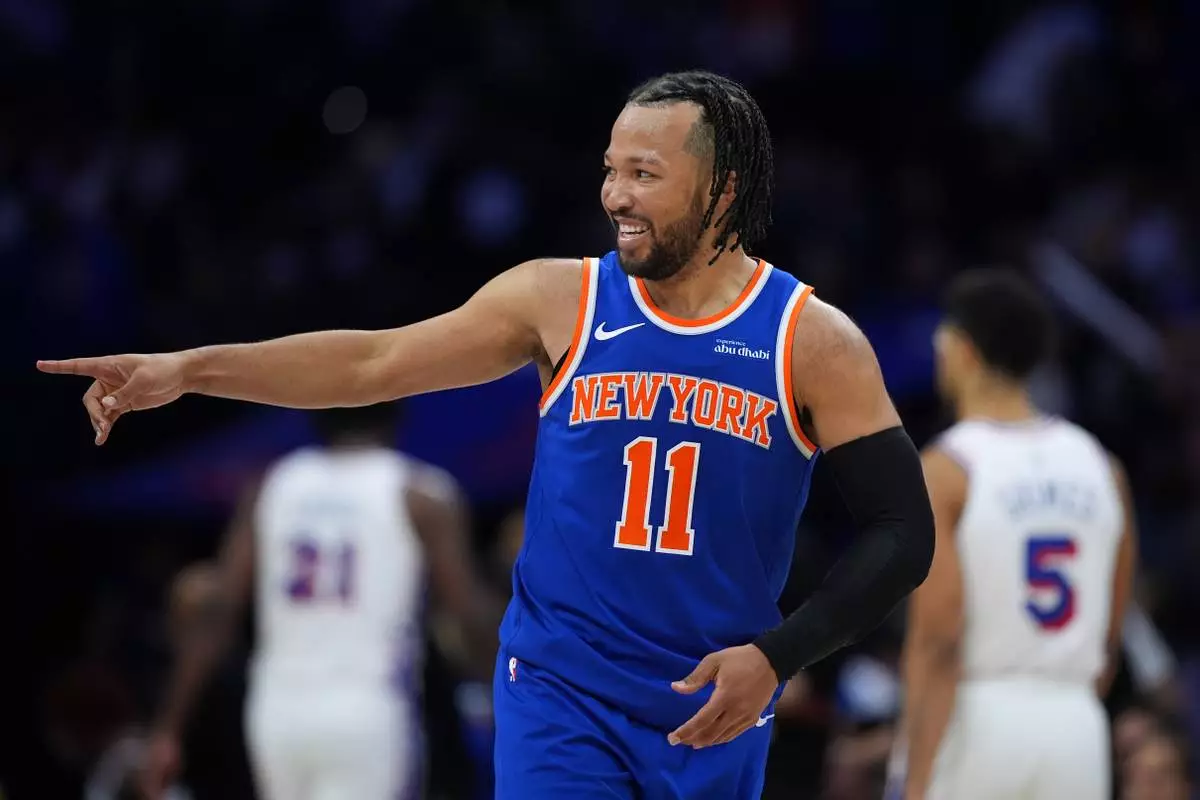
New York Knicks' Jalen Brunson reacts after scoring during the second half of Game 4 against the Philadelphia 76ers in a second-round NBA basketball playoffs series Sunday, May 10, 2026, in Philadelphia. (AP Photo/Matt Slocum)
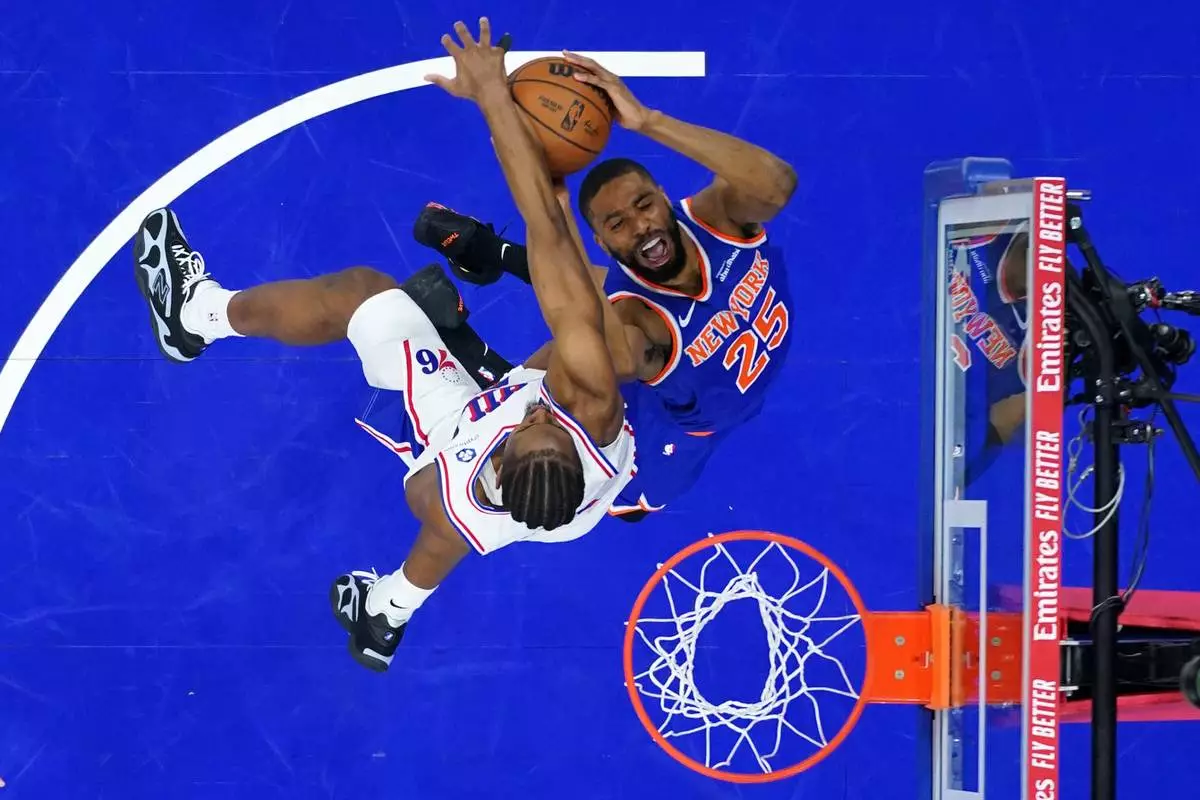
New York Knicks' Mikal Bridges, right, goes up for a shot against Philadelphia 76ers' Tyrese Maxey during the second half of Game 3 in a second-round NBA basketball playoff series Friday, May 8, 2026, in Philadelphia. (AP Photo/Matt Slocum)
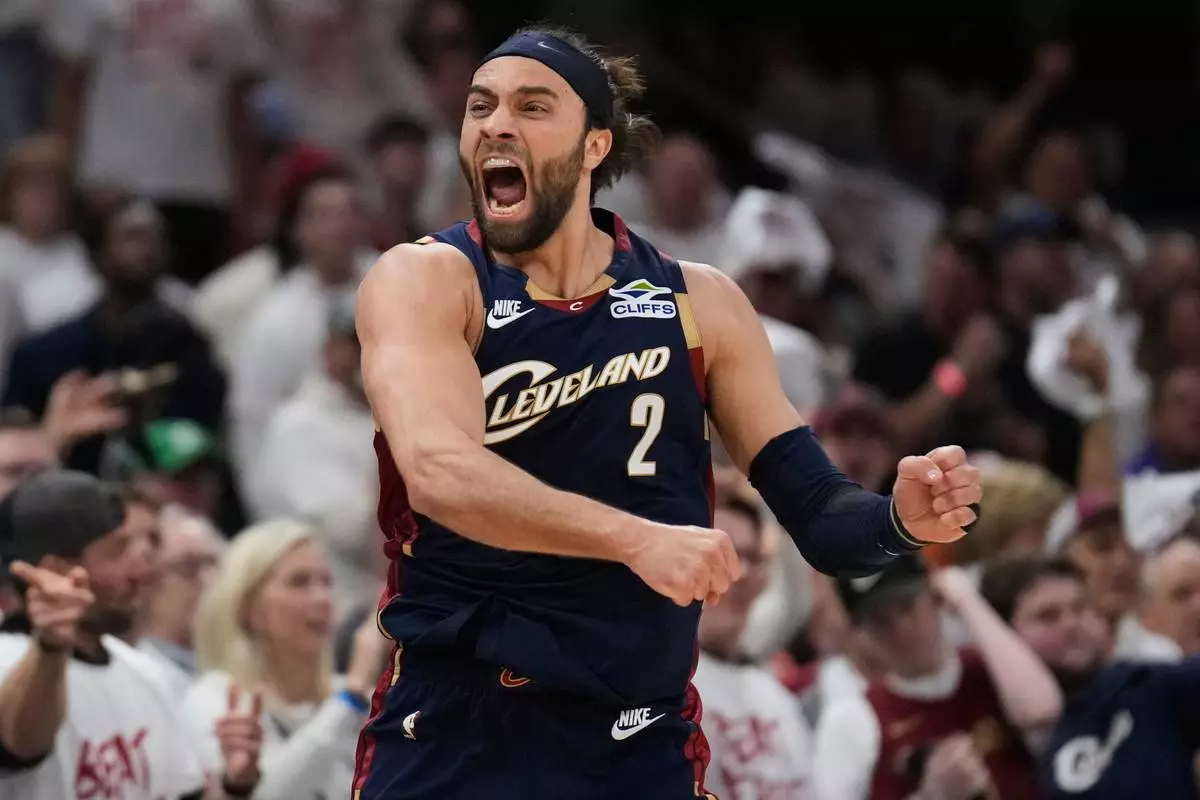
Cleveland Cavaliers guard Max Strus (2) celebrates a turnover by the Detroit Pistons in the first half of Game 3 of a second-round NBA playoffs basketball series Saturday, May 9, 2026 in Cleveland. (AP Photo/Sue Ogrocki)
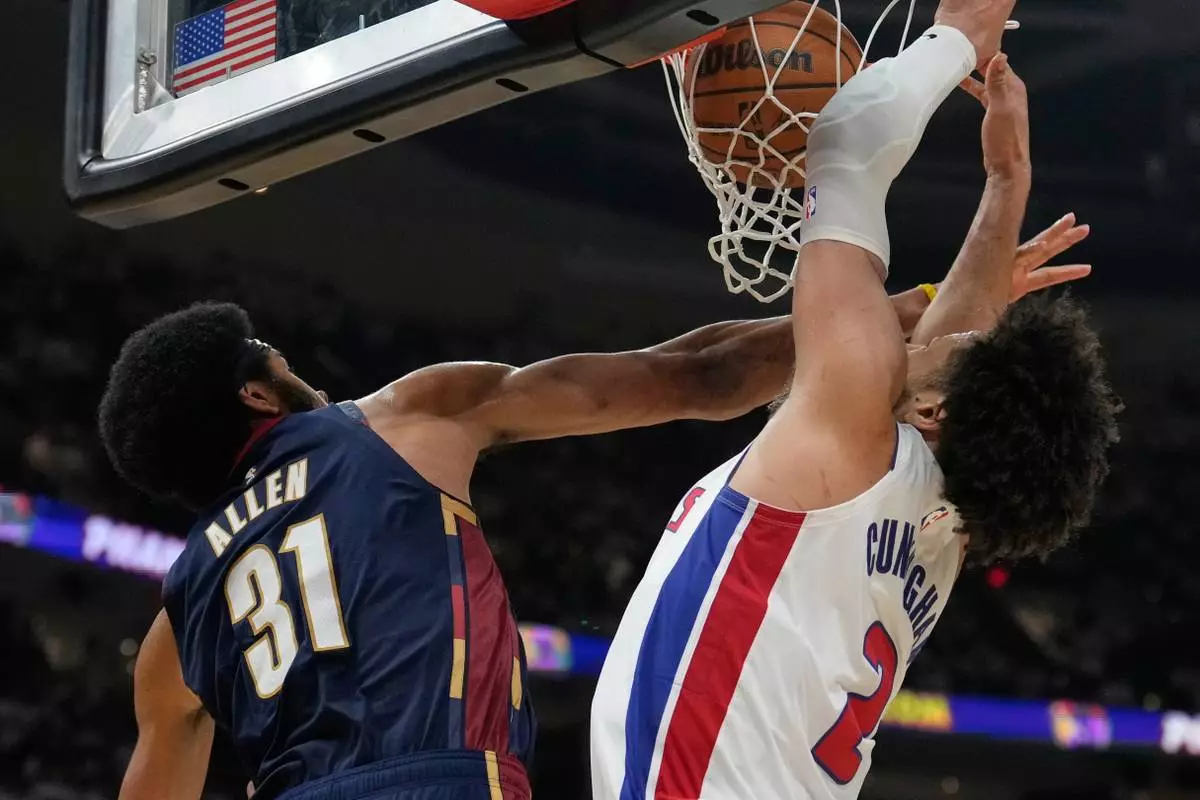
Detroit Pistons guard Cade Cunningham (2) dunks as Cleveland Cavaliers center Jarrett Allen (31) defends in the second half of Game 3 of a second-round NBA playoffs basketball series Saturday, May 9, 2026 in Cleveland. (AP Photo/Sue Ogrocki)
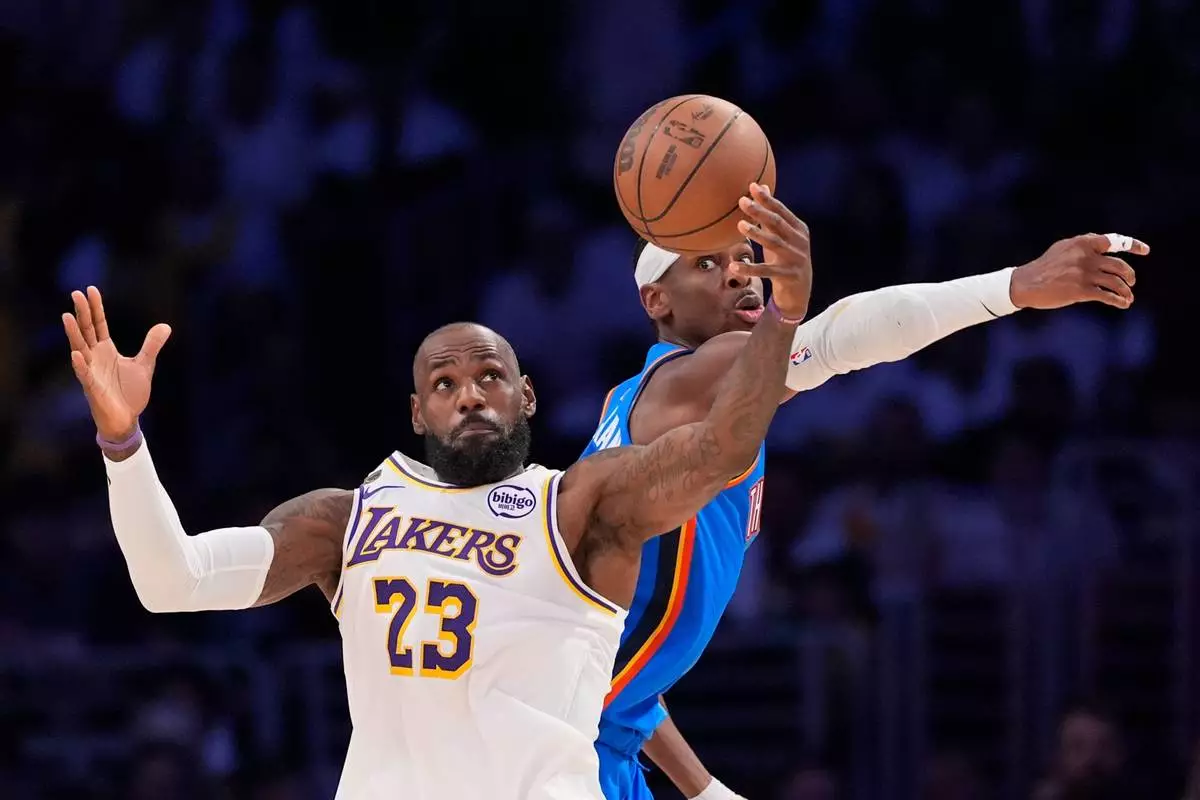
Los Angeles Lakers forward LeBron James, left, takes a pass as Oklahoma City Thunder guard Shai Gilgeous-Alexander defends during the first half of Game 3 in a second-round NBA basketball playoffs series Saturday, May 9, 2026, in Los Angeles. (AP Photo/Mark J. Terrill)
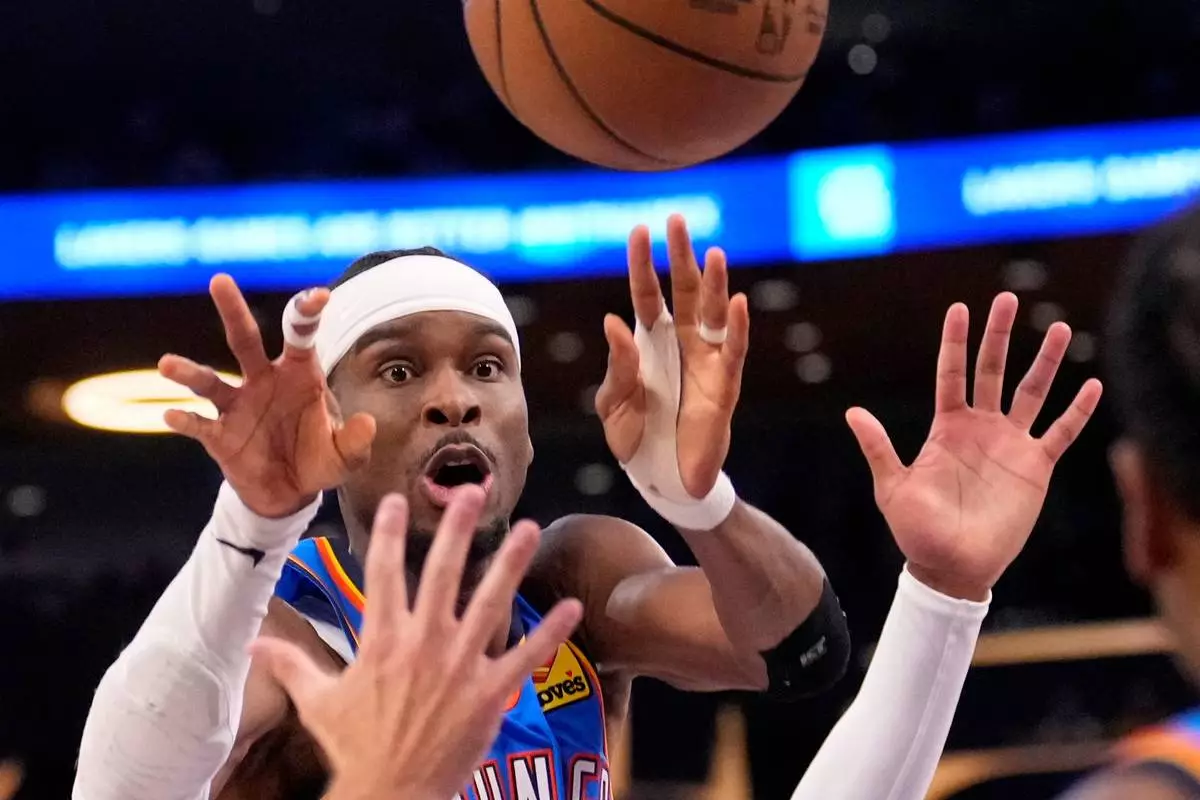
Oklahoma City Thunder guard Shai Gilgeous-Alexander passes the ball during the second half of Game 3 in a second-round NBA basketball playoffs series against the Los Angeles Lakers, Saturday, May 9, 2026, in Los Angeles. (AP Photo/Mark J. Terrill)
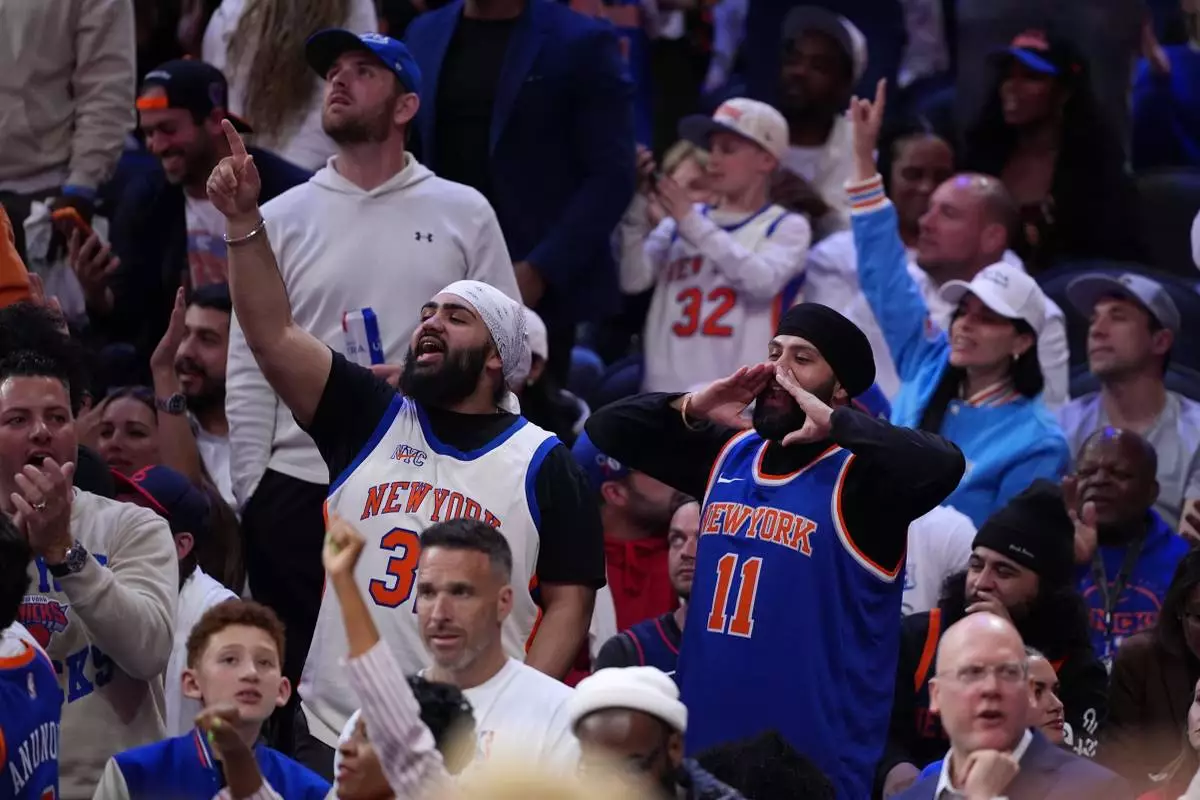
New York Knicks' fan react during the second half of Game 3 in a second-round NBA basketball playoff series against the Philadelphia 76ers Friday, May 8, 2026, in Philadelphia. (AP Photo/Matt Slocum)
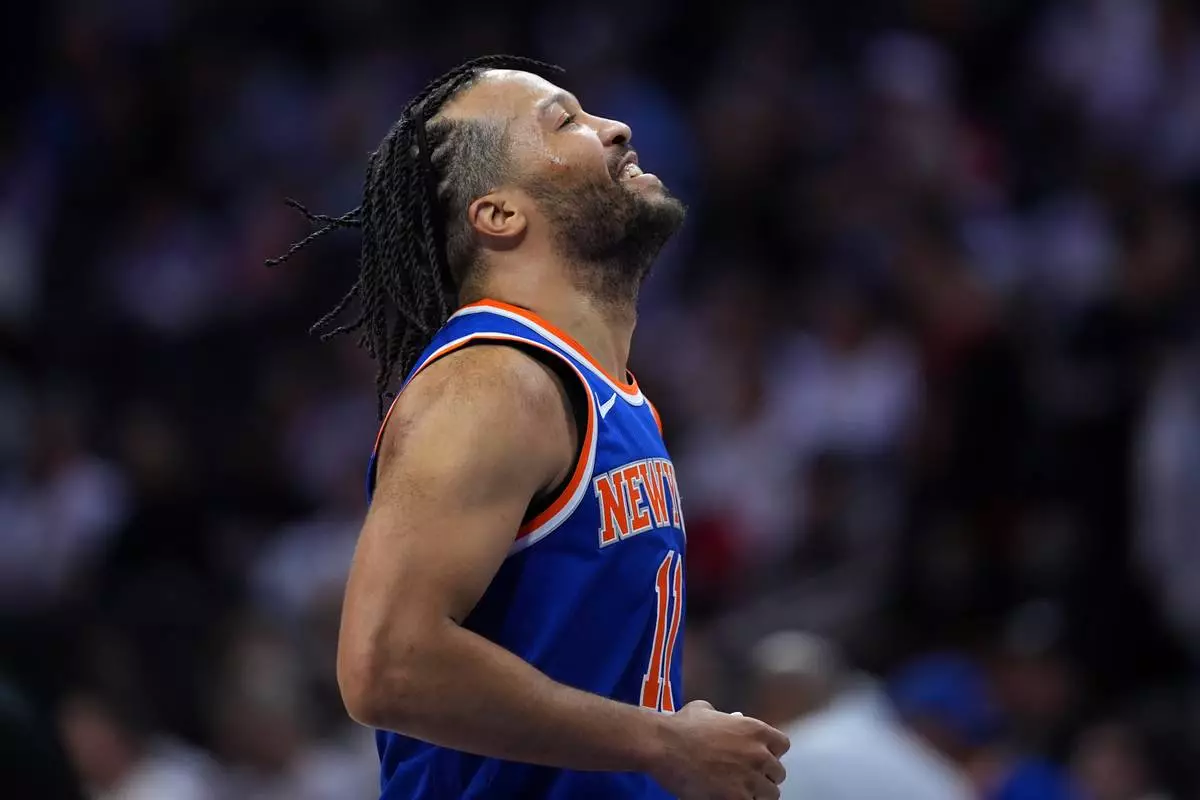
New York Knicks' Jalen Brunson reacts during the second half of Game 3 in a second-round NBA basketball playoff series against the Philadelphia 76ers Friday, May 8, 2026, in Philadelphia. (AP Photo/Matt Slocum)
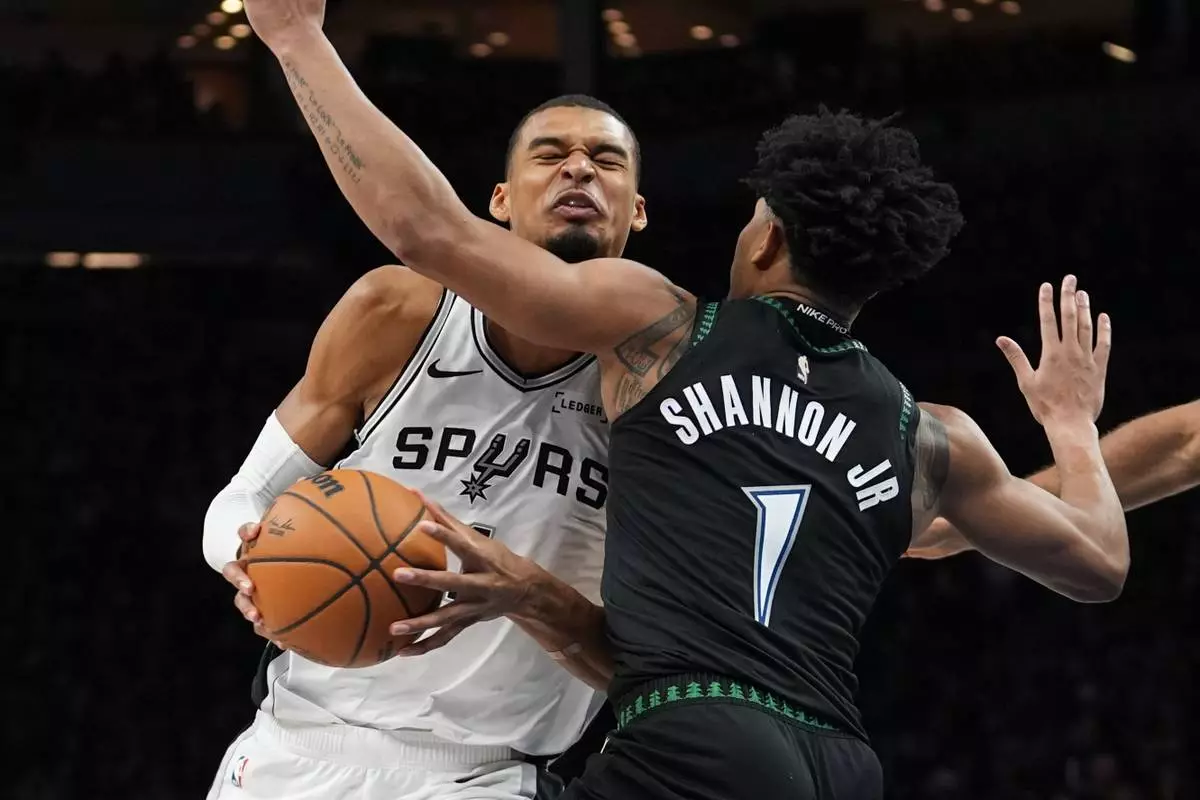
San Antonio Spurs forward Victor Wembanyama, left, is fouled by Minnesota Timberwolves guard Terrence Shannon Jr. (1) as he drives to the basket during the second half of Game 3 of a NBA basketball second-round playoff series in Minneapolis, Friday, May 8, 2026. (AP Photo/Abbie Parr)
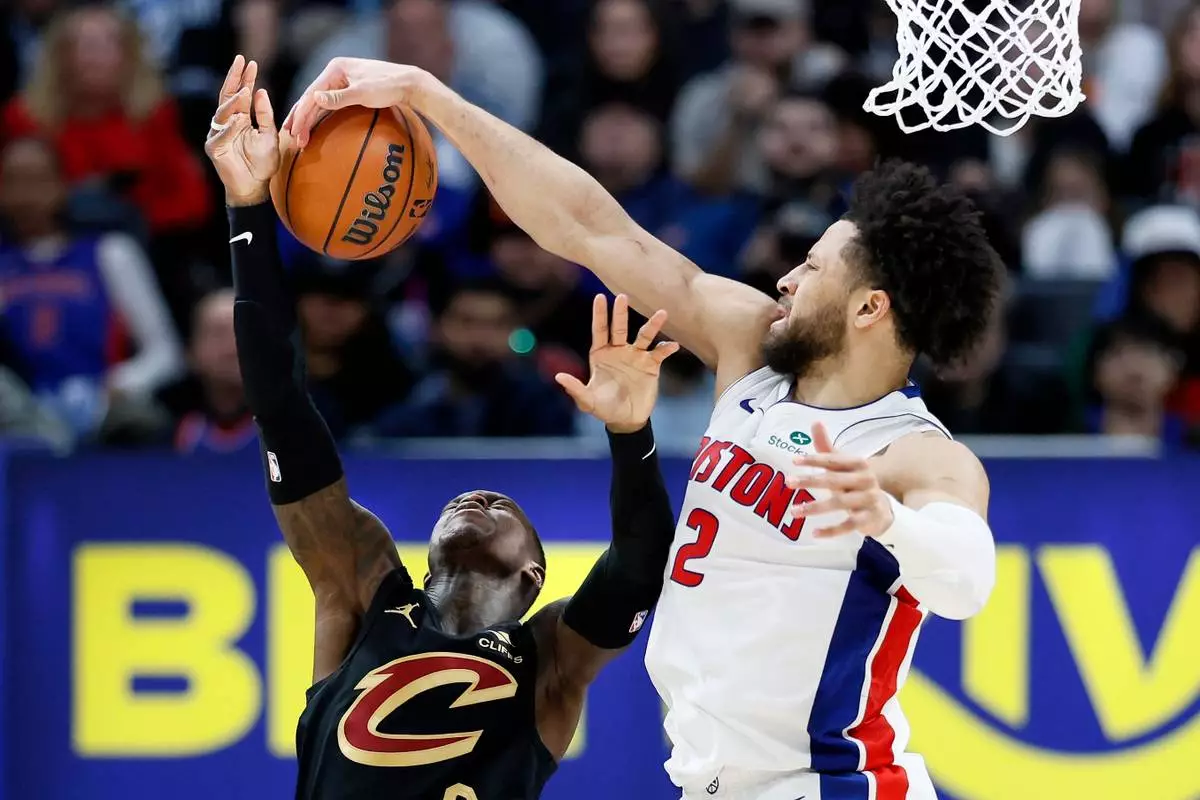
Detroit Pistons guard Cade Cunningham (2) blocks a shot attempted by Cleveland Cavaliers guard Dennis Schroder (8) during the second half in Game 2 of a second-round NBA playoffs basketball series, Thursday, May 7, 2026, in Detroit. (AP Photo/Duane Burleson)
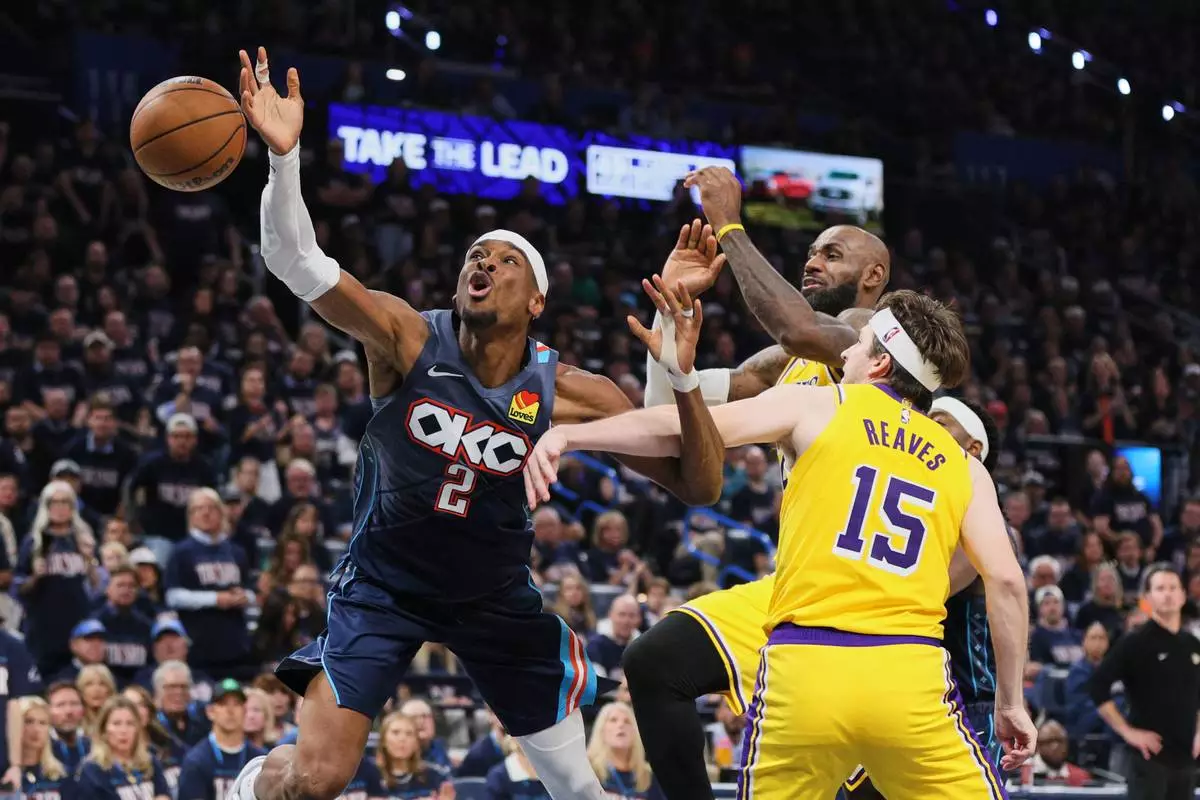
Oklahoma City Thunder's Shai Gilgeous-Alexander (2) is fouled driving to the basket by Los Angeles Lakers' Austin Reaves (15) as LeBron James, right rear, follows behind on the play in the second half of Game 2 in a second-round NBA basketball playoffs series Thursday, May 7, 2026, in Oklahoma City. (AP Photo/Nate Billings)
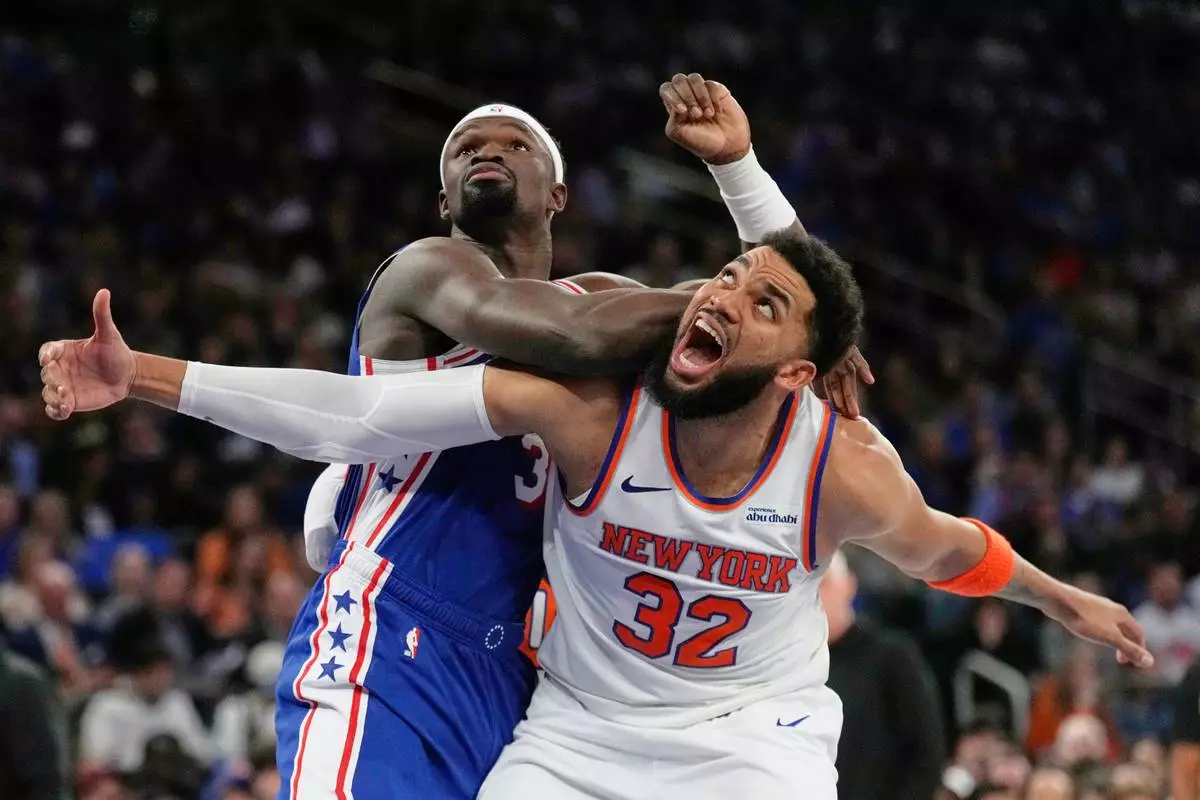
Philadelphia 76ers' Adem Bona, top, fouls New York Knicks' Karl-Anthony Towns during the second half of Game 1 in a second-round NBA basketball playoffs series Monday, May 4, 2026, in New York. (AP Photo/Seth Wenig)
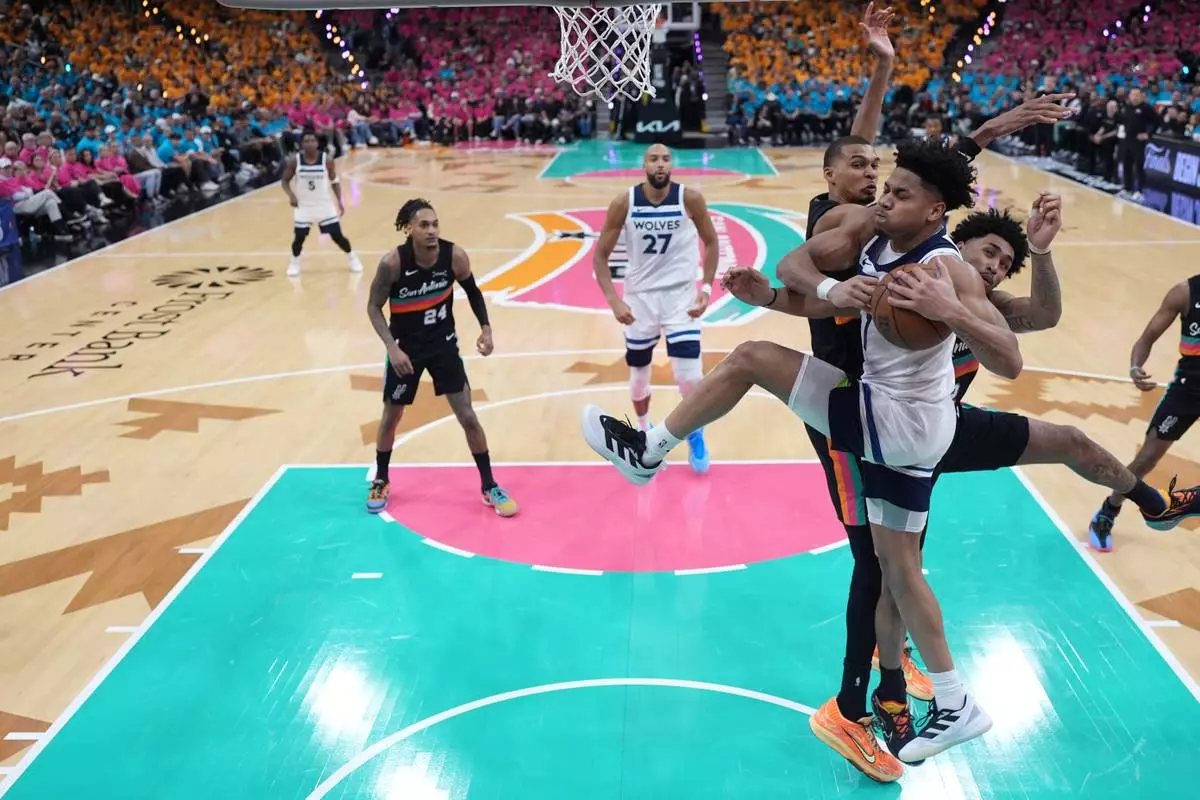
Minnesota Timberwolves guard Terrence Shannon Jr. (1), front, handles the ball as San Antonio Spurs guard Dylan Harper (2), middle, and forward-center Victor Wembanyama (1), back, defend during the second half in Game 1 of a second-round NBA playoffs basketball series in San Antonio, Monday, May 4, 2026. (AP Photo/Eric Gay)
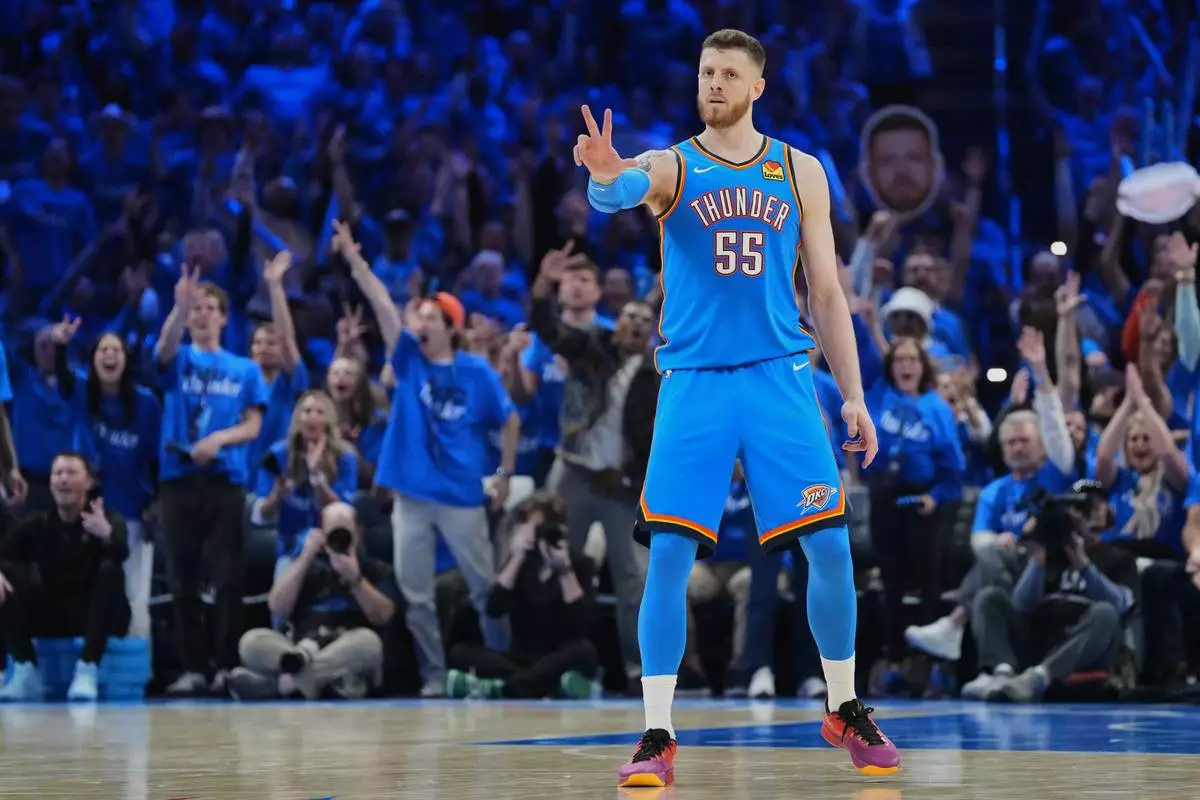
Oklahoma City Thunder center Isaiah Hartenstein (55) and fans celebrate a basket in the second half of Game 1 in a second-round NBA basketball playoffs series against the Los Angeles Lakers Tuesday, May 5, 2026 in Oklahoma City. (AP Photo/Kyle Phillips)
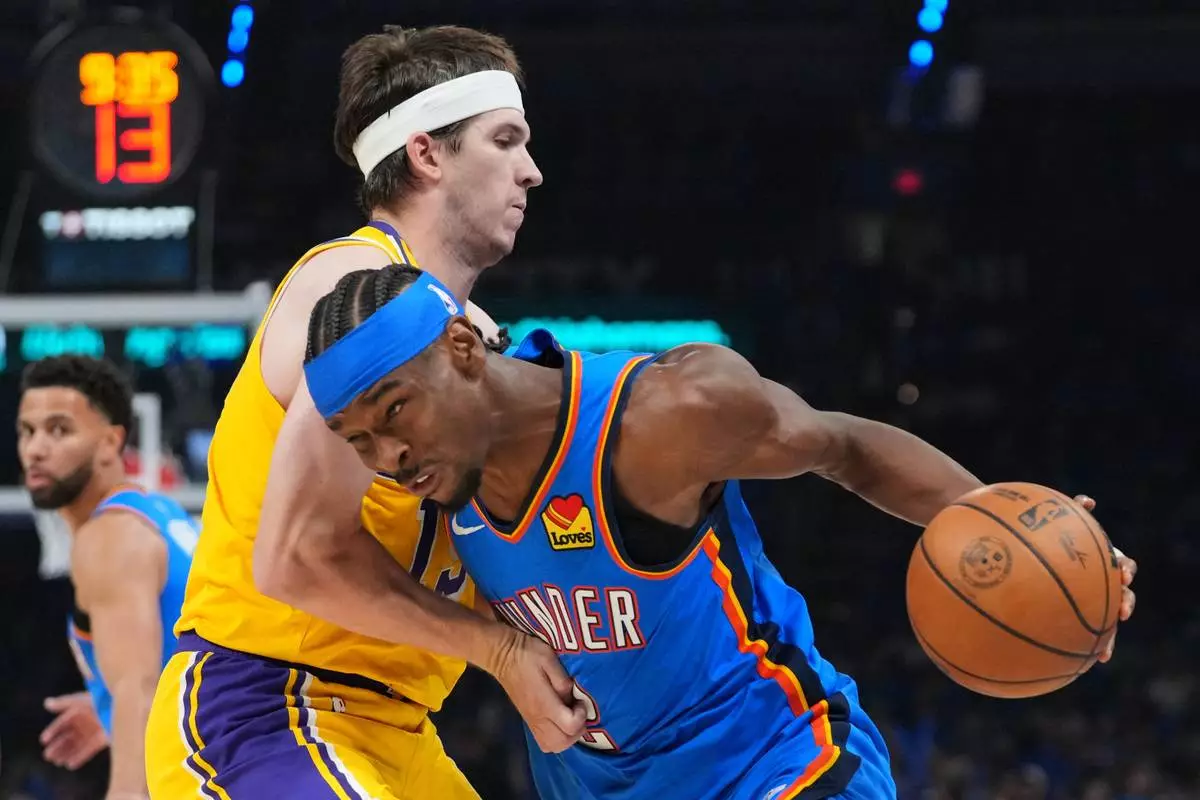
Oklahoma City Thunder guard Shai Gilgeous-Alexander, right, drives to the basket as Los Angeles Lakers guard Austin Reaves, left, defends second half of Game 1 in a second-round NBA basketball playoffs series Tuesday, May 5, 2026 in Oklahoma City. (AP Photo/Kyle Phillips)
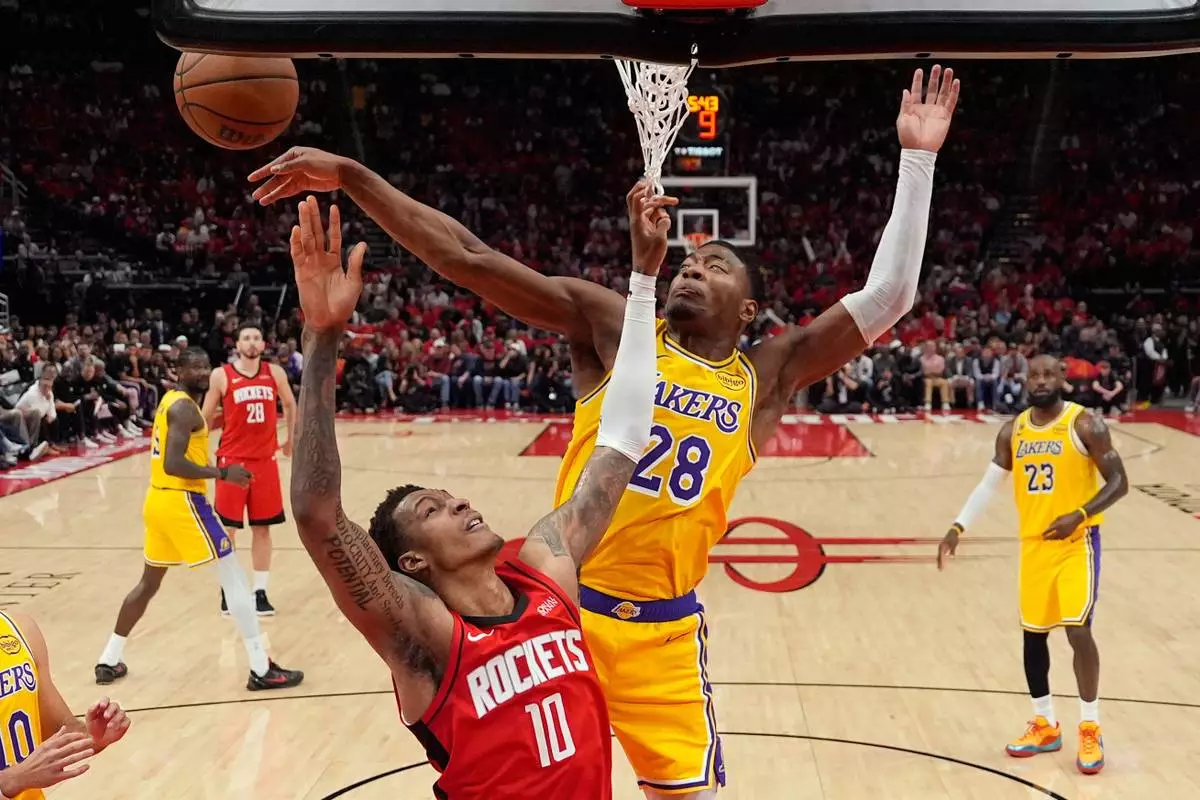
Los Angeles Lakers forward Rui Hachimura (28) blocks a shot by Houston Rockets forward Jabari Smith Jr. (10) during the first half of Game 6 of a first-round NBA playoffs basketball series in Houston, Friday, May 1, 2026. (AP Photo/Ashley Landis)
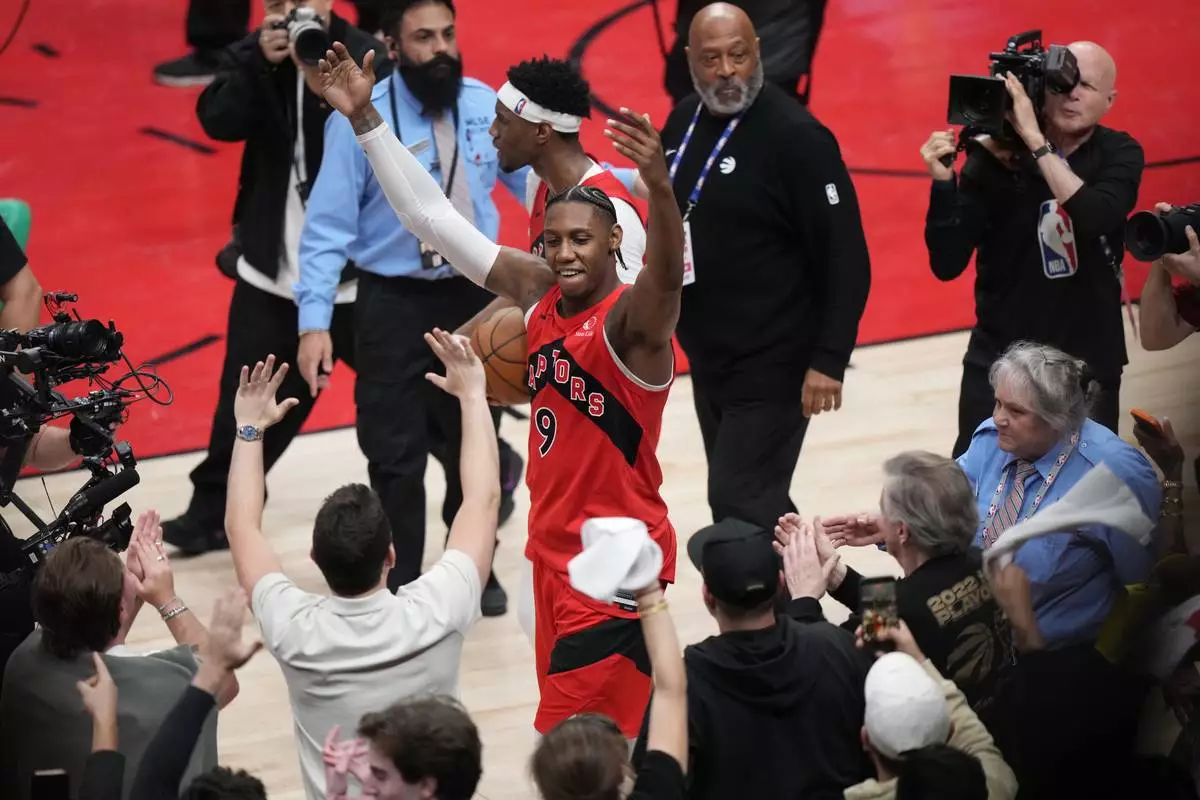
Toronto Raptors' RJ Barrett (9) celebrates with fans after a win over the Cleveland Cavaliers in Game 6 in the first round of an NBA basketball playoffs series in Toronto, Friday, May 1, 2026. (Nathan Denette/The Canadian Press via AP)
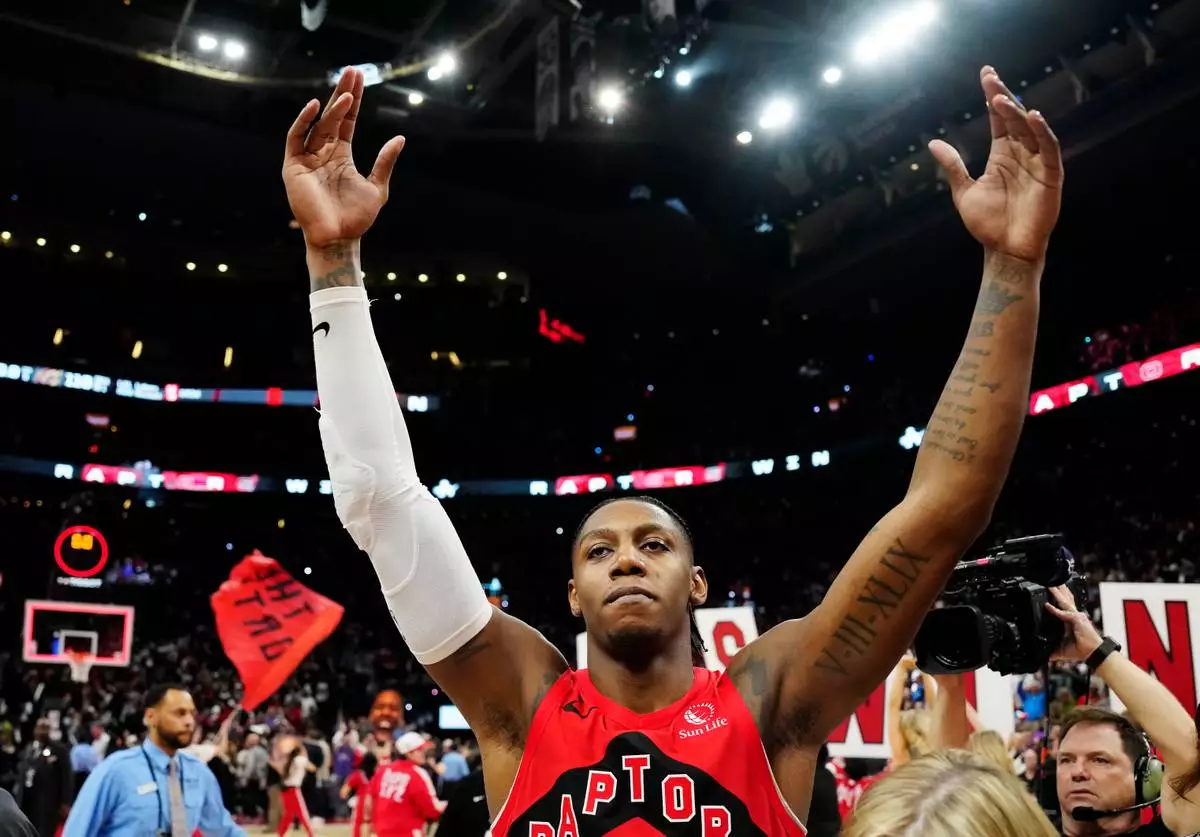
Toronto Raptors' RJ Barrett (9) celebrates after defeating the Cleveland Cavaliers in overtime of Game 6 in the first round of an NBA basketball playoffs series in Toronto on Friday, May 1, 2026. (Frank Gunn/The Canadian Press via AP)
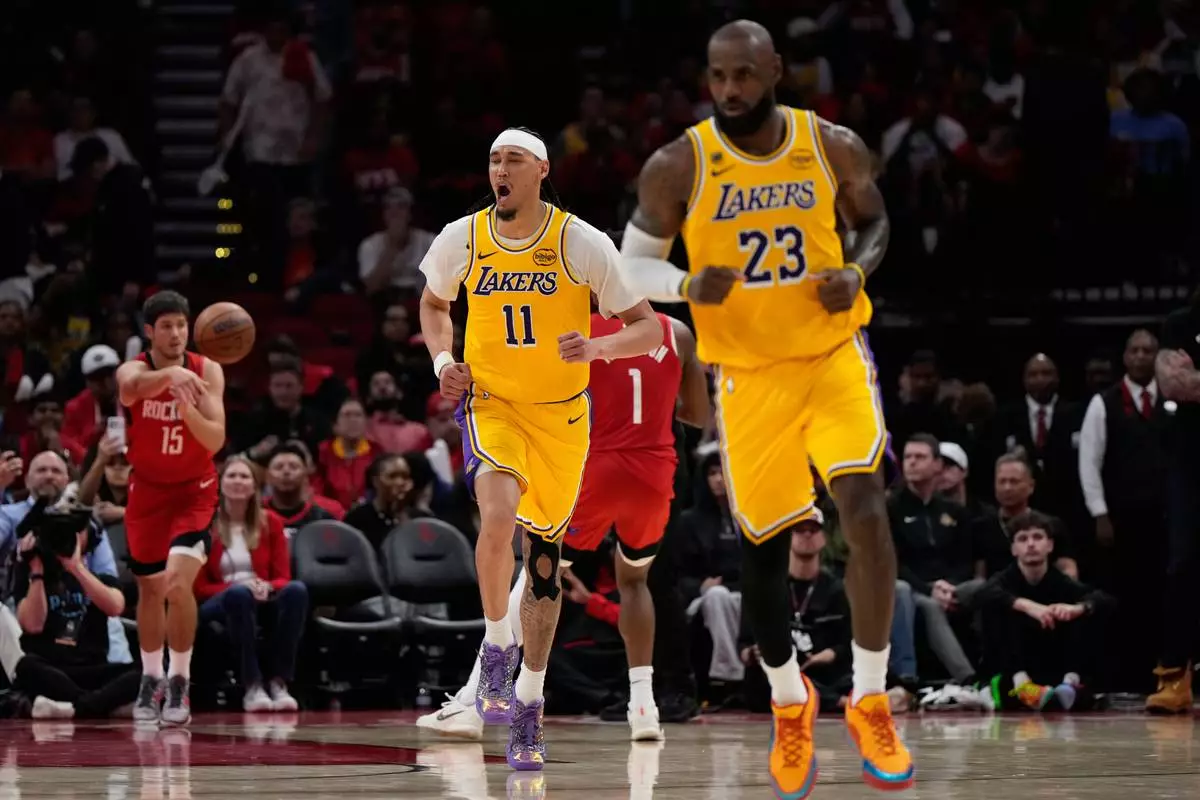
Los Angeles Lakers center Jaxson Hayes (11) celebrates during the second half of Game 6 of a first-round NBA playoffs basketball series against the Houston Rockets in Houston, Friday, May 1, 2026. (AP Photo/Ashley Landis)
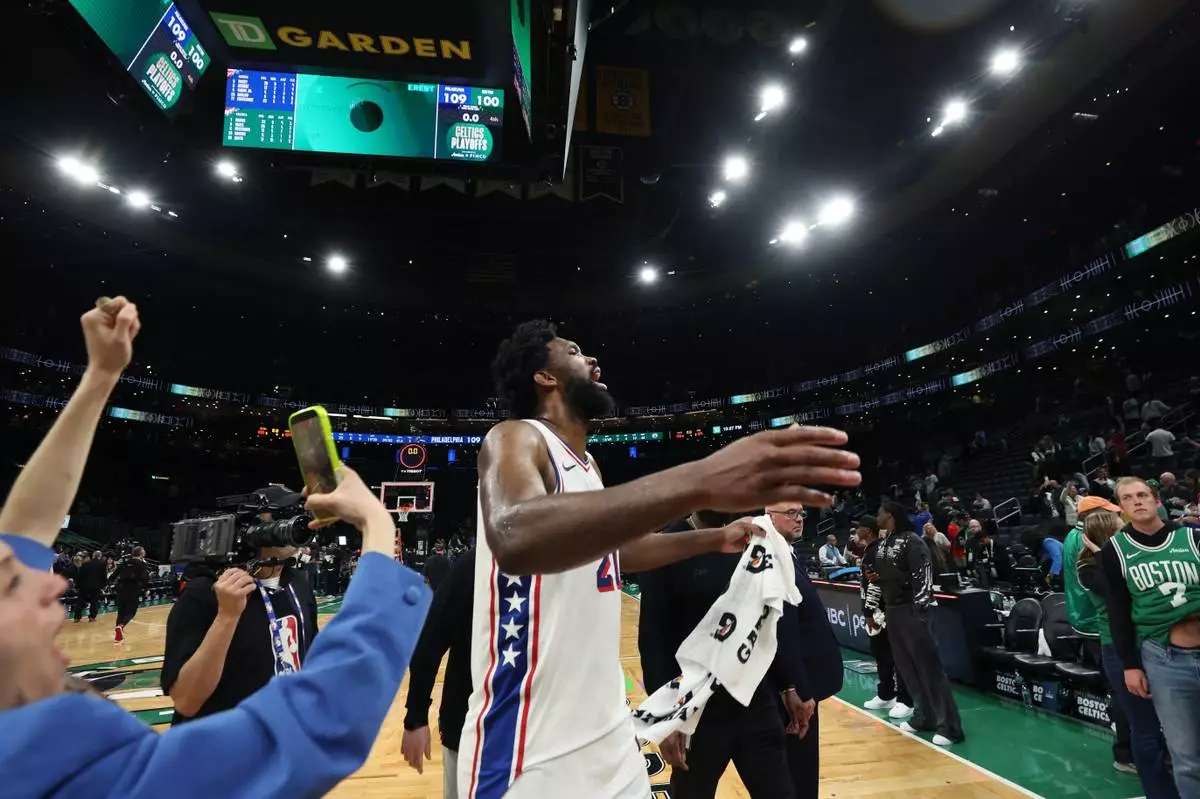
Philadelphia 76ers' Joel Embiid celebrates following his team's victory over the Boston Celtics after the Game 7 in a first-round NBA basketball playoffs series, Saturday, May 2, 2026 in Boston. (AP Photo/Jim Davis)
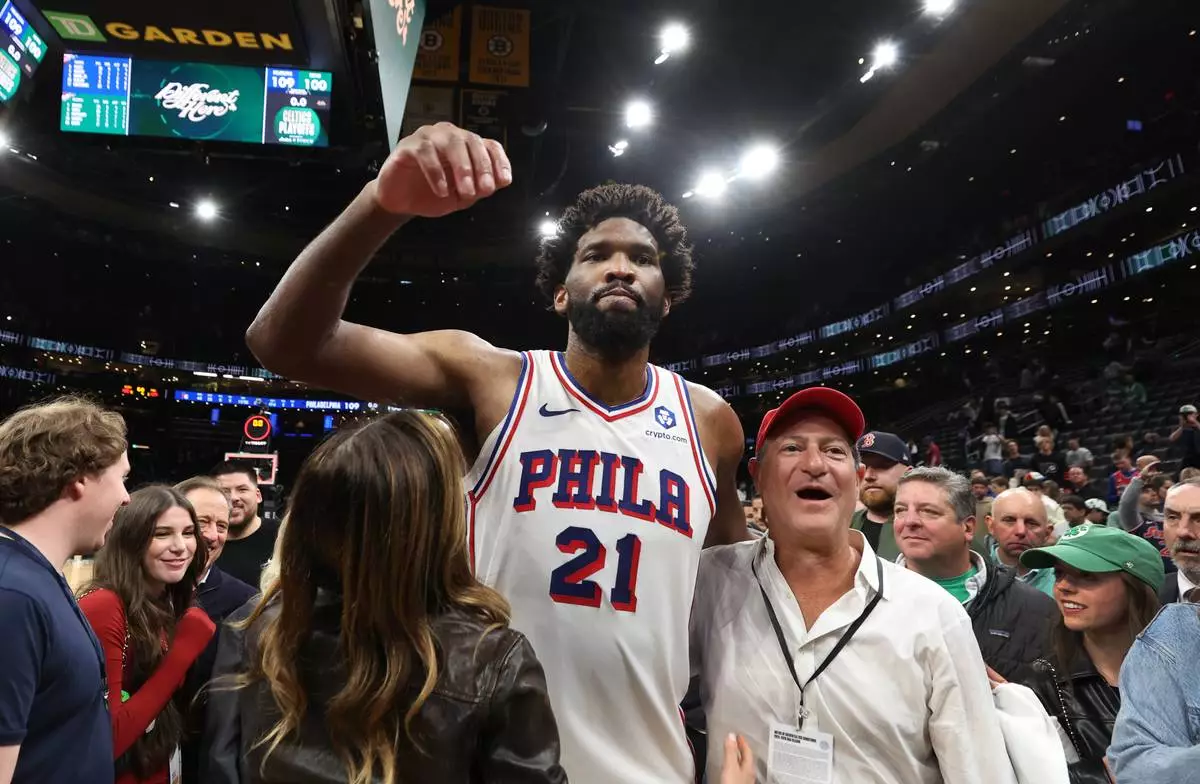
Philadelphia 76ers' Joel Embiid celebrates following his team's victory over the Boston Celtics after the Game 7 in a first-round NBA basketball playoffs series, Saturday, May 2, 2026 in Boston. (AP Photo/Jim Davis)
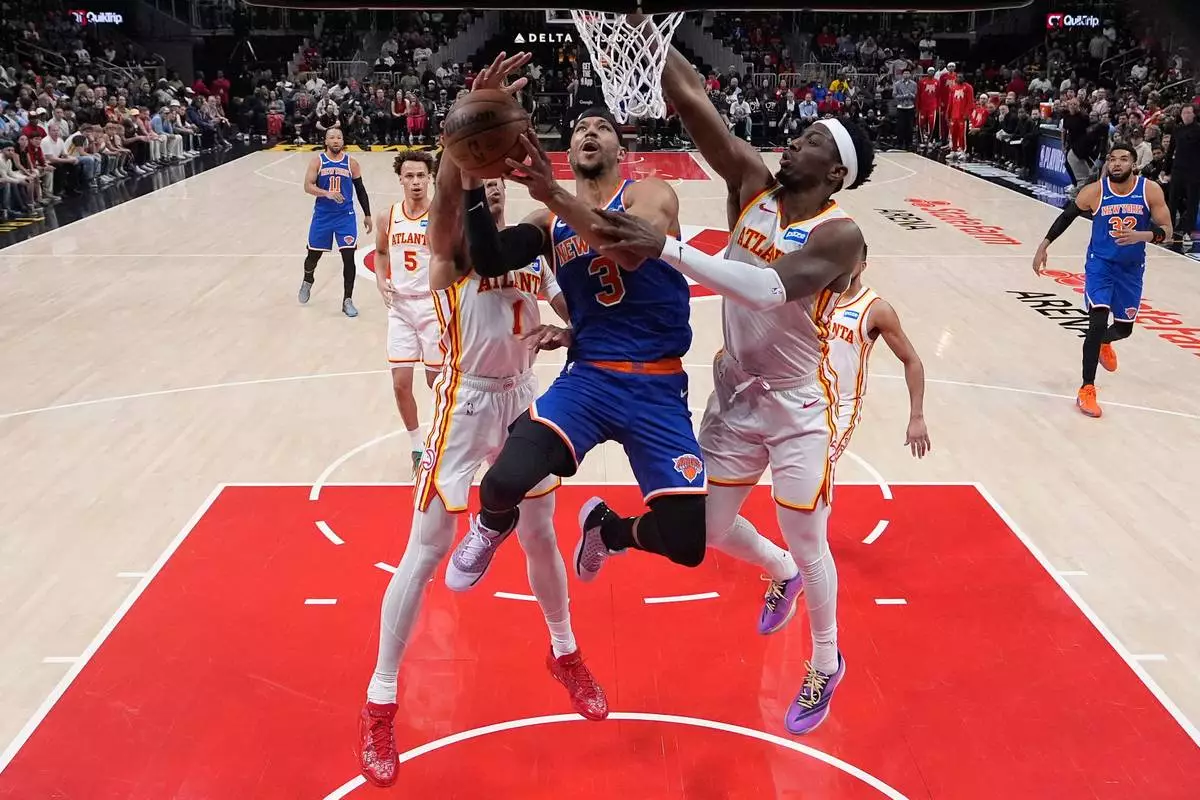
New York Knicks guard Josh Hart (3) shoots during Game 6 in a first-round NBA basketball playoffs series Thursday, April 30, 2026, in Atlanta. (AP Photo/Brynn Anderson)
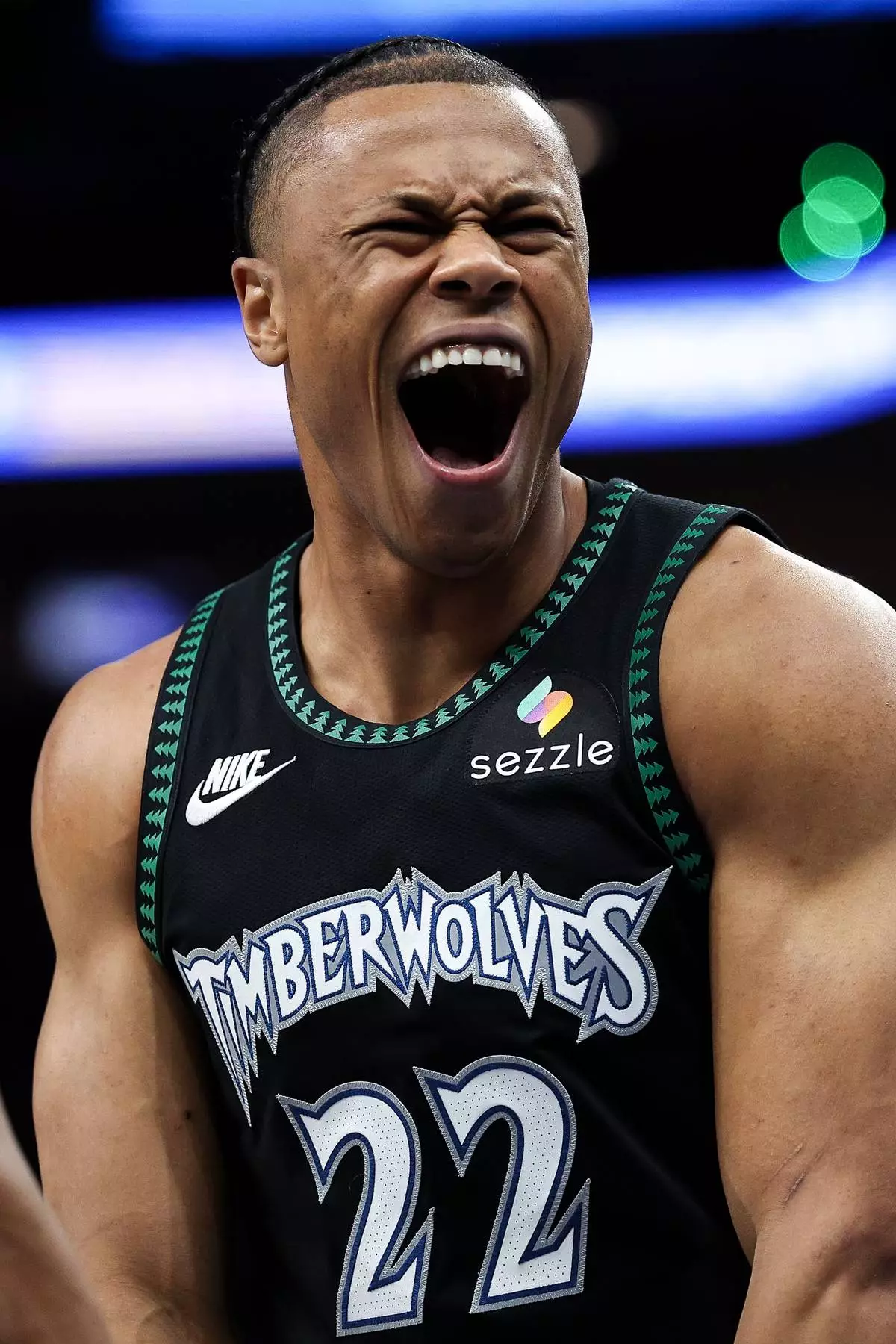
Minnesota Timberwolves guard Jaylen Clark (22) celebrates a basket against the Denver Nuggets during the second half of Game 6 of a first-round NBA basketball playoffs series, Thursday, April 30, 2026, in Minneapolis. (AP Photo/Matt Krohn)
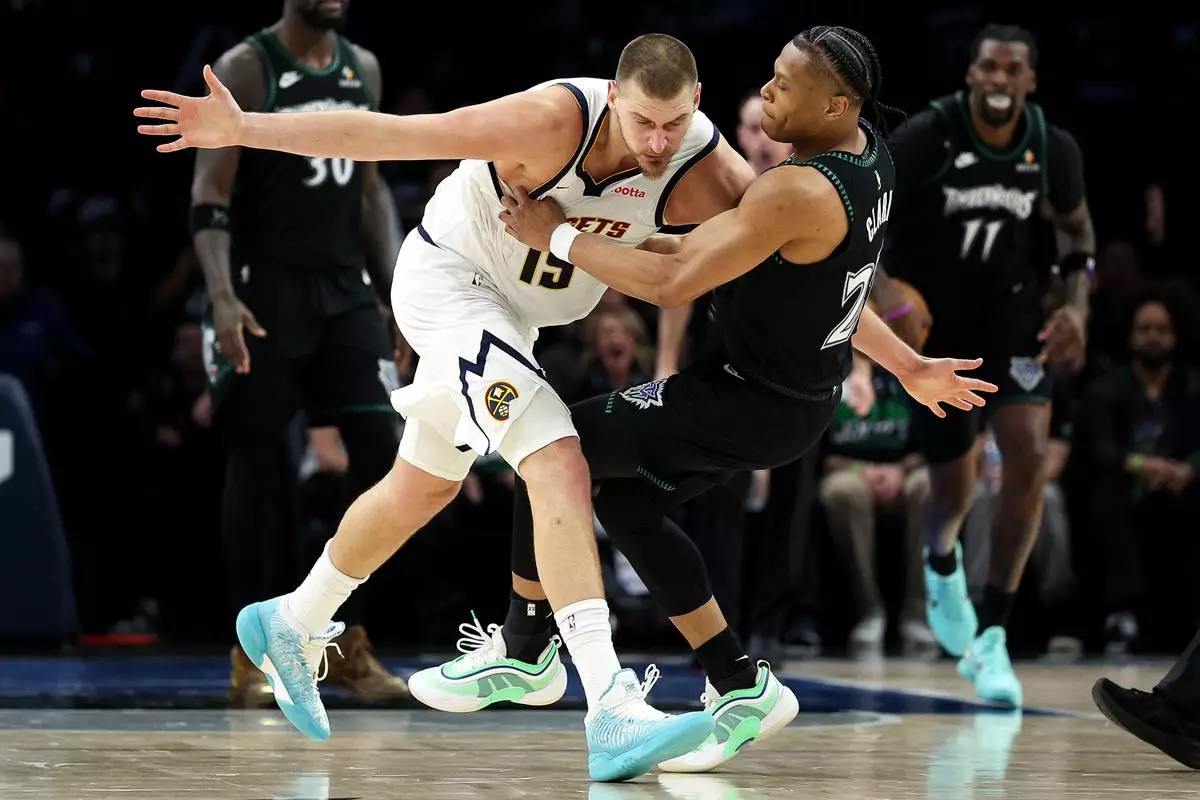
Denver Nuggets center Nikola Jokic, left, and Minnesota Timberwolves guard Jaylen Clark (22) get into an altercation during the second half of Game 6 of a first-round NBA basketball playoffs series, Thursday, April 30, 2026, in Minneapolis. (AP Photo/Matt Krohn)
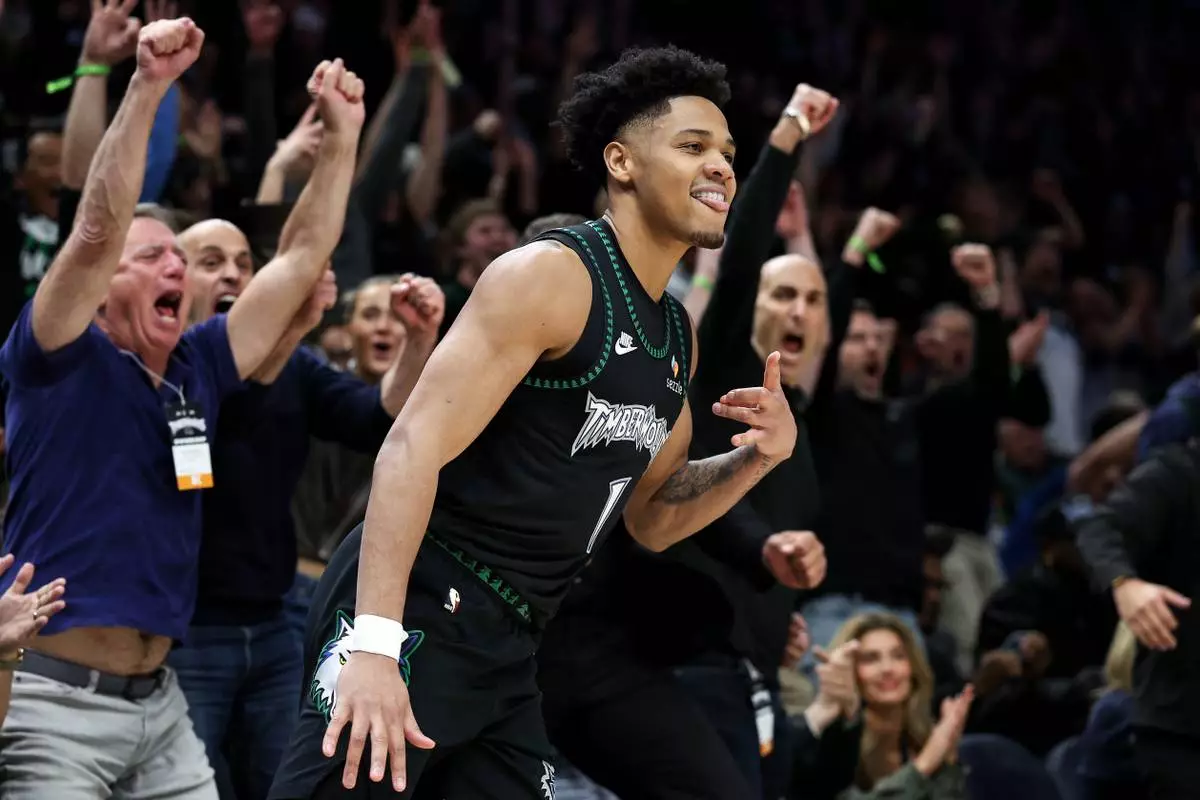
Minnesota Timberwolves guard Terrence Shannon Jr. (1) celebrates his three-point basket against the Denver Nuggets during the second half of Game 6 of a first-round NBA basketball playoffs series, Thursday, April 30, 2026, in Minneapolis. (AP Photo/Matt Krohn)
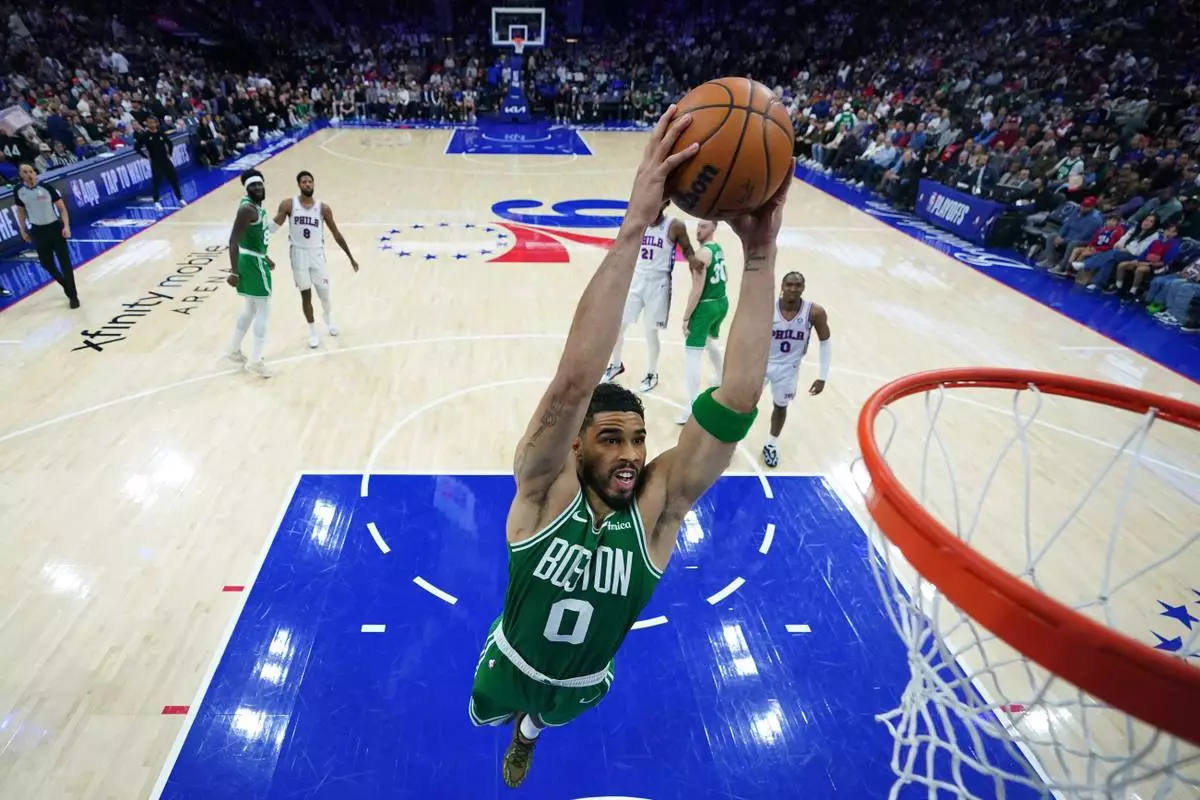
Boston Celtics' Jayson Tatum goes up for a dunk during the second half of Game 6 in a first-round NBA basketball playoff series against the Philadelphia 76ers Thursday, April 30, 2026, in Philadelphia. (AP Photo/Matt Slocum)
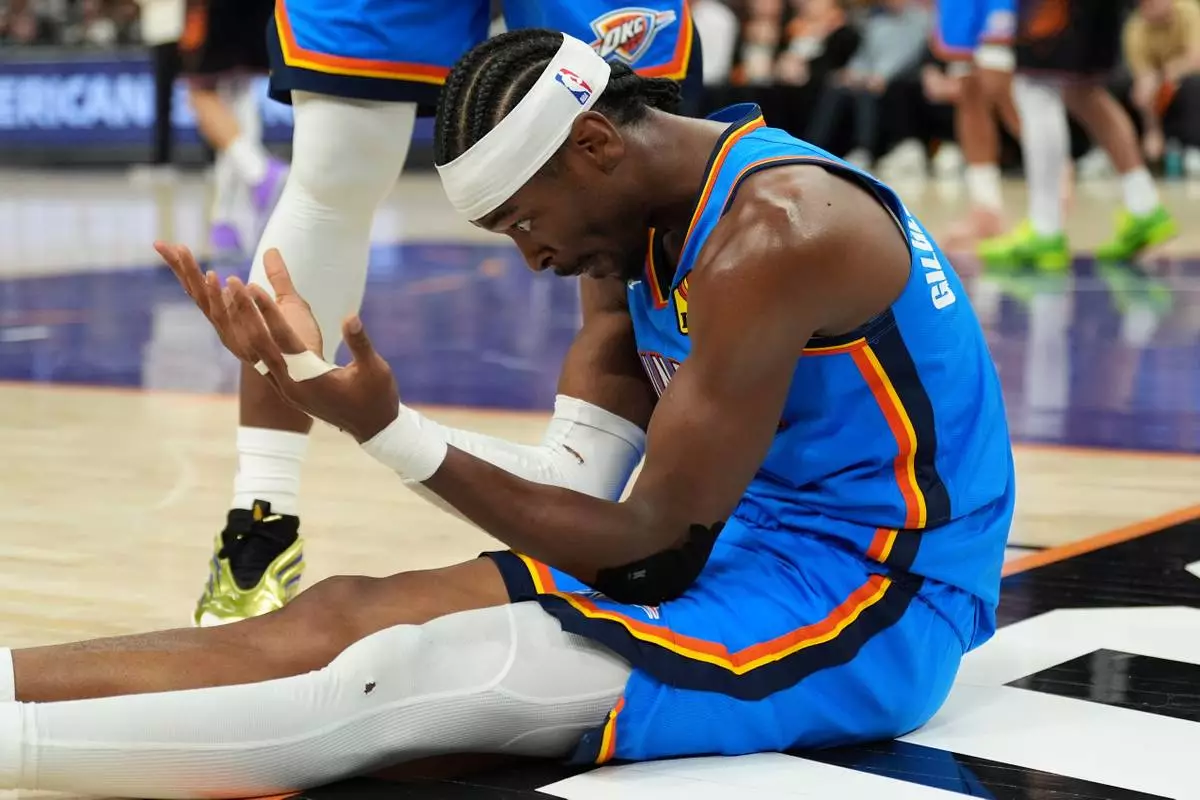
Oklahoma City Thunder guard Shai Gilgeous-Alexander celebrates a scores against the Phoenix Suns during the second half of Game 4 in a first-round NBA playoffs basketball series, Monday, April 27, 2026, in Phoenix. (AP Photo/Ross D. Franklin)
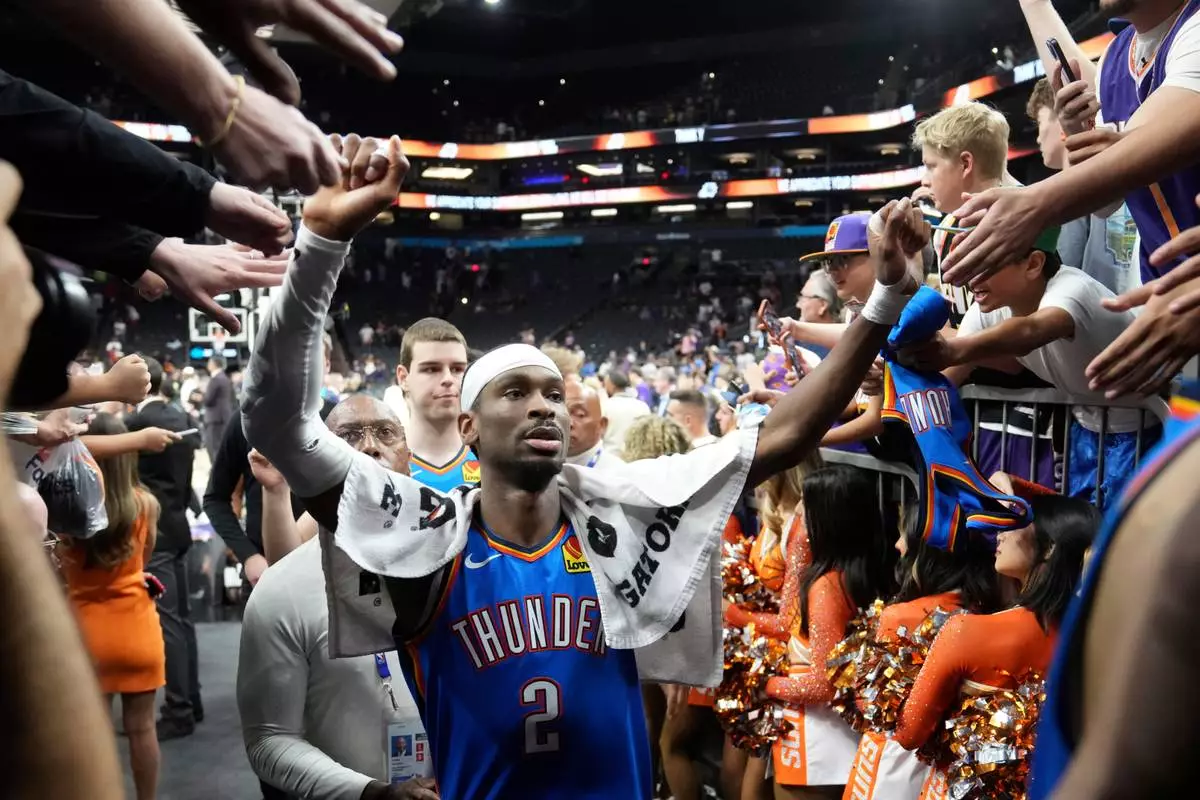
Oklahoma City Thunder guard Shai Gilgeous-Alexander celebrates with fans after Game 4 in a first-round NBA playoffs basketball series against the Phoenix Suns, Monday, April 27, 2026, in Phoenix. (AP Photo/Ross D. Franklin)
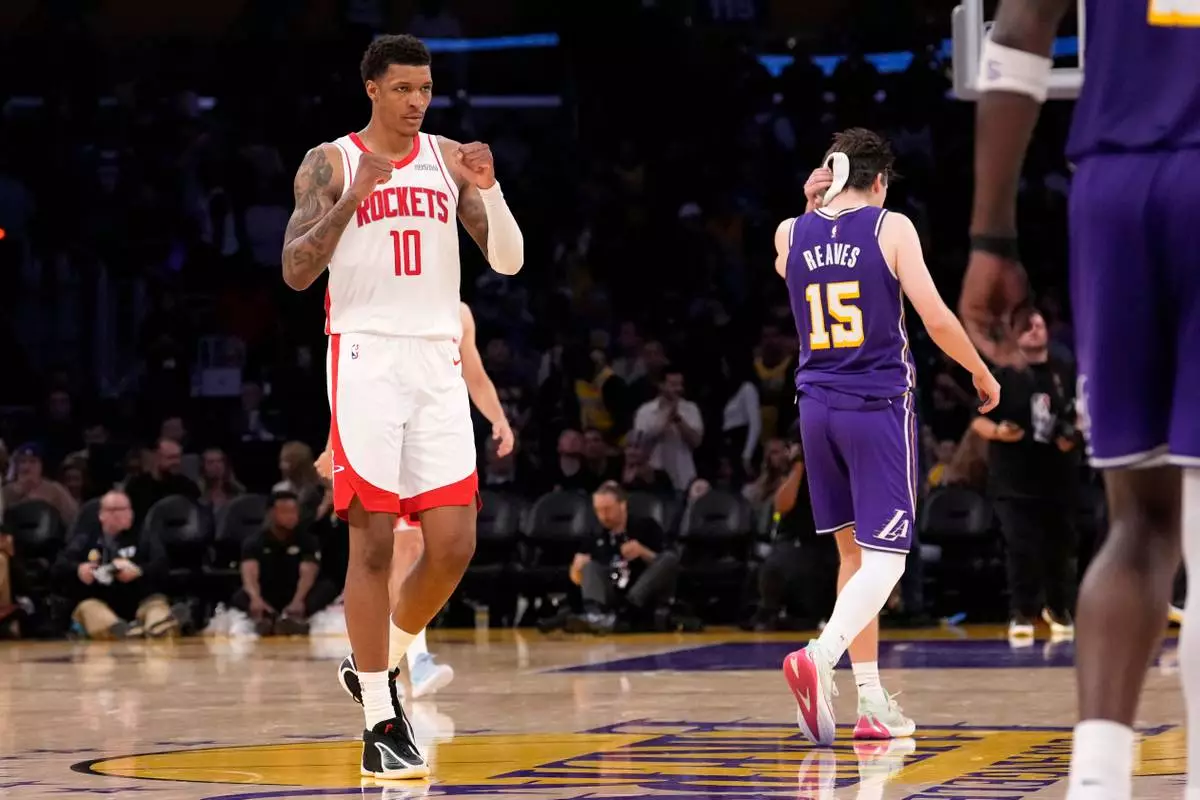
Houston Rockets forward Jabari Smith Jr., left, celebrates as Los Angeles Lakers guard Austin Reaves walks off after the Rockets defeated the Lakers in Game 5 of a first-round NBA playoffs basketball series Wednesday, April 29, 2026, in Los Angeles. (AP Photo/Mark J. Terrill)
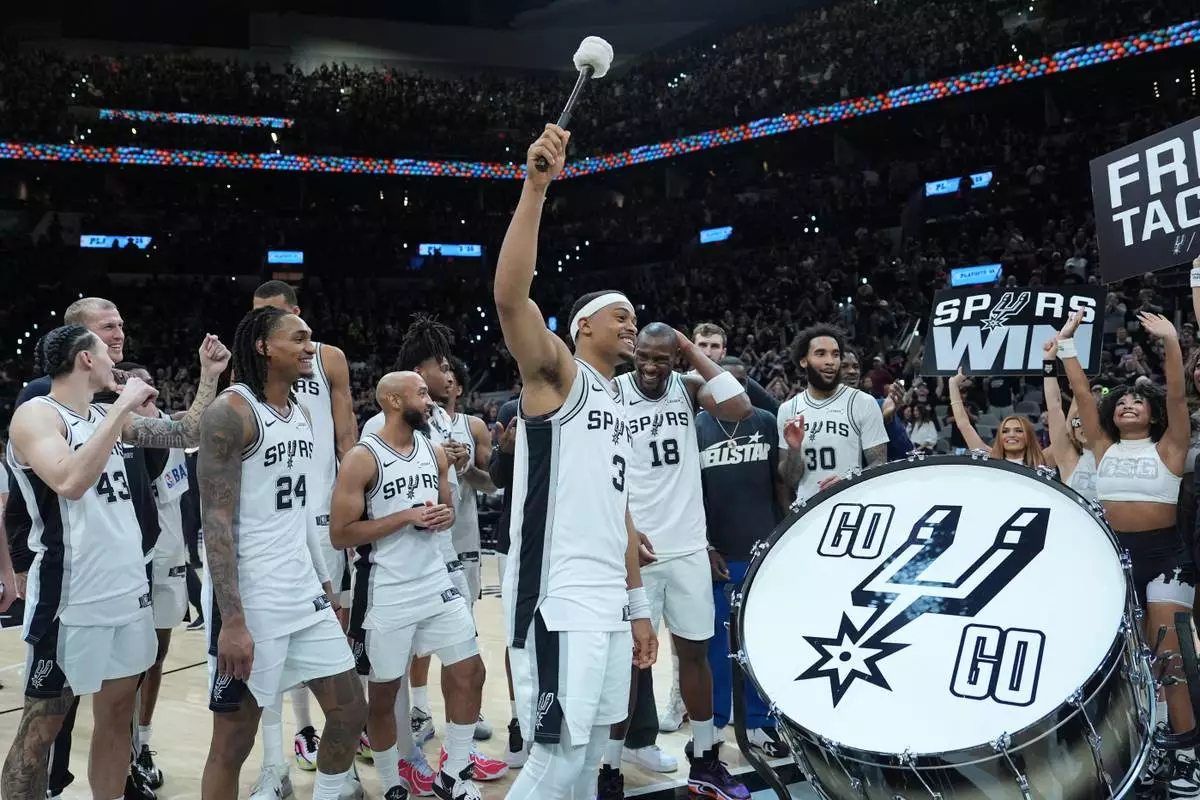
San Antonio Spurs forward/guard Keldon Johnson (3) celebrates with teammates after Game 5 of a first-round NBA playoffs basketball series against the Portland Trail Blazers in San Antonio, Tuesday, April 28, 2026. (AP Photo/Eric Gay)
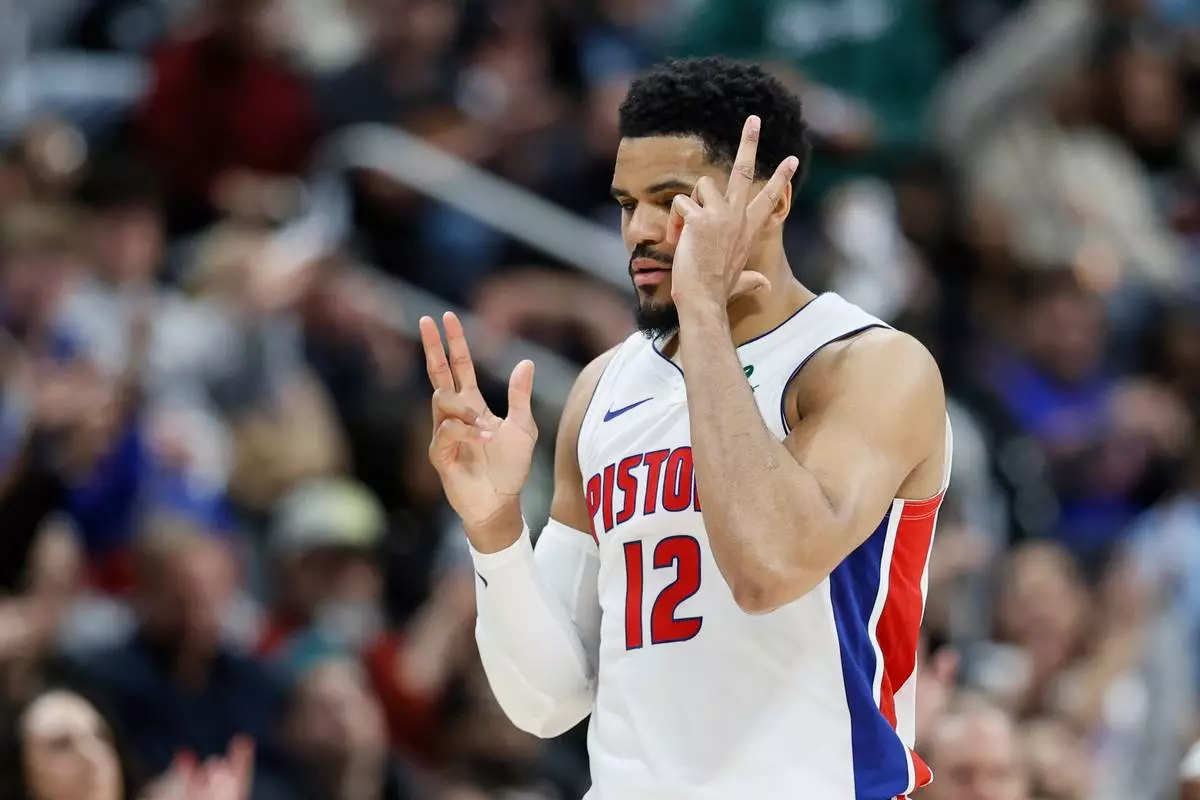
Detroit Pistons forward Tobias Harris (12) celebrates after scoring against the Orlando Magic during the fourth quarter in Game 5 of a first-round NBA basketball playoffs series Wednesday, April 29, 2026, in Detroit. (AP Photo/Duane Burleson)
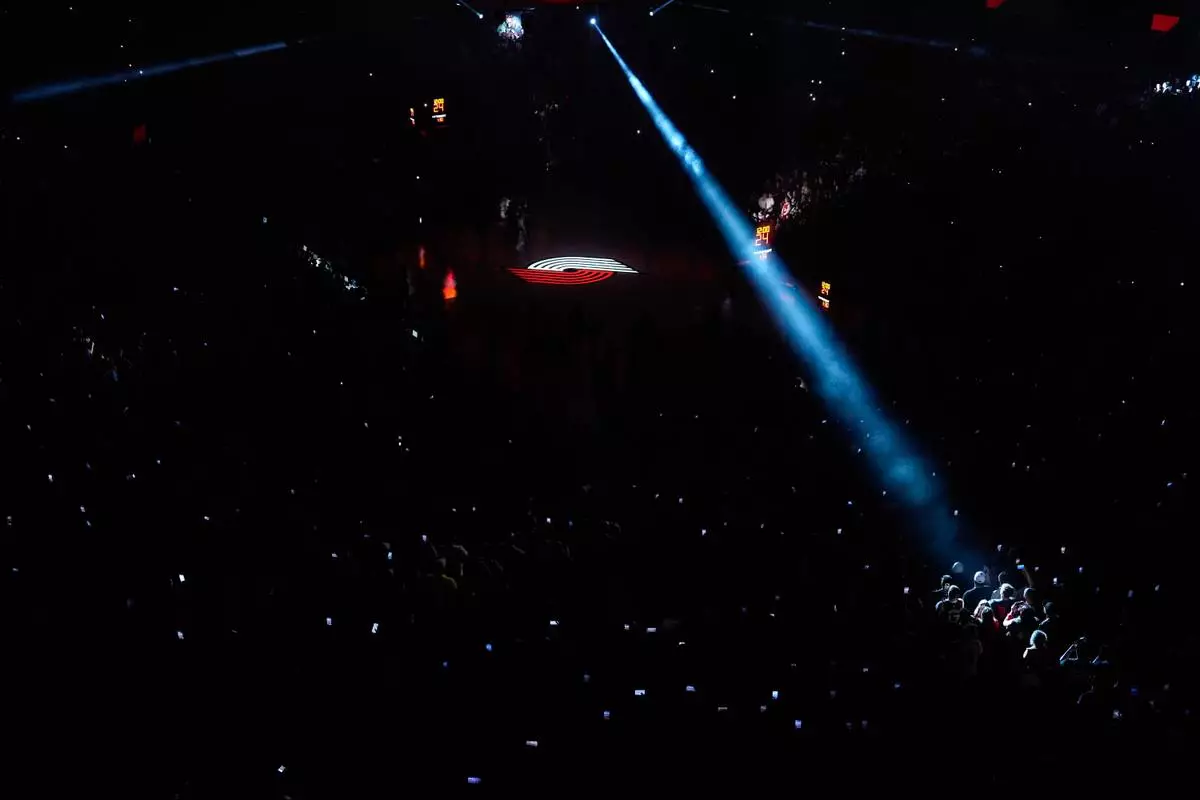
Fans watch Portland Trail Blazers player introductions before Game 4 of a first-round NBA basketball playoffs series against the San Antonio Spurs, in Portland, Ore., Sunday, April 26, 2026. (AP Photo/Jenny Kane)
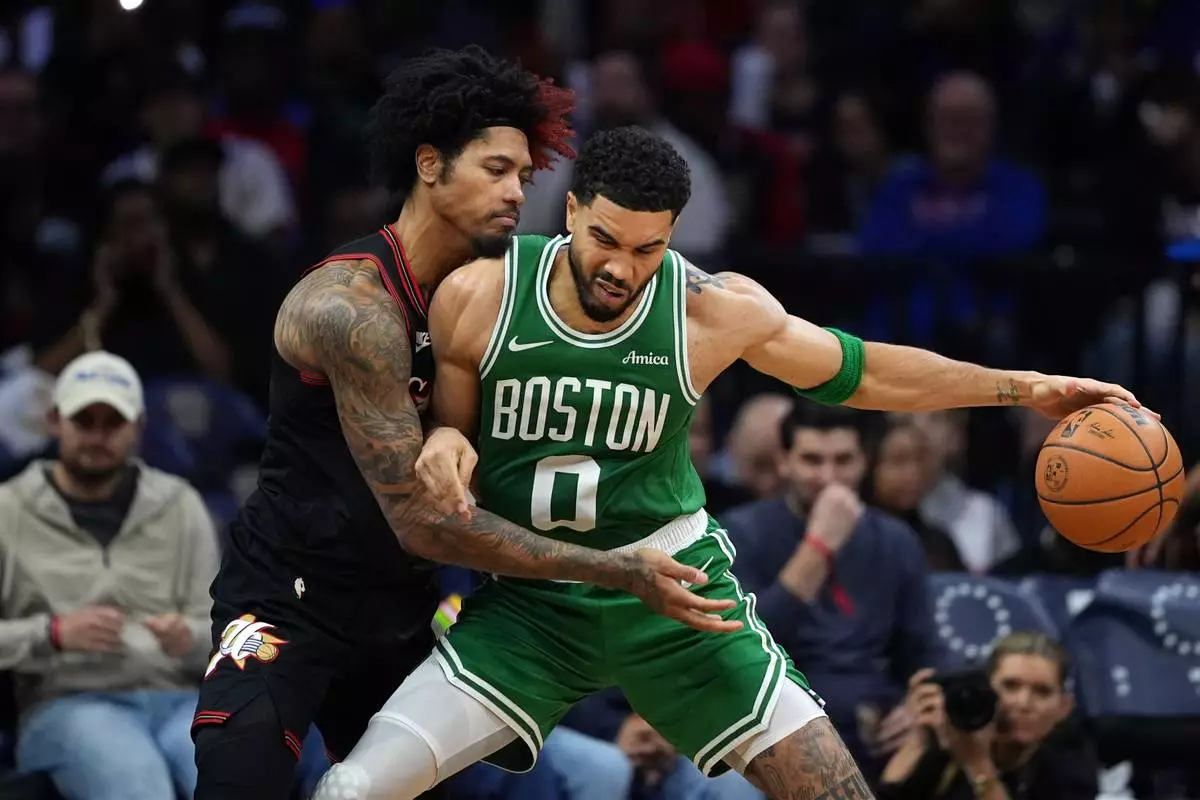
Boston Celtics' Jayson Tatum, right, tries to get past Philadelphia 76ers' Kelly Oubre Jr. during the second half of Game 4 in a first-round NBA basketball playoffs series Sunday, April 26, 2026, in Philadelphia. (AP Photo/Matt Slocum)
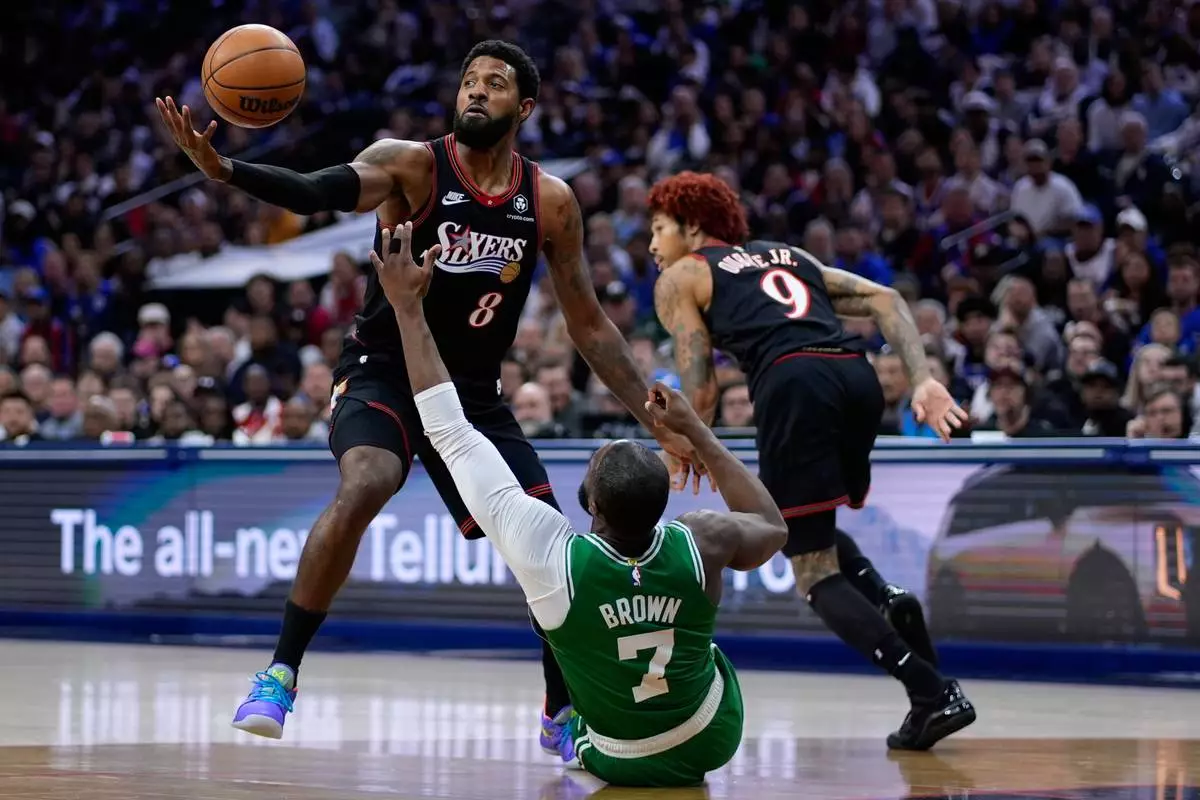
Philadelphia 76ers' Paul George (8) and Boston Celtics' Jaylen Brown (7) reach for a loose ball during the first half of Game 4 in a first-round NBA basketball playoffs series Sunday, April 26, 2026, in Philadelphia. (AP Photo/Matt Slocum)
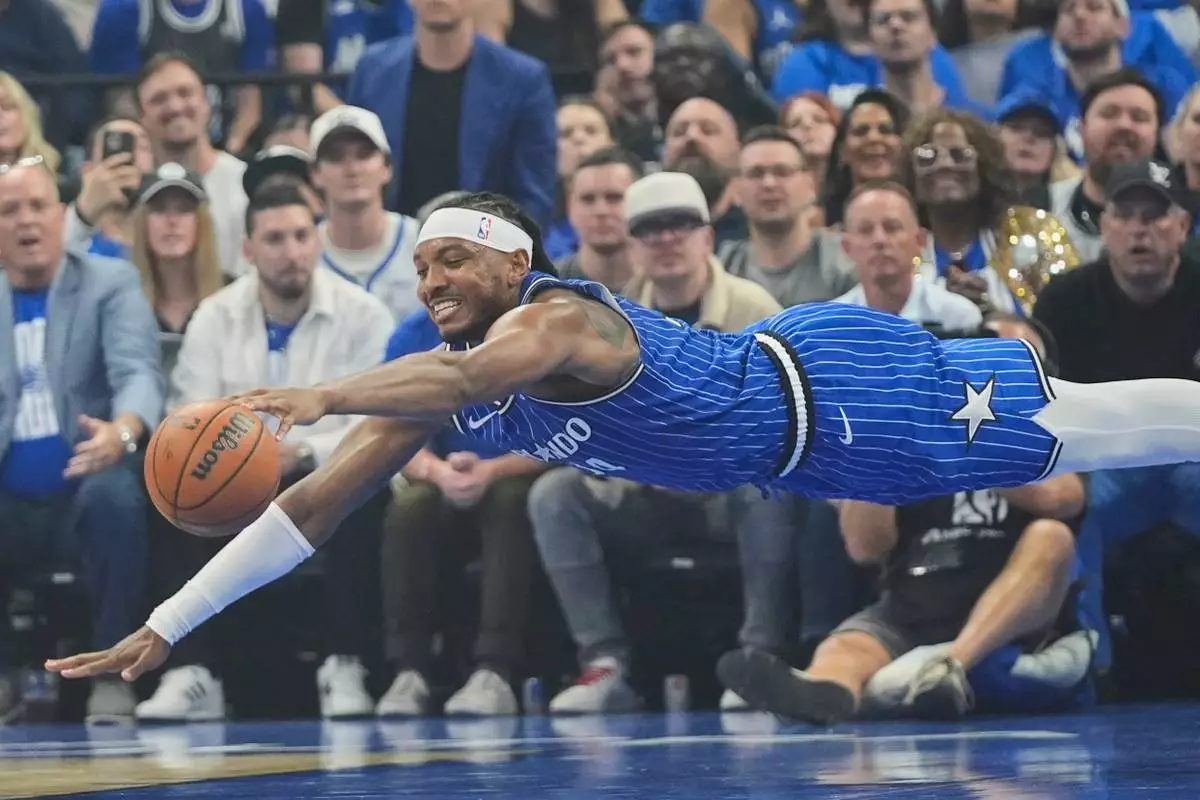
Orlando Magic center Wendell Carter Jr. dives for a loose ball during the first half in Game 4 of a first-round NBA basketball playoff series against the Detroit Pistons, Monday, April 27, 2026, in Orlando, Fla. (AP Photo/John Raoux)
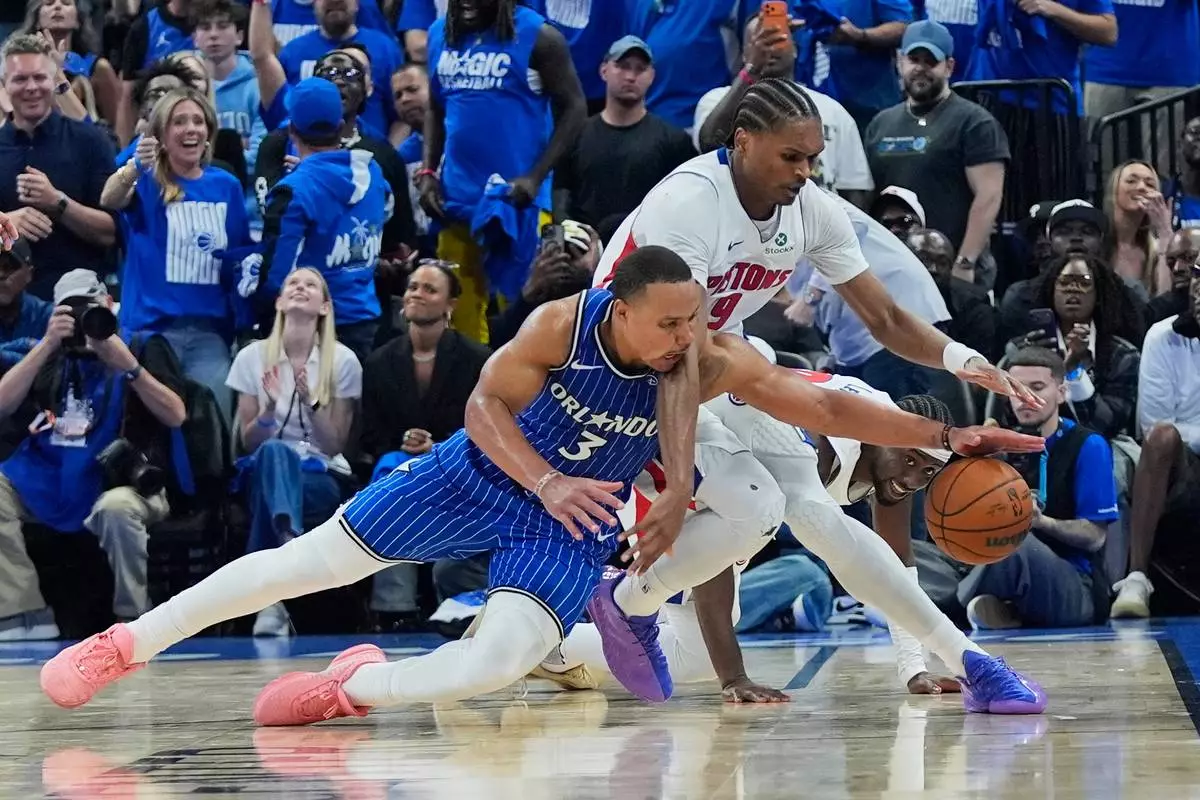
Orlando Magic guard Desmond Bane (3) goes after a loose ball against Detroit Pistons guard Ausar Thompson during the second half in Game 4 of a first-round NBA basketball playoff series, Monday, April 27, 2026, in Orlando, Fla. (AP Photo/John Raoux)
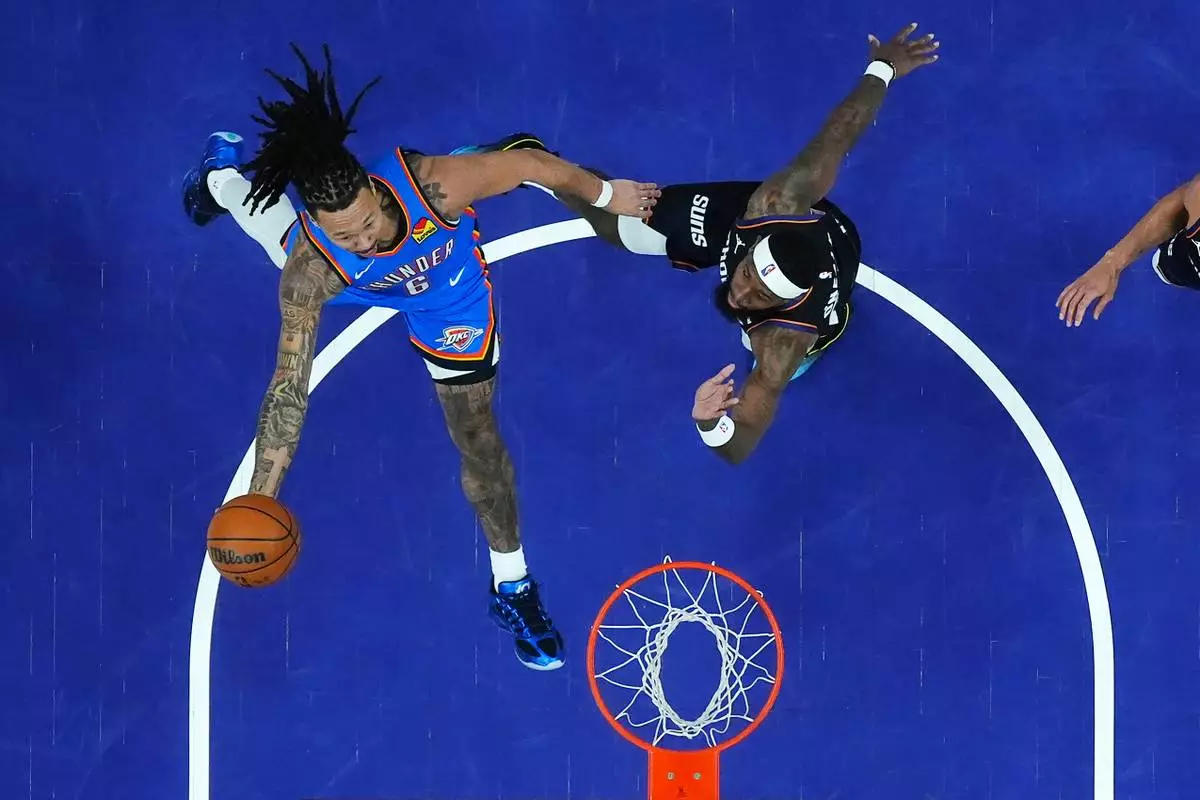
Oklahoma City Thunder forward Jaylin Williams (6) scores against Phoenix Suns forward Royce O'Neale during the second half of Game 3 of a first-round NBA playoffs basketball series, Saturday, April 25, 2026, in Phoenix. (AP Photo/Ross D. Franklin)
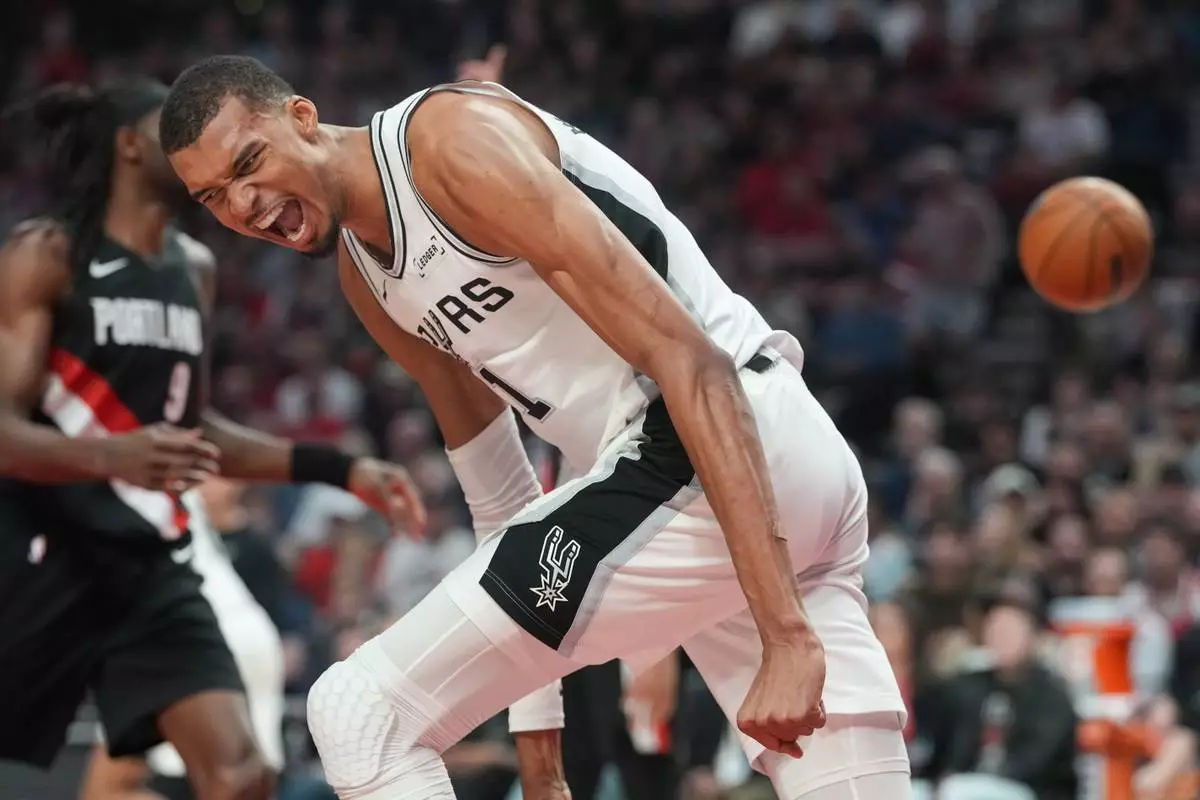
San Antonio Spurs center Victor Wembanyama reacts after a shot during the first half in Game 4 of a first-round NBA basketball playoffs series against the Portland Trail Blazers, in Portland, Ore., Sunday, April 26, 2026. (AP Photo/Jenny Kane)
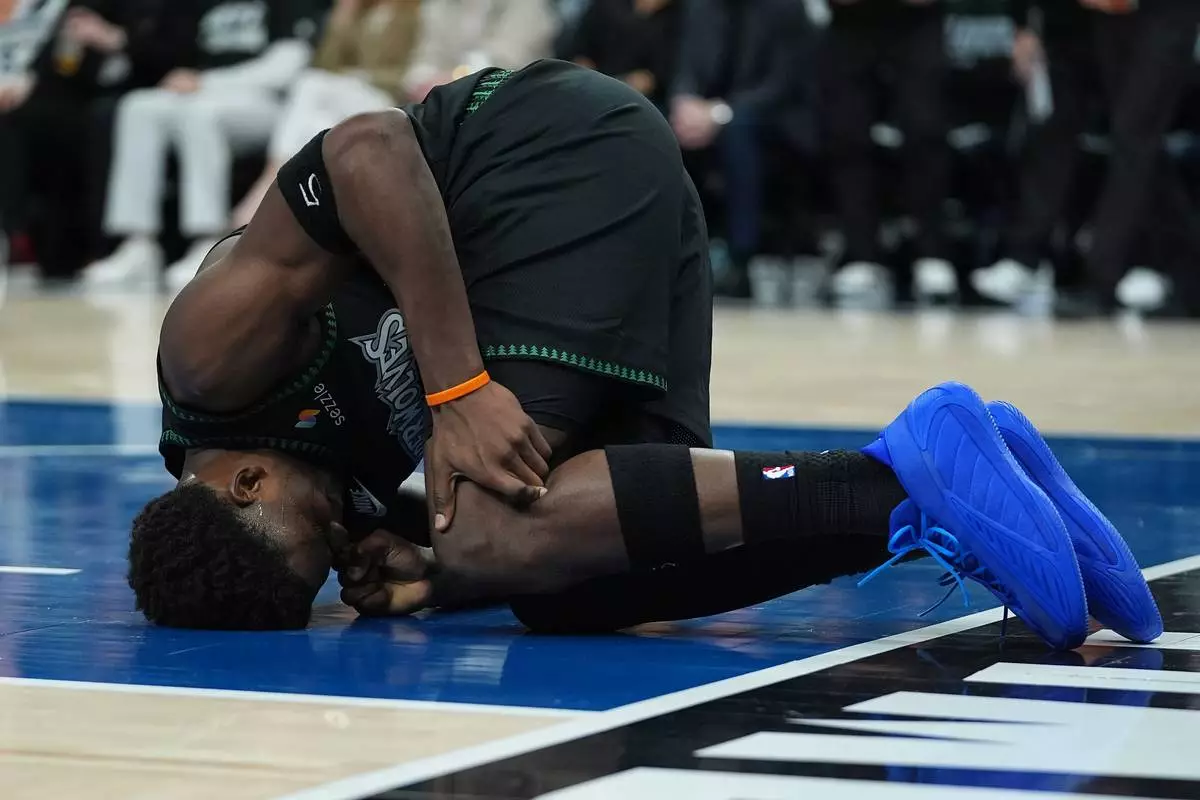
Minnesota Timberwolves guard Anthony Edwards kneels on the court after sustaining an injury during the first half of Game 4 of a first-round NBA basketball playoff series against the Denver Nuggets, Saturday, April 25, 2026, in Minneapolis. (AP Photo/Abbie Parr)
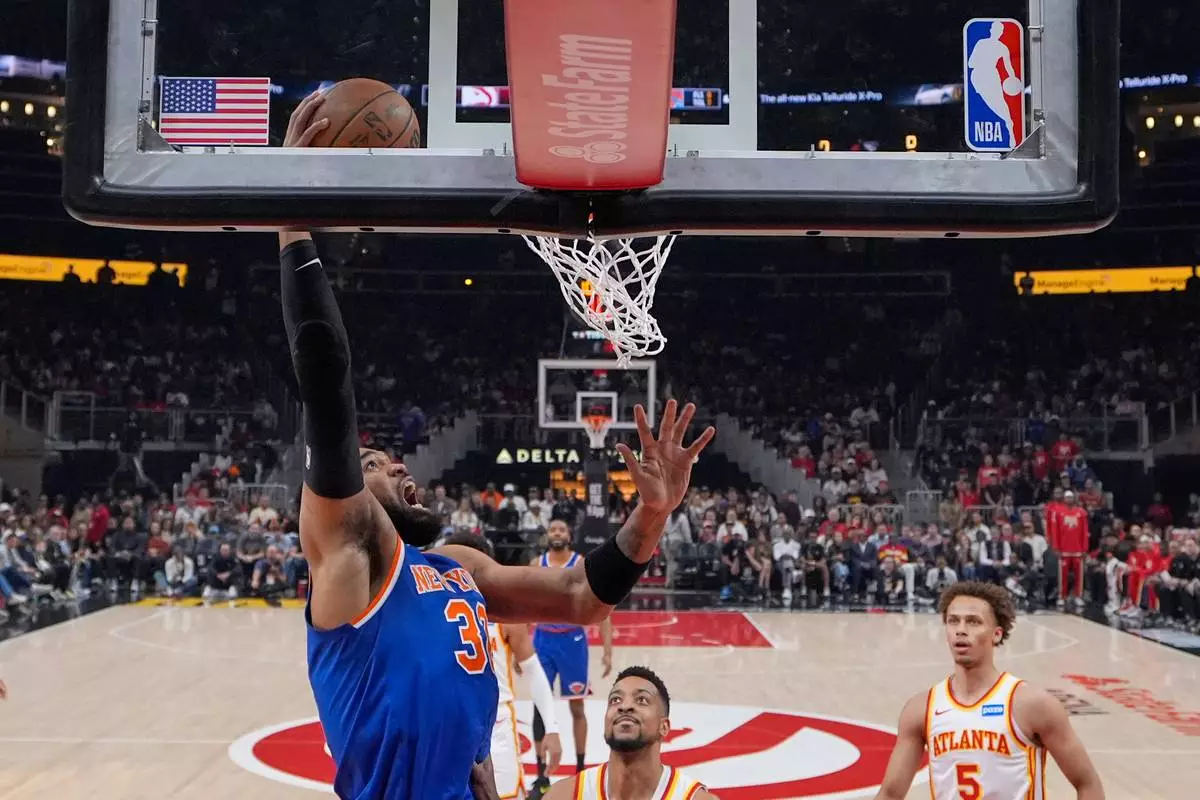
New York Knicks center Karl-Anthony Towns (32) shoots against Atlanta Hawks forward Onyeka Okongwu (17) during the first half of Game 4 in a first-round NBA playoffs basketball series Saturday, April 25, 2026, in Atlanta. (AP Photo/Brynn Anderson)
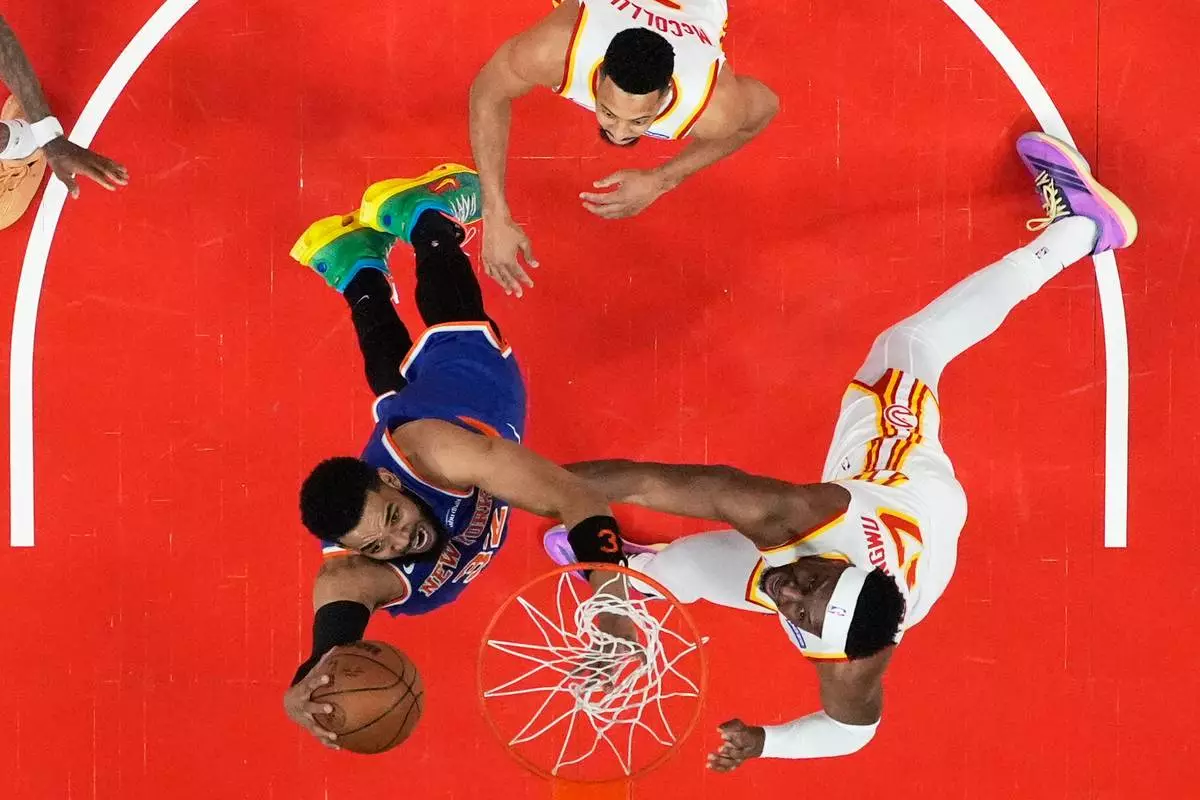
New York Knicks center Karl-Anthony Towns (32) shoots against Atlanta Hawks forward Onyeka Okongwu (17) during the first half of Game 4 in a first-round NBA playoffs basketball series Saturday, April 25, 2026, in Atlanta. (AP Photo/Brynn Anderson)
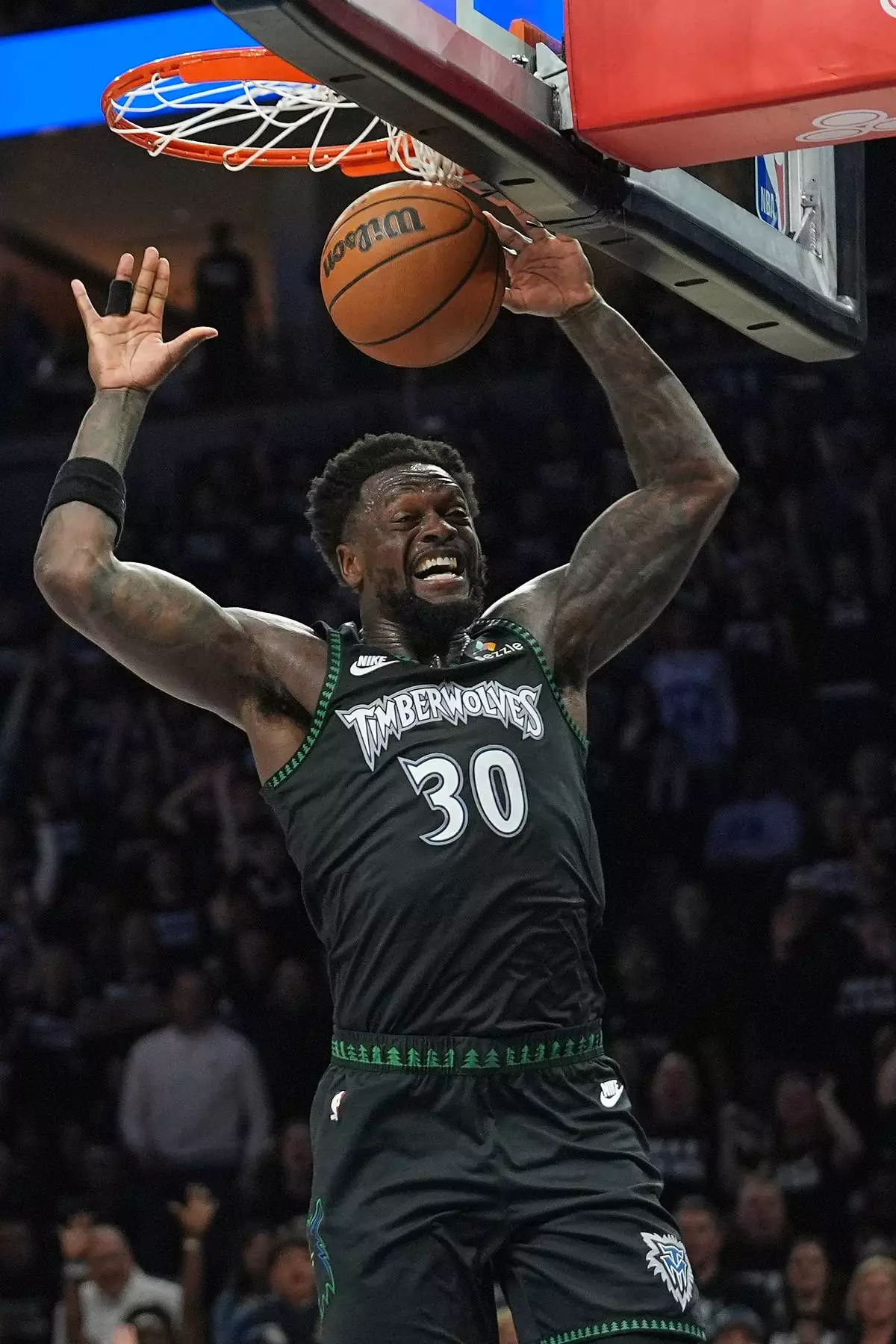
Minnesota Timberwolves forward Julius Randle dunks during the second half of Game 4 of a first-round NBA basketball playoff series against the Denver Nuggets, Saturday, April 25, 2026, in Minneapolis. (AP Photo/Abbie Parr)
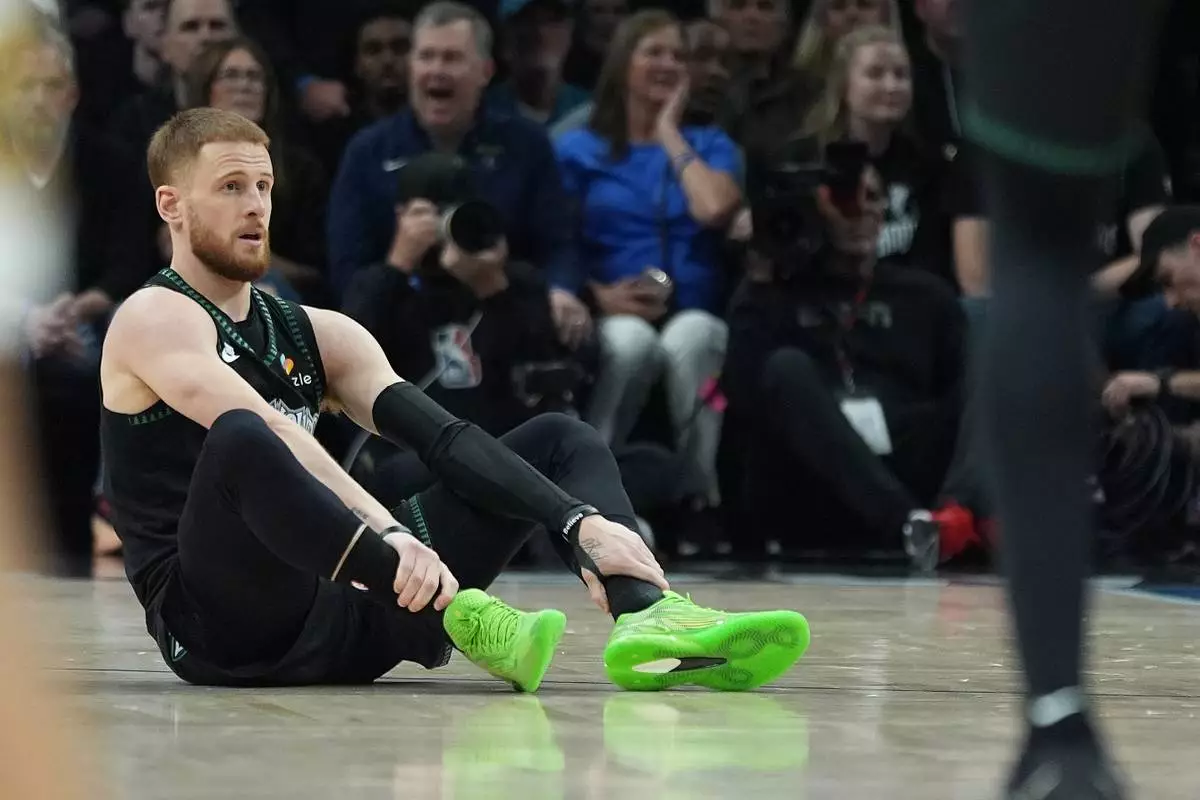
Minnesota Timberwolves guard Donte DiVincenzo (0) sits on the court after sustaining an injury during the first half of Game 4 of a first-round NBA basketball playoff series against the Denver Nuggets, Saturday, April 25, 2026, in Minneapolis. (AP Photo/Abbie Parr)
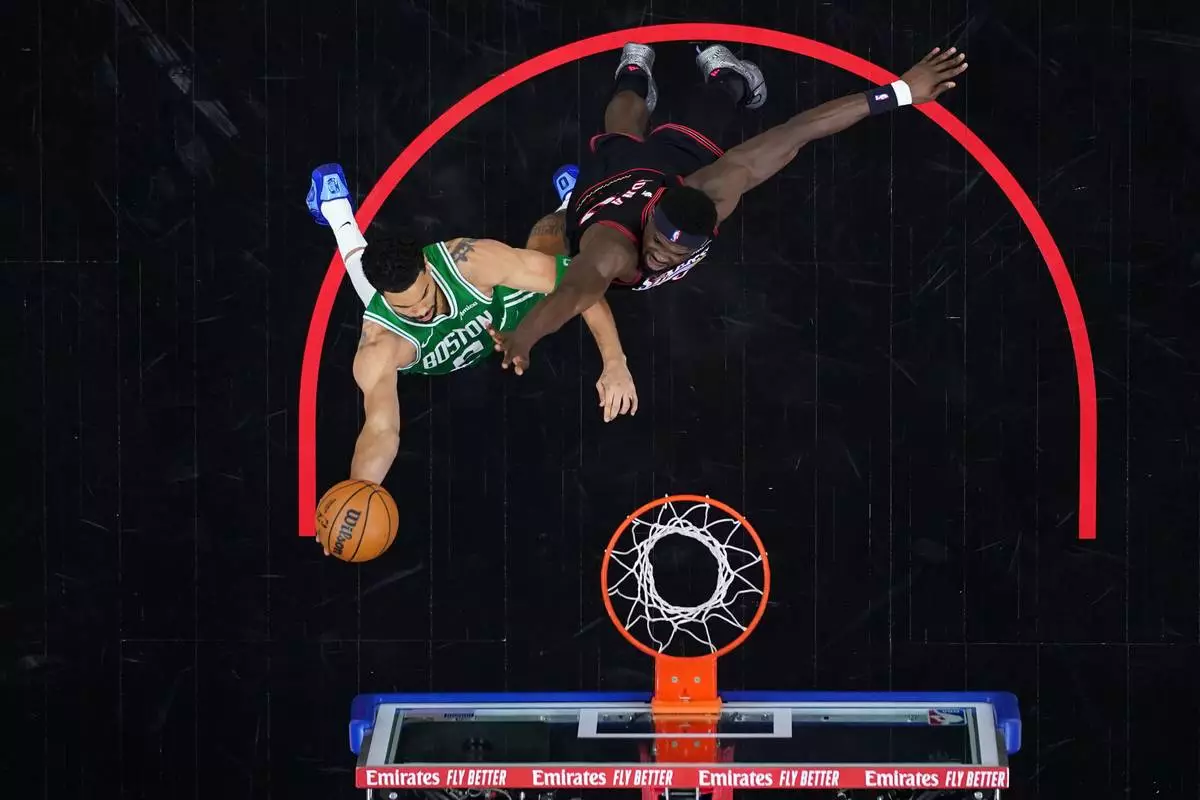
Boston Celtics' Jayson Tatum, left, goes up for a shot past Philadelphia 76ers' Adem Bona during the second half of Game 3 in a first-round NBA playoffs basketball series Friday, April 24, 2026, in Philadelphia. (AP Photo/Matt Slocum)
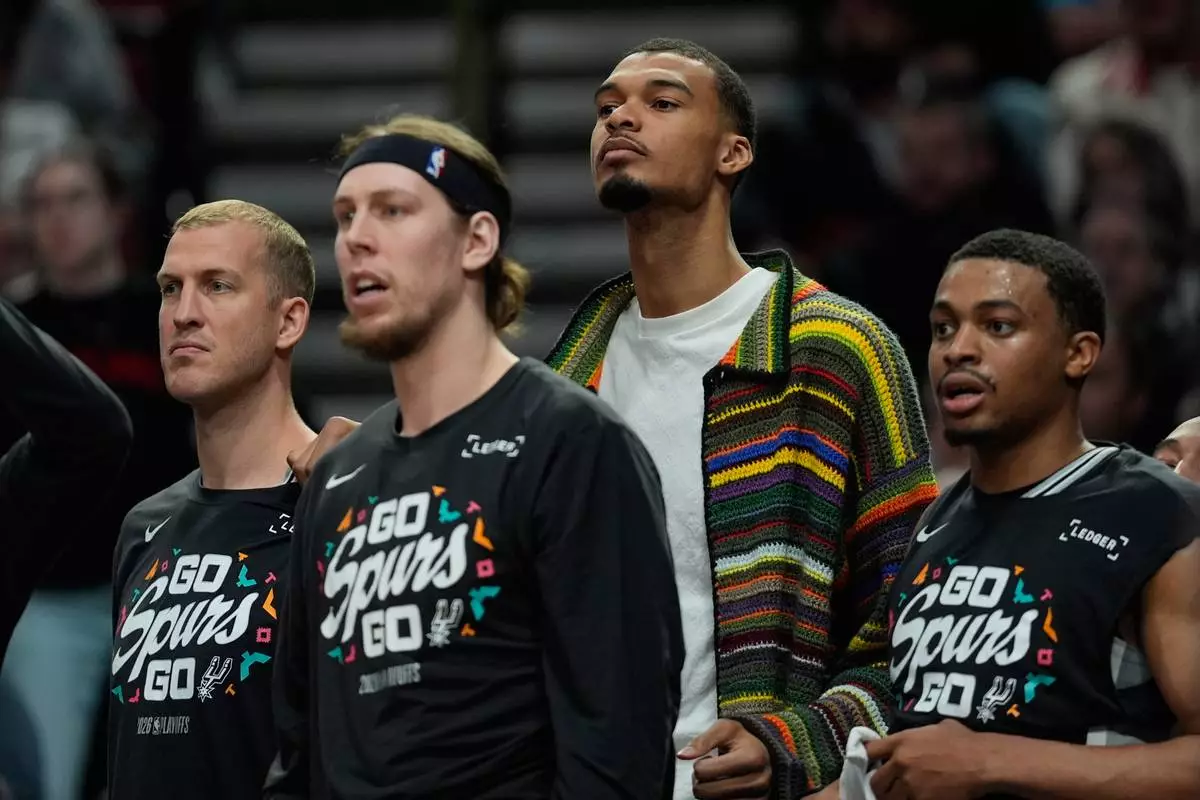
San Antonio Spurs forward Victor Wembanyama, center, wears street cloths on the bench as he sits out Game 3 of a first-round NBA playoffs basketball series against the Portland Trail Blazers in Portland, Ore, Friday, April 24, 2026. (AP Photo/Jenny Kane)
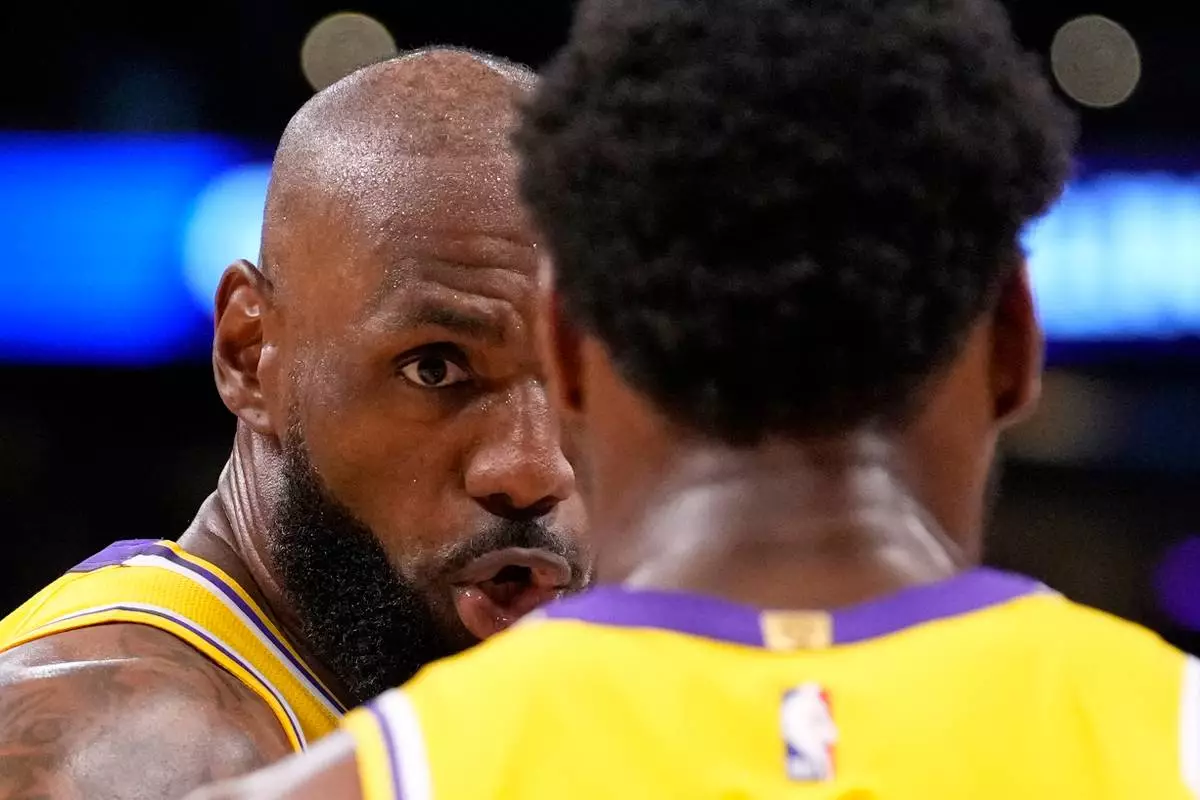
Los Angeles Lakers forward LeBron James, left, talks to guard Bronny James during the first half in Game 1 of a first-round NBA playoffs basketball series against the Houston Rockets, Saturday, April 18, 2026, in Los Angeles. (AP Photo/Mark J. Terrill)
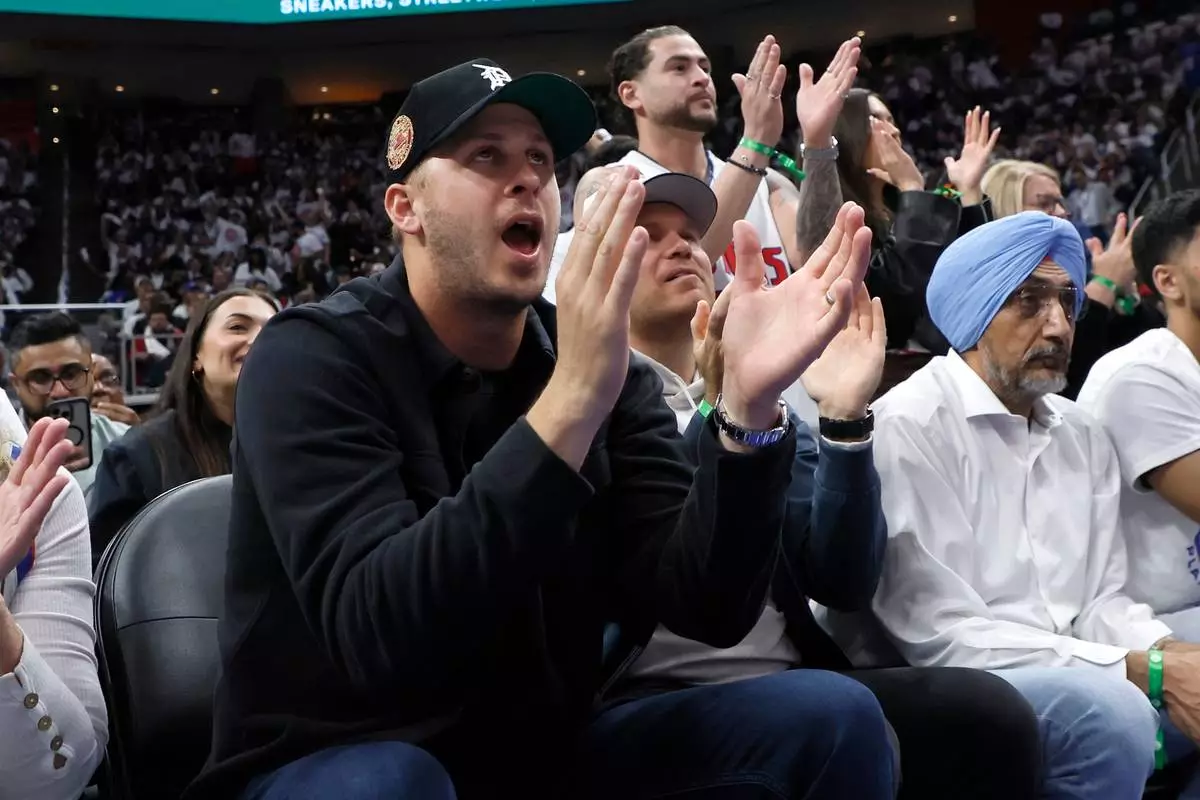
Detroit Lions quarterback Jared Goff cheers on the Detroit Piston during the second half in Game 2 of a first-round NBA basketball playoffs series against the Orlando Magic Wednesday, April 22, 2026, in Detroit. (AP Photo/Duane Burleson)
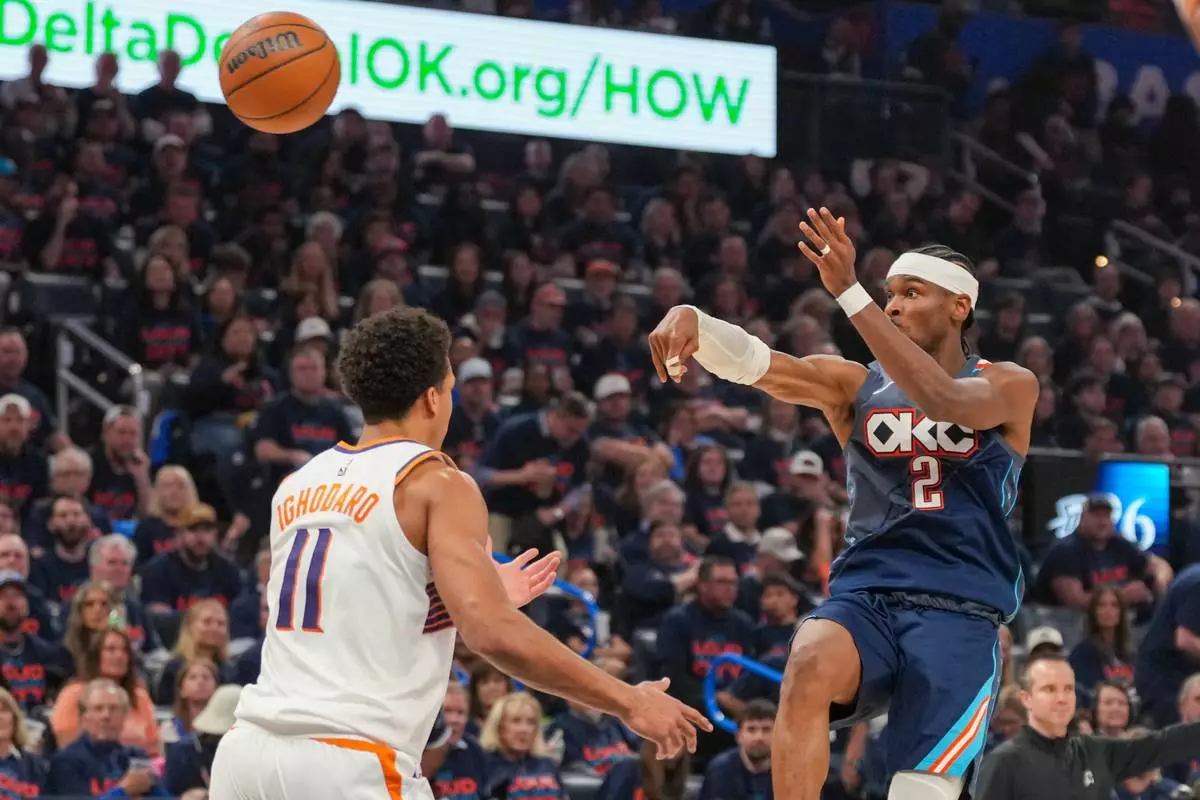
Oklahoma City Thunder guard Shai Gilgeous-Alexander (2) passes over Phoenix Suns forward Oso Ighodaro (11) during the second half in Game 2 of a first-round NBA playoffs basketball series Wednesday, April 22, 2026, in Oklahoma City. (AP Photo/Kyle Phillips)
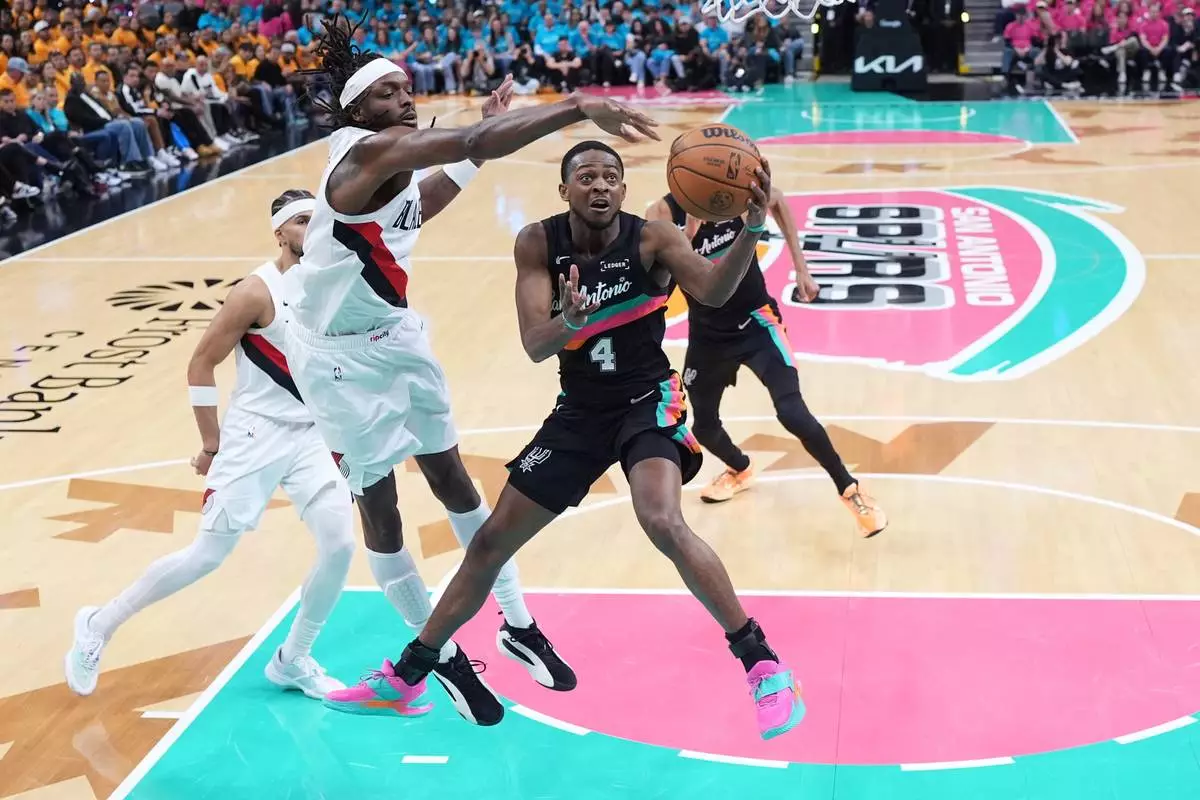
San Antonio Spurs guard De'aaron Fox (4) drives to the basket past Portland Trail Blazers forward Jerami Grant, left, during the second half in Game 1 of a first-round NBA playoffs basketball series in San Antonio, Sunday, April 19, 2026. (AP Photo/Eric Gay)
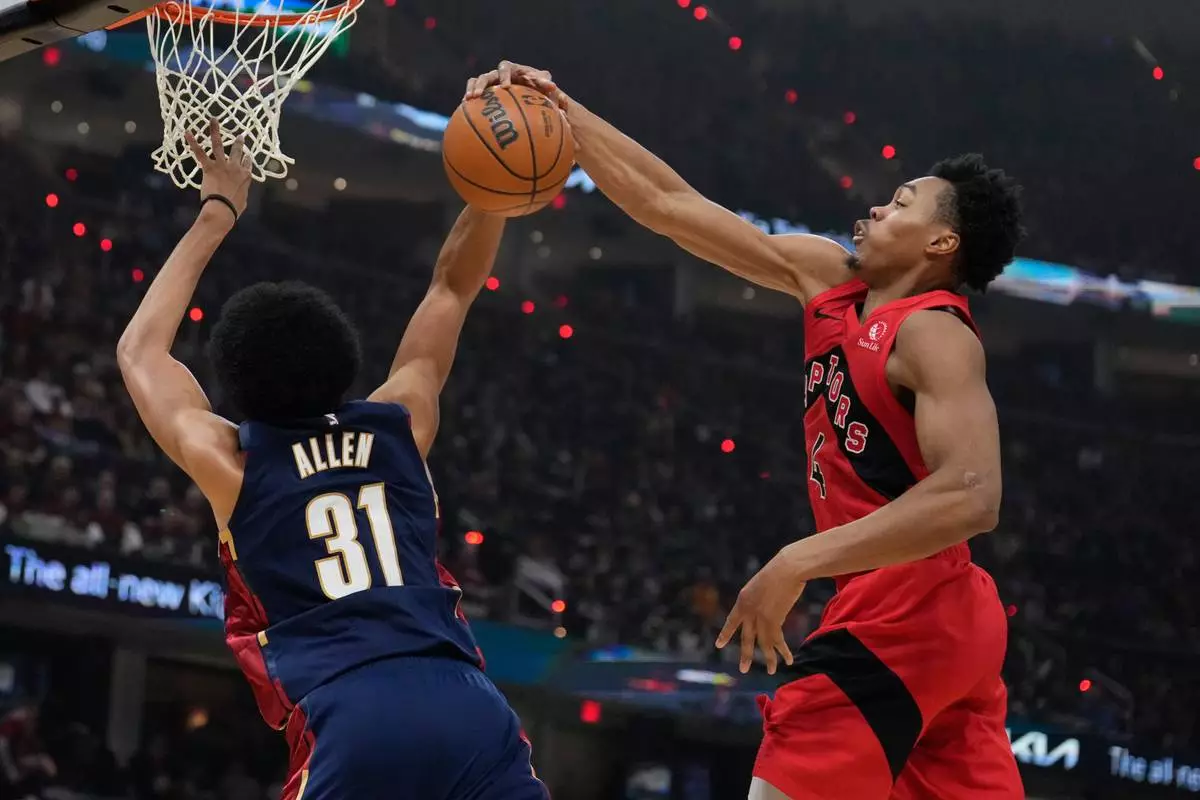
Toronto Raptors forward Scottie Barnes (4) blocks a shot by Cleveland Cavaliers center Jarrett Allen (31) in the second half in Game 2 of a first-round NBA basketball playoffs series in Cleveland, Monday, April 20, 2026. (AP Photo/Sue Ogrocki)
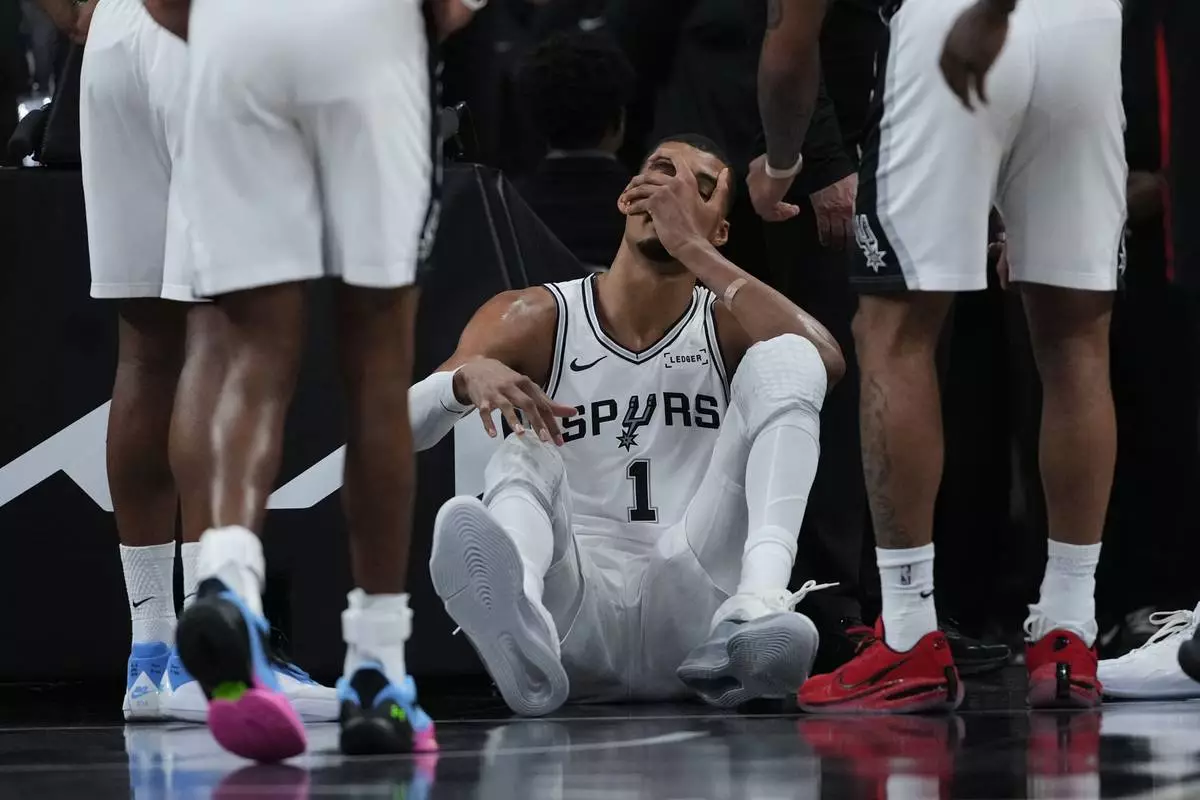
San Antonio Spurs forward Victor Wembanyama (1) sits on the court after a hard fall during the first half in Game 2 of a first-round NBA playoffs basketball series against the Portland Trail Blazers in San Antonio, Tuesday, April 21, 2026. (AP Photo/Eric Gay)
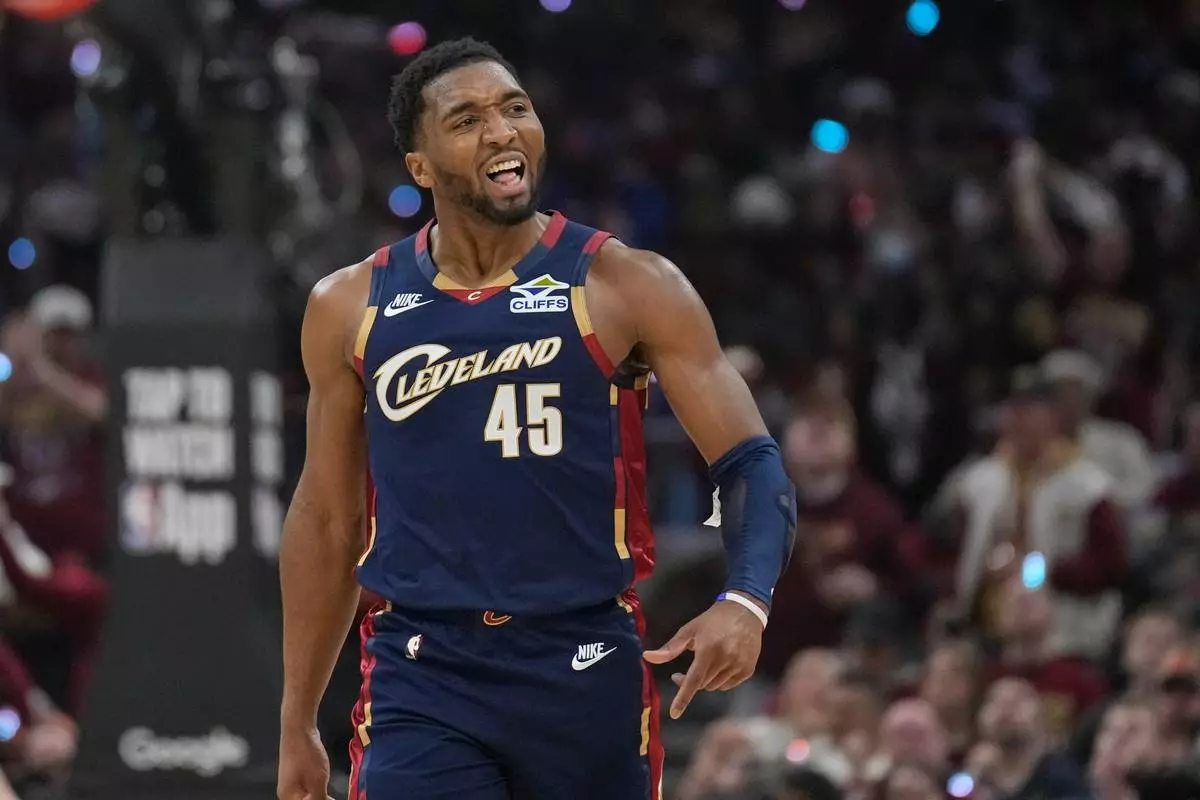
Cleveland Cavaliers guard Donovan Mitchell (45) gestures to the crowd in the first half in Game 2 of a first-round NBA basketball playoffs series against the Toronto Raptors in Cleveland, Monday, April 20, 2026. (AP Photo/Sue Ogrocki)
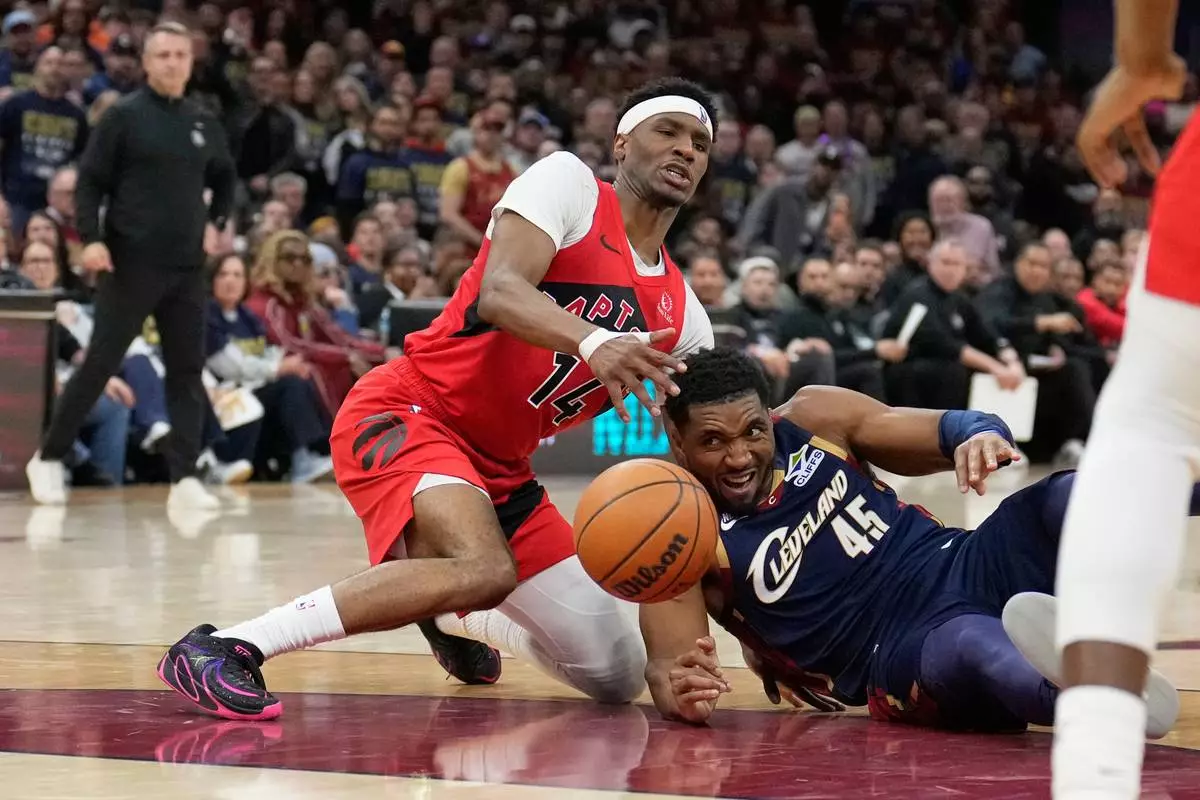
Toronto Raptors guard Ja'kobe Walter (14) and Cleveland Cavaliers guard Donovan Mitchell (45) reach for the ball in the second half in Game 2 of a first-round NBA basketball playoffs series in Cleveland, Monday, April 20, 2026. (AP Photo/Sue Ogrocki)
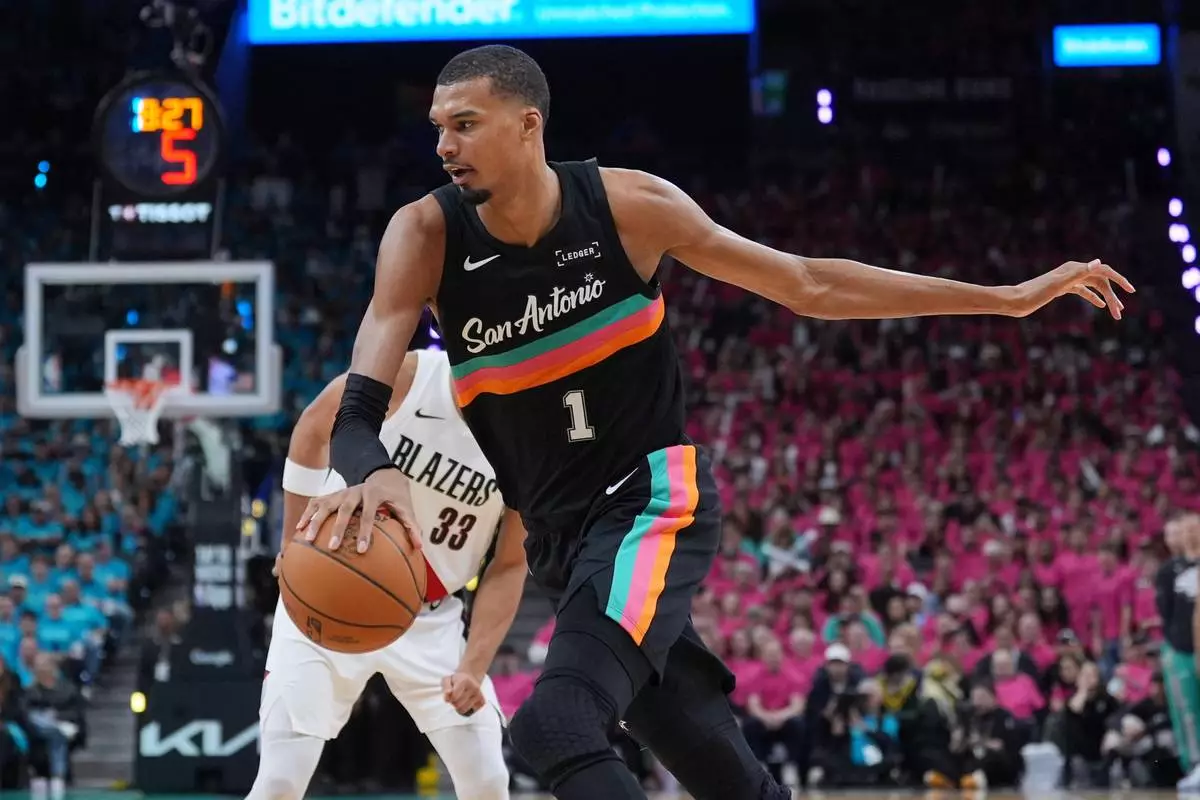
San Antonio Spurs forward Victor Wembanyama (1) drives past Portland Trail Blazers forward Toumani Camara (33) during the second half in Game 1 of a first-round NBA playoffs basketball series in San Antonio, Sunday, April 19, 2026. (AP Photo/Eric Gay)
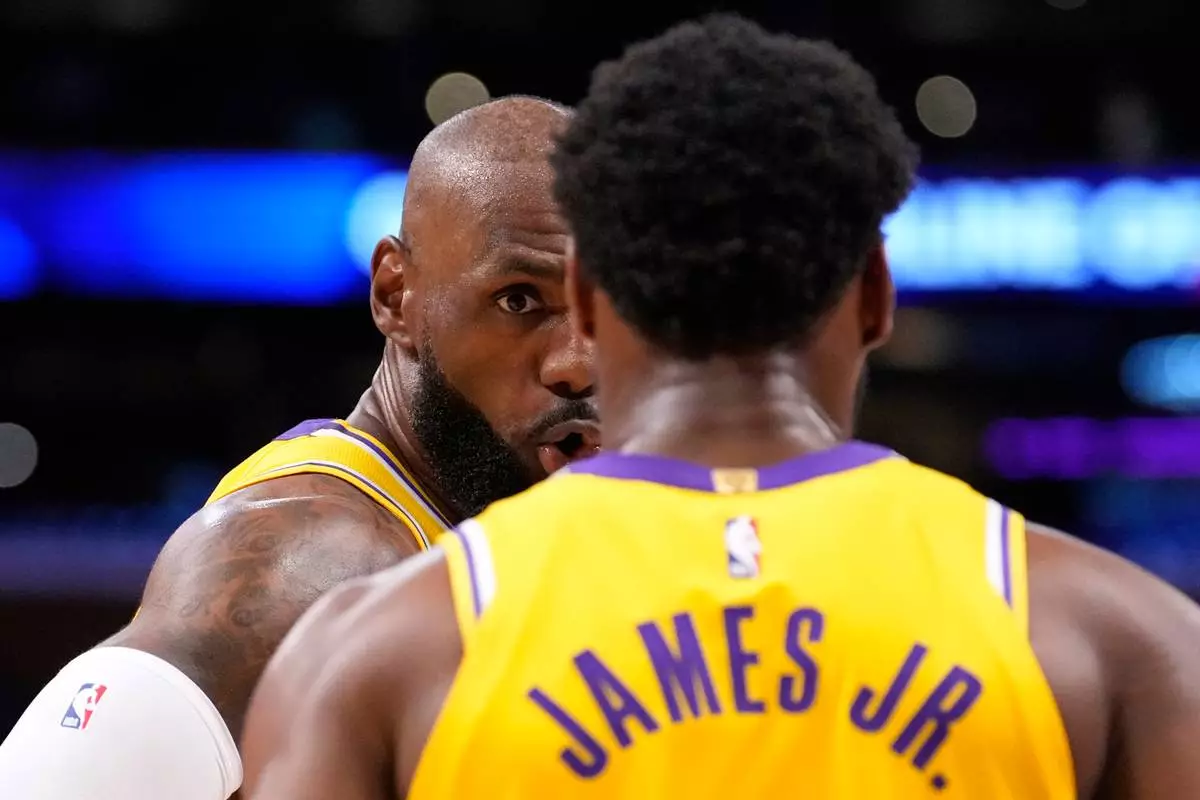
Los Angeles Lakers forward LeBron James, left, talks to his son guard Bronny James during the first half in Game 1 of a first-round NBA playoffs basketball series against the Houston Rockets, Saturday, April 18, 2026, in Los Angeles. (AP Photo/Mark J. Terrill)
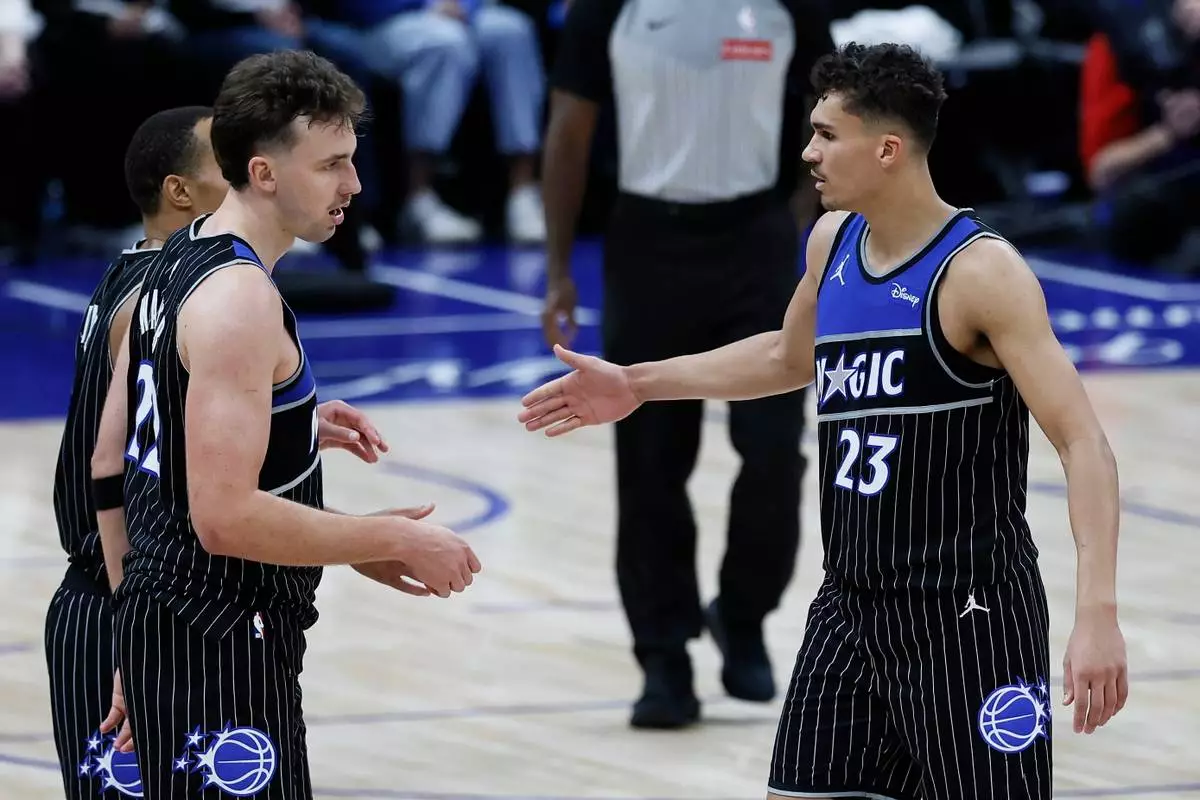
Orlando Magic forward Franz Wagner (22) and forward Tristan da Silva (23) celebrate after a win over the Detroit Pistons in Game 1 of a first-round NBA basketball playoffs series, Sunday, April 19, 2026, in Detroit. (AP Photo/Duane Burleson)
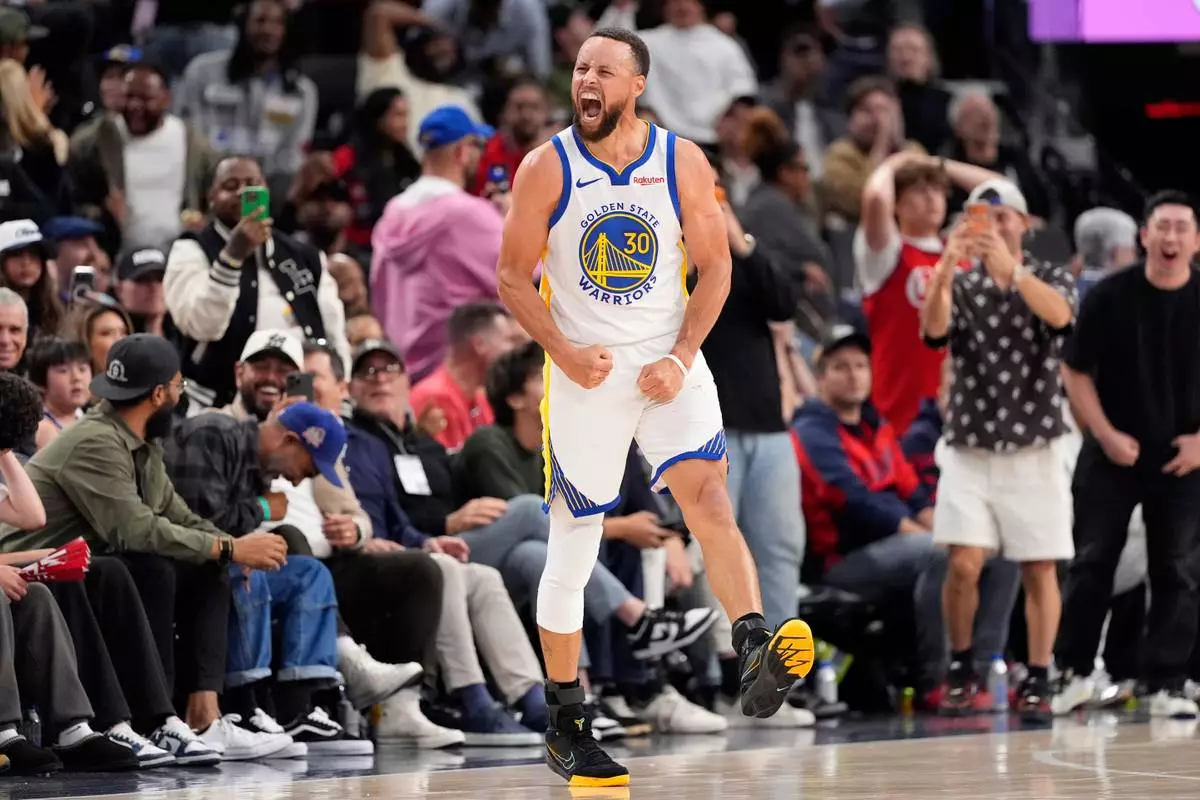
Golden State Warriors guard Stephen Curry celebrates after scoring during the second half of an NBA play-in tournament basketball game against the against the Los Angeles Clippers, Wednesday, April 15, 2026, in Inglewood, Calif. (AP Photo/Mark J. Terrill)
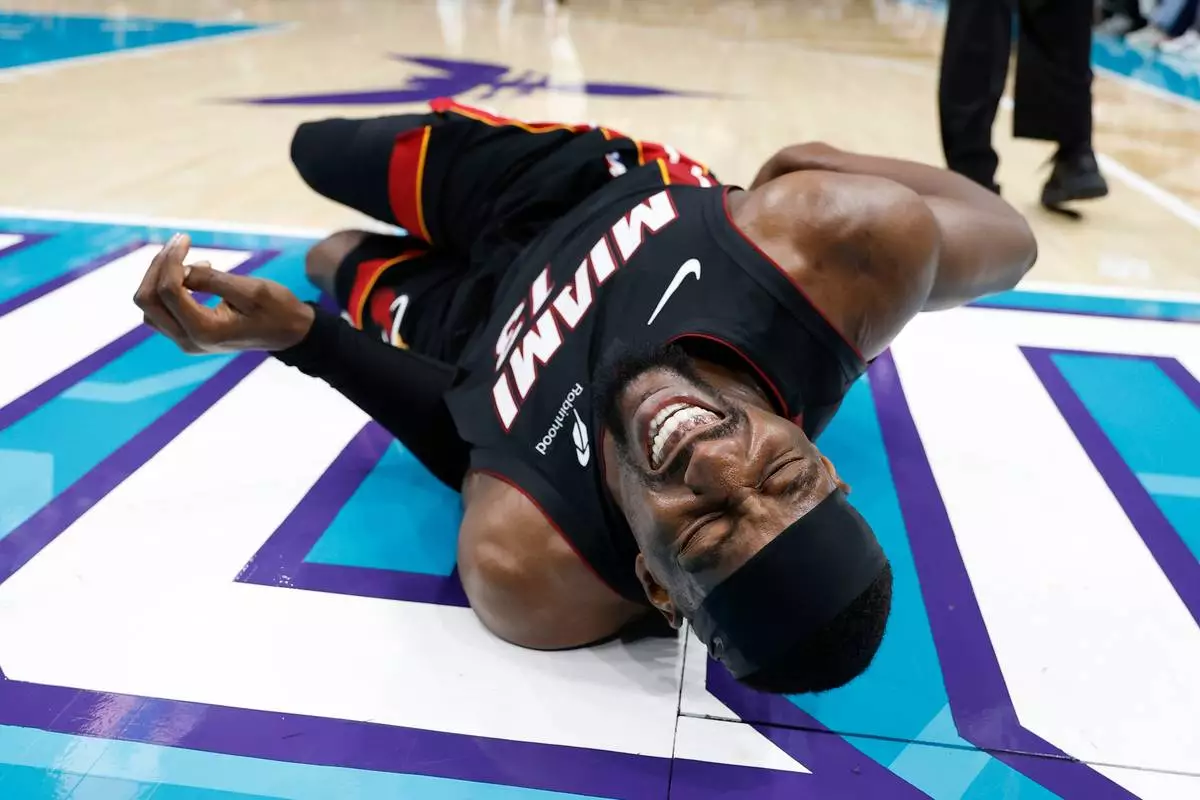
Miami Heat center Bam Adebayo (13) lies on the court during the first half of an NBA play-in tournament basketball game against the Charlotte Hornets in Charlotte, N.C., Tuesday, April 14, 2026. (AP Photo/Nell Redmond)
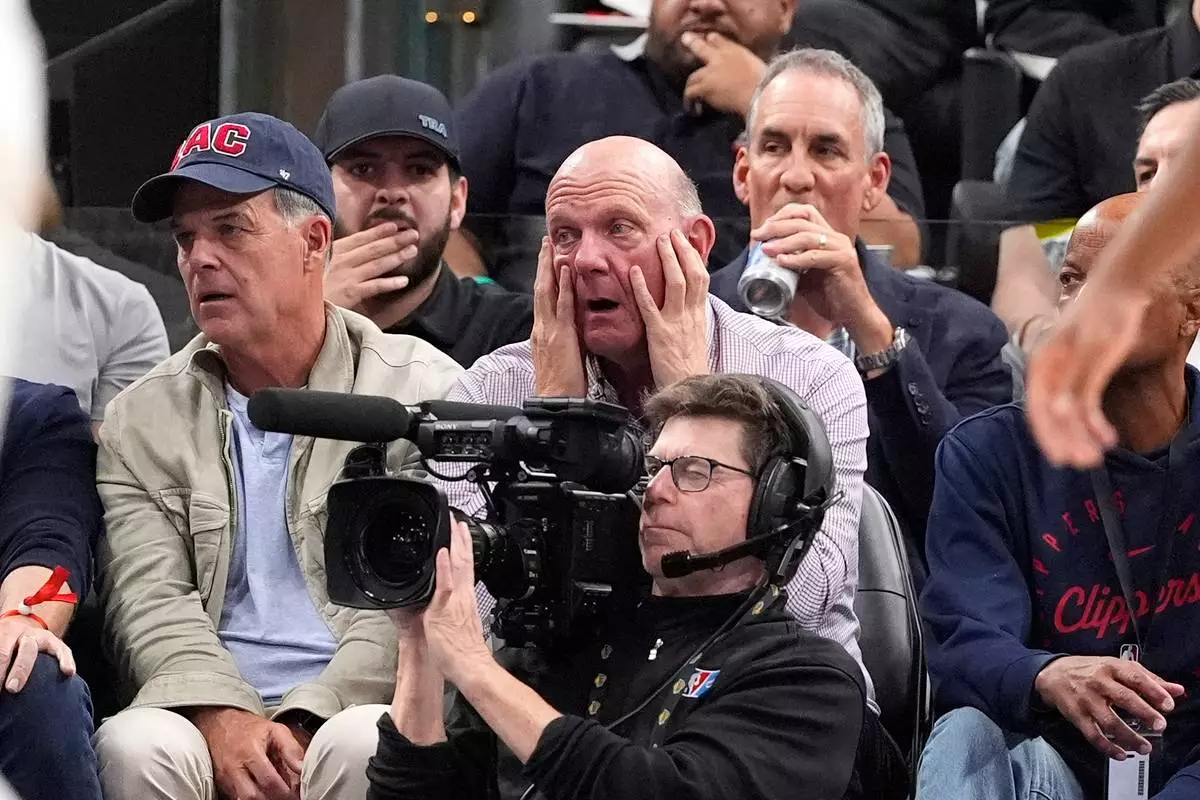
Los Angeles Clippers owner Steve Ballmer watches in the closing minutes of an NBA play-in tournament basketball game between the Clippers and the Golden State Warriors Wednesday, April 15, 2026, in Inglewood, Calif. (AP Photo/Mark J. Terrill)
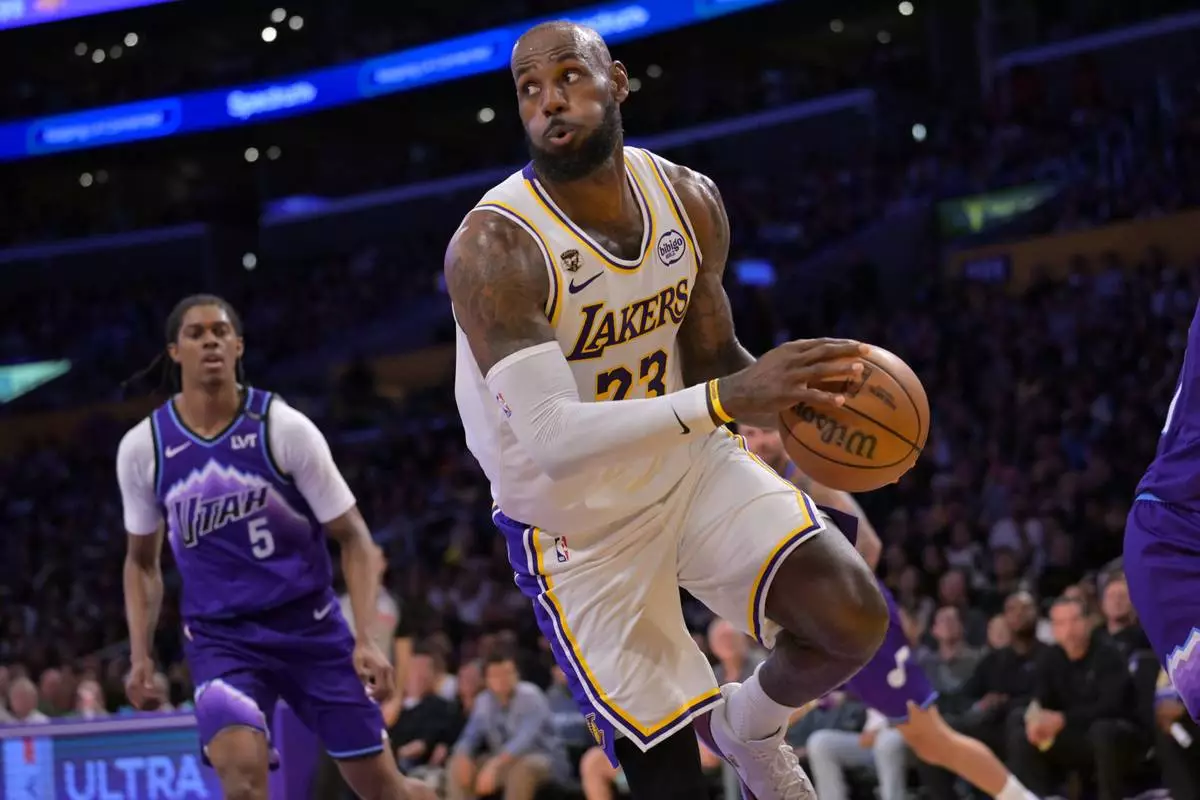
Los Angeles Lakers forward LeBron James looks to make a pass during the first half of an NBA basketball game against the Utah Jazz, Sunday, April 12, 2026, in Los Angeles. (AP Photo/Jayne Kamin-Oncea)
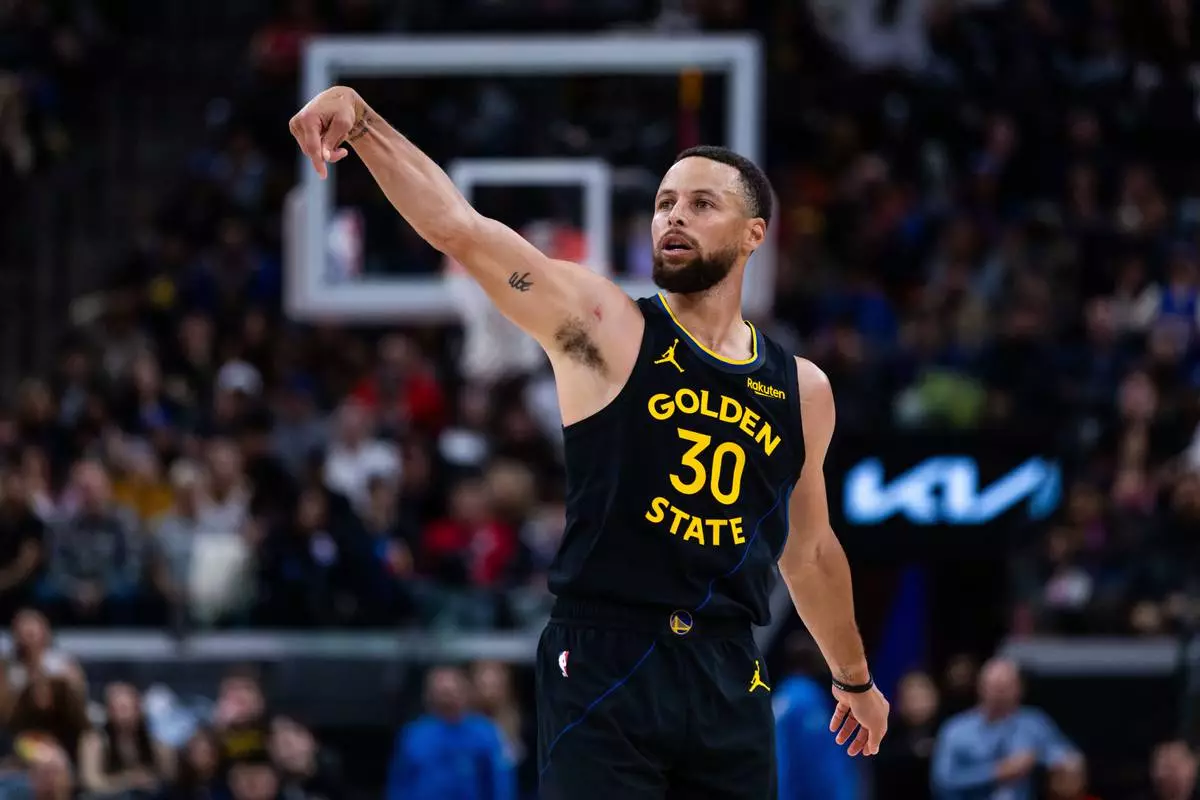
Golden State Warriors guard Stephen Curry (30) shoots against the Los Angeles Clippers during the second half of an NBA basketball game, Sunday, April 12, 2026, in Inglewood, Calif. (AP Photo/Ethan Swope)