BEIRUT (AP) — Jawad Younes, 11, and his cousins were playing soccer in the lot between their houses, as they often did. His little brother, 4-year-old Mehdi, had joined them but grew tired, so Jawad took him home before returning to the game. Minutes later, an Israeli strike came.
The target was Jawad’s uncle’s home. The blast shook buildings and threw Jawad’s siblings at home to the ground. Their mother scrambled to help them but already had a feeling of dread.
Click to Gallery
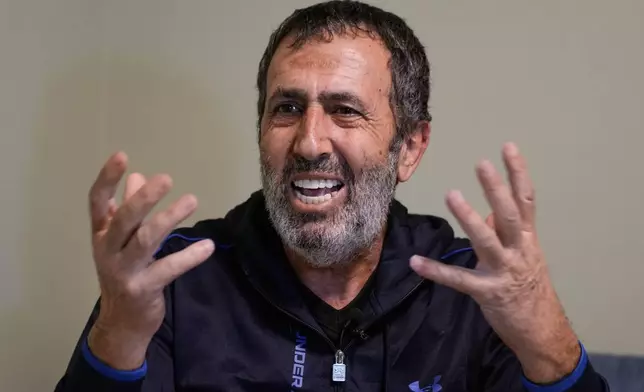
Hassan, the father of Zeinab al-Jabali, 10, who was killed on March 5, 2026, in an Israeli airstrike that hit her house in Libbaya village, east of Lebanon, speaks during an interview at the office of Dr. Ghassan Abu Sitta Fund, in Beirut, Lebanon, Thursday, March 19, 2026. (AP Photo/Bilal Hussein)
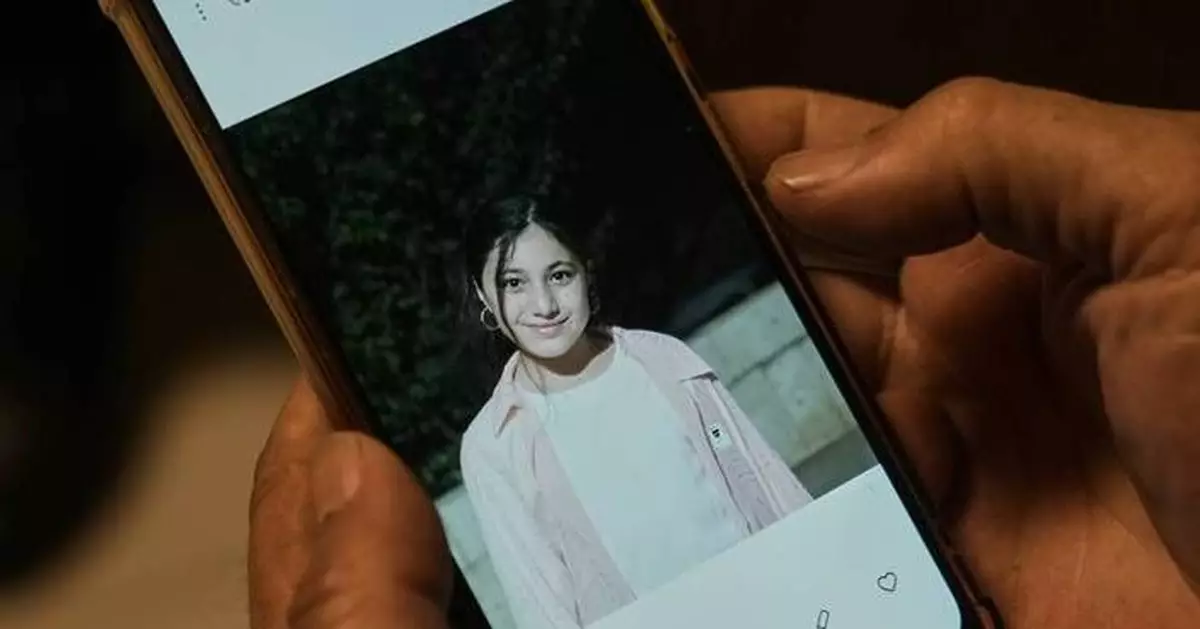
Hassan, the father of Zeinab al-Jabali, 10, who was killed on March 5, 2026, in an Israeli airstrike that hit her house in Libbaya village, east of Lebanon, shows a picture of his daughter, Zainab, during an interview at the office of doctor Ghassan Abu Sitta Fund, in Beirut, Lebanon, Thursday, March 19, 2026. (AP Photo/Bilal Hussein)
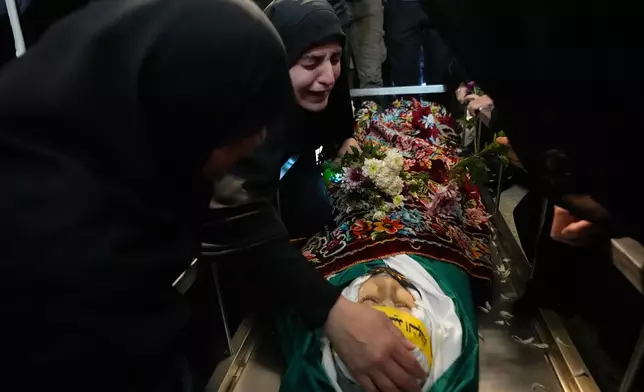
FILE — Malak Meslmani, center, the mother of Jawad Younes, 11, who was was killed in an Israeli airstrike, mourns over her son's body during his funeral procession in Saksakieh village, south Lebanon, Saturday, March 28, 2026. (AP Photo/Hussein Malla, File)
Hassan, the father of Zeinab al-Jabali, 10, who was killed on March 5, 2026, in an Israeli airstrike that hit her house in Libbaya village, east of Lebanon, speaks during an interview at the office of Dr. Ghassan Abu Sitta Fund, in Beirut, Lebanon, Thursday, March 19, 2026. (AP Photo/Bilal Hussein)
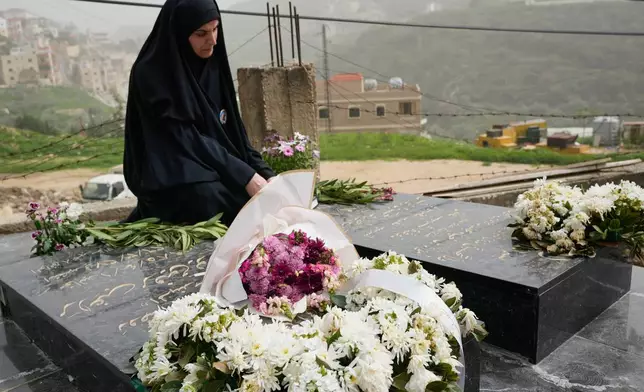
Malak Meslmani, the mother of Jawad Younes, 11, who was killed on March 27, 2026 in an Israeli airstrike, visits her son's grave in Saksakieh village, south Lebanon, Friday, April 3, 2026. (AP Photo/Hussein Malla)
Hassan, the father of Zeinab al-Jabali, 10, who was killed on March 5, 2026, in an Israeli airstrike that hit her house in Libbaya village, east of Lebanon, shows a picture of his daughter, Zainab, during an interview at the office of doctor Ghassan Abu Sitta Fund, in Beirut, Lebanon, Thursday, March 19, 2026. (AP Photo/Bilal Hussein)
FILE — Malak Meslmani, center, the mother of Jawad Younes, 11, who was was killed in an Israeli airstrike, mourns over her son's body during his funeral procession in Saksakieh village, south Lebanon, Saturday, March 28, 2026. (AP Photo/Hussein Malla, File)
“I was pulling my children off the floor in the house, but as I was running to pick them up, I screamed, ‘Jawad,’” Malak Meslmani said. “My heart told me.”
Her son was killed in the March 27 strike in Saksakieh. So was a cousin — so close they were more like brothers. Several other children were wounded.
Jawad's uncle also was killed. He was an interior design engineer; Jawad wanted to be an engineer like him. Meslmani called him a civilian. But like many Shiite families in southern Lebanon, the family were loyal supporters of the militant group and political party Hezbollah, which formed in the 1980s to fight Israel’s occupation of the area.
Jawad and his cousin are among 172 children killed — of more than 2,100 people in all — by Israel's strikes in the six weeks of renewed war between the country and Iran-backed Hezbollah.
Israel has often struck alleged Hezbollah militants or officials in their homes without warning, frequently in areas far from the front line when they are with their families, in apartment buildings surrounded by uninvolved neighbors. The Israeli military rarely names the targets of its strikes but says it takes measures to minimize civilian casualties — including children — and blames Hezbollah members for mixing with the general population. The families of children killed accuse Israel of committing war crimes because of the large number of civilian casualties.
At least two Israeli civilians — both adults — and 13 soldiers have been killed in the current war with Hezbollah, according to figures from Israel. One of the civilians was killed by mistaken Israeli fire.
In response to questions from The Associated Press, the Israeli military didn't deny that children have been killed in its Lebanon strikes but said it has targeted Hezbollah facilities and militants. The army says it's killed hundreds of Hezbollah operatives but has provided little evidence to support the claim.
Under international law governing armed conflict, it's never legal to directly target civilians, but collateral damage — harm to civilians when striking a military target — is allowed if it is proportional to the anticipated military gains of any given strike.
The Israeli military told AP in a statement that its strikes follow the law, including “the principles of distinction, proportionality, and the taking of precautions.”
Charles Trumbull, an assistant University of South Carolina law professor who studies the law and ethics of armed conflict, said it's difficult to assess whether the proportionality threshold was met without knowing the strike targets and whether the military knew children were present.
“To the extent that they knew that children were likely to be harmed or killed in these strikes, and as an ethical matter, absolutely I think that should affect the calculus,” he said. “Just because certain strikes might not violate the law on conflict doesn’t mean that they’re not concerning or problematic or that they are morally justified.”
At 2 a.m. March 12, Taline Shehab — who would have turned 4 last month — was sleeping when missiles tore into an apartment above hers in the family's building in Aramoun, about 20 km (12 miles) south of Beirut, causing it to collapse. Taline and her father died; her mother was critically wounded.
Aramoun is a religiously mixed area that was generally considered safe, though it had been targeted by airstrikes in the previous Israel-Hezbollah war, in 2024.
Taline’s father, Mohamad, was a drone operator and video producer who often worked with the Lebanese army and on high-profile television productions. He and his wife, Nathalie, ran a fashion company; Taline appeared regularly on its social media.
“They were a very close family. Their daily life revolved around their daughter,” said Ali Shehab, Mohamad's brother.
Taline “was full of personality,” he said. “She was very attached to her father. She loved being around him" and "didn’t like to share him with anyone.”
He comforts himself with the thought that “maybe Mohammed and Taline, because they are so attached to each other, God chose them both.”
Dr. Ghassan Abu Sitta, who's worked extensively in Gaza and Lebanon and runs an initiative treating some of the most seriously war-wounded children at the American University of Beirut Medical Center, said that, like Taline, most of the cases he has seen are “children being crushed underneath the rubble of their own homes.”
Ten-year-old Zeinab al-Jabali used to tag along wherever her father went: the corner store, the mountains around their village in Lebanon’s Bekaa Valley.
On March 5, she was helping to prepare for iftar, the meal ending the daily fast during the holy month of Ramadan, when an airstrike hit her aunt’s house.
Now, Hassan al-Jabali sleeps in the Beirut hospital where doctors are treating his wife and three remaining daughters, all wounded in the strike that killed Zeinab.
War has shadowed most of his life. In 1982, his brother — then 10, like Zeinab — was killed by an Israeli missile.
Al-Jabali made a living selling mouneh, or preserved foods such as raisins and dried herbs, and worked for his cousin's factory producing laban, or yogurt.
Al-Jabali acknowledged his brother-in-law — who was killed — “in the past was with the resistance,” referring to Hezbollah.
“But they struck him at home, in a house full of children, full of girls,” said al-Jabali, who heard the blast from elsewhere in the village and found a scene of carnage when he rushed to check on his family.
He said his wife still doesn’t know Zeinab is dead; he’s afraid the grief would endanger her recovery.
In response to questions about the strikes that killed Jawad, Taline, and Zeinab, the Israeli military didn't give details about the intended targets beyond that they were related to Hezbollah.
The military's statement said Israel regrets any civilian harm but that it's operating against Hezbollah, “which attacked the State of Israel under Iranian backing.”
Many Lebanese have blamed Hezbollah for pulling their country into the war when it fired missiles across the border March 2, two days after the U.S. and Israel attacked Iran. But for others, the devastation from Israeli strikes has strengthened their support.
“We are now holding onto the resistance more than any time before,” said Meslmani, Jawad's mother.
Despite Israeli army notices for residents in large swathes of southern Lebanon to flee, many in their town of Saksakieh stayed. Displaced people from farther south took refuge there. Life felt almost normal before the strike that killed Jawad.
Now, Meslmani visits his grave in a small cemetery overlooking a mountain vista, where she can hear warplanes roar overhead.
“I remember everything," she said. "How he used to eat and drink, how he used to play, how he would get dressed and fix his beautiful hair.”
Since he was killed, the planes no longer bother her.
“The most precious thing, my heart, is gone," she said. "What more can they do?”
Associated Press journalists Malak Harb in Beirut and Koral Saeed in Abu Snan, Israel, contributed to this report.
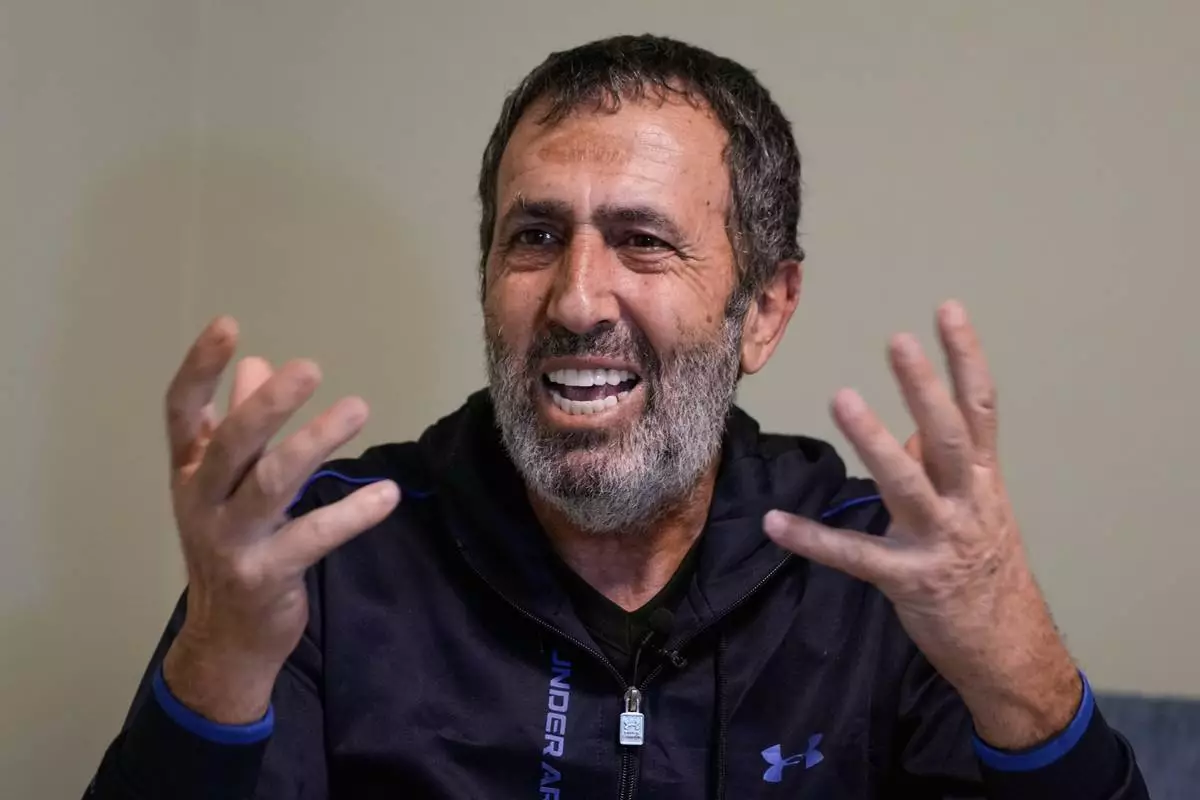
Hassan, the father of Zeinab al-Jabali, 10, who was killed on March 5, 2026, in an Israeli airstrike that hit her house in Libbaya village, east of Lebanon, speaks during an interview at the office of Dr. Ghassan Abu Sitta Fund, in Beirut, Lebanon, Thursday, March 19, 2026. (AP Photo/Bilal Hussein)
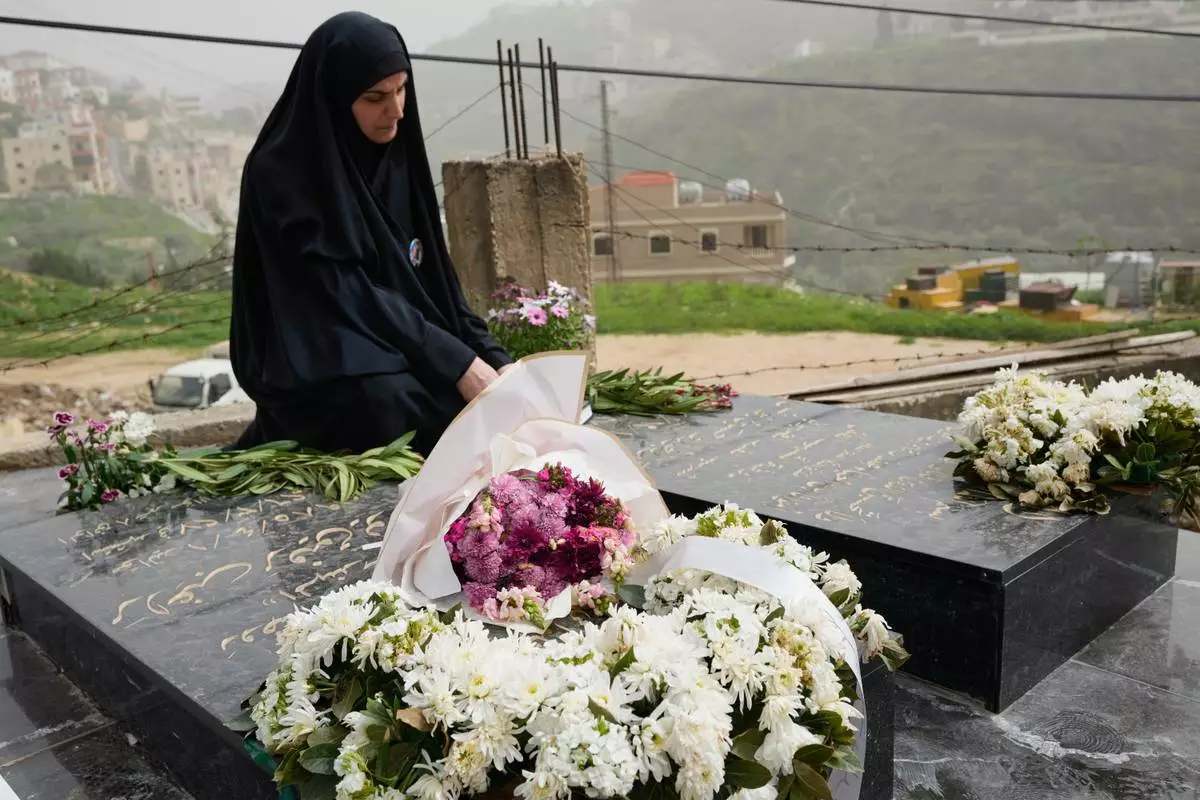
Malak Meslmani, the mother of Jawad Younes, 11, who was killed on March 27, 2026 in an Israeli airstrike, visits her son's grave in Saksakieh village, south Lebanon, Friday, April 3, 2026. (AP Photo/Hussein Malla)

Hassan, the father of Zeinab al-Jabali, 10, who was killed on March 5, 2026, in an Israeli airstrike that hit her house in Libbaya village, east of Lebanon, shows a picture of his daughter, Zainab, during an interview at the office of doctor Ghassan Abu Sitta Fund, in Beirut, Lebanon, Thursday, March 19, 2026. (AP Photo/Bilal Hussein)
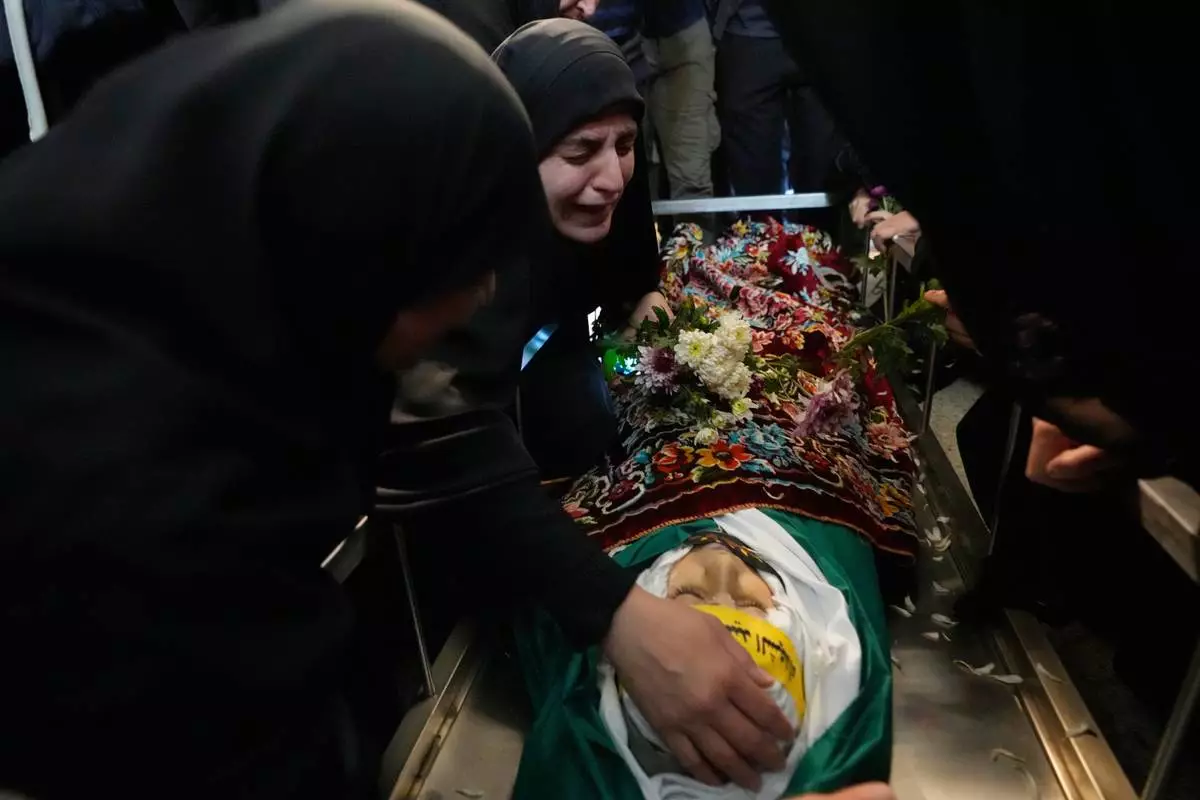
FILE — Malak Meslmani, center, the mother of Jawad Younes, 11, who was was killed in an Israeli airstrike, mourns over her son's body during his funeral procession in Saksakieh village, south Lebanon, Saturday, March 28, 2026. (AP Photo/Hussein Malla, File)
Iran reversed its decision to reopen the Strait of Hormuz and warned that it would continue to block transit through the strait as long as the U.S. blockade of Iranian ports remained in effect.
The escalating standoff over the critical choke point threatened to deepen the energy crisis roiling the global economy and push the two countries toward renewed conflict, even as mediators expressed confidence that a new deal was within reach.
The strait is closed until the U.S. blockade is lifted, Iran’s Revolutionary Guard navy said Saturday night. Hours earlier, two gunboats from Iran’s Revolutionary Guard opened fire on a tanker transiting the Strait of Hormuz, the British military’s United Kingdom Maritime Trade Operations center said. It reported that the tanker and crew were safe, without identifying the vessel or its destination.
Roughly one-fifth of the world’s oil passes through the strait and further limits would squeeze the already constrained supply, driving prices higher once again. Meanwhile, a 10-day truce between Israel and the Iran-backed Hezbollah militant group in Lebanon appeared to be holding.
The fighting in the Middle East conflict, which is approaching the two-month mark, has killed at least 3,000 people in Iran, nearly 2,300 in Lebanon, 23 civilians and 15 soldiers in Israel, and more than a dozen in Gulf Arab states. Thirteen U.S. service members have also been killed.
Here is the latest:
The far-right South American leader landed on Sunday for a three-day visit, meeting Prime Minister Benjamin Netanyahu and visiting the Western Wall of Jerusalem’s Temple Mount.
Milei is scheduled to sign new binational accords with Israel and receive a Presidential Medal from Israeli President Isaac Herzog celebrating his commitment to fighting anti-semitism, Herzog’s office said. It is at least Milei’s third visit to the Western Wall.
He has backed the United States and Israel’s decision to launch a war on Iran. Earlier this month Argentina expelled Iran’s ambassador from Buenos Aires.
Milei is among a small cohort of right-leaning leaders who have deepened ties with Netanyahu’s government even as Israel faces diplomatic isolation over wartime conduct, including in Gaza and Lebanon. Some of Argentina’s South American neighbors have cut diplomatic ties or withdrawn their ambassadors,
Speaking at the end of his Mass in Kilamba, Angola, Leo said the ceasefire between Israel and Hezbollah was a “sign of relief for the Lebanese people.”
He said: “I encourage those who have been committed to the search for a diplomatic solution to continue peace talks so that the end of hostilities throughout the Middle East becomes permanent.”
Leo said he prays for a permanent ending of hostilities in the Middle East.
The pope is on an 11-day, four-nation African journey that has been characterized by repeated appeals for peace.
Pakistani authorities have begun tightening security in the capital, Islamabad, ahead of a possible second round of ceasefire talks between the U.S. and Iran.
Authorities on Sunday deployed troops at roadside checkpoints, closed tourist sites and ordered major hotels to cancel bookings and keep facilities available.
Islamabad’s streets are largely deserted, as residents stayed home to avoid road closures seen earlier this month during the first round of talks.
While there were no formal announcements, Pakistani officials said arrangements are in place for talks in the coming days.
A regional official involved in the mediation efforts said mediators were finalizing the preparations. He said U.S. advance security teams are already on the ground. The officials spoke on condition of anonymity to discuss the preparations.
Pakistan has led mediation efforts to end the war. Its military chief visited Tehran last week, while Prime Minister Shehbaz Sharif met with regional leaders in Saudi Arabia, Qatar and Turkey.
The Israeli army says it carried out a series of strikes that killed more than 150 Hezbollah fighters.
Among those killed was Ali Rida Abbas, which it said was Hezbollah’s commander in Bint Jbeil. The southern Lebanese town and its surroundings were the site of intense clashes between Israeli troops and Hezbollah militants in the days leading up to the ceasefire.
Israel gave no evidence to support its claims, and Hezbollah didn't immediately confirm the death of its commander.
The ceasefire took effect early Friday.
Iran’s chief negotiator says his country wants “a lasting peace so that war is not repeated again.”
Parliamentary Speaker Mohammad Bagher Qalibaf made the comments in a televised interview late Saturday, a few days before a ceasefire deadline is set to expire, according to Iranian state media.
“What is fundamental for us is distrust of the United States,” he said. “At the same time, we have good intentions and seek a lasting peace — one that prevents the recurrence of war.”
He said that the Islamabad negotiations didn’t address the mistrust, but that the U.S. and Iranian negotiators “reached a more realistic understanding of one another.”
He said that the two sides achieved progress in the Islamabad talks, but disagreement remained on some key issues, including the nuclear program and the Strait of Hormuz.
“The gaps remain wide and some fundamental issues are still unresolved,” he said.
He didn’t elaborate with further details.
The Lebanese army said in a statement Sunday that it reopened the Khardali road that links the southern city of Nabatiyeh with the town of Marjayoun.
The army said that it also reopened the road that links the port city of Tyre with the village of Bourj Rahhal. The army is also working on reopening other roads, including a bridge on the Litani River in the village of Tayr Filsay.
During Israel’s invasion of southern Lebanon over the past several weeks, Israel’s air force has destroyed several bridges on the river.
After a 10-day ceasefire was declared as of midnight Thursday, the Lebanese army and the Litani Authority have been working on putting up temporary bridges to replace the destroyed ones.
Iran’s parliamentary Speaker Mohammed Bagher Qalibaf says the Strait of Hormuz will remain closed as long as the U.S. imposes a naval blockade on Iran.
“It is impossible for others to pass through the Strait of Hormuz while we cannot,” he said in televised comments aired by Iranian semiofficial media late Saturday.
Qalibaf, who is Iran’s chief negotiator with the United States, said that the strait is now under Iran’s control, linking the choke point’s reopening to the U.S. lifting of its blockade.
“If the U.S. does not lift the blockade, traffic in the Strait of Hormuz will definitely be restricted,” he said.
He said that the ceasefire was on verge of collapse when the U.S. attempted to mine-clear the strait.
He said Iran viewed the U.S. attempt as a violation of the ceasefire.
“The situation escalated to the point of conflict but the enemy retreated,” he said.
Israel’s military says another soldier died in combat in southern Lebanon, the second death announced in under 12 hours.
It brought the total number of soldiers killed in Lebanon to 15, and was the second soldier killed in combat since the ceasefire.
The military said that another soldier was badly wounded, along with four moderately wounded and four slightly injured.
The navy of Iran’s Revolutionary Guard Corps said that it extended the closure to the corridor it had earlier designated for the safe passage of vessels through the strategic waterway and declared the strait fully closed until the U.S. blockade on Iranian ports and ships is lifted.
On Friday, Iran said that vessels could move through the strait in coordination with it and against the payment of a toll.
But in a statement late Saturday carried by Iran’s state media, the navy warned that any violating vessel would be targeted.
Iran considers the U.S. blockade a violation of the ceasefire between the two countries. Two vessels were attacked earlier on Saturday in the Strait of Hormuz and off Oman’s coast, at least one of them by Iranian gunboats.
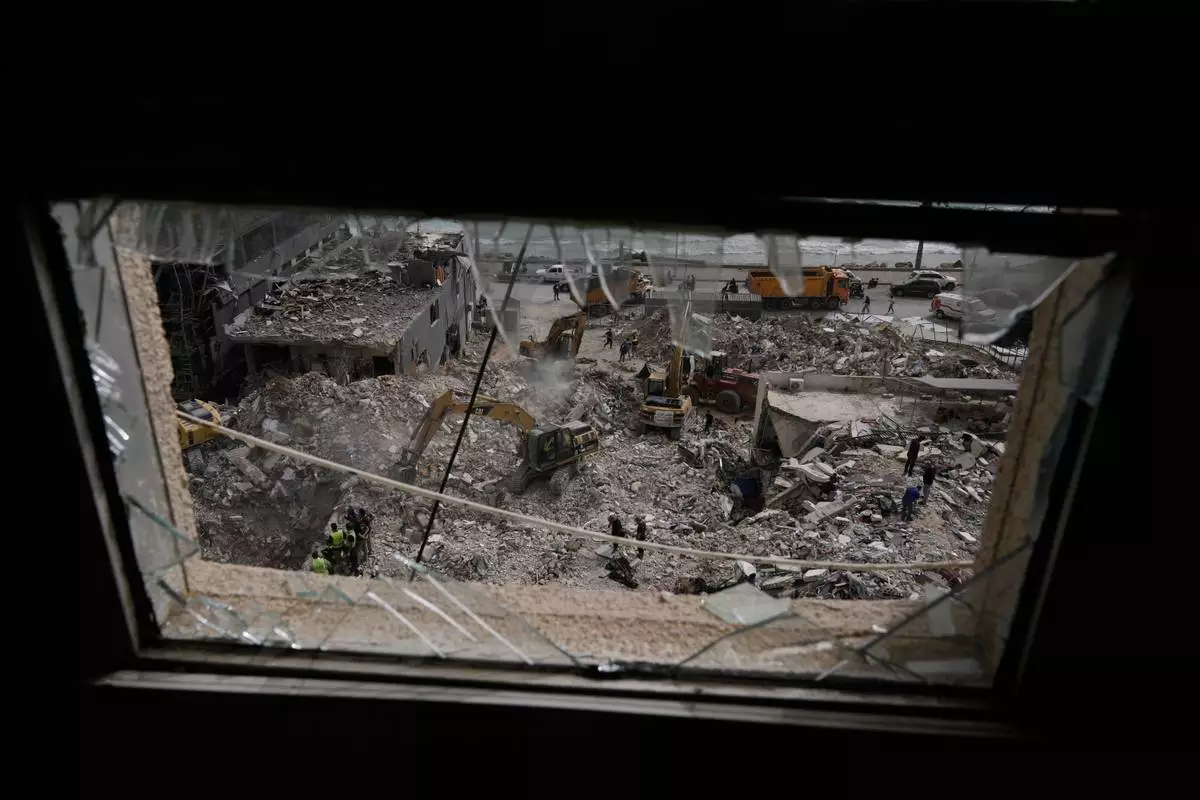
Excavators remove rubble from destroyed buildings that were hit on Thursday by Israeli airstrikes, as they keep searching for victims in Tyre city, southern Lebanon, Saturday, April 18, 2026. (AP Photo/Bilal Hussein)
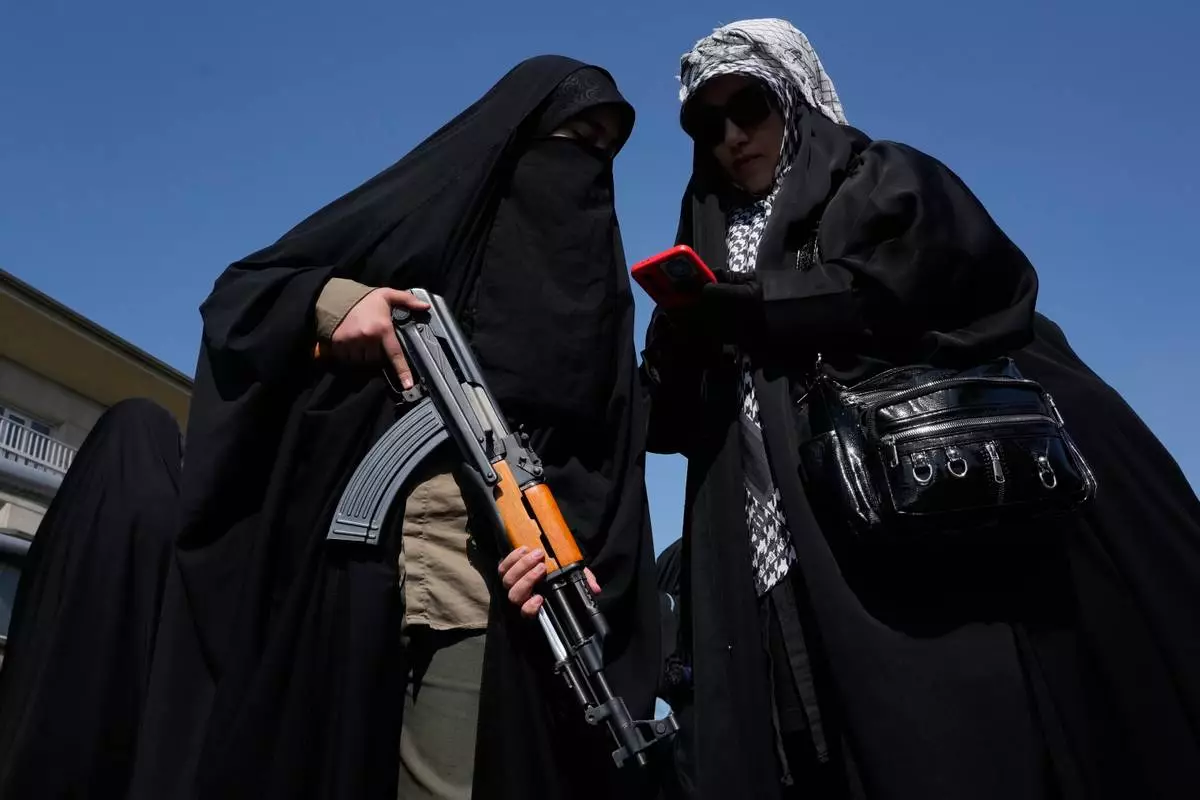
A woman member of the Basij paramilitary, affiliated with Iran's Revolutionary Guard, holds her gun during a state-organized rally in support of the supreme leader marking National Girl's Day in Tehran, Iran, Friday, April 17, 2026. (AP Photo/Vahid Salemi)
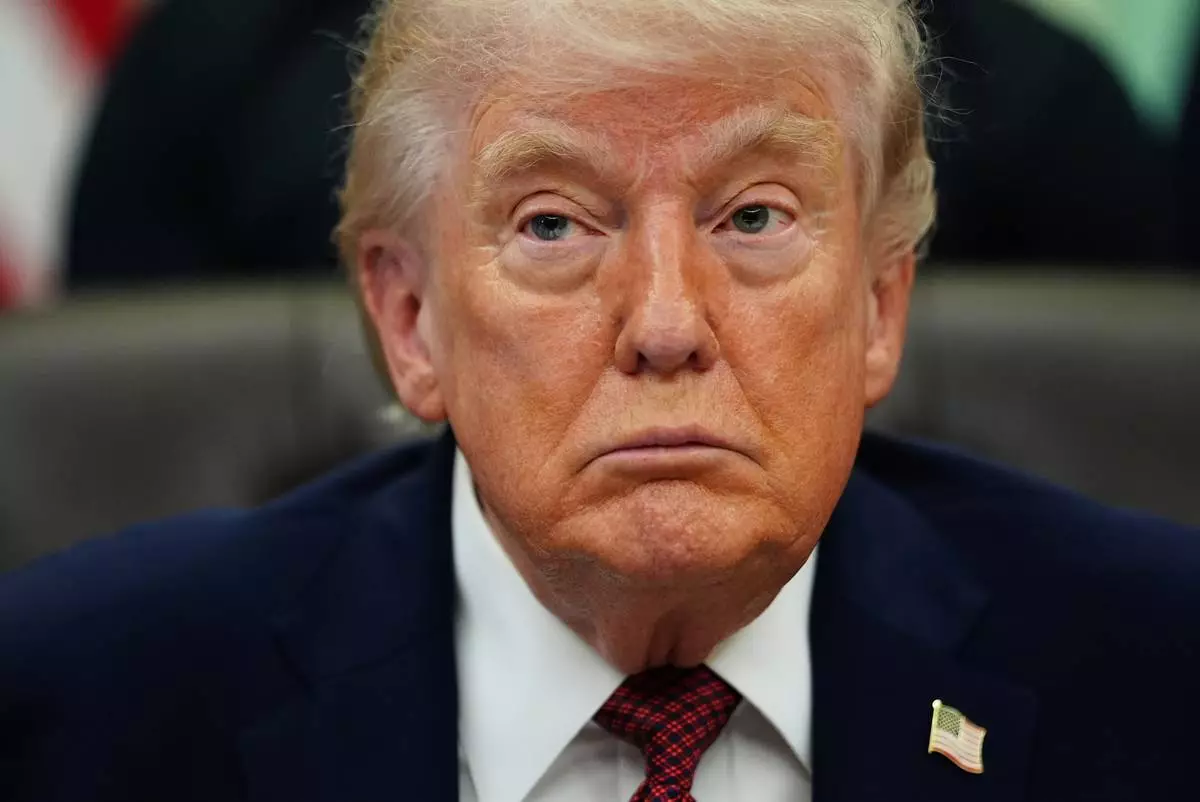
President Donald Trump listens to speeches before signing an executive order in the Oval Office of the White House, Saturday, April 18, 2026, in Washington. (AP Photo/Julia Demaree Nikhinson)
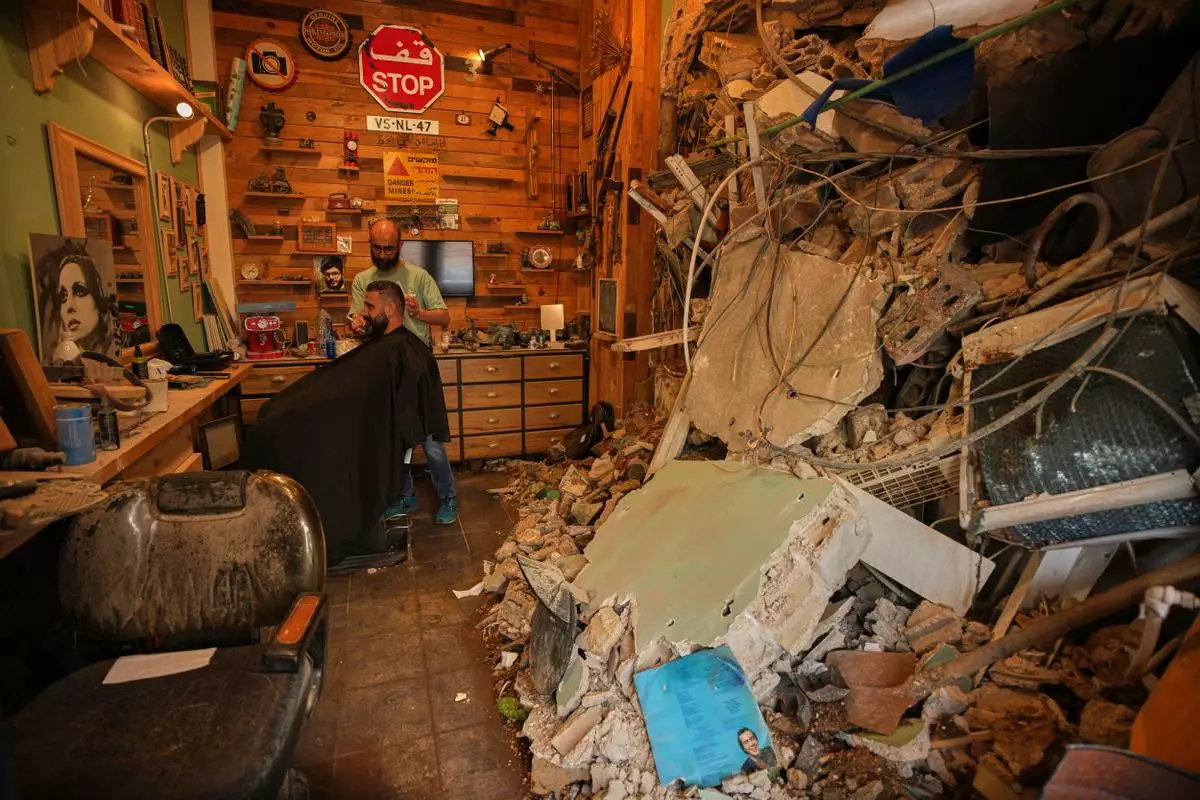
Barber Mohammad Mehdi cuts the hair of his client Ayman Al Zein inside his shop, which was damaged in an Israeli airstrike that also damaged Al Zein's shop, in Dahiyeh, Beirut's southern suburbs, Lebanon, Saturday, April 18, 2026. (AP Photo/Hassan Ammar)
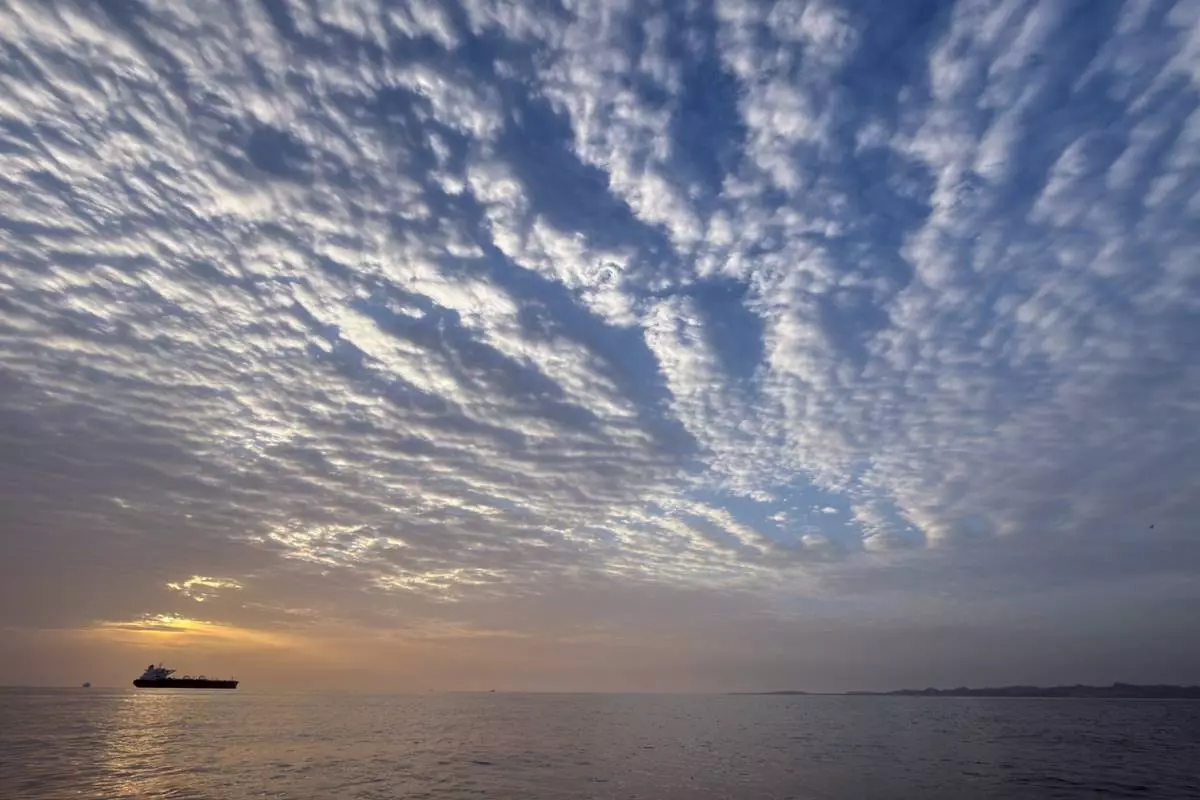
The sun rises behind a tanker anchored in the Strait of Hormuz off the coast of Qeshm Island, Iran, Saturday, April 18, 2026. (AP Photo/Asghar Besharati)