President Donald Trump said the U.S. forcibly seized an Iranian-flagged cargo ship that tried to get around a naval blockade near the Strait of Hormuz on Sunday, the first such interception since the blockade of Iranian ports began last week.
He said a U.S. Navy guided missile destroyer in the Gulf of Oman “stopped them right in their tracks by blowing a hole in the engineroom” and that U.S. Marines had custody of the vessel, named Touska, and were “seeing what’s on board!”
Click to Gallery
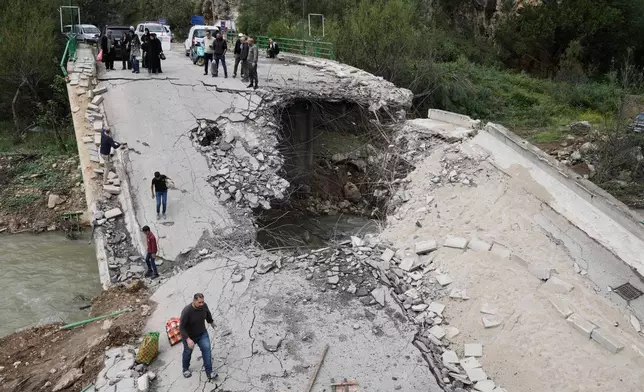
Displaced people cross a destroyed bridge as they return to their villages, following a ceasefire between Hezbollah and Israel, in Tayr Felsay village, southern Lebanon, Sunday, April 19, 2026. (AP Photo/Bilal Hussein)
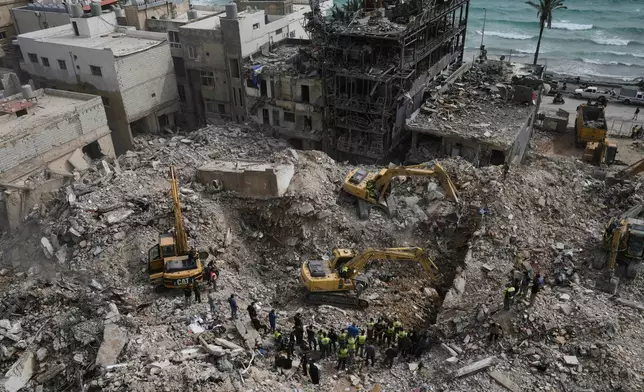
Excavators remove rubble from buildings destroyed in Israeli airstrikes on Thursday as rescuers search for victims in the city of Tyre, southern Lebanon, Saturday, April 18, 2026. (AP Photo/Bilal Hussein)
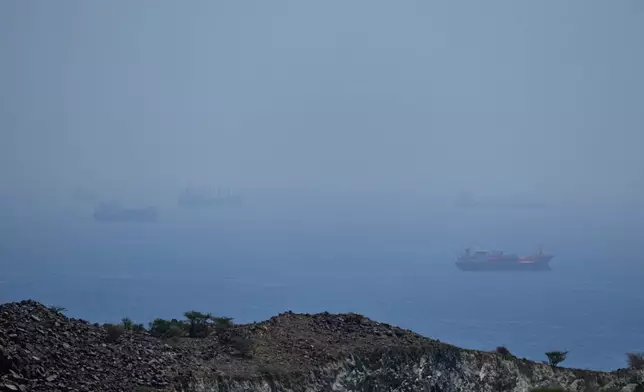
Tankers and bulk carriers anchored in the Strait of Hormuz, Saturday, April 18, 2026. (AP Photo)
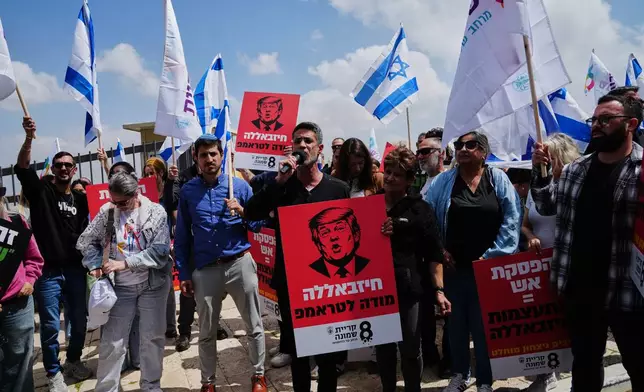
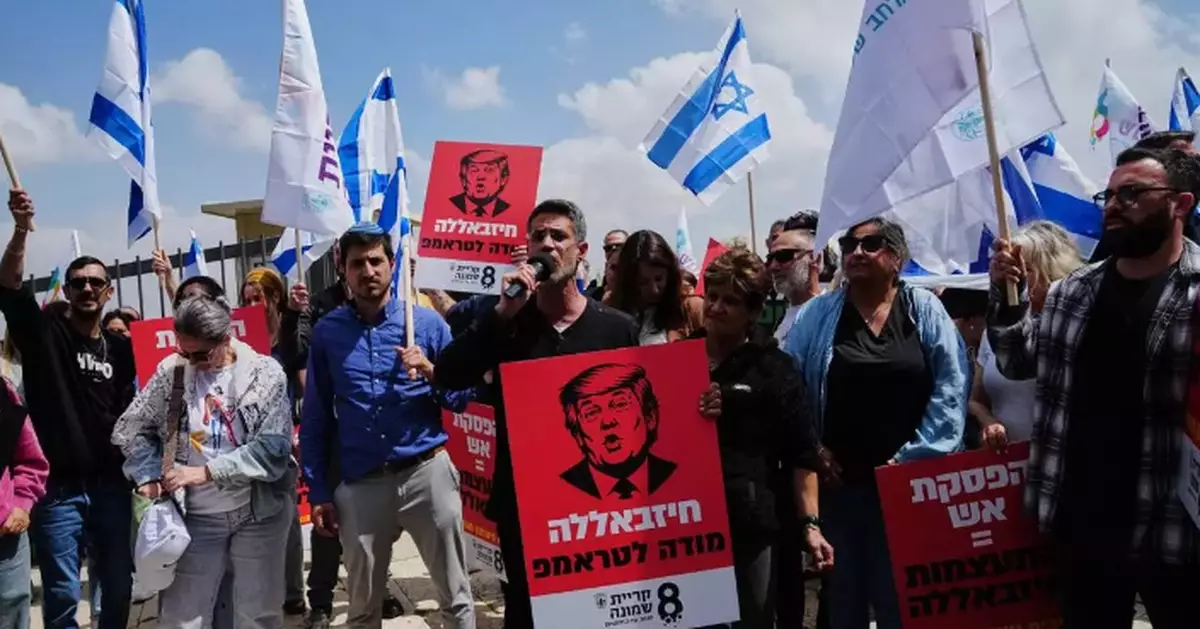
Residents of northern Israel living near the Lebanese border protest the security situation, outside the U.S. Embassy in Jerusalem Sunday, April 19, 2026. Hebrew on a sign bearing an image of President Trump reads "Hezbollah thanks Trump." (AP Photo/Mahmoud Illean)
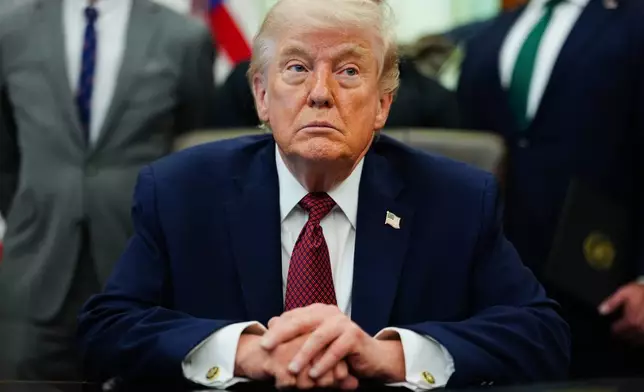
President Donald Trump listens in the Oval Office of the White House, Saturday, April 18, 2026, in Washington. (AP Photo/Julia Demaree Nikhinson)
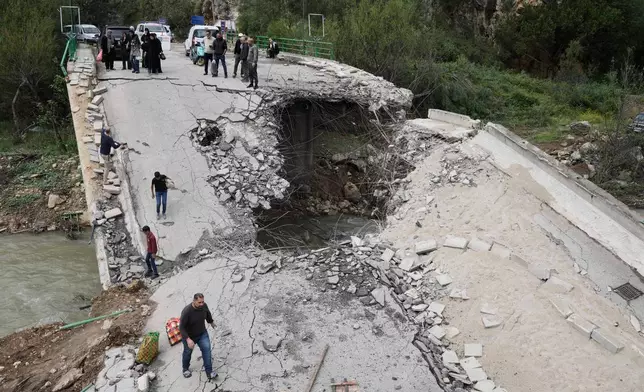
Displaced people cross on foot a destroyed bridge as they return to their villages, following a ceasefire between Hezbollah and Israel, in Tayr Felsay village, southern Lebanon, Sunday, April 19, 2026. (AP Photo/Bilal Hussein)
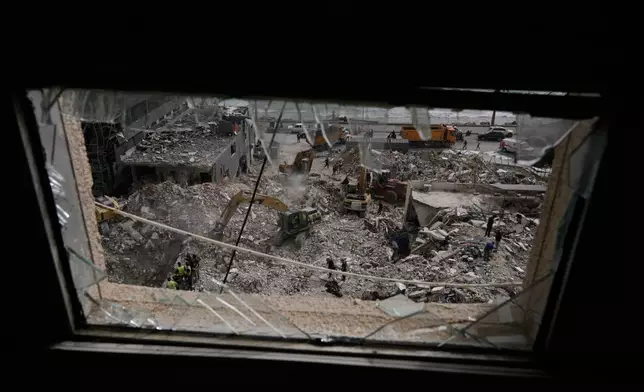
Excavators remove rubble from destroyed buildings that were hit on Thursday by Israeli airstrikes, as they keep searching for victims in Tyre city, southern Lebanon, Saturday, April 18, 2026. (AP Photo/Bilal Hussein)
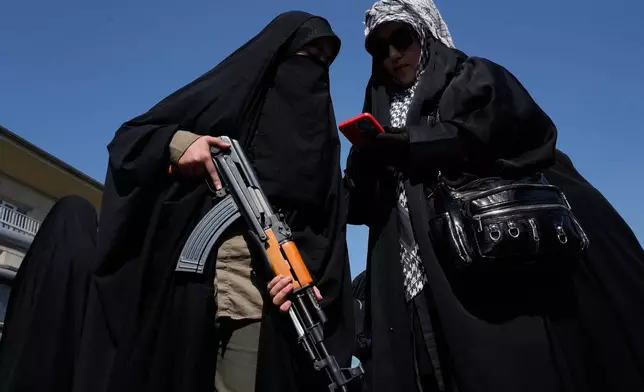
A woman member of the Basij paramilitary, affiliated with Iran's Revolutionary Guard, holds her gun during a state-organized rally in support of the supreme leader marking National Girl's Day in Tehran, Iran, Friday, April 17, 2026. (AP Photo/Vahid Salemi)
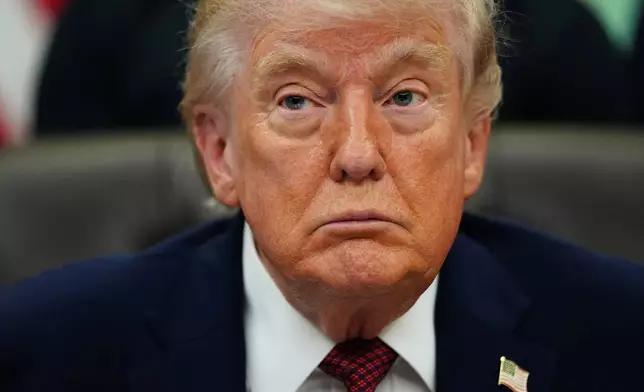
President Donald Trump listens to speeches before signing an executive order in the Oval Office of the White House, Saturday, April 18, 2026, in Washington. (AP Photo/Julia Demaree Nikhinson)
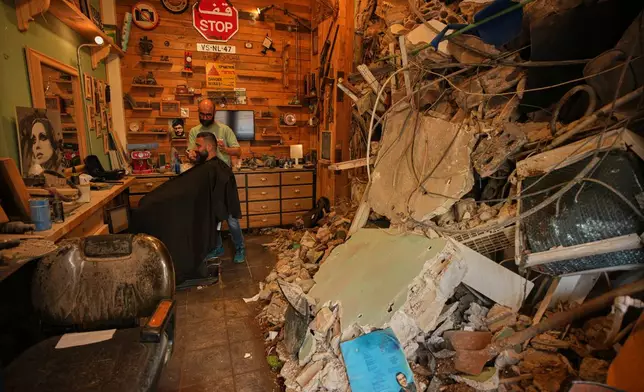
Barber Mohammad Mehdi cuts the hair of his client Ayman Al Zein inside his shop, which was damaged in an Israeli airstrike that also damaged Al Zein's shop, in Dahiyeh, Beirut's southern suburbs, Lebanon, Saturday, April 18, 2026. (AP Photo/Hassan Ammar)
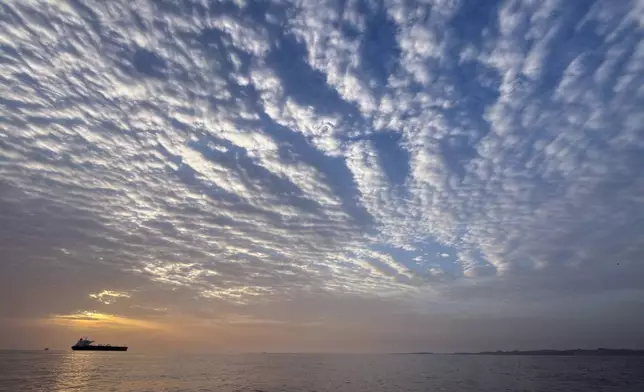
The sun rises behind a tanker anchored in the Strait of Hormuz off the coast of Qeshm Island, Iran, Saturday, April 18, 2026. (AP Photo/Asghar Besharati)
Iran’s joint military command said Tehran will respond soon and called the U.S. seizure an act of piracy.
The news threw into question Trump’s earlier announcement that U.S. negotiators would head to Pakistan on Monday for another round of talks with Iran. That had raised hopes of extending a fragile ceasefire set to expire by Wednesday, but Iran has not confirmed it would attend.
The escalating standoff threatened to deepen the energy crisis roiling the global economy and push the two countries toward renewed fighting that has killed at least 3,000 people in Iran, nearly 2,300 in Lebanon, 23 civilians and 15 soldiers in Israel, and more than a dozen in Gulf Arab states. Thirteen U.S. service members have also been killed.
Here is the latest:
Iran’s first vice president, Mohammad Reza Aref, says global fuel prices could stabilize only if economic and military pressures on Iranian oil exports end.
“One cannot restrict Iran’s oil exports while expecting free security for others,” Aref wrote on X. “The choice is clear: either a free oil market for all, or the risk of significant costs for everyone.”
Iran’s top diplomat has told his Pakistani counterpart that Washington’s demands in negotiations and its threats to Iranian ships and ports mark “clear signs” of America’s disingenuousness.
Abbas Aragchi made the remarks in a phone call to Pakistan’s foreign minister, Ishaq Dar, according to Iranian state media.
It’s another indication of how the Washington-Tehran standoff is sharpening as the ceasefire is to expire on Wednesday. It could also shake up plans for a new U.S.-Iran round of talks in Islamabad this week.
The Iranian military headquarters said the attack and subsequent boarding of the Iranian vessel by U.S. forces was a violation of the ceasefire and an act of “maritime piracy,” according to Iran’s state-run broadcaster.
The United States says it fired on the ship and seized it because it had crossed the blockade line after ignoring multiple warnings.
There has been no comment from Iranian officials on Trump’s announcement of new talks in Pakistan this week.
But Iranian state media, without citing anyone beyond unnamed sources, issued brief reports on Sunday suggesting the talks would not happen. The reports came before the U.S. announcement of its seizure of an Iranian-flagged cargo ship near the Strait of Hormuz.
U.S. Central Command released a message sent by a U.S. Mariner to the Iranian-flagged tanker in a video posted on X, saying it shows the moments before the U.S. seized Touska for crossing the U.S.-imposed blockade line in the Gulf of Oman.
“Motor vessel Touska, Motor vessel Touska. Vacate your engine room. Vacate your engine room. We are about to subject you to disabling fire,” can be heard in the video. Later, three rounds are fired, leaving smoke in their wake.
CENTCOM said its fire targeted the vessel’s engine room before forces seized the ship. It said Touska was headed to the Iranian port of Bandar Abbas and ignored multiple U.S. warnings over six hours to evacuate the engine room. The USS Spruance then fired, after which Marines boarded and took hold of the ship.
“American forces acted in a deliberate, professional, and proportional manner to ensure compliance,” it wrote on X.
The Iranian judiciary’s Mizan news agency has reported on President Masoud Pezeshkian’s phone conversation with Pakistan’s prime minister earlier today. The report says Pezeshkian alleged bullying and unreasonable behavior by the United States during negotiations and the ceasefire.
The report says Pezeshkian warned that the U.S. actions and threatening rhetoric have led to increased suspicion among Iranian officials about the seriousness of the United States and the possibility that it will repeat previous patterns and “betray diplomacy.”
The report did not say whether Iran’s president commented on a second round of talks in Pakistan, or on Trump’s announcement that U.S. forces had seized an Iranian-flagged ship.
CMA CGM said Sunday that one of its vessels was the target of warning shots. Trump said Iran had fired on French and British ships in the Strait of Hormuz.
The International Maritime Organization confirmed that a French-flagged vessel was involved. The IMO, which regulates international shipping, said there have been 24 incidents in the Strait of Hormuz and across the Middle East since March 1. The latest, on April 18, involved the CMA CGM Everglade, a container ship sailing under French flag. The IMO said it was damaged north of Kumzar, Oman, though no pollution or injuries were reported.
Trump said Sunday on his social media platform, Truth Social, that Iran had “fired bullets” in the Strait of Hormuz, adding that “many of them were aimed at a French ship and a freighter from the United Kingdom.”
Trump, in a post on social media, said the ship was warned by a U.S. Navy guided missile destroyer in the Gulf of Oman to stop but it did not.
“Our Navy ship stopped them right in their tracks by blowing a hole in the engine room,” Trump wrote.
He said U.S. Marines had custody of the cargo ship, named Touska, and were “seeing what’s on board!”
The seizure escalates a back-and-forth with Iran over traffic in the strait and comes as the U.S. was preparing for a second round of in-person talks with Iran as a fragile ceasefire runs out in days.
The decision announced Friday at the Treasury Department came days after Secretary Scott Bessent had ruled out such a move, and Senate Democrats led by Minority Leader Chuck Schumer of New York called it “shameful.”
“Putin has been one of the biggest beneficiaries of President Trump’s war against Iran, as Russia saw oil revenues nearly double in March,” the Democrats’ statement said. “Enough is enough.”
But Chris Wright said the Trump administration’s reasoning was to ensure that India and other Asian countries receive oil that would have otherwise gone to China. He noted that India exports gasoline, diesel and jet fuel to Europe, where people are also concerned about fuel prices.
“These are short term, pragmatic decisions to allow oil that was already flowing to flow a different direction, and they’re temporary,” Wright said on “Fox News Sunday.”
Six hours have passed since U.S. President Donald Trump said negotiators would head to Pakistan on Monday for more talks with Iran, but neither Iran nor host Pakistan have confirmed it.
Pakistan has kept up the diplomacy today, with its prime minister holding a 45-minute call with Iran’s president and Pakistan’s foreign minister speaking with his Iranian counterpart.
But while authorities have begun tightening security in Islamabad, the only player that has openly committed to another round of talks is the Trump administration.
The British military has declared the situation in the Strait of Hormuz and the Persian Gulf to be “critical,” its highest risk level.
The military’s United Kingdom Maritime Trade Operations center, UKMTO, cited “a high level of activity by naval forces in the region.”
It said there is a “risk of attack or miscalculation” in the waterway.
The Iranian navy reimposed tight restrictions on transit through the strait as the U.S. military implements a blockade on Iranian ports and waters. The UKMTO also cited multiple attacks on Saturday by Iranian forces on vessels passing through the strait.
The Israeli military says it has established the line and released a map showing troops operating south of it.
The deployment has been described elsewhere as a “Yellow Line.” It says five divisions are working to dismantle Hezbollah infrastructure. The line was not mentioned in ceasefire terms published by the United States.
The map shows dozens of villages inside the zone, stretching several kilometers into Lebanon, whose residents would likely be prevented from returning.
There was no immediate comment from Lebanese officials, but the move is likely to raise concerns in Lebanon about the scope and duration of Israel’s presence.
Celebrating Mass before an estimated 100,000 people outside the capital of Angola on Sunday, Leo praised the cease-fire in Lebanon between Israel and Hezbollah as a “sign of hope” that he prayed would bring peace permanently to the Middle East.
Leo mentioned the conflict as he called on Angolans to denounce the exploitation of their mineral-rich land and people, who still bear the scars of a brutal, post-independence civil war. “We wish to build a country where old divisions are overcome once and for all, where hatred and violence disappear, and where the scourge of corruption is healed by a new culture of justice and sharing,” Leo said.
The American pope is on an African odyssey that will take him to an epicenter of the African slave trade with a history emblematic of the Catholic Church’s role in forcing human bondage, and what some scholars say is the Holy See’s continued refusal to fully acknowledge it and atone for it.
▶ Read more
The strike on a group of people in central Gaza also wounded three others, according to a health official at Awda hospital, where the casualties arrived.
The Israeli military said it was looking into the incident.
Palestinians in Gaza have reported that Israeli strikes have intensified over the past few days across the enclave. Since a fragile ceasefire deal was reached in October, deadly Israeli strikes have been a near-daily threat in Gaza, and more than 775 Palestinians have been killed since then, according to the Hamas-run Gaza Health Ministry.
The Metropolitan Police force says counterterror officers are probing fires at synagogues and other Jewish targets, as well as an attack on a Persian-language media organization critical of Iran’s government. No one has been injured in the blazes, the latest of which caused minor damage to a north London synagogue on Saturday night.
Deputy Assistant Commissioner Vicki Evans said Sunday that the attacks had been claimed online by a group calling itself Harakat Ashab al-Yamin al-Islamia.
Israel’s government has described the group, whose name means the Islamic Movement of the Companions of the Right, as recently founded with suspected links to “an Iranian proxy” that has also claimed responsibility for synagogue attacks in Belgium and the Netherlands.
▶ Read more
Vessels trying to transit the Strait of Hormuz have reversed course, according to the MarineTraffic shipping tracker.
The Iranian navy has reimposed tight restrictions on transit through the strait while the U.S. blockades Iran’s ports and waters. The standoff has left hundreds of vessels waiting in both directions for clearance through the waterway where a fifth of the world’s oil supplies normally passes.
Kpler, a maritime data firm, said 19 vessels had passed through the strait on Friday after Iran and the U.S. announced the reopening of the strait late last week as part of understanding between the two governments.
But on Saturday, U.S. Central Command said it had sent 23 ships back to Iran since its blockade began, and at least three vessels were attacked by Iran Saturday while attempting to cross the strait, bringing shipping to a standstill again and further straining the global energy market.
Chris Wright said the United States “is not too far away from a deal.”
“There are negotiations with the Iranians going on, despite what you hear in the chatter in public, I think those are actually going well,” Wright said on “Fox News Sunday.”
Wright said Trump is “a creative negotiator” who uses “pressure in different ways, uses uncertainty in different ways.”
“I think we’ll have a nice end of this conflict,” Wright predicted, adding that restarting shipping “will take time but probably not too much time” once the strait is reopened.
Trump is renewing his threat to “knock out” every Iranian power plant and bridge if Tehran doesn’t agree to U.S. terms for ending the war.
Some experts in military law have said targeting civilian infrastructure can be a war crime, an issue that could turn on whether the power plants are legitimate military targets, whether the attacks are proportional compared with what Iran has done and whether civilian casualties are minimized.
When the war crimes question was posed to Trump’s ambassador to the United Nations, Mike Waltz said “that would be an escalatory ladder.”
Iran and its proxies “have a long history of actually deliberately hiding military infrastructure in hospitals, schools, neighborhoods and … and other civilian assets. … They have no ground to stand on,” Waltz told ABC’s “This Week.”
“It’s perfectly acceptable in the rules of land warfare,” Waltz added, noting that Iran has used drones and missiles to strike hotels, resorts and homes across the Gulf.
“So this is just a ridiculous argument,” he said.
Iran’s foreign ministry spokesman Esmail Baghaei said Sunday that the U.S. blockade of Iran’s ports and coastline is an act of aggression that violates the shaky Pakistani-mediated ceasefire between the two countries.
By “deliberately inflicting collective punishment on the Iranian population, it amounts to war crime and crimes against humanity,” Baghaei said on social media.
Baghaei’s comments came after Iran’s renewed threats on shipping, in response to the U.S. blockade, fully reclosed the strategic Strait of Hormuz.
Bahrain’s king has ordered a review of citizenship of those deemed a threat to the island kingdom.
The decision has come amid an intensified crackdown on dissent during the war in the Middle East.
According to the state-run Bahrain News Agency, Hamad bin Isa Al Khalifa ordered the government to immediately take measures against “those who have betrayed the nation or undermined its security and stability,” including stripping Bahraini citizenship from those “who don’t deserve it.”
“The situation is still delicate,” the king was quoted as saying.
Bahrain, which hosts the U.S. Navy’s 5th Fleet, has been one of the hardest hit by Iranian missile and drone attacks during the U.S.-Israeli war against Iran.
Authorities in the small Shiite-majority island, which is ruled by a Sunni monarchy, have detained many people over the course of the war.
Prime Minister Pedro Sánchez wants the 27-nation European Union to tear up its long-standing Association Agreement with Israel.
The agreement, in force since 2000, sets out the legal and institutional framework within which the bloc and Israel conduct trade and cooperation.
“We have nothing against the people of Israel; quite the contrary,” Sánchez said in a post on X on Sunday. “But a Government that violates international law and, therefore, the principles and values of the EU cannot be our partner.”
Spain will present a formal proposal at an EU foreign ministers’ meeting on Tuesday to end the agreement with Israel, he said.
Sánchez has been a vocal critic of the decision by the U.S. and Israel to attack Iran, drawing sharp public criticism from Trump.
About 150 residents from Kiryat Shmona, located near Israel’s northern border with Lebanon, traveled to Jerusalem on Sunday to demonstrate against the ceasefire with Hezbollah.
The 10-day ceasefire announced by Trump began Friday. It is meant to shore up a broader ceasefire between the U.S. and Iran.
Residents of northern Israel, whose communities were subject to round-the-clock barrages of Hezbollah rockets, have reacted angrily to the truce. They say Hezbollah remains a threat and has not been disarmed.
“It’s time to remove this threat from over the heads of the northern residents,” said Kiryat Shmona’s mayor, Avichai Stern.
One of the protesters, Einat Dardari, said she’s “very disappointed” that the Israeli military was forced to halt its offensive against Hezbollah. “We want security, I want security at home, I want security for my children,” she said.
A senior Iranian military official said Sunday that Iran has begun rebuilding its stockpile of weapons and munitions as the two-week ceasefire nears to expire, state media reported.
Brig. Gen. Seyed Majid Mousavi, commander of the Revolutionary Guard’s Aerospace Force, said they have repaired missiles and drone launchers during the ceasefire which started on April 8, according to Islamic Republic of Iran Broadcasting.
“Our speed in updating and refilling missile and drone launch platforms is even greater than before the war,” he said.
The broadcaster aired a two-minute video paired with uplifting music, showing missiles and drones in warehouses as well as mobile launches of missiles.
The United States and Israel say they have degraded Iran’s military capabilities over the course of the nearly six-week war.
Hakan Fidan was asked whether Turkey could replace Iran as Israel’s main adversary, a question raised in both Turkish and Israeli media in recent weeks.
“This is a fundamentalist government. They are a problem for the whole world. This is not just a problem for Turkey,” Fidan told a news conference at the close of a three-day diplomacy forum in southern Turkey.
Turkish officials have described Israel’s military operations in Gaza, Iran, Lebanon and Syria as an “expansionist” threat to global stability. Fidan said stopping this threat is clearly on the international community’s agenda. He also described the defense agreements signed between Israel, Greece and Cyprus in December last year as a “military alliance against the Muslim countries in the region.”
Vice President JD Vance and envoys Steve Witkoff and Jared Kushner will be traveling to Islamabad for the second round of in-person talks, according to the White House.
Trump in his social media post Sunday accused Iran of violating the ceasefire agreement by firing bullets Saturday in the Strait of Hormuz, and threatened to destroy civilian infrastructure in Iran if it does not take the deal the U.S. is offering.
“If they don’t, the United States is going to knock out every single Power Plant, and every single Bridge, in Iran,” Trump wrote.
The far-right South American leader landed on Sunday for a three-day visit, meeting Prime Minister Benjamin Netanyahu and visiting the Western Wall of Jerusalem’s Temple Mount.
Milei is scheduled to sign new binational accords with Israel and receive a Presidential Medal from Israeli President Isaac Herzog celebrating his commitment to fighting anti-semitism, Herzog’s office said. It is at least Milei’s third visit to the Western Wall.
He has backed the United States and Israel’s decision to launch a war on Iran. Earlier this month Argentina expelled Iran’s ambassador from Buenos Aires.
Milei is among a small cohort of right-leaning leaders who have deepened ties with Netanyahu’s government even as Israel faces diplomatic isolation over wartime conduct, including in Gaza and Lebanon. Some of Argentina’s South American neighbors have cut diplomatic ties or withdrawn their ambassadors,
Pakistani authorities have begun tightening security in the capital, Islamabad, ahead of a possible second round of ceasefire talks between the U.S. and Iran.
Authorities on Sunday deployed troops at roadside checkpoints, closed tourist sites and ordered major hotels to cancel bookings and keep facilities available.
Islamabad’s streets are largely deserted, as residents stayed home to avoid road closures seen earlier this month during the first round of talks.
While there were no formal announcements, Pakistani officials said arrangements are in place for talks in the coming days.
A regional official involved in the mediation efforts said mediators were finalizing the preparations. He said U.S. advance security teams are already on the ground. The officials spoke on condition of anonymity to discuss the preparations.
Pakistan has led mediation efforts to end the war. Its military chief visited Tehran last week, while Prime Minister Shehbaz Sharif met with regional leaders in Saudi Arabia, Qatar and Turkey.
The Israeli army says it carried out a series of strikes that killed more than 150 Hezbollah fighters.
Among those killed was Ali Rida Abbas, which it said was Hezbollah’s commander in Bint Jbeil. The southern Lebanese town and its surroundings were the site of intense clashes between Israeli troops and Hezbollah militants in the days leading up to the ceasefire.
Israel gave no evidence to support its claims, and Hezbollah didn't immediately confirm the death of its commander.
The ceasefire took effect early Friday.
Iran’s chief negotiator says his country wants “a lasting peace so that war is not repeated again.”
Parliamentary Speaker Mohammad Bagher Qalibaf made the comments in a televised interview late Saturday, a few days before a ceasefire deadline is set to expire, according to Iranian state media.
“What is fundamental for us is distrust of the United States,” he said. “At the same time, we have good intentions and seek a lasting peace — one that prevents the recurrence of war.”
He said that the Islamabad negotiations didn’t address the mistrust, but that the U.S. and Iranian negotiators “reached a more realistic understanding of one another.”
He said that the two sides achieved progress in the Islamabad talks, but disagreement remained on some key issues, including the nuclear program and the Strait of Hormuz.
“The gaps remain wide and some fundamental issues are still unresolved,” he said.
He didn’t elaborate with further details.
The Lebanese army said in a statement Sunday that it reopened the Khardali road that links the southern city of Nabatiyeh with the town of Marjayoun.
The army said that it also reopened the road that links the port city of Tyre with the village of Bourj Rahhal. The army is also working on reopening other roads, including a bridge on the Litani River in the village of Tayr Filsay.
During Israel’s invasion of southern Lebanon over the past several weeks, Israel’s air force has destroyed several bridges on the river.
After a 10-day ceasefire was declared as of midnight Thursday, the Lebanese army and the Litani Authority have been working on putting up temporary bridges to replace the destroyed ones.
Iran’s parliamentary Speaker Mohammed Bagher Qalibaf says the Strait of Hormuz will remain closed as long as the U.S. imposes a naval blockade on Iran.
“It is impossible for others to pass through the Strait of Hormuz while we cannot,” he said in televised comments aired by Iranian semiofficial media late Saturday.
Qalibaf, who is Iran’s chief negotiator with the United States, said that the strait is now under Iran’s control, linking the choke point’s reopening to the U.S. lifting of its blockade.
“If the U.S. does not lift the blockade, traffic in the Strait of Hormuz will definitely be restricted,” he said.
He said that the ceasefire was on verge of collapse when the U.S. attempted to mine-clear the strait.
He said Iran viewed the U.S. attempt as a violation of the ceasefire.
“The situation escalated to the point of conflict but the enemy retreated,” he said.
Israel’s military says another soldier died in combat in southern Lebanon, the second death announced in under 12 hours.
It brought the total number of soldiers killed in Lebanon to 15, and was the second soldier killed in combat since the ceasefire.
The military said that another soldier was badly wounded, along with four moderately wounded and four slightly injured.
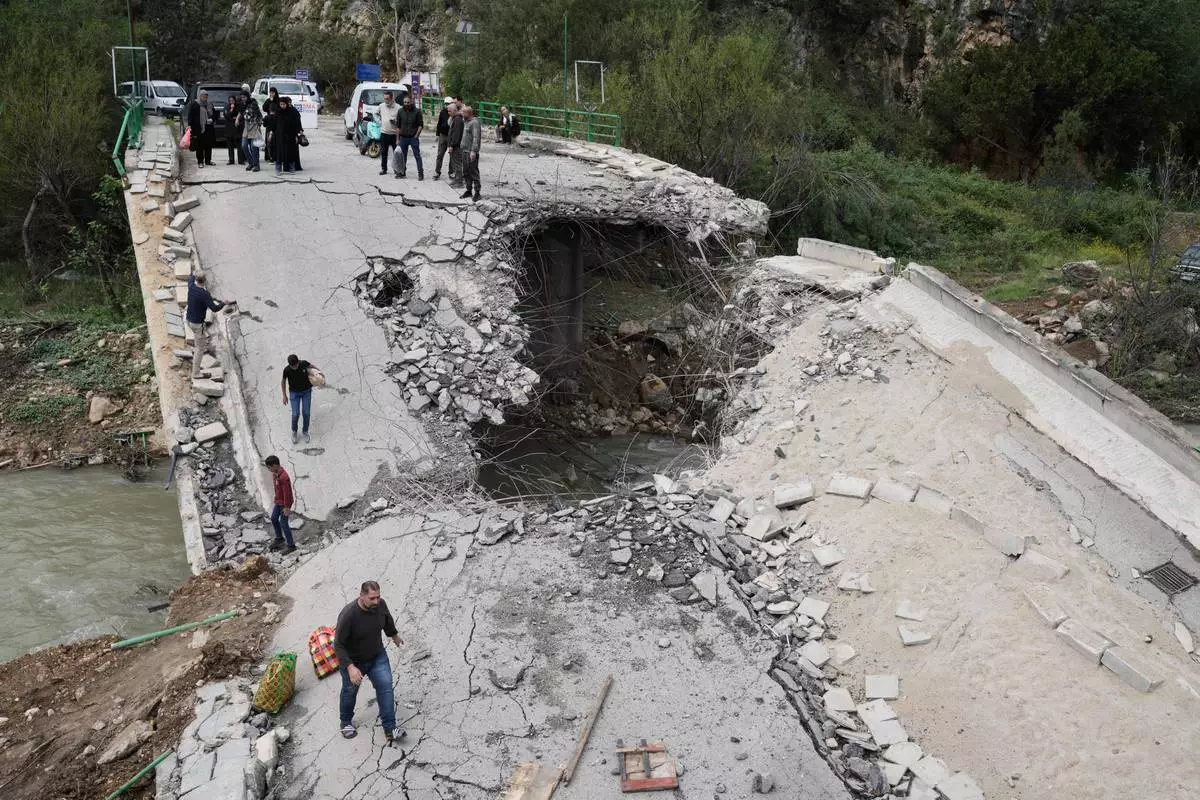
Displaced people cross a destroyed bridge as they return to their villages, following a ceasefire between Hezbollah and Israel, in Tayr Felsay village, southern Lebanon, Sunday, April 19, 2026. (AP Photo/Bilal Hussein)
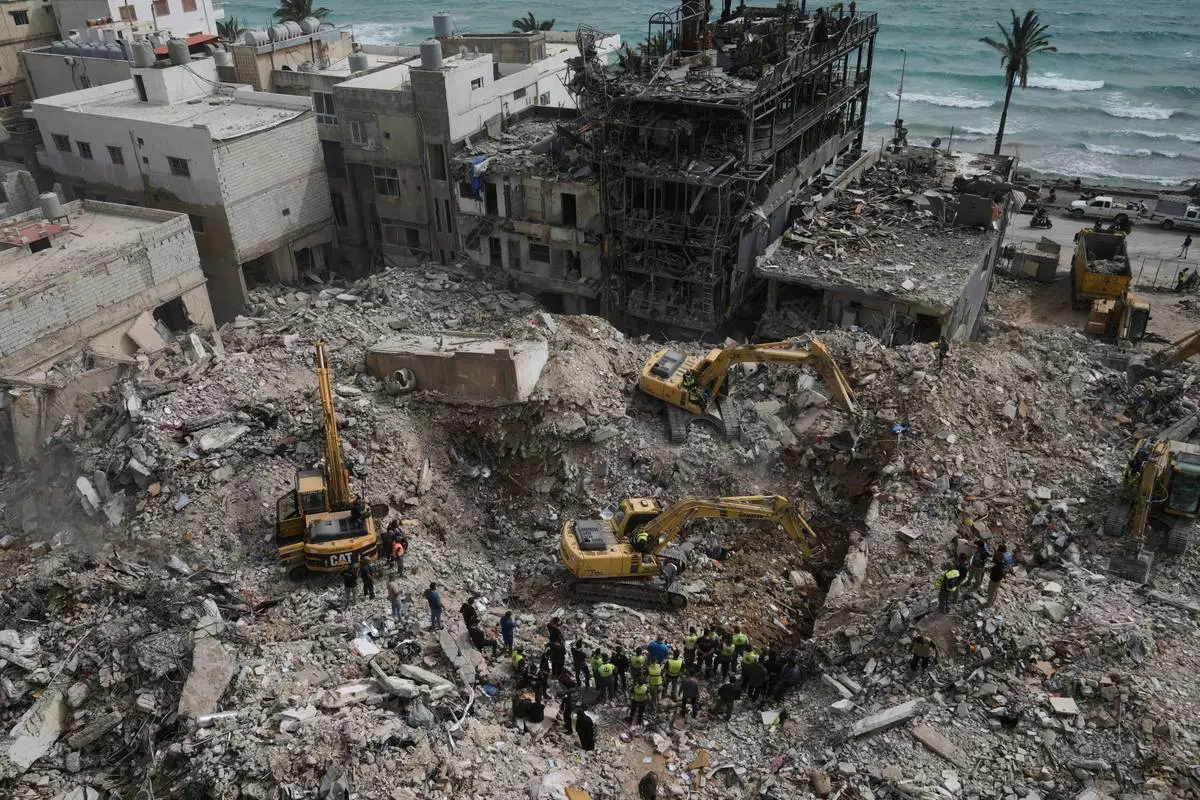
Excavators remove rubble from buildings destroyed in Israeli airstrikes on Thursday as rescuers search for victims in the city of Tyre, southern Lebanon, Saturday, April 18, 2026. (AP Photo/Bilal Hussein)
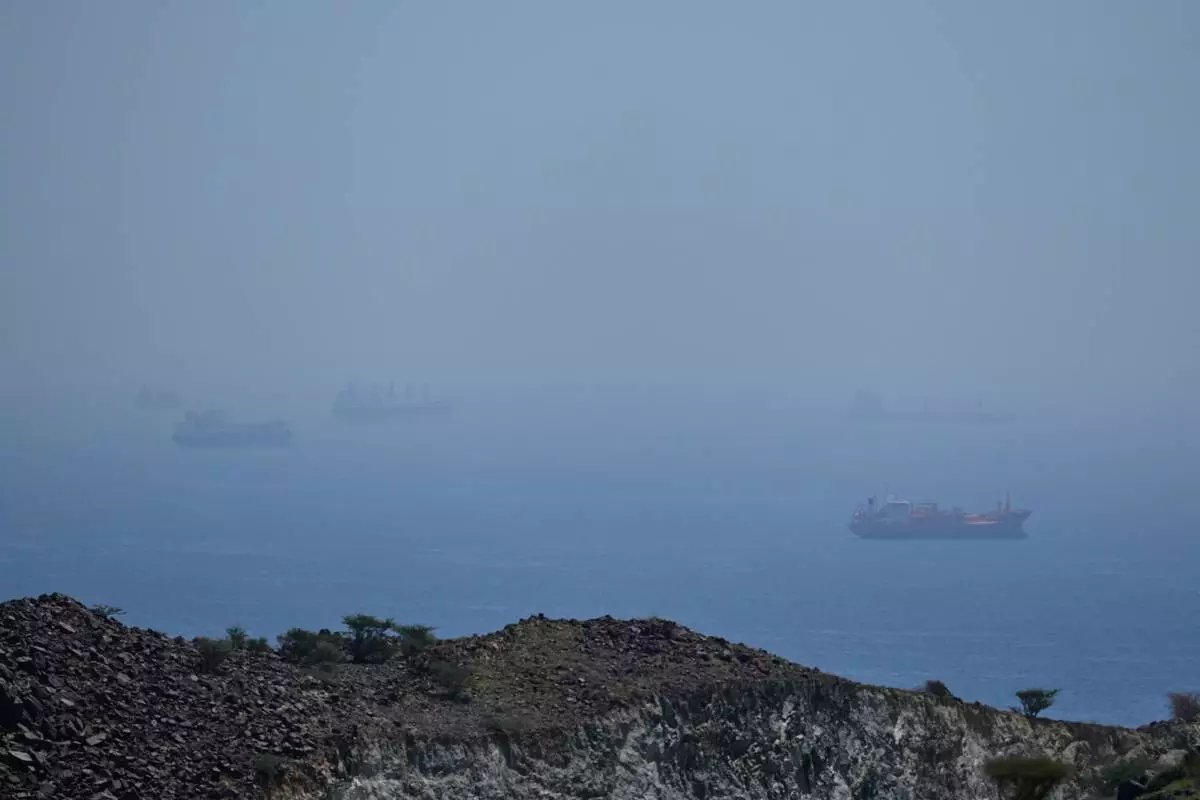
Tankers and bulk carriers anchored in the Strait of Hormuz, Saturday, April 18, 2026. (AP Photo)
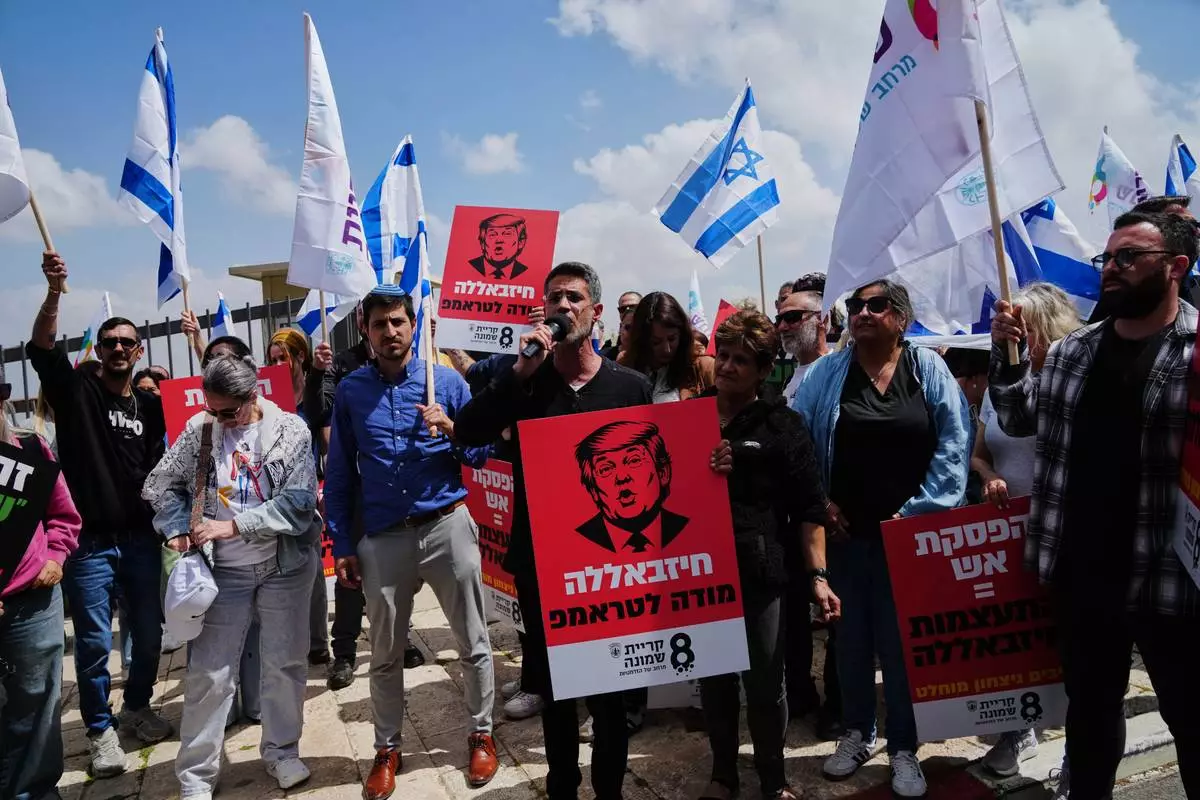
Residents of northern Israel living near the Lebanese border protest the security situation, outside the U.S. Embassy in Jerusalem Sunday, April 19, 2026. Hebrew on a sign bearing an image of President Trump reads "Hezbollah thanks Trump." (AP Photo/Mahmoud Illean)
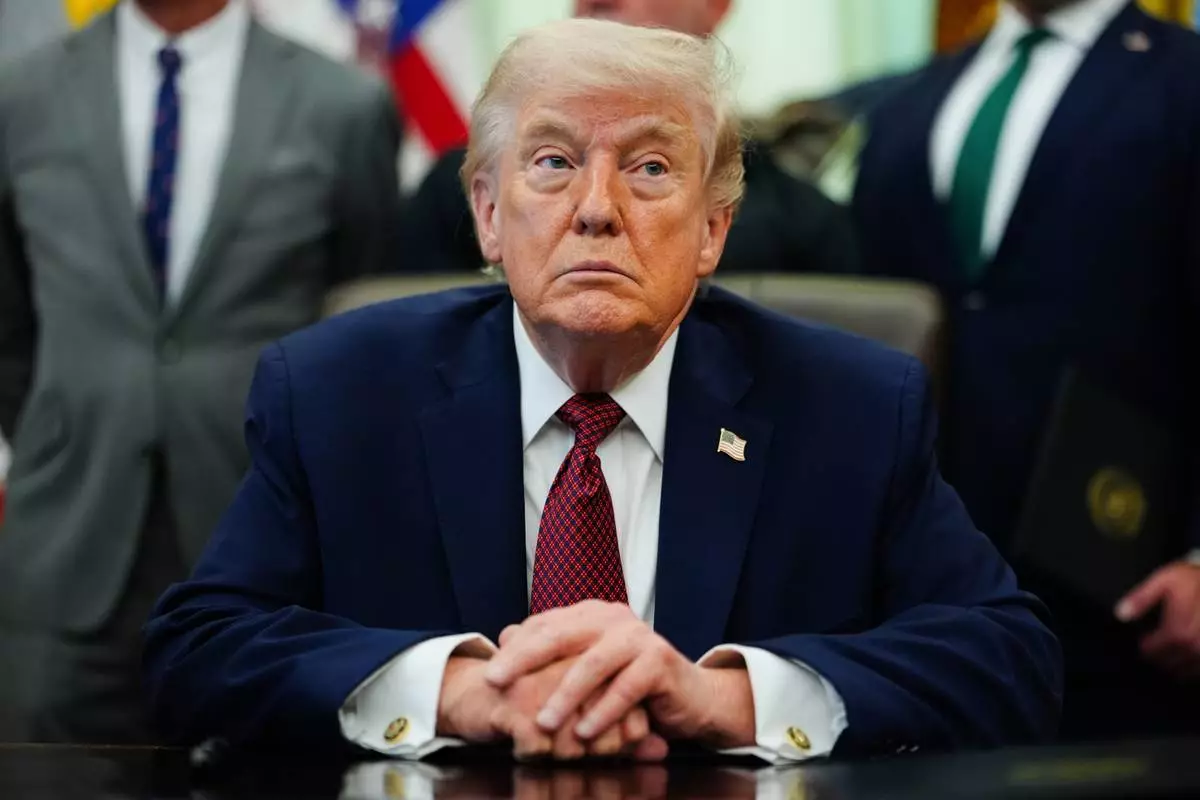
President Donald Trump listens in the Oval Office of the White House, Saturday, April 18, 2026, in Washington. (AP Photo/Julia Demaree Nikhinson)
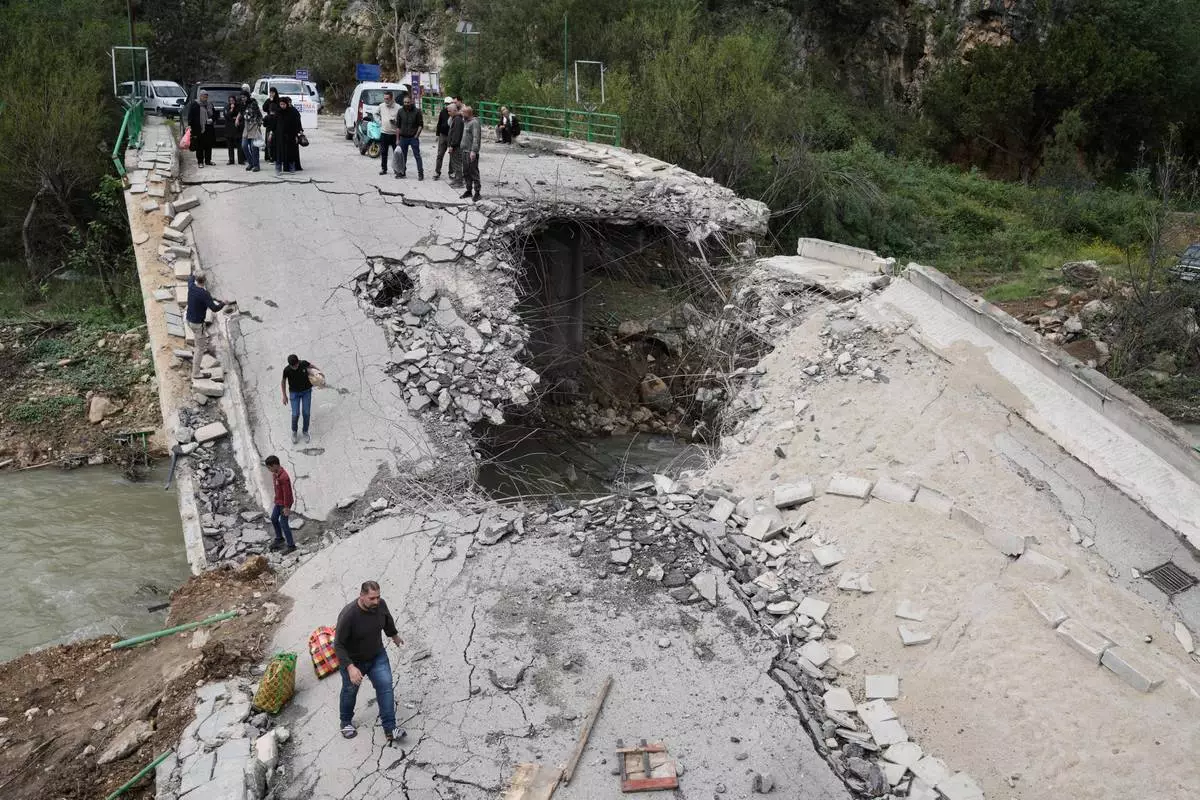
Displaced people cross on foot a destroyed bridge as they return to their villages, following a ceasefire between Hezbollah and Israel, in Tayr Felsay village, southern Lebanon, Sunday, April 19, 2026. (AP Photo/Bilal Hussein)
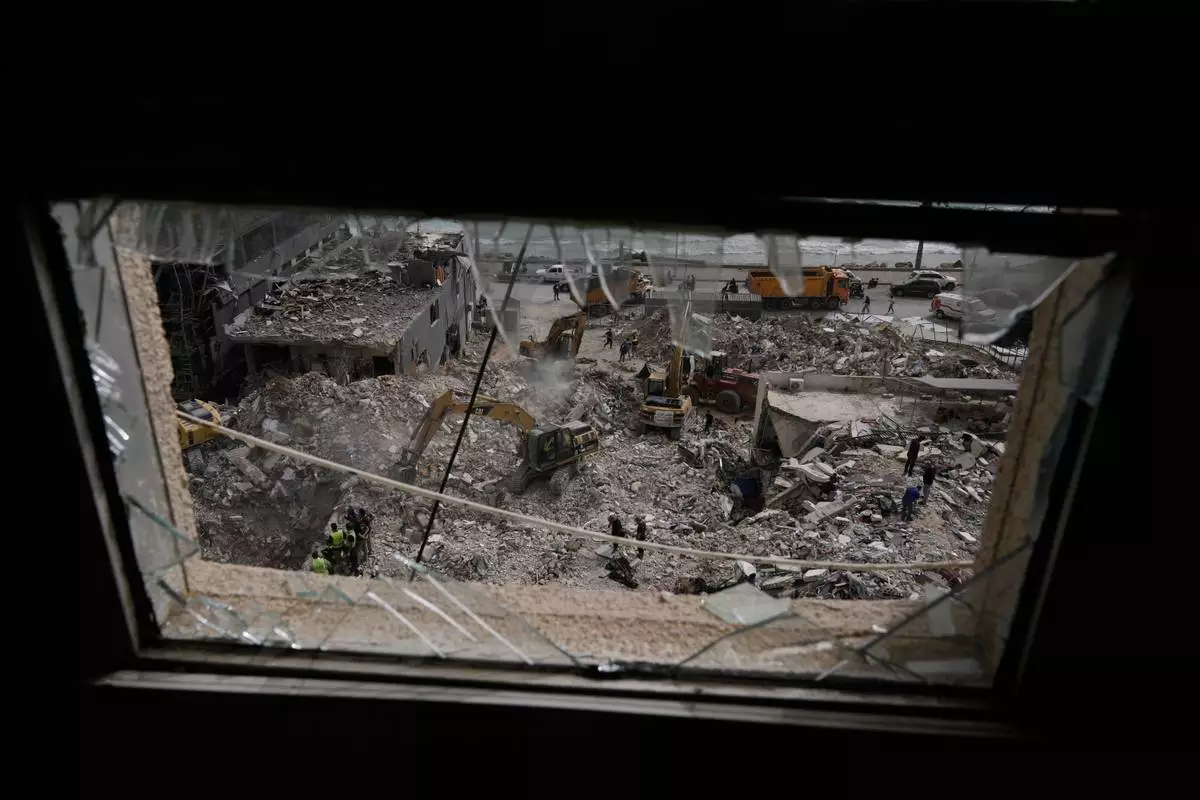
Excavators remove rubble from destroyed buildings that were hit on Thursday by Israeli airstrikes, as they keep searching for victims in Tyre city, southern Lebanon, Saturday, April 18, 2026. (AP Photo/Bilal Hussein)
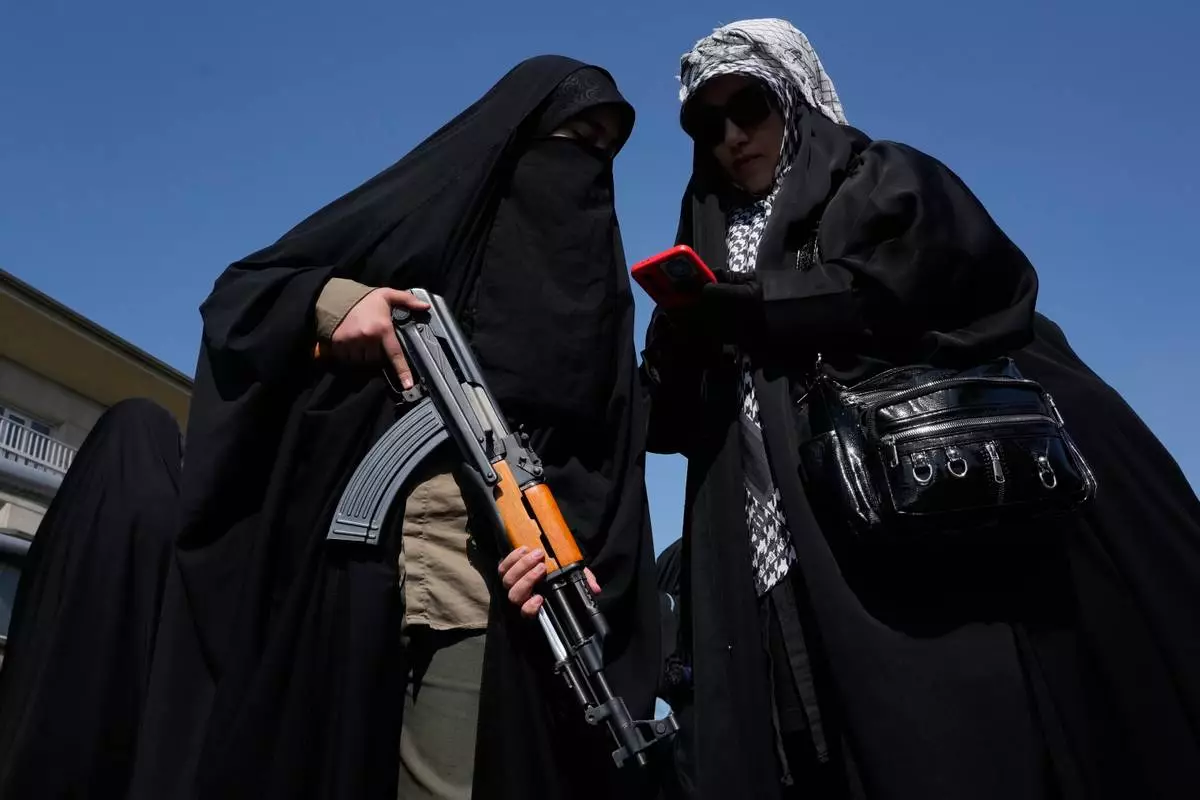
A woman member of the Basij paramilitary, affiliated with Iran's Revolutionary Guard, holds her gun during a state-organized rally in support of the supreme leader marking National Girl's Day in Tehran, Iran, Friday, April 17, 2026. (AP Photo/Vahid Salemi)
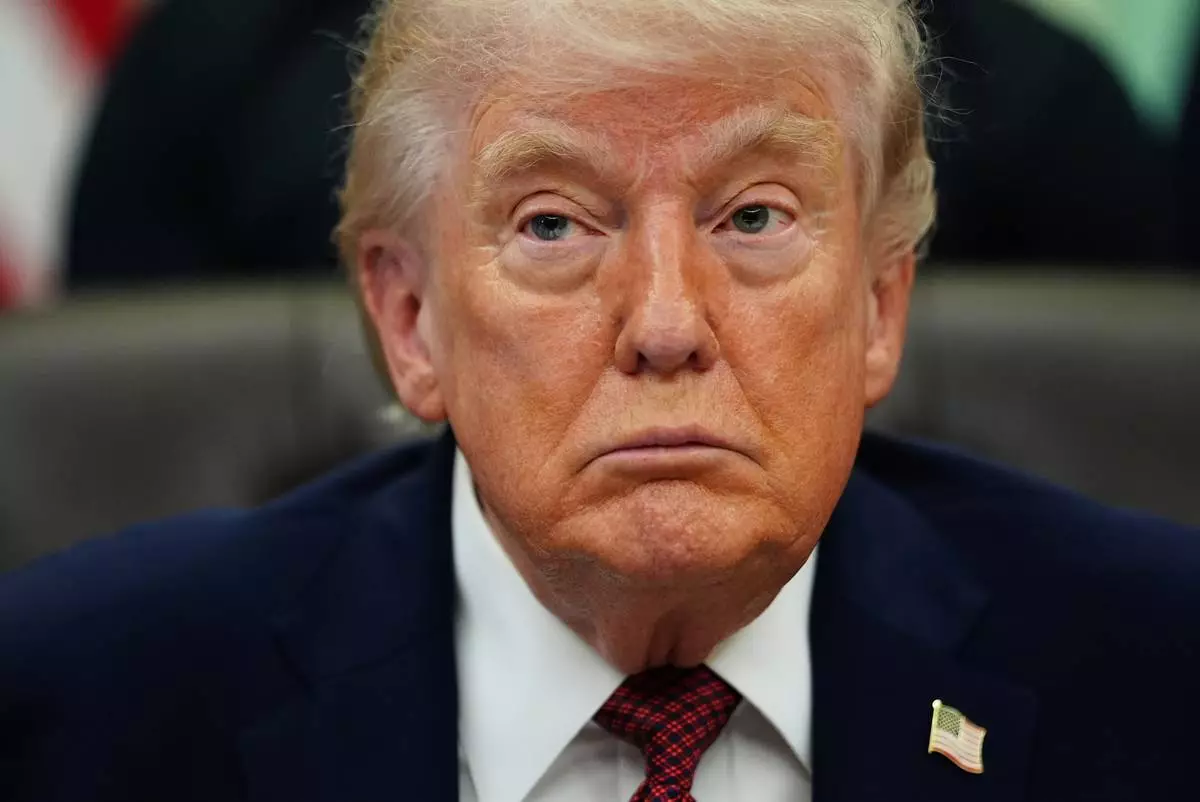
President Donald Trump listens to speeches before signing an executive order in the Oval Office of the White House, Saturday, April 18, 2026, in Washington. (AP Photo/Julia Demaree Nikhinson)
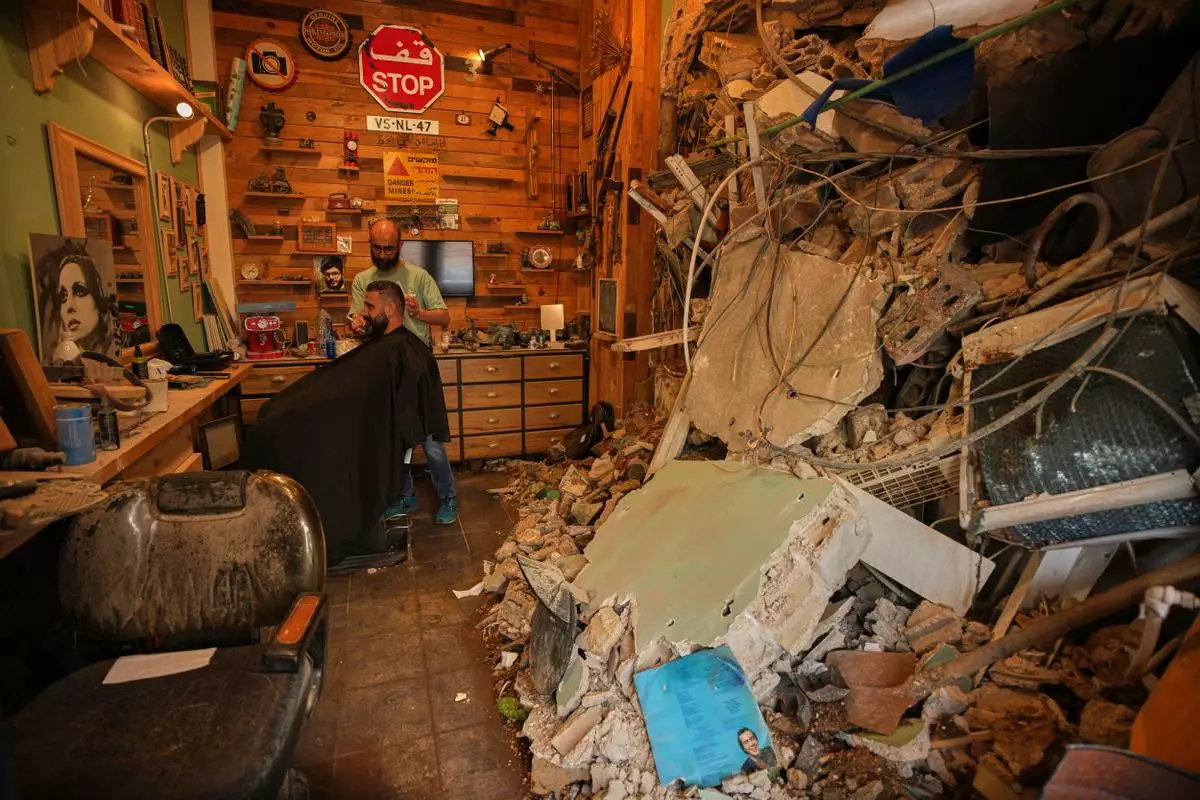
Barber Mohammad Mehdi cuts the hair of his client Ayman Al Zein inside his shop, which was damaged in an Israeli airstrike that also damaged Al Zein's shop, in Dahiyeh, Beirut's southern suburbs, Lebanon, Saturday, April 18, 2026. (AP Photo/Hassan Ammar)
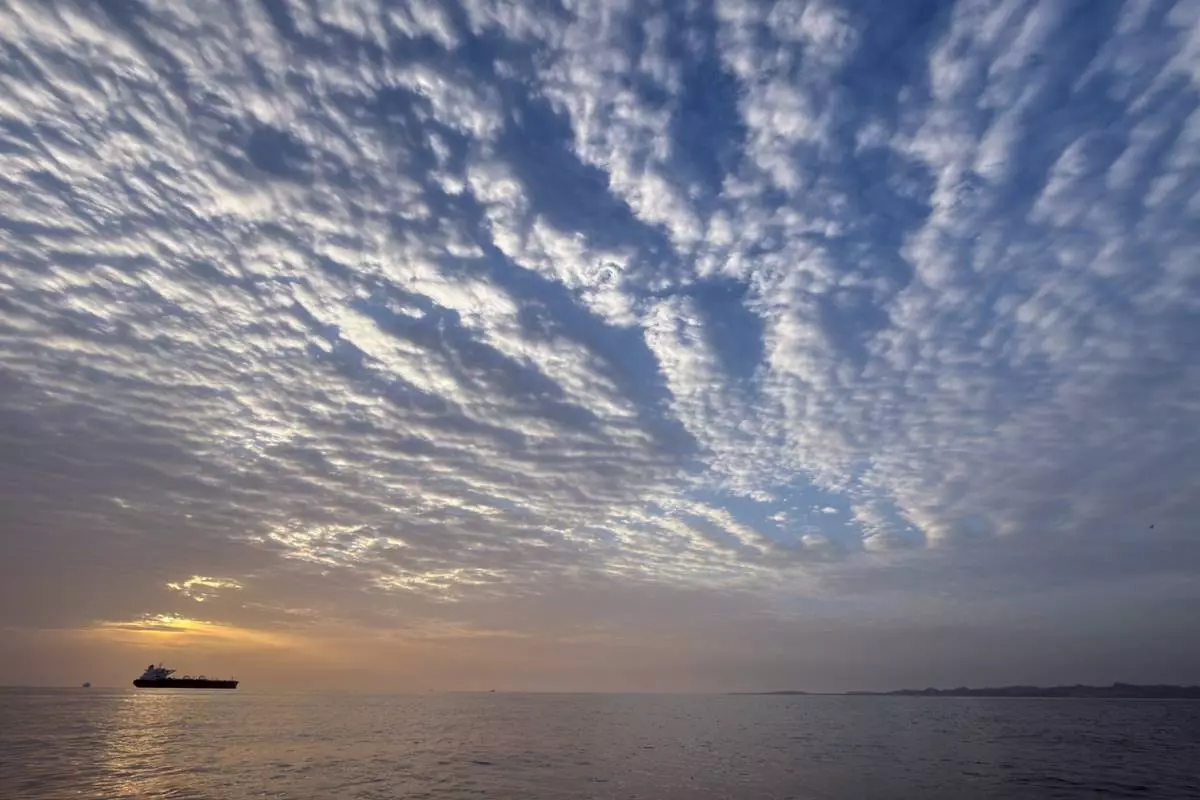
The sun rises behind a tanker anchored in the Strait of Hormuz off the coast of Qeshm Island, Iran, Saturday, April 18, 2026. (AP Photo/Asghar Besharati)