Skip to Content Facebook Feature Image

An energy blockade on Cuba pulls the plug on Havana’s legendary nightlife

News

An energy blockade on Cuba pulls the plug on Havana’s legendary nightlife
News

News

An energy blockade on Cuba pulls the plug on Havana’s legendary nightlife

2026-04-19 13:25 Last Updated At:14:00

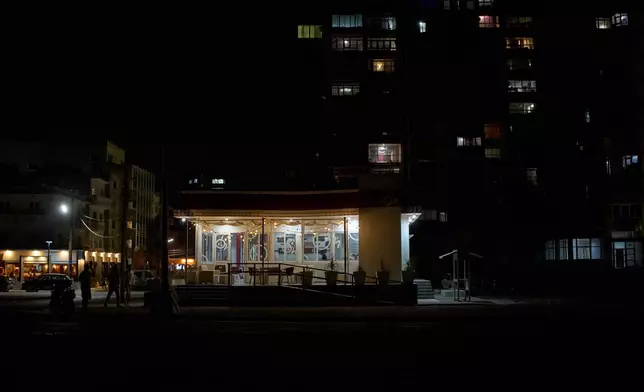
HAVANA (AP) — Havana's broad avenues are empty at night. Theaters are closed. Bars and cafes have curtains lowered. It’s hard to find lights in the streets or Cubans making money entertaining tourists.

Under the weight of an oil embargo imposed by the second administration of U.S. President Donald Trump, and the island's most severe economic crisis in decades, the city's once bustling nightlife has gone quiet.

More Images
A restaurant sits empty in Havana, Wednesday, April 15, 2026. (AP Photo/Ramon Espinosa)
A restaurant sits empty in Havana, Wednesday, April 15, 2026. (AP Photo/Ramon Espinosa)

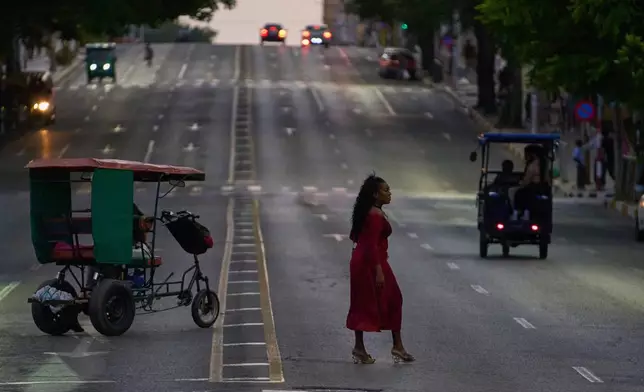
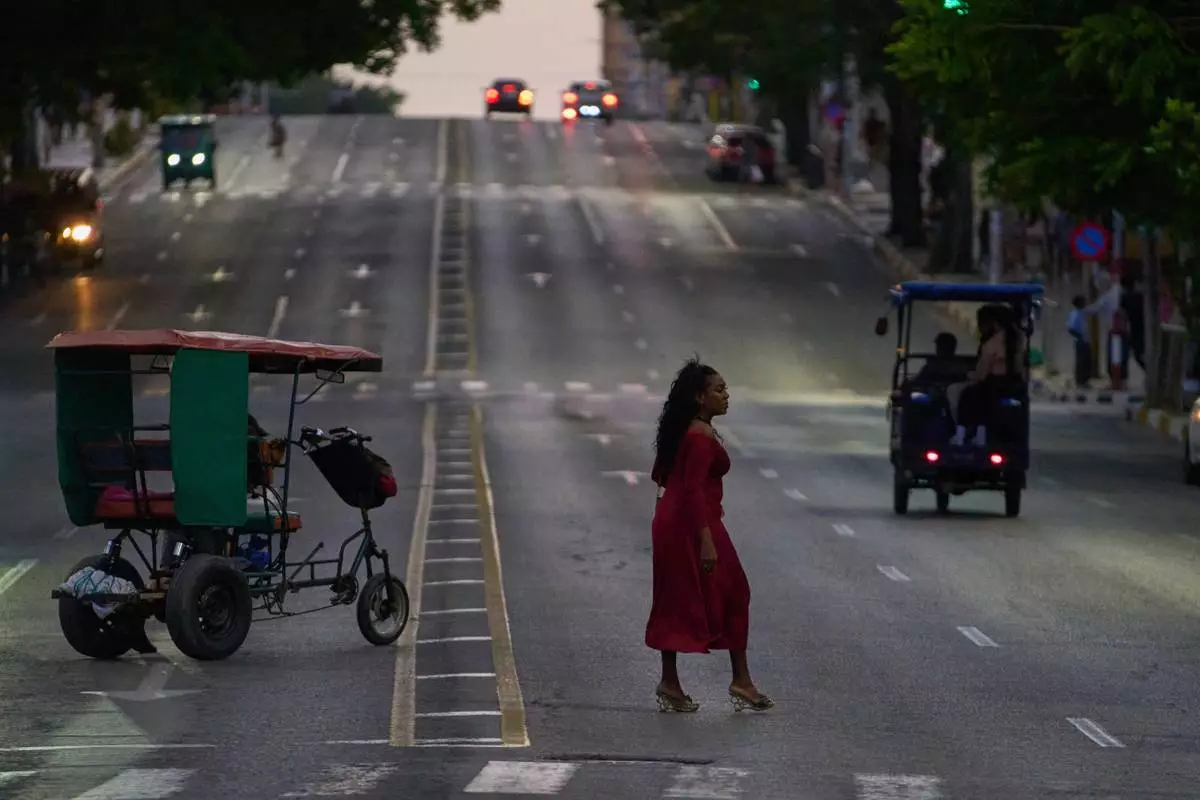
A woman crosses an avenue in Havana, Wednesday, April 15, 2026. (AP Photo/Ramon Espinosa)
A woman crosses an avenue in Havana, Wednesday, April 15, 2026. (AP Photo/Ramon Espinosa)

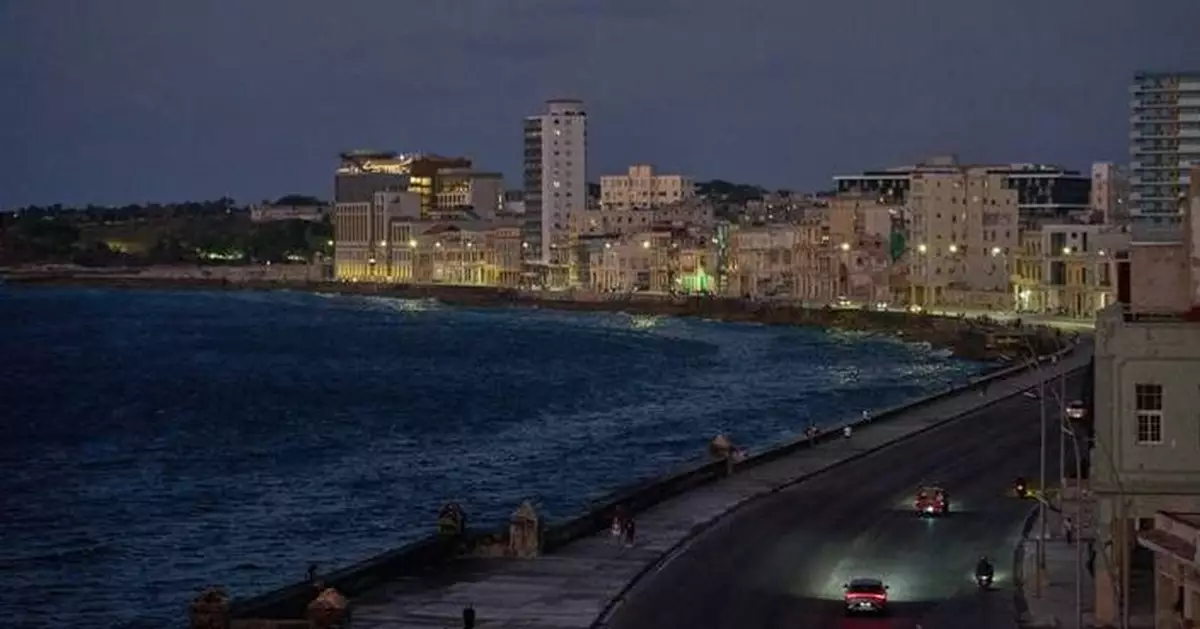
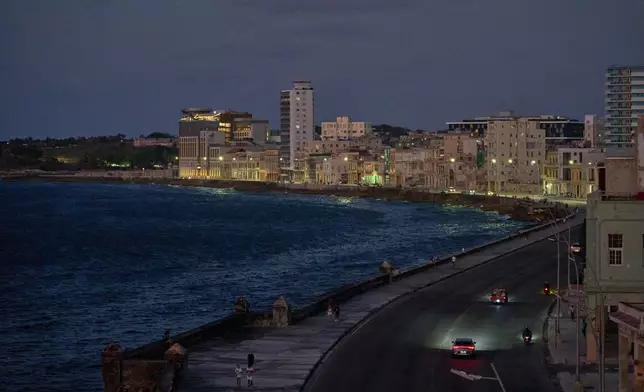
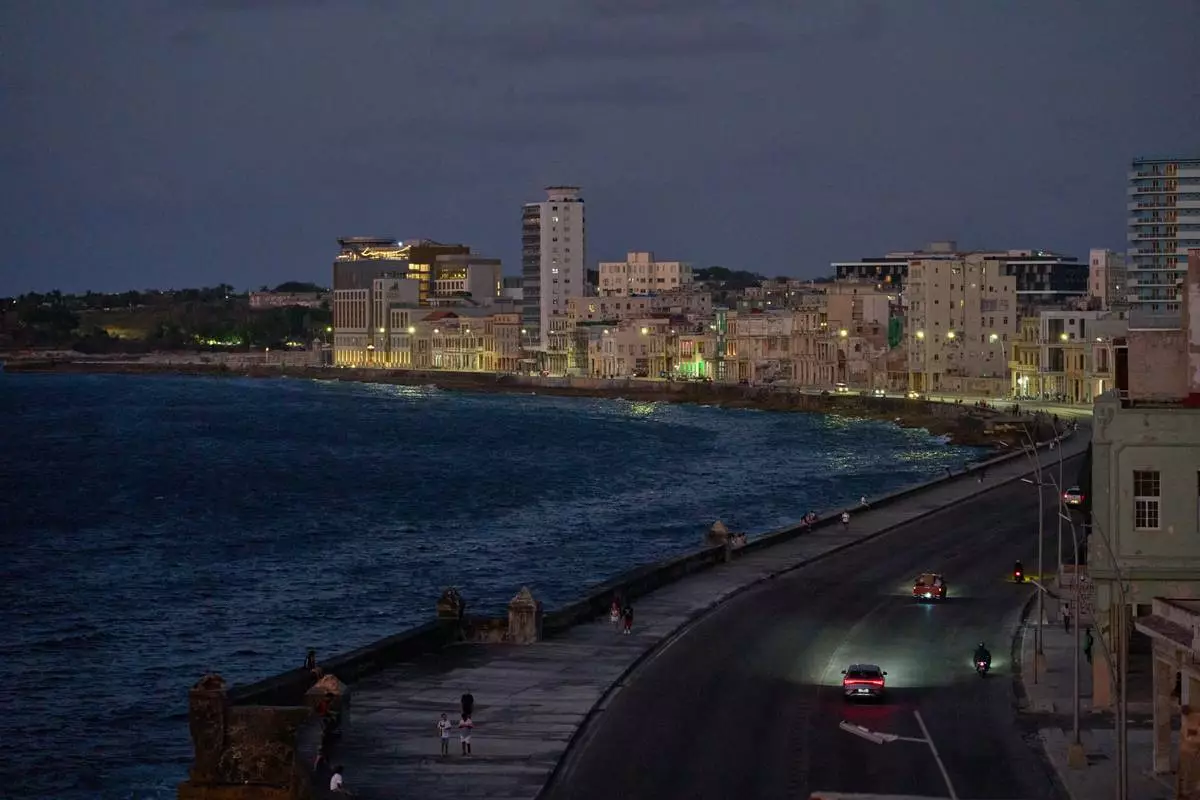
Vehicles traverse the Malecon at dusk in Havana, Wednesday, April 15, 2026. (AP Photo/Ramon Espinosa)
Vehicles traverse the Malecon at dusk in Havana, Wednesday, April 15, 2026. (AP Photo/Ramon Espinosa)

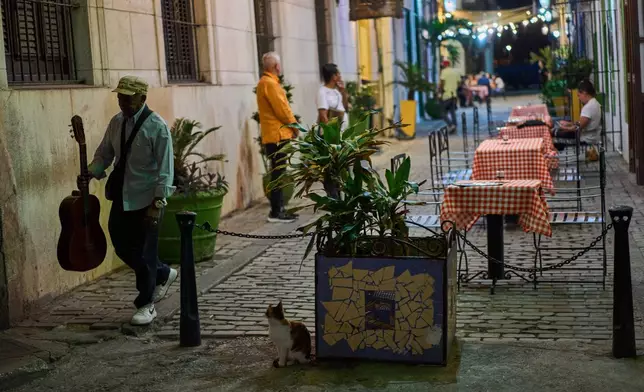
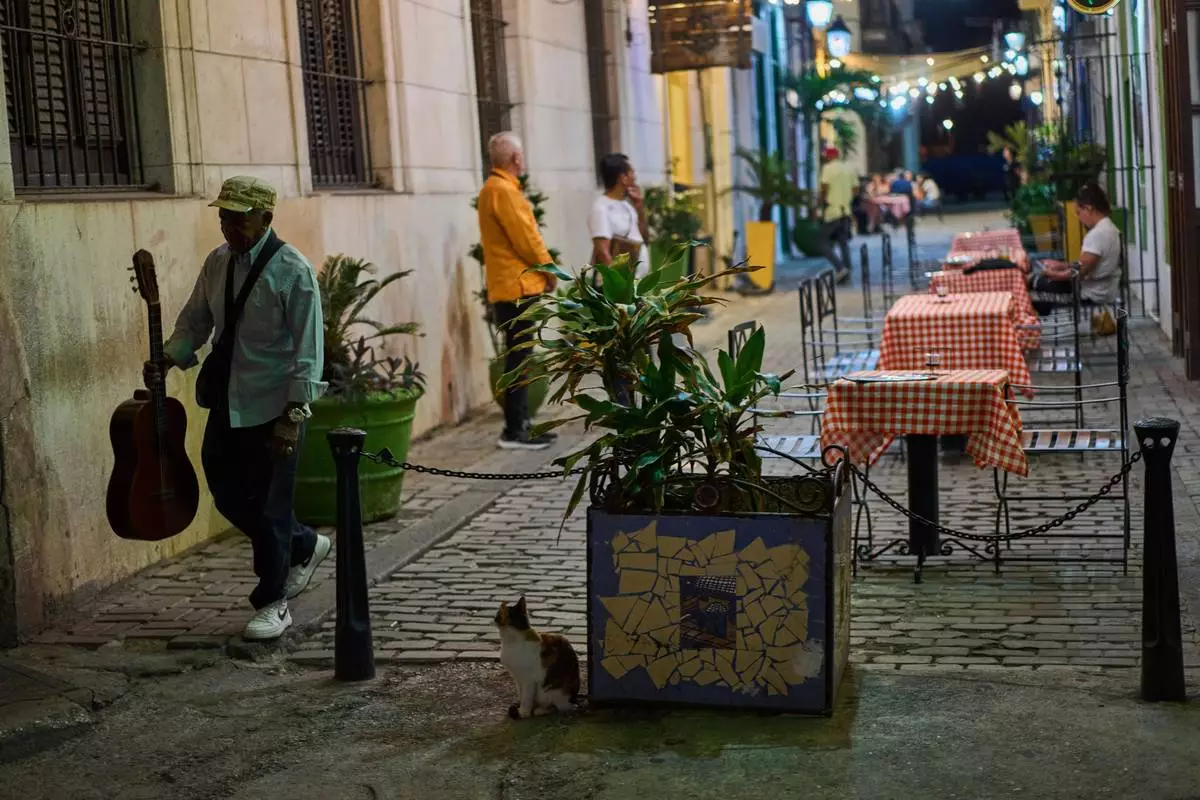
A street musician walks past a restaurant in Havana, Wednesday, April 15, 2026. (AP Photo/Ramon Espinosa)

A street musician walks past a restaurant in Havana, Wednesday, April 15, 2026. (AP Photo/Ramon Espinosa)

“I feel empty inside when I see my streets empty,” said Yusleydi Blanco, a 41-year-old accountant. “I can’t be happy when my country is sad.”

Following a 2016 deal between then-Presidents Barack Obama and Raúl Castro easing U.S. travel restrictions on Cuba, money flooded the island as tourism spiked. A small number of entrepreneurs opened newly allowed private businesses and bought imported modern vehicles that shared the streets with classic cars from the 1950s.

In 2018, a record 4.7 million tourists arrived on the island. Hotel accommodations were so saturated that travelers without lodging were seen sleeping in a park in the small western Cuban town of Viñales that draws thousands of tourists and rock climbers to its scenic limestone cliffs.

Today, gasoline sales are limited to 20 liters (5 gallons) per vehicle and owners can wait months for a turn at the pump. Buses now stop running at 6 p.m. and international airlines including Air France, Air Canada and Iberia have stopped flying to Havana because they can’t refuel there. The sound of cars has disappeared in the wealthy El Vedado neighborhood, where the soundscape of chirping birds has reemerged.

The Cuban government reported the arrival of 77,600 tourists in February, down from 178,000 on the same month a year ago.

“This is worse than the Special Period," said 65-year-old parking attendant Dolores de la Caridad Méndez about the years of economic devastation that followed the collapse of the Soviet Union, Cuba's Cold War patron, in the 1990s.

In contrast with his Democratic predecessors, U.S. President Donald Trump has tightened economic sanctions against Cuba, demanding an end to political repression, a release of political prisoners and a liberalization of the island’s ailing economy.

The deepening crisis has led to persistent blackouts, cuts to the state-run food ration system, and severe shortages of water and medicine that have transformed daily life into an ordeal for many in the island of 10 million. Between 2021 and 2024, approximately 1.4 million Cubans left the island — mostly young people but also accomplished musicians, actors, dancers and other entertainers who fueled Havana's nightlife.

In January, the U.S. captured then-President Nicolás Maduro of Venezuela, which had been Cuba's primary supplier of oil. The Trump administration severed that supply and threatened to impose tariffs on other countries that sold oil to Cuba, which went without a single shipment until a Russian tanker came in March.

For entrepreneurs and business owners across the island, life has become difficult as tourism plummeted and their hopes of selling cheaper goods to fellow Cubans dashed against the rocks of a vastly harder economic reality.

“You wake up and you're ready to conquer the world, saying, ‘Today I’ll sell more than ever,'” said Yeni Pérez, owner of the Old Havana cafe Entre Nos. “Then not a single client comes in and you go home devastated.”

“The next day,” she said, “You say, ‘Let’s give it another chance.' It's a time that's testing everyone's stamina."

Follow AP’s coverage of Latin America and the Caribbean at https://apnews.com/hub/latin-america
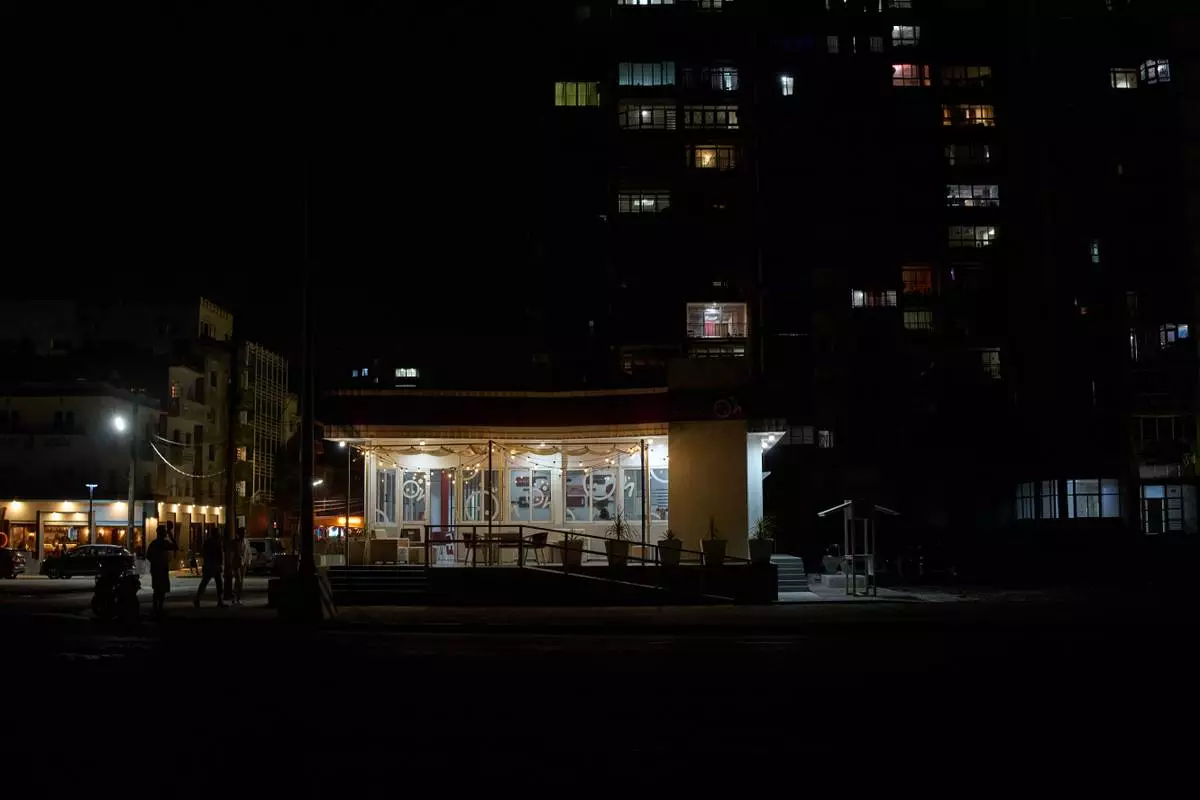
A restaurant sits empty in Havana, Wednesday, April 15, 2026. (AP Photo/Ramon Espinosa)
A restaurant sits empty in Havana, Wednesday, April 15, 2026. (AP Photo/Ramon Espinosa)

A woman crosses an avenue in Havana, Wednesday, April 15, 2026. (AP Photo/Ramon Espinosa)
A woman crosses an avenue in Havana, Wednesday, April 15, 2026. (AP Photo/Ramon Espinosa)

Vehicles traverse the Malecon at dusk in Havana, Wednesday, April 15, 2026. (AP Photo/Ramon Espinosa)
Vehicles traverse the Malecon at dusk in Havana, Wednesday, April 15, 2026. (AP Photo/Ramon Espinosa)

A street musician walks past a restaurant in Havana, Wednesday, April 15, 2026. (AP Photo/Ramon Espinosa)
A street musician walks past a restaurant in Havana, Wednesday, April 15, 2026. (AP Photo/Ramon Espinosa)
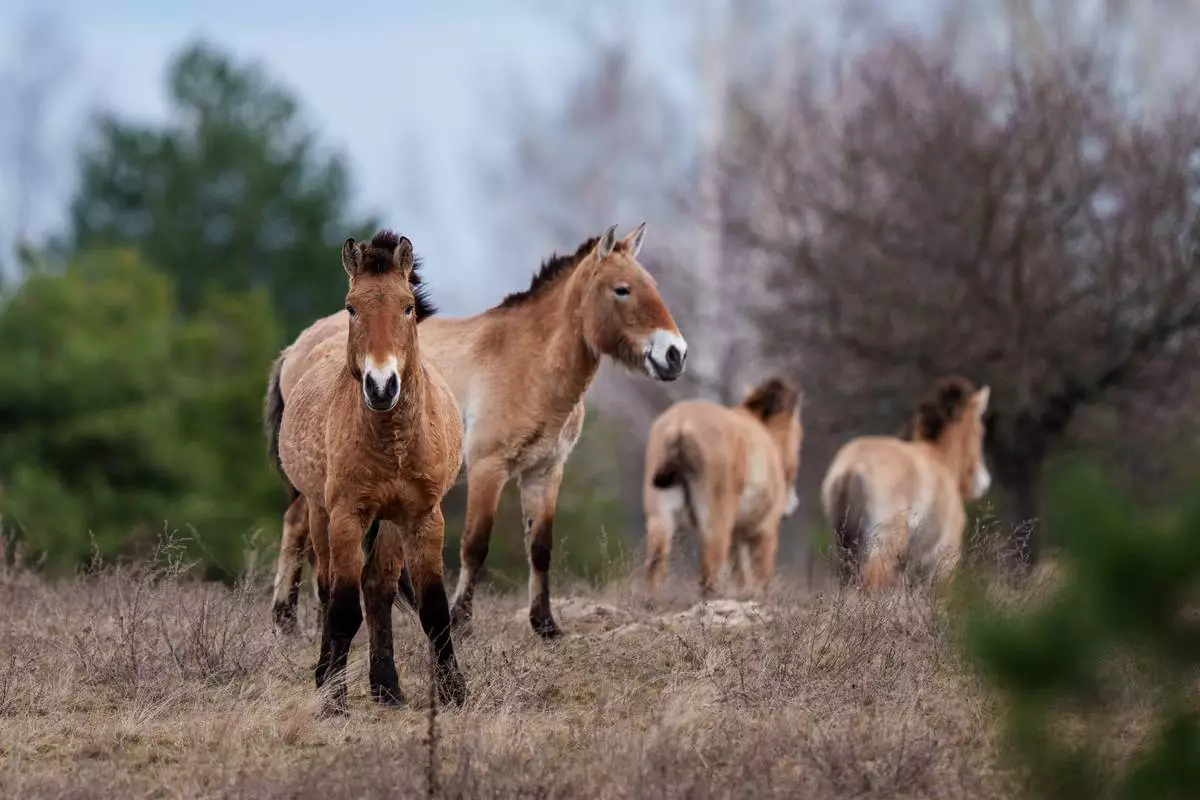
CHERNOBYL, Ukraine (AP) — On contaminated land that is too dangerous for human life, the world’s wildest horses roam free.

Across the Chernobyl exclusion zone, Przewalski’s horses — stocky, sand-colored and almost toy-like in appearance — graze in a radioactive landscape larger than Luxembourg.

On April 26, 1986, an explosion at the nuclear power plant in Ukraine sent radiation across Europe and forced the evacuation of entire towns, displacing tens of thousands. It was the worst nuclear disaster in history.

Four decades on, Chernobyl — which is transliterated as “Chornobyl” in Ukraine — remains too dangerous for humans. But the wildlife has moved back in.

Wolves now prowl the vast no-man’s-land spanning Ukraine and Belarus, and brown bears have returned after more than a century. Populations of lynx, moose, red deer and even free-roaming packs of dogs have rebounded.

Przewalski’s horses, native to Mongolia and once on the brink of extinction, were introduced here in 1998 as an experiment.

Known as “takhi” in Mongolia (“spirit”), the horses are distinct from domestic breeds, with 33 pairs of chromosomes compared with 32 in domesticated horses. The modern name comes from the Russian explorer who first formally identified them.

“The fact that Ukraine now has a free-ranging population is something of a small miracle,” said Denys Vyshnevskyi, the zone’s lead nature scientist.

With human pressure gone, parts of the exclusion zone now resemble European landscapes from centuries past, he said, adding: “Nature recovers relatively quickly and effectively.”

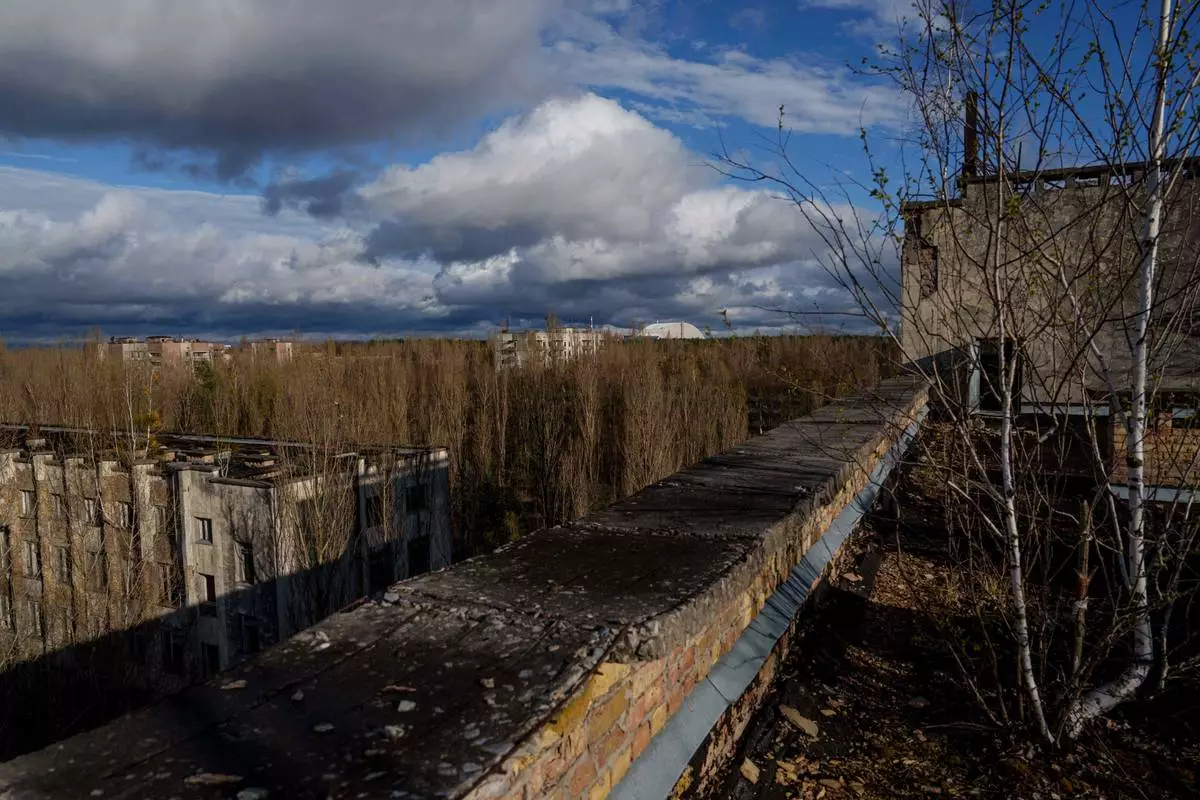
The transformation is visible everywhere. Trees pierce abandoned buildings, roads dissolve into forest, and weathered Soviet-era signs stand beside leaning wooden crosses in overgrown cemeteries.

Hidden cameras show the horses adapting in unexpected ways. They seek shelter in crumbling barns and deserted homes, using them to escape harsh weather and insects — even bedding down inside.

The animals live in small social groups — typically one stallion with several mares and their young — alongside separate bands of younger males. Many died after their introduction, but others adapted.

Tracking them takes time. Vyshnevskyi often drives alone for hours, setting motion-sensitive camera traps in camouflaged casings attached to trees.

Despite persistent radiation, scientists have not recorded widespread die-offs, though subtler effects are evident. Some frogs have developed darker skin, and birds in higher-radiation areas are more likely to develop cataracts.

However, new threats have emerged.

Russia’s 2022 invasion brought fighting through the exclusion zone as troops advanced toward Kyiv, digging defenses into contaminated soil. Fires linked to military activity swept through forests.

Harsh wartime winters have also taken a toll. Damage to the power grid left surrounding managed areas without resources, and scientists report increases in fallen trees and dead animals — casualties of both extreme conditions and hastily built fortifications.

“Most forest fires are caused by downed drones,” said Oleksandr Polischuk, who leads a firefighting unit in the zone. “Sometimes we have to travel dozens of kilometers to reach them.”

Fires can send radioactive particles back into the air.

Today, the zone is no longer just an accidental refuge for wildlife. It has become a heavily monitored military corridor, marked by concrete barriers, barbed wire and minefields — a landscape of what some describe as grim beauty.

Personnel rotate in and out to limit radiation exposure. Chernobyl is likely to remain off-limits for generations — too dangerous for people, yet full of life.

“For those of us in conservation and ecology, it’s kind of a wonder,” Vyshnevskyi said. “This land was once heavily used — agriculture, cities, infrastructure. But nature has effectively performed a factory reset.”

–––

Associated Press writers Dmytro Zhyhinas and Vasilisa Stepanenko contributed to this report.

Abandoned houses are seen overgrown with vegetation at the Chernobyl exclusion zone in Prypiat, Ukraine, Monday, April 6, 2026. Chornobyl is the Ukrainian name for the city. (AP Photo/Evgeniy Maloletka)

Abandoned houses are seen overgrown with vegetation at the Chernobyl exclusion zone in Prypiat, Ukraine, Monday, April 6, 2026. Chornobyl is the Ukrainian name for the city. (AP Photo/Evgeniy Maloletka)

Wild Przewalski horses graze in a forest inside the Chernobyl exclusion zone, Ukraine, Wednesday, April 8, 2026. Chornobyl is the Ukrainian name for the city. (AP Photo/Evgeniy Maloletka)

Wild Przewalski horses graze in a forest inside the Chernobyl exclusion zone, Ukraine, Wednesday, April 8, 2026. Chornobyl is the Ukrainian name for the city. (AP Photo/Evgeniy Maloletka)

Recommended Articles