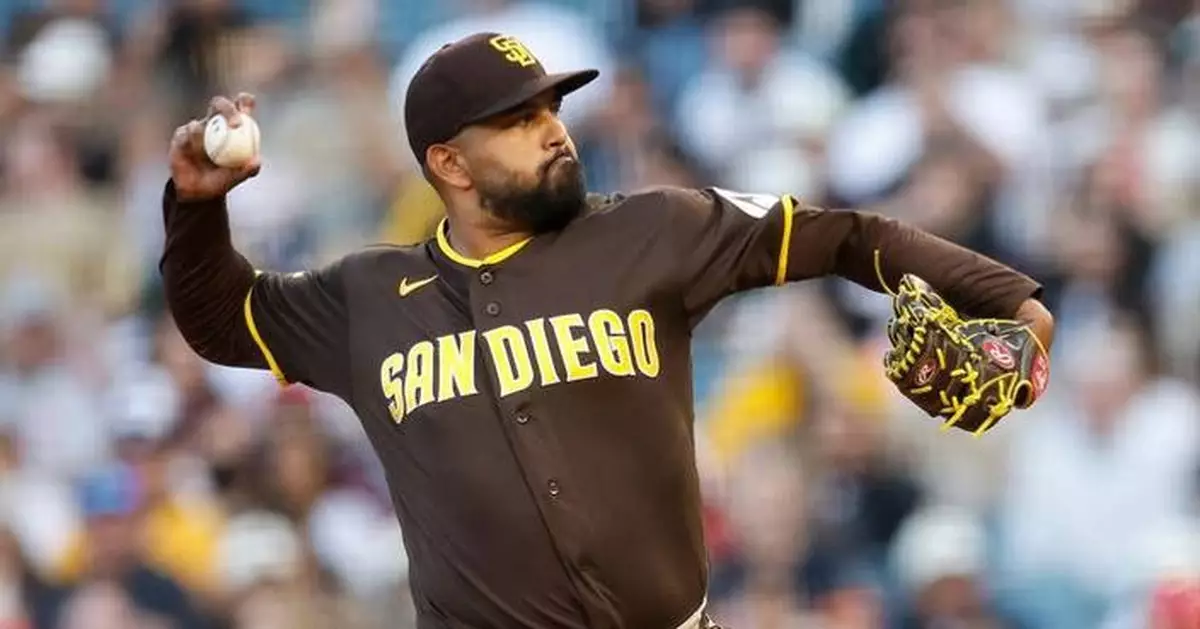
ANAHEIM, Calif. (AP) — Ramón Laureano and Fernando Tatis Jr. each drove in two runs apiece, Germán Márquez threw 5 2/3 scoreless innings in a strong start and the San Diego Padres beat the Los Angeles Angels 4-1 on Saturday night.
Adrian Morejon (2-0) struck out two in 1 1/3 scoreless relief innings for the win and Mason Miller earned his seventh save despite giving up a single and a walk in the ninth.
Click to Gallery
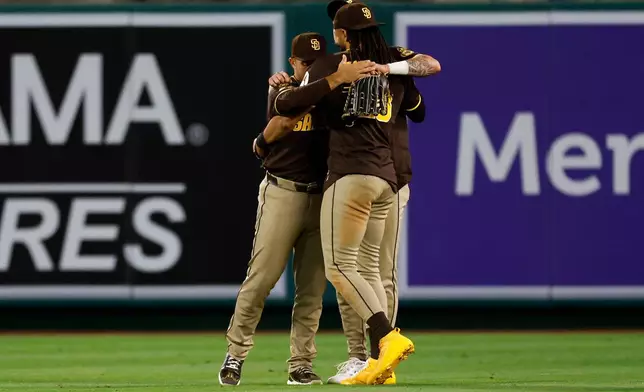
San Diego Padres left fielder Ramon Laureano (5), from left, San Diego Padres right fielder Fernando Tatis Jr. (23) and San Diego Padres center fielder Jackson Merrill (3) embrace upon defeating the Los Angeles Angels at the end of the ninth inning of a baseball game, Saturday, April 18, 2026, in Anaheim, Calif. (AP Photo/Caroline Brehman)
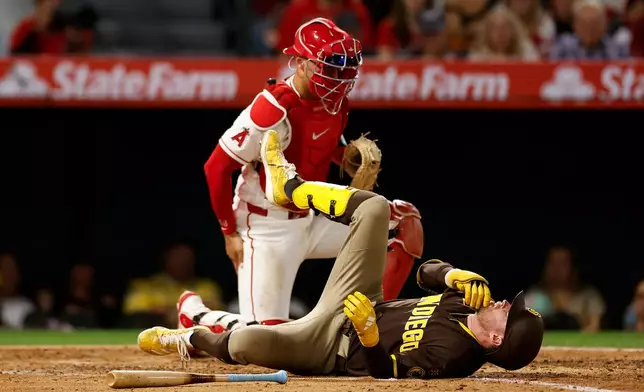
San Diego Padres' Jake Cronenworth, bottom, reacts after getting hit with a pitch during the fifth inning of a baseball game against the Los Angeles Angels, Saturday, April 18, 2026, in Anaheim, Calif. (AP Photo/Caroline Brehman)
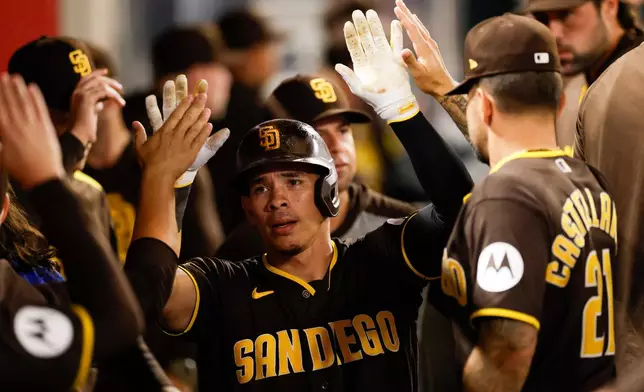
San Diego Padres' Freddy Fermin (54) is greeted by teammates after scoring during the eighth inning of a baseball game against the Los Angeles Angels, Saturday, April 18, 2026, in Anaheim, Calif. (AP Photo/Caroline Brehman)
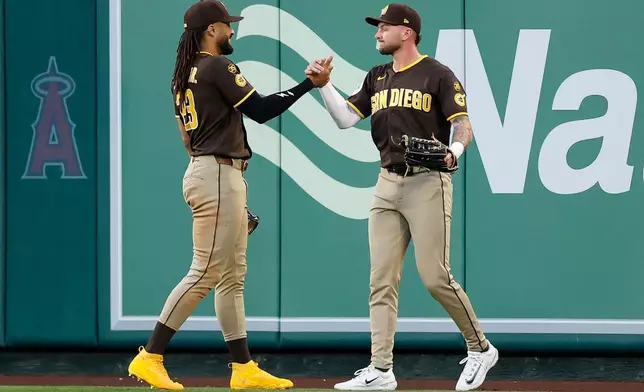
San Diego Padres center fielder Jackson Merrill (3) is greeted by San Diego Padres right fielder Fernando Tatis Jr. (23) after catching a ball hit by Los Angeles Angels' Yoan Moncada (10) during the second inning of a baseball game Saturday, April 18, 2026, in Anaheim, Calif. (AP Photo/Caroline Brehman)
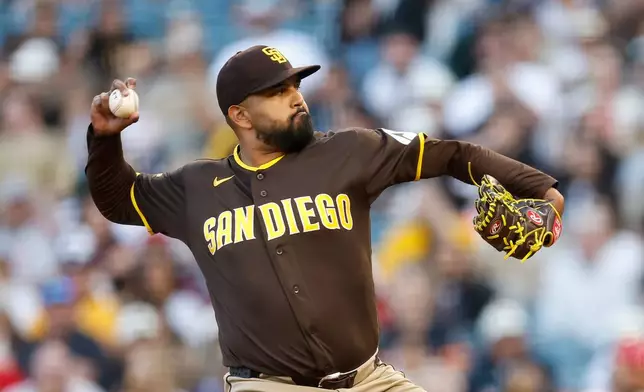
San Diego Padres starter German Marquez pitches during the first inning of a baseball game against the Los Angeles Angels, Saturday, April 18, 2026, in Anaheim, Calif. (AP Photo/Caroline Brehman)
Miller, who has allowed two hits, walked two and struck out 25 in 10 1/3 innings this season, extended his scoreless streak to 31 2/3 innings dating to last Aug. 6.
The teams were in a scoreless tie when Freddy Fermin and Jake Cronenworth opened the eighth with four-pitch walks off Ryan Zeferjahn (1-1). Laureano chopped an RBI single through the middle for a 1-0 lead, snapping San Diego’s 16-inning scoreless streak. Tatis followed with an RBI hit-and-run dribbler through a vacated second-base spot for a 2-0 lead.
The Angels trimmed the deficit to 2-1 in the bottom of the eighth when Logan O’Hoppe and Adam Frazier singled off Jason Adam and Nolan Schanuel hit a two-out RBI single. But Jo Adell grounded out to end the inning.
San Diego pushed the lead to 4-1 in the ninth on Laureano's sacrifice fly and Tatis' RBI single.
Márquez gave up two hits, struck out five — all in the fourth and fifth innings — and walked two.
Angels starter Yusei Kikuchi allowed four hits, struck out eight and walked one in six innings.
Jackson Merrill robbed Yoán Moncada of a solo homer with a leaping catch at the right-center-field wall in the second, holding onto the ball as he collided with Tatis.
The game was twice delayed for several minutes. In the second, O’Hoppe, the Angels' catcher, took a foul tip off his neck. In the fifth a 96-mph fastball from Kikuchi grazed Cronenworth’s chin. Both players remained in the game.
Padres RHP Michael King (2-1, 2.78 ERA) will face Angels LHP Reid Detmers (1-1, 3.57 ERA) in Sunday’s series finale.
—
AP MLB: https://apnews.com/MLB
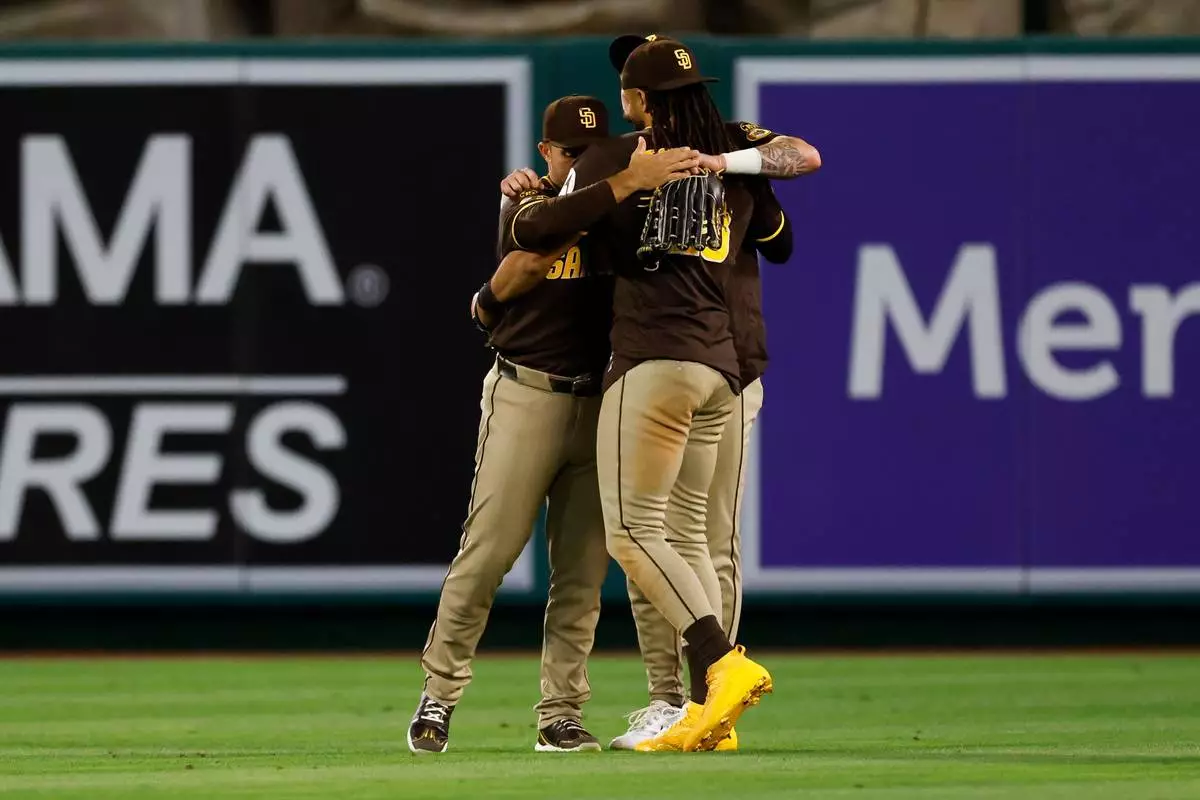
San Diego Padres left fielder Ramon Laureano (5), from left, San Diego Padres right fielder Fernando Tatis Jr. (23) and San Diego Padres center fielder Jackson Merrill (3) embrace upon defeating the Los Angeles Angels at the end of the ninth inning of a baseball game, Saturday, April 18, 2026, in Anaheim, Calif. (AP Photo/Caroline Brehman)
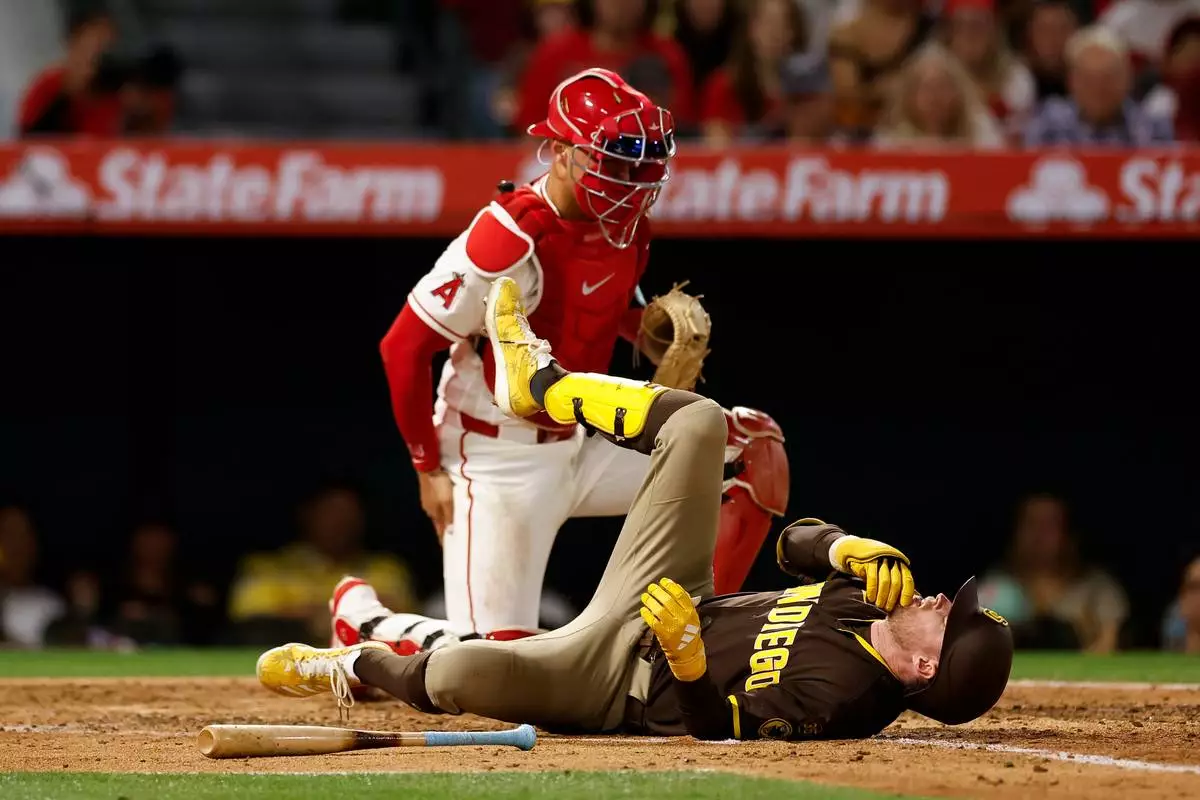
San Diego Padres' Jake Cronenworth, bottom, reacts after getting hit with a pitch during the fifth inning of a baseball game against the Los Angeles Angels, Saturday, April 18, 2026, in Anaheim, Calif. (AP Photo/Caroline Brehman)
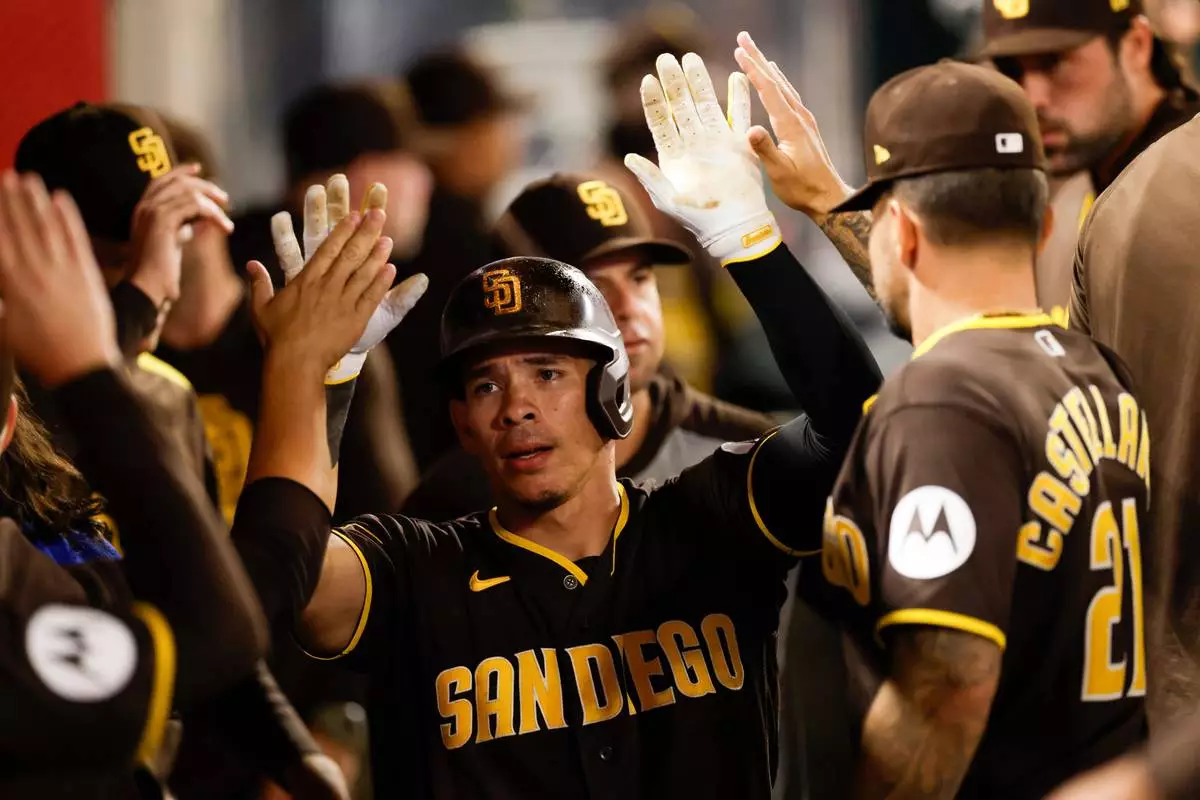
San Diego Padres' Freddy Fermin (54) is greeted by teammates after scoring during the eighth inning of a baseball game against the Los Angeles Angels, Saturday, April 18, 2026, in Anaheim, Calif. (AP Photo/Caroline Brehman)
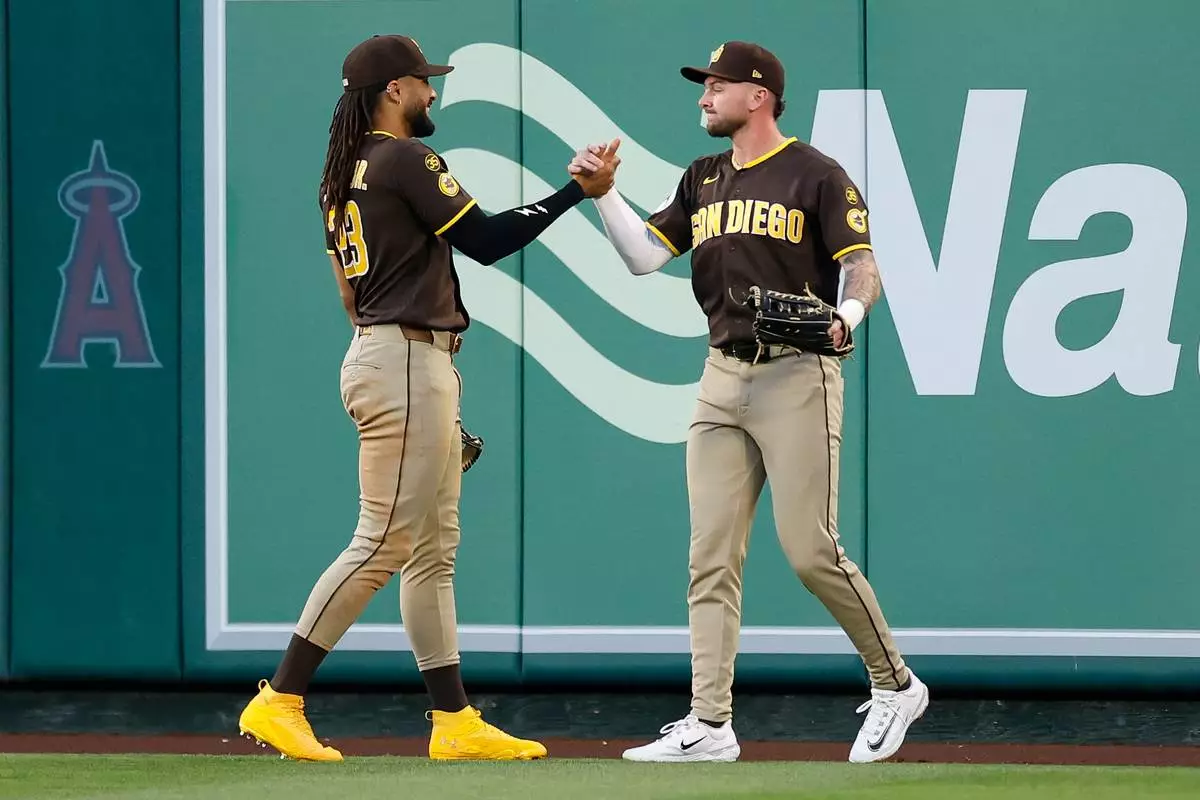
San Diego Padres center fielder Jackson Merrill (3) is greeted by San Diego Padres right fielder Fernando Tatis Jr. (23) after catching a ball hit by Los Angeles Angels' Yoan Moncada (10) during the second inning of a baseball game Saturday, April 18, 2026, in Anaheim, Calif. (AP Photo/Caroline Brehman)
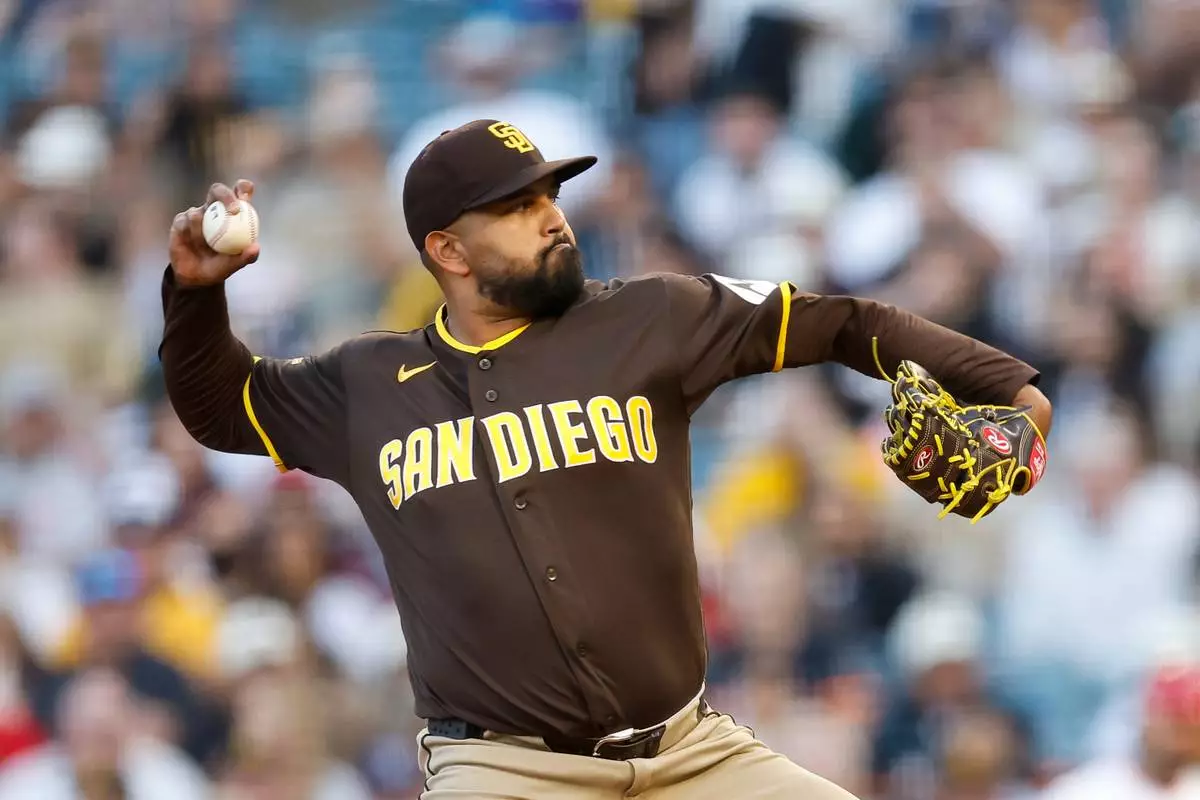
San Diego Padres starter German Marquez pitches during the first inning of a baseball game against the Los Angeles Angels, Saturday, April 18, 2026, in Anaheim, Calif. (AP Photo/Caroline Brehman)