PARIS (AP) — Gasoline prices are rising largely because of the Iran war's impact on the Strait of Hormuz, a crucial passageway for oil and gas from the Persian Gulf. The waterway off Iran's coast, now effectively closed, is so vital for the global economy that governments are working on blueprints to speedily reopen it to shipping when the shooting stops.
In Europe, French President Emmanuel Macron is leading an international effort to unblock the energy choke point, so that oil, gas and goods could flow freely again “when circumstances permit." He envisions countries using warships to escort tankers and container vessels through the strait when fighting is less intense, whenever that may be.
Former naval officers who have served in the Hormuz passage say vessels would be sitting ducks, with little room for maneuver in the strait's narrow shipping lanes, if foreign naval forces attempted to reopen the waterway before a cessation of hostilities.
“In today’s context, sending warships or civilian vessels into the Strait of Hormuz would be suicidal,” French navy retired Vice Adm. Pascal Ausseur said in an interview with The Associated Press.
A ceasefire agreement with Iran “would make the situation shift from suicidal to dangerous. At that point, military ships could be deployed. And then escort operations could begin," he said.
Here's a look at how Hormuz might be made navigable again:
French, American, British and other naval crews already have valuable experience of fighting off missiles and drones in the region. They have escorted and defended cargo vessels through attacks in the Red Sea carried out by Iran-backed Houthi rebels in Yemen.
French frigates used machine guns, cannons and sophisticated air-defense missiles to fend off Houthi strikes. French frigate Alsace downed three ballistic missiles in the Red Sea in 2024 as it was escorting a container ship. The ship's commander at the time, Capt. Jérôme Henry, told the AP that being on the receiving end of the potentially deadly strikes was unnerving and exhausting. The sea battles also took a toll on U.S. Navy ships and personnel.
“There were repeated attacks, either by drones or missiles,” Henry said in an interview. “The crew didn’t get much sleep.”
French retired Vice Adm. Michel Olhagaray, a former head of France’s center for higher military studies, says that “all navies learned a great deal” about working together and escorting ships from their Red Sea missions and have also drawn on Ukraine's experiences against Russian barrages of missiles and drones during Moscow's war.
“It would allow us to deploy to that region with fairly refined know-how and a high level of cooperation — and that is extremely important,” said Olhagaray, who commanded a French frigate that patrolled the Strait of Hormuz during the Iran-Iraq war in the 1980s.
Iran is militarily far better equipped than its Houthi proxies in Yemen, which caused considerable damage and disruption in the Red Sea between November 2023 and January 2025. Armed by Iran, the rebels targeted more than 100 merchant vessels with missiles and drones, sinking two and killing four sailors, and greatly reduced trade flows.
Iran can reach all of the Strait of Hormuz and its approaches with anti-ship cruise missiles that it developed off Chinese-made weapons, according to mapping by the U.S. Defense Intelligence Agency. It can also target vessels with longer-range missiles, drones, fast attack craft and naval mines, which it used during the Iran-Iraq war. U.S. strikes on mine-laying Iranian vessels in this latest conflict underscore the gravity of that danger.
With war raging, the Hormuz passage is “very, very dangerous” and the risks for shipping are “much greater” than in the Red Sea against the Houthis, Olhagaray said.
“The means to counter this threat must be far more substantial and far more effective,” he said. “Before the heat can decrease ... most of the offensive installations on land in Iran would have to be eliminated. There would need to be constant monitoring, patrols, extremely close surveillance, and a very high level of intelligence to be able to say that it would be possible to allow tankers to transit, even with military escorts.”
“That will not happen at all — not at all — in the near future.”
Experts say another challenge will be reassuring shipping insurers and companies that navigating in Hormuz waters is feasible again. Insurance premiums for shipping in the strait have soared to levels that France's transport minister described as “insane," causing “a big problem” for shippers.
“Maritime traffic is a business. That business has to make money. If insurance costs are so high that you can’t make a profit by sailing through a given area, then you don’t sail through that area,” said Ausseur, now a director of the Mediterranean Foundation for Strategic Studies, a think tank.
Insurance rates for oil tankers that want to transit through Hormuz are many times higher than they were before the war and are approaching levels that have been charged for ships carrying grain from Ukraine during the ongoing war with Russia, said Marcus Baker, global head of marine, cargo and logistics for insurance broker and risk adviser Marsh Risk.
Potential naval escorts for commercial ships “would be helpful,” Baker said.
“That’s been done before in conflicts past, so that’s not something unusual and that will obviously give a degree of confidence to the insurers that the vessels are going to have a greater degree of safety,” he said.
Mae Anderson in New York, and Sylvie Corbet in Paris, contributed to this report.

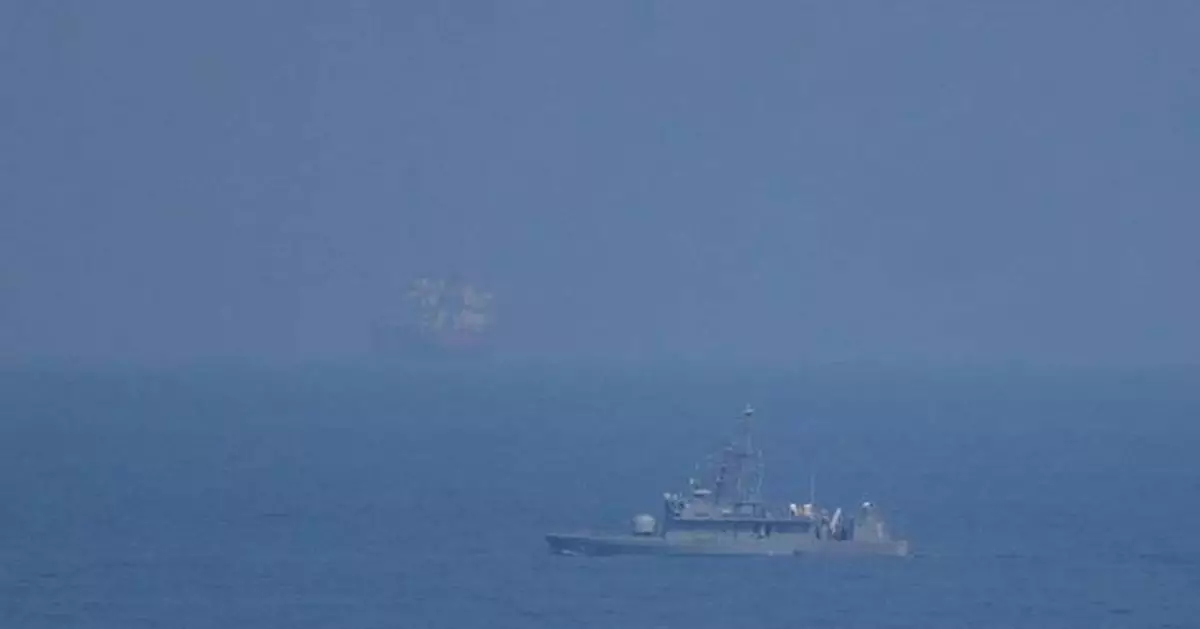
A UAE navy ship patrols the Strait of Hormuz as seen from Mina Al Fajer, United Arab Emirates, Wednesday, March 11, 2026. (AP Photo/Altaf Qadri)
A Trump administration task force has alleged wide-ranging discrimination against Christians during the tenure of former President Joe Biden, claiming in a new report they were targeted in areas such as education, tax law and prosecution of anti-abortion protesters.
Progressive groups criticized the report, saying it fails to document a pattern of discrimination, focuses on causes favored by conservative Christians and amounts to “advocacy dressed up as investigation.”
The Task Force to Eradicate Anti-Christian Bias, created within the Justice Department by President Donald Trump last year, issued its conclusions Thursday in a 200-page report.
“When Christian beliefs about morality and human nature conflicted with the Biden Administration’s views, religious rights often suffered," the report said.
The task force — which included numerous Cabinet secretaries — didn't accuse the Biden administration of any large pattern of suppressing churches themselves or the right to worship. But the report did accuse it of taking a hard line against those who advocated for conservative policies on the basis of their faith in such areas as abortion, gender, school curriculum and vaccine exemptions.
“The Biden Administration generally tolerated religious beliefs that were privately held but zealously pursued actions to limit Christians’ ability to act in accordance with their faith," it said.
Critics said the report essentially equates one strand of conservative Christianity to be representative of Christians overall, then construes policy disagreements to be persecution.
The report is “advocacy dressed up as investigation,” said Jim Simpson, executive director of the Center on Faith and Justice at Georgetown University.
He said the report falsely deems policy disagreements to be “evidence of anti-Christian bias rather than the normal functioning of a pluralistic democracy." He also said it falsely positions Christians — nearly two-thirds of Americans — as “a persecuted minority despite being the country’s largest and most politically influential religious group.”
The task force report contends that the Biden-era Justice Department sought severe penalties for anti-abortion activists who illegally blockaded clinics and took such protests more seriously than threats to pregnancy resource centers — often Christian-run facilities that seek to persuade women not to obtain abortions.
It cited a group of people convicted in federal court and sentenced to prison after invading and blockading a Washington abortion clinic. Trump pardoned them in 2025.
The report contended that the Biden administration “sidelined Christians in favor of their preferred constituencies.”
One section of the report accuses Biden of “replacing Easter" with Transgender Day of Visibility, which takes place every March 31. That event coincided with Easter on 2024. In fact, Biden issued proclamations honoring both occasions. The report accused Biden of “profound lack of consideration for the Christian faith.”
Christian groups have mixed views on LGBTQ+ issues, with some progressive churches flying Pride flags. Conservative denominations generally oppose same-sex marriage and transgender rights. The report chided the Biden administration for flying Pride flags at U.S. Embassies, including at the Vatican.
Melissa Rogers, who served as executive director of the White House Office of Faith-Based and Neighborhood Partnerships under Biden, contrasted Trump's Easter messaging this year with his predecessor's.
“President Biden spent Easter and Orthodox Easter wishing Christians worldwide joyful Resurrection Sundays, not by pretending to be Jesus, by tweeting profanities, and by attacking the pope,” she said.
She also noted that Biden is a devout Catholic, and that his administration's officials routinely met with Christian and other faith leaders to cooperate on a wide range of concerns, from the security of sanctuaries to immigration to supporting COVID-19 clinics.
The task force’s report criticized a Biden-era Justice Department memo that discussed possible efforts to prevent violence and threats targeting school boards. The discussions never led to federal action, and then-Attorney General Merrick Garland defended the effort, saying it was to curtail violence, not inhibit debates over policy.
The report did not directly say how it considered this anti-Christian bias, though many school board meetings in that time period did draw conservative Christians and other critics denouncing school policies and lessons on such topics as gender and race.
The report also criticized denials in federal agencies for Christians seeking exemptions from such things as COVID-19 vaccine mandates.
It criticized federal regulators that had told a Catholic hospital in Oklahoma to snuff its chapel candle, deemed a safety hazard because of the risk of combustion to patients with oxygen equipment. The hospital was allowed to keep the candle while putting up a barrier and a warning notice.
The report also cited what it said were disproportionately heavy fines imposed by Biden's Department of Education on two Christian universities — Grand Canyon University for allegedly deceiving thousands of students over program costs, and Liberty University for failures to comply with required disclosures of crime statistics. The Trump administration cleared Grand Canyon University of the charges and rescinded the fine.
Amanda Tyler, executive director of the Baptist Joint Committee for Religious Liberty, criticized the report for “cherry-picked anecdotes” that don't add up to a pattern of persecution.
“To the extent that the government ever did overreach or violate the law in any of these examples, the courts of law, not a partisan political report, provide the right venue to settle any legal disputes,” she said. “Focusing government resources on this narrow issue while ignoring or discounting the much more widespread instances of anti-religious discrimination against other faith groups in the U.S. further harms religious freedom for all.”
The report comes even as the Religious Liberty Commission, another entity created by Trump, prepares a report on its findings; its hearings featured many of the same grievances cited by the task force.
Associated Press religion coverage receives support through the AP’s collaboration with The Conversation US, with funding from Lilly Endowment Inc. The AP is solely responsible for this content.
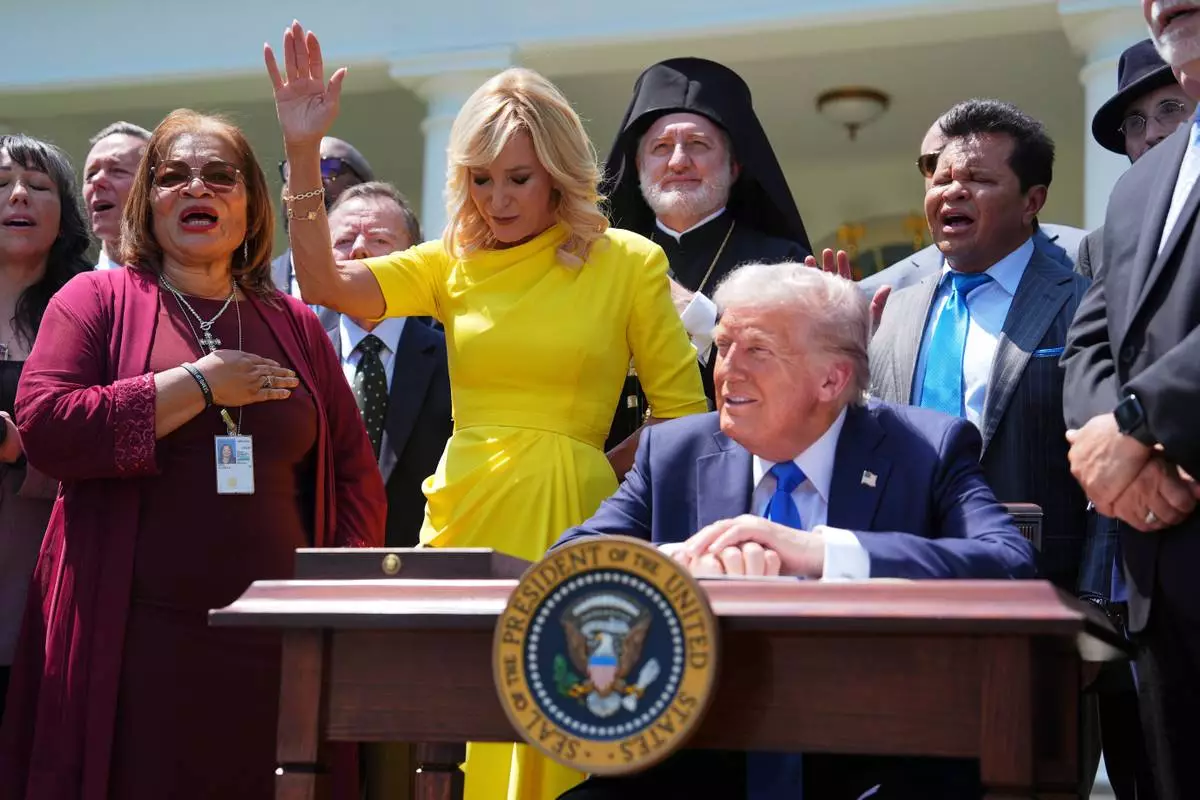
FILE - President Donald Trump sits at a desk as he and religious leaders listen to a musical performance before Trump signs an executive order during a National Day of Prayer event in the Rose Garden of the White House, May 1, 2025, in Washington. (AP Photo/Evan Vucci, File)
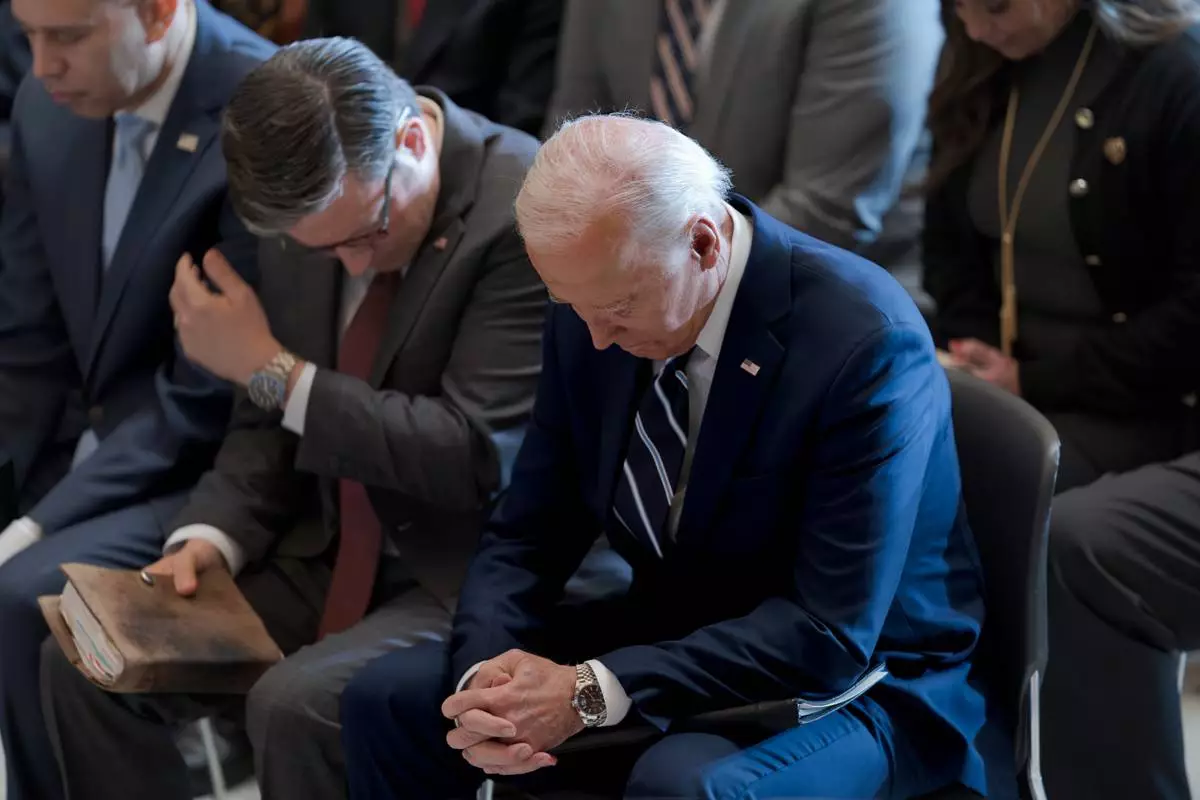
FILE- President Joe Biden, with from left, House Minority Leader Hakeem Jeffries, D-N.Y., and House Speaker Mike Johnson of La., pray and listen during the National Prayer Breakfast, Feb. 1, 2024, at the Capitol in Washington. (AP Photo/J. Scott Applewhite, File)
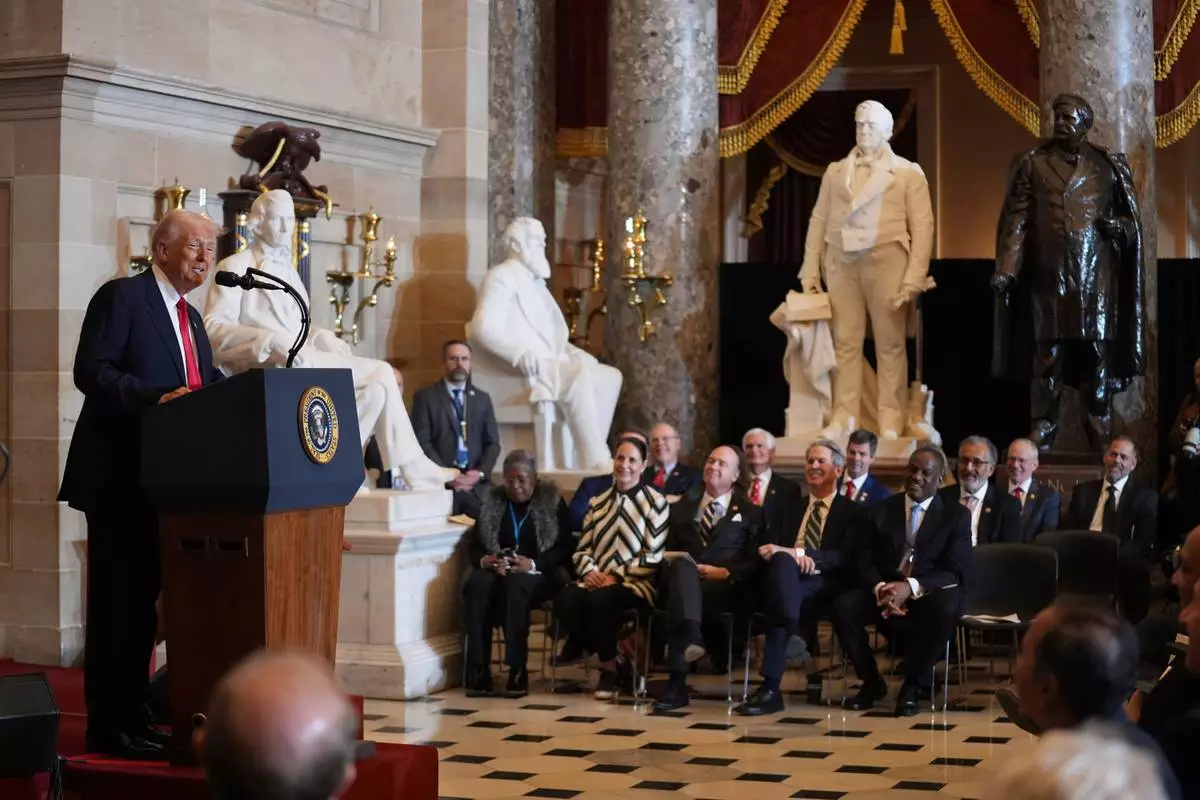
FILE - President Donald Trump speaks during the National Prayer Breakfast, at the Capitol in Washington, Feb. 6, 2025. (AP Photo/Evan Vucci, File)