PHOENIX--(BUSINESS WIRE)--Dec 12, 2024--
Pinnacle West Capital Corp. (NYSE: PNW) announced today that Pinnacle West and Arizona Public Service (APS) Chairman and CEO Jeff Guldner will retire as Chairman of the Board, CEO and board member on March 31, 2025, after 5 years of leading the company. APS President Ted Geisler will assume the roles of Chairman of the Board, President and CEO of Pinnacle West and APS effective April 1, 2025. Guldner will remain employed by Pinnacle West in a non-executive advisory capacity to support a smooth transition through the end of March 2026.
This press release features multimedia. View the full release here: https://www.businesswire.com/news/home/20241212666520/en/
“We’re incredibly grateful for Jeff’s leadership since joining APS in 2004 as Director of Federal Regulatory Affairs and Compliance through his tenure as CEO,” said Pinnacle West Lead Director Paula Sims. “He cast a strong vision for a carbon-free future, and he initiated efforts to improve our customers’ experience and the long-term financial health of the company - the impacts of which can’t be overstated. Jeff’s passion for APS’s people, customers and the community has left an indelible mark.
“Following a thoughtful succession planning process, we are excited to announce Ted Geisler as our next Chairman and CEO,” Sims continued. “Ted brings a unique blend of operational and financial acumen and results-oriented leadership from his breadth of experience across our business. He is well-positioned to build on his success as President of APS, where he drove top-quartile rankings in reliability and customer satisfaction, achieved key regulatory outcomes and set the strategy that’s enabled us to expand and strengthen the grid.”
“Over my tenure as CEO, Ted has been a trusted partner and deeply involved in crafting and executing the company’s long-term strategy,” Guldner said of his successor. “No one understands our priorities better, and I have full faith Ted and the team will lead APS and Arizona successfully through the new era of growth that’s upon us.”
Geisler has been President of APS since 2022 and has held a series of leadership positions at the company during his 23-year career at APS.
“It’s an honor to continue to serve in this new capacity,” Geisler said. “I do so with deep respect and appreciation for Jeff, and for our essential role in powering Arizona’s progress. We have a talented team and a strategy that has reliably delivered outstanding results for our customers, communities and shareholders. I look forward to continuing to work closely with Jeff during the transition and building on the plans in place that have set the stage for APS’s success.”
About Ted Geisler
Geisler began his career at APS in 2001 and has held positions on the executive team since 2018, including the past two years as President. His leadership journey includes critical roles such as Chief Financial Officer, Chief Information Officer, General Manager of Transmission and Distribution Operations and Director of Corporate Strategy, as well as other key positions across operations and corporate resources.
A third-generation Arizonan, Geisler is deeply committed to the community and is currently Chairman of the Board of the Arizona Chamber of Commerce and on the board of the Greater Phoenix Economic Council (GPEC). He sits on the W.P. Carey Dean’s Council at Arizona State University and recently was chosen as the 56th Fighter Wing Command Honorary Commander at Luke Air Force Base. He has previously served on the boards of Chicanos por la Causa and Boys and Girls Club of the Valley.
Geisler earned a Bachelor of Science degree from Colorado State University and an MBA from Arizona State University. He is a graduate of the Nuclear Reactor Technology Course at the Massachusetts Institute of Technology and the Strategic Financial Leadership Program at Stanford University’s Graduate School of Business.
About Pinnacle West Capital Corp.
Pinnacle West Capital Corp., an energy holding company based in Phoenix, has consolidated assets of more than $26 billion, about 6,500 megawatts of generating capacity and approximately 6,100 employees in Arizona and New Mexico. Through its principal subsidiary, Arizona Public Service, the company provides retail electricity service to about 1.4 million Arizona homes and businesses. For more information about Pinnacle West, visit the company’s website at pinnaclewest.com.


Following a thoughtful succession planning process, Ted Geisler will assume the roles of Chairman of the Board, President and CEO of Pinnacle West Capital Corp. and APS effective April 1, 2025. He replaces Jeff Guldner who will retire as Chairman of the Board, CEO and board member on March 31, 2025, after 5 years of leading the company. Geisler currently serves as President of APS. (Photo: Business Wire)
Pinnacle West and Arizona Public Service (APS) Chairman and CEO Jeff Guldner will retire as Chairman of the Board, CEO and board member on March 31, 2025, after 5 years of leading the company. Guldner will remain employed by Pinnacle West in a non-executive advisory capacity to support a smooth transition through the end of March 2026. (Photo: Business Wire)
WASHINGTON (AP) — The United States said Sunday it rescued a service member missing behind enemy lines since Iran downed a fighter jet, as President Donald Trump escalated pressure on Tehran with a new looming deadline to reopen the Strait of Hormuz.
Iran showed no signs of backing down, striking economic and infrastructure targets in neighboring Gulf Arab countries.
The airman’s extraction followed a U.S. search-and-rescue operation after the Friday crash of the F-15E Strike Eagle, as Iran also promised a reward for anyone who turned in an “enemy pilot.” Trump said he was injured but in stable condition.
“This brave Warrior was behind enemy lines in the treacherous mountains of Iran, being hunted down by our enemies, who were getting closer and closer by the hour,” Trump wrote on social media.
A second crew member was rescued earlier.
The fighter jet was the first American aircraft to have crashed in Iranian territory since the U.S. and Israel launched the war, striking Iran on Feb. 28. The war has since killed thousands, shaken global markets, cut off key shipping routes and spiked fuel prices. Both sides have threatened and hit civilian targets, bringing warnings of possible war crimes.
Trump said last week that the U.S. had “decimated” Iran and would finish the war “very fast.” Two days later, Iran shot down two U.S. military planes, showing the ongoing perils of the bombing campaign and the ability of a degraded Iranian military to continue to hit back.
As Iran continues to exert control over the Strait of Hormuz, Trump, in a weekend social media post, threatened to unleash “all Hell” if it isn’t opened by Monday. He has issued such threats before and extended them when mediators have claimed progress toward ending the war on agreeable terms.
The other jet to go down was a U.S. A-10 attack aircraft. Neither the status of the crew nor exactly where it crashed was immediately known.
On Sunday, Iran’s state TV aired a video showing what it claimed were parts of American aircraft shot down by Iranian forces, along with a photo of thick, black smoke rising into the air. The broadcaster said Iran had shot down an American transport plane and two helicopters that were part of the rescue operation.
However, a regional intelligence official briefed on the mission told The Associated Press that the U.S. military blew up two transport planes due to a technical malfunction, forcing it to bring in additional aircraft to complete the rescue.
The official spoke on condition of anonymity to discuss the covert mission.
In Kuwait, an Iranian drone attack caused significant damage to two power plants and put a water desalination station out of service, according to the Ministry of Electricity. No injuries were reported from the attack, the ministry said.
In Bahrain, the national oil company said that a drone attack caused a fire at one of its storage facilities, which was extinguished. It said the damage was still being assessed and no injuries had been reported.
In the United Arab Emirates, authorities responded to multiple fires at the Borouge petrochemicals plant that they said were caused by intercepted debris. Production at the plant in Ruwais, near the UAE’s western border with Saudi Arabia, was halted.
The strike came a day after Israel struck a petrochemical plant in Iran that Prime Minister Benjamin Netanyahu said generated revenue that it had used to fund the war.
Trump renewed his threats for Iran to open up the Strait of Hormuz by Monday or face devastating consequences, writing Saturday in a social media post: “Remember when I gave Iran ten days to MAKE A DEAL or OPEN UP THE HORMUZ STRAIT. Time is running out — 48 hours before all Hell will reign down on them.”
The waterway is a critical chokepoint for global energy shipments, especially oil and gas moving from the Persian Gulf to Europe and Asia. Disruptions there have injected volatility into the market and pushed oil and gas-importing countries to seek alternative sources.
“The doors of hell will be opened to you” if Iran’s infrastructure is attacked, Gen. Ali Abdollahi Aliabadi with the country’s joint military command said late Saturday in response to Trump’s renewed threat, state media reported. In turn, the general threatened all infrastructure used by the U.S. military in the region.
But Pakistan’s Foreign Ministry spokesperson, Tahir Andrabi, told the AP that his government’s efforts to broker a ceasefire are “right on track” after Islamabad last week said that it would soon host talks between the U.S. and Iran.
Mediators from Pakistan, Turkey and Egypt were working to bring the U.S. and Iran to the negotiating table, according to two regional officials.
The proposed compromise includes a cessation of hostilities to allow a diplomatic settlement, according to a regional official involved in the efforts and a Gulf diplomat briefed on the matter. They spoke on condition of anonymity to discuss closed-door diplomacy.
Iran’s parliamentary speaker, Mohammad Bagher Qalibaf, issued a veiled threat late Friday to disrupt traffic through a second strategic waterway in the region, the Bab el-Mandeb.
The strait, 32 kilometers (20 miles) wide, links the Red Sea with the Gulf of Aden and the Indian Ocean. More than a tenth of seaborne global oil and a quarter of container ships pass through it.
“Which countries and companies account for the highest transit volumes through the strait?” Qalibaf wrote.
More than 1,900 people have been killed in Iran since the war began.
In Gulf Arab states and the occupied West Bank, more than two dozen people have died, while 19 have been reported dead in Israel and 13 U.S. service members have been killed. In Lebanon, more than 1,400 people have been killed and more than 1 million people have been displaced. Ten Israeli soldiers have died there.
This report has been corrected to show that Borealis is an Austrian company and not Australian.
Metz reported from Jerusalem and Magdy from Cairo. Jon Gambrell in Dubai, United Arab Emirates, and Munir Ahmed in Islamabad contributed to this report.
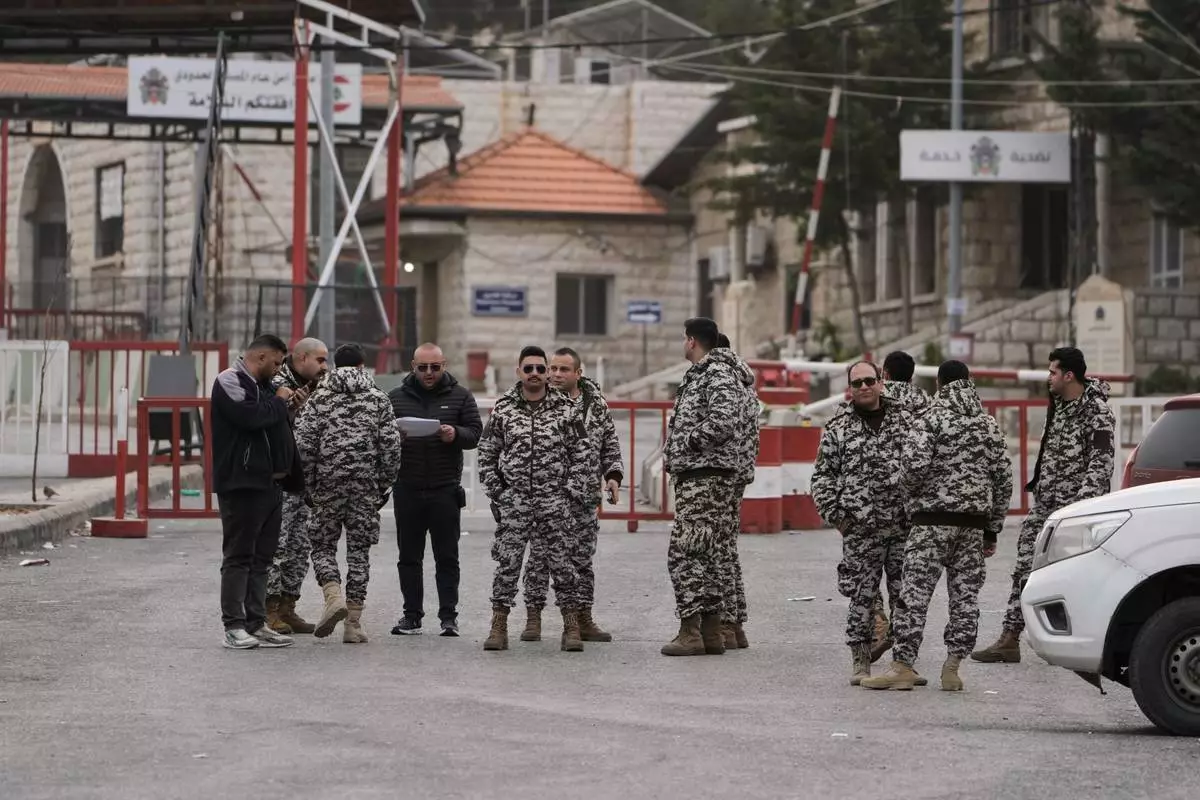
Members of Lebanon's General Security stand at the Masnaa border crossing in the Bekaa valley, eastern Lebanon, Sunday, April 5, 2026. (AP Photo/Bilal Hussein)
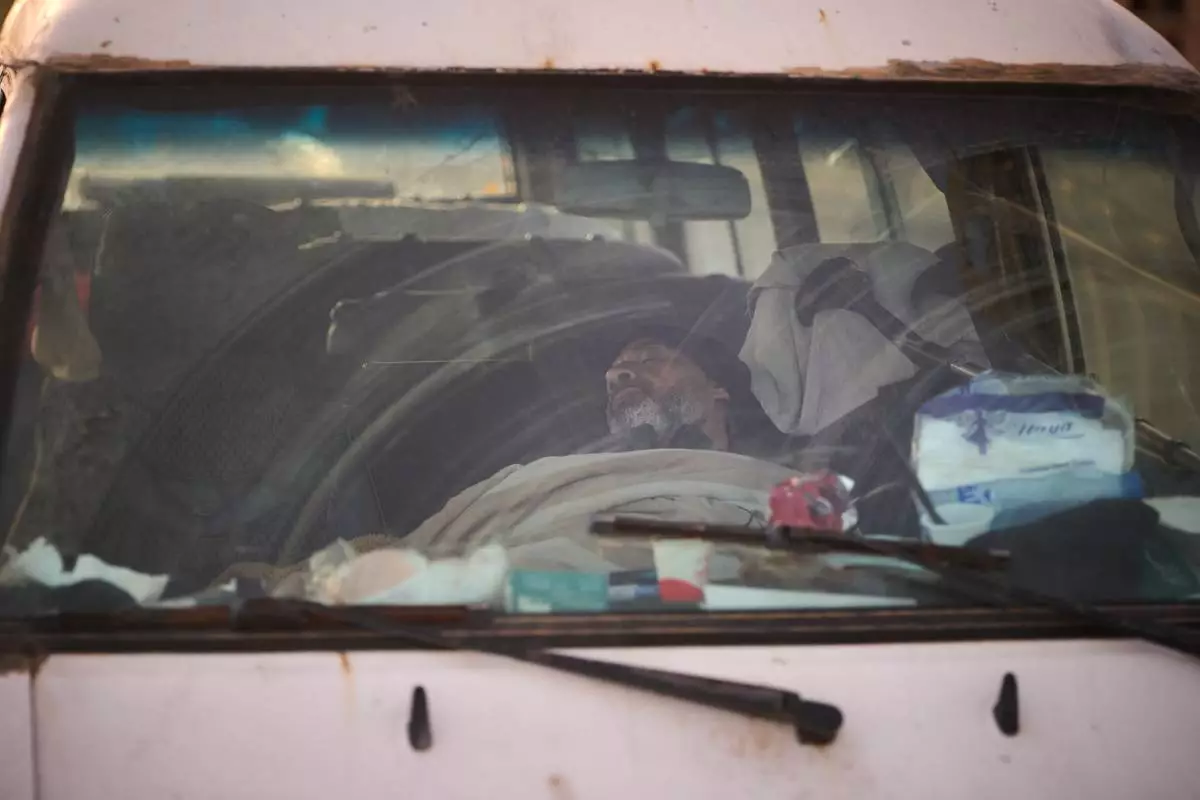
A man, who fled Israeli bombings in southern Lebanon with his family, sleeps in his car used as shelter, along a seaside promenade in downtown Beirut, Lebanon, Sunday, April 5, 2026. (AP Photo/Emilio Morenatti)
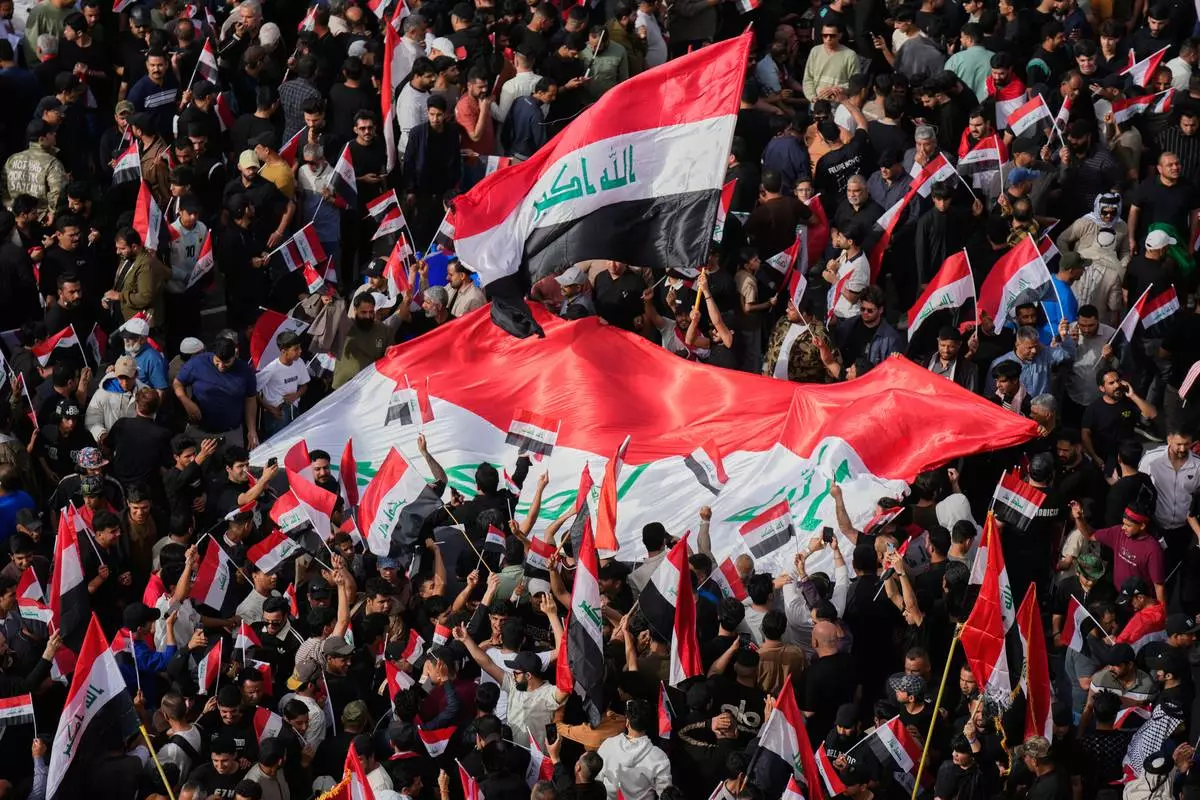
Followers of Iraq's Shiite cleric Muqtada al-Sadr chant slogans as they wave national Iraqi flag during a protest against U.S. and Israeli attacks on multiple cities across Iran, in Tahrir Square, Baghdad, Baghdad, Iraq, Saturday, April 4, 2026. (AP Photo/Hadi Mizban)
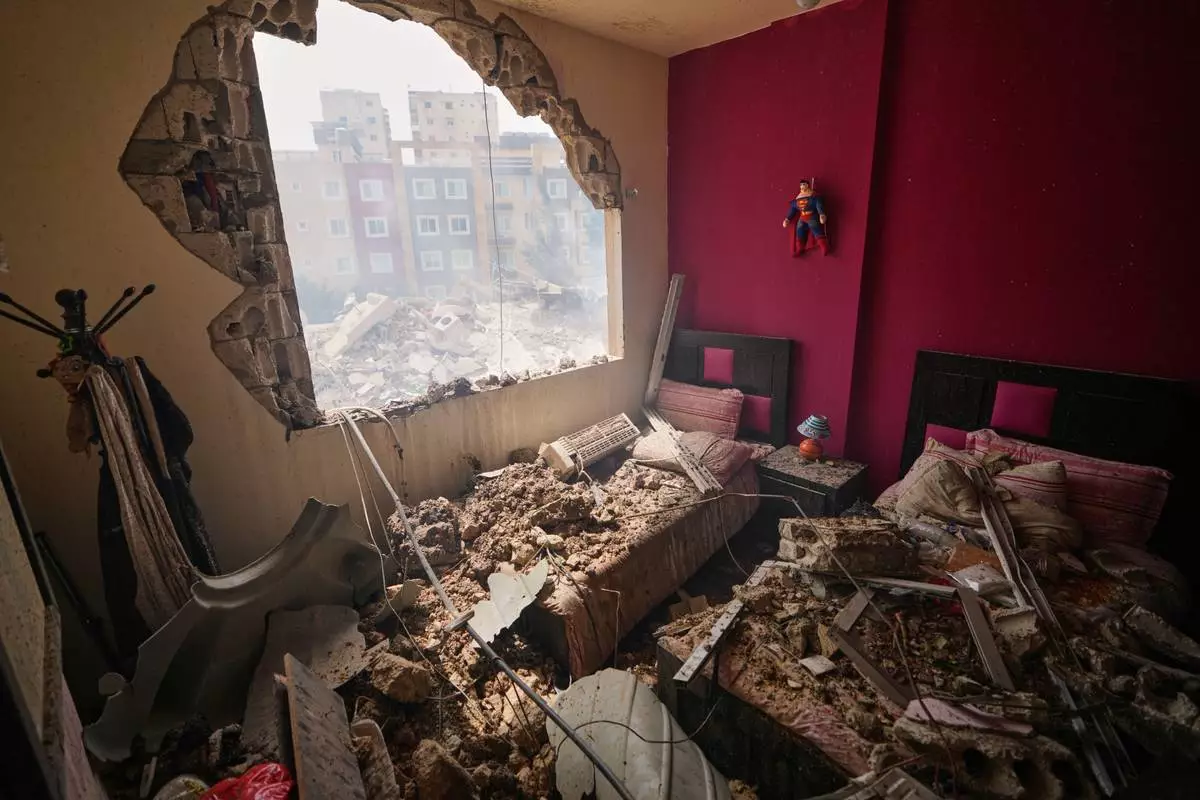
A bedroom is damaged in a building struck in an Israeli airstrike in the southern port city of Tyre, Lebanon, Saturday, April 4, 2026. (AP Photo/Mohammed Zaatari)
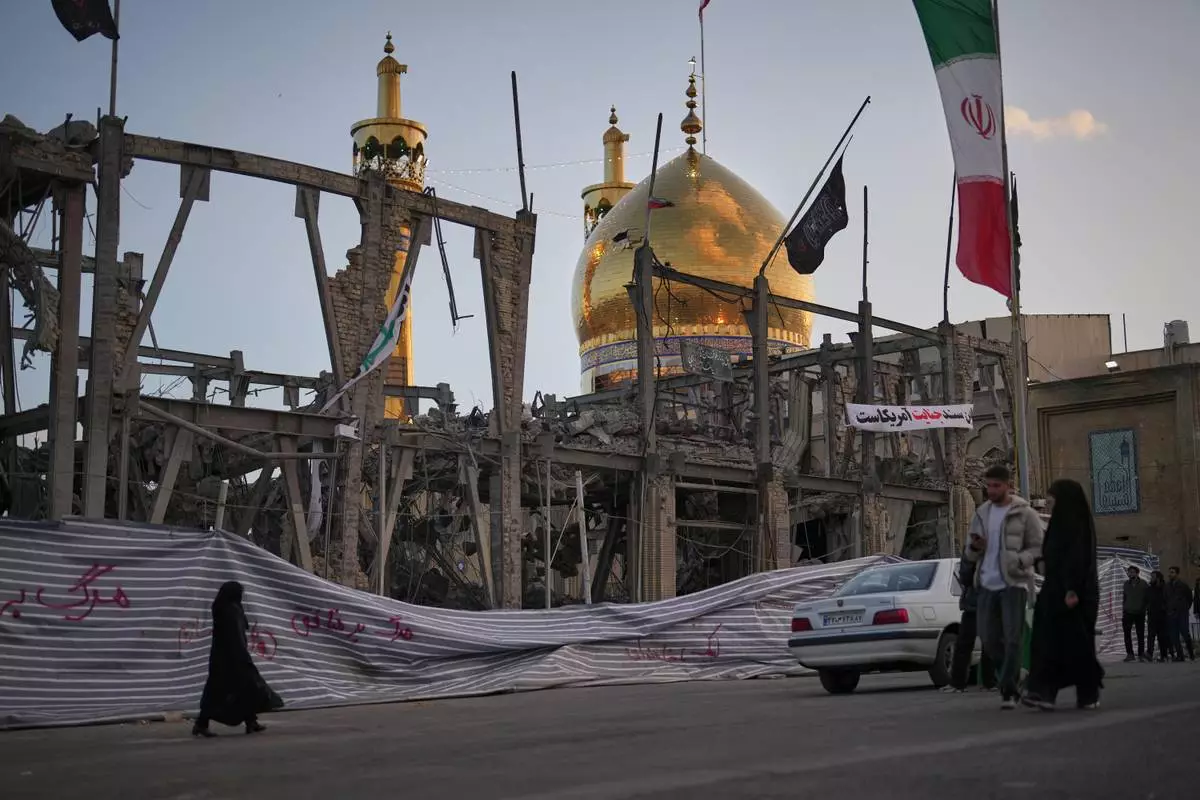
Pedetrians walk by a destroyed building within the Grand Hosseiniyeh, with the mosque visible in the background, which officials at the site say was hit by U.S.-Israeli airstrikes Tuesday, in Zanjan, Iran, Saturday, April 4, 2026. (AP Photo/Francisco Seco)

Police officers and their horses take cover in an underground parking garage as sirens warn of an incoming missile fired from Yemen in Tel Aviv, Israel, Saturday, April 4, 2026. (AP Photo/Maya Levin)
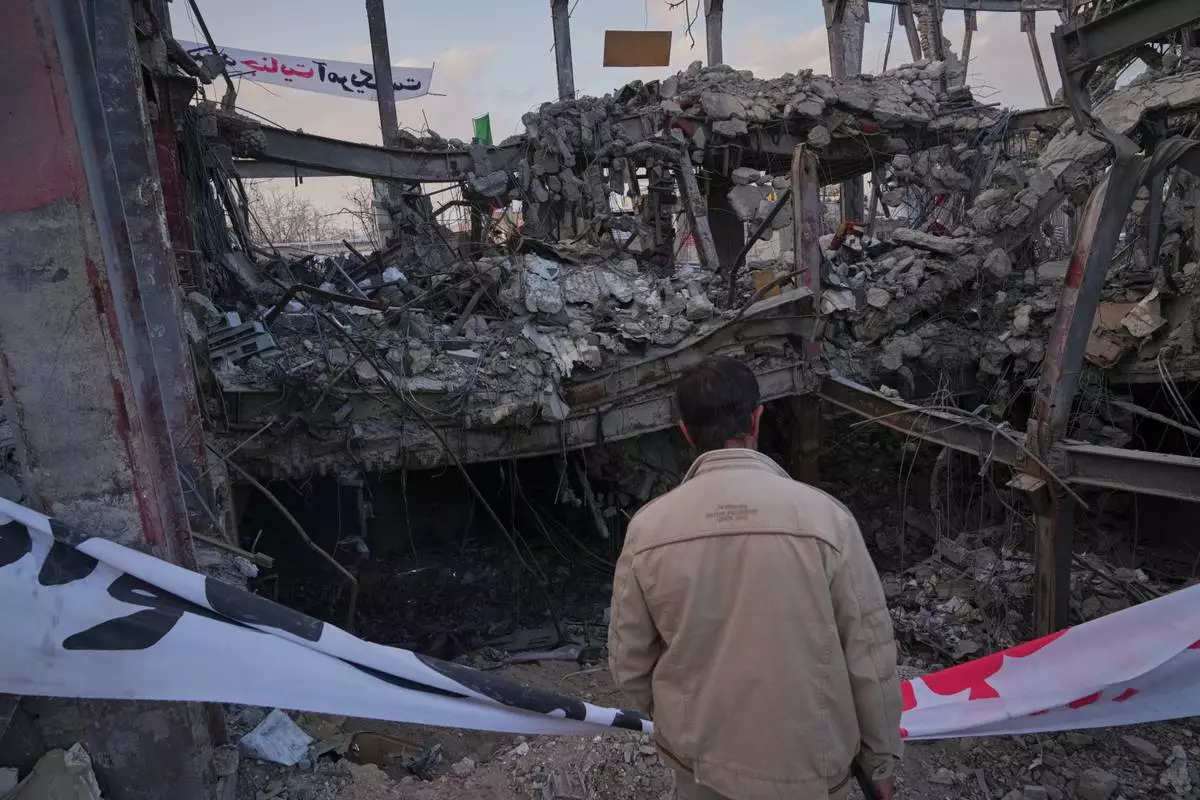
A man looks at a destroyed building within the Grand Hosseiniyeh complex that officials say was hit by U.S.-Israeli airstrikes Tuesday in Zanjan, Iran, Saturday, April 4, 2026. (AP Photo/Francisco Seco)