Skip to Content Facebook Feature Image

New Zealand scientists suspect specimen of world's rarest whale died from head injuries

News

New Zealand scientists suspect specimen of world's rarest whale died from head injuries
News

News

New Zealand scientists suspect specimen of world's rarest whale died from head injuries

2024-12-13 15:43 Last Updated At:15:50

MELBOURNE, Australia (AP) — Scientists suspect the first complete specimen ever recorded of the world’s rarest whale died from head injuries, an expert said Friday.

The first dissection of a spade-toothed whale, a type of beaked whale, was completed last week after a painstaking examination at a research center near the New Zealand city of Dunedin, the local people who led the scientific team, Te Rūnanga Ōtākou, said in a statement issued by the New Zealand Department of Conservation.

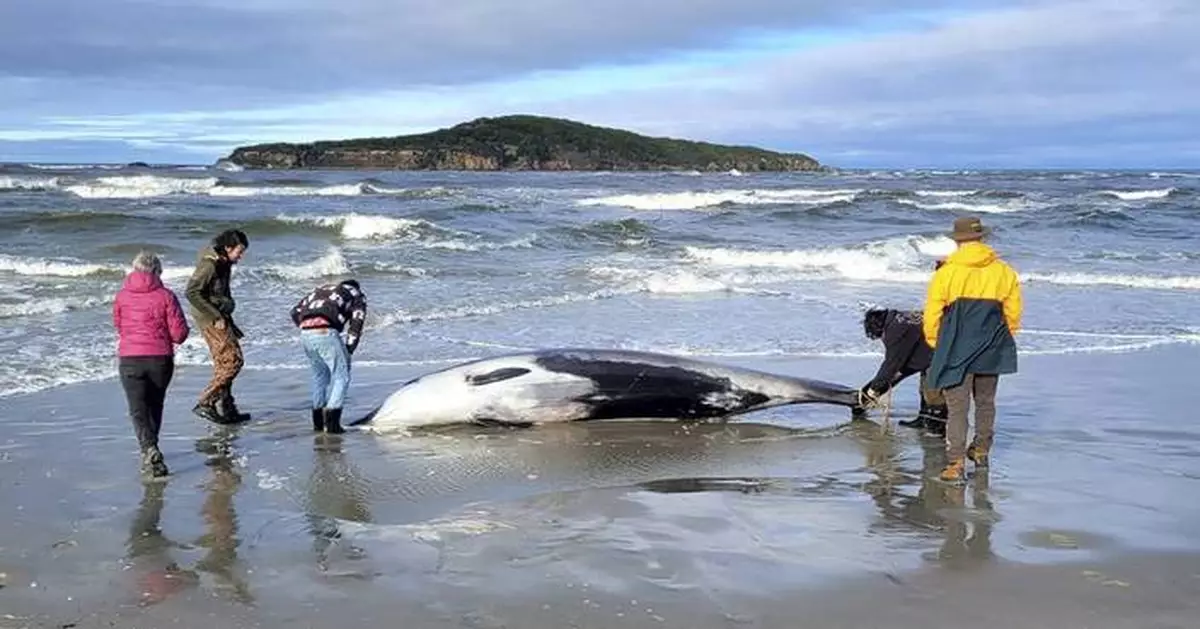
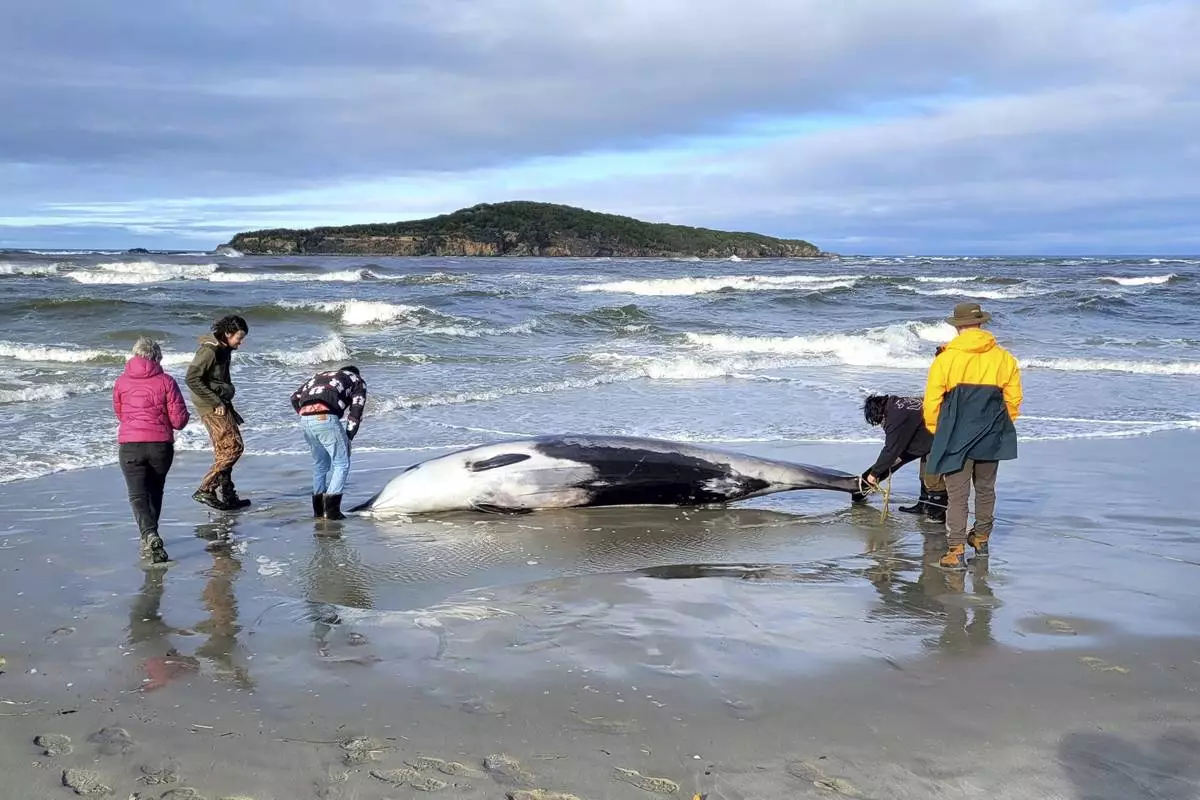
A near-perfectly preserved 5-meter (16-foot) male was found washed up on a South Island beach in July. It was the first complete specimen ever recorded. There have only been seven known sightings and never of a living spade-toothed whale.

New Zealand conservation agency beaked whale expert Anton van Helden said the whale’s broken jaw and bruising to the head and neck led scientists to believe that head trauma may have caused its death.

“We don’t know, but we suspect there must have been some sort of trauma, but what caused that could be anyone’s guess,” van Helden said in a statement.

All varieties of beaked whales have different stomach systems and researchers didn’t know how the spade-toothed type processed its food.

The scientific team found the specimen had nine stomach chambers containing remnants of squid and parasitic worms, the statement said.

Among the more interesting finds were tiny vestigial teeth in the upper jaw.

“These little teeth embedded in the gum tells us something about their evolutionary history. It’s remarkable to see this and it’s just another thing that we had no idea about,” van Helden said.

“It’s a week I’ll never forget in my life, it’s certainly a highlight and it’s the start of the storytelling around this beautiful animal,” van Helden added.

The dissection was also notable because scientists and curators worked together with local Māori people to incorporate Indigenous knowledge and customs into each step of the process.

Following the dissection, the local iwi, or tribe, will keep the jawbone and teeth of the whale before its skeleton is displayed in a museum. 3D printing will be used to replicate those parts retained by the iwi.

To Māori, whales are a taonga -– a precious treasure -– and the creature has been treated with the reverence afforded to an ancestor.

New Zealand is a whale-stranding hotspot, with more than 5,000 episodes recorded since 1840, according to the Department of Conservation.

The first spade-toothed whale bones were found in 1872 on New Zealand’s Pitt Island. Another discovery was made at an offshore island in the 1950s, and the bones of a third were found on Chile’s Robinson Crusoe Island in 1986.

Associated Press writer Charlotte Graham-McLay in Wellington, New Zealand, contributed to this report.
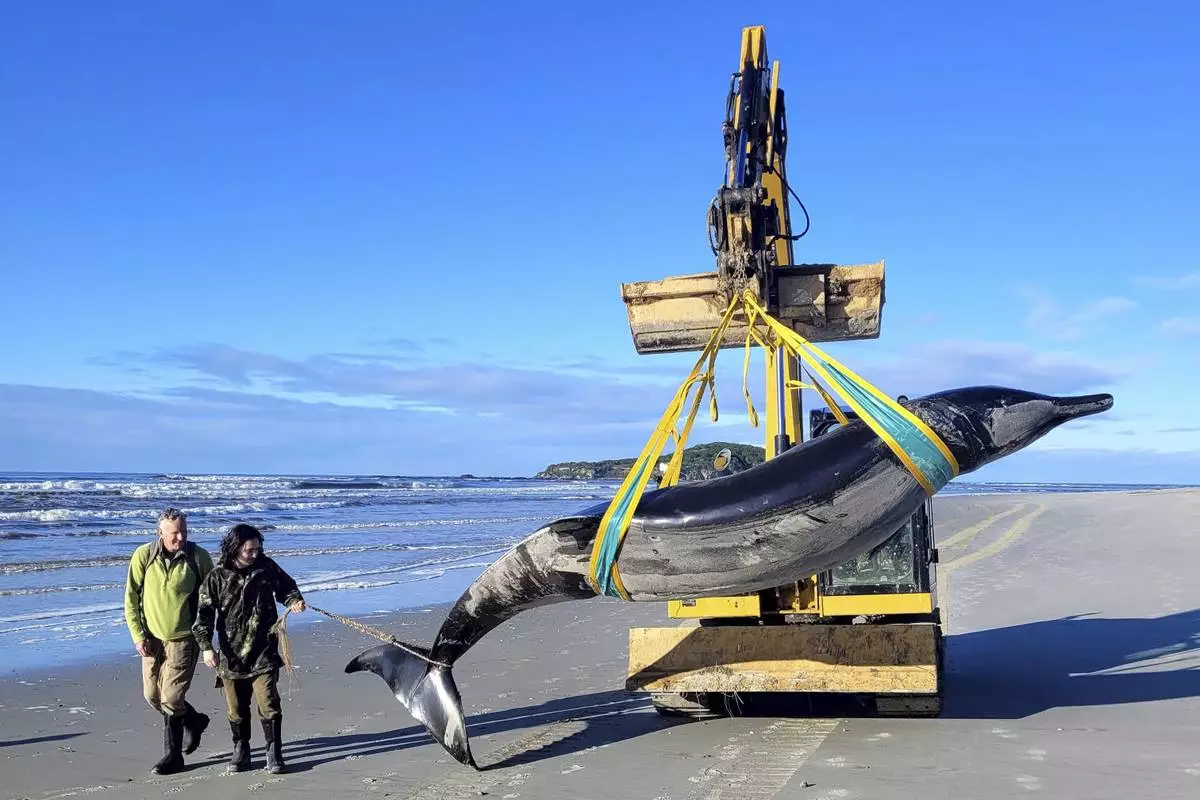
FILE - In this photo provided by the New Zealand Department of Conservation rangers Jim Fyfe and Tūmai Cassidy walk alongside what is believed to be a rare spade-toothed whale, on July 5, 2024, after its was found washed ashore on a beach near Otago, New Zealand. (Department of Conservation via AP, File)
FILE - In this photo provided by the New Zealand Department of Conservation rangers Jim Fyfe and Tūmai Cassidy walk alongside what is believed to be a rare spade-toothed whale, on July 5, 2024, after its was found washed ashore on a beach near Otago, New Zealand. (Department of Conservation via AP, File)
FILE - In this photo provided by the New Zealand Department of Conservation, rangers inspect what is believed to be a rare spade-toothed whale on July 5, 2024, after it was found washed ashore on a beach near Otago, New Zealand. (Department of Conservation via AP, File)
FILE - In this photo provided by the New Zealand Department of Conservation, rangers inspect what is believed to be a rare spade-toothed whale on July 5, 2024, after it was found washed ashore on a beach near Otago, New Zealand. (Department of Conservation via AP, File)

KAMPALA, Uganda (AP) — Police in Uganda on Saturday denied reports that the main opposition candidate in this week's tense election had been arrested, terming the reports as “deceitful and inciteful.” They urged citizens to remain peaceful as the country awaits the results in the presidential vote.

Uganda held a general election on Thursday amid an internet shutdown that has been in place for four days, with the military heavily deployed across the country and pockets of violence erupting as people protested parliamentary election results in various parts of the country.

President Yoweri Museveni, 81, is seeking a seventh term in office and is leading in the provisional results with more than 70% support. His main challenger, musician-turned-politician Kyagulanyi Ssentamu, better known as Bobi Wine, is currently holding 20% of the vote. Wine dismissed the announced results as “fake,” and asked his supporters to ignore them.

Police on Saturday said that Wine was “not under arrest,” as claimed by his National Unity Platform party. Police spokesperson Kituuma Rusoke said Wine was free to leave his house, but there was “controlled access” for others trying to go into the property, to prevent people from using the premises to incite violence.

“It should not surprise you when we have a pickup or two near the residence of Kyagulanyi,” Rusoke said.

Ugandan electoral officials are set to announce the final presidential results on Saturday, as constitutionally required. The chairperson of the national electoral commission said Friday that everything was on course to announce the final result by the end of the day Saturday.

The voting was marred by delays due to the late delivery of materials to polling stations after opening time and the failure of some biometric machines.

President Museveni said he agreed with the electoral commission’s plan to revert to paper voter registration records, but Wine alleged fraud, claiming that there was “massive ballot stuffing” and that his party’s polling agents were abducted to give an unfair advantage to the ruling party.

The security forces were a constant presence throughout the election campaign, and Wine said authorities followed him and harassed his supporters, using tear gas against them. He campaigned in a flak jacket and helmet due to his security fears.

Wine wrote Thursday on X that he was unable to leave his house, and on Friday his party wrote that he had been arrested and taken away in an army helicopter.

Uganda has not witnessed a peaceful transfer of presidential power since independence from British colonial rule six decades ago.

Veteran opposition figure Kizza Besigye, a four-time presidential candidate, remains in prison after he was charged with treason in February 2025.

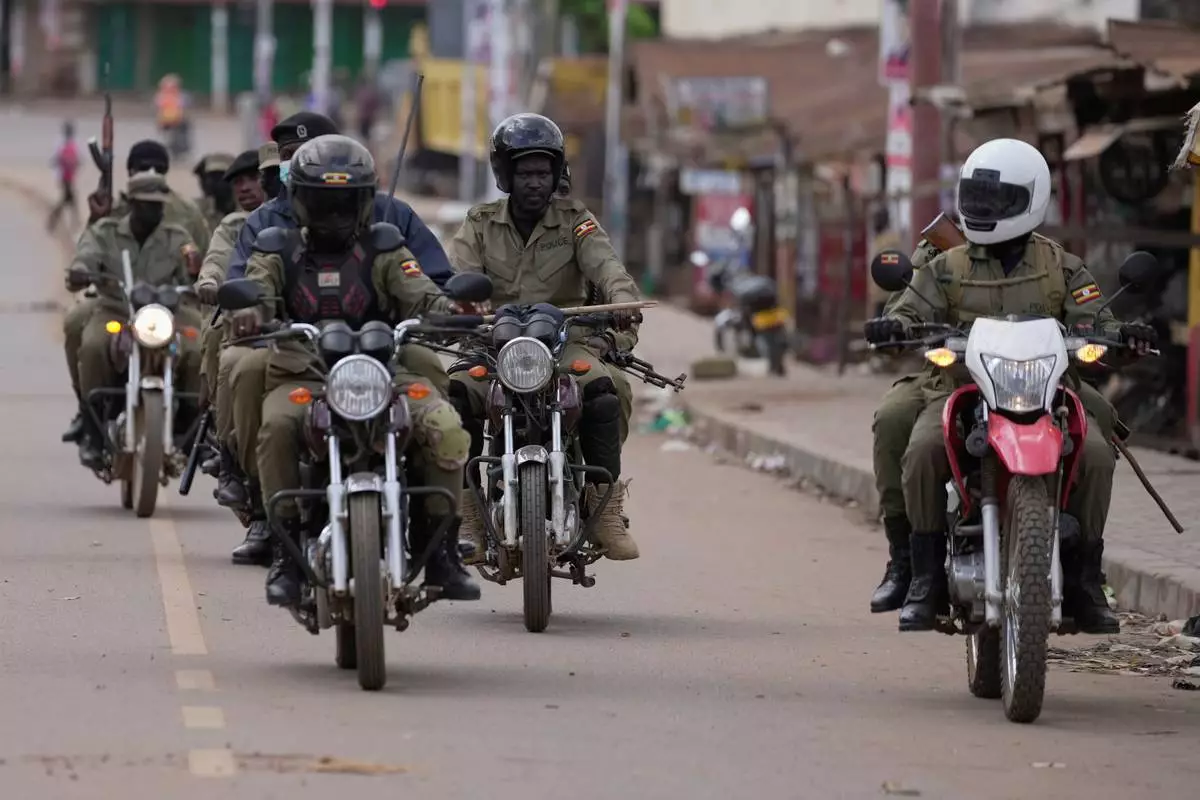
Uganda's security forces patrol a street during protests following the announcement of the preliminary results in Kampala, Uganda, Friday, Jan. 16, 2026. (AP Photo/Brian Inganga)

Uganda's security forces patrol a street during protests following the announcement of the preliminary results in Kampala, Uganda, Friday, Jan. 16, 2026. (AP Photo/Brian Inganga)

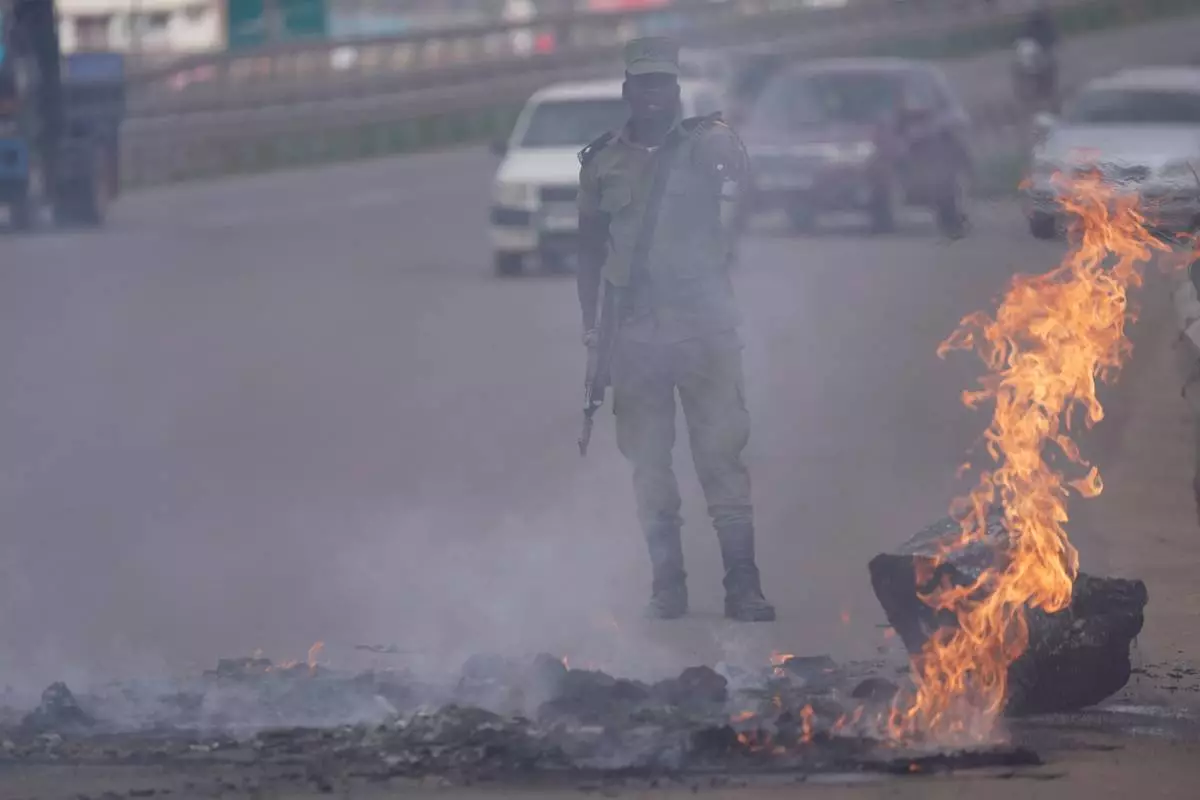
A Ugandan police officer makes a gesture behind a burning fire amid protests following the announcement of the preliminary results in Kampala, Uganda, Friday, Jan. 16, 2026. (AP Photo/Brian Inganga)

A Ugandan police officer makes a gesture behind a burning fire amid protests following the announcement of the preliminary results in Kampala, Uganda, Friday, Jan. 16, 2026. (AP Photo/Brian Inganga)

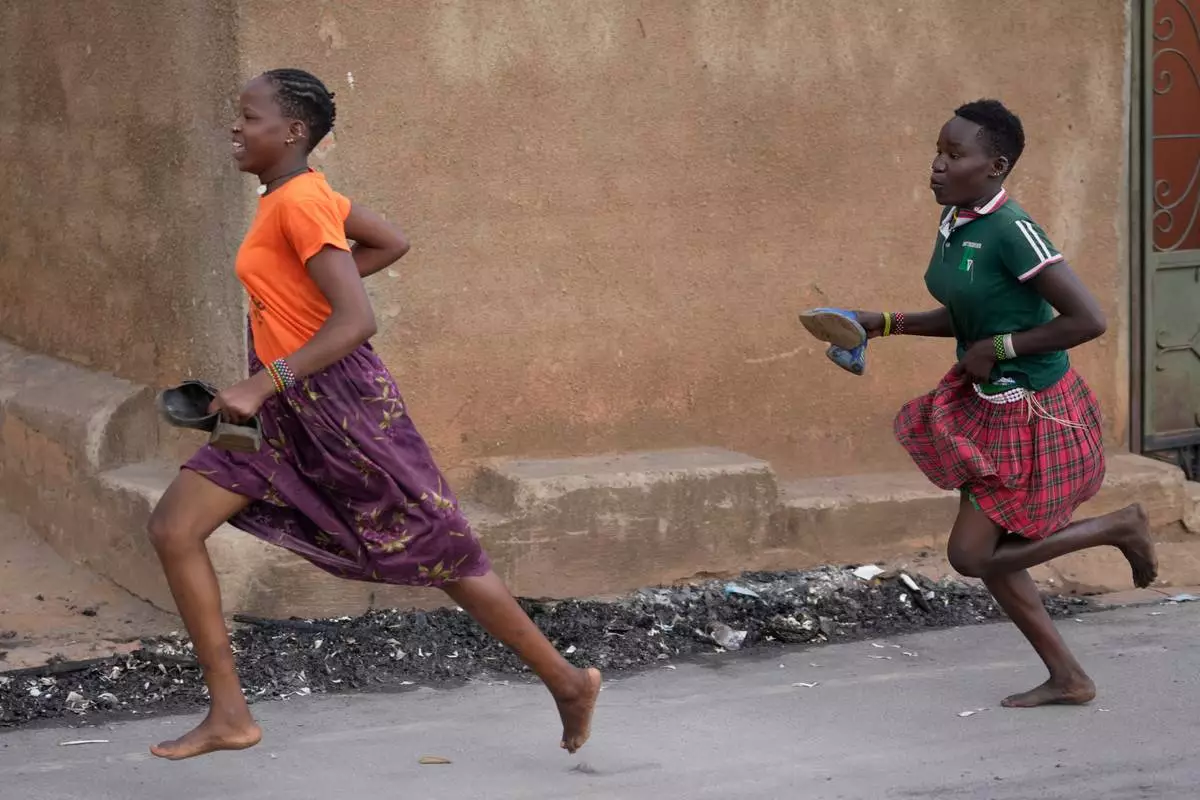
Girls run during protests following the preliminary results in Kampala, Uganda, Friday, Jan. 16, 2026. (AP Photo/Brian Inganga)

Girls run during protests following the preliminary results in Kampala, Uganda, Friday, Jan. 16, 2026. (AP Photo/Brian Inganga)

Recommended Articles