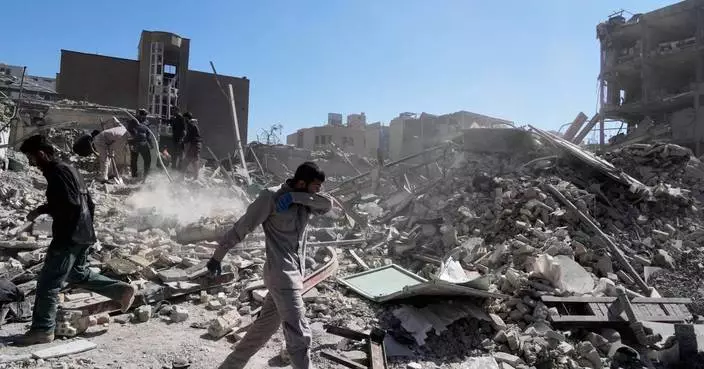
The world’s first legally binding agreement to protect marine life in international waters took effect Saturday, marking a historic moment for ocean conservation after nearly two decades of negotiations.
The High Seas Treaty will govern nearly half the planet’s surface – the vast ocean areas beyond any country’s control. These waters face mounting threats from destructive fishing practices, shipping, plastic pollution, overfishing and potential deep sea mining, all compounded by climate change. The ocean absorbs carbon dioxide and produces oxygen, making its health critical for addressing the climate crisis.
Click to Gallery
Strands of kelp rise from a thinned kelp forest off the coast of La Jolla, Calif., Tuesday, Dec. 2, 2025. (AP Photo/Annika Hammerschlag)
FILE - Corals grow off Efate Island, Vanuatu, Saturday, July 26, 2025. (AP Photo/Annika Hammerschlag, File)
FILE - Coral is visible in the protected area of France's Porquerolles National Park ahead of the U.N. Ocean Conference on June 6, 2025. (AP Photo/Annika Hammerschlag, File)
FILE - Common two-banded seabream fish swim in the protected area of France's Porquerolles National Park ahead of the U.N. Ocean Conference on June 6, 2025. (AP Photo/Annika Hammerschlag, File)
FILE - A clownfish swims at Havannah Harbour, off the coast of Efate Island, Vanuatu, July 20, 2025. (AP Photo/Annika Hammerschlag, File)
The treaty entered into force 120 days after it reached the threshold of ratification by 60 countries in September. As of Friday, 83 countries had ratified it, including the recent addition of major maritime powers such as China and Japan.
The treaty creates the first framework for establishing Marine Protected Areas on the high seas, which make up about two-thirds of the world’s ocean. Currently, only around 1% of these international waters are protected.
From Saturday, ratifying countries must begin working together on ocean science and technology as well as help developing nations build capacity to participate in ocean governance. Companies planning activities that could harm marine life must conduct environmental impact assessments that meet the treaty’s standards. Those conducting research on ocean organisms that could be used commercially, such as for new medicines, must notify other countries and share their findings.
Perhaps most significantly, countries must now promote the treaty’s conservation goals when they participate in other international bodies that regulate ocean activities, such as regional fisheries organizations, the International Maritime Organization and the International Seabed Authority.
While key institutions like the treaty’s secretariat and scientific body are still being developed, countries can begin preparing proposals for Marine Protected Areas immediately. Potential sites include the Emperor Seamounts in the North Pacific, the Sargasso Sea in the Atlantic and the Salas y Gomez and Nazca Ridges off South America.
Conservationists warn governments must act quickly to achieve the global goal of protecting 30% of the world’s oceans by 2030 – a target scientists say is critical for ocean health. Because the high seas make up such a vast portion of the oceans, their protection is essential to reaching that goal.
“The marine protected areas under the treaty will only be as strong as the governments make them,” said Megan Randles, global political lead for Greenpeace’s Ocean Campaign. “We can’t trust big fishing industry players to simply stop fishing in these critical ecosystems. We need governments to use the treaty to force their hands.”
How those protected areas will actually be monitored and enforced is undecided. Countries are exploring various options, from satellite technology to coordinating patrols between multiple nations to using other UN agencies to help with oversight, said Rebecca Hubbard, director of the High Seas Alliance. Those details will be worked out as the first protected areas take shape.
Within a year, the treaty’s first Conference of Parties will meet to decide key operational details, from budgets to the makeup of various committees. Countries have been working through many of those questions at preparatory meetings, with a final session scheduled for late March. The earliest any Marine Protected Areas could actually win approval would be at the second COP, since the scientific body that will review proposals hasn’t yet been established.
The United States has signed but not ratified the treaty, meaning it can participate as an observer but won’t have voting rights. Under international law, signatory countries are expected to comply with treaty objectives even before ratification.
“The High Seas Treaty has such incredibly broad and strong political support from across all regions of the world,” said Hubbard. “Whilst it’s disappointing that the U.S. hasn’t yet ratified, it doesn’t undermine its momentum and the support that it has already.”
Advocates emphasize that broad support must now turn into rapid implementation.
“The treaty is a sign that in a divided world, protecting nature and protecting our global commons can still triumph over political rivalries,” Randles said. “The ocean connects us all.”
Follow Annika Hammerschlag on Instagram @ahammergram.
The Associated Press receives support from the Walton Family Foundation for coverage of water and environmental policy. The AP is solely responsible for all content. For all of AP’s environmental coverage, visit https://apnews.com/hub/climate-and-environment

Strands of kelp rise from a thinned kelp forest off the coast of La Jolla, Calif., Tuesday, Dec. 2, 2025. (AP Photo/Annika Hammerschlag)

FILE - Corals grow off Efate Island, Vanuatu, Saturday, July 26, 2025. (AP Photo/Annika Hammerschlag, File)

FILE - Coral is visible in the protected area of France's Porquerolles National Park ahead of the U.N. Ocean Conference on June 6, 2025. (AP Photo/Annika Hammerschlag, File)

FILE - Common two-banded seabream fish swim in the protected area of France's Porquerolles National Park ahead of the U.N. Ocean Conference on June 6, 2025. (AP Photo/Annika Hammerschlag, File)

FILE - A clownfish swims at Havannah Harbour, off the coast of Efate Island, Vanuatu, July 20, 2025. (AP Photo/Annika Hammerschlag, File)
BEIRUT (AP) — Israel's military issued warnings to residents of dozens of border villages in southern Lebanon to evacuate “immediately” Wednesday as airstrikes on suburbs of Beirut intensified and Hezbollah claimed more attacks.
Lebanon was dragged into the broader war in the Middle East early Monday when Hezbollah fired rockets and drones into northern Israel, triggering Israeli retaliatory airstrikes that killed more than 70 people, wounded more than 400 and displaced tens of thousands of people from southern Lebanon, the eastern Bekaa Valley and Beirut’s southern suburbs.
The ongoing conflict is not the first between Hezbollah and Israel. Hezbollah began firing into Israel a day after the Oct. 7, 2023, Hamas-led attack on southern Israel triggered the war in Gaza. After months of low-level fighting, a full-scale war erupted in September 2024 and Israel later launched a ground invasion of Lebanon.
Israeli forces withdrew from most of southern Lebanon after a U.S.-brokered ceasefire halted the fighting in late 2024, but continued to occupy five points on the Lebanese side of the border. Israel also pressed on with near-daily strikes, primarily in southern Lebanon, saying that Hezbollah has been trying to rebuild its positions there, killing nearly 400 people while the ceasefire was in place.
Hezbollah Secretary-General Naim Kassem says the group had no choice but to fire rockets because of this. “As long as the occupation is present, then the resistance and its weapons are a legitimate right,” Kassem said in his first speech since this latest escalation.
Kassem slammed the Lebanese government's criticism of Hezbollah's rocket fire and its commitment to disarm the group, claiming that Israel cannot stop its attacks through diplomatic means alone.
“Why did you make a big deal out of this salvo of rockets? The reason is the ongoing aggression,” he said.
The Israeli military issued a statement Wednesday telling people living in dozens of villages in southern Lebanon close to the border with Israel to evacuate and move “immediately” north of the Litani River.
The Israeli army’s Arabic spokesperson warned on X that if people decide to move south of the river, they will be endangering their lives.
The area south of the Litani River, about 8% of the territory of Lebanon, is mostly along the border with Israel. The Lebanese government says it has cleared the area of Hezbollah’s military presence there over the past months.
The order came after airstrikes overnight on the predominantly Christian southeastern suburb of Hazmieh that struck a hotel. Others hit the towns of Aramoun and Saadiyat just south of Beirut’s international airport, killing six and wounding eight. Another strike hit the eastern city of Baalbek, killing six people and wounding 15, according to state media.
The four airstrikes came without a warning in advance, which usually implies targeted assassinations. Security officials speaking on condition of anonymity in line with regulations said the man targeted in Hazmieh was a local official in Beirut’s southern suburb of Ghobeiri, and that the official was wounded.
“We live in a country where a missile can fall on your head at any moment,” said Maggie Shibli, wife of the owner of the Hotel Comfort in a Hazmieh neighborhood that was struck early Wednesday.
Abbas Najdeh, who was displaced from the southern port city of Tyre and was staying at the hotel, said: “We were sleeping then suddenly I, my children and my wife were thrown" by the blast.
Also Wednesday, the Israeli military issued several warnings to people to evacuate buildings in Beirut’s southern suburbs, which were struck shortly afterward.
Hezbollah said Wednesday that it carried out several attacks on Israel, including two in which the group claimed that it used precision-guided missiles.
The warning for people to leave the area south of the Litani River came a day after Israel sent additional troops into southern Lebanon. Israeli forces had already been occupying several border points in Lebanon since the November 2024 cease-fire ended the previous Israel-Hezbollah war.
It was not immediately clear if Israel was preparing for a wider ground invasion. Lebanon’s state-run National News Agency reported Israeli artillery shelling on several Lebanese villages along the border, including Aid al-Shaab and Beit Lif.
The Lebanese military in a statement that it arrested 27 people for “illegally possessing weapons and munitions," and that it had redeployed some forces in the south and further to the east along the border with Syria. It did not say whether the 26 Lebanese and one Palestinian apprehended were affiliated with Hezbollah or other militant groups.
The cash-strapped army's move comes after Prime Minister Nawaf Salam's government and President Joseph Aoun urged state security agencies to pursue people firing rockets from Lebanon, as part of their broader policy of asserting the government's full sovereignty over the country, while also criticizing Israel's strikes and ground movements.
In eastern Lebanon, the main border crossing with Syria was briefly closed Wednesday after Lebanese officials received a warning of an impending Israeli strike, which officials later said turned out to be a false alarm.
Anxieties have also been running high in Lebanon in recent days over a buildup of Syrian forces on the border. The current Syrian government is hostile to Iran and Hezbollah, as they were on opposite sides of Syria's civil war that ended with the ouster of former President Bashar Assad in December 2024.
A high-ranking Syrian official told The Associated Press on Wednesday that the troop buildup was “purely defensive” and to “prevent smuggling and counter any unforeseen scenario.” The official spoke on condition of anonymity because they weren't authorized to comment publicly.
—
Associated Press writer Abby Sewell in Beirut contributed to this report.
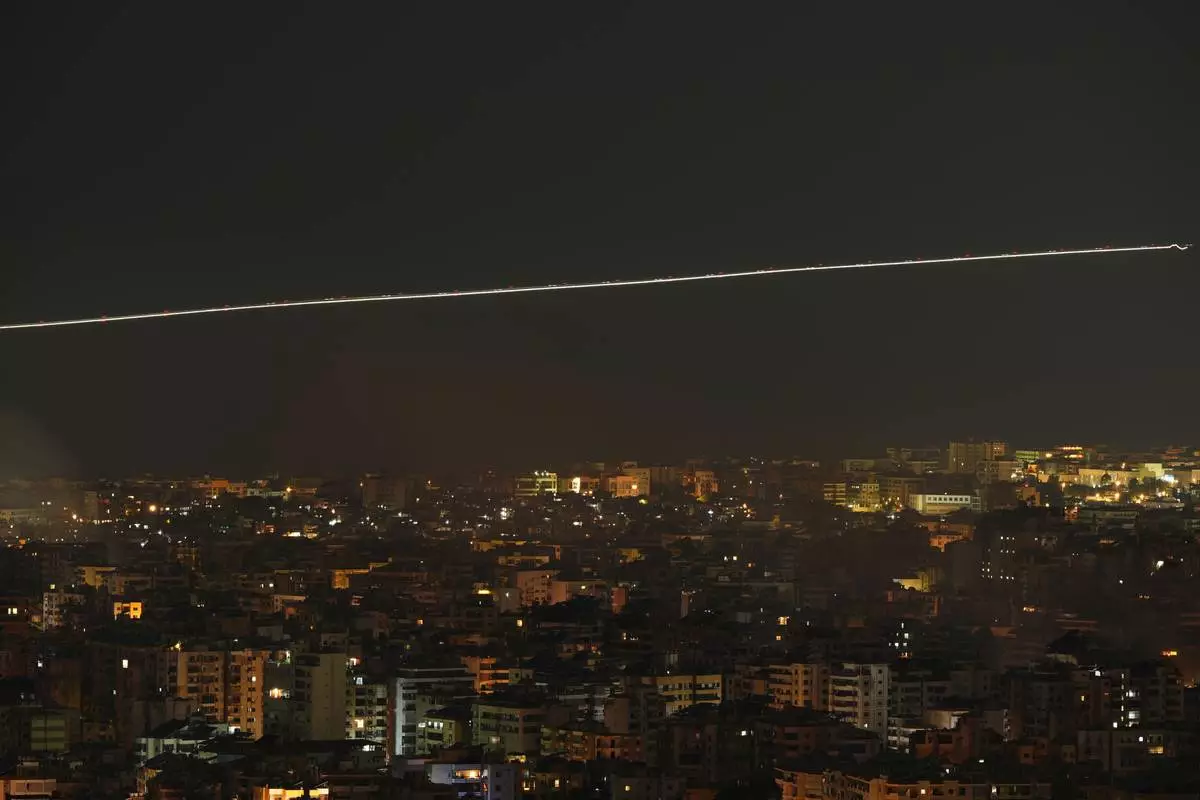
In this photo taken with a slow shutter speed, a Middle East Airlines plane flies over Dahiyeh in Beirut's southern suburbs, which remains in darkness following Israeli airstrikes, Lebanon, Wednesday, March 4, 2026. (AP Photo/Hassan Ammar)
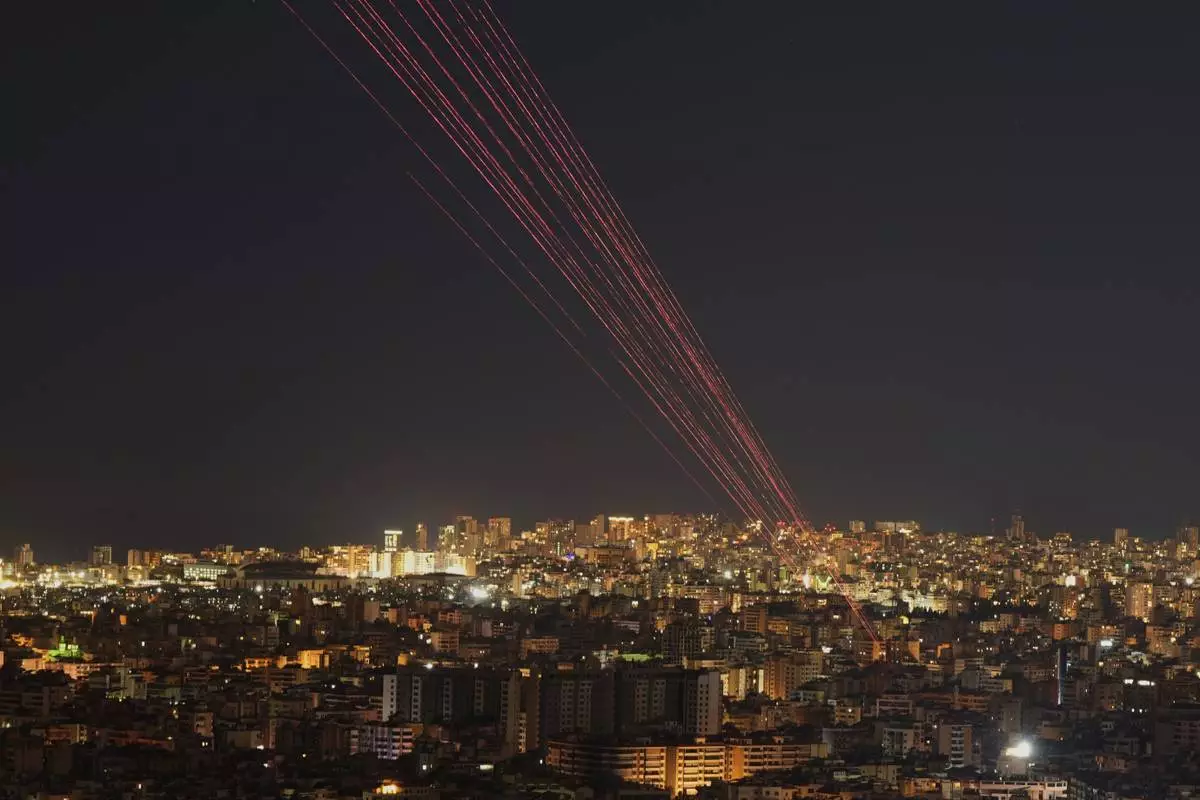
Tracer rounds light the sky as people fire live rounds into the air during a televised speech by Hezbollah leader Naim Kassem in Dahiyeh, Beirut's southern suburbs, Lebanon, Wednesday, March 4, 2026. (AP Photo/Hassan Ammar)
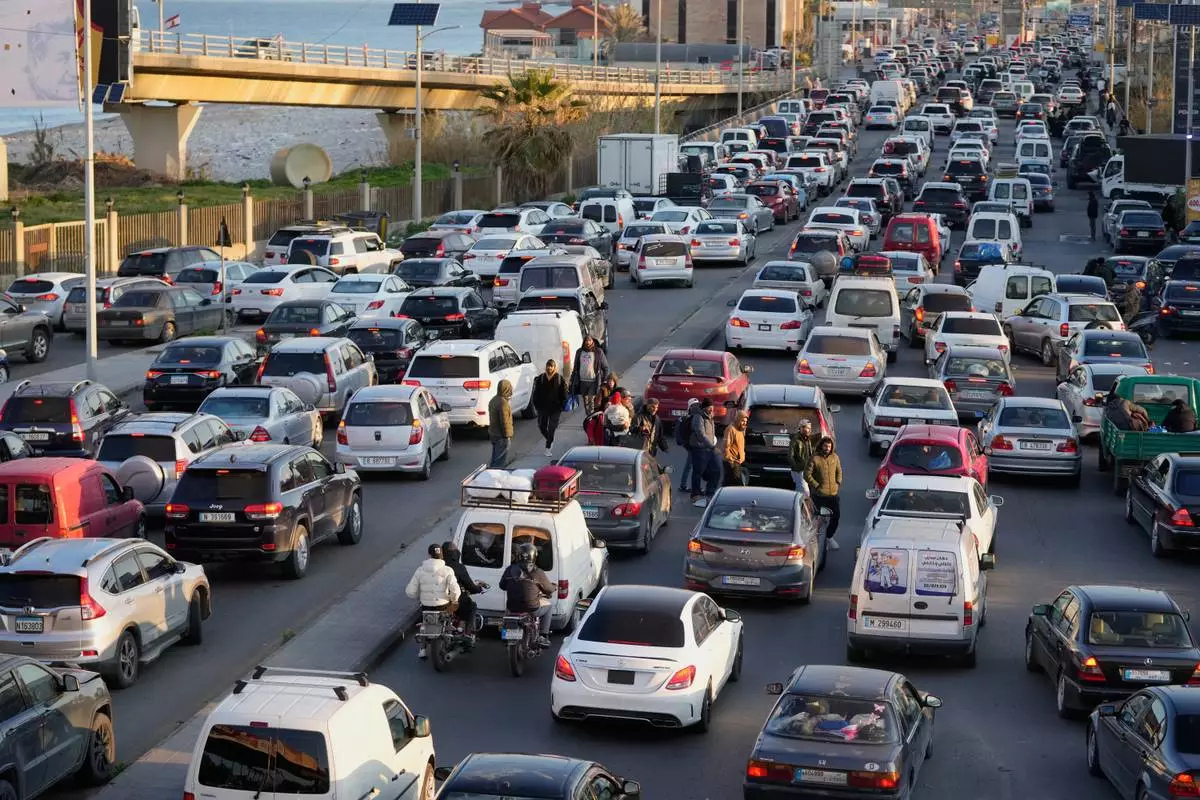
Displaced people fleeing Israeli strikes in southern Lebanon sit in traffic at a highway that links to Beirut, in the southern port city of Sidon, Monday, March 2, 2026. (AP Photo/Mohammed Zaatari)
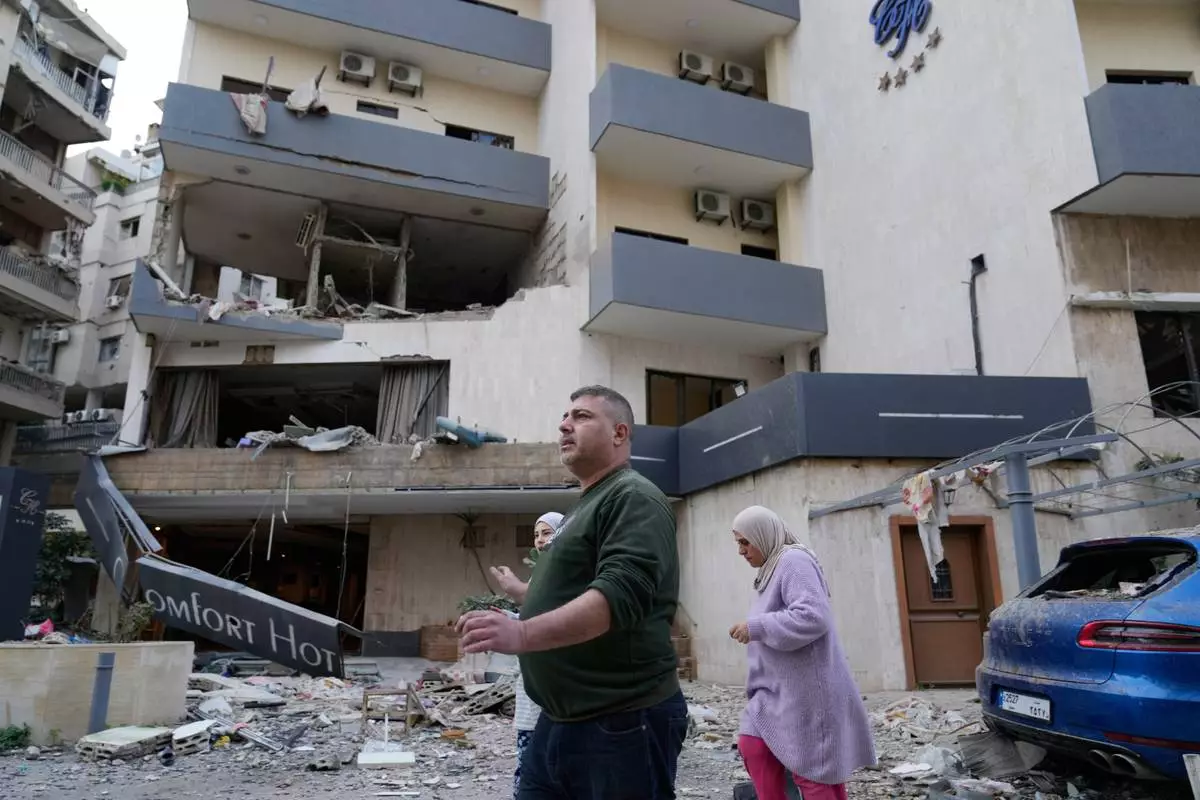
People pass in front of a damaged hotel that was hit by an Israeli airstrike in Hazmieh east of Beirut, Lebanon, Wednesday, March 4, 2026. (AP Photo/Hussein Malla)
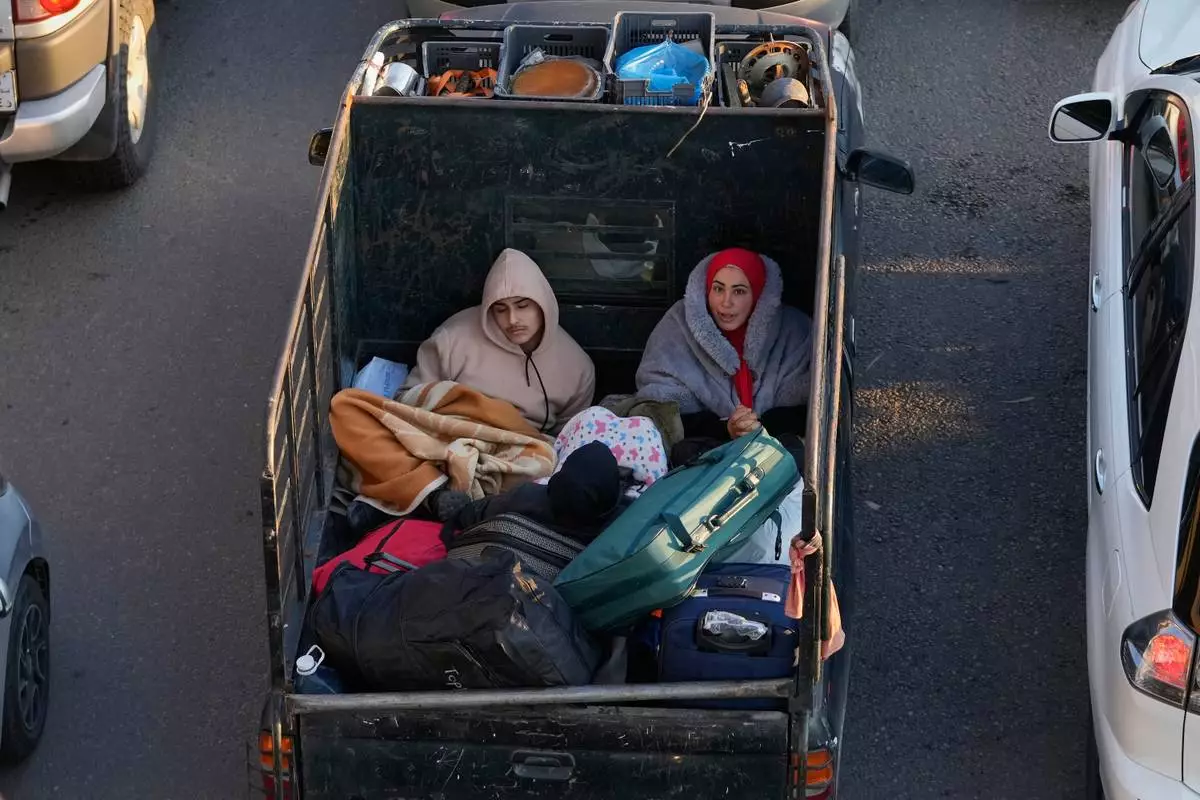
Displaced people fleeing Israeli strikes in southern Lebanon sit on a pickup at a highway that links to Beirut, in the southern port city of Sidon, Monday, March 2, 2026. (AP Photo/Mohammed Zaatari)
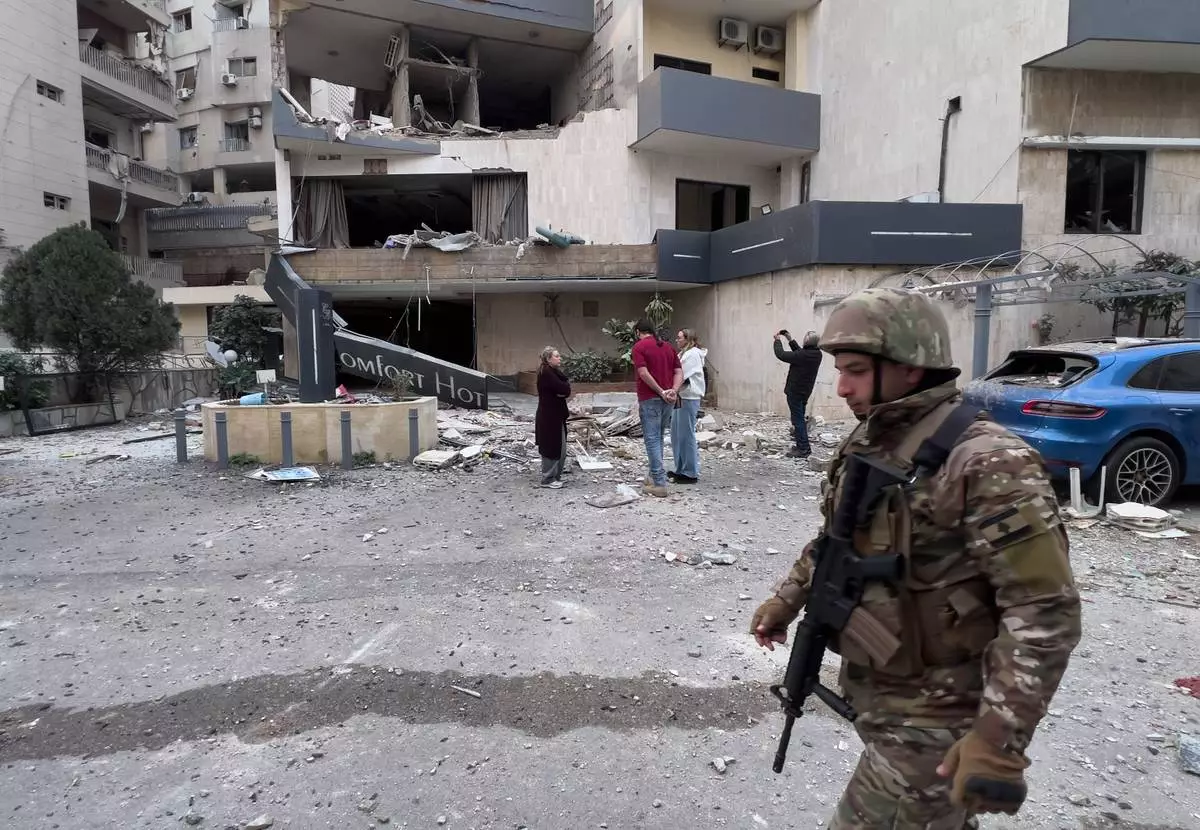
A Lebanese soldier passes in front of a damaged hotel that was hit by an Israeli airstrike in Hazmieh, east of Beirut, Lebanon, Wednesday, March 4, 2026. (AP Photo/Hussein Malla)
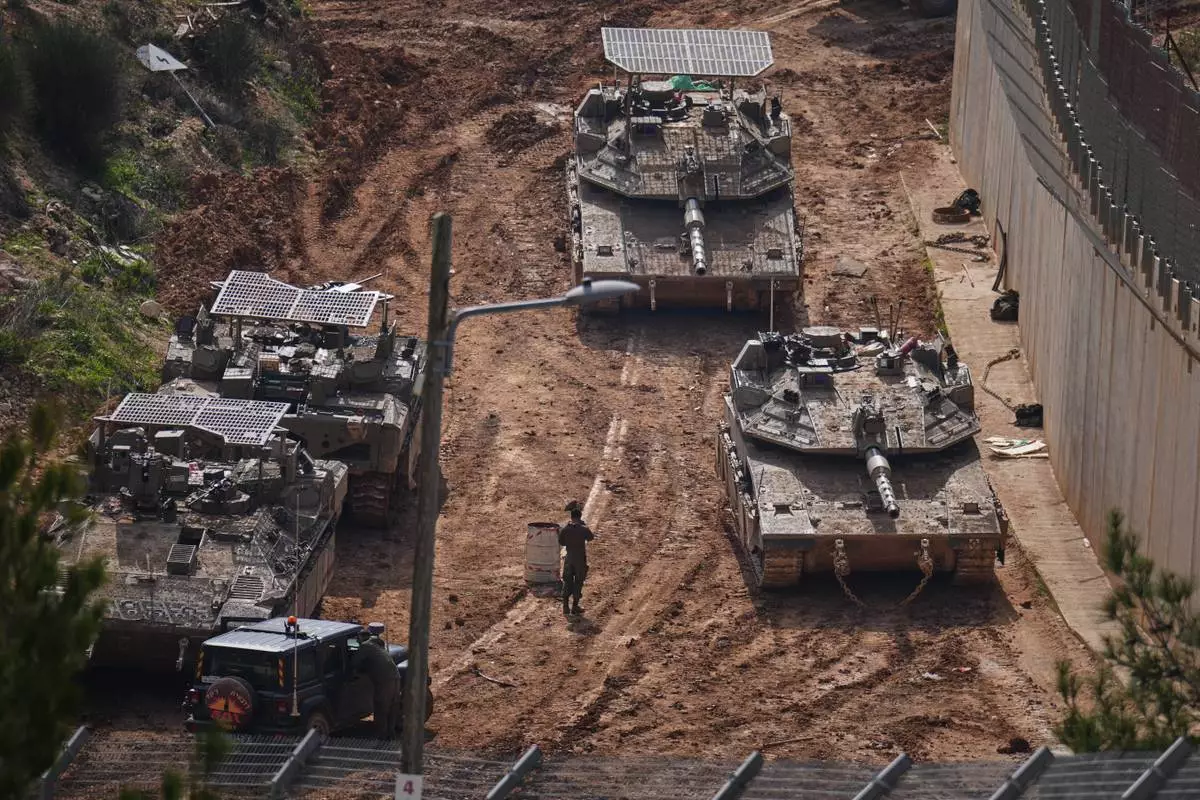
Israeli tanks maneuver near the Israel-Lebanon border, in northern Israel, Wednesday, March 4, 2026. (AP Photo/Ariel Schalit)
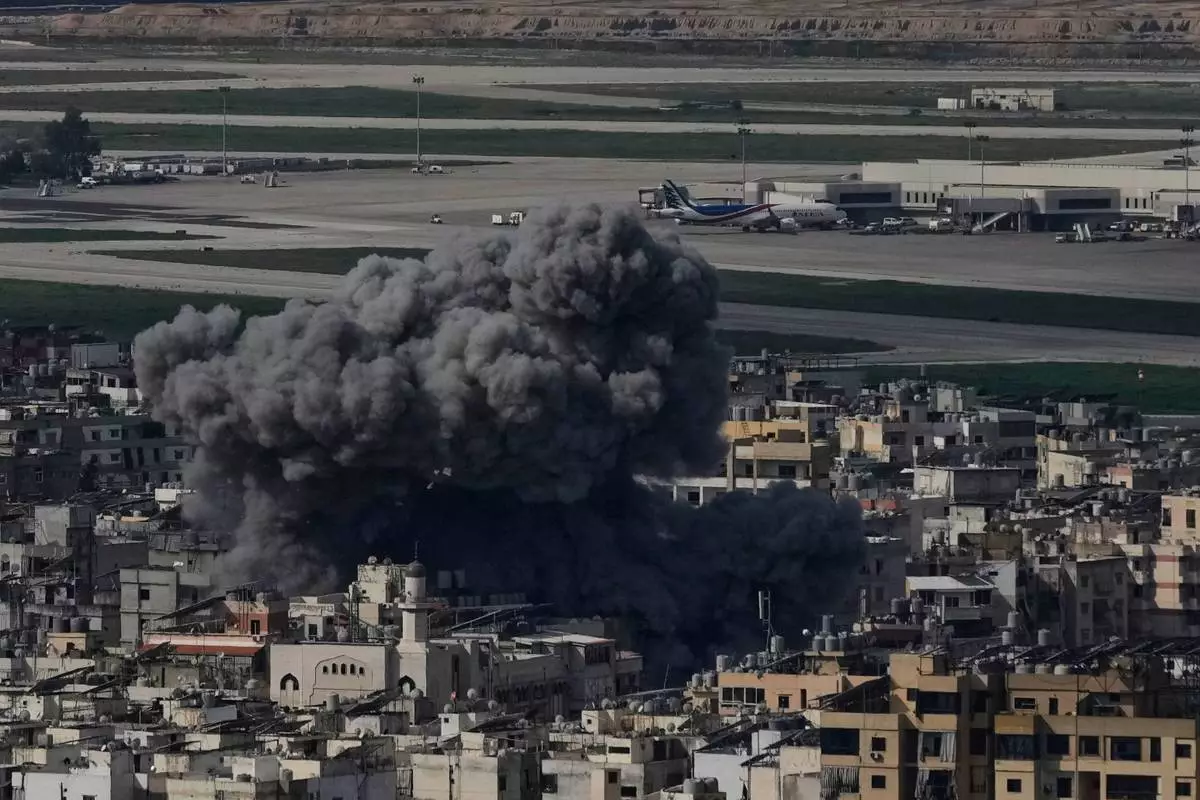
Smoke rises following an Israeli airstrike in Dahiyeh, Beirut's southern suburb, near Rafik Hariri International Airport, Lebanon, Wednesday, March 4, 2026. (AP Photo/Bilal Hussein)