BEIRUT (AP) — Israel's military ordered on Wednesday residents of dozens of border villages in southern Lebanon to evacuate “immediately” as airstrikes on suburbs of Beirut intensified and Hezbollah claimed more attacks.
Lebanon was dragged early Monday into the war in the Middle East, which erupted following U.S.-Israeli strikes on Iran, when Hezbollah fired rockets and drones into northern Israel, triggering Israeli retaliatory airstrikes on different parts of the country that killed more than 50 people wounded about 300 and dispalced tens of thousands of people from southern Lebanon, the eastern Bekaa Valley and Beirut’s southern suburbs.
Israeli authorities and Hezbollah agreed to a ceasefire in late 2024 after the Iranian-backed militant group started firing at Israel following the war in Gaza. Despite the ceasefire, Israeli strikes killed nearly 400 people in Lebanon until Monday’s escalation.
The Israeli military issued a statement Wednesday telling people living in dozens of villages in southern Lebanon close to the border with Israel to evacuate and move “immediately” north of the Litani River.
The Israeli army’s Arabic spokesperson warned on X that if people decide to move south of the river, they will be endangering their lives.
The area south of the Litani River, about 8% of the size of Lebanon, is mostly along the border with Israel. The Lebanese government says it has cleared the area of Hezbollah’s military presence there over the past months.
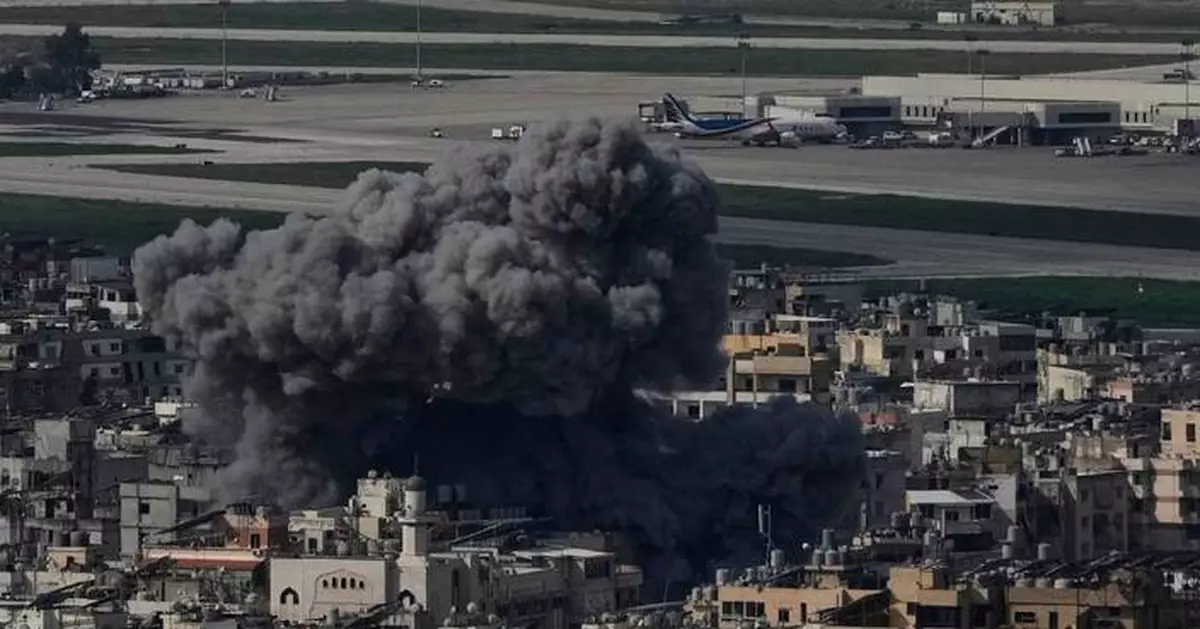
The order came after airstrikes overnight on the predominantly Christian southeastern suburb of Hazmieh that struck a hotel. Others hit the towns of Aramoun and Saadiyat just south of Beirut’s international airport, killing six and wounding eight. Another strike hit the eastern city of Baalbek, killing six people and wounding 15, according to state media.
The four airstrikes came without a warning in advance, which usually implies targeted assassinations. Security officials speaking on condition of anonymity in line with regulations said the man targeted in Hazmieh was a local official in Beirut’s southern suburb of Ghobeiri who got wounded.
“We live in a country where a missile can fall on your head at any moment,” said Maggie Shibli, wife of the owner of the Hotel Comfort in a Hazmieh neighborhood that was struck early Wednesday.
Abbas Najdeh, who was displaced from the southern port city of Tyre and was staying at the hotel, said: “We were sleeping then suddenly I, my children and my wife were thrown away.”
Also Wednesday, the Israeli military issued several warnings to people to evacuate buildings in Beirut’s southern suburbs, which were struck shortly afterward.
Hezbollah said Wednesday that it carried out several attacks on Israel, including two in which the group claimed that it used precision-guided missiles.
The warning for people to leave the area south of the Litani River came a day after Israel sent additional troops into southern Lebanon. Israeli forces had already been occupying several border points in Lebanon since a cease-fire ended a 14-month Israel-Hezbollah war in November 2024.
It was not immediately clear if Israel was preparing for a wider ground invasion. Lebanon’s state-run National News Agency reported Israeli artillery shelling on several Lebanese villages along the border, including Aid al-Shaab and Beit Lif.
In eastern Lebanon, the main border crossing with Syria was briefly closed Wednesday after Lebanese officials received a warning of an impending Israeli strike, which officials later said turned out to be a false alarm. There have been false alarms elsewhere in Beirut and other parts of Lebanon, causing fears among residents.
Anxieties have also been running high in Lebanon in recent days over a buildup of Syrian forces on the border. The current Syrian government is hostile to Iran and Hezbollah, as they were on opposite sides of Syria's civil war that ended with the ouster of former President Bashar Assad in December 2024.
But a high-ranking Syrian official told The Associated Press Wednesday that the troop buildup “certainly has no offensive dimension — it is purely defensive.”
“The deployment is perfectly normal and within reasonable limits, primarily to prevent smuggling and also to counter any unforeseen eventuality,” said the official, who spoke on condition of anonymity because they weren't authorized to comment publicly.
The ongoing conflict is not the first between Hezbollah and Israel. Hezbollah began firing into Israel a day after the Oct. 7, 2023, Hamas-led attack on southern Israel triggered the war in Gaza. After months of low-level fighting, a full-scale war erupted in September 2024 and Israel later launched a ground invasion of Lebanon.
Israeli forces withdrew from most of southern Lebanon after a U.S.-brokered ceasefire halted the fighting in late 2024, but continued to occupy five points on the Lebanese side of the border. Israel also pressed on with near-daily strikes, primarily in southern Lebanon, saying that Hezbollah has been trying to rebuild its positions there.
—
Associated Press writer Abby Sewell in Beirut contributed to this report.
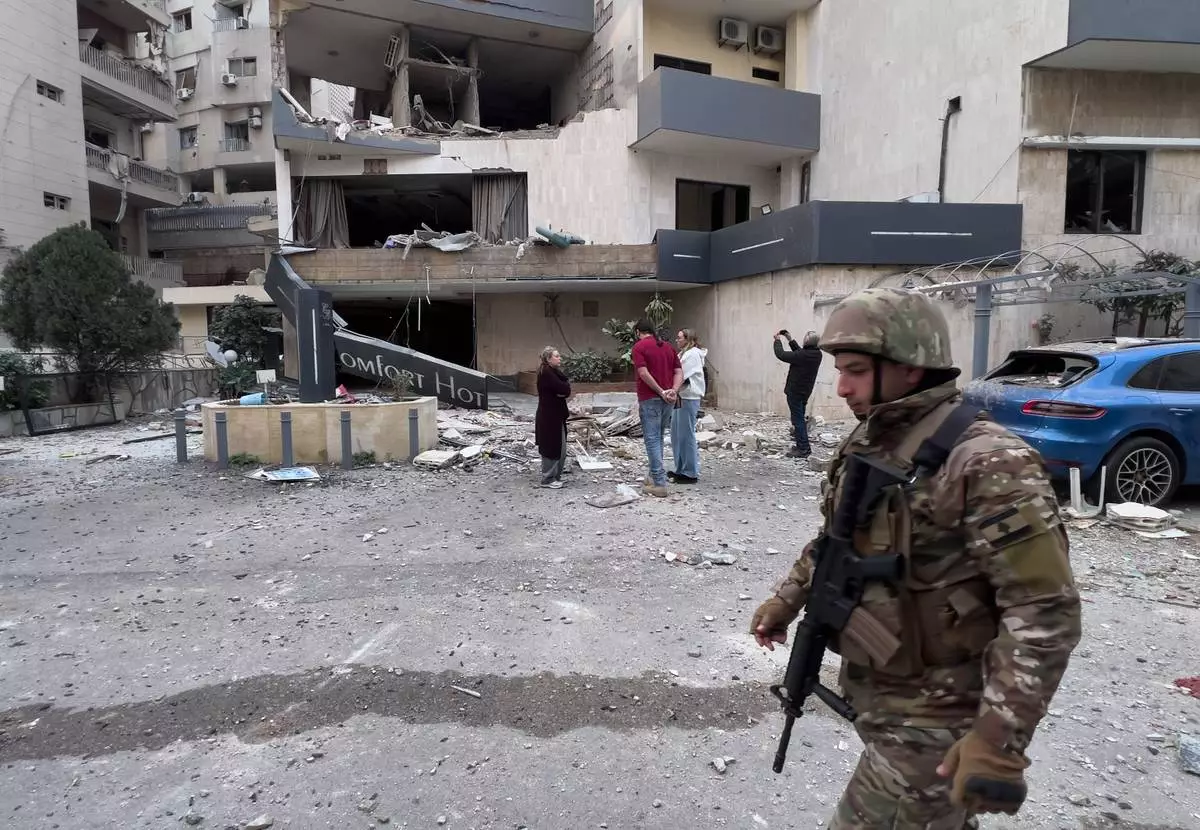
A Lebanese soldier passes in front of a damaged hotel that was hit by an Israeli airstrike in Hazmieh, east of Beirut, Lebanon, Wednesday, March 4, 2026. (AP Photo/Hussein Malla)
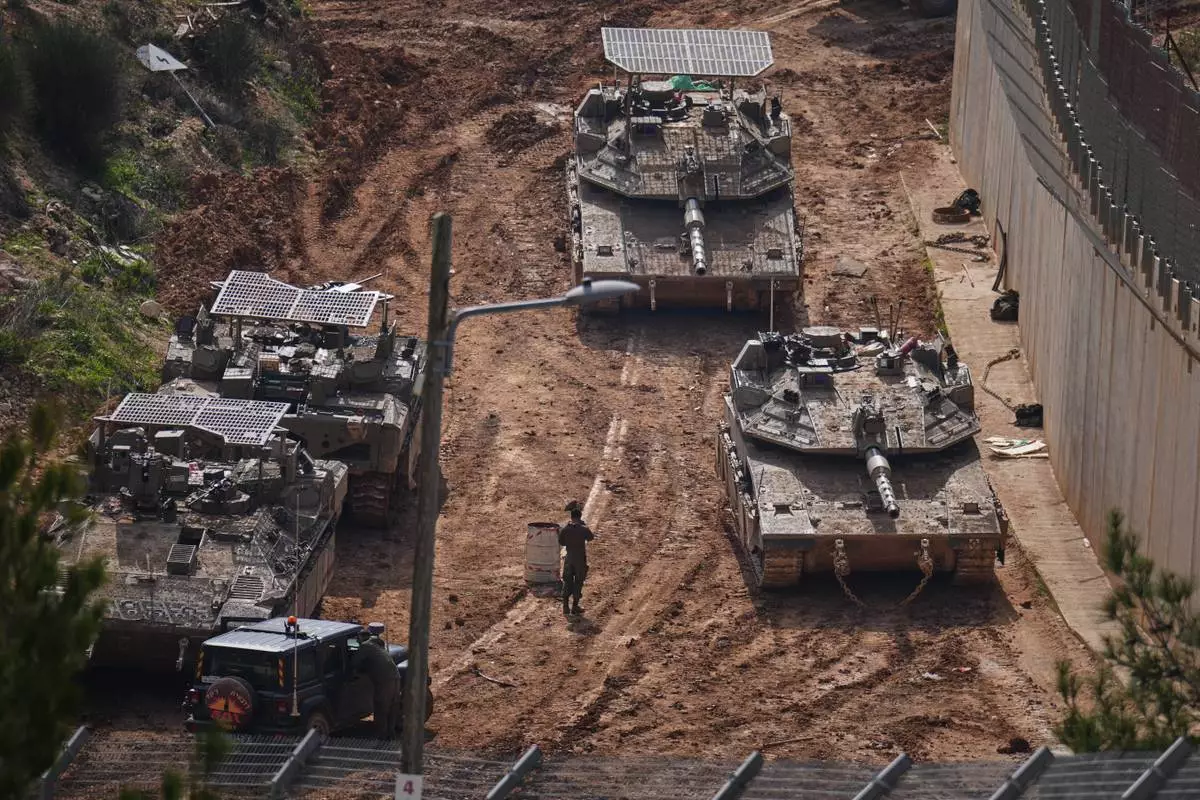
Israeli tanks maneuver near the Israel-Lebanon border, in northern Israel, Wednesday, March 4, 2026. (AP Photo/Ariel Schalit)
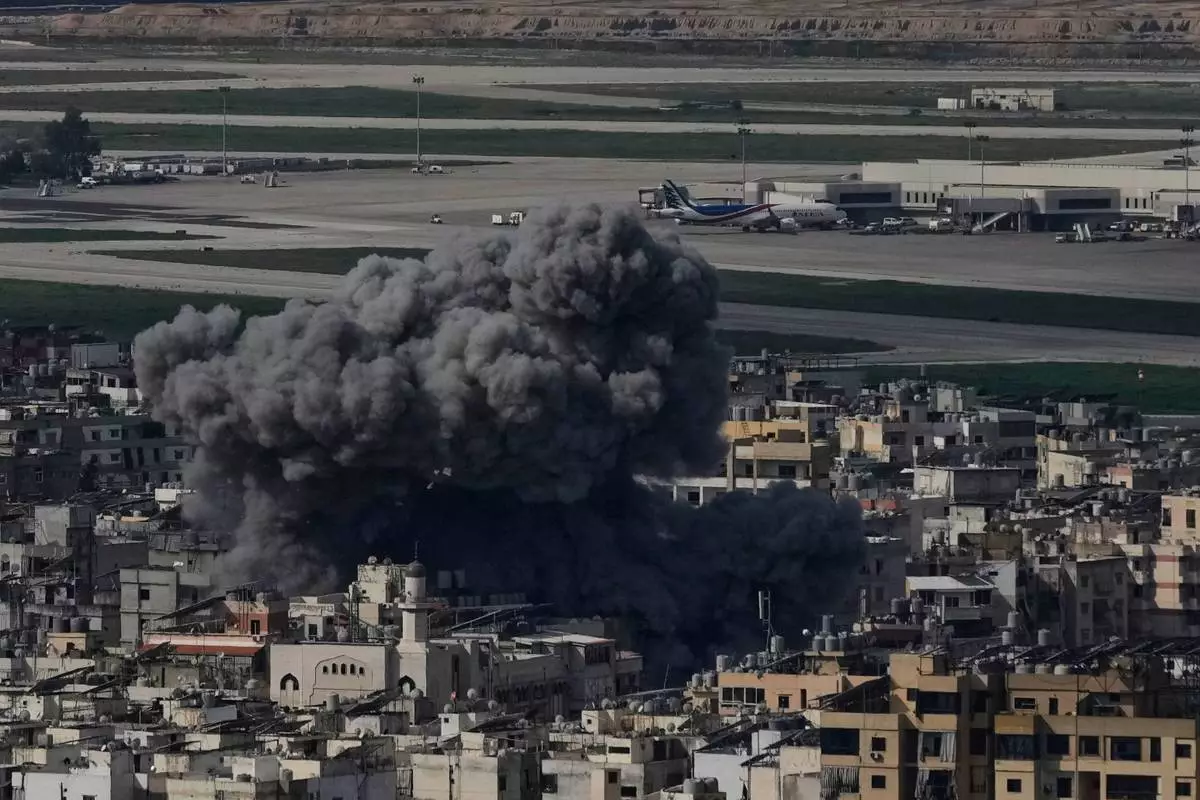
Smoke rises following an Israeli airstrike in Dahiyeh, Beirut's southern suburb, near Rafik Hariri International Airport, Lebanon, Wednesday, March 4, 2026. (AP Photo/Bilal Hussein)
U.S. Defense Secretary Pete Hegseth said Wednesday that the United States is winning its military operation against Iran “decisively, devastatingly and without mercy.”
Speaking from the Pentagon’s briefing room, Hegseth said more forces, including jet fighters and bombers, will soon arrive in the region. He said that the U.S. “will take all the time we need to make sure that we succeed.”
Hegseth also said that a torpedo from a U.S. submarine sank an Iranian warship on Tuesday night, the first such attack on an enemy since World War II.
Earlier, explosions sounded in Tehran Wednesday as Iran's war with the U.S. and Israel entered a fifth day following earlier strikes on an Iranian nuclear site and retaliatory strikes by the Islamic Republic across the Gulf region.
The war has killed more than 1,000 people in Iran and dozens in Lebanon, while disrupting the supply of the world’s oil and gas, snarling international shipping, and stranding hundreds of thousands of travelers in the Middle East.
Here is the latest:
Top U.S. military officials say U.S. forces have adequate munitions for ongoing operations against Iran.
Gen. Dan Caine, chair of the Joint Chiefs of Staff, was speaking to reporters.
U.S. Defense Secretary Pete Hegseth said that the military used more advanced weapons at the start of the campaign, but was switching to gravity bombs now that the U.S. has control of Iranian skies, and stockpiles of the advanced weapons remain “extremely strong.”
U.S. Defense Secretary Pete Hegseth says a torpedo from a U.S. submarine sank an Iranian warship.
In a Pentagon briefing on Wednesday, Hegseth said that the Tuesday night strike on an Iranian warship was the first such attack on an enemy since World War II.
“An American submarine sunk an Iranian warship that thought it was safe in international waters,” Hegseth said. “Instead, it was sunk by a torpedo.”
An Israeli military official says top U.S. and Israeli commanders began planning the opening strike of the war against Iran three weeks ago.
The official says that once Israel’s government decided on its intention to attack Iran, Israel’s top military brass reached out to the Pentagon to coordinate the operation.
The militaries worked side by side during the opening strikes on Saturday, killing Iran’s supreme leader and dozens of other top officials. As part of the operation, top Israeli commanders went home for the weekend on Friday to deceive Iran into thinking that an attack was not imminent.
NATO spokesperson, Allison Hart, condemned “Iran’s targeting of Turkey” but she did not confirm whether the military organization’s air defenses were used to down the missile.
“NATO stands firmly with all allies, including Turkey, as Iran continues its indiscriminate attacks across the region,” she said. “Our deterrence and defense posture remains strong across all domains, including when it comes to air and missile defense.”
Asked whether NATO air defenses were used, Hart said she “can’t get into operational details.”
NATO has parts of a broader European ballistic missile defense system on Turkish soil, including an early warning radar at the Kurecik base which can detect missiles from Iran.
Turkish Foreign Minister Hakan Fidan has spoken by phone with his Iranian counterpart after an Iranian ballistic missile that was detected heading toward Turkish airspace Wednesday was intercepted.
During the call with Abbas Araghchi, Turkey stressed that “all steps that could escalate the conflict and contribute to its spread” must be avoided, a Turkish official said, speaking on condition of anonymity in line with government protocol.
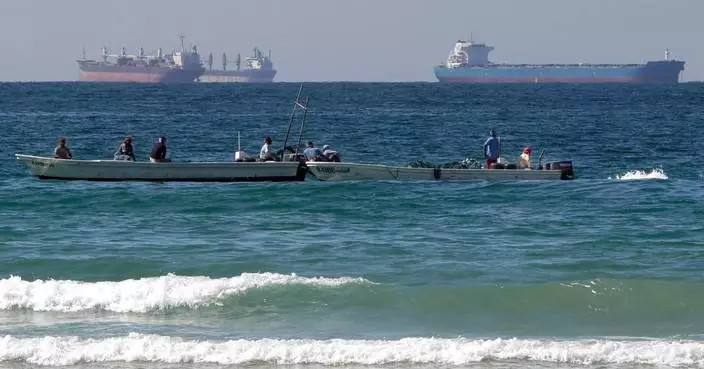
A container ship was attacked Wednesday afternoon off the coast of Oman, causing fire in its engine room, an agency of the U.K. military said.
The vessel was transiting eastbound through the Strait of Hormuz, 2 nautical miles north of Oman, when it was hit by an unknown projectile, according to the United Kingdom Maritime Trade Operations, UKMTO.
Oman, long an intermediary between the West and Iran, has repeatedly come under attack by Iran.
Ayatollah Ahmad Khatami is a member of the Assembly of Experts, the body charged with picking a new leader. His comments were aired on state television.
“The options have become clear,” Khatami said. Other top officials have indicated a decision may be close.
Sirens have gone off in Jerusalem and elsewhere for simultaneous launches from Lebanon and Iran.
Israel’s military earlier said it is seeing a decline in launches from Iran as the campaign enters its fifth day.
An Iraqi official says a senior Iranian official requested that Iraq take measures to prevent Iranian opposition groups based there from breaching the border.
A statement says Ali Bagheri, deputy secretary of Iran’s Supreme National Security Council, made the request in a call with Iraqi National Security Advisor Qassim al-Araji.
The guard says it is prepared for the “complete destruction of the region’s military and economic infrastructure.” The statement came via Iranian state television.
“The continued mischief and deception by the United States in the region will come at the cost of the complete destruction of the region’s military and economic infrastructure,” it says.
It alleges, without offering evidence, that the U.S. military was using “civilian facilities ... as cover.”
The death toll in Iran from the ongoing war with the United States and Israel has reached at least 1,045 people, an Iranian government agency said Wednesday.
The Iran’s Foundation of Martyrs and Veterans Affairs offered the toll, saying it represented the number of bodies so far identified and prepared for burial.
Turkey’s Defense Ministry says NATO defenses have intercepted a ballistic missile launched from Iran before it entered Turkey’s airspace. A ministry statement said the missile was detected after crossing Iraqi and Syrian airspace. NATO air and missile defense units stationed in the eastern Mediterranean intercepted it in time.
Canadian Prime Minister Mark Carney say he sees the war as an extreme example of a rupturing world order in which countries increasingly act without respect for international norms and laws.
“Geo-strategically, hegemons are increasingly acting without constraint or respect for international norms or laws while others bear the consequences. Now the extremes of this disruption are being played out in real time in the Middle East,” Carney said at the Lowy Institute, a Sydney-based international policy think tank.
But whether the U.S. and Israeli airstrikes on Iran broke international law was “a judgment for others to make,” he said.
Grand Ayatollah Ali al-Sistani, a prominent religious leader based in Iraq, condemned the “military aggression” against Iran. He said attacking a country that is a member of the United Nations without U.N. approval is a violation of international law.
The Iran-born al-Sistani, who is one of the world’s most influential Shiite clerics, warned that war would cause widespread chaos and prolonged unrest “that will bring calamities to the peoples of the region and to the interests of others as well.”
Al-Sistani is based in the holy Shiite city of Najaf.
Iranian state television on Wednesday afternoon said the mourning ceremony for Iranian Supreme Leader Ayatollah Ali Khamenei had been postponed and would be held later after intense strikes targeted Tehran.
The Iranian vessel that was sinking off of Sri Lanka, the IRIS Dena, is one of Iran’s newest warships.
The frigate was the centerpiece of a two-ship international tour in 2023 that included port calls in countries including South Africa and Brazil. It was accompanied by the support ship IRIS Makran, a converted oil tanker.
The U.S. Treasury Department included both ships on a sanctions designation in February 2023 along with eight executives of an Iranian drone manufacturer that supplied the weapons to Russia for use against civilian targets in Ukraine.
The Israeli military is ordering people living in dozens of villages in southern Lebanon close to the border with Israel to evacuate and move “immediately” north of the Litani River.
The Israeli army’s Arabic spokesperson warned people on X that if they decide to move south of the river they will be endangering their lives.
The area south of the Litani River is mostly along the border with Israel. The Lebanese government says it has cleared the area of Hezbollah’s military presence there over the past months.
Israel is seeing a decline in launches from Iran as the campaign enters its fifth day, military spokesperson Brig. Gen. Effie Defrin said.
Defrin also said Israel is not surprised by any new weapons Iran may use and had prepared extensively for the confrontation.
He said Israel would continue to “hunt and destroy” Iran’s military capabilities.
Israel has struck more than 250 Hezbollah targets in Lebanon over the past 48 hours, an Israeli army spokesperson said Wednesday.
Spokesperson Effie Defrin said in a recorded statement that the Iran-backed militant group Hezbollah had been launching rockets at Israel overnight.
Defrin said Israel would continue to target Hezbollah until “the threat is removed.”
“I emphasize: We have no issue with the people of Lebanon. The people of Lebanon are paying the price for the Iranian regime,” he said.
A top Sri Lankan official says 32 people have been rescued from a sinking Iranian naval ship off Sri Lanka’s southern coast have been admitted to a hospital.
Dr. Anil Jasinghe, a top health ministry official, says one of them is in critical condition, seven are receiving emergency treatment and others are treated for minor injuries.
Foreign Minister Vijitha Herath told Parliament that Sri Lanka’s navy received information that the ship IRIS Dena with 180 onboard was under distress, and that the island nation sent ships and air force planes on a rescue mission.
There were no immediate details as to how the sailors were wounded and how the ship was damaged.
Kuwait’s military said a new wave of Iranian missiles and drone was targeting the tiny Mideast nation.
Iran’s judiciary chief threatened “those who say or do anything” in support of the U.S.-Israeli airstrike campaign targeting the Islamic Republic.
Gholam Hosseini Mohseni Ejehei’s remarks raised the possibility of those detained facing death-penalty charges, as cooperating with an enemy can carry execution if convicted.
Speaking on state television, he said: “Those who say or do anything in line with the will of America and the Zionist regime are on the enemy’s side and must be dealt with on revolutionary, Islamic principles and in accordance with the time of war.”
The British government says a chartered flight will take off from Oman late Wednesday to bring back some of the thousands of U.K. nationals in the Gulf.
It says the most vulnerable will be prioritized for the first of what is expected to be a series of flights.
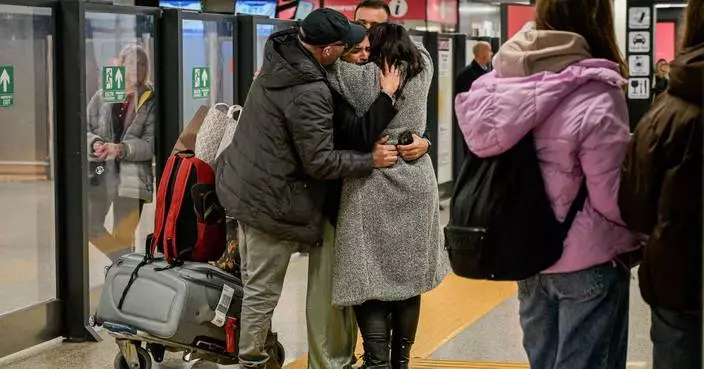
The Foreign Office says more than 130,000 British nationals in the Middle East have registered their presence with the government since the U.S.-Israel-Iran conflict broke out, though not all are trying to leave. Many of those are in the United Arab Emirates, and the government has advised against trying to travel overland to Oman.
Commercial airlines are also starting to resume some flights, with Etihad, Emirates and Virgin Atlantic all due to operate flights from the UAE to London on Wednesday.
The Israeli military said one of its F-35 stealth fighter jets shot down a piloted Iranian Air Force YAK-130 fighter over Tehran on Wednesday. Israel described it as the first air-to-air combat kill of a piloted aircraft by the fighter jet.
Iran’s top diplomat is again criticizing U.S. President Donald Trump as America and Israel continue their airstrike campaign targeting his country in the war.
Abbas Araghchi said that “Trump betrayed diplomacy and Americans who elected him.”
“When complex nuclear negotiations are treated like a real estate transaction, and when big lies cloud realities, unrealistic expectations can never be met,” Araghchi wrote on X. “The outcome? Bombing the negotiation table out of spite.”
The war began Saturday after Israel launched an airstrike killing Iranian Supreme Leader Ayatollah Ali Khamenei. The U.S. and Iran had held three rounds of nuclear negotiations prior to the start of the war, but no deal had been reached.
As the fighter jets roared overhead, those still in Tehran looked anxiously to the skies.
One man who ran a clothing shop said he didn’t know what, if anything, he could do.
“It’s very difficult to decide what to do. If I leave the city, how am I supposed to earn money and survive?” said the man, who spoke on condition of anonymity for fear of reprisals.
“I just hope the Arabs do not get involved. If they do, their missiles won’t be as precise as these.”
By Jon Gambrell
Airstrikes also were reported in the Iranian cities of Urmiah and Kermanshah.
The Israeli military said it had begun “broad scale strikes” in Tehran.
Airstrikes struck eastern Tehran later Wednesday morning, witnesses said.
Israel’s defense minister on Wednesday threatened whoever Iran picks to be the country’s next supreme leader, saying he will be “a target for elimination.”
Israel Katz made the statement on X.
“Every leader appointed by the Iranian terror regime to continue and lead the plan to destroy Israel, to threaten the United States and the free world and the countries of the region, and to suppress the Iranian people — will be a target for elimination,” he wrote.
Israel targeted a building Tuesday associated with Iran’s Assembly of Experts, which will select the new supreme leader.
Israel killed the 86-year-old Ayatollah Ali Khamenei in a strike Saturday that started the war.
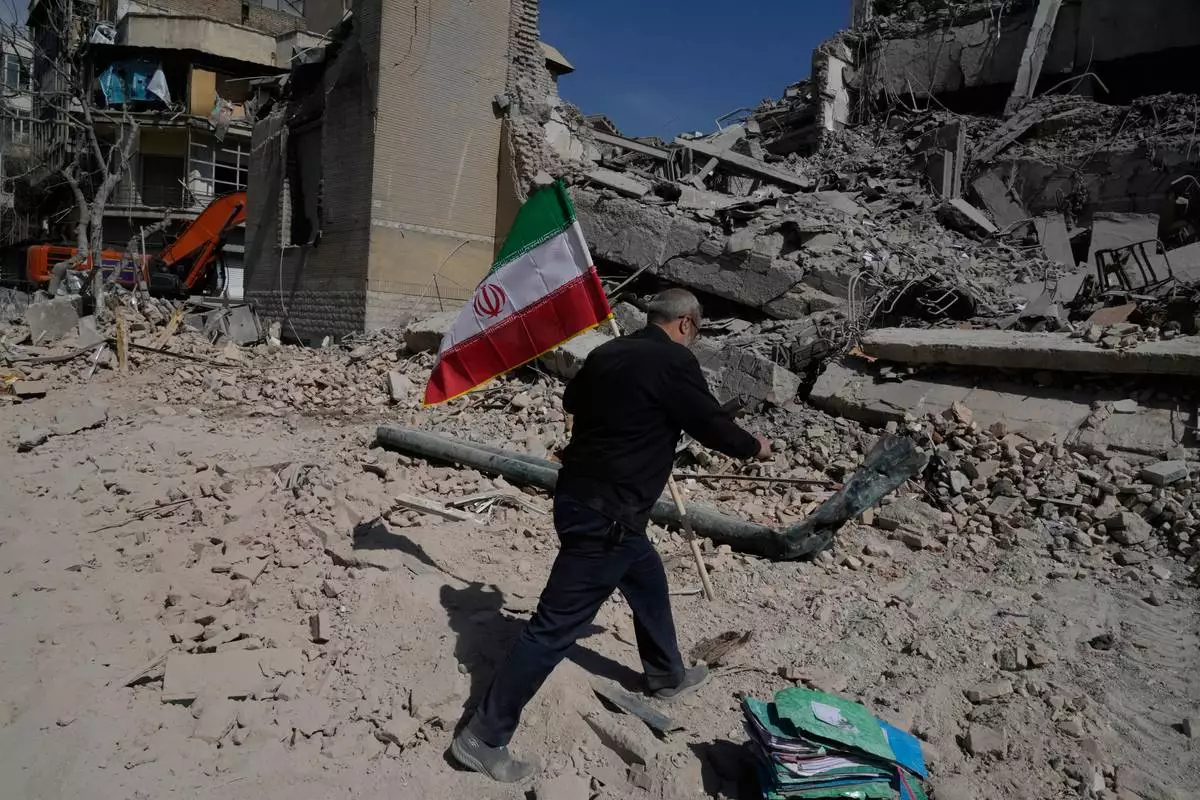
A man carries an Iranian flag to place on the rubble of a police facility struck during the U.S.–Israeli military campaign in Tehran, Iran, Wednesday, March 4, 2026. (AP Photo/Vahid Salemi)
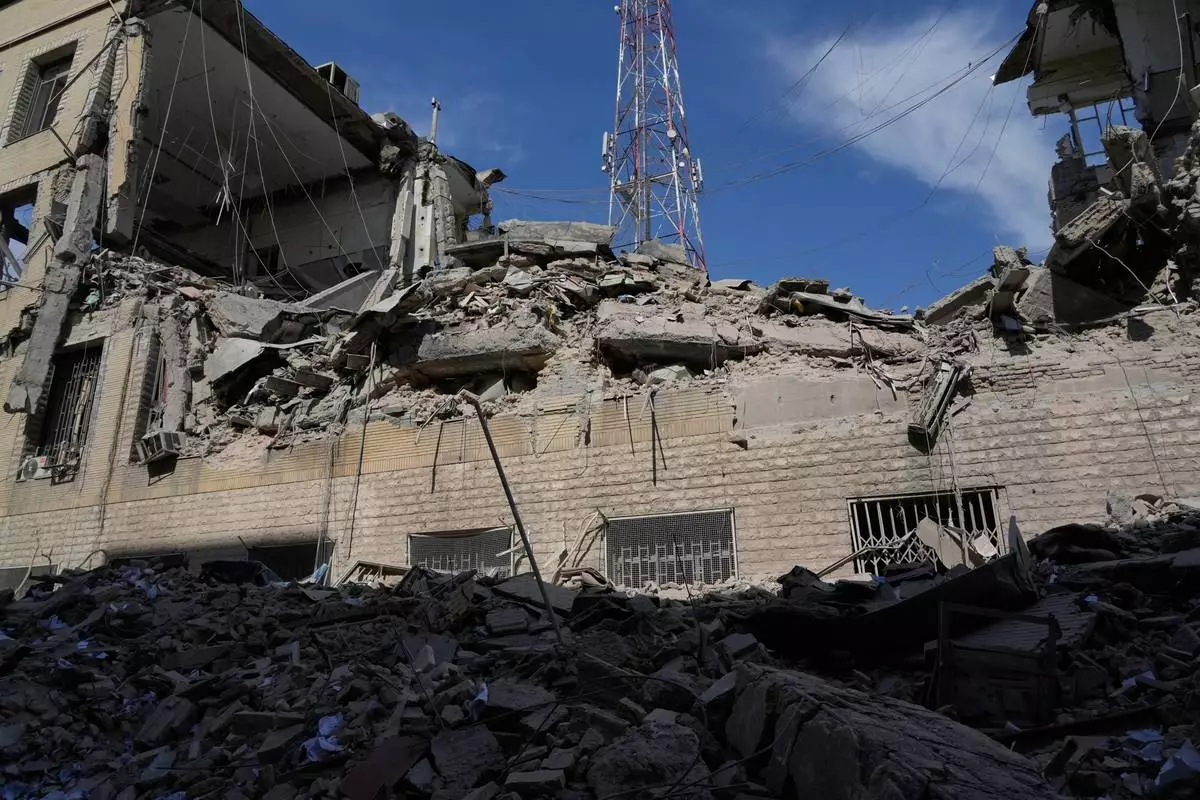
The rubble of a police facility struck during the U.S.–Israeli military campaign is seen in Tehran, Iran, Wednesday, March 4, 2026. (AP Photo/Vahid Salemi)
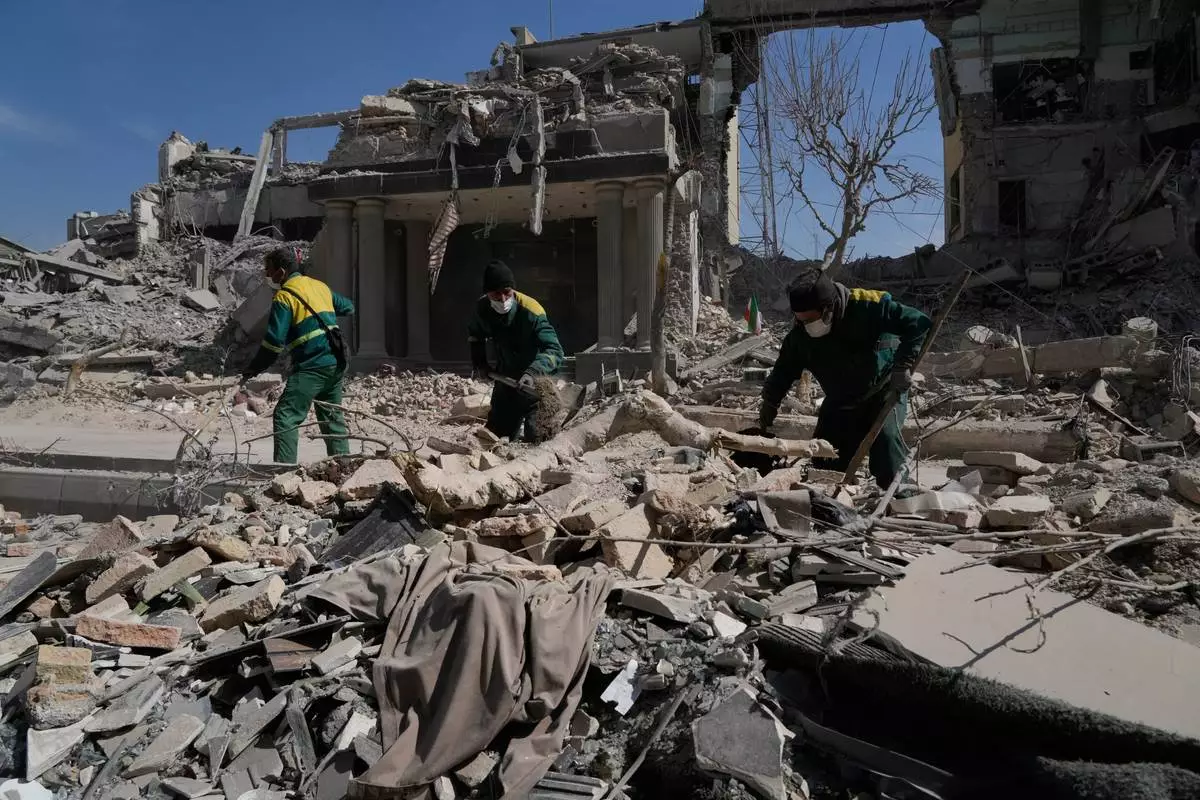
Workers remove the rubble of a police facility struck during the U.S.–Israeli military campaign in Tehran, Iran, Wednesday, March 4, 2026. (AP Photo/Vahid Salemi)
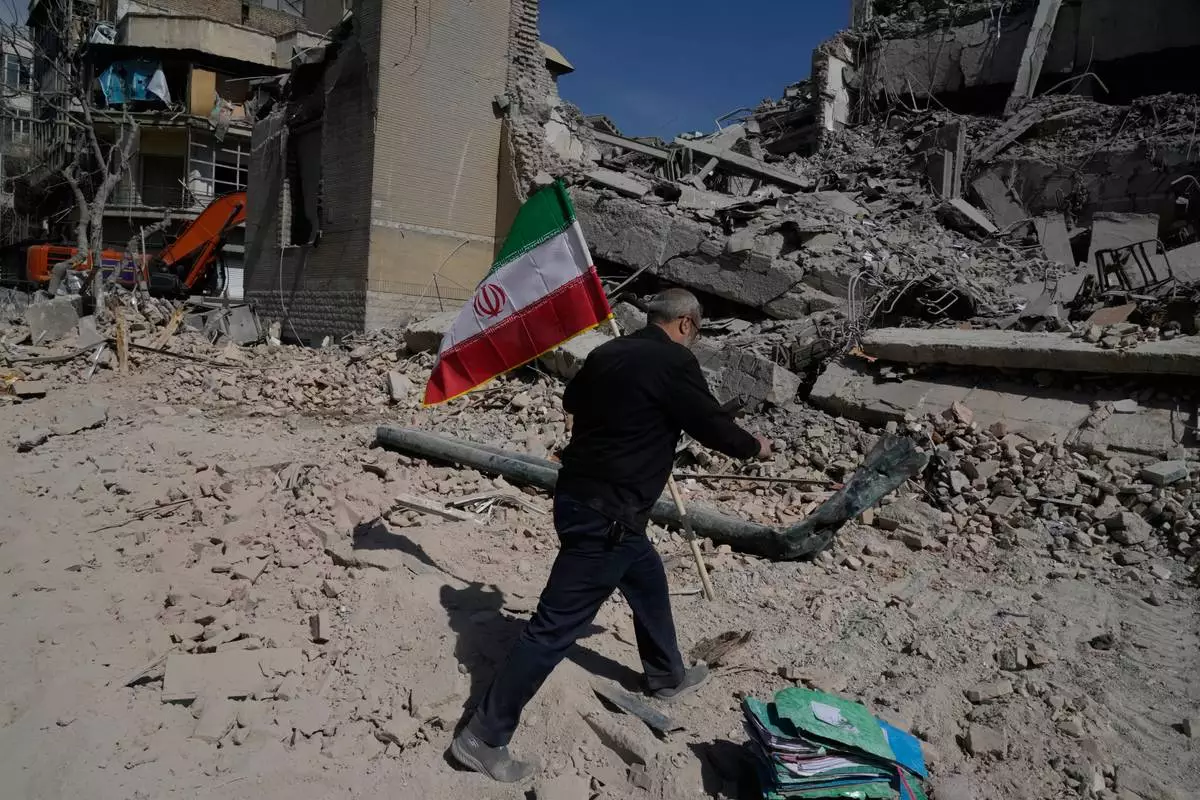
A man carries an Iranian flag to place on the rubble of a police facility struck during the U.S.–Israeli military campaign in Tehran, Iran, Wednesday, March 4, 2026. (AP Photo/Vahid Salemi)
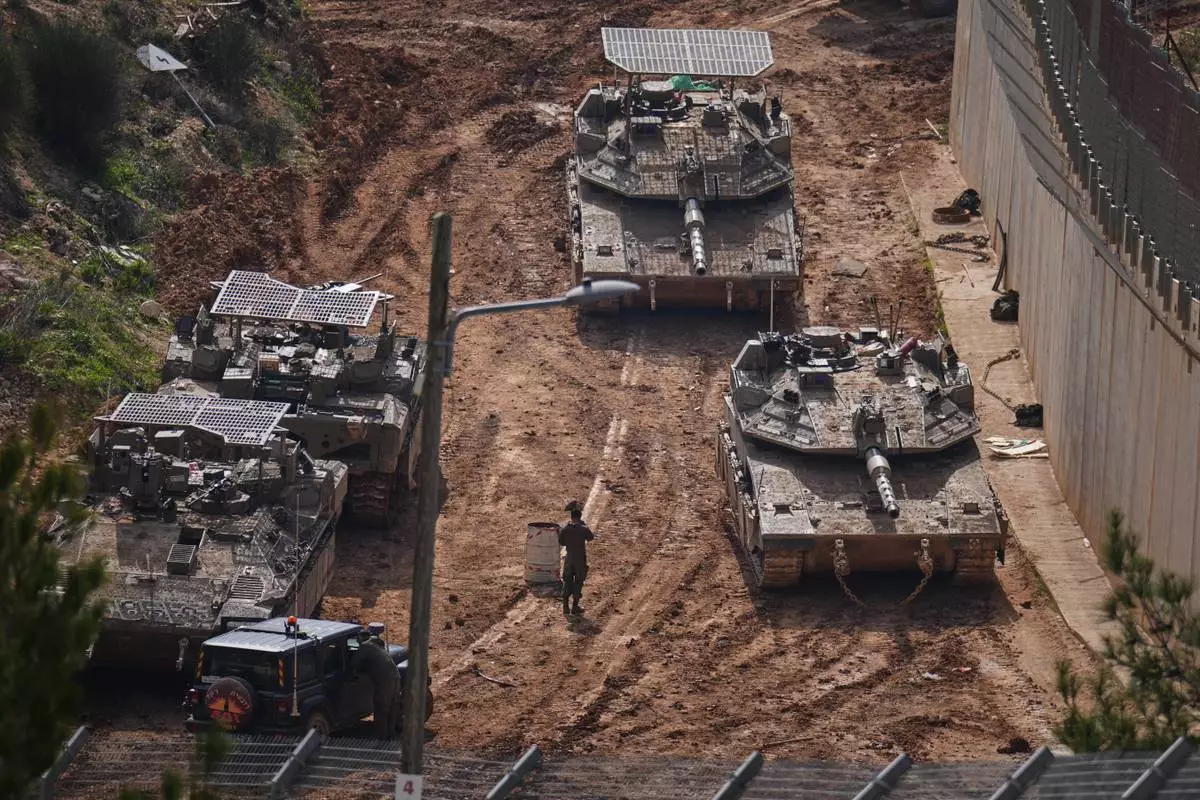
Israeli tanks maneuver near the Israel-Lebanon border, in northern Israel, Wednesday, March 4, 2026. (AP Photo/Ariel Schalit)
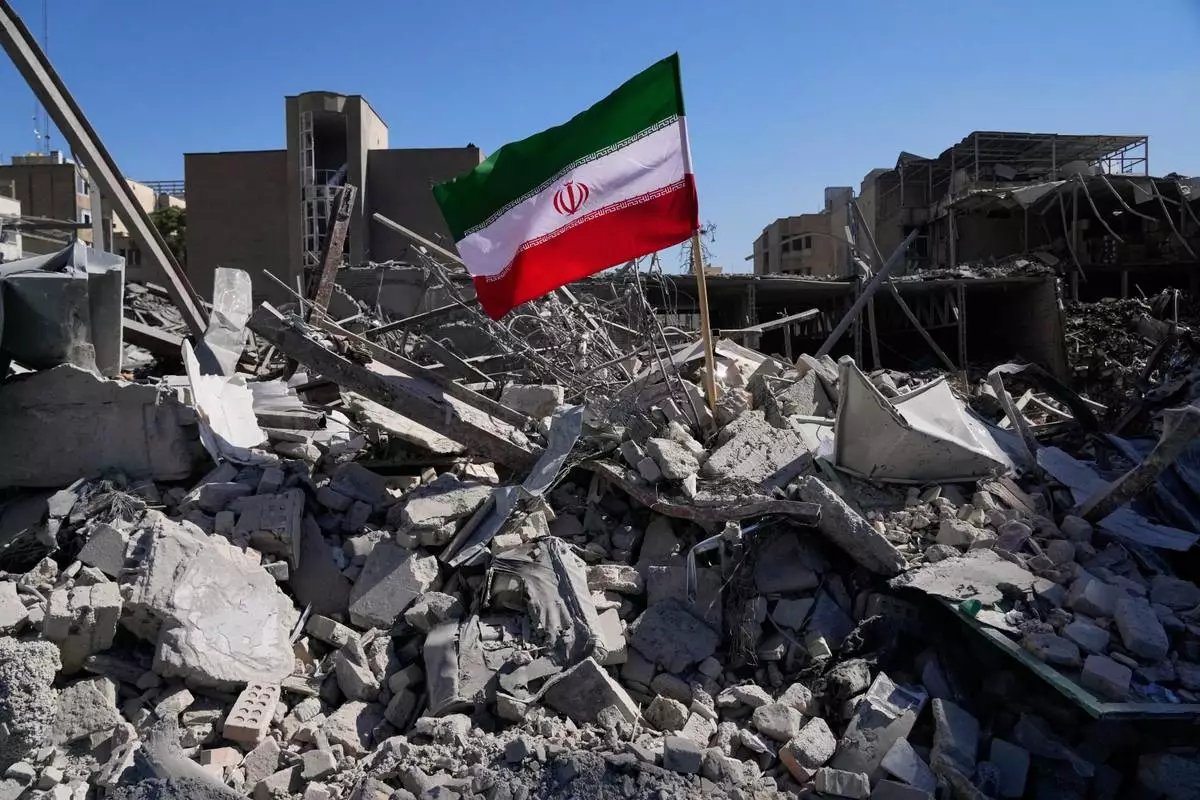
An Iranian flag is placed among the ruins of a police station struck Monday during the U.S.–Israeli military campaign in Tehran, Iran, Tuesday, March 3, 2026. (AP Photo/Vahid Salemi)
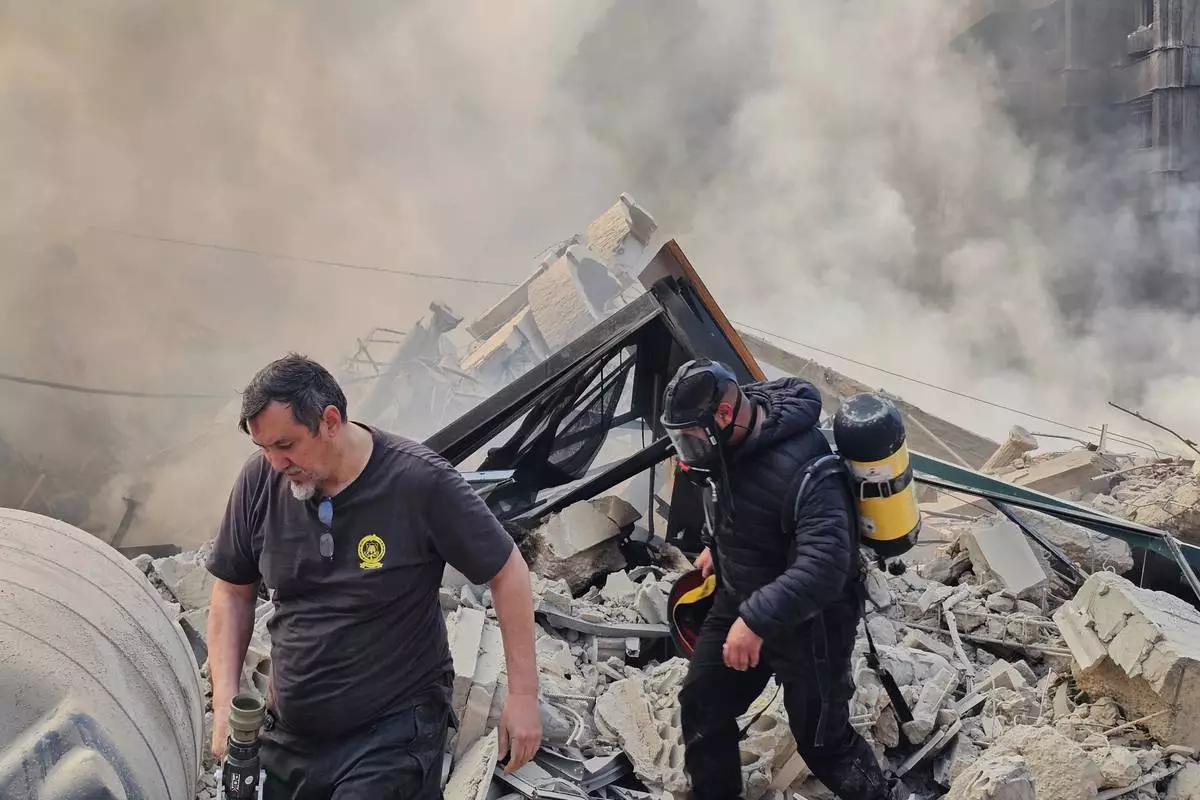
Firefighters inspect the rubble as smoke rises from a building hit by an Israeli airstrike in Dahiyeh, a southern suburb of Beirut, Lebanon, Tuesday, March 3, 2026. (AP Photo/Hassan Ammar)
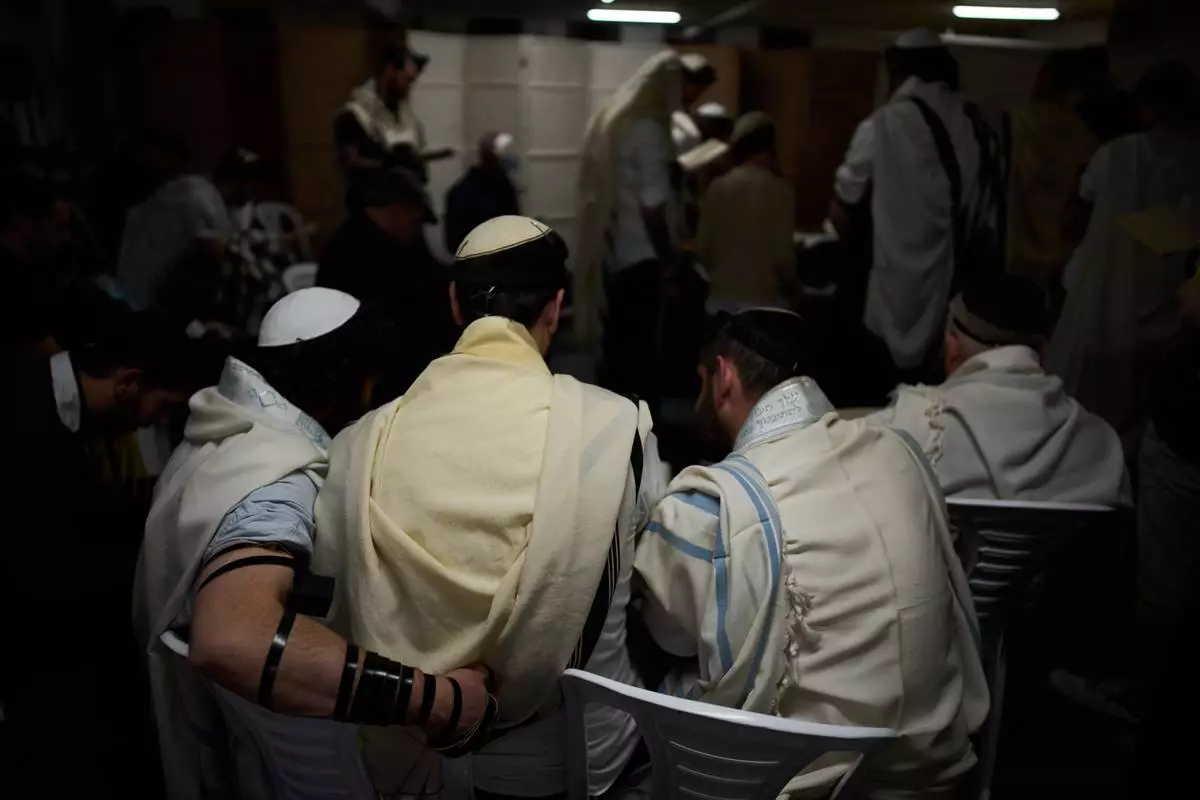
Jewish men covered in prayer shawls pray in an underground parking garage as a precaution against possible Iranian missile attacks, in Tel Aviv, Israel, Tuesday, March 3, 2026. (AP Photo/Oded Balilty)
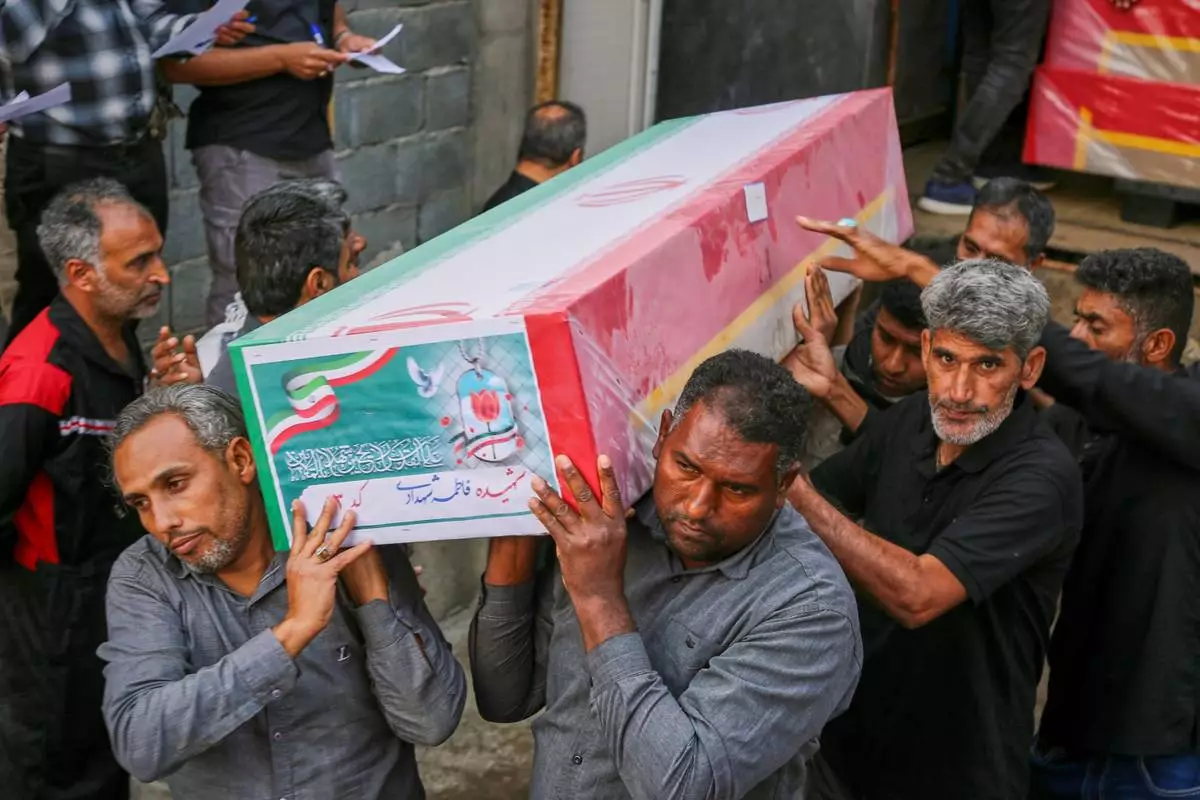
A coffin is carried during the funeral of mostly children killed in what Iranian officials said was an Israeli-U.S. strike Feb. 28 at a girls' elementary school in Minab, Iran, Tuesday, March 3, 2026. (Abbas Zakeri/Mehr News Agency via AP)

A man takes shelter in an underground metro station as a precaution against possible Iranian missile attacks, in Ramat Gan, Israel Monday, March 2, 2026. (AP Photo/Oded Balilty)
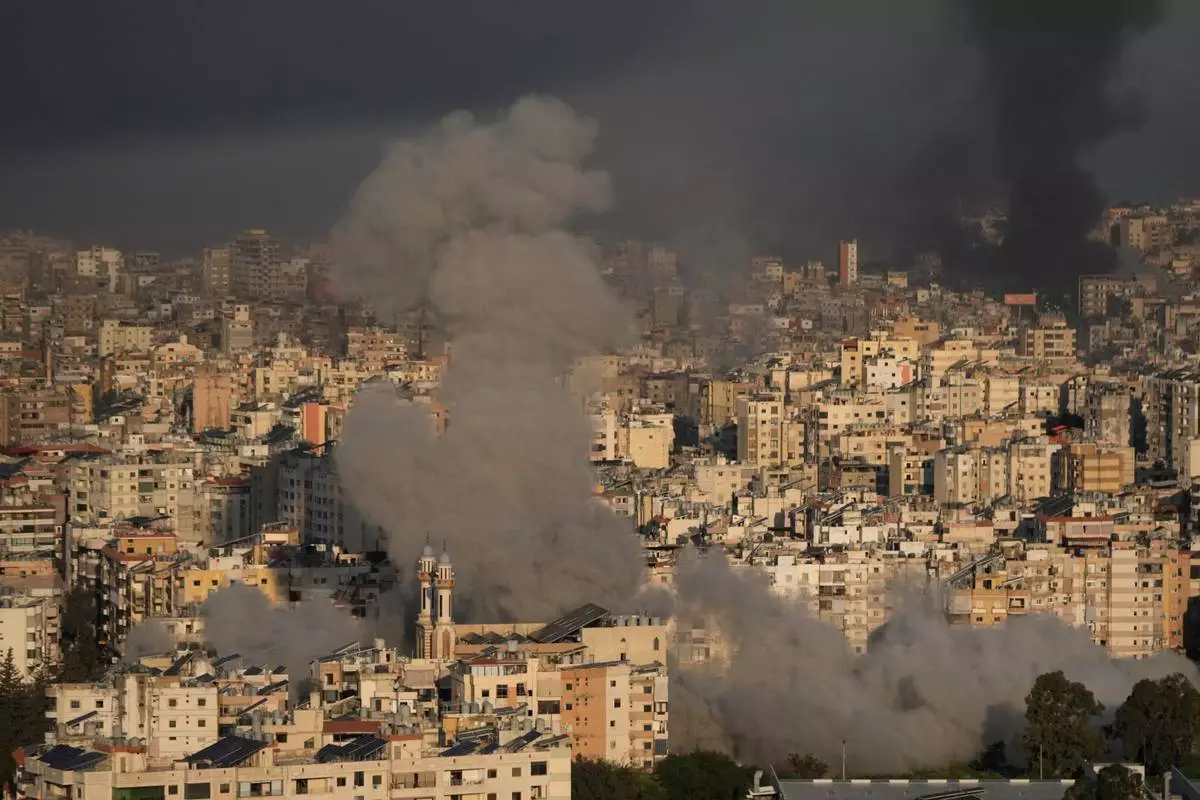
Smoke rises from Israeli airstrikes in Dahiyeh, a southern suburb of Beirut, Lebanon, Tuesday, March 3, 2026. (AP Photo/Hussein Malla)