A U.S. submarine sank an Iranian warship in international waters, Defense Secretary Pete Hegseth said Wednesday. In addition to striking Tehran, Israel hit the Iranian-backed Hezbollah militant group in Lebanon, while Iran fired on Bahrain, Kuwait and Israel.
As the U.S.-Israeli war on Iran spirals, U.S. Senate Republicans rejected a war powers measure demanding congressional approval before further attacks. A twin House bill faces the same long odds in the Republican-controlled Congress, and Trump would almost certainly veto it anyway.
Click to Gallery
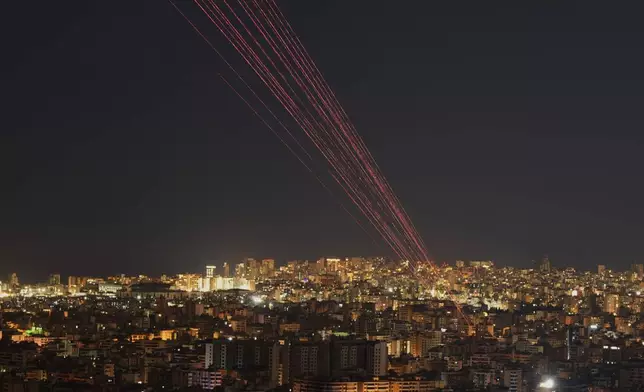
Tracer rounds light the sky as people fire live rounds into the air during a televised speech by Hezbollah leader Naim Kassem in Dahiyeh, Beirut's southern suburbs, Lebanon, Wednesday, March 4, 2026. (AP Photo/Hassan Ammar)
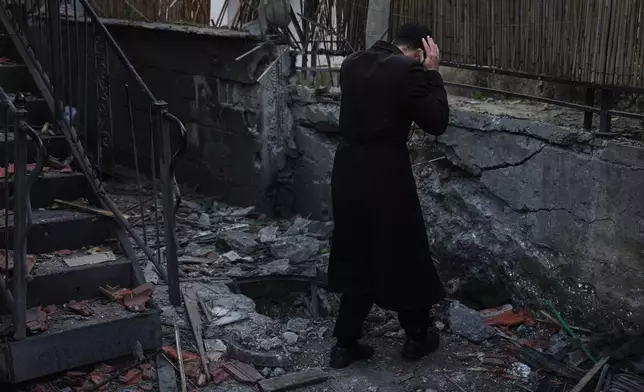
A man inspects a damaged house struck by a rocket fired from Lebanon, in Hatzor HaGlilit, northern Israel, Wednesday, March 4, 2026. (AP Photo/Ariel Schalit)
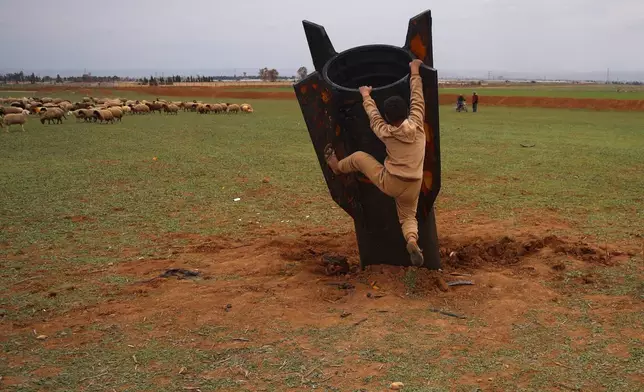
Exposing himself to the danger of unexploded ordnance, a boy tries to climb on an unexploded Iranian projectile that landed in an open field in the outskirts of Qamishli, eastern Syria, Wednesday, March 4, 2026.(AP Photo/Baderkhan Ahmad)
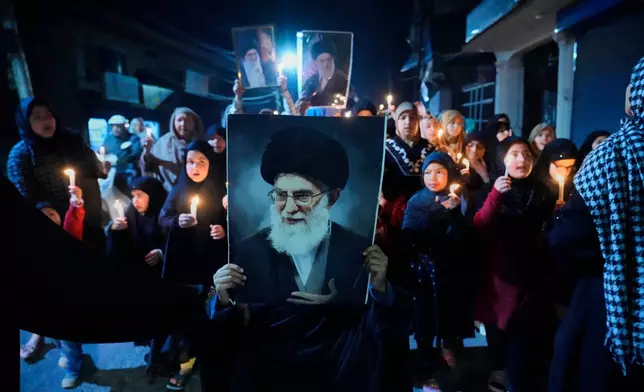
Shiite Muslims shout slogans during a candlelit protest against the killing of Iran's Supreme Leader Ayatollah Ali Khamenei, in Srinagar, Indian controlled Kashmir, Wednesday, March 4, 2026. (AP Photo/Mukhtar Khan)
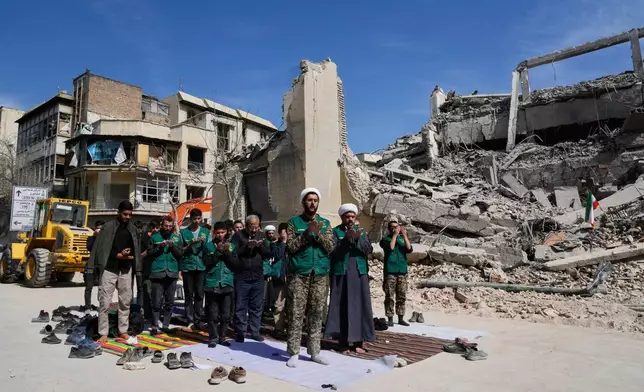
A cleric leads a group of volunteers in prayer next to a police facility struck during the U.S.–Israeli military campaign in Tehran, Iran, Wednesday, March 4, 2026. (AP Photo/Vahid Salemi)
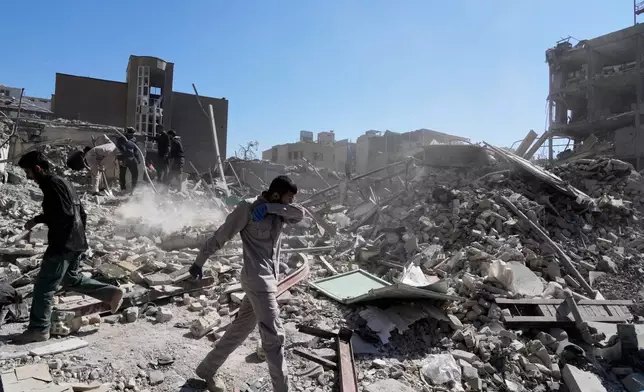
A group of men inspect the ruins of a police station struck Monday amid the U.S.–Israeli military campaign in Tehran, Iran, Tuesday, March 3, 2026. (AP Photo/Vahid Salemi)
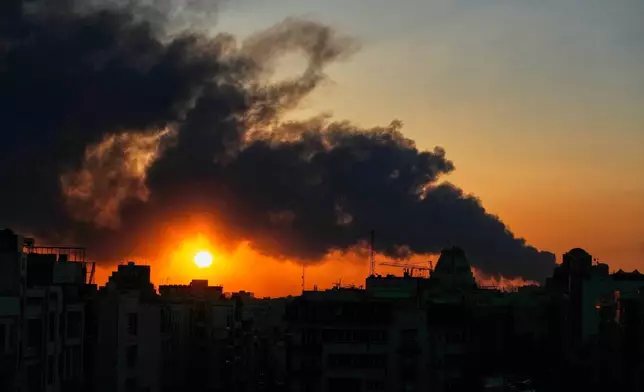
The sun sets behind a plume of smoke rising after a U.S.–Israeli military strike in Tehran, Iran, Tuesday, March 3, 2026. (AP Photo/Vahid Salemi)
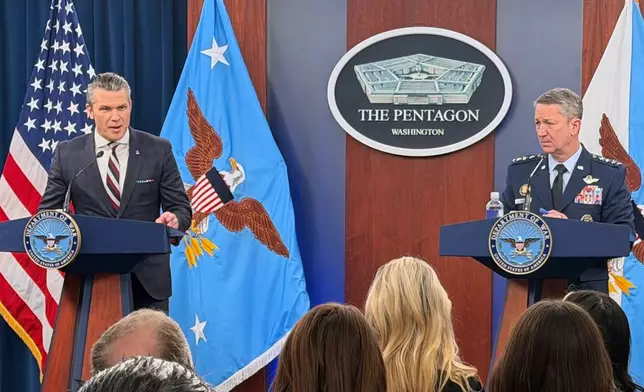
Defense Secretary Pete Hegseth and Chairman of the Joint Chiefs of Staff Gen. Dan Caine, speak during a press briefing at the Pentagon, Wednesday, March 4, 2026, in Washington. (AP Photo/Konstantin Toropin)
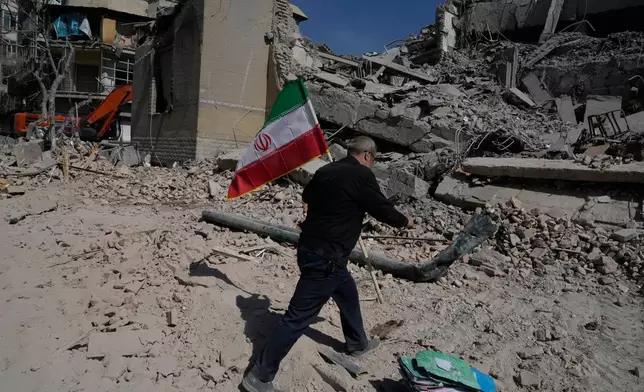
A man carries an Iranian flag to place on the rubble of a police facility struck during the U.S.–Israeli military campaign in Tehran, Iran, Wednesday, March 4, 2026. (AP Photo/Vahid Salemi)
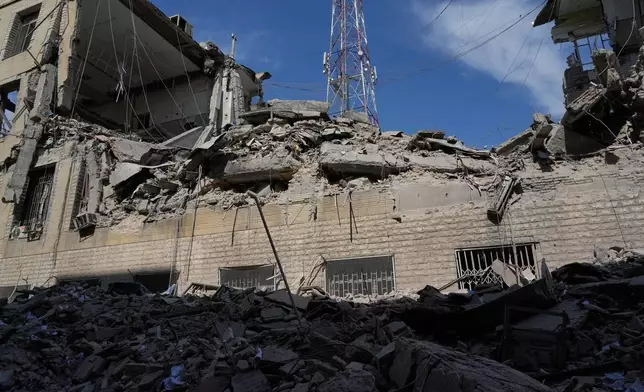
The rubble of a police facility struck during the U.S.–Israeli military campaign is seen in Tehran, Iran, Wednesday, March 4, 2026. (AP Photo/Vahid Salemi)
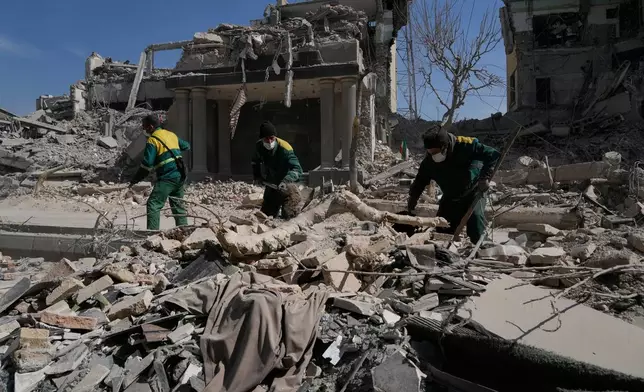
Workers remove the rubble of a police facility struck during the U.S.–Israeli military campaign in Tehran, Iran, Wednesday, March 4, 2026. (AP Photo/Vahid Salemi)
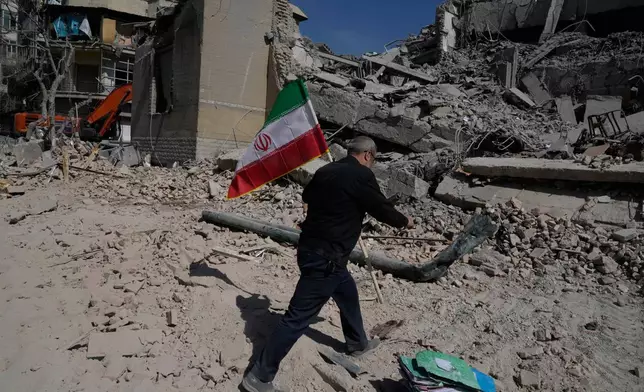
A man carries an Iranian flag to place on the rubble of a police facility struck during the U.S.–Israeli military campaign in Tehran, Iran, Wednesday, March 4, 2026. (AP Photo/Vahid Salemi)
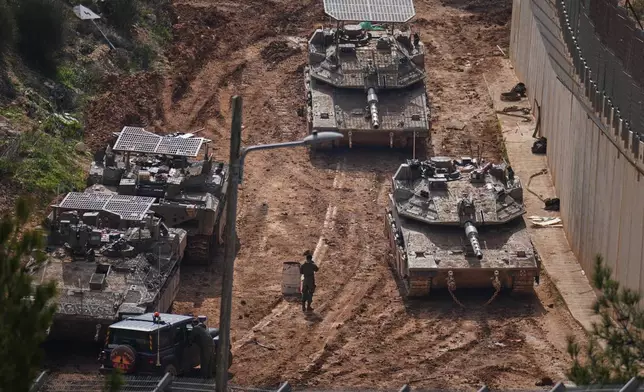
Israeli tanks maneuver near the Israel-Lebanon border, in northern Israel, Wednesday, March 4, 2026. (AP Photo/Ariel Schalit)
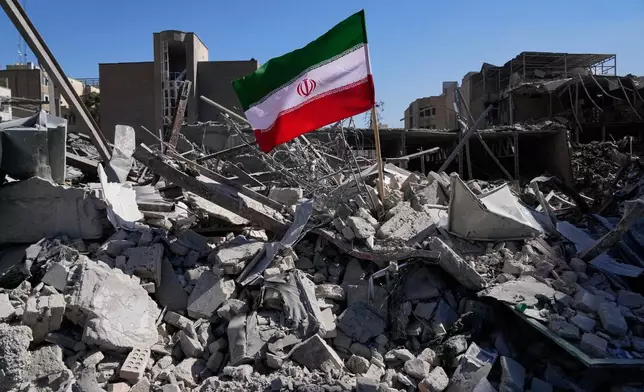
An Iranian flag is placed among the ruins of a police station struck Monday during the U.S.–Israeli military campaign in Tehran, Iran, Tuesday, March 3, 2026. (AP Photo/Vahid Salemi)
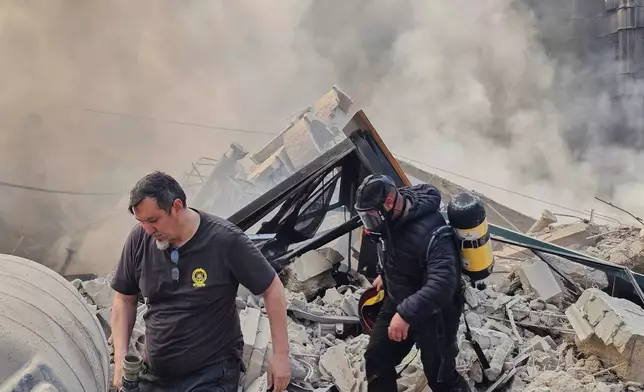
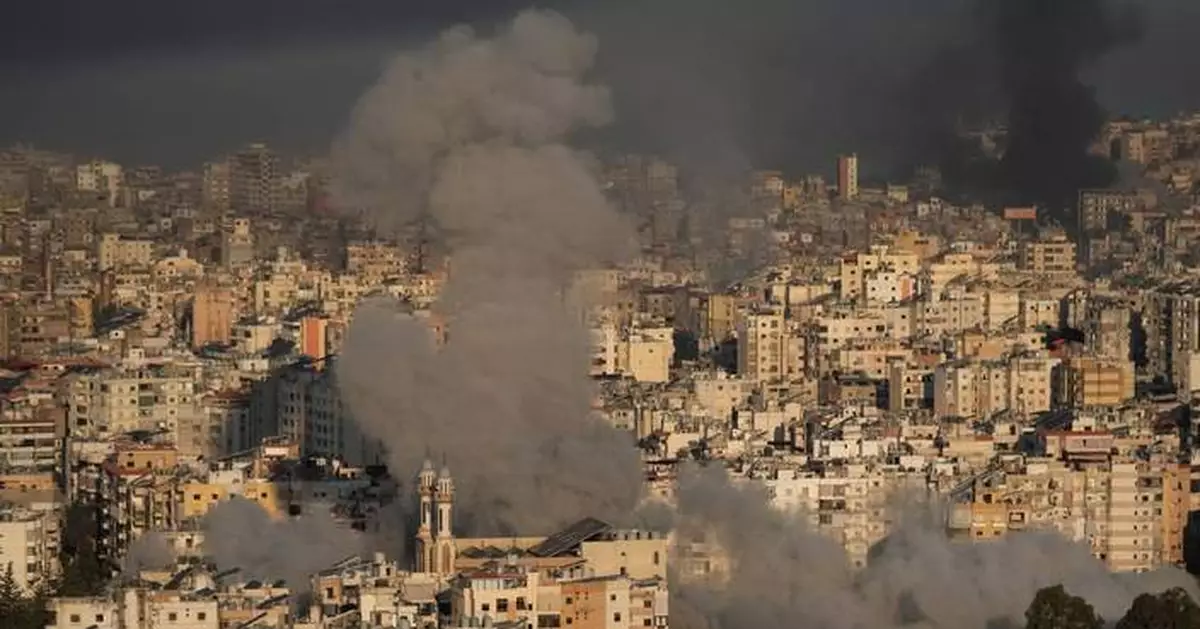
Firefighters inspect the rubble as smoke rises from a building hit by an Israeli airstrike in Dahiyeh, a southern suburb of Beirut, Lebanon, Tuesday, March 3, 2026. (AP Photo/Hassan Ammar)
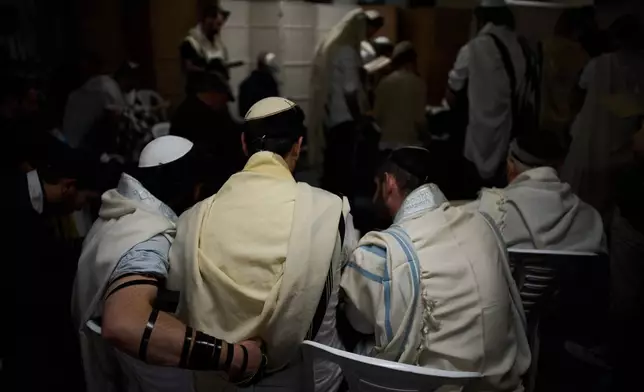
Jewish men covered in prayer shawls pray in an underground parking garage as a precaution against possible Iranian missile attacks, in Tel Aviv, Israel, Tuesday, March 3, 2026. (AP Photo/Oded Balilty)
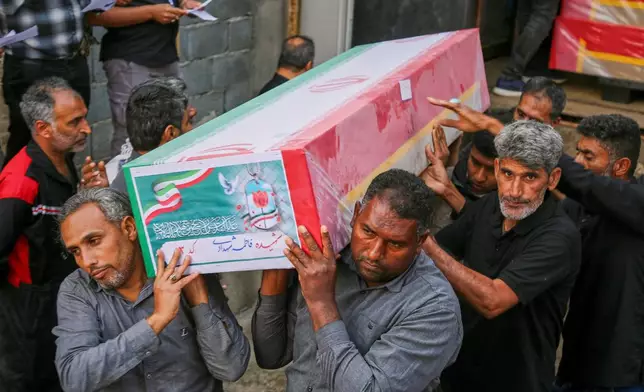
A coffin is carried during the funeral of mostly children killed in what Iranian officials said was an Israeli-U.S. strike Feb. 28 at a girls' elementary school in Minab, Iran, Tuesday, March 3, 2026. (Abbas Zakeri/Mehr News Agency via AP)
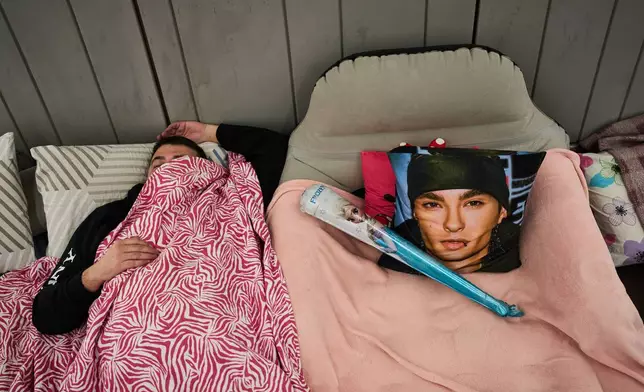
A man takes shelter in an underground metro station as a precaution against possible Iranian missile attacks, in Ramat Gan, Israel Monday, March 2, 2026. (AP Photo/Oded Balilty)
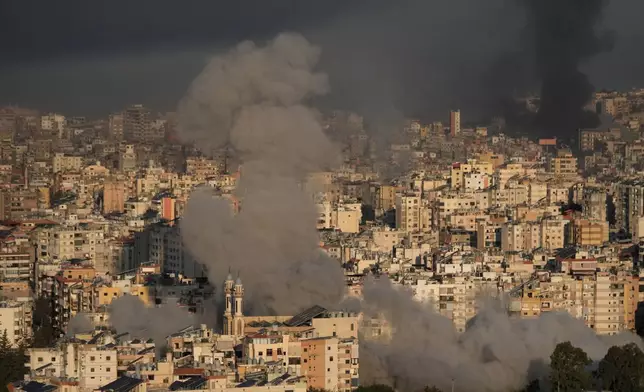
Smoke rises from Israeli airstrikes in Dahiyeh, a southern suburb of Beirut, Lebanon, Tuesday, March 3, 2026. (AP Photo/Hussein Malla)
The war has killed more than 1,000 people in Iran, more than 50 in Lebanon and around a dozen in Israel, according to officials in those countries. The United Nations says 100,000 people fled the Iranian capital in the war’s first two days alone.
U.S. stocks rebounded after oil prices stopped spiking and reports gave encouraging updates on the American economy.
Here is the latest:
The Saudi Defense Ministry said it destroyed a drone in the kingdom’s al-Jawf province, which borders Jordan.
The Israeli military struck a building in the Beddawi Palestinian refugee camp in the coastal city of Tripoli, killing two people, Lebanon’s Health Ministry said.
The strike, which hit the area without prior warning and marked the northernmost strike so far, wounded another individual, the Health Ministry said.
The Israeli military did not immediately say who it targeted in the strike.
Located about 85 kilometers (53 miles) north of Beirut and more than 180 kilometers (112 miles) from the Lebanese–Israeli border, Beddawi was targeted during the 2024 war between Israel and Hezbollah.
Despite a ceasefire reached in November 2024, the Israeli military said in July it struck a Hamas figure in the camp.
An overnight Israeli drone strike targeted a vehicle on a coastal highway in southern Lebanon, killing three people, Lebanon’s state news agency said.
The highway connects the city of Tyre to Naqoura, a border town near Israel.
On Wednesday, the Israeli military warned residents to move north of the Litani River, which serves as a key buffer line with villages south of it lying closest to the Israeli border.
The number of people killed in Israeli strikes in Lebanon in the four days since the conflict between Israel and the Lebanese militant group Hezbollah reignited has risen to more than 70, with over 430 people wounded, Lebanon’s Health Ministry said Wednesday.
It is not clear how many of those killed in Lebanon were civilians, but the Health Ministry said Tuesday that they included seven children.
Officials with Hezbollah and the Palestinian Islamic Jihad militant group were also killed.
Iranian state television said there was a new wave of attacks Thursday morning targeting Israel and U.S. military bases in the region.
Sirens sounded in Jerusalem and loud booms were heard.
For the third time in the early hours of Thursday, Israel’s military said Iran had launched missiles at the country and its defense systems were working to intercept them.
No casualties were reported in the first two incidents.
South Korean President Lee Jae Myung has called on officials to activate an emergency financial package worth 100 trillion won ($68.5 billion) aimed at calming market volatility.
Lee’s comments came a day after the country’s benchmark stock index, the Kospi, recorded its biggest single-day drop since the Sept. 11 attacks in 2001, as concerns grew over how the spiraling conflict in the Middle East would affect the country’s economy, which is heavily dependent on trade and imported fuel.
Stocks rebounded Thursday as investors sought bargains, triggering temporary trading halts.
During a Cabinet meeting, Lee also instructed officials to use all possible transport means, including military aircraft and chartered flights, to speed up the evacuation of South Korean nationals in war-affected areas of the Middle East.
South Korean officials have so far evacuated 24 citizens from Iran to Turkmenistan, and 62 from Israel to Egypt by bus.
Before the evacuations, officials said about 60 South Korean nationals were in Iran and about 600 in Israel.
The Pentagon on Wednesday night released the last two names of the six U.S. soldiers killed in a Kuwait attack.
The soldiers identified were Chief Warrant Officer 3 Robert Marzan, 54, of Sacramento and Maj. Jeffrey O’Brien, 45, of Indianola, Iowa.
The Pentagon said Marzan was at the scene when a drone strike hit the command center in Kuwait and is “believed to be the individual who perished at the scene,” according to a statement. A medical examiner will confirm identification, the Pentagon said.
The Pentagon listed O’Brien’s home address as Indianola but his listed address is in Waukee. Both are suburbs of Des Moines. Four soldiers were previously identified by the Pentagon on Tuesday.
They died Sunday when a drone hit a command center in Port Shuaiba, Kuwait, just a day after the U.S. and Israel launched its military campaign against Iran. Iran responded by launching missiles and drones against Israel and several Gulf Arab states that host U.S. armed forces.
New Zealand’s government will deploy two military planes to the Middle East so that New Zealanders can be evacuated when conditions permit, officials said Thursday.
Foreign Minister Winston Peters and Defense Minister Judith Collins said in a statement that the government was also speaking to commercial airlines, including to discuss charter flight options. Commercial services from Dubai to Auckland, New Zealand, are not currently operating.
There are about 3,000 New Zealanders known to be living in the Middle East, officials said.
“We cannot be sure when and how any civilian evacuation operations might be possible, but we want to be ready if and when conditions on the ground make them possible,” Peters said.
The State Department says that charter flights for American citizens stranded in the Middle East since the start of military operations against Iran have begun.
The department said Wednesday that one plane has left the Middle East to bring Americans home.
It did not say where the flight originated from or where it was going, although the department has said it is arranging charter aircraft from the United Arab Emirates, Qatar, Saudi Arabia, and Israel.
It has said Americans wanting to leave those countries should register online at mytravel.state.gov/s/crisis-intake or contact the State Department’s 24/7 Task Force at +1-202-501-4444.
A new attack early Thursday off the coast of Kuwait appeared to expand the area where commercial shipping was in danger.
The United Kingdom Maritime Trade Operations center, run by the British military, said the attack happened off the coast of Kuwait in the northern Persian Gulf.
An explosion rocked the area, the UKMTO said, adding that a tanker apparently came under attack and a small vessel left the area afterward.
The UKMTO did not offer a cause, but Iran has used limpet mines in the past attached to ships to attack them.
So far, attacks have happened in the Strait of Hormuz, the narrow mouth of the Persian Gulf, and the Gulf of Oman.
Qatar’s Interior Ministry said Thursday that authorities were evacuating residents near the U.S. Embassy in Doha as a temporary precaution.
No further details or threats were immediately reported.
Since the start of the U.S.–Israel war with Iran, American diplomatic missions across the Middle East have faced heightened threats, closures and evacuations as Iranian missiles and drones have targeted or prompted alerts at U.S. embassies and consulates.
The Israeli military says it has launched at least two strikes on Beirut’s southern suburbs after issuing an evacuation warning for a building in the Haret Hreik area.
No casualties were immediately reported.
Senate Republicans voted down an effort Wednesday to halt the Trump administration’s war against Iran, demonstrating early support for a conflict that has rapidly spread across the Middle East with no clear U.S. exit strategy.
The legislation, known as a war powers resolution, failed on a 47-53 vote tally. The vote fell mostly along party lines, though Republican Sen. Rand Paul of Kentucky voted in favor and Democratic Sen. John Fetterman of Pennsylvania voted against.
The war powers resolution gave lawmakers an opportunity to demand congressional approval before any further attacks are carried out. The vote forced them to take a stand on a war shaping the fate of U.S. military members, countless other lives and the future of the region.
Two near-simultaneous drone strikes hit vehicles traveling in opposite directions along Beirut’s coastal Airport Road on Wednesday, killing three people and wounding six, Lebanon’s health ministry said.
The Israeli military said it targeted a Hezbollah member. The cars burst into flames, with video from the scene showing one wounded man lying on the pavement as bystanders gathered nearby.
Lebanese officials say more than 70 people have been killed in Israeli strikes since the latest escalation with Hezbollah began three days ago. Those include at least one Hezbollah intelligence official and a senior Palestinian militant.
“If Congress wants war, then the speaker should hold a vote to declare it,” said Rep. Thomas Massie, an outlier in the Republican Party.
He joined with Democratic Rep. Ro Khanna to push forward a war powers resolution in the House that would halt Trump’s ability to wage war on Iran without approval from Congress.
Khanna during a floor speech called it “a profoundly moral vote.”
GOP lawmakers maintain that Trump is well with his authority to send the U.S. military into combat.
Israel’s Home Front Command said workplaces may reopen and gatherings of up to 50 people will be allowed if there is nearby shelter starting Thursday at noon, although schools will remain closed.
The nationwide shutdown, imposed when the war began Saturday, is being loosened as the Israeli military says incoming missile fire has dropped in recent days.
However, Israelis are still “spending a lot of time in shelters,” acknowledged Brig. Gen. Effie Defrin, a military spokesperson.
At a Pentagon briefing Wednesday, the US Joint Chiefs of Staff chairman, Gen. Dan Caine, said that the number of ballistic missiles fired off by Iran is down by 86% from the first day of the war, and that there’s been a 23% drop in the last 24 hours.
U.S. Secretary of State Marco Rubio told Turkish Foreign Minister Hakan Fidan that attacks on Turkey’s territory are unacceptable and pledged full U.S. support after an Iranian missile headed toward the country was shot down, the State Department said Wednesday.
Ibrahim Jawdat woke around 2:45 a.m. Wednesday when a drone exploded beside his family’s home in Irbil, shattering windows and spraying glass across his bed.
Neighbor Hawkar Hadi’s house was also damaged, with broken windows and shrapnel lodged in walls and furniture.
“It’s difficult to be a victim of a war that we’re not part of,” he said. “We’re paying the cost of things we didn’t do.”
Iran and allied Iraqi militias have fired missiles and drones at U.S. bases and the U.S. consulate in Irbil, the capital of the semiautonomous Kurdish region in northern Iraq. Most have been intercepted, though some have fallen in residential areas.
There have been more than 100 attacks on Irbil since the war began, Gov. Omed Khoshnaw told reporters Wednesday, and he urged Baghdad to compensate residents for damage.
More than 6,400 South Africans have registered on a system opened for citizens to advise the government of their location, the Foreign Ministry said in a statement Wednesday.
The ministry said it was urging its citizens to depart on the limited number of commercial flights that have resumed.
United Nations peacekeepers said Wednesday they observed rockets fired from Lebanon into Israel and Israeli military activity and airstrikes near several villages.
Both sides are in violation of a 2006 U.N. Security Council ceasefire, according to the peacekeeping force, while Israel is also breaching Lebanon’s sovereignty. The 7,500-strong force said it remains on the ground in southern Lebanon.
Israel’s military said Wednesday that its air force had destroyed Iranian ballistic missile sites in the west and central parts of the country, hitting the infrastructure being used to launch projectiles toward Israeli territory.
Iran’s barrages of ballistic missiles toward Israel have slowed and been mostly intercepted, however some have gotten through Israel’s defenses, causing damage and killing around a dozen people. Some experts say Iran may be holding its weapons in reserve to prolong the conflict.
The president opened his remarks at an unrelated White House event on artificial intelligence that the U.S. is “doing very well on the war front, to put it mildly.”
Trump said someone asked him to rate on a scale of 10 how well he thought the U.S. was doing and said, “about a 15.”
The ongoing strikes deepen an “unprecedented state of hostility” with Iran's neighbors in the Gulf, said Arab League chief Ahmed Aboul Gheit in a statement Wednesday.
He demanded Tehran stop the attacks, which he called a “strategic mistake,” saying “Iran must come to its senses.”
The Arab League, made up of 22 member states, promotes regional cooperation. However, it is widely seen as toothless and has long struggled to help solve conflicts.
In his first public address since joining the war, Hezbollah leader Naim Kassem said the Lebanese militant group rejects the government’s plan to disarm its fighters.
“As long as the (Israeli) occupation is present, then the resistance and its weapons are a legitimate right,” Kassem said.
Lebanon’s leaders say Hezbollah’s rocket fire into Israel is illegal and urged the Lebanese army to crack down on groups possessing weapons outside state control.
Lebanon’s cash-strapped military, backed by the U.S. and other governments, has been deploying in recent months across southern Lebanon where Hezbollah has a strong military presence. However, it’s unclear if the army is able or willing to disarm Hezbollah by directly confronting them.
The U.N. refugee agency, basing its estimates on Iranian officials, also said around 1,000 to 2,000 vehicles per day were reported leaving the capital, mostly toward the north.
Geneva-based UNHCR spokesman Babar Baloch said the latest reports on Wednesday indicated no increase in cross-border movements linked to the recent conflict “but the situation remains fluid.”
Spanish Foreign Minister José Manuel Albares on Wednesday denied that the government had changed its position on supporting the U.S. military operations against Iran, contradicting a White House spokesperson.
“I can refute (the White House spokesperson),” Albares told Spanish radio station Cadena Ser. “The position of the Spanish government regarding the war in the Middle East, the bombing of Iran and the use of our bases has not changed one iota.”
Albares spoke in Madrid shortly after White House press secretary Karoline Leavitt had said that Spain had changed its position and “they’ve agreed to cooperate with the U.S. military.”
The Israeli military said the two were wounded Wednesday by anti-tank fire while operating in southern Lebanon.
Hezbollah says its fighters attacked Israeli troops advancing toward the village of Khiyam and released video showing a missile striking a tank.
Israel said Tuesday its forces were moving deeper into Lebanon to establish “forward defensive positions” to protect northern Israel.
The president’s top spokeswoman pushed back against criticisms that the administration didn’t do enough to ensure Americans could leave the Middle East following the U.S. war in Iran.
Leavitt insisted that “there have been plans in place” and that the State Department has been clear to those in the region to leave immediately.
“We will help every single American who wants to come home if they’re making that request of the State Department,” she said.
Leavitt also said a State Department hotline that told callers not to rely on help from the U.S. government to leave the region has been corrected.
Asked if Trump thinks that Americans support the Israel-U.S. war in Iran — even though Trump hasn’t given a national address to personally make the case — Leavitt said, “I think he does.”
“This was a rogue terrorist regime that has been threatening the United States, our allies and our people for 47 years,” she said. “And the American people are smart enough to know that, and they’re smart enough to listen to the president himself — not just over the past year, in the second term, but during his first term as president.”
Recent polling shows that, prior to the U.S.-Israel strikes that started last weekend, 61% of Americans said Iran was an “enemy” of the U.S., but only about 3 in 10 Americans said they had “a great deal” or “quite a bit” of trust in Trump.
The White House on Wednesday said Spain has agreed to cooperate with U.S. operations in the Mideast after Trump had threatened to cut off trade with Madrid.
“With respect to Spain, I think they heard the president’s message yesterday loud and clear,” White House press secretary Karoline Leavitt said. “And it’s my understanding over the past several hours, they’ve agreed to cooperate with the US military. And so I know that the US military is coordinating with their counterparts in Spain.”
Trump on Tuesday said he was going to “cut off all trade with Spain,” the day after Foreign Minister José Manuel Albares said his country would not allow the U.S. to use jointly operated bases in southern Spain in any strikes not covered by the United Nations’ charter.
Leavitt said she would not take away military options on behalf of the president by ruling it out, saying that leaders in the past take options off the table “without having a full understanding of how things could develop.”
“It’s not part of the current plan, but I’m not going to remove an option for the president that is on the table,” Leavitt said.
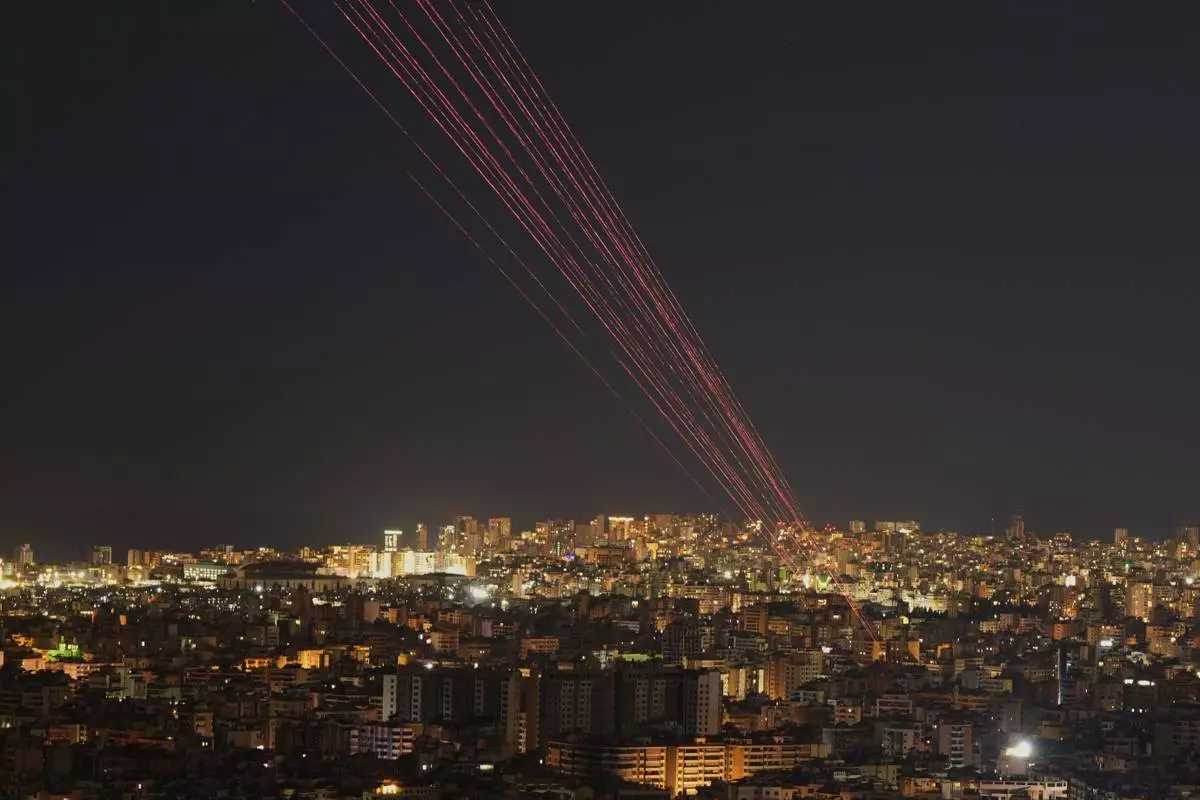
Tracer rounds light the sky as people fire live rounds into the air during a televised speech by Hezbollah leader Naim Kassem in Dahiyeh, Beirut's southern suburbs, Lebanon, Wednesday, March 4, 2026. (AP Photo/Hassan Ammar)
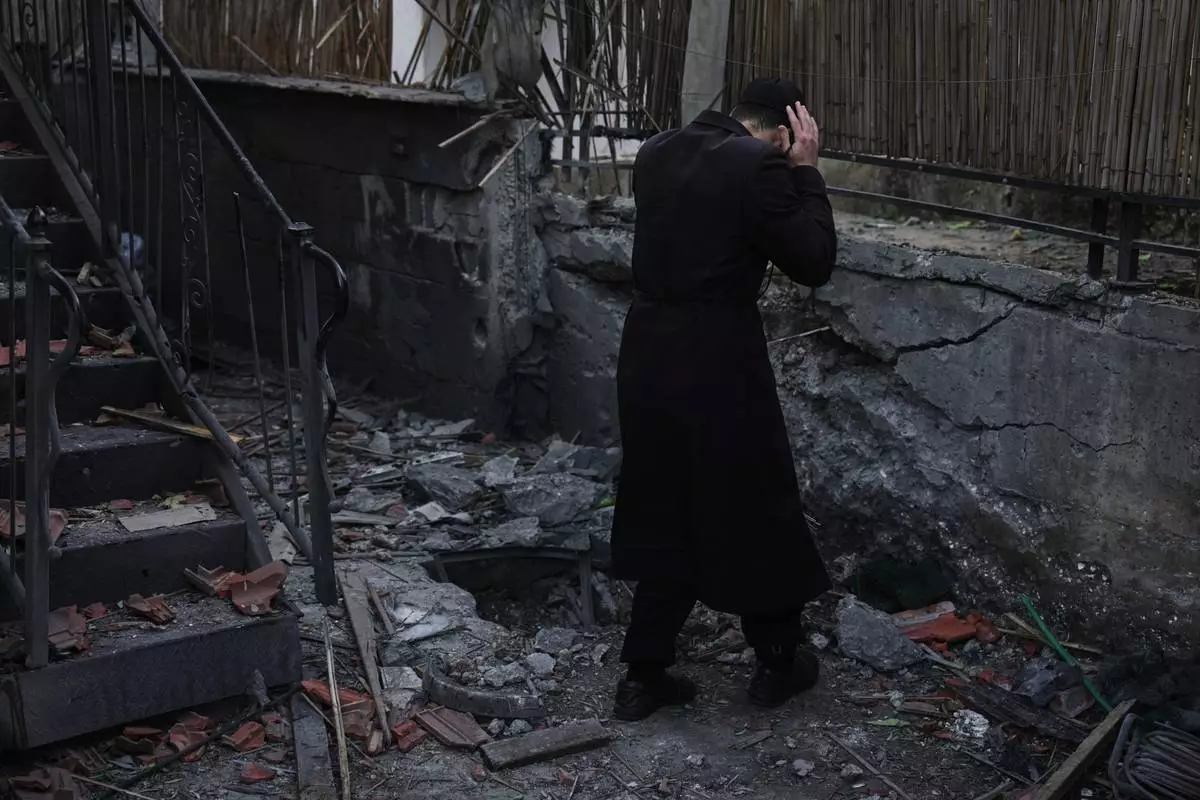
A man inspects a damaged house struck by a rocket fired from Lebanon, in Hatzor HaGlilit, northern Israel, Wednesday, March 4, 2026. (AP Photo/Ariel Schalit)
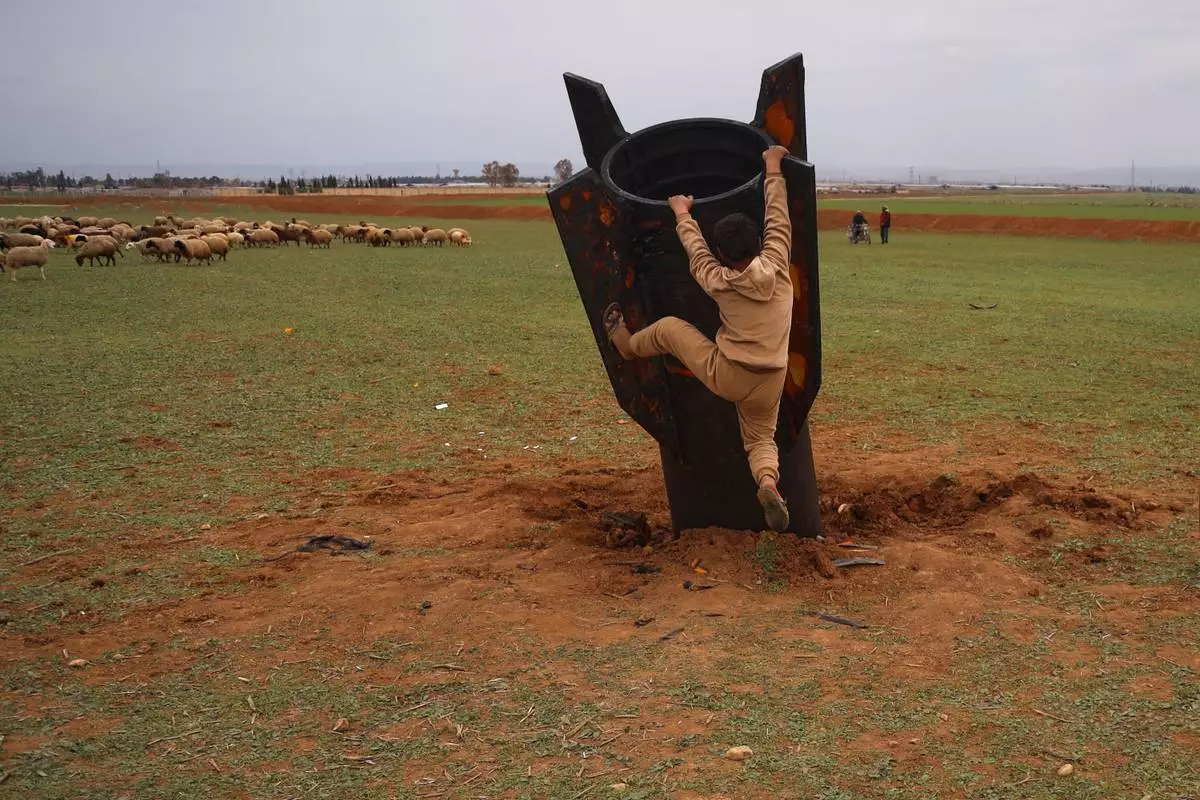
Exposing himself to the danger of unexploded ordnance, a boy tries to climb on an unexploded Iranian projectile that landed in an open field in the outskirts of Qamishli, eastern Syria, Wednesday, March 4, 2026.(AP Photo/Baderkhan Ahmad)
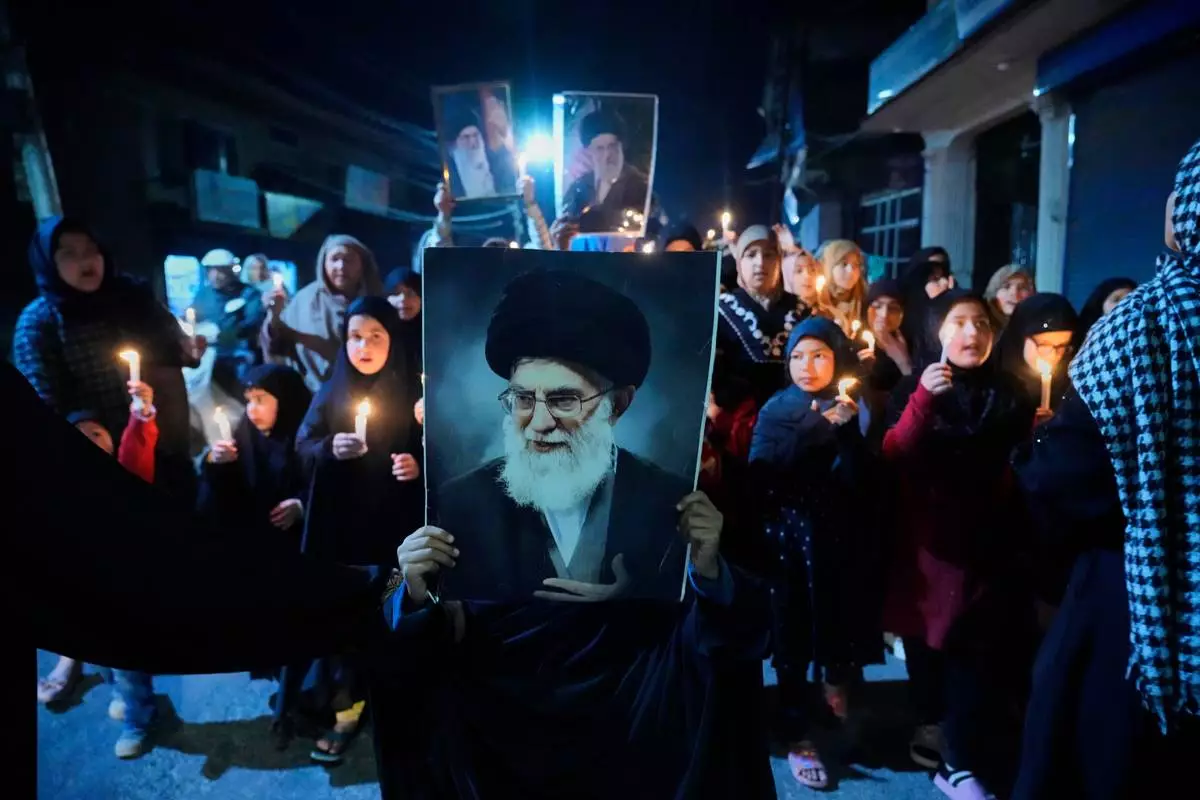
Shiite Muslims shout slogans during a candlelit protest against the killing of Iran's Supreme Leader Ayatollah Ali Khamenei, in Srinagar, Indian controlled Kashmir, Wednesday, March 4, 2026. (AP Photo/Mukhtar Khan)
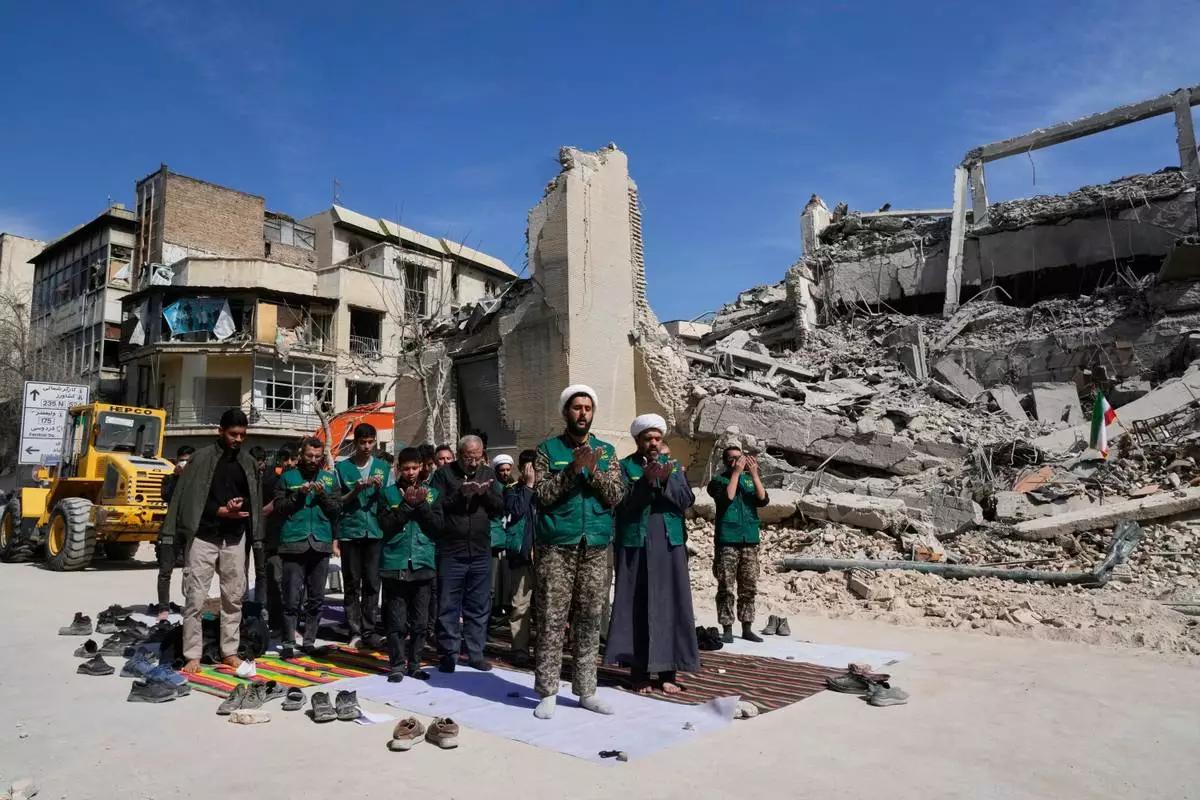
A cleric leads a group of volunteers in prayer next to a police facility struck during the U.S.–Israeli military campaign in Tehran, Iran, Wednesday, March 4, 2026. (AP Photo/Vahid Salemi)
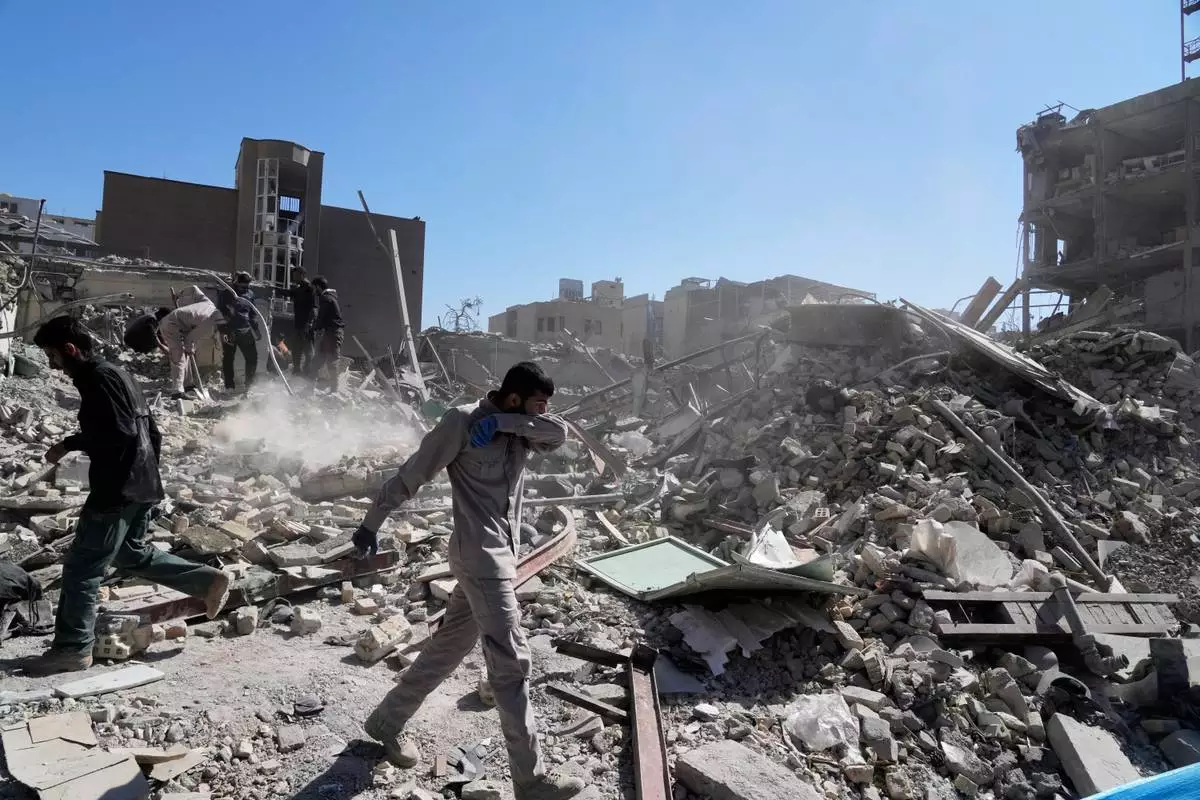
A group of men inspect the ruins of a police station struck Monday amid the U.S.–Israeli military campaign in Tehran, Iran, Tuesday, March 3, 2026. (AP Photo/Vahid Salemi)
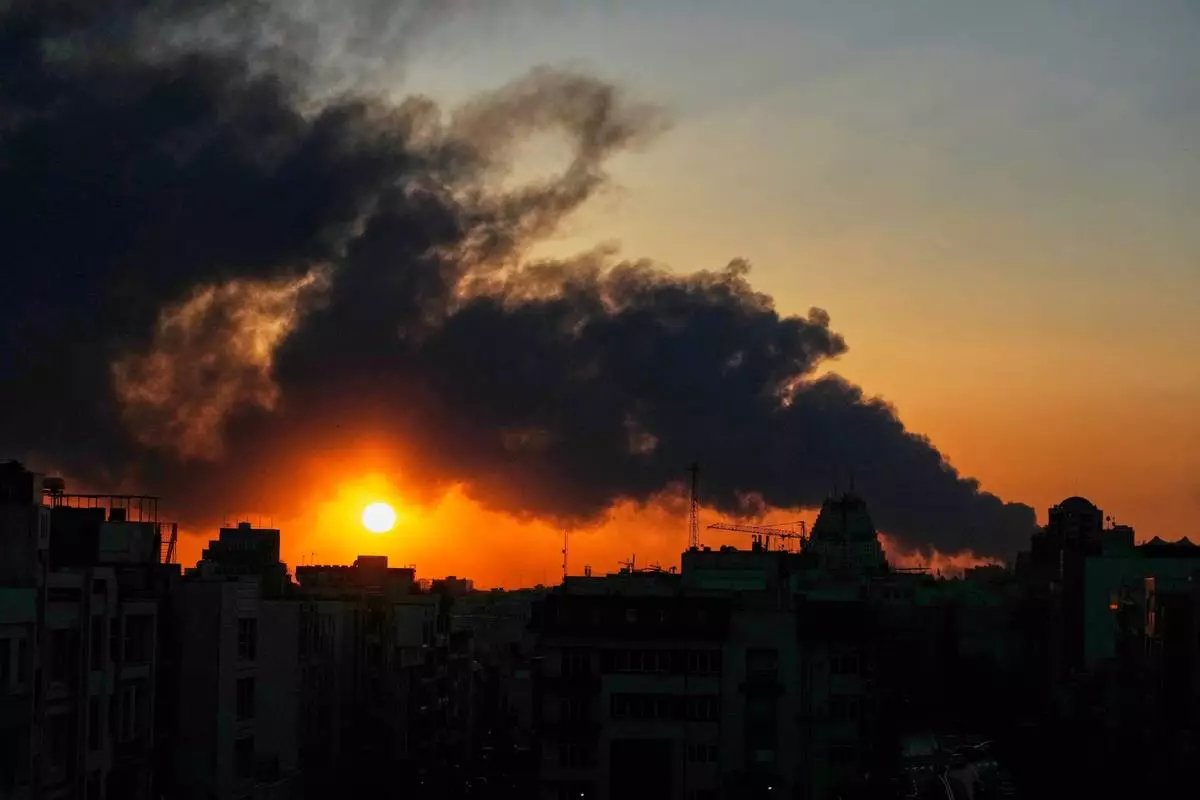
The sun sets behind a plume of smoke rising after a U.S.–Israeli military strike in Tehran, Iran, Tuesday, March 3, 2026. (AP Photo/Vahid Salemi)

Defense Secretary Pete Hegseth and Chairman of the Joint Chiefs of Staff Gen. Dan Caine, speak during a press briefing at the Pentagon, Wednesday, March 4, 2026, in Washington. (AP Photo/Konstantin Toropin)
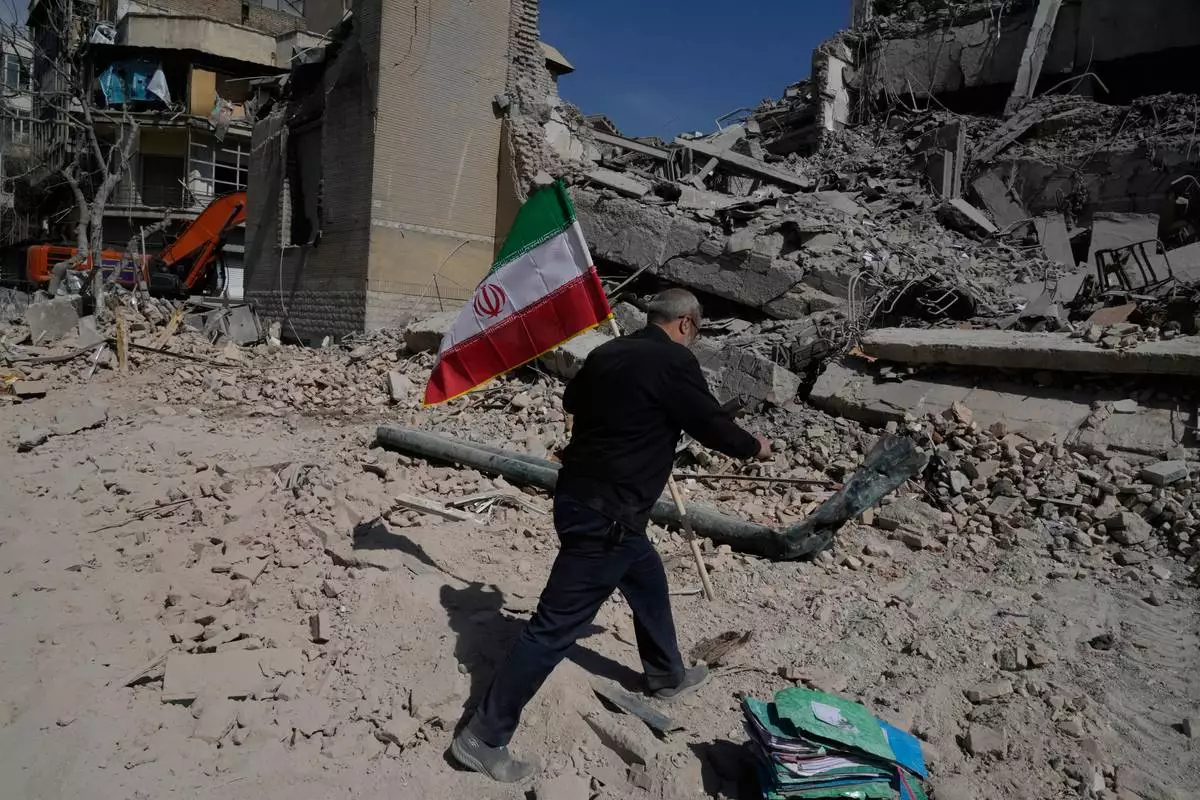
A man carries an Iranian flag to place on the rubble of a police facility struck during the U.S.–Israeli military campaign in Tehran, Iran, Wednesday, March 4, 2026. (AP Photo/Vahid Salemi)
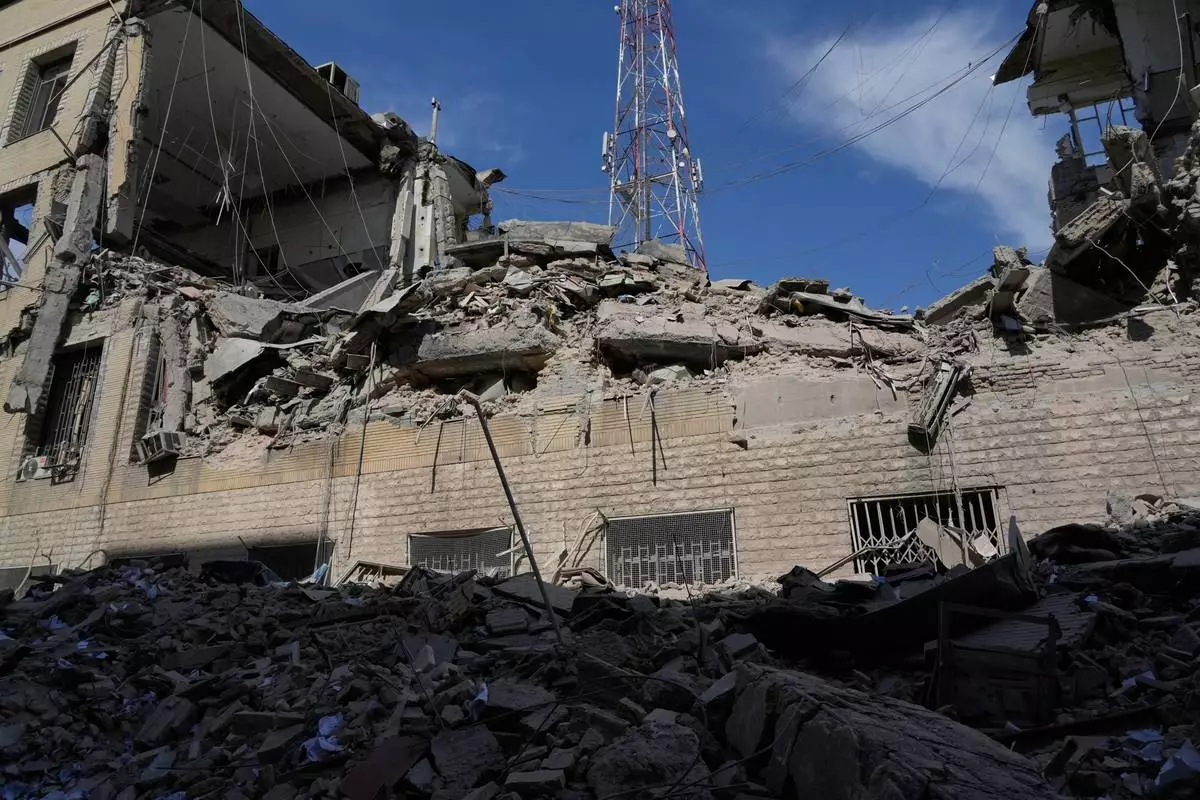
The rubble of a police facility struck during the U.S.–Israeli military campaign is seen in Tehran, Iran, Wednesday, March 4, 2026. (AP Photo/Vahid Salemi)
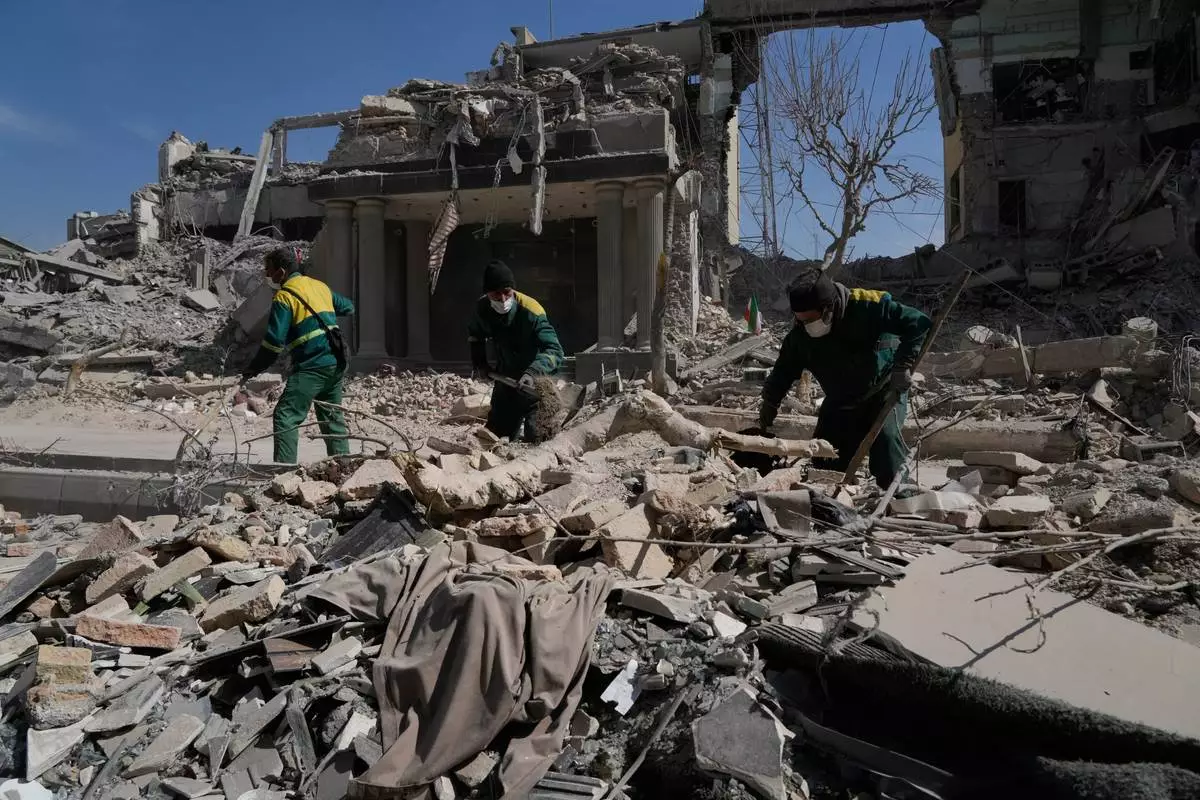
Workers remove the rubble of a police facility struck during the U.S.–Israeli military campaign in Tehran, Iran, Wednesday, March 4, 2026. (AP Photo/Vahid Salemi)
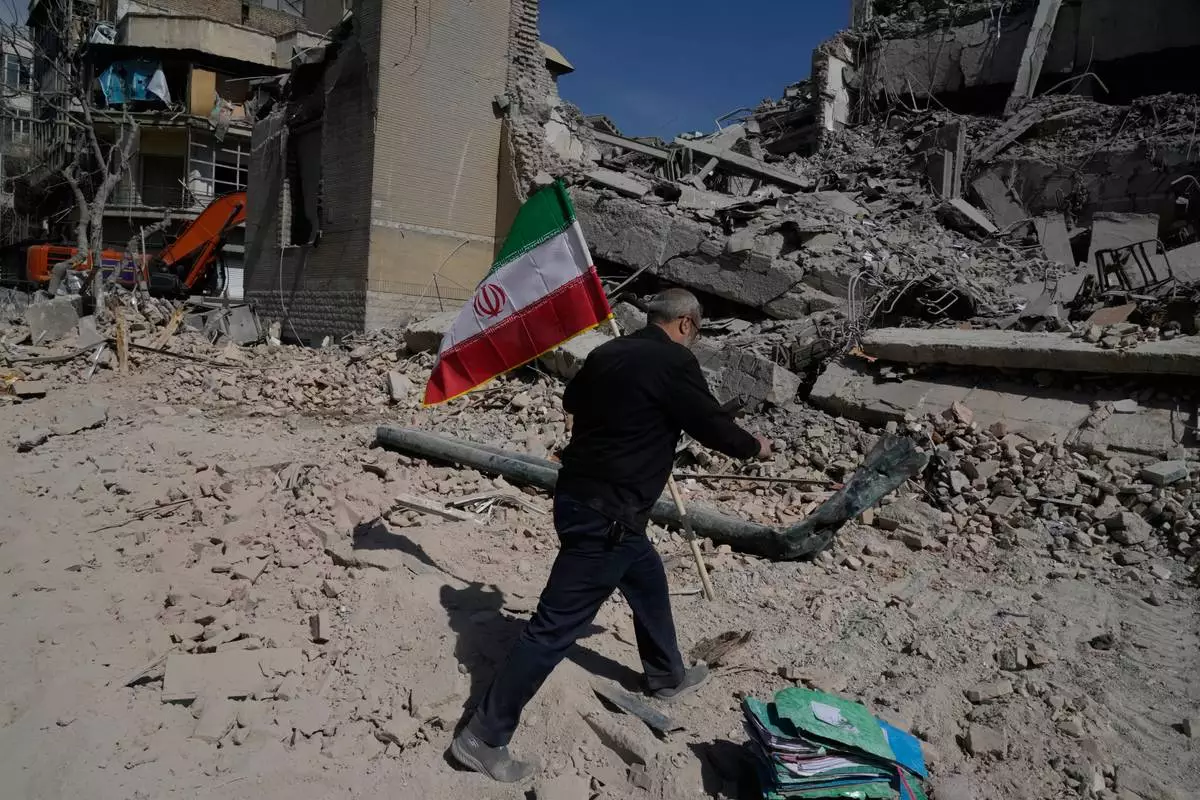
A man carries an Iranian flag to place on the rubble of a police facility struck during the U.S.–Israeli military campaign in Tehran, Iran, Wednesday, March 4, 2026. (AP Photo/Vahid Salemi)
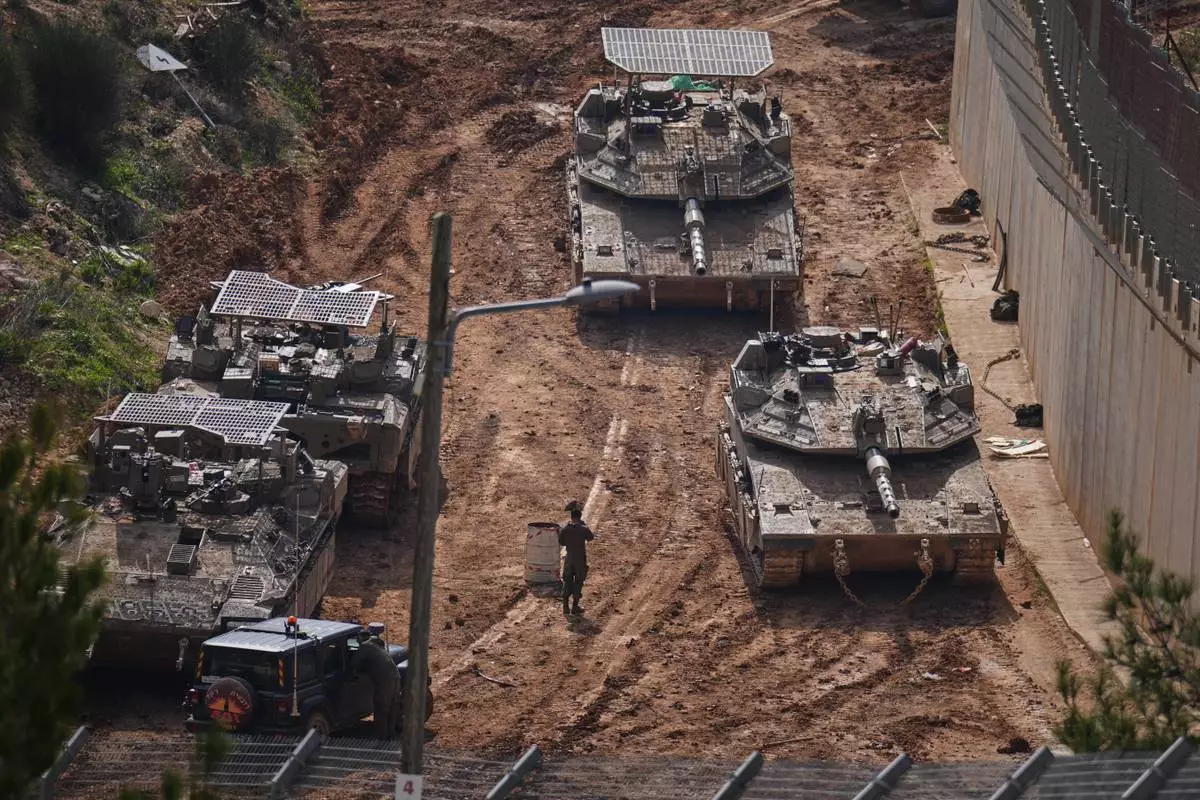
Israeli tanks maneuver near the Israel-Lebanon border, in northern Israel, Wednesday, March 4, 2026. (AP Photo/Ariel Schalit)
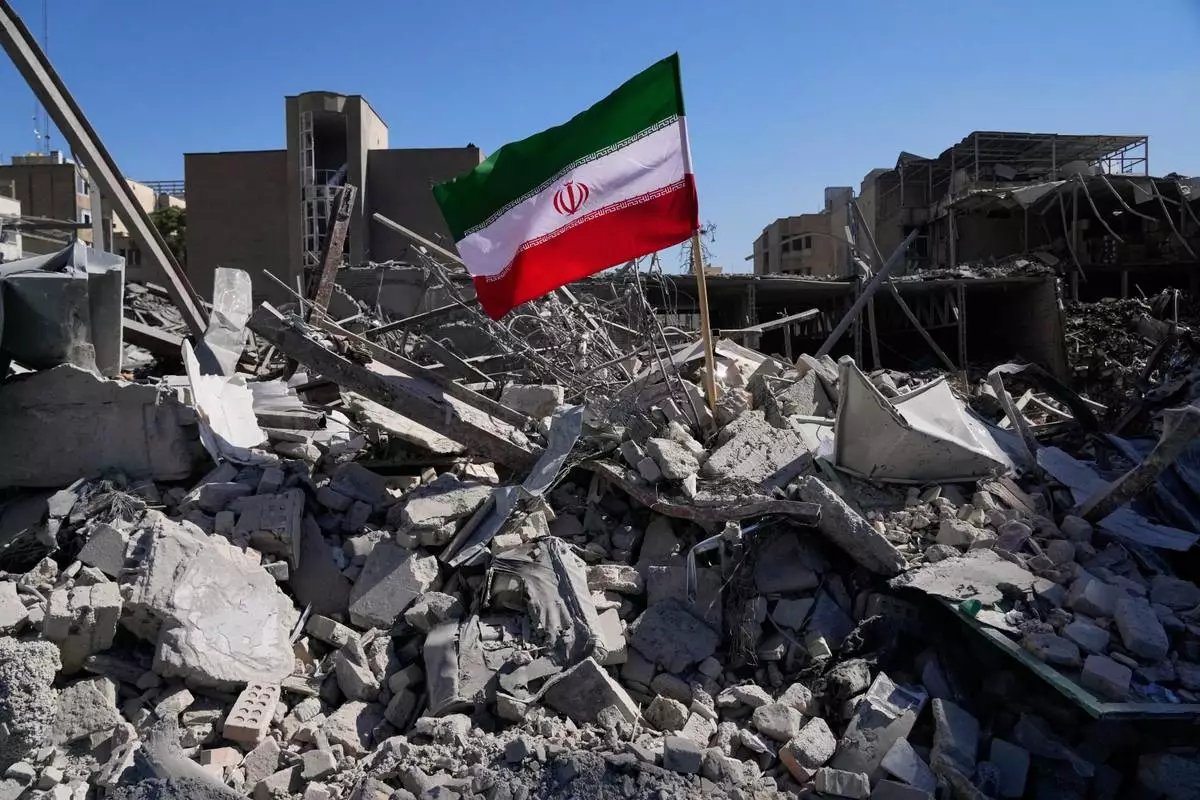
An Iranian flag is placed among the ruins of a police station struck Monday during the U.S.–Israeli military campaign in Tehran, Iran, Tuesday, March 3, 2026. (AP Photo/Vahid Salemi)
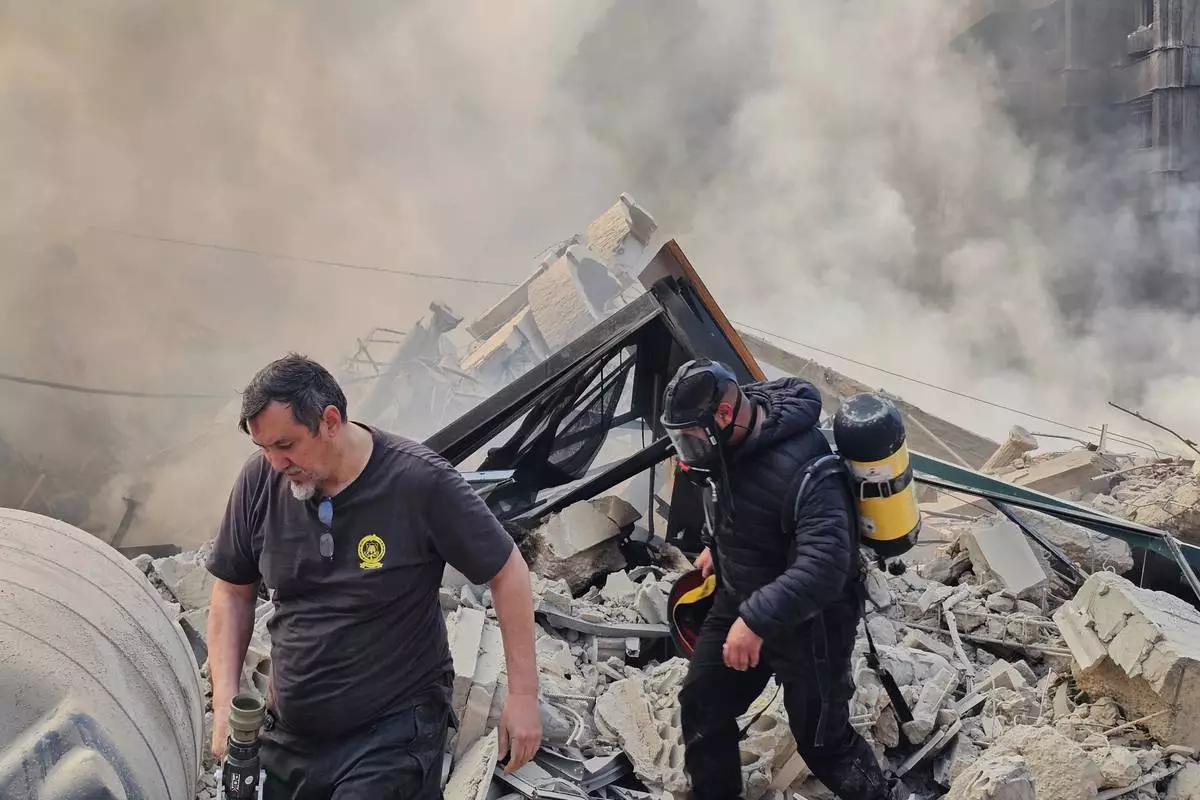
Firefighters inspect the rubble as smoke rises from a building hit by an Israeli airstrike in Dahiyeh, a southern suburb of Beirut, Lebanon, Tuesday, March 3, 2026. (AP Photo/Hassan Ammar)
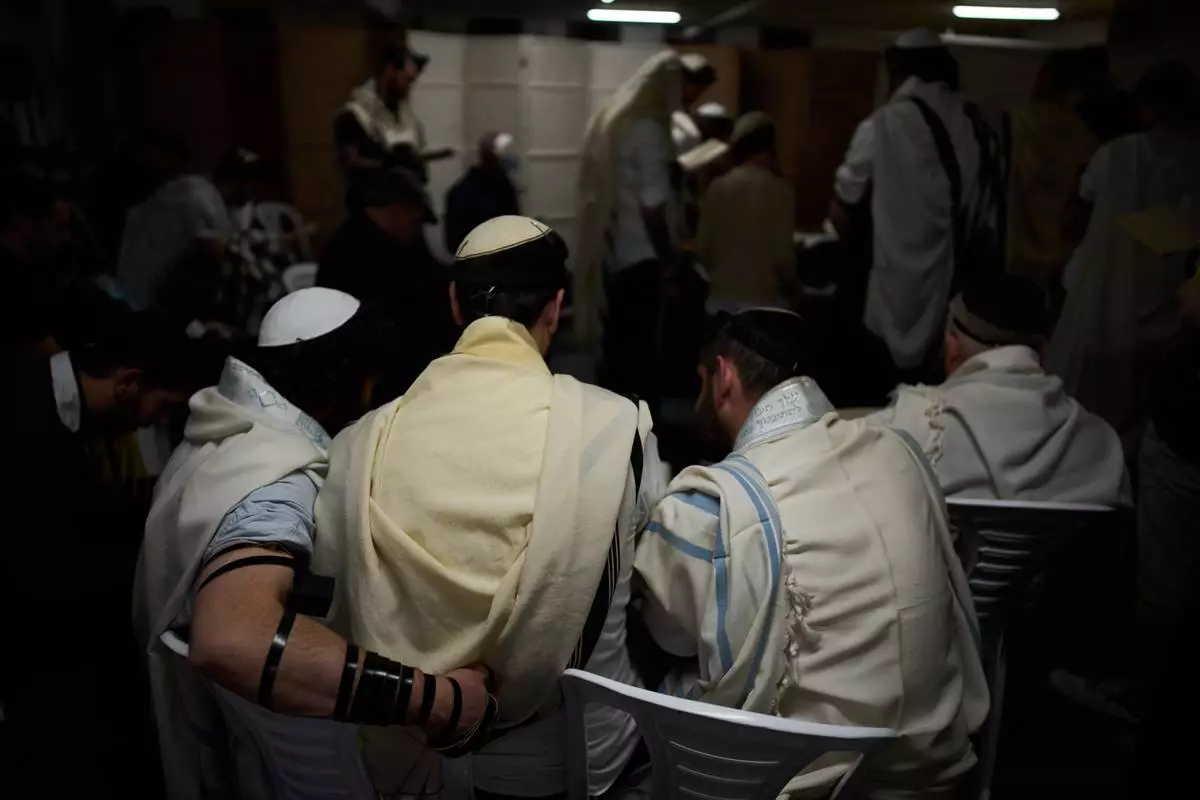
Jewish men covered in prayer shawls pray in an underground parking garage as a precaution against possible Iranian missile attacks, in Tel Aviv, Israel, Tuesday, March 3, 2026. (AP Photo/Oded Balilty)
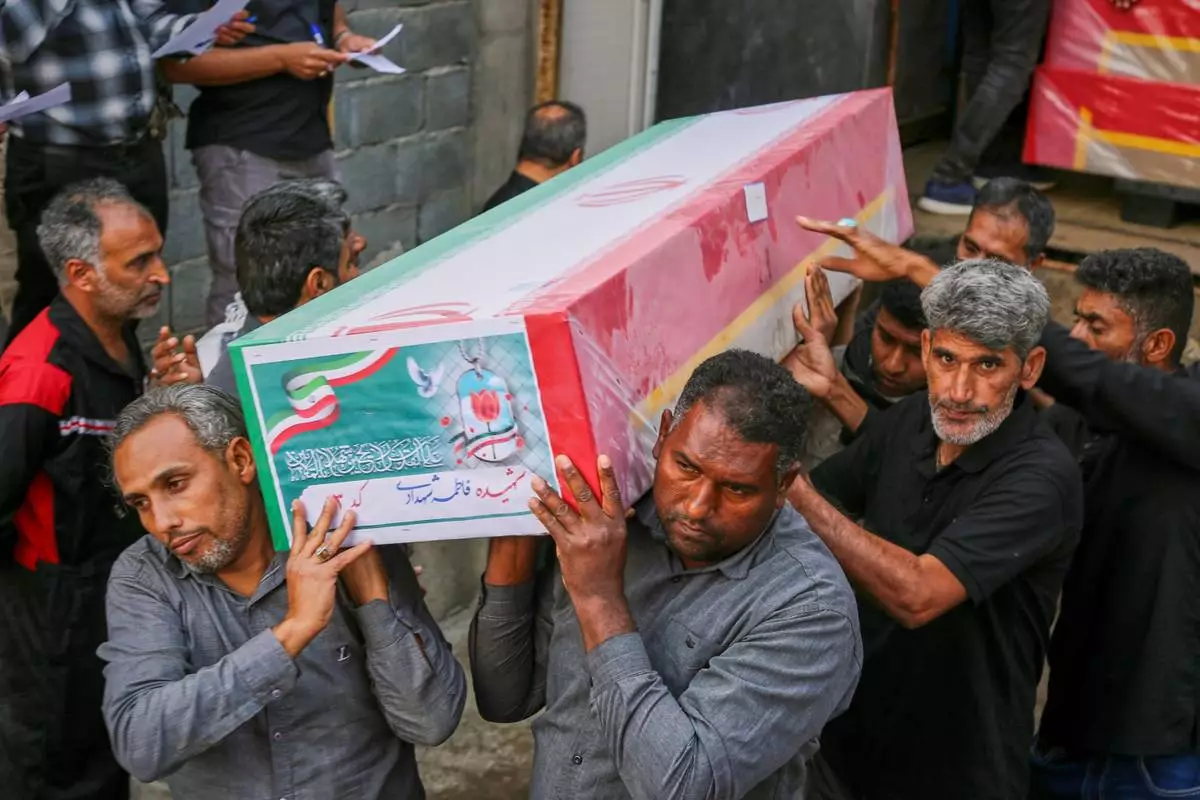
A coffin is carried during the funeral of mostly children killed in what Iranian officials said was an Israeli-U.S. strike Feb. 28 at a girls' elementary school in Minab, Iran, Tuesday, March 3, 2026. (Abbas Zakeri/Mehr News Agency via AP)
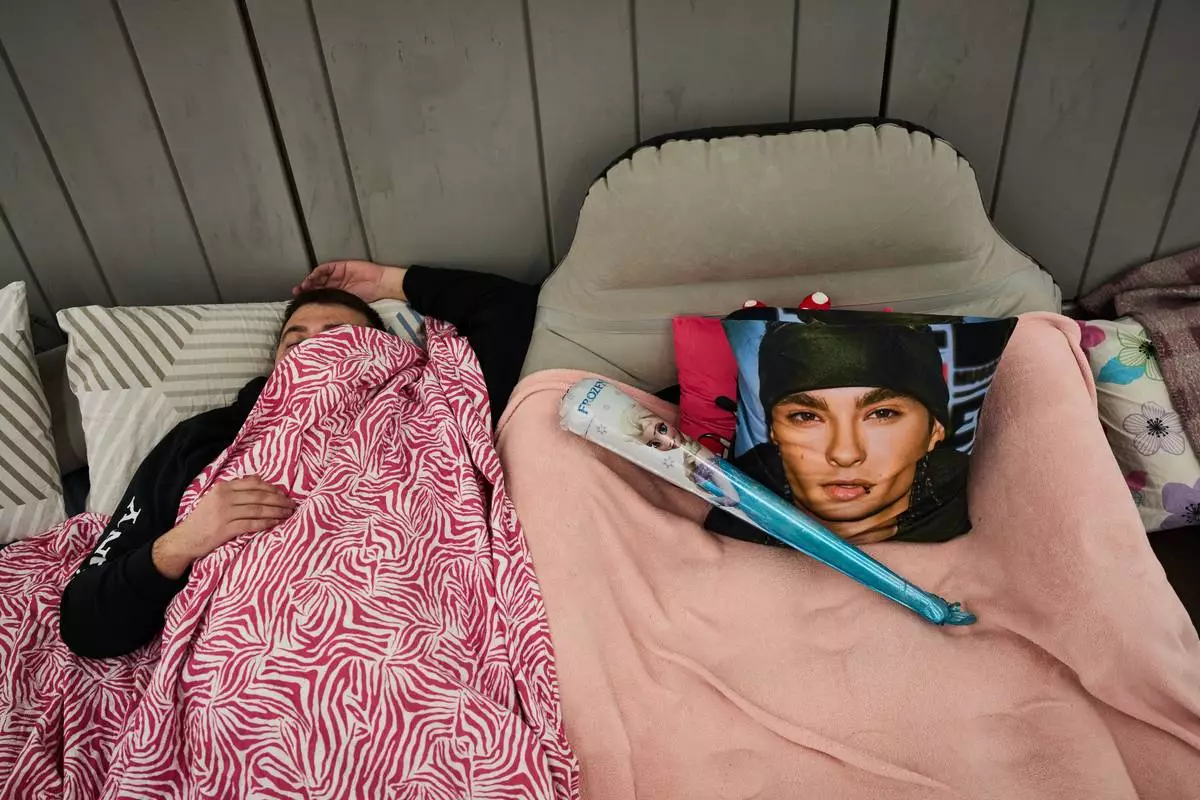
A man takes shelter in an underground metro station as a precaution against possible Iranian missile attacks, in Ramat Gan, Israel Monday, March 2, 2026. (AP Photo/Oded Balilty)
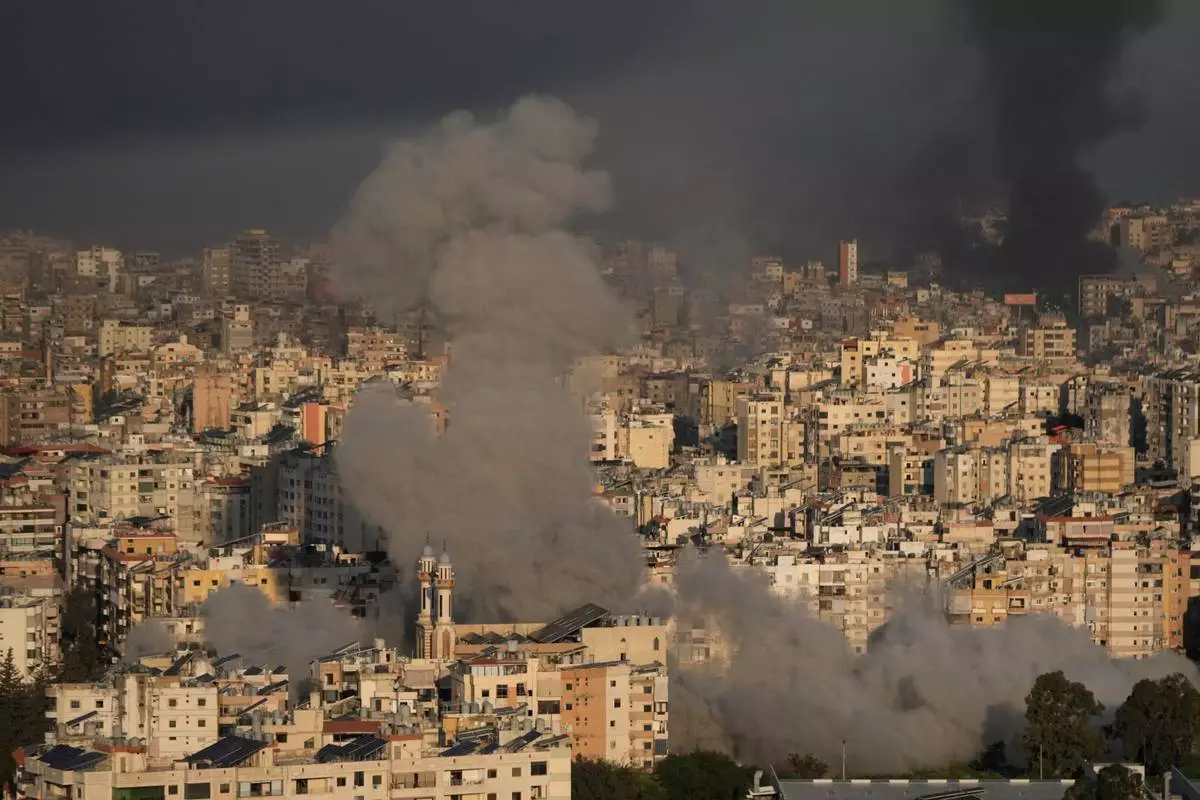
Smoke rises from Israeli airstrikes in Dahiyeh, a southern suburb of Beirut, Lebanon, Tuesday, March 3, 2026. (AP Photo/Hussein Malla)