Skip to Content Facebook Feature Image

Governments scramble to bring citizens home during travel chaos caused by war in the Middle East

News

Governments scramble to bring citizens home during travel chaos caused by war in the Middle East
News

News

Governments scramble to bring citizens home during travel chaos caused by war in the Middle East

2026-03-04 22:41 Last Updated At:22:50

PARIS (AP) — Governments across the world scrambled to organize the return of their citizens from the Middle East on Wednesday as travel across the region remained heavily disrupted by the widening war in the region.

The first flight repatriating French citizens stranded in the Middle East landed in Paris early Wednesday as French authorities booked about 100 seats onboard for vulnerable people on a priority list, said Eleonore Caroit, the minister responsible for French Nationals Abroad.

More Images
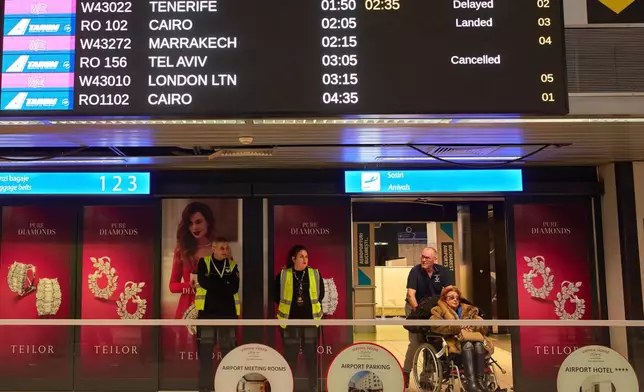
A display in the arrivals terminal of the Henri Coanda International Airport shows cancelled flights originating in Middle East countries, in Otopeni, Romania, Tuesday, March 3, 2026. (AP Photo/Vadim Ghirda)
A display in the arrivals terminal of the Henri Coanda International Airport shows cancelled flights originating in Middle East countries, in Otopeni, Romania, Tuesday, March 3, 2026. (AP Photo/Vadim Ghirda)

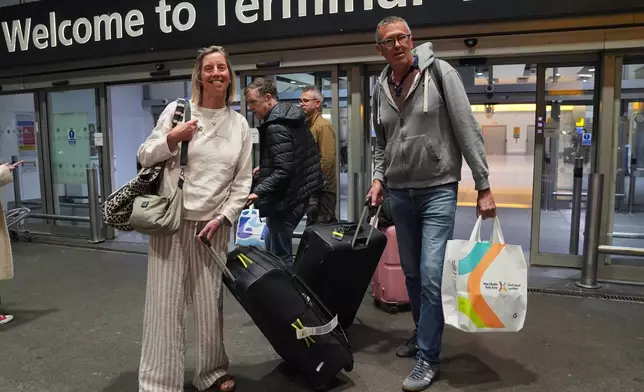
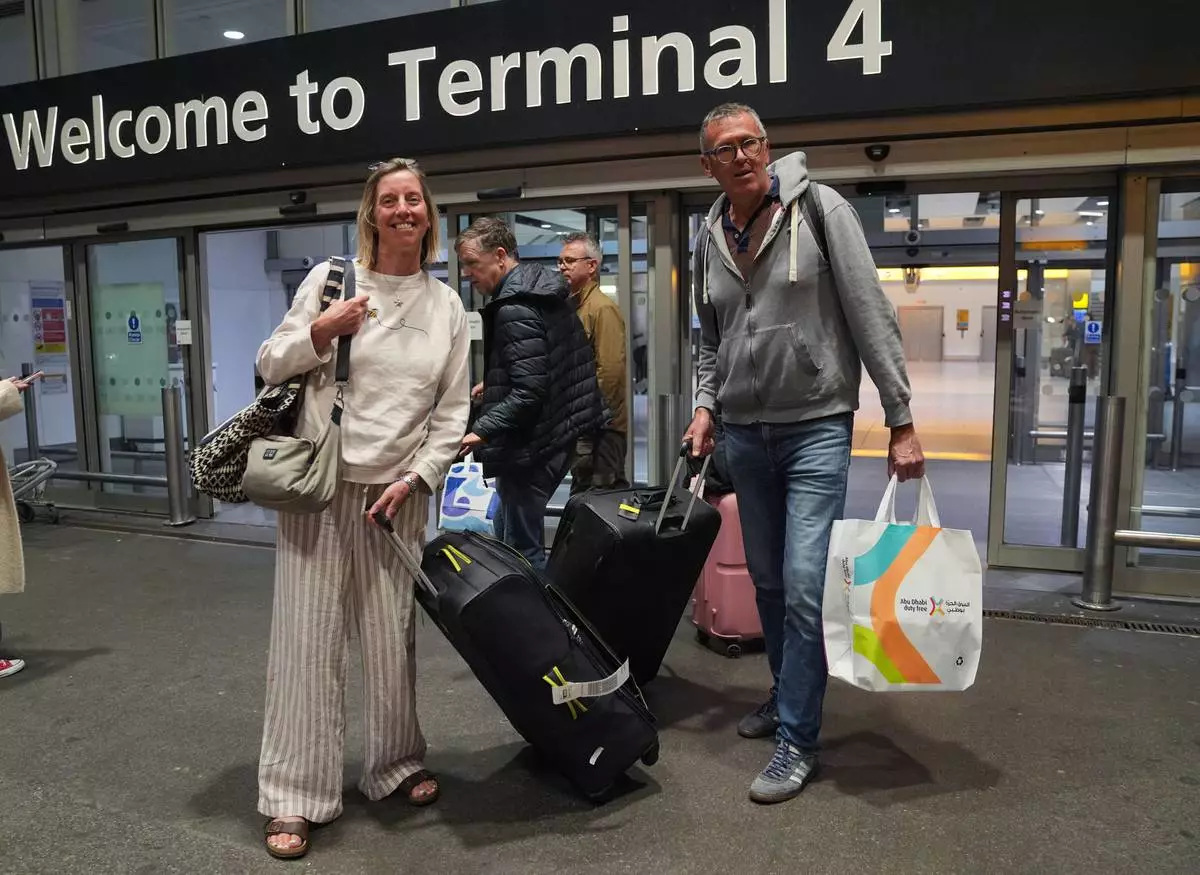
Lindsay Elvidge and husband Ric, from Somerset, arrive at Terminal 4 of London Heathrow Airport on a flight from Abu Dhabi in the United Arab Emirates, Monday, March 2, 2026. (Yui Mok/PA via AP)
Lindsay Elvidge and husband Ric, from Somerset, arrive at Terminal 4 of London Heathrow Airport on a flight from Abu Dhabi in the United Arab Emirates, Monday, March 2, 2026. (Yui Mok/PA via AP)

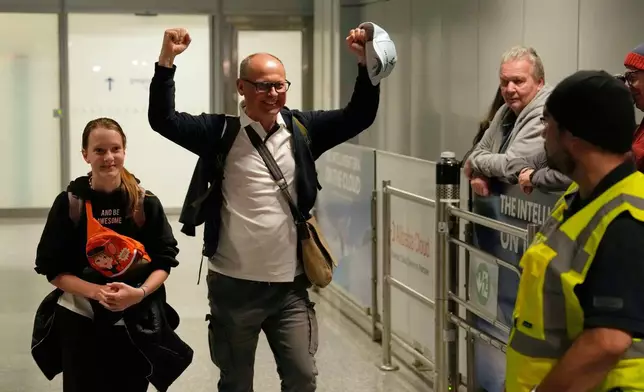
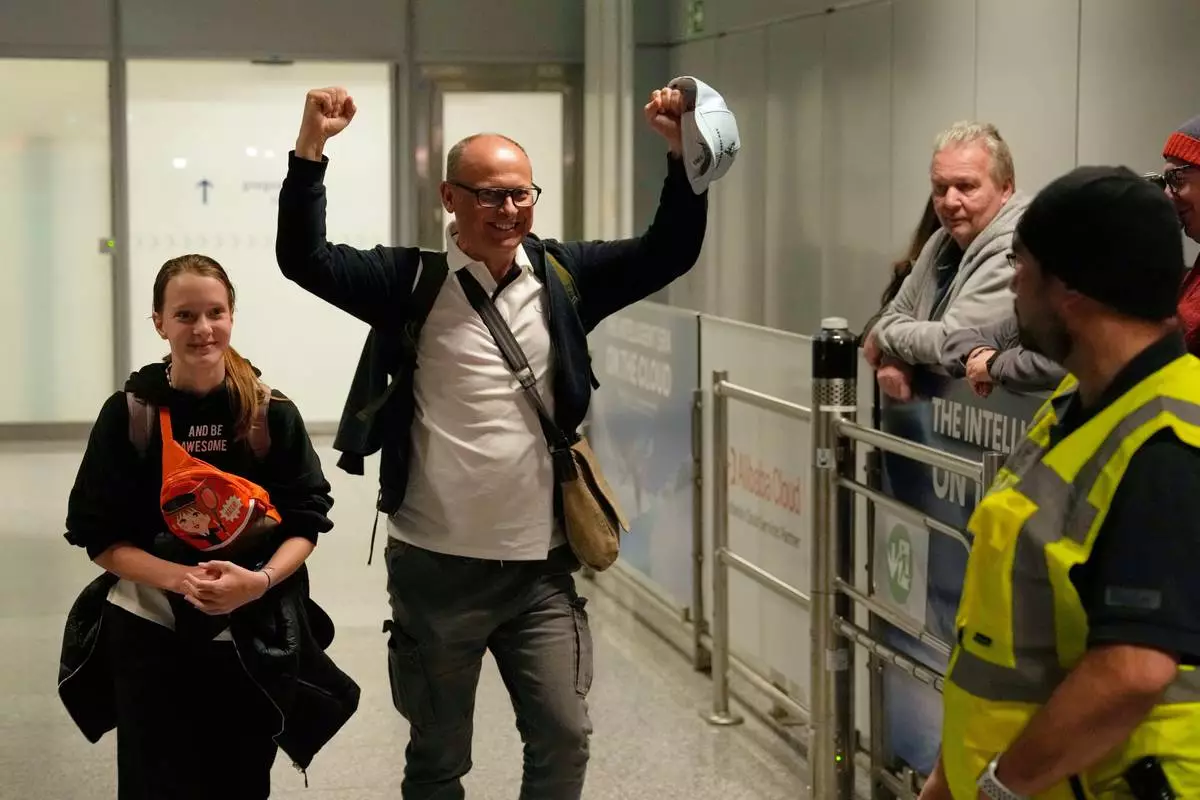
A man celebrates as he arrives at the International Airport in Frankfurt, Germany, after being evacuated from Dubai on a commercial flight, Tuesday, March 3, 2026. (AP Photo/Michael Probst)
A man celebrates as he arrives at the International Airport in Frankfurt, Germany, after being evacuated from Dubai on a commercial flight, Tuesday, March 3, 2026. (AP Photo/Michael Probst)

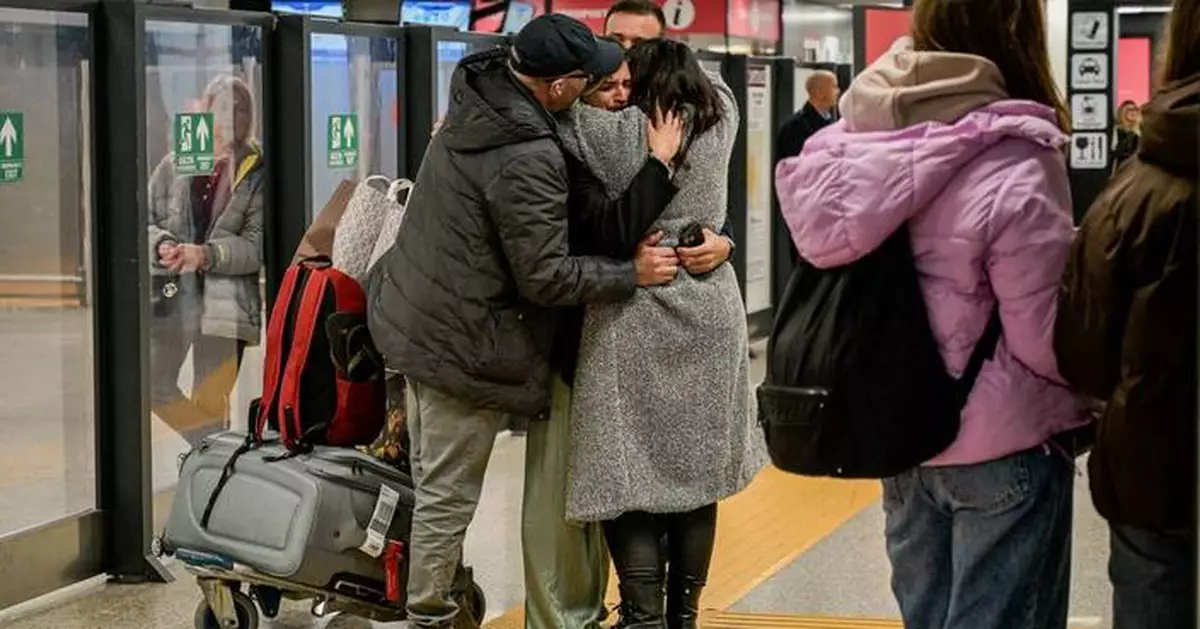
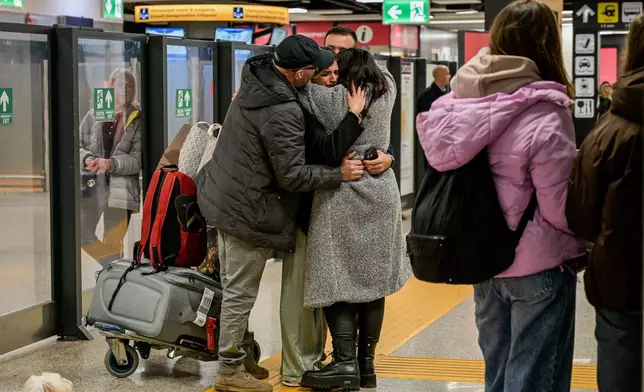
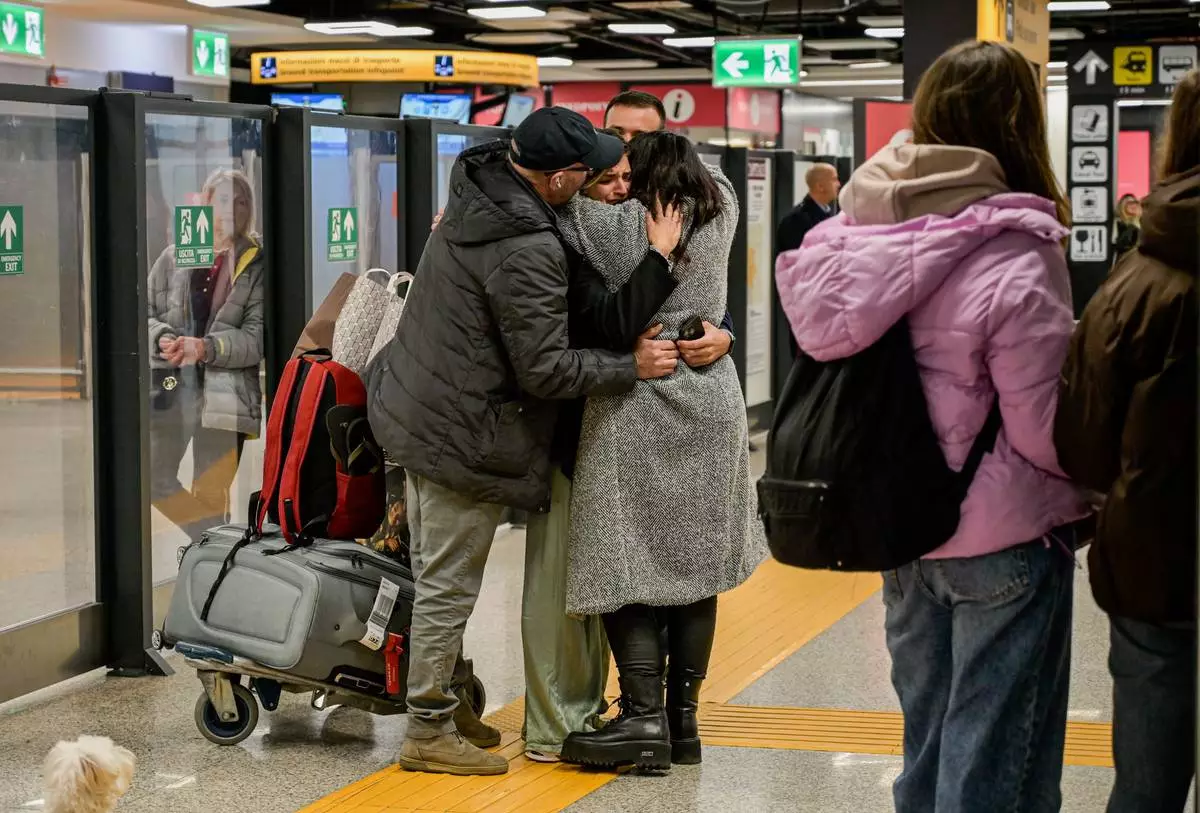
The flight from Abu Dhabi with passengers returned to Italy arrives at Fiumicino Airport, in Rome, Tuesday, March 3, 2026. (Valentina Stefanelli/LaPresse via AP)

The flight from Abu Dhabi with passengers returned to Italy arrives at Fiumicino Airport, in Rome, Tuesday, March 3, 2026. (Valentina Stefanelli/LaPresse via AP)

Students also returned to Milan after being evacuated from Dubai by the Italian government. Valerio Schiavoi, a member of the World Students Connection program, said he was part of a group involved in United Nations diplomatic simulations in Dubai.

“We received the news that Iran had been bombed by USA and Israel,” he told Italian news agency LaPresse. “And as soon as we leave the room, we start to hear the sounds of military planes and so on. And the panic starts a bit. Through the window we could see missiles passing by and alarms kept sounding but we didn’t know what to do.”

With airspace closed or heavily restricted across much of the Gulf, passengers have been stranded not only in the region but also in cities far from the fighting after their connecting flights in the Middle East were canceled. More than 20,000 of the more than 36,000 flights scheduled to fly to or from the Middle East between the start of the war and Wednesday have been canceled, according to aviation analytics firm Cirium.

Amid the travel chaos and with commercial flights limited, governments have been mounting emergency operations.

The French plane departed from Muscat, Oman and made a stop in Cairo, Egypt, before touching down at Paris Charles de Gaulle airport. Another flight carrying French citizens, who were based in Israel and managed to cross the border with Egypt, should arrive in France later Wednesday, Caroit said.

“We are focusing on a priority group — families with children, people affected by illness, old people,” Caroit told TF1 broadcaster. “Our goal is to help repatriate as quickly as possible the French people who wish to return.”

French President Emmanuel Macron said an estimated 400,000 French people are present in the region affected by the conflict, either as residents or temporarily passing through.

The United States told its citizens to leave more than a dozen countries in the region right away using any available commercial transportation. The countries include Iran and Israel, as well as Qatar, Bahrain, Egypt, Iraq, Jordan, Kuwait, Lebanon, Oman, the Palestinian territories, Saudi Arabia, Syria, the United Arab Emirates and Yemen.

In Britain, the government said a chartered flight will take off from Oman late Wednesday to bring back some of the thousands of U.K. nationals in the Gulf. It said the most vulnerable will be prioritized for the first of what is expected to be a series of flights.

The Foreign Office said more than 130,000 British nationals in the Middle East have registered their presence with the government since the U.S.-Israel-Iran conflict broke out, though not all are trying to leave. Many of those are in the UAE, and the government has advised against trying to travel overland to Oman.

Commercial airlines are starting to resume some flights, with Etihad, Emirates and Virgin Atlantic all due to operate flights from the UAE to London on Wednesday.

But scores of travelers have struggled to find a way home. Li Qian, a 44-year-old tourist from Hangzhou, has been stuck in Abu Dhabi with her family after airspace closures disrupted their return flight to China. She said she received repeated missile alerts on her mobile phone and saw smoke rising near areas they had visited.

“It was frightening ... We just want to get home as soon as possible,” she said, adding that she worried about her mother’s high blood pressure medication and her child’s return to school.

Thousands of miles away in the Indonesian resort island Bali, officials said about 6,000 people were stranded because their flights to Doha, Dubai and Abu Dhabi were canceled. Many of those affected were tourists from Europe or the U.S. trying to fly long-haul via those Middle Eastern airports.

Indonesian immigration authorities said they have issued emergency stay permits and waived overstay fines for stranded foreign nationals.

Agnes Chen Pun, a Hong Kong expatriate who moved with her family to Dubai last year, said she struggled to find plane tickets to leave the region. She moved first to a resort in Fujairah, then to a desert resort near Sharjah amid fears of potential attacks and local fires.

“We were so nervous, so anxious,” said Chen, a partner at Asia Bankers Club, a Hong Kong- and Dubai-based investment company.

She said she considered a 13-seat private jet costing $268,000 — but ultimately secured commercial tickets for around $2,200 per person to Singapore. Her departure is still uncertain. Despite the disruption, Chen said she plans to return to the UAE once the situation stabilizes.

“I think the scare, the fears, will be short-term,” she said.

Ireland’s foreign minister said Emirates airlines would operate a flight from Dubai to Dublin on Wednesday.

Foreign Affairs Minister Helen McEntee welcomed the development as the government tried to help some of its estimated 22,000 to 23,000 Irish citizens in the Middle East return home. The Irish government also plans to charter a flight for about 280 people from Oman in the coming days.

Elsewhere, Norway’s Foreign Ministry said it’s sending an “emergency team” to Dubai to reinforce the Norwegian embassy’s team helping an estimated 1,500 Norwegians registered in the city.

Associated Press writers from around the world contributed to this story.
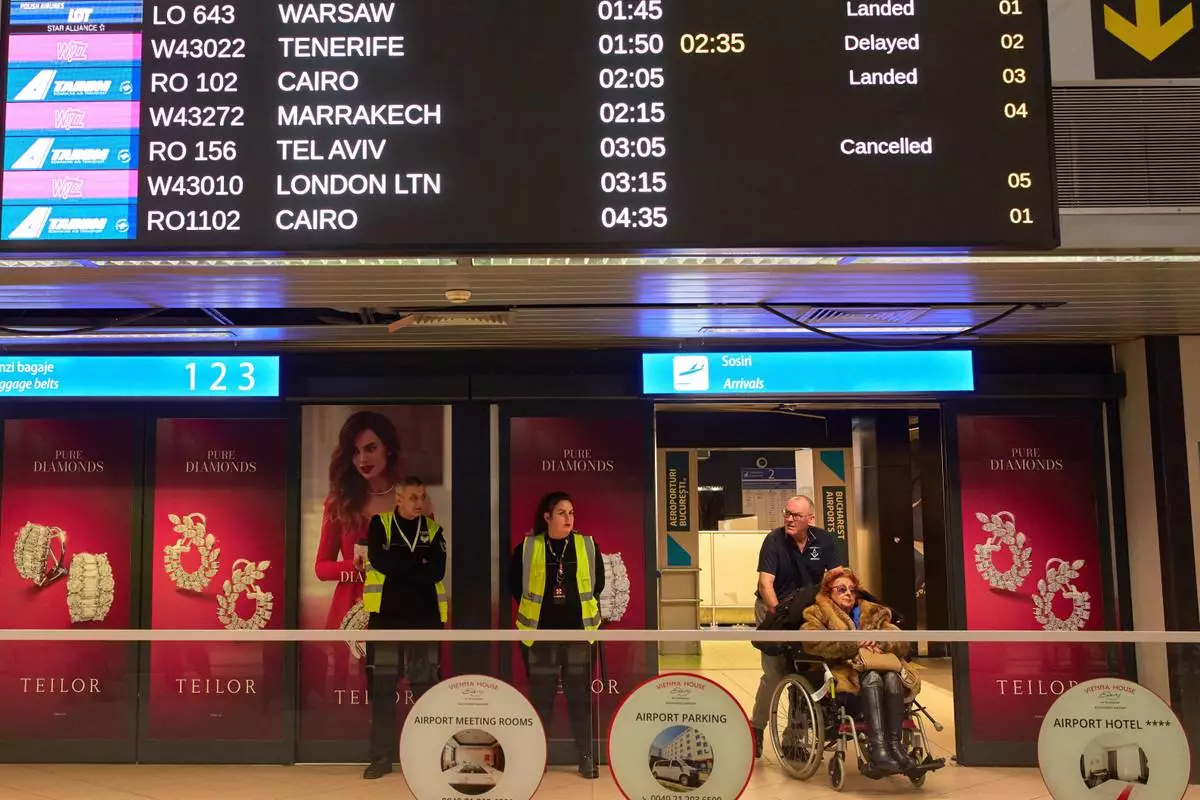
A display in the arrivals terminal of the Henri Coanda International Airport shows cancelled flights originating in Middle East countries, in Otopeni, Romania, Tuesday, March 3, 2026. (AP Photo/Vadim Ghirda)
A display in the arrivals terminal of the Henri Coanda International Airport shows cancelled flights originating in Middle East countries, in Otopeni, Romania, Tuesday, March 3, 2026. (AP Photo/Vadim Ghirda)

Lindsay Elvidge and husband Ric, from Somerset, arrive at Terminal 4 of London Heathrow Airport on a flight from Abu Dhabi in the United Arab Emirates, Monday, March 2, 2026. (Yui Mok/PA via AP)
Lindsay Elvidge and husband Ric, from Somerset, arrive at Terminal 4 of London Heathrow Airport on a flight from Abu Dhabi in the United Arab Emirates, Monday, March 2, 2026. (Yui Mok/PA via AP)

A man celebrates as he arrives at the International Airport in Frankfurt, Germany, after being evacuated from Dubai on a commercial flight, Tuesday, March 3, 2026. (AP Photo/Michael Probst)
A man celebrates as he arrives at the International Airport in Frankfurt, Germany, after being evacuated from Dubai on a commercial flight, Tuesday, March 3, 2026. (AP Photo/Michael Probst)

The flight from Abu Dhabi with passengers returned to Italy arrives at Fiumicino Airport, in Rome, Tuesday, March 3, 2026. (Valentina Stefanelli/LaPresse via AP)

The flight from Abu Dhabi with passengers returned to Italy arrives at Fiumicino Airport, in Rome, Tuesday, March 3, 2026. (Valentina Stefanelli/LaPresse via AP)

NEW YORK (AP) — The U.S. stock market is holding steadier on Wednesday, for now at least, following two days of punishing swings driven by worries about how high oil prices will go because of the war with Iran.

The S&P 500 rose 0.2% in early trading. The Dow Jones Industrial Average was down 9 points, or less than 0.1%, as of 9:35 a.m. Eastern time, and the Nasdaq composite was 0.6% higher.

Early-morning trends for Wall Street have not held through the day this week, though. Uncertainty about the war has sent prices in financial markets careening up and down hour by hour, with most taking their cues from what the price of oil is doing. Earlier on Wednesday, South Korea’s Kospi stock index plunged 12.1% for its worst day in history.

But oil prices eased as the trading day moved westward from Asia to Europe. By the time Wall Street was trading, Brent crude, the international standard, slipped 0.3% to $81.13 per barrel. The price for a barrel of benchmark U.S. crude added 0.7% to $75.10.

An announcement by President Donald Trump on Tuesday afternoon helped stem the surge for oil prices, when he said the U.S. Development Corp. would provide insurance for oil tankers and other ships going through the Strait of Hormuz off Iran’s coast. He also said the U.S. Navy could escort tankers through the strait, “if necessary.”

That helped calm worries that flared earlier following an Iranian threat to set fire to any ship crossing through the narrow passageway. It’s a route typically taken by roughly a fifth of the world’s oil.

To be sure, the promise of insurance and a possible military escort “only mitigate, but do not eliminate, enduring upside risks to oil prices,” Mizuho Bank said in a commentary. The increased insurance costs filtering through to shipping would ultimately cost an extra $5 to $15 a barrel, it said, adding that the "‘war premium’ remains firmly intact.”

In financial markets, worries are centered on how long the war could last, how high inflation will go because of more expensive oil and how much corporate profits will sink because of it.

“I think the Iran situation is getting out of hand, and I think that U.S. President Donald Trump miscalculated enormously,” said Francis Lun, CEO of Venturesmart Asia. “The situation is very grim.”

But the U.S. stock market also has a history of shaking off military conflicts in the Middle East relatively quickly, though that comes with a caveat that oil prices don’t jump too high. That has some professional investors suggesting patience, as difficult as it may be to muster, through the uncertainty, at least when it comes to financial markets.

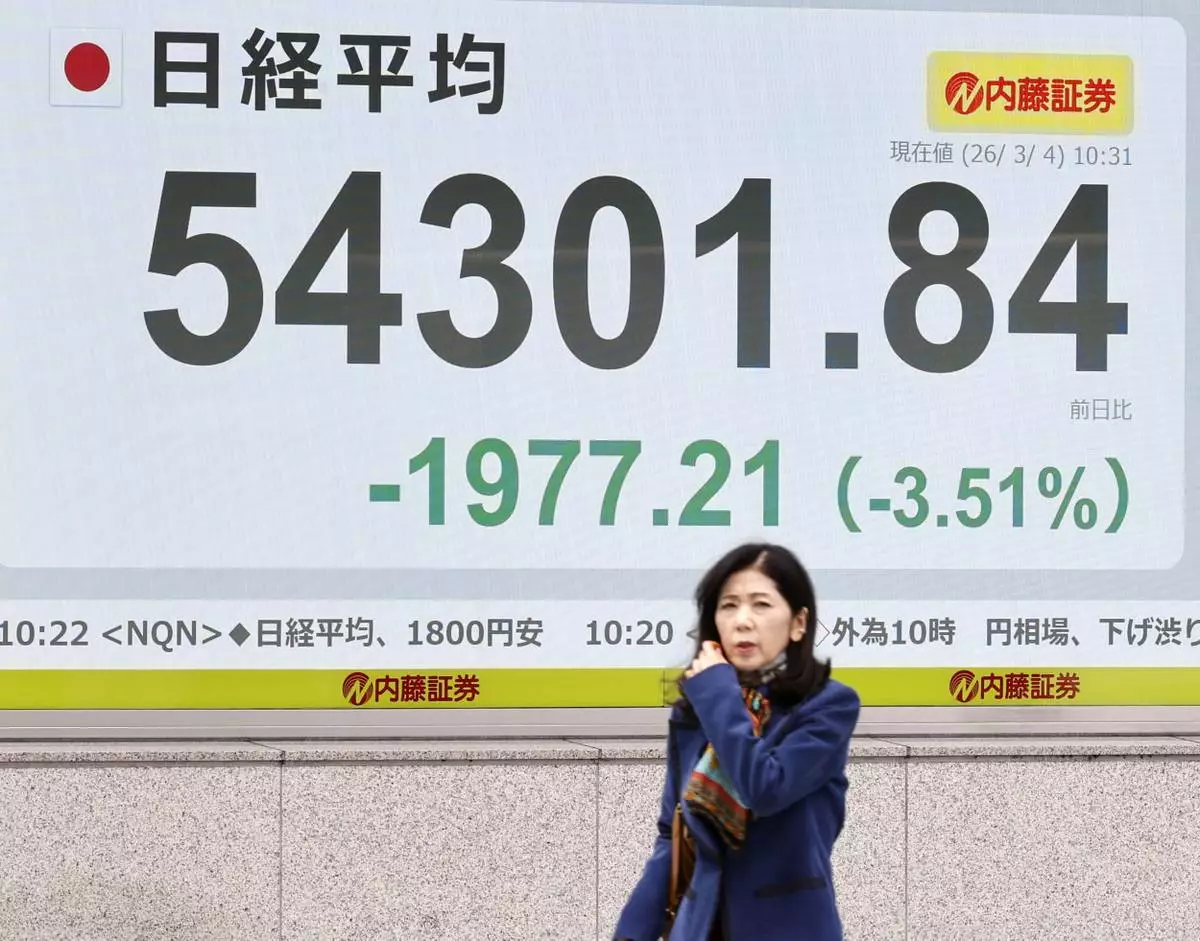
In stock markets abroad, indexes rebounded in Europe following sharp drops in Asia. France’s CAC 40 rose 1.1%, and Germany’s DAX climbed 1.6%. That followed losses of 2% for Hong Kong’s Hang Seng and 3.6% for Japan’s Nikkei 225.

In the bond market, Treasury yields inched higher after jumping early in the week with worries about worsening inflation. The yield on the 10-year Treasury rose to 4.07% from 4.06% late Tuesday.

It also got some upward pressure from a report suggesting U.S. employers outside of the government picked up their hiring last month by more than economists expected. That could be an encouraging signal for the more comprehensive report coming Friday from the U.S. government about the strength of the job market.

AP Writers Matt Ott, Kim Tong-hyung and Elaine Kurtenbach contributed.

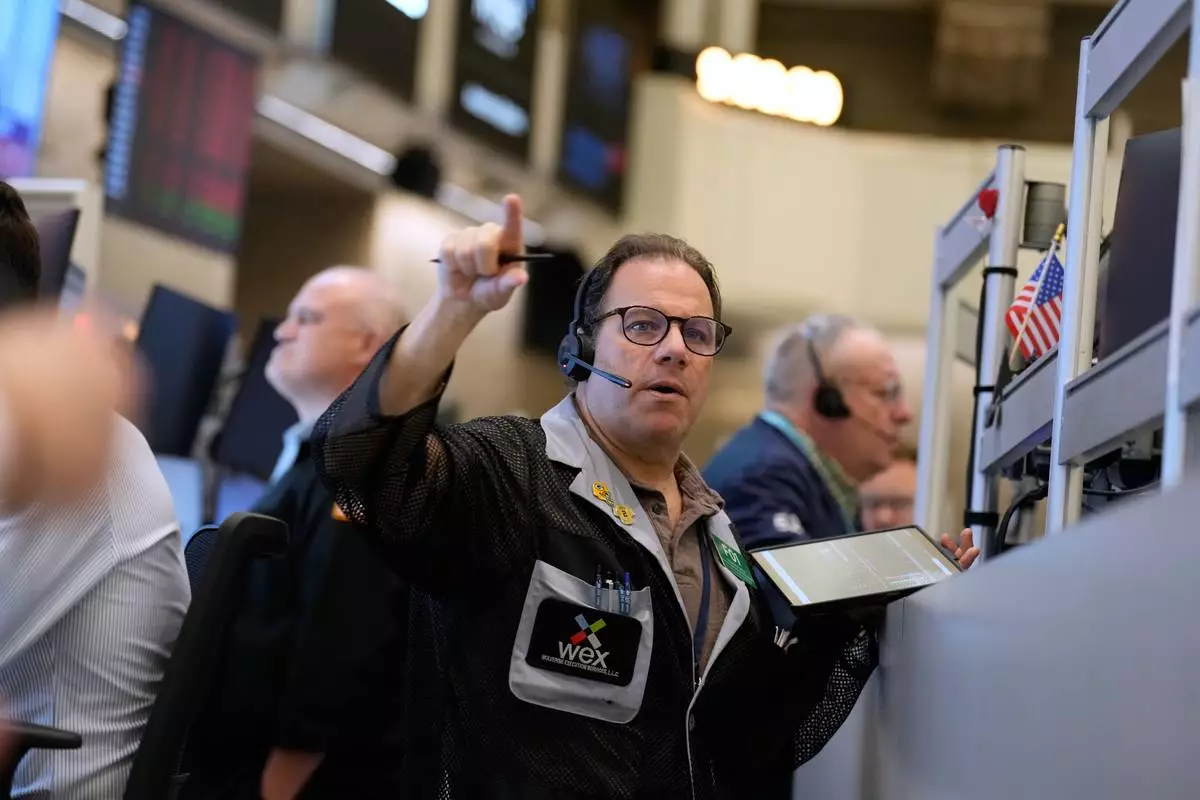
Anthony Spina works on the floor at the New York Stock Exchange in New York, Tuesday, March 3, 2026. (AP Photo/Seth Wenig)

Anthony Spina works on the floor at the New York Stock Exchange in New York, Tuesday, March 3, 2026. (AP Photo/Seth Wenig)

Anthony Confusione works on the floor at the New York Stock Exchange in New York, Tuesday, March 3, 2026. (AP Photo/Seth Wenig)

Anthony Confusione works on the floor at the New York Stock Exchange in New York, Tuesday, March 3, 2026. (AP Photo/Seth Wenig)

A dealer walks near the screens showing the Korea Composite Stock Price Index (KOSPI) and the foreign exchange rate between U.S. dollar and South Korean won at a dealing room of Hana Bank in Seoul, South Korea, Wednesday, March 4, 2026. (AP Photo/Lee Jin-man)

A dealer walks near the screens showing the Korea Composite Stock Price Index (KOSPI) and the foreign exchange rate between U.S. dollar and South Korean won at a dealing room of Hana Bank in Seoul, South Korea, Wednesday, March 4, 2026. (AP Photo/Lee Jin-man)

A dealer talks on the phone at a dealing room of Hana Bank in Seoul, South Korea, Wednesday, March 4, 2026. (AP Photo/Lee Jin-man)

A dealer talks on the phone at a dealing room of Hana Bank in Seoul, South Korea, Wednesday, March 4, 2026. (AP Photo/Lee Jin-man)

A dealer walks past near a screen showing the foreign exchange rate between U.S. dollar and South Korean won at a dealing room of Hana Bank in Seoul, South Korea, Wednesday, March 4, 2026. (AP Photo/Lee Jin-man)

A dealer walks past near a screen showing the foreign exchange rate between U.S. dollar and South Korean won at a dealing room of Hana Bank in Seoul, South Korea, Wednesday, March 4, 2026. (AP Photo/Lee Jin-man)

A dealer walks past near a screen showing the Korea Composite Stock Price Index (KOSPI), right, and the foreign exchange rate between U.S. dollar and South Korean won at a dealing room of Hana Bank in Seoul, South Korea, Wednesday, March 4, 2026. (AP Photo/Lee Jin-man)

A dealer walks past near a screen showing the Korea Composite Stock Price Index (KOSPI), right, and the foreign exchange rate between U.S. dollar and South Korean won at a dealing room of Hana Bank in Seoul, South Korea, Wednesday, March 4, 2026. (AP Photo/Lee Jin-man)

A person walks by an electronic stock board showing Japan's Nikkei index at a securities firm in Tokyo Wednesday, March 4, 2026. (Masanori Kumagai/Kyodo News via AP)

A person walks by an electronic stock board showing Japan's Nikkei index at a securities firm in Tokyo Wednesday, March 4, 2026. (Masanori Kumagai/Kyodo News via AP)

Recommended Articles