PHOENIX (AP) — Dick Van Arsdale, a three-time All-Star who became the first Phoenix Suns player after being selected by the franchise in the 1968 expansion draft, has died. He was 81.
The Suns announced Van Arsdale's death in a statement on Monday and a team spokesman confirmed that the franchise had received the news from his family. A cause of death wasn't disclosed.
The 6-foot-5 Van Arsdale played his first three NBA seasons with the New York Knicks before being selected by the Suns with their first pick in the 1968 expansion draft. He an All-Star during his first three seasons in the desert, averaging a career-high 21.9 points during the 1970-71 season.
Van Arsdale was part of the franchise's 1976 team that advanced to the NBA Finals before losing to the Boston Celtics and retired in 1977 as the franchise's all-time scoring leader. His is survived by twin brother, Tom Van Arsdale, who was also a three-time NBA All-Star and played with his brother in Phoenix during the 1976-77 season.
After his playing days, Dick Van Arsdale held several positions with the franchise, including broadcaster and front-office executive.
AP NBA: https://apnews.com/NBA

FILE - Phoenix Suns' Dick van Arsdale, right, comes in on a play as New York Knicks' Dick Barnett, left, prepares to move out with the ball during an NBA basketball game at New York's Madison Square Garden, Oct. 21, 1969. (AP Photo/Ron Frehm, File)
MINNEAPOLIS--(BUSINESS WIRE)--Apr 7, 2026--
Tennant Company (NYSE: TNC) today announced the launch of the X16 SWEEP, the first autonomous, robotic sweeper engineered for complex industrial environments such as warehousing, logistics centers and light manufacturing operations by a major cleaning brand. Built to meet rising expectations for industrial automation, the X16 SWEEP delivers consistent, repeatable floor-cleaning coverage facilities can rely on to support dependable operations.
This press release features multimedia. View the full release here: https://www.businesswire.com/news/home/20260407554309/en/
Earlier this year, Tennant Company established a dedicated autonomous robotics organization designed to accelerate the adoption and scaling of its robotic cleaning solutions. This new group unifies expertise across product design and engineering, production, commercial strategy, marketing, business development and customer support, creating an integrated team focused on advancing Tennant’s autonomous product roadmap, expanding production capacity and supporting customers throughout deployment and ongoing operation. The X16 SWEEP is the first product introduced through this new organization, marking a significant milestone as Tennant strengthens its leadership and long-term investment in autonomous cleaning technologies.
Powered by Brain Corp’s industry-leading autonomy platform, BrainOS ®, the X16 SWEEP delivers a new standard in autonomous cleaning for industrial spaces. Integrating the advanced AI autonomy, visual intelligence, and workflow-aware automation capabilities of the latest BrainOS ® software, the X16 SWEEP features SelfPath™ AI to dynamically generate and optimize its own cleaning paths, and the ability to intelligently recognize and adapt cleaning behavior in real time—avoiding problem debris while providing more consistent coverage, productivity, and performance with every clean.
“Industrial customers are making more deliberate investments in automation as a core operational necessity,” said Pat Schottler, Senior Vice President, Robotics at Tennant Company. “We launched Tennant Company Robotics with a focus on advancing cleaning automation for those environments. The X16 SWEEP is the first of many products we’re bringing to market through Tennant Company Robotics, giving facilities a faster path to reliable autonomous cleaning that can keep pace with changing industrial conditions.”
Key features of the X16 SWEEP include:
“Industrial leaders want enterprise-grade autonomy that’s easy to roll out, dependable day after day, and built for the realities of their busy spaces,” said Mark Garczewski, Chief Product Officer at Brain Corp. “We're proud to accelerate Tennant's vision for solving real customer problems at scale. By pairing Tennant’s industrial-grade design with the BrainOS ® autonomy platform, the X16 SWEEP is the latest way we are helping enterprises deploy AI in the real world for more productive and reliable operations.”
The X16 SWEEP will be available for purchase starting April 7, 2026. For more information visit https://www.tennantco.com/en_us/1/machines/sweepers/product.x16-sweep.autonomous-floor-sweeper.2000309.html.
* Optional features available at an additional cost.
About Tennant Company
Founded in 1870, Tennant Company (TNC), headquartered in Eden Prairie, Minnesota, is a world leader in the design, manufacture and marketing of solutions that help create a cleaner, safer and healthier world. Its products include equipment for maintaining surfaces in industrial, commercial and outdoor environments; detergent-free and other sustainable cleaning technologies; and cleaning tools and supplies. Tennant's global field service network is the most extensive in the industry. Tennant Company had sales of $1.20 billion in 2025 and has approximately 4,500 employees. Tennant has manufacturing operations throughout the world and sells products directly in more than 21 countries and through distributors in more than 100 countries. For more information, visit www.tennantco.com and www.ipcworldwide.com. The Tennant Company logo and other trademarks designated with the symbol “®” are trademarks of Tennant Company registered in the United States and/or other countries.
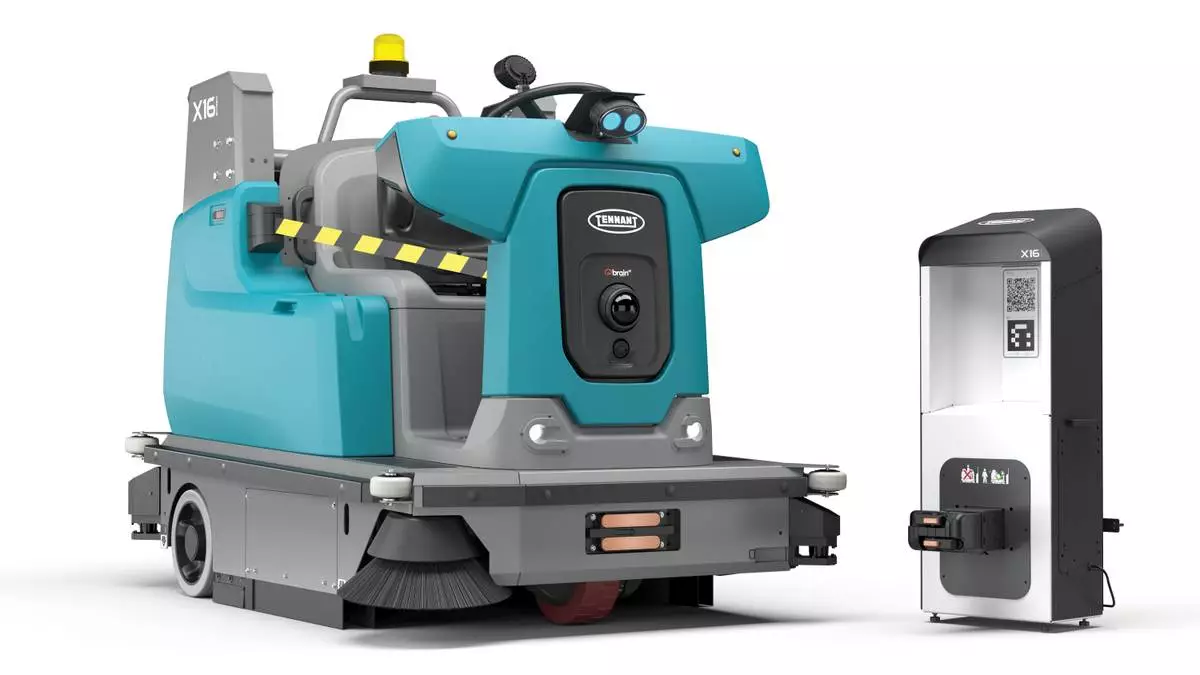
Tennant Company's new X16 SWEEP