SAN JOSE, Calif.--(BUSINESS WIRE)--Dec 19, 2024--
Micromax Informatics, India’s home-grown consumer electronics brand and Phison, a leading innovator in NAND controller and NAND storage technologies, have launched MiPhi, a strategic joint venture poised to revolutionize India’s technology landscape.
This press release features multimedia. View the full release here: https://www.businesswire.com/news/home/20241218703212/en/
As India emerges as a global economic hub, this partnership supports the nation's vision of ‘Making AI in India,’ aligning with its ambition to become a global leader in artificial intelligence. The strategic partnership announcement demonstrates this commitment by combining the key differentiators of two industry leaders to drive innovation, expand product offerings, and bolster India’s ambitions as a global AI superpower. With a vision to enhance GPU efficiency and deliver advanced NAND storage solutions, MiPhi will introduce the world’s lowest per-token cost and energy consumption for AI use cases.
Through MiPhi, the joint venture aims to empower the Indian market with cutting-edge NAND storage solutions, providing unparalleled convenience and technological advantages. The collaboration leverages Micromax’s deep-rooted customer relationships within India and Phison’s expertise in NAND storage technology to foster a strong, synergistic partnership that expands opportunities and business growth across enterprise, consumer, embedded, AI, and security applications within India’s burgeoning tech ecosystem and specific agreed-upon regions.
“We are thrilled to announce our joint venture with Phison, uniting our capabilities to drive a new wave of innovation in the Indian technology landscape,” said Rahul Sharma, Co-founder, Micromax Informatics. “By combining our local market expertise with Phison’s critical technological prowess, we are poised to deliver breakthrough solutions. The joint venture kicks off a new chapter with an aim to harness the full potential of emerging technologies and contribute to the future of digital transformation across industries. With this venture, we aim to bring down the cost of GPU by 1/10 th by bringing the lowest per token cost in the world. This will help us in disrupting the AI landscape not only in India but also in specific agreed-upon regions.”
“India has been a hub for technological growth, and now the vision set forth from the government further enables homegrown companies to innovate at an exponentially higher rate,” said K.S. Pua, CEO of Phison. “Phison is delighted to partner with Micromax. Together, we are committed to leveraging our combined resources and expertise to establish MiPhi as a leading force in India’s NAND storage ecosystem. By uniting Micromax’s local market understanding with Phison’s world-class storage technologies, we’re well-positioned to create impactful solutions across SMBs, automotive, IoT, AI, enterprise workloads, and beyond.
The collaboration between Micromax, leading Indian electronics brand renowned for its expertise in manufacturing and marketing tech products, and Phison, a global pioneer in NAND storage solutions and technology, will position MiPhi as a key innovation hub in India. Phison’s impressive portfolio, with over 2,000 patents and a legacy of industry-first innovations, coupled with its commitment to R&D—investing 80% of its OPEX (Operating Expense)—equips the company to provide vital technical insights to MiPhi’s operations. This strategic alliance will drive MiPhi’s contribution to India’s technological future, harnessing local manufacturing and sales channels to accelerate the growth of the country’s storage economy.
As a part of the joint venture, MiPhi’s distinctive approach to drive innovation includes:
MiPhi will specialize in custom-designed NAND storage solutions for AI, enterprise, and automotive use cases, addressing the needs of both Indian and specific agreed-upon markets. The joint venture’s focus on innovation and collaboration ensures a robust, connected ecosystem powered by advanced semiconductor solutions. With a strong local manufacturing partnership and in-house NAND controller technology, Phison reinforces its commitment to comprehensive support, including local RMA services and a sales channel to India and specific agreed-upon regions for efficient customer service.
About Micromax Informatics Ltd.
Micromax Informatics, founded in 2000 and headquartered in Gurugram, Haryana, is one of India’s leading homegrown consumer electronics brands. The company has been at the forefront of democratizing technology by offering innovative, affordable, and feature-rich products, including smartphones, laptops, tablets, and televisions. Known for its iconic Canvas series, Micromax revolutionized the Indian smartphone market by delivering advanced technology to budget-conscious consumers.
Driven by its vision of making technology accessible to all, Micromax has diversified into smart devices and consumer electronics to meet evolving customer needs. As part of its commitment to "Make in India", the brand has invested significantly in local manufacturing and innovation, supporting India's push for self-reliance in electronics production. With state-of-the-art facilities in Rudrapur, Hyderabad, Greater Noida, and Rajasthan, Micromax produces a range of products, including mobile phones and all consumer electronics. For more information, please visit: www.micromaxinfo.com
About Phison
Phison Electronics Corp. (TPEX:8299) is a global leader in NAND Flash controller IC and storage solutions. We provide a variety of services from controller design, system integration, IP licensing to total turnkey solutions, covering applications across SSD (PCIe/SATA/PATA), eMMC, UFS, SD and USB interfaces, reaching out to consumer, industrial and enterprise markets. As an active member of industry associations, Phison is on the Board of Directors for SDA, ONFI, UFSA and a contributor for JEDEC, PCI-SIG, MIPI, NVMe and IEEE-SA. For more information, please visit http://www.phison.com.
Micromax and Phison partner to launch MiPhi, a joint venture (Graphic: Business Wire)
CHICAGO (AP) — It’s official: Skydance-owned Paramount closed its $81 billion takeover of Warner Bros. Discovery on Tuesday, ushering in a new Hollywood giant.
The merger brings two of America’s oldest moviemaking studios together under a new name: Skydance. The deal, which followed a tumultuous, roughly yearlong fight, further concentrates power in an industry already run by just a handful of major players.
HBO Max, titles ranging from “Harry Potter” to “Sinners” and networks such as CNN now find themselves under the same roof as Paramount+, CBS and the likes of “Top Gun” and “The Godfather.” All are under the helm of billionaire David Ellison and his new co-CEO Ynon Kreiz.
“Today is a historic day, not just for Skydance but for our entire industry,” Ellison said in a statement. “We couldn’t be more excited to get to work.”
Including billions of dollars in debt, the Warner acquisition amounts to nearly $111 billion.
Ellison’s Skydance bought Paramount for $8 billion last year before setting its sights on Warner. What followed was one of the biggest tie-ups ever in the media and entertainment industry.
Politics loomed over much of the process. The Ellison family has held a long relationship with President Donald Trump, who said Tuesday that Skydance is “going to be a great company.”
The early days of Paramount's quest for Warner turned into a messy bidding war.
Months after disclosing it was open to selling all or part of its business, Warner initially struck a studio and streaming deal with Netflix in December.
But Paramount said it also had made offers that Warner management “never engaged meaningfully” with. It soon launched a hostile counterbid.
The Hollywood giants spent much of early 2026 in a heated back-and-forth over who had a stronger offer, with Warner leadership repeatedly backing Netflix as its preferred suitor. But Netflix bowed out after Paramount eventually upped its offer to buy all of Warner for $31 per share.
Warner and Paramount inked a mutual merger agreement in late February.
Hollywood was closely watching the fight over Warner's future. From awards shows to online petitions, A-list celebrities and other creatives made their voices known.
In April, thousands of movie stars, writers, directors and other professionals announced their “unequivocal opposition” to the Paramount-Warner merger. An open letter — which was signed by long-outspoken critics of the deal like Jane Fonda and Mark Ruffalo, as well as Hollywood heavyweights from Denis Villeneuve to J.J. Abrams — warned of fewer jobs and “less choice for audiences in the United States and around the world.”
Others lined up to back Paramount as Ellison reiterated his commitments to the movies. At CinemaCon, the company debuted a glossy mini movie about the studio directed by Jon M. Chu and narrated by Tom Cruise — who ended the spot atop the iconic Paramount water tower, with the words “the future is paramount and the future looks pretty great from here.” Director James Cameron also doubled down on his support of Ellison.
The prospect of a new Warner owner also loomed over awards season, from #BlockTheMerger pins to more subtle nods in acceptance speeches. When accepting her Emmy last month, “Remarkably Bright Creatures” actor Sally Field — who also signed the open letter in opposition to the Paramount-Warner deal — stressed that “unique storytelling matters” and “we can’t let those voices be silenced, or compromised or merged.”
Many industry critics were also outspoken when Netflix's studio and streaming deal was on the table, with a particular focus on the future of movies staying in theaters.
Critics are also watching what happens with CNN under Skydance.
Trump has regularly attacked reporting he deems unfavorable at CNN (most recently attempting to bar the outlet from the White House altogether). Over the course of the Warner buyout, his administration chimed in about hopes for a new owner.
Days after Paramount launched its hostile bid for Warner, Trump said that CNN spread “poison and lies” and “it’s imperative that CNN be sold.”
The White House took aim again at CNN in March, over the network's coverage of the U.S.-Israeli war against Iran. Secretary of Defense Pete Hegseth told reporters that “the sooner David Ellison takes over that network, the better.”
After the deal closed, Trump called it a “great” merger. “I’m glad they let it go,” he added.
Ellison has said editorial independence will be maintained at CNN. Skydance is retaining Mark Thompson as CNN’s editor-in-chief.
Under a settlement finalized last month with states that had sued over the takeover, the company agreed to form a “News Editorial Independence Board.”
Critics point to turmoil already seen at CBS under Skydance ownership and aren’t convinced this new body will be able to do much, because Ellison is set to have ample oversight over appointments.
Ellison has maintained a close relationship with Trump. He reportedly hosted a dinner in Washington in Trump’s honor in April, on the same day Warner shareholders gave their green light for the merger. In June, just two days after the Justice Department said it wouldn't intervene in the deal, Ellison attended an Ultimate Fighting Championship match on the White House lawn for Trump’s 80th birthday (streamed by Paramount+).
To help fund its Warner buyout, Paramount racked up billions of dollars in financial backing from three Gulf countries: Saudi Arabia, Qatar and the United Arab Emirates. The Federal Communications Commission approved the company’s request for sizable indirect ownership from those foreign investors.
Paramount previously disclosed it expected those funds to indirectly own nearly 50% of equity interests — but no voting rights — of Skydance. But the company asked for clearance of up to 100% to account for potential future investments, which the FCC granted, citing in part that access to more capital would strengthen the broadcast industry and was therefore “in the public interest.”
The FCC’s sole Democratic commissioner, Anna Gomez, and other critics have called the move alarming and unprecedented. They argue that amount of money opens the door to behind-the-scenes influence.
Paramount cleared antitrust hurdles for its Warner acquisition from the Justice Department and regulators worldwide over the summer.
But in July, Democratic attorneys general from 12 states — led by California's Rob Bonta — sued to block the merger, alleging the combined company would “extinguish competition” and lead to fewer choices for consumers, particularly movie theatergoers and cable customers across the U.S.
The Writers Guild of America followed suit.
Settlements emerged in September. The states' terms, approved by a judge, include pledges from the company to increase film production in the U.S. over the next five years, commit millions of dollars to a fund aimed at supporting workers displaced by the merger and establish new editorial monitoring of CNN and CBS.
Critics said the remedies were too weak, but the settlements cleared the way for the deal to close.
Associated Press reporter Jonathan J. Cooper in Phoenix contributed.
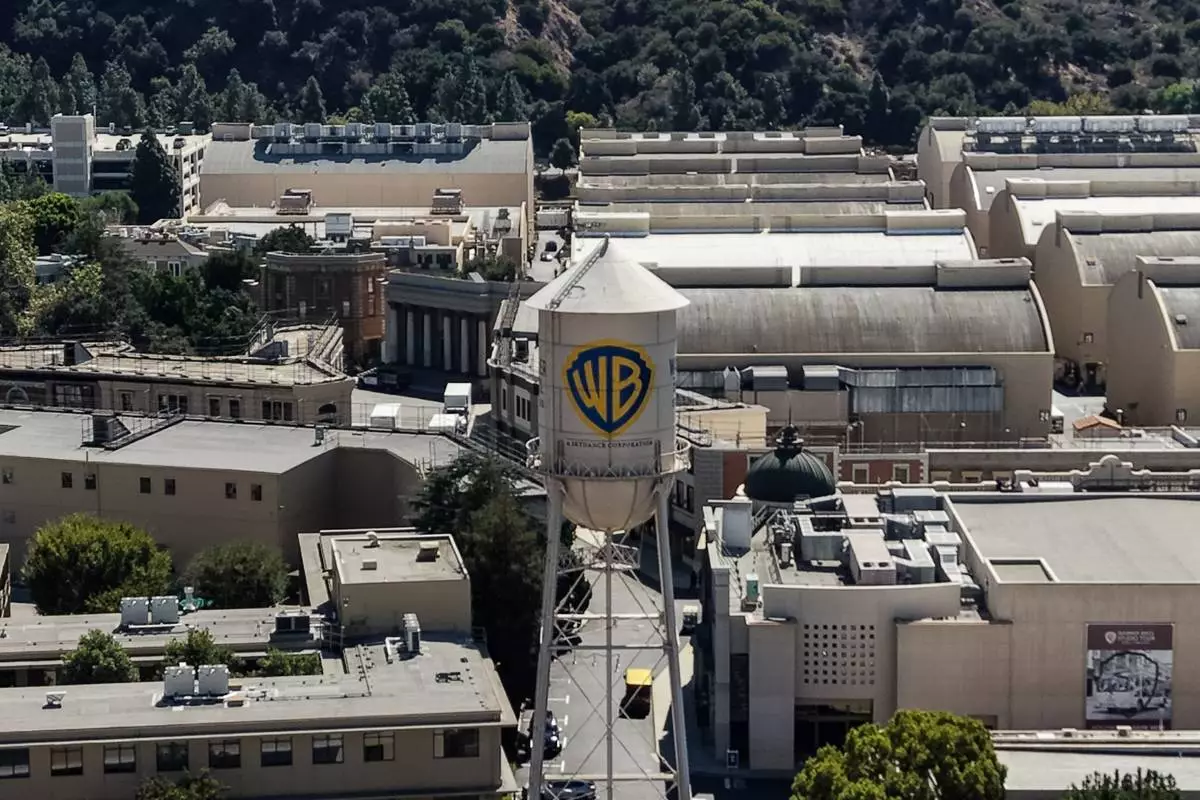
An aerial view shows Warner Bros. Studios in Burbank, Calif., Tuesday, Oct. 6, 2026. (AP Photo/Jae C. Hong)
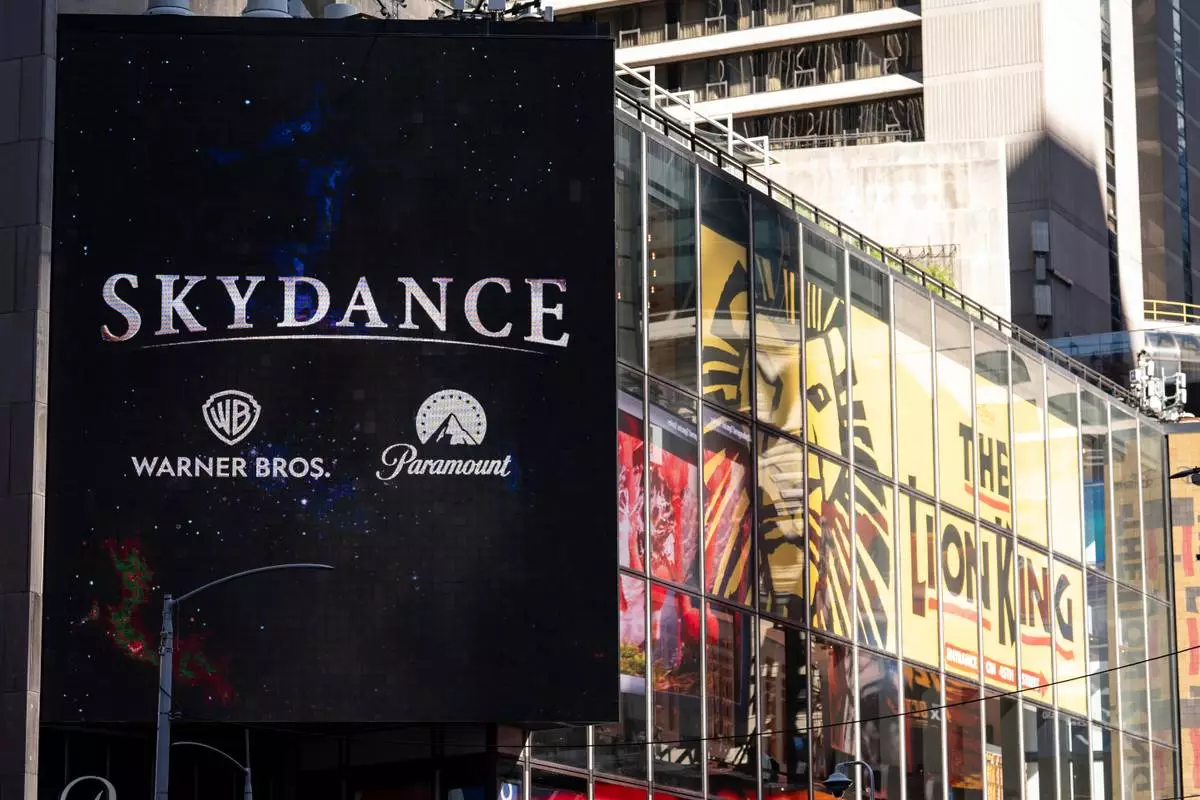
A Skydance billboard is displayed outside Paramount Global office in Times Square, Tuesday, Oct. 6, 2026, in New York. (AP Photo/Yuki Iwamura)
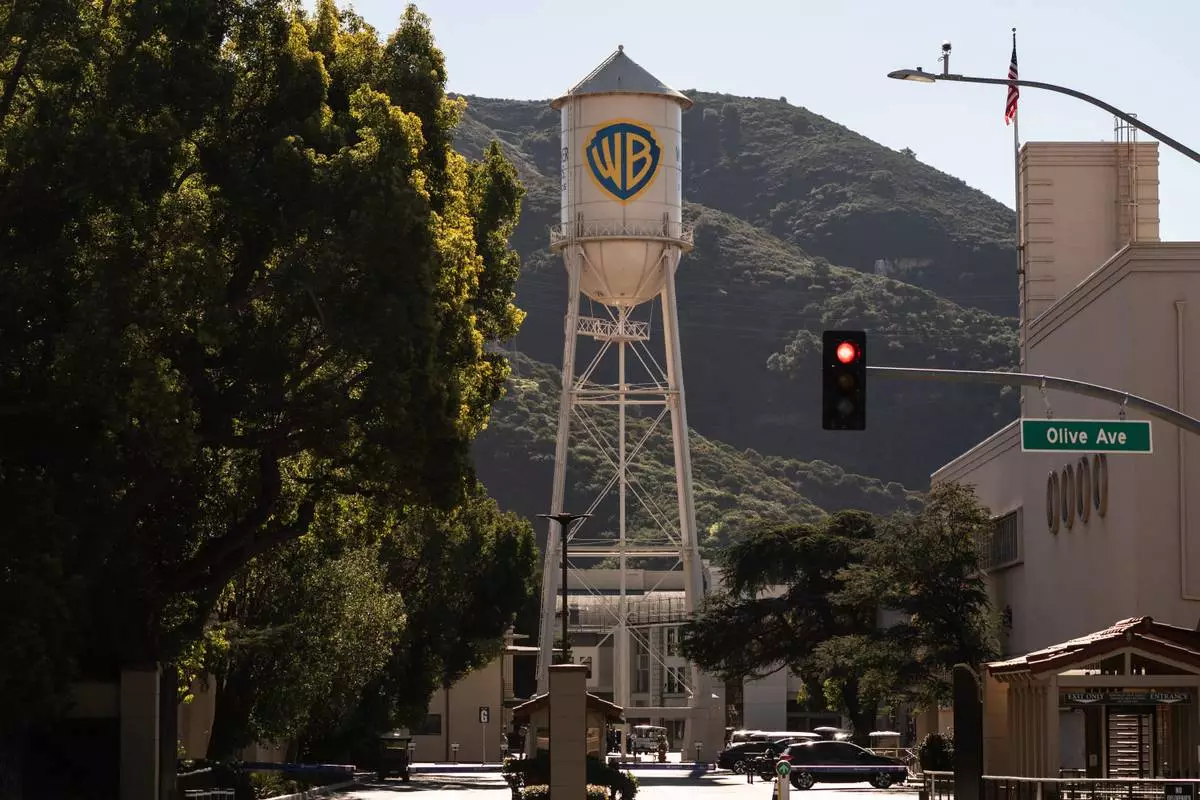
FILE - The Warner Bros. water tower is seen at Warner Bros. Studios in Burbank, Calif., on Dec. 5, 2025. (AP Photo/Jae C. Hong, File)