ANAHEIM, Calif., Dec. 20, 2024 /PRNewswire/ -- Zelus Fitness is thrilled to announce the exceptional success of its weighted vest brand, especially the Weight Vest for Running and Training, which is distinguishable by its unique and original matching design.
Since the brand's official launch in 2016, Zelus' Weighted Vests have quickly won the hearts of runners, cross-fit athletes, hikers, bikers, and even military personnel all over the United States.
They are functional, well-designed, and versatile for a wide variety of sports and exercises. Users have also commended the vests for being incredibly adjustable, with elastic straps and bands that hold the frame firmly but comfortably, regardless of the wearer's height, inseam, or body size.
Zelus' Best Seller
At the forefront is our best-selling single-weight model, the Weight Vest for Running and Training. Since its launch in 2017, it has consistently gained nationwide appeal with its functionality and comfort. Within the first eleven months of 2024, over 250,000 units have been sold, making it the preferred choice for fitness enthusiasts in the whole country.
What are some of the main features of this vest?
Made of premium chloroprene rubber, it stays super rigid, breathable, soft, and elastic even under extreme conditions.
The shoulder straps are cushioned and gentle, and the fabric is non-chafing.
The edges are double-stitched to prevent sand leakage.
The thickened and widened shoulders distribute the vest's weight evenly and prevent shoulder fatigue.
It is evenly filled with iron sand to ensure proper balance and reduce the risk of injury.
The integrated adjustable buckle strap is perfect for a bust between 35 and 45 inches.
- It is all-round and Versatile.
Stuffed with chemical-free iron sands, this vest is perfect for strength training, muscle building, stair climbing, weight loss, weightlifting, walking, running, and more.
The vest includes a detachable front zipper pocket, perfect for keeping cell phones, car keys, and other items safe and secure while you work out.
Your purchase is guaranteed by Zelus' one-year warranty and friendly 24/7 customer service.
What Do Customers Say?
We are most proud of and encouraged by the feedback we have received from customers, fitness enthusiasts, and reviewers. Over 5,000 customers have reviewed and rated this vest on Amazon, earning an impressive overall rating of 4.4 stars.
Users have also been enthusiastic about sharing their enjoyment of working out with the vest. Here are some of the most popular comments:
- "It is rock solid but comfortable"
- "Absolutely versatile: perfect for a multitude of exercises"
- "Well balanced and great for long workouts"
Zelus Weighted Vests, Here to Stay!
The growing popularity of this vest, combined with the evident results, proves that our product is not just a trend but a staple in fitness nationwide. With incredibly good quality and designs, great sales, and positive reviews to back it up, the Zelus Weighted Vest stands as an absolute must-have for anyone looking to maximize their workout potential.
Contact Us!
Please visit https://zelusfitness.com/ for more information about our weighted vest and to explore our full range of fitness products.
** The press release content is from PR Newswire. Bastille Post is not involved in its creation. **

Introducing The Industry - Leading Weighted Vest Model From Zelus Fitness
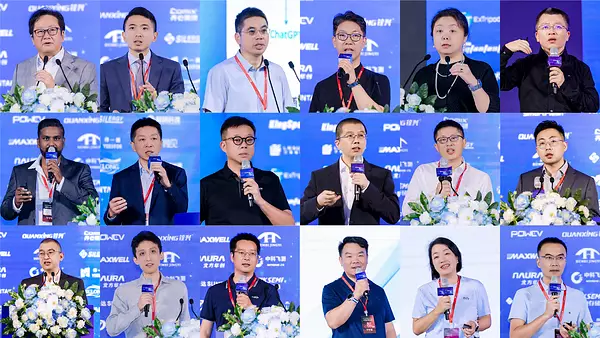
SHENZHEN, China, Sept. 26, 2026 /PRNewswire/ -- On September 23, the 5th GMIF2026 Innovation Summit successfully concluded at the Renaissance Shenzhen Bay Hotel. Co-hosted by the Shenzhen Memory Industry Association (SMIA) and School of Integrated Circuits at Peking University, the summit, themed "The Future Built on AI Memory and Storage," has brought together industry forces from IDMs, controllers, and memory solution providers to OSATs, equipment and material suppliers, server and AI infrastructure vendors, automotive electronics companies, AI applications developers, academic institutions, and investors. In-depth discussions explored the evolution of memory and storage technologies, industry trends, and application innovations in the AI era.
As AI training and inference workloads continue to scale, the boundaries of memory and storage technology and its applications keep expanding — from storage media and controllers to system architecture and AI applications themselves. GMIF 2026 approached the industry through the lens of the token economy, spotlighting inference efficiency, enterprise-grade storage, cloud-edge-device coordination, industrial capital, and the shifting global competitive landscape.
Five Years of GMIF: A Platform Built Around the Memory & Storage Industry
The summit officially kicked off with an opening remarks from Rixin Sun, President of the Shenzhen Memory Industry Association (SMIA). He looked back on GMIF's growth since its founding in 2019. Now in its fifth consecutive year, the summit has steadily expanded in scale, industry reach, and influence, with its agenda consistently tracking the pulse of the storage sector.
President Sun said GMIF will continue to pursue a more specialized and differentiated approach going forward — staying close to frontier industry trends and supply-chain coordination, while connecting storage companies with adjacent players in AI compute and end-user applications to drive technical exchange, supply-demand matching, and ecosystem collaboration.
As AI Inference Accelerates, Memory & Storage's Value Climbs
Daniel Yen, Executive Director at Morgan Stanley, opened the technical discussion with a look at how generative and agentic AI are reshaping infrastructure demands. As model weight loading, KV cache management, and data read/write scheduling grow more complex, Daniel noted that AI capital expenditure keeps rising — and memory and storage's share of that investment, and its strategic value, are rising with it. He pointed to the "memory wall" as a defining challenge now driving fresh innovation in storage architecture, advanced packaging, and related technologies.
Yimao Cai, Dean of School of Integrated Circuits at Peking University, addressed the topic from the angle of AI inference architecture, discussing the growing role of high-bandwidth storage and multi-media integration. As large model inference drives up demand for capacity, bandwidth, and cost efficiency, Prof. Cai suggested that high-bandwidth flash (HBF) and heterogeneous multi-media storage architectures stand to play a larger role — combining HBM, NAND, and RRAM to strike a better balance between performance, capacity, and cost for AI inference.
Global IDMs Race to Meet the Demands of Agentic AI
Kevin Yoon, CVP & CTO of Samsung Memory China at Samsung Electronics, discussed memory architecture in the age of agentic AI. As agentic AI drives token generation and KV cache volumes to new heights, AI systems are placing greater demands on capacity, bandwidth, and energy efficiency. He outlined Samsung's progress on Z-NAND, PCIe Gen6 SSDs, and ultra-high-capacity data center SSDs, and discussed how tiering across different storage media can more efficiently support KV cache and model weight storage.
Maya Zhang, Senior Director of Product Marketing at Sandisk, focused on data storage needs in the age of AI inference. As multimodal models, long-context processing, and increasingly sophisticated agents continue to grow KV cache demands, she noted, NAND flash is becoming ever more central to AI infrastructure. She added that more flexible data tiering and reuse across SSDs can improve efficiency for different AI workloads, and that high-density technologies like QLC are set to see broader adoption in AI use cases.
Benny Ni, GAR Sales VP at Solidigm, addressed enterprise SSDs' role in AI infrastructure amid growing data volumes and operational demands. As model size, token counts, and inference complexity all continue to climb, he said, memory offloading and data tiering are becoming core components of AI system architecture — with high-capacity QLC SSDs paired with high-performance storage offering a more efficient, cost-effective data foundation for inference.
Cloud, Edge, and Device: AI Opens New Ground for Memory & Storage
John Xavier Lionel, Head of Global Storage Business at Arm, spoke on system-level coordination in AI inference, noting that inference spans compute, memory, storage, and data movement — all of which require holistic architectural optimization. As small models, quantization, and heterogeneous NPUs continue to advance, he said, AI deployment will increasingly span cloud, edge, and device, with local storage taking on a larger role in hosting model weights, knowledge bases, and application data.
Stanley Huang, AVP at Silicon Motion, focused on storage requirements in multi-agent, concurrent-use scenarios, where differing tasks demand tailored QoS, latency, and resource allocation. He described how Silicon Motion's controller and resource-scheduling technologies improve storage efficiency under complex workloads, spanning enterprise SSDs, server storage, mobile UFS, autonomous driving, and robotics applications.
Sam Sun, Chairman at BIWIN, discussed how AI is simultaneously driving storage demand across data centers, edge, and endpoint devices — each with distinct requirements. In data centers, he noted, AI training and inference are pushing up demand for enterprise SSDs and server memory; at the edge and endpoint, applications like AI/AR glasses, AI PCs, smart vehicles, and industrial equipment are pushing storage toward smaller form factors, lower power consumption, higher reliability, and tighter system integration. Sam Sun said BIWIN continues to leverage its integrated solutions and manufacturing capability across enterprise, embedded, PC and mobile, industrial, and automotive product lines — with innovations like Mini SSDs, ultra-compact embedded storage, and wide-temperature industrial SSDs opening new ground in the AI era.
From Compute Infrastructure to Token Production, Deeper System-Level Integration
Tao Zhou, General Manager of the Server Division at Lenovo ISG China, discussed the concept of the "token factory." As enterprise AI moves from proof-of-concept to large-scale deployment, he said, improving the efficiency of AI infrastructure and sustaining stable token output have become critical industry priorities. He also described how top-level design, data governance, compute optimization, and security management — combined with pooled training/inference resources and hardware-software coordination — are helping enterprise AI infrastructure evolve from simple compute buildout into systematic operations.
Fan Zhang, Chief Computing Architect at NEXWISE, discussed integrated management and scheduling across cloud, compute, and storage resources from an operations standpoint, showing how coordination across compute, storage, and software platforms can improve overall infrastructure efficiency.
Wei Xiong, CTO of Infplane, focused on storage tiering in large model inference, explaining how hot/cold data tiering and intelligent scheduling can shift more inference workload onto SSDs — reducing memory footprint and improving token output efficiency.
Across servers, AI computing centers, and storage systems, deeper coordination among compute, memory, storage, networking, and software scheduling is emerging as a defining trend in AI infrastructure.
From Core Technology to Real-World Application, AI Memory & Storage Ecosystem is Converging Fast
As AI continues to move into automotive, robotics, and enterprise applications, the connection between the storage industry and AI use cases keeps deepening.
Junjia Chen, AI Product Director at SYNCORE, discussed the application of agent architecture in automotive scenarios, focused on smart cockpits and vehicle-wide intelligence.
Lusha Chen, General Manager for APAC at Dify, introduced a "workflow plus agent" model for enterprise AI, connecting large models, corporate knowledge bases, business systems, and end-user applications to embed AI more deeply into enterprise workflows.
Gongjie Liu, Regional Director for Central & Southern China & General Manager of Branch Office at Paratera, discussed multi-model access, unified management, and enterprise AI services built around a MaaS platform.
Zhen Li, VP of Genstoraige, spoke to the concept of "storage-powered compute," covering data hosting, high-speed interconnects, and intelligent scheduling within AI systems.
Yunjie Ye, Chairman of Numbers Law, presented the company's work on next-generation mechanical storage architectures for large-capacity data storage.
Ming Zhao, General Manager of OKN Technology, addressed testing requirements for the AI era, describing how test equipment is evolving to support higher speeds, more complex scenarios, and real-world workload simulation for PCIe 6.0 SSDs, memory, and increasingly demanding AI applications — laying the groundwork for the development and large-scale deployment of next-generation storage products.
The Future Built on AI Memory & Storage
From AI inference to agentic AI, from emerging storage media to enterprise SSDs, from data centers to edge and endpoint devices, and from controllers, packaging, and testing equipment to servers, AI computing platforms, and applications, GMIF 2026 highlighted the technological innovation and industry transformation taking place across the memory and storage ecosystem in response to AI.
The massive volumes of data that AI generates, retrieves, and moves are steadily elevating memory and storage's role within the broader computing stack. Demand for high-capacity, high-bandwidth, and high-reliability storage in data centers continues to climb, while emerging endpoints — AI PCs, smart vehicles, AI/AR glasses, robotics — keep opening new application space. Together, cloud, edge, and device are shaping a richer and more complex set of storage requirements for the AI era.
Meanwhile, the technology itself keeps moving — HBM, HBF, NAND flash, enterprise SSDs, and a handful of newer media all advancing in parallel, with controllers, packaging, testing, and software scheduling evolving alongside them into tighter, more coordinated systems.
Now in its fifth successful year, GMIF has established itself as a leading platform for exchange across the global memory and storage industry. Looking ahead, GMIF will continue to focus on technological innovation, industry trends, and supply-chain collaboration — bringing together key players from across the global industry, pursuing an increasingly specialized and differentiated event model, and fostering deeper exchange and cooperation across the storage value chain.
Media Contact:
Carina Gu
wenjing.gu@gmif.com.cn
** This press release is distributed by PR Newswire through automated distribution system, for which the client assumes full responsibility. **
AI Memory & Storage: The 5th GMIF2026 Innovation Summit Successfully Concludes in Shenzhen