CHICAGO (AP) — Sammy Sosa appeared to acknowledge using performance-enhancing drugs during a career in which he hit more than 600 home runs, and the Chicago Cubs said they were ready to welcome back their former star.
In a statement released Thursday through Aurora Global Consulting, Sosa said he was sorry for mistakes without specifying them.
“There were times I did whatever I could to recover from injuries in an effort to keep my strength up to perform over 162 games,” he said. “I never broke any laws. But in hindsight, I made mistakes and I apologize.”
Cubs chairman Tom Ricketts said the team is “ready to move forward together” with Sosa and plans to invite him to the annual fan convention Jan. 17-19 in Chicago.
“We appreciate Sammy releasing his statement and for reaching out,” Ricketts said. “No one played harder or wanted to win more. Nobody’s perfect but we never doubted his passion for the game and the Cubs. It is an understatement to say that Sammy is a fan favorite.”
Sosa, the franchise’s record holder with 545 home runs, was traded to Baltimore after he showed up late for the 2004 finale at Wrigley Field and left early.
Sosa, Barry Bonds and Mark McGwire, all tainted by allegations of performance-enhancing drugs use, fell well short of Hall of Fame election in 2022 on their 10th and final appearance on the Baseball Writers’ Association of America ballot.
Sosa received a high of 18.5% support in his final appearance, less than a quarter of the 75% needed. His next chance for consideration would be if he is placed on the ballot for the contemporary player committee, which meets next December.
Now 56, Sosa was a seven-time All-Star and the 1998 NL MVP for the Cubs. He hit .273 with 609 home runs — currently ninth on the career list — with 1,667 RBIs and 234 stolen bases in 18 major league seasons from 1989 to 2007 with Texas (1989, 2007), the Chicago White Sox (1989-91), the Cubs (1992-04) and Baltimore (2005).
During congressional testimony in 2005, Sosa denied using performance-enhancing drugs.
“We accomplished great things as a team, and I worked extremely hard in the batting cage to become a great hitter,” Sosa said in his statement. “Cubs' fans are the best in the world, and I hope that fans, the Cubs and I can all come together again and move forward. We can't change the past, but the future is bright. In my heart, I have always been a Cub, and I can't wait to see Cubs fans again.”
AP MLB: https://apnews.com/hub/MLB

FILE - Texas Rangers' Sammy Sosa singles against the Seattle Mariners in the fourth inning at a baseball game, Thursday, May 31, 2007, in Seattle. (AP Photo/Elaine Thompson, File)

FILE - Texas Rangers' Sammy Sosa reacts to striking out against Baltimore Orioles pitcher Jeremy Guthrie in the third inning of a baseball game in Arlington, Texas, Friday, July 6, 2007. (AP Photo/Tony Gutierrez, File)

FILE - Chicago Cubs' Sammy Sosa connects for a three-run home run in the third ining against the St. Louis Cardinals Sunday, July 11, 2004 at Busch Stadium in St. Louis. (AP Photo/Tom Gannam, File)
It was at a relatively minor event in upstate New York in September 2022 that Ilia Malinin, the self-anointed “Quad God" who was fast becoming the biggest name in figure skating, finally landed the jump that so many people had thought impossible.
Others had tried quad axels in competition over the years. All of them had fallen. That extra 180 degrees of rotation — necessary for the only jump in skating that starts with a forward-facing entry — proved to be a half-revolution too much.
So when Malinin landed it inside the arena made famous by the U.S. hockey team's upset of the Soviets at the 1980 Winter Olympics in Lake Placid, it not only sent shockwaves through the tight-knit skating community but made headlines around the world.
“My mind was just blown,” said two-time Olympic skater Jason Brown.
Yet by conquering the gravity-defying jump, Malinin also raised an important question: What comes next?
The six main jumps in figure skating have been standard since the early 1900s. The only difference between then and now is the number of revolutions. Dick Button landed the first double axel in 1948, and the first triple jump four years later. Kurt Browning landed the first quad, a toe loop, in 1988, and it was 10 years before Timothy Goebel landed the first quad salchow.
By landing the quad axel, Malinin may have maxed out the boundaries of human performance. Most sports scientists agree that the speed and amplitude necessary for five-revolution jumps truly is impossible, leaving figure skating at a crossroads, where a dearth of innovation threatens to take the shine off a sport already fighting to maintain popularity.
“I think it's kind of natural that we were going to get to this point,” said Malinin, the overwhelming favorite to win gold for the U.S. at the Milan Cortina Olympics. "But I haven't reached my top, whether it's in the technical and how much I can jump and spin, but also in the creativity.”
Malinin, 20, points to his signature “raspberry twist,” a somersaulting spin unlike anything that anybody else does. He created it himself, and it tends to bring down the house whenever he throws it down near the end of his programs.
Yet the flashy maneuver also underscores one of the inherent problems with trying to be creative: It doesn't get rewarded.
The International Skating Union has rigid requirements for both short programs and free skates, and it rarely pays off to deviate too far from the script. Malinin might not get a lot of extra points for landing his raspberry twist, for example, since it is not one of the six standard figure skating jumps, but a failure to land it could cost him dearly.
“Absolutely, there are a lot of things I've wanted to try,” Malinin told The Associated Press, “because I think it would be really cool and appealing. But it's a bigger risk for the program itself, and the system and scoring means it doesn't make sense.”
In other words, what's the point in trying to innovate?
“There are so many rules in your programs that you don't have too much wiggle room,” said Alysa Liu, the reigning world champion. “A lot of these rules really restrict us. Like, all of our spins look the same now, but they could look so different."
“One of my training mates, Sonja Himler, does these incredible programs," added Amber Glenn, a three-time U.S. champion, and along with Liu one of the favorites to win Olympic gold for the American team in February.
“Like, she spins the other way, jumps the other way — really cool things that, you know, someone who's watched a little bit of skating will be like, ‘Oh, I’ve never seen that before,'” Glenn said. “Whereas if I go and do, you know, the norm, and do it well, versus what she does, my scores will be better, even though what she does is way more impressive, in my opinion.”
Justin Dillon, the manager of high performance at U.S. Figure Skating, acknowledged having had hard conversations with some skaters about their programs. They may have planned something unique or interesting, but the risk wouldn't be worth the reward.
“I encourage individuality, and bringing it to the ice,” Dillon said, “but if they do something so avant-garde that it doesn't check those boxes, then it really doesn't serve them. It doesn't always mean throw it out, but what can we do to make it a home run?”
To its credit, figure skating's governing body has loosened some restrictions in recent years. The backflip, which was long banned in competition because of its inherent danger, is allowed now, though it also doesn't carry a whole lot of scoring weight.
Is that hold-your-breath element of risk and uncertainty the next big step in skating?
“I mean, you're cringing. It legit scares me," Glenn said of the backflip. “If you can do it, great. I think it's so fun. I want to learn it once I'm done competing. But the thought of practicing it in like, a warmup or in training, it just scares me.”
Brown has never been able to consistently land quad jumps in competition. Instead, he relies on near-perfect execution of triple jumps, along with arguably the best artistry in figure skating, to consistently challenge for podium placements in major competitions.
Maybe, Brown mused, the next innovation in figure skating has nothing to do with extreme feats of athletic ability.
“I have so much respect for the ways in which people are pushing the sport technically,” he said, "but I think the more that people fixate on executing an element, the less risk people take artistically, because they’re already taking these risks technically. And it is very hard to do both. So maybe the next step for figure skating is to reward the story we're trying to tell."
AP Winter Olympics: https://apnews.com/hub/milan-cortina-2026-winter-olympics
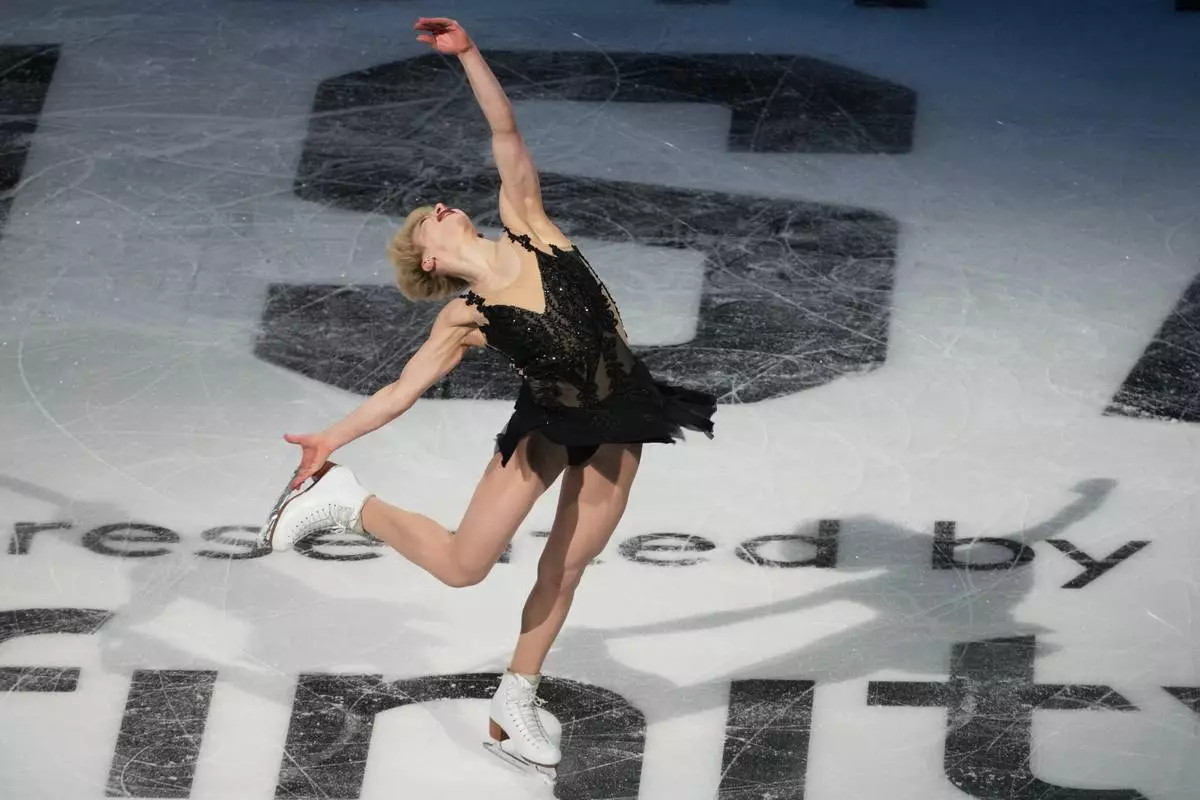
Amber Glenn skates during the "Making Team USA" performance at the U.S. Figure Skating Championships, Sunday, Jan. 11, 2026, in St. Louis. (AP Photo/Jeff Roberson)
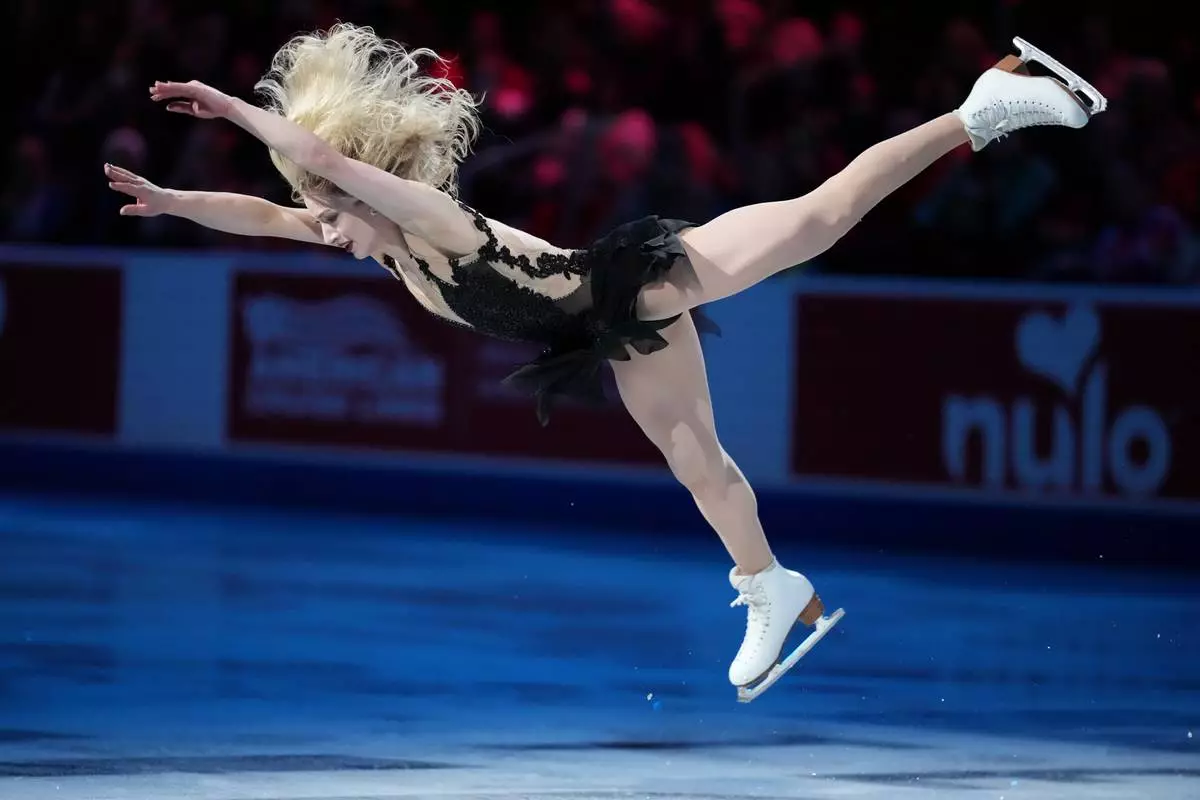
Amber Glenn skates during the "Making Team USA" performance at the U.S. Figure Skating Championships, Sunday, Jan. 11, 2026, in St. Louis. (AP Photo/Stephanie Scarbrough)
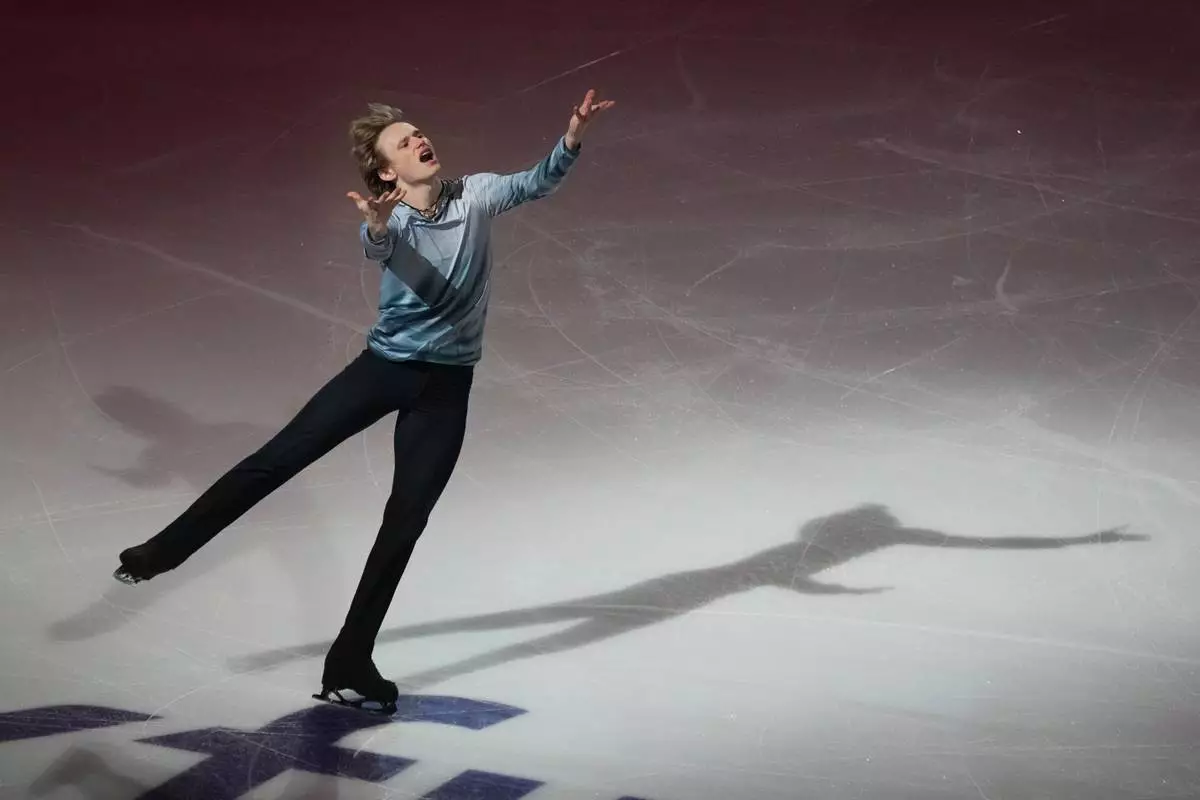
Ilia Malinin skates during the "Making Team USA" performance at the U.S. Figure Skating Championships, Sunday, Jan. 11, 2026, in St. Louis. (AP Photo/Jeff Roberson)
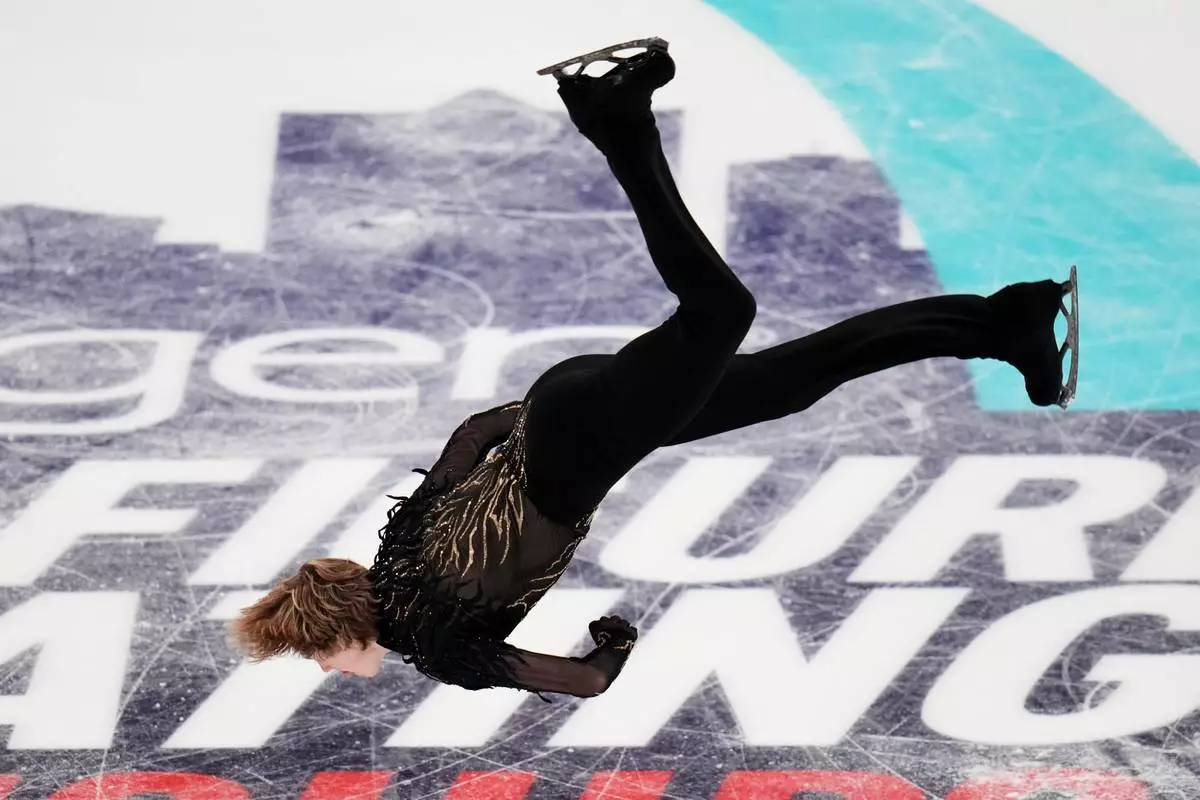
Ilia Malinin competes during the men's free skate competition at the U.S. Figure Skating Championships, Saturday, Jan. 10, 2026, in St. Louis. (AP Photo/Jeff Roberson)

Ilia Malinin competes during the men's short program at the U.S. Figure Skating Championships, Thursday, Jan. 8, 2026, in St. Louis. (AP Photo/Stephanie Scarbrough)