KYIV, Ukraine (AP) — Russia has not spared a single Ukrainian power plant from attack since its all-out invasion, Ukraine’s new energy minister said Friday, as a recent escalation of aerial bombardments left hundreds of thousands of people without heat or light for days during the coldest winter in years.
Denys Shmyhal said Russia conducted 612 attacks on Ukraine’s energy infrastructure objects over last year. That barrage has intensified in recent months as nighttime temperatures plunge to minus 18 degrees C (minus 0.4 F).
“Nobody in the world has ever faced such a challenge,” Shmyhal told lawmakers in a speech at Ukraine’s Parliament, the Verkhovna Rada.
Russia has hammered Ukraine’s power grid, especially in winter, throughout the almost four-year war. It aims to weaken the Ukrainian will to resist in a strategy that Kyiv officials call “weaponizing winter.”
Securing from abroad new missile supplies for air defenses that can counter Russia’s power grid attacks is a difficult and exhausting process, Zelenskyy said, revealing that some of the country’s air defense systems were out of missiles and at Russia’s mercy until a new shipment arrived Friday morning.
Obtaining supplies requires intense diplomatic pressure due to minimum stockpile levels and national laws in allied countries, according to the Ukrainian leader.
“But honestly, what do those rules and laws mean when we are at war and we desperately need these missiles?” Zelenskyy said.
The grim outlook roughly halfway through the winter season coincides with uncertainty about the direction and progress of U.S.-led peace efforts.
Ukraine’s President Volodymyr Zelenskyy said Friday that a Ukrainian delegation is on its way to the United States to try and finalize with Washington documents for a proposed peace settlement that relate to postwar security guarantees and economic recovery.
If American officials approve the proposals, the U.S. and Ukraine could sign the documents next week at the World Economic Forum in Davos, Switzerland, Zelenskyy said at a Kyiv news conference with Czech President Petr Pavel.
U.S. President Donald Trump plans to be in Davos, organizers say.
Russia would still need to be consulted on the proposals.
In Ukraine, the hardship was acute amid extended blackouts.
“This is a critical moment,” Jaime Wah, the deputy head in the Kyiv delegation of the International Federation of Red Cross and Red Crescent Societies, said Friday.
“This is the hardest winter since the escalation of the conflict: punishing cold temperatures and the lack of heating and electricity are affecting millions who are already pushed to the edge by years of violence and economic strain,” he told a briefing in Geneva.
Ukraine's power shortage is so desperate that Shmyhal urged businesses to switch off their illuminated signage and exterior decorations to save electricity.
“If you have spare energy, better give it to people,” the energy minister said. “This is the most important thing today. People will be grateful.”
Ukraine has introduced emergency measures, including temporarily easing curfew restrictions to allow people to go whenever they need to public heating centers set up by the authorities, Shmyhal said. He said hospitals, schools and other critical infrastructure remain the top priority for electricity and heat supplies.
Officials have instructed state energy companies Ukrzaliznytsia, Naftogaz and Ukroboronprom to urgently purchase imported electricity covering at least 50% of their own consumption, according to Shmyhal.
U.K. Deputy Prime Minister David Lammy was in Kyiv on Friday to mark the first anniversary of the “100-year partnership” between Britain and Ukraine. To coincide with the anniversary, Britain announced a further 20 million pounds ($27 million) for repairs to Ukraine’s energy infrastructure.
A grinding war of attrition is continuing along the roughly 1,000-kilometer (600-mile) front line. For all its military might, Russia has managed to occupy less than 20% of Ukraine since 2014.
Follow AP’s coverage of the war in Ukraine at https://apnews.com/hub/russia-ukraine
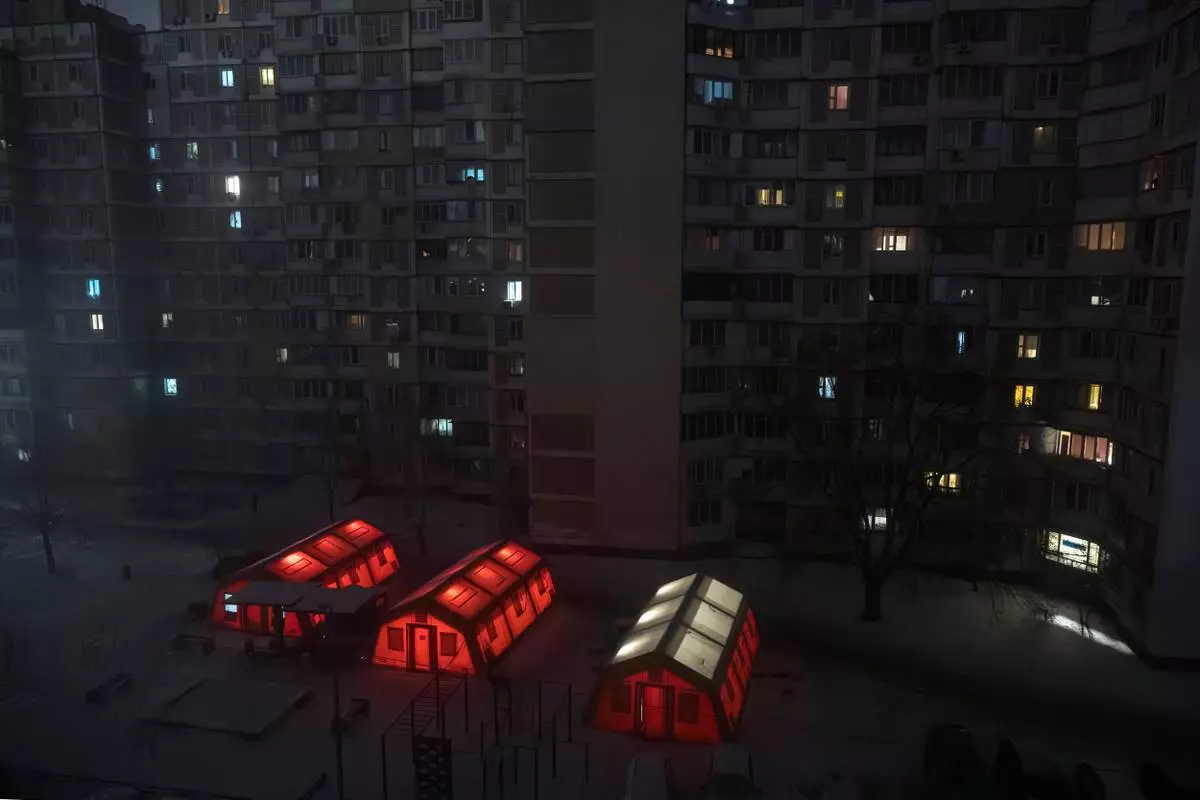
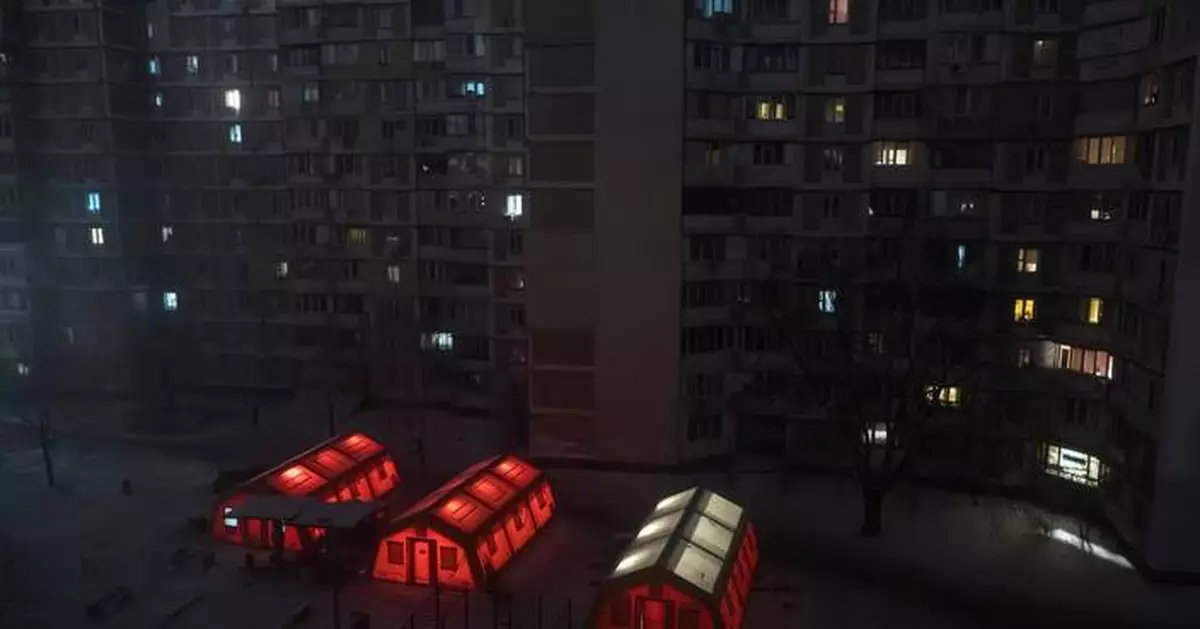
Emergency tents are set up in a residential neighborhood where people can warm up following Russia's regular air attacks against the country's energy objects that leave residents without power, water and heating in the dead of winter, in Kyiv, Ukraine, Thursday, Jan. 15, 2026. (AP Photo/Vladyslav Musiienko)
JOHANNESBURG (AP) — Torrential rains and flooding have killed more than 100 people in South Africa, Mozambique and Zimbabwe, and authorities warned Friday that more severe weather was expected across several countries in southern Africa.
South Africa has reported at least 19 deaths in two of its northern provinces following heavy rains that began last month and led to severe flooding.
Tourists and staff members were evacuated this week by helicopter from flooded camps to other areas in the renowned Kruger National Park, which is closed to visitors while parts of it are inaccessible because of washed out roads and bridges, South Africa's national parks agency said.
In neighboring Mozambique, the Institute for Disaster Management and Risk Reduction said 103 people had died in an unusually severe rainy season since late last year. Those deaths were from various causes including electrocution from lightning strikes, drowning in floods, infrastructure collapse caused by the severe weather and cholera, the institute said.
The worst flooding in Mozambique has been in the central and southern regions, where more than 200,000 people have been affected, thousands of homes have been damaged, while tens of thousands face evacuation, the World Food Program said.
Zimbabwe’s disaster management agency said that 70 people have died and more than 1,000 homes have been destroyed in heavy rains since the beginning of the year, while infrastructure including schools, roads and bridges collapsed.
Flooding has also hit the island nation of Madagascar off the coast of Africa as well as Malawi and Zambia. Authorities in Madagascar said 11 people died in floods since late November.
The United States' Famine Early Warning System said flooding was reported or expected in at least seven southern African nations, possibly due to the presence of the La Nina weather phenomenon that can bring heavy rains to parts of southeastern Africa.
South African President Cyril Ramaphosa visited flood-stricken areas in the northern Limpopo province on Thursday and said that region had received around 400 millimeters (more than 15 inches) of rain in less than a week. He said that in one district he visited “there are 36 houses that have just been wiped away from the face of the Earth. Everything is gone ... the roofs, the walls, the fences, everything.”
The flooding occurred in the Limpopo and Mpumalanaga provinces in the north, and the South African Weather Service issued a red-level 10 alert for parts of the country for Friday, warning of more heavy rain and flooding that poses a threat to lives and could cause widespread infrastructure damage.
The huge Kruger wildlife park, which covers some 22,000 square kilometers (7,722 square miles) across the Limpopo and Mpumalanga provinces, has been impacted by severe flooding and around 600 tourists and staff members have been evacuated from camps to high-lying areas in the park, Kruger National Park spokesperson Reynold Thakhuli said.
He couldn't immediately say how many people there were in the park, which has been closed to visitors after several rivers burst their banks and flooded camps, restaurants and other areas. The parks agency said precautions were being taken and no deaths or injuries had been reported at Kruger.
The South African army sent helicopters to rescue other people trapped on the roofs of their houses or in trees in northern parts of the country, it said. An army helicopter also rescued border post officers and police officers stranded at a flooded checkpoint on the South Africa-Zimbabwe border.
Southern Africa has experienced a series of extreme weather events in recent years, including devastating cyclones and a scorching drought that caused a food crisis in parts of a region that often suffers food shortages.
The World Food Program said more than 70,000 hectares (about 173,000 acres) of crops in Mozambique, including staples such as rice and corn, have been waterlogged in the current flooding, worsening food insecurity for thousands of small-scale farmers who rely on their harvests for food.
Imray reported from Cape Town, South Africa. AP writers Charles Mangwiro in Maputo, Mozambique, and Farai Mutsaka in Harare, Zimbabwe, contributed to this report.
AP Africa news: https://apnews.com/hub/africa
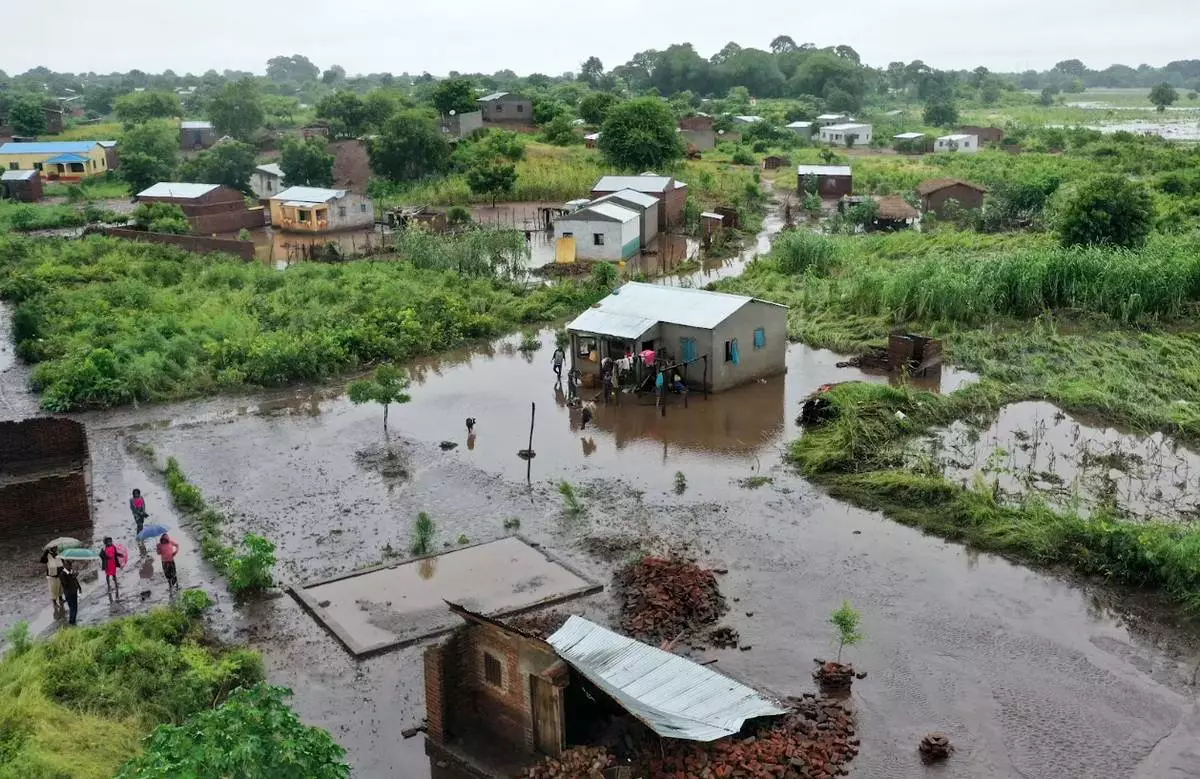
This image made from video shows the scene after flooding in Tete Province, Mozambique, Thursday, Jan. 15, 2026. (AP Photo)
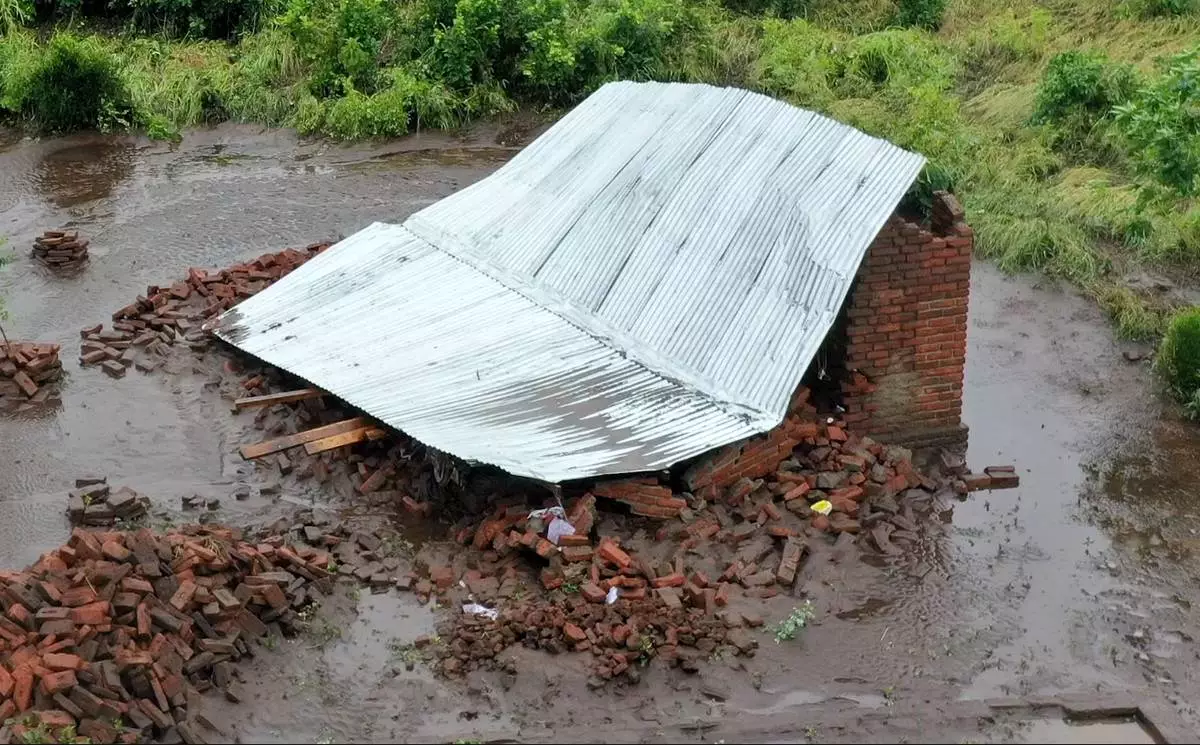
This image made from video shows the scene after flooding in Tete Province, Mozambique, Thursday, Jan. 15, 2026. (AP Photo)
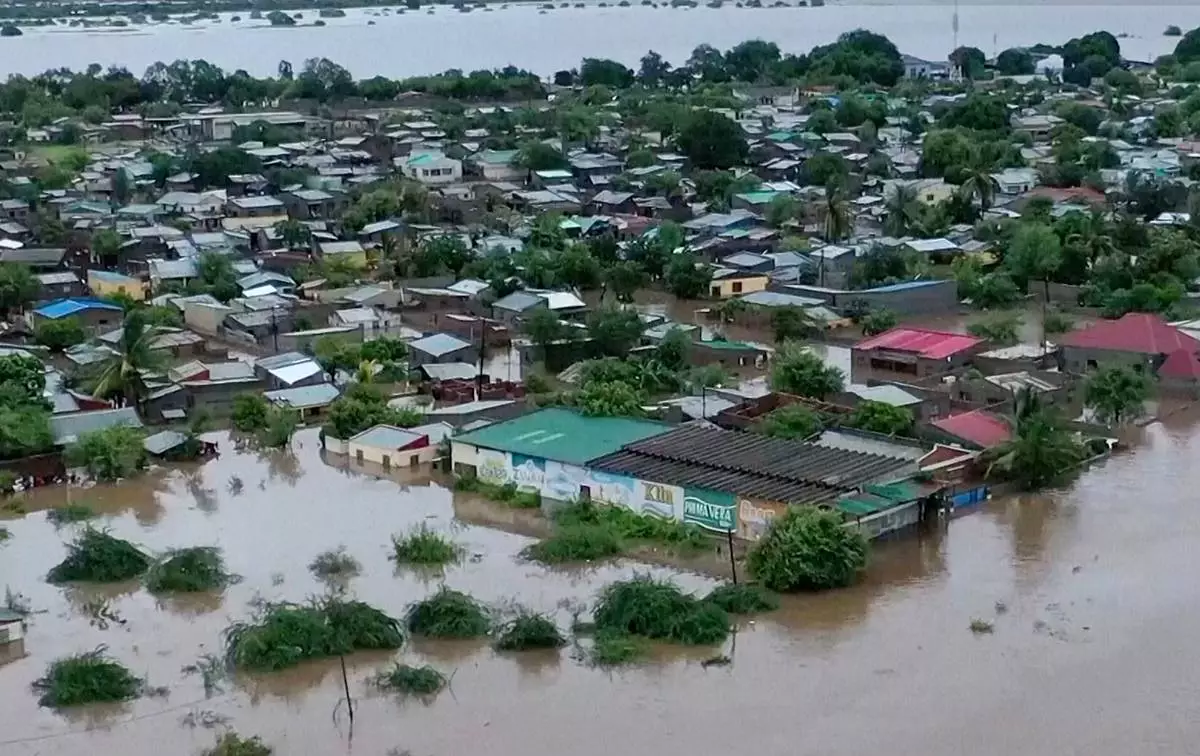
This image made from video shows the scene after flooding in Tete Province, Mozambique, Thursday, Jan. 15, 2026. (AP Photo)