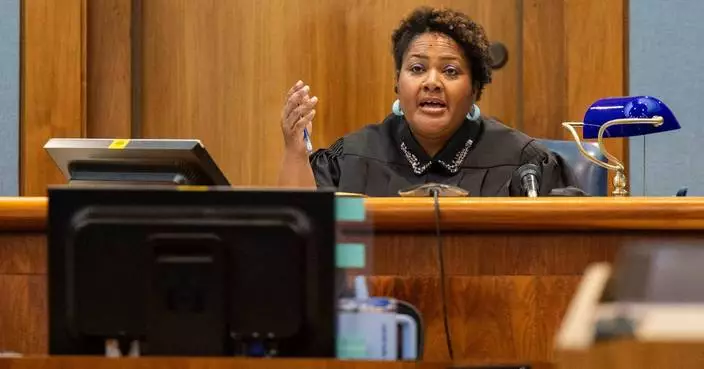
MOSCOW (AP) — A court in Moscow on Friday began considering a lawsuit filed by the central bank against Euroclear, the Brussels-based clearing house that holds the bulk of Russian assets frozen by the European Union.
The lawsuit seeks to recover 18.2 trillion rubles ($232 billion) in damages incurred when Russia was barred from managing and disposing of its Euroclear funds and securities, the bank said. The case is being heard behind closed doors.
Click to Gallery
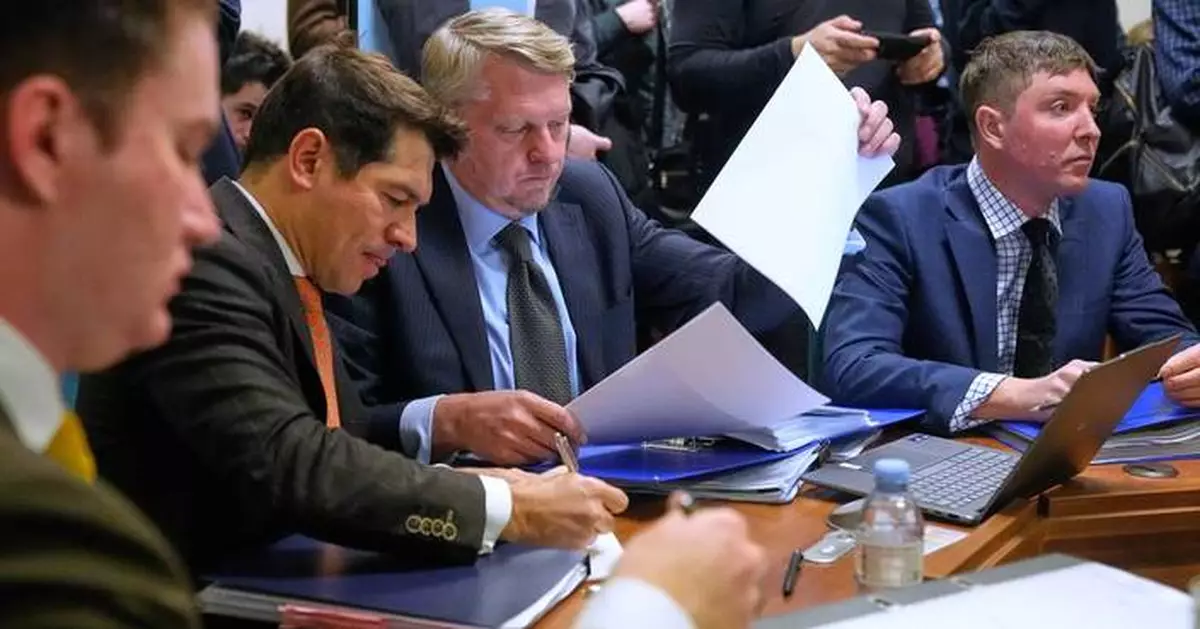
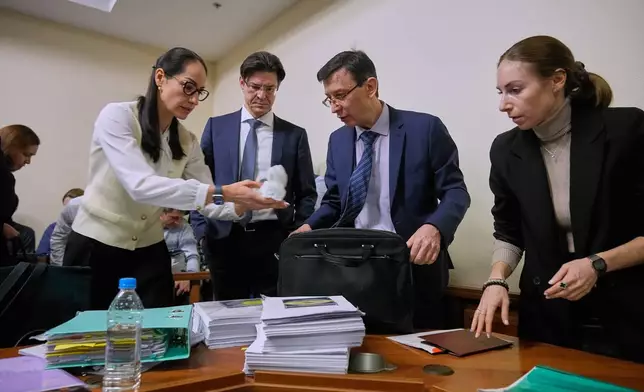
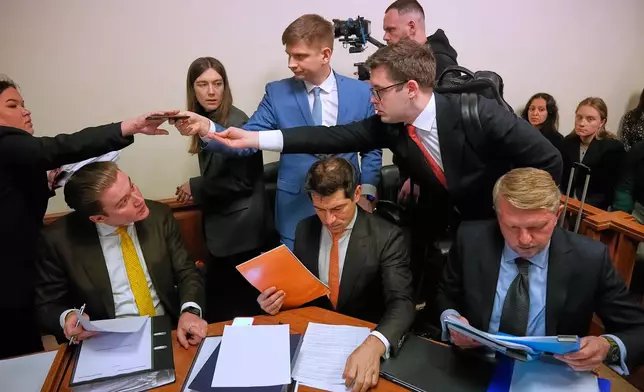
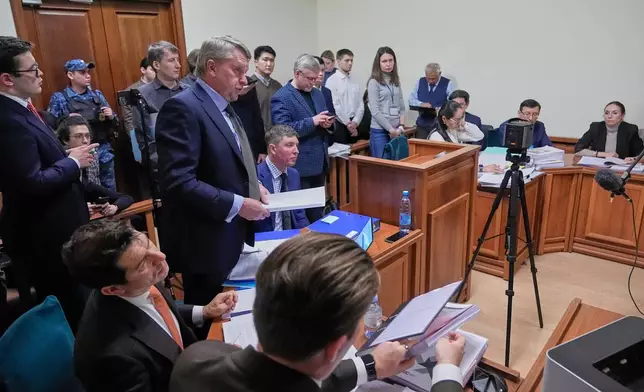
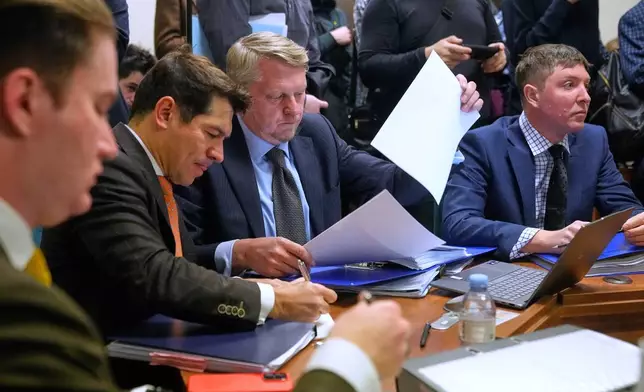
Participants gather in Moscow's Arbitration Court to hold a hearing to consider a lawsuit by Russia's Central Bank against Belgium-based financial clearinghouse Euroclear in Moscow, Russia, Friday, Jan. 16, 2026. (AP Photo/Pavel Bednyakov)
Participants gather in Moscow's Arbitration Court to hold a hearing to consider a lawsuit by Russia's Central Bank against Belgium-based financial clearinghouse Euroclear in Moscow, Russia, Friday, Jan. 16, 2026. (AP Photo/Pavel Bednyakov)
Participants gather in Moscow's Arbitration Court to hold a hearing to consider a lawsuit by Russia's Central Bank against the Euroclear Group in Moscow, Russia, Friday, Jan. 16, 2026. (AP Photo/Pavel Bednyakov)
Participants gather in Moscow's Arbitration Court to hold a hearing to consider a lawsuit by Russia's Central Bank against Belgium-based financial clearinghouse Euroclear in Moscow, Russia, Friday, Jan. 16, 2026. (AP Photo/Pavel Bednyakov)
The EU has frozen 210 billion euros ($244 billion) worth of Russian assets as part of the sanctions imposed on Moscow after it sent troops into Ukraine in February 2022. Euroclear holds around 193 billion euros of the seized funds.
Moscow's Arbitration Court picked up the case even though the EU last month set aside its initial plan to use frozen Russian assets to assist Ukraine after failing to convince Belgium that it would be protected from Russia's retaliation. The bloc opted instead for borrowing 90 billion euros on capital markers to provide an interest-free loan to Ukraine to meet its military and economic needs for the next two years.
Russia's Central Bank has condemned the use of frozen assets to aid Ukraine as “illegal, contrary to international law,” arguing that they violated “the principles of sovereign immunity of assets.”
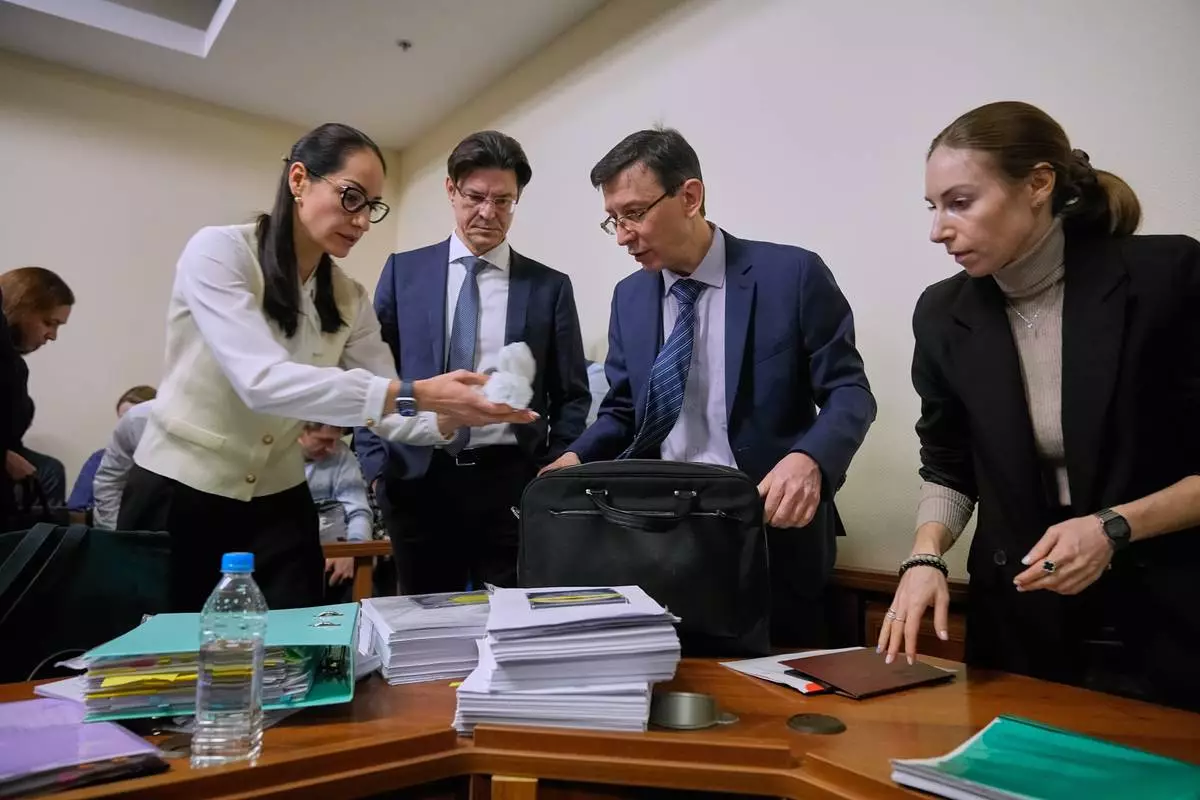
Participants gather in Moscow's Arbitration Court to hold a hearing to consider a lawsuit by Russia's Central Bank against Belgium-based financial clearinghouse Euroclear in Moscow, Russia, Friday, Jan. 16, 2026. (AP Photo/Pavel Bednyakov)
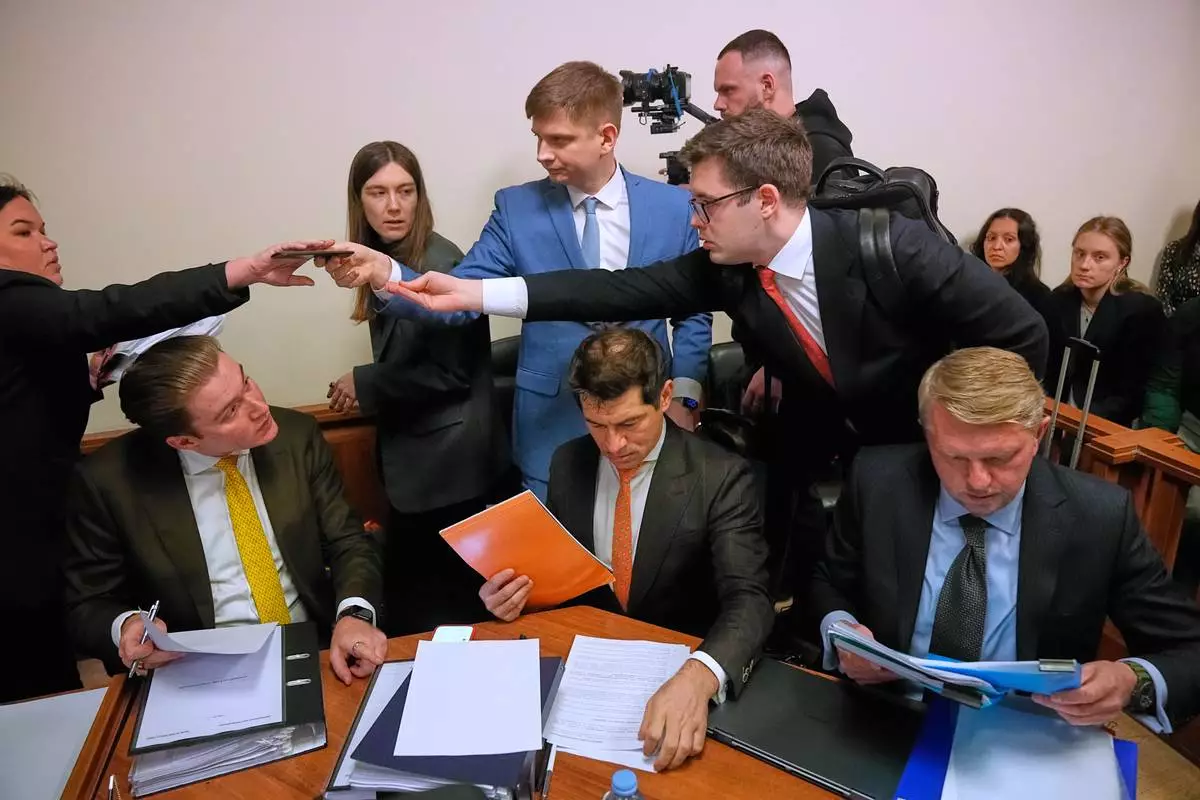
Participants gather in Moscow's Arbitration Court to hold a hearing to consider a lawsuit by Russia's Central Bank against Belgium-based financial clearinghouse Euroclear in Moscow, Russia, Friday, Jan. 16, 2026. (AP Photo/Pavel Bednyakov)
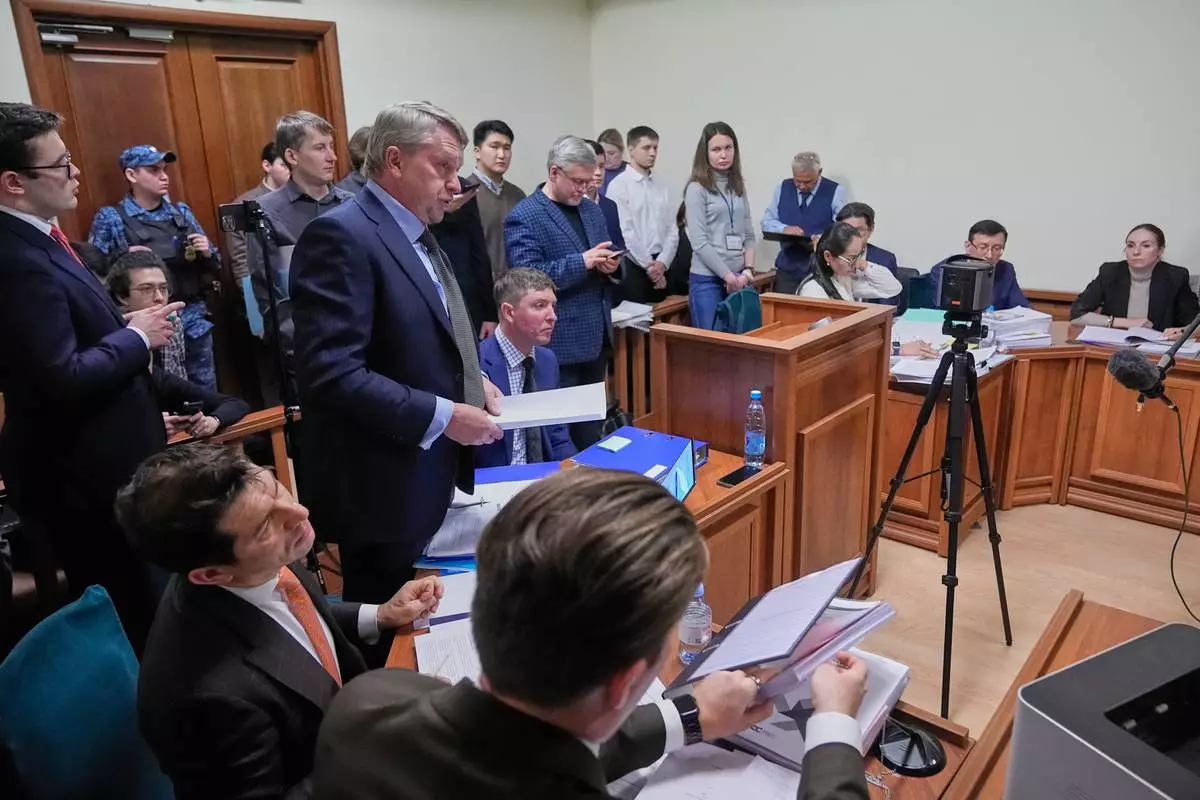
Participants gather in Moscow's Arbitration Court to hold a hearing to consider a lawsuit by Russia's Central Bank against the Euroclear Group in Moscow, Russia, Friday, Jan. 16, 2026. (AP Photo/Pavel Bednyakov)
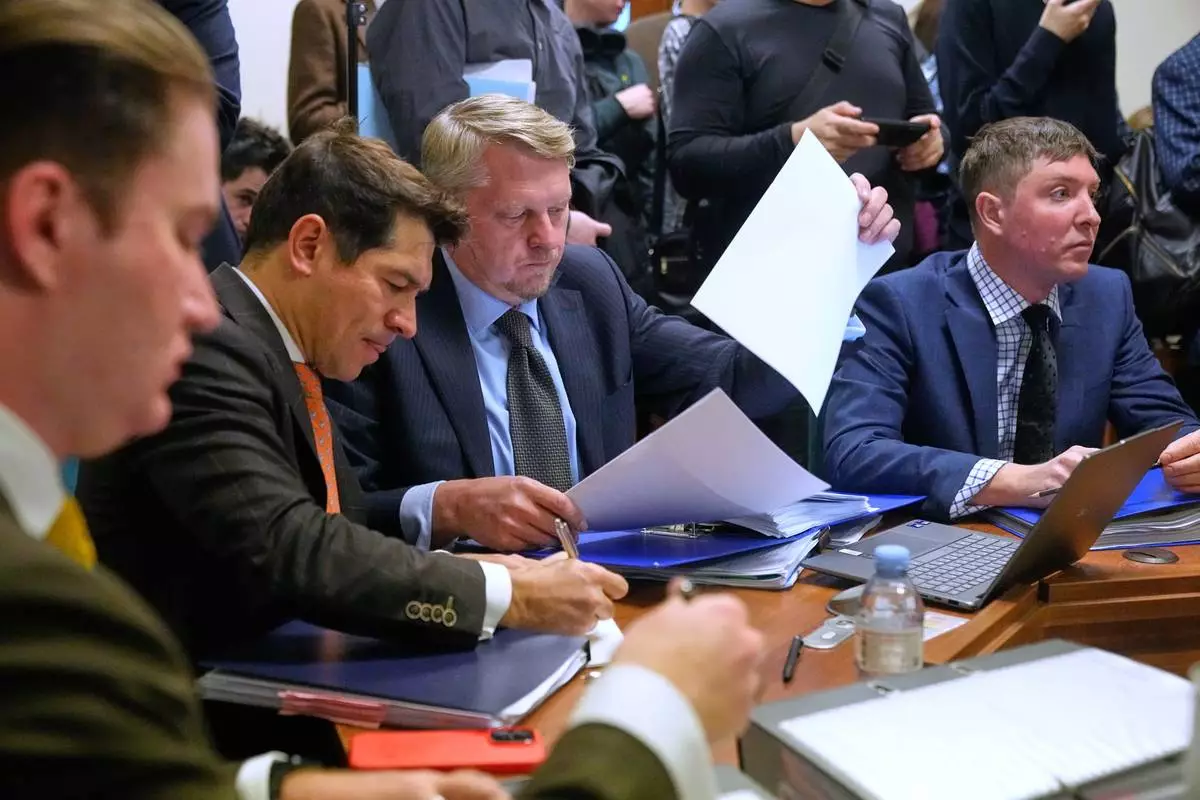
Participants gather in Moscow's Arbitration Court to hold a hearing to consider a lawsuit by Russia's Central Bank against Belgium-based financial clearinghouse Euroclear in Moscow, Russia, Friday, Jan. 16, 2026. (AP Photo/Pavel Bednyakov)
WASHINGTON (AP) — The U.S. Commission of Fine Arts on Thursday approved the design for the triumphal arch that President Donald Trump wants built at an entrance to the nation's capital, a key step in the project's process.
Commissioners, all appointed by Trump, acted despite overwhelming public opposition to the 250-foot arch, one of several projects that Trump is pursuing alongside a White House ballroom to leave his imprint on Washington.
“The building is beautiful,” the commission's chairman, Rodney Mims Cook Jr., said shortly before the vote on a design revised slightly from what was presented to the federal agency in April.
The arch would stand 250 feet tall (76 meters) from its base to a torch held aloft by a Lady Liberty-like figure on top of the structure. The statue would be flanked on top by two gilded eagles, but the four lions envisioned as guarding the base are now gone. The phrases “One Nation Under God” and “Liberty and Justice for All” would be inscribed in gold lettering atop either side of the monument.
A public observation deck on top would provide 360-degree views of the surroundings.
The commission’s vice chairman, architect James McCrery II, said in April that he preferred the arch without the figures on top, which would have reduced the arch's height by about 80 feet (24.4 meters). Critics of the project argue that the arch would dominate the skyline and disrupt views from the Lincoln Memorial to Arlington National Cemetery.
The arch would dwarf the Lincoln Memorial, which is 99 feet (30 meters) tall, and be close to half the height of the Washington Monument, an obelisk that is about 555 feet (169 meters) tall.
Commissioners were told at Thursday's meeting that Trump considered the suggestion to remove the statue “but elected not to pursue such an option.”
McCrery recommended doing away with the lions on the base and objected to plans for an underground tunnel for pedestrians to get to the arch, which would be built on a traffic circle. Both design elements have been removed.
Preliminary surveys and testing of the site began last week.
A group of veterans and a historian have sued the Trump administration in federal court to block construction on grounds that the arch would disrupt the sightline between the Lincoln Memorial and Arlington House at Arlington National Cemetery, among other reasons.
The Republican president and his interior secretary, Doug Burgum, have argued that Washington is the only major Western world capital without such an arch. Burgum's department includes the National Park Service, which manages the plot where Trump wants to put the arch.
The president has said some of his other projects, such as adding a blue coating to the interior of the Lincoln Memorial Reflecting Pool, will beautify the city in time for July 4 celebrations of America’s 250th birthday.
Trump's rehab of the Reflecting Pool is also the subject of a court challenge brought by The Cultural Landscape Foundation, which said the administration’s moves to repaint the bottom of the Reflecting Pool blue without first undergoing relevant reviews ran afoul of federal preservation laws governing historic sites.
The nonprofit group argued in a lawsuit filed last week that the changes at the Reflecting Pool are part of Trump’s broader effort to push through dramatic renovations in Washington without proper reviews and undermine the tone of the area.
A hearing in the case was scheduled for later Thursday in federal court in Washington.
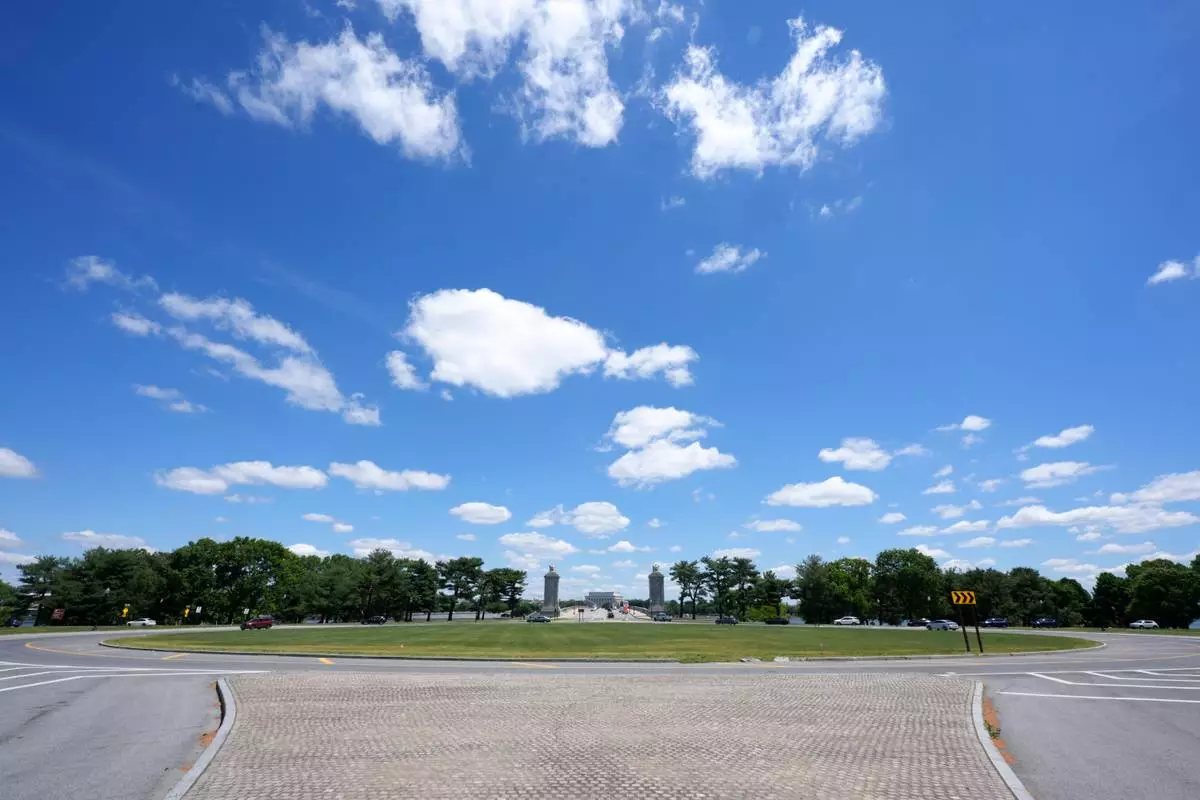
Flags placed by workers are pictured in the Memorial Circle, where President Donald Trump has proposed building an arch to commemorate the United States' 250th anniversary, Friday, May 15, 2026, in Washington. (AP Photo/Jacquelyn Martin)
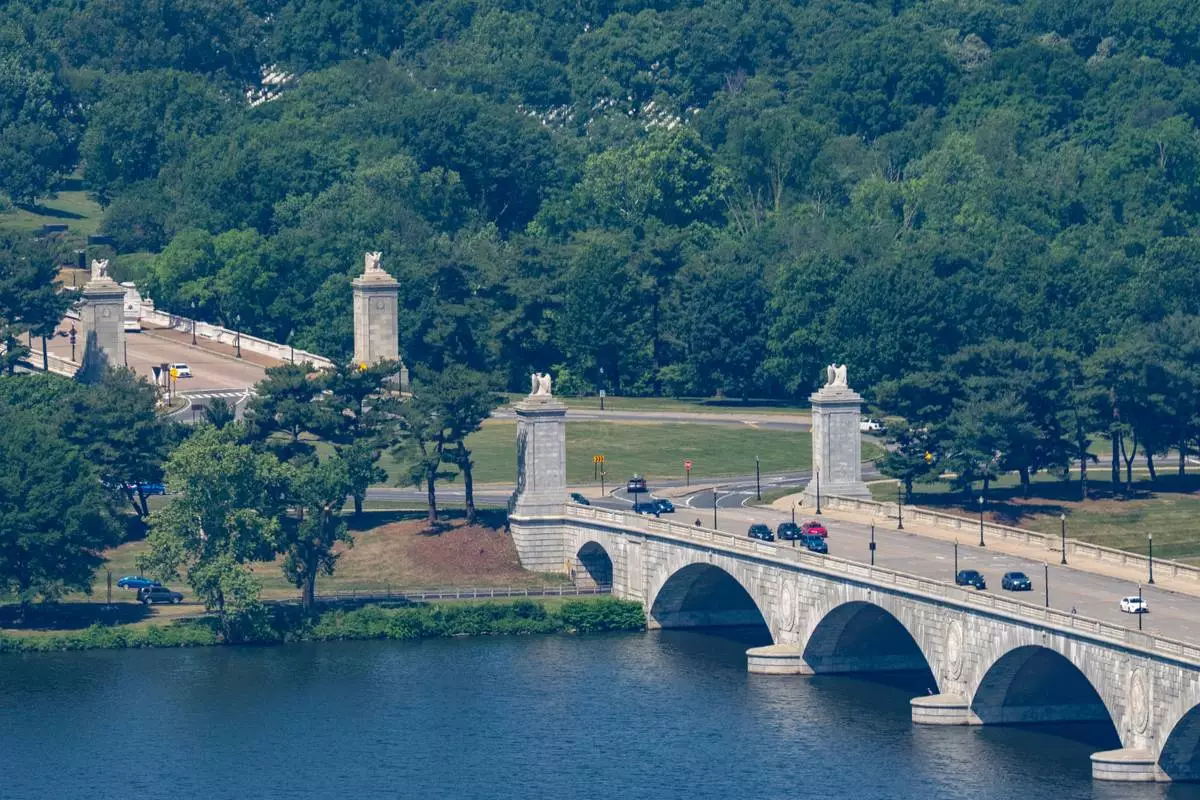
The Memorial Circle, where President Donald Trump has proposed building an arch to commemorate the United States' 250th anniversary is seen, Tuesday, May 19, 2026, in Washington. (AP Photo/Alex Brandon)