BISMARCK, N.D. (AP) — Federal officials on Thursday gave final approval for the Dakota Access oil pipeline to continue operating its contentious Missouri River crossing, an outcome that comes nearly a decade after boisterous protests against the project on the North Dakota prairie.
The U.S. Army Corps of Engineers’ decision to grant the key easement means the pipeline will keep operating but with added conditions for detecting leaks and monitoring groundwater, among others. The announcement brings an end to a drawn-out legal and regulatory saga stemming from the protests in 2016 and 2017, though further litigation over the pipeline is likely.
The $3.8 billion, multistate pipeline has been transporting oil since June 2017 from North Dakota’s Bakken oil field to a terminal in Illinois. The line carries about 4% of U.S. daily oil production, or roughly 540,000 barrels per day,
The Corps is “decisively putting years of delays to rest and moving out to safely execute this crossing beneath Lake Oahe," Assistant Secretary of the Army for Civil Works Adam Telle said in a statement.
The pipeline crosses the river upstream from the Standing Rock Sioux Tribe’s reservation, which straddles the Dakotas. The tribe has long opposed the pipeline, fearing a spill and contamination of its water supply. In 2016 and 2017, thousands of people camped and protested for months near the river crossing.
The protests resulted in hundreds of arrests and related criminal cases and lawsuits, some of them still ongoing, including litigation that threatens the future of the environmental group Greenpeace.
In December, the Corps released its final environmental impact statement nearly six years after a federal judge ordered a more rigorous review of the pipeline's crossing. In that document, the Corps endorsed the option to grant the easement for the crossing and keep the pipeline operating with modifications.
Those measures include enhanced leak detection and monitoring systems, expanded groundwater and surface water monitoring and third-party expert evaluation of the leak and detection systems, among others, the Corps said. The conditions also include water supply contingency planning and other studies coordinated with affected tribes.
The Corps had weighed several options, including removing or abandoning the pipeline's river crossing or even rerouting it north. The agency said its decision “best balances public safety, protection of environmental resources, and leak detection and response considerations while meeting the project’s purpose and need.”
Pipeline developer Energy Transfer hailed the decision, saying the pipeline has been safely operating for nearly 10 years and is critical to the country’s energy infrastructure.
“We want to thank the Corps for the tremendous amount of time and effort put in by so many to bring this matter to a thoughtful close,” said Vicki Granado, a company spokesperson.
The Associated Press sent text messages and emails to media representatives for the tribe and left a voicemail at the tribe's headquarters. They didn't immediately respond Thursday.
North Dakota Republican Gov. Kelly Armstrong, Interior Secretary and former North Dakota governor Doug Burgum and U.S. Senators John Hoeven and Kevin Cramer each welcomed the decision to ensure the pipeline continues operating.
The Corps' announcement came as officials and oil industry leaders were gathered for a trade conference in Bismarck.
Energy Transfer and Enbridge are in early stages of a project to move about 250,000 daily barrels of light Canadian crude oil through the Dakota Access Pipeline by using another pipeline and building a 56-mile connecting line, spokespersons for the companies said. Enbridge will decide sometime in mid-2026 whether to move ahead.
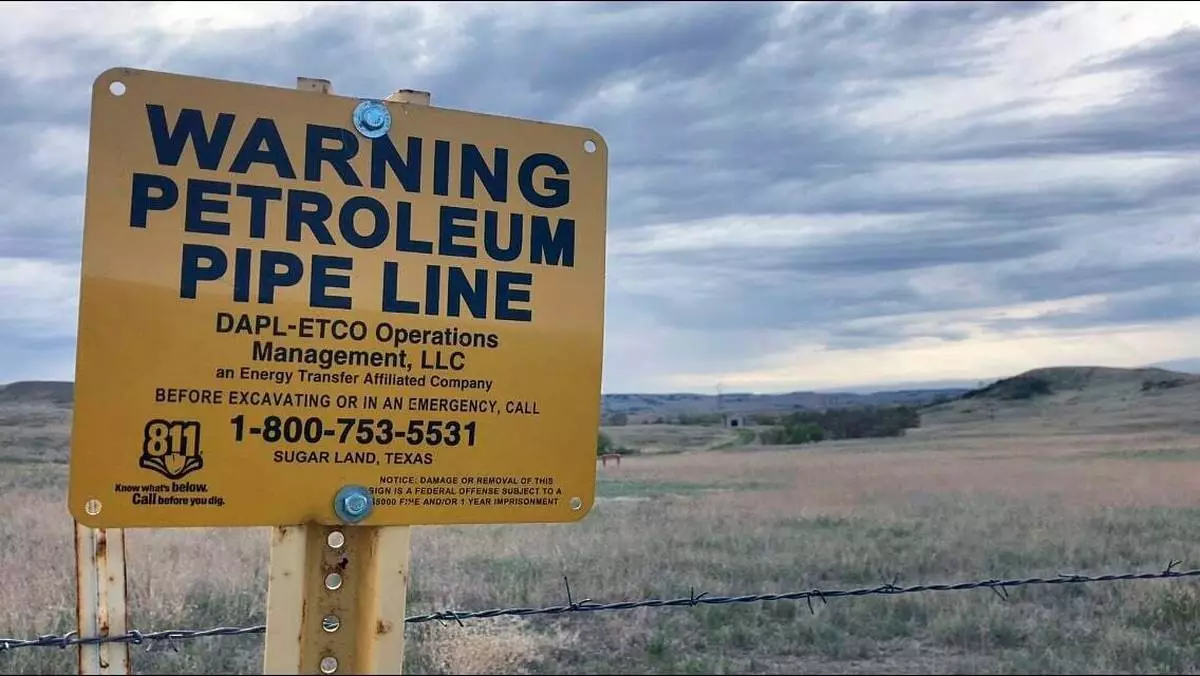
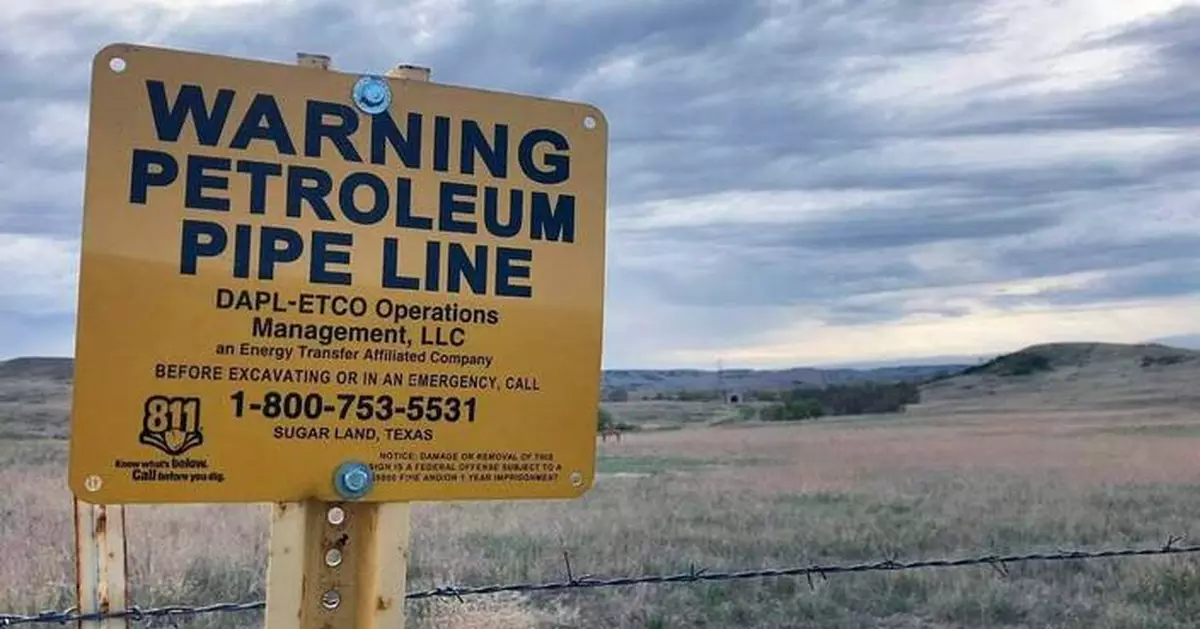
FILE - A sign for the Dakota Access Pipeline is seen north of Cannonball, N.D. and the Standing Rock Reservation on May 20, 2021. (AP Photo/Matthew Brown, File)
MINNEAPOLIS (AP) — A judge on Thursday handed down an extraordinary prison sentence — nearly 42 years — to the former leader of a Minnesota nonprofit who was convicted in a staggering $250 million fraud case that helped ignite an immigration crackdown by the Trump administration.
Aimee Bock ran Feeding Our Future, which had claimed it helped provide millions of meals to children in need during the pandemic. The U.S. Justice Department, however, said she was atop the “single largest COVID-19 fraud scheme in the country.”
“I understand I failed. I failed the public, my family, everyone,” Bock said in federal court.
President Donald Trump used the fraud cases against Bock and many others to initially justify a massive surge of federal officers to the Minneapolis-St. Paul area last winter, leading to a pushback by residents and the deaths of two people.
“Feeding Our Future operated like a cash pipeline, open to anyone willing to submit fraudulent claims and pay kickbacks,” prosecutors said in a court filing.
Bock had long proclaimed her innocence but was convicted last year of conspiracy, fraud and bribery.
“This case has changed our state forever,” Joe Thompson, formerly the lead prosecutor in the case, said outside the courtroom. “Aimee Bock did everything she could to earn this long sentence.”
The nonprofit sat atop a fraud network that included a web of partner organizations, phony distribution sites, kickbacks and fake lists of children supposedly being fed, prosecutors say. Dozens of people, many from the state’s large Somali community, have been convicted in a series of overlapping food fraud cases that have spent years in the courts.
Bock and co-conspirators enriched themselves with international travel, real estate purchases, luxury vehicles and other lavish spending, the government said.
Bock's lawyer, Kenneth Udoibok, argued for no more than three years in prison, saying she had provided key information to investigators. He argued that Bock had been unfairly painted as the mastermind and insisted that two co-defendants were responsible for running the scams.
Meanwhile, authorities this week filed additional charges against others in a sprawling investigation into federal social service spending in Minnesota.
The targets include Fahima Mahamud, who was CEO of Future Leaders Early Learning Center, a childcare center in Minneapolis. Over three years, Mahamud’s organization was reimbursed approximately $4.6 million for services on behalf of people who didn’t make a required copayment, prosecutors allege.
A message seeking comment from her lawyer was not immediately returned Thursday. Mahamud was charged separately in February with fraud related to meals. She has pleaded not guilty.
Two other people were charged with conspiring to get $975,000 in Medicaid subsidies for housing services that were not provided. They’re expected to plead guilty in June, according to a court filing.
Two additional people were accused of receiving $21.1 million by billing Medicaid for autism therapy that was either unnecessary or not provided. Investigators said the two paid families as much as $1,500 per child per month to add their names to the program and get reimbursement.
Trump, who has long derided Somalis, last year blasted the state as “a hub of fraudulent money laundering activity.” He also criticized the leadership of Gov. Tim Walz, the Democrats’ vice presidential nominee in the 2024 election.
“Somali gangs are terrorizing the people of that great State, and BILLIONS of Dollars are missing. Send them back to where they came from,” Trump wrote on social media.
Bock is white and the U.S. Attorney’s Office says the overwhelming majority of defendants in the cases are of Somali descent. Most are U.S. citizens.
The immigration surge led to repeated protests and confrontations between residents and federal officers and resulted in the killings of Renee Good and Alex Pretti.
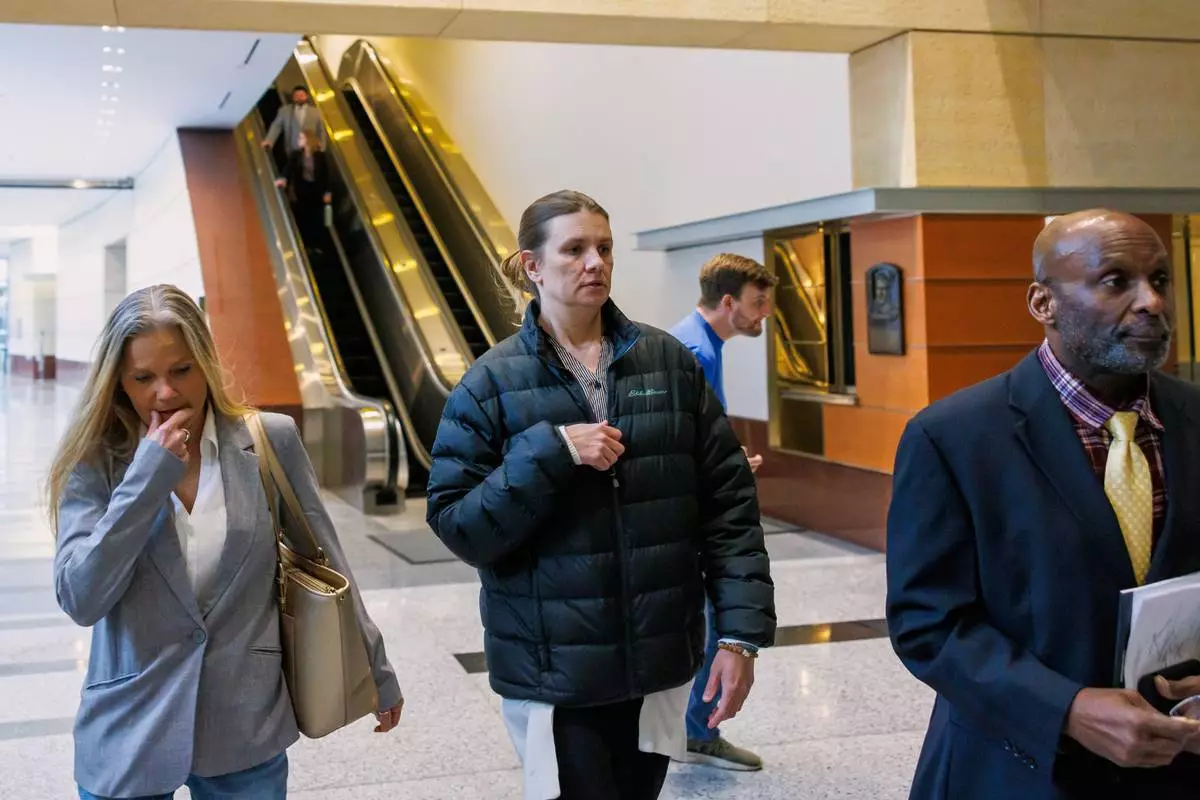
FILE - Aimee Bock, founder and executive director of the nonprofit organization Feeding Our Future, arrives at the Minneapolis federal courthouse with her attorney, Ken Udoibok, right, on March 19, 2025, in Minneapolis. (Kerem Yücel/Minnesota Public Radio via AP, File)