BUNIA, Congo (AP) — People set fire to an Ebola treatment center in a town at the heart of the outbreak in eastern Congo on Thursday after being stopped from retrieving the body of a local man, a witness and a senior police officer said, as fear and anger grow over a health crisis that doctors are struggling to contain.
The arson attack in Rwampara reflects the challenges of health workers trying to curb a rare Ebola virus by using stringent measures that might clash with local customs, such as burial rites. The disease has been spreading for weeks in a region lacking in health facilities and where armed conflict has displaced many people.
Click to Gallery
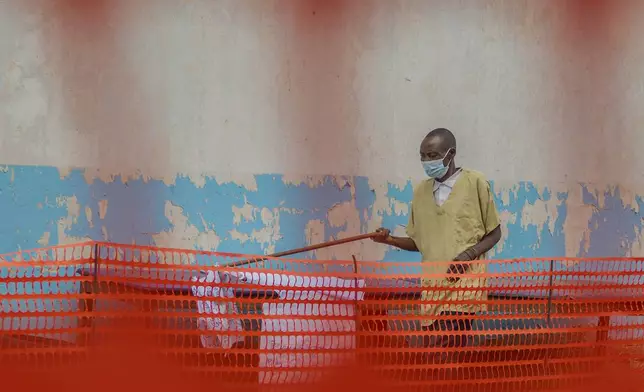
A health worker prepares an Ebola treatment center at the General Hospital in Bunia, Congo, Thursday, May 21, 2026. (AP Photo/Moses Sawasawa)
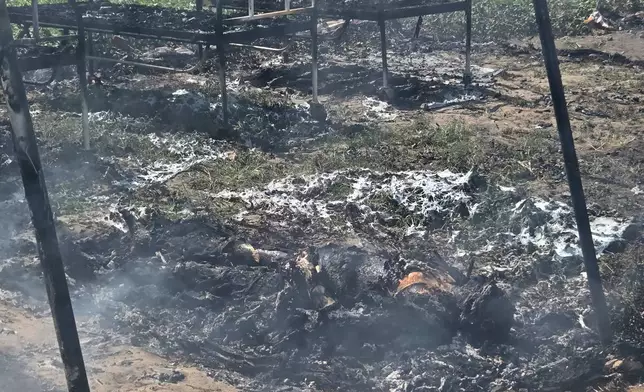
EDS NOTE: GRAPHIC CONTENT - The remains of a body lie on the ground at an Ebola treatment center after it burned down in Rwampara, Ituri province, Congo, Thursday, May 21, 2026. (AP Photo/Dirole Lotsima Dieudonne)
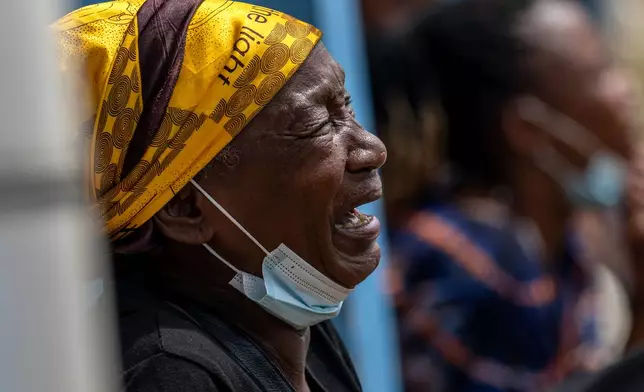
A woman mourns her child, who died of Ebola, at the General Hospital in Bunia, Congo, Thursday, May 21, 2026. (AP Photo/Moses Sawasawa)
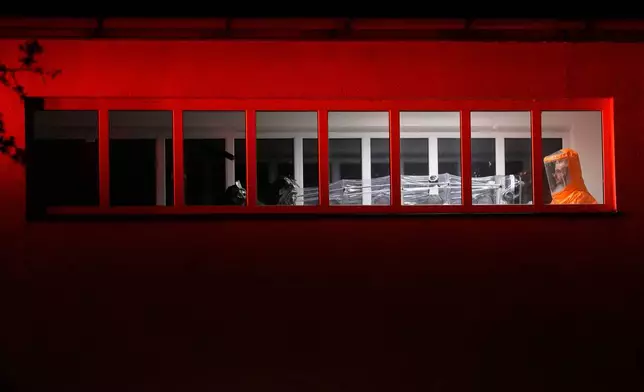
A U.S. doctor, who was in contact with people infected with Ebola in Uganda, arrives in a hospital in Prague, Czech Republic, Thursday, May 21, 2026. (AP Photo/Petr David Josek)
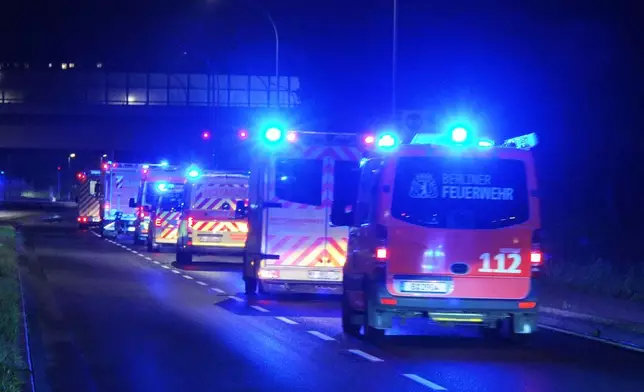
A convoy of emergency vehicles in Schönefeld, Germany, transports the family of a U.S. national who tested positive for Ebola in Congo, from the airport to where the patient is being examined in a special isolation ward of the Charite hospital in Berlin, on Wednesday, May 20, 2026. (Michael Ukas/dpa via AP)
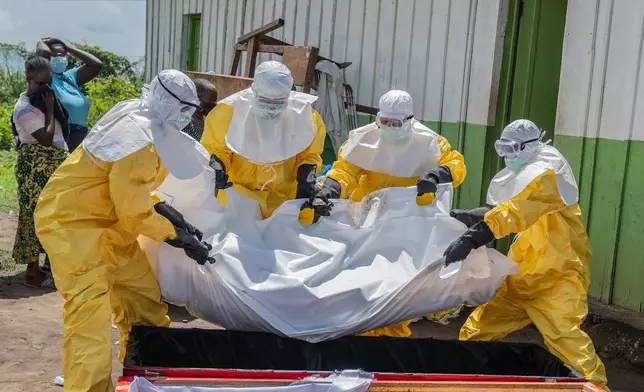
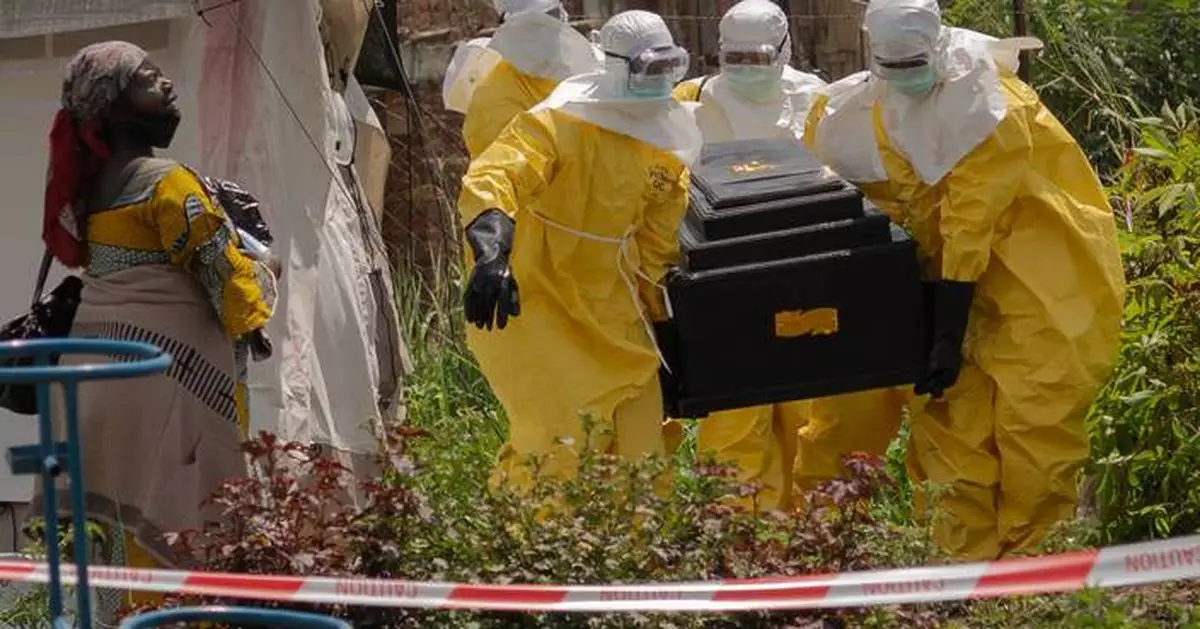
Red Cross workers carry the body of a person who died of Ebola into a coffin at a health center in Rwampara, Congo, Wednesday, May 20, 2026. (AP Photo/Moses Sawasawa)
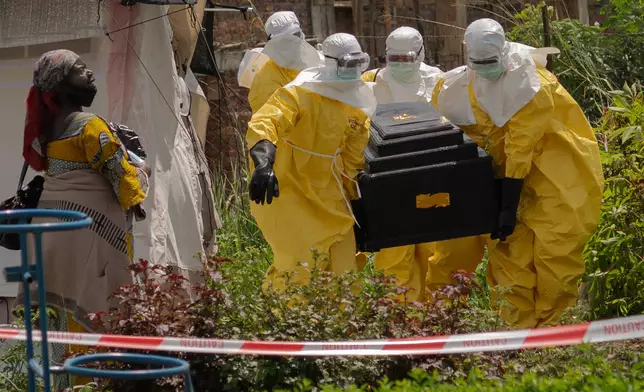
A woman cries as Red Cross workers carry the coffin of a person who died of Ebola from a health center in Rwampara, Congo, Wednesday, May 20, 2026. (AP Photo/Moses Sawasawa)
The dangerous work of burying suspected victims is being managed wherever possible by authorities because the bodies of those who die from Ebola can be highly contagious and lead to further spread when people prepare bodies for burial and gather for funerals.
That policy can be extremely unpopular with victims' families and friends, who aren't given the chance to bury their loved ones.
The center in Rwampara was burned by local youths who became angry while trying to retrieve the body of a friend who had apparently died of Ebola, according to a witness who spoke to The Associated Press by telephone.
“The police intervened to try to calm the situation, but unfortunately they were unsuccessful,” said Alexis Burata, a local student who said he was in the area. "The young people ended up setting fire to the center. That’s the situation.”
An AP journalist saw people break into the center and set fire to objects inside and also to what appeared to be the body of at least one suspected Ebola victim that was being stored there. Aid workers fled the treatment center in vehicles.
Deputy Senior Commissioner Jean Claude Mukendi, head of the public security department, Ituri Province, said it was due to youths who didn't understand the protocols required for burying suspected Ebola victims.
“His family, friends, and other young people wanted to take his body home for a funeral even though the instructions from the authorities during this Ebola virus outbreak are clear," Mukendi said. "All bodies must be buried according to the regulations."
Hama Amadou, the field Coordinator for the humanitarian organization ALIMA, which had teams working at the center, said later that calm had been restored and the aid teams were continuing their work at the center.
The flash of anger underlined the complications faced by both Congolese authorities and an array of aid agencies trying to stem an outbreak the World Health Organization has declared a public health emergency of international concern.
There are 148 suspected deaths and nearly 600 suspected cases, according to the U.N., with two cases including one death in neighboring Uganda. But the head of the WHO has said the outbreak is almost certainly much larger and has also expressed concern over the speed of the spread.
The risk of the outbreak spreading globally is low, the WHO has said, but high regionally with the Ituri Province at the center of the outbreak bordering Uganda and South Sudan.
“The priority now is to act quickly and work closely with communities, as the coming days are critical,” said Ariel Kestens, the head of the International Federation of Red Cross and Red Crescent Societies delegation in Congo.
Health workers and aid groups have said they are in dire need of more supplies and staff to respond. Also, there is no available vaccine or medicine for the Bundibugyo strain responsible for the outbreak.
An expert said this week it would be at least six to nine months before one would be available.
The virus spread undetected for weeks following the first known death in late April as Congolese health authorities tested for a different Ebola virus more commonly responsible for outbreaks in the country.
On Thursday, the M23 rebel group that controls parts of eastern Congo reported a confirmed case near the major city of Bukavu, some 500 kilometers (310 miles) south of the outbreak’s epicenter in Ituri Pronvince. The person died, M23 said in a statement.
As well as Ituri, other cases had been confirmed in North Kivu province and two in Uganda. But the announcement by M23 was the first confirmation of a case in South Kivu.
Health officials have not yet found “patient zero,” according to the WHO.
Investigations are continuing into the source of the outbreak, but “given the scale, we are thinking that it has started probably a couple of months ago,” said Anaïs Legand, a viral hemorrhagic fevers expert at the WHO.
India and the African Union said Thursday that the India-Africa Forum Summit, scheduled to be held next week in New Delhi, had been postponed due to the “evolving health situation in parts of Africa.”
On Wednesday, Congo’s soccer team canceled a three-day World Cup preparation training camp and a planned farewell to fans in the capital Kinshasa because of the Ebola outbreak.
The U.S. Department of Homeland Security announced that any flights carrying American citizens or U.S. permanent residents who had visited Congo, Uganda or South Sudan in the previous 21 days would be redirected to Washington Dulles International Airport from Thursday, where there would be enhanced Ebola screening.
The U.S. had already put in place restrictions banning other travelers who had been in those three countries in the previous 21 days from entering the U.S.
Pronczuk reported from Dakar, Senegal and Imray from Cape Town, South Africa. Associated Press writers Jamey Keaten in Geneva; Jean Yves Kamale in Kinshasa, Congo; and Wilson McMakin in Dakar, Senegal contributed to this report.
For more on Africa and development: https://apnews.com/hub/africa-pulse
The Associated Press receives financial support for global health and development coverage in Africa from the Gates Foundation. The AP is solely responsible for all content. Find AP’s standards for working with philanthropies, a list of supporters and funded coverage areas at AP.org.
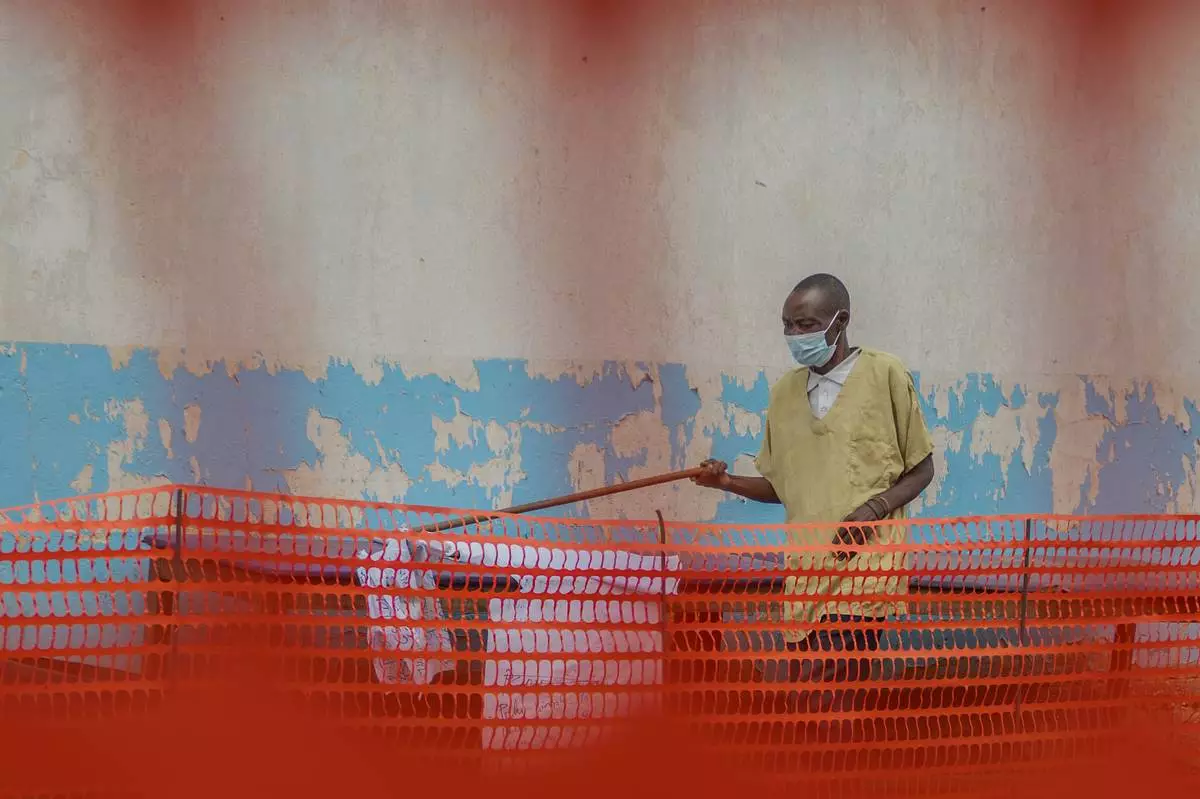
A health worker prepares an Ebola treatment center at the General Hospital in Bunia, Congo, Thursday, May 21, 2026. (AP Photo/Moses Sawasawa)
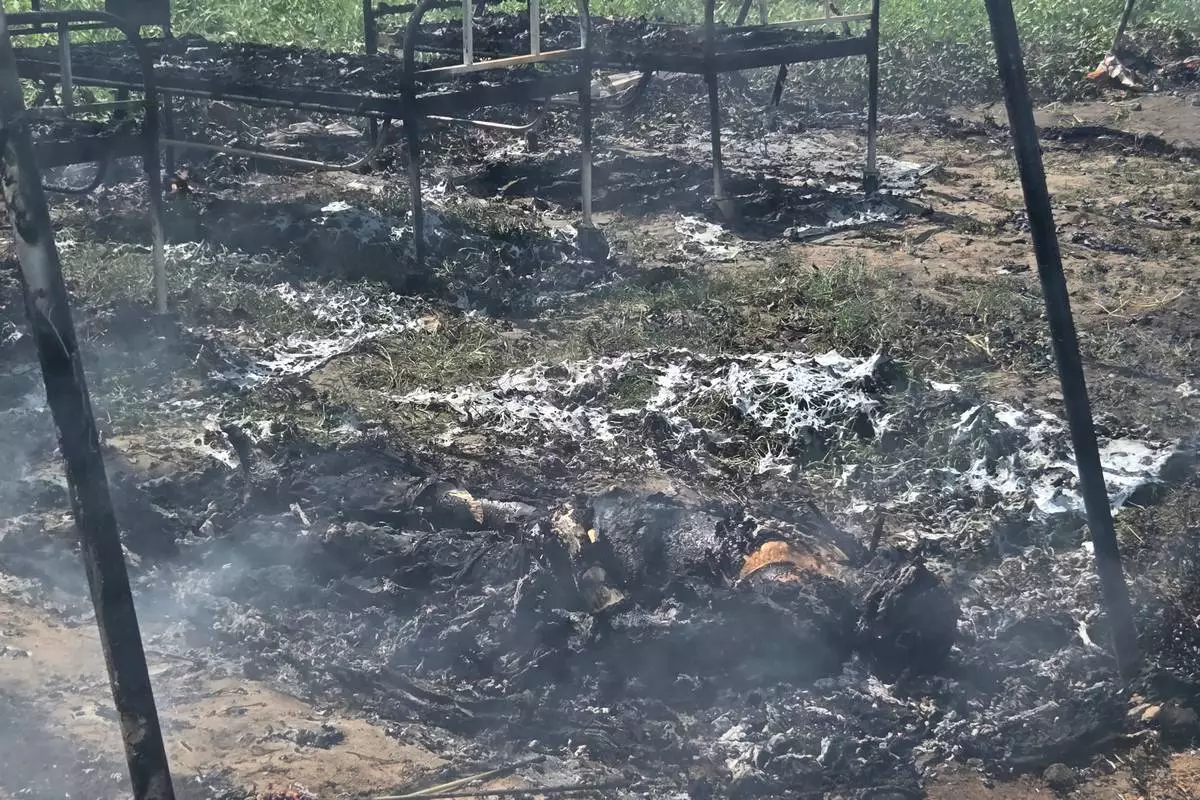
EDS NOTE: GRAPHIC CONTENT - The remains of a body lie on the ground at an Ebola treatment center after it burned down in Rwampara, Ituri province, Congo, Thursday, May 21, 2026. (AP Photo/Dirole Lotsima Dieudonne)
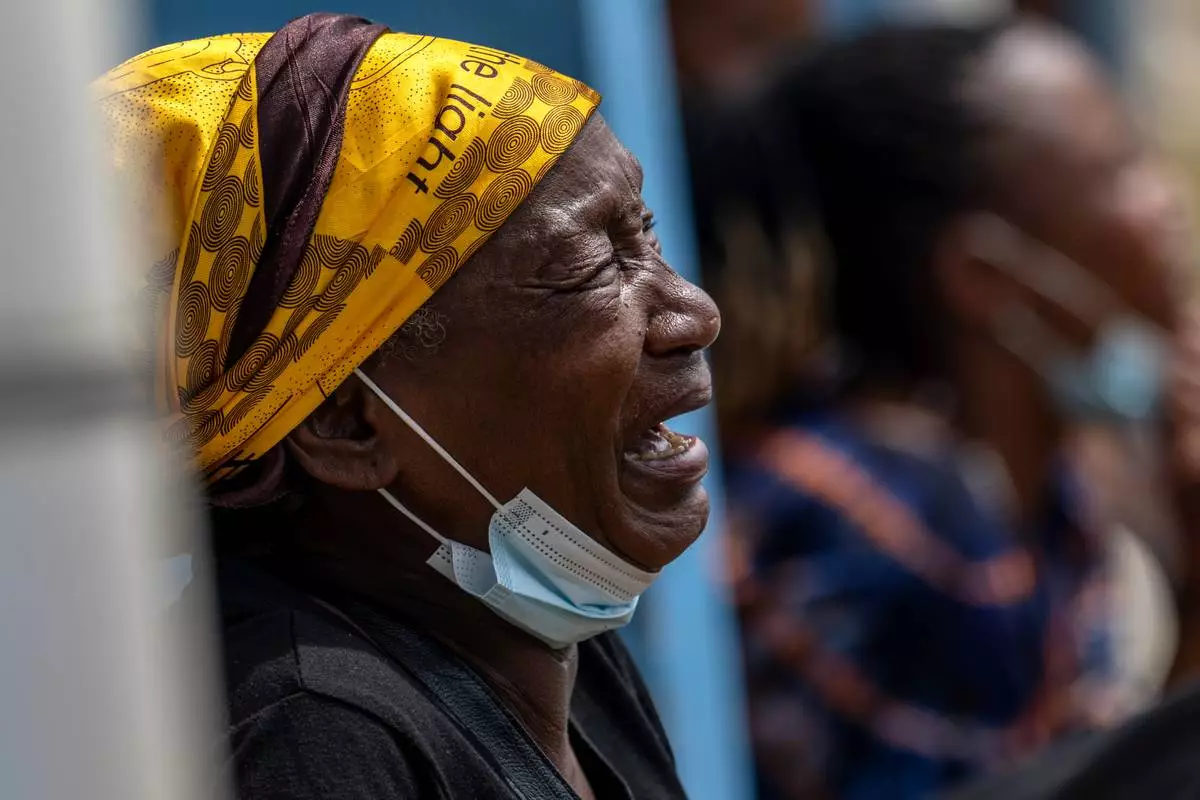
A woman mourns her child, who died of Ebola, at the General Hospital in Bunia, Congo, Thursday, May 21, 2026. (AP Photo/Moses Sawasawa)
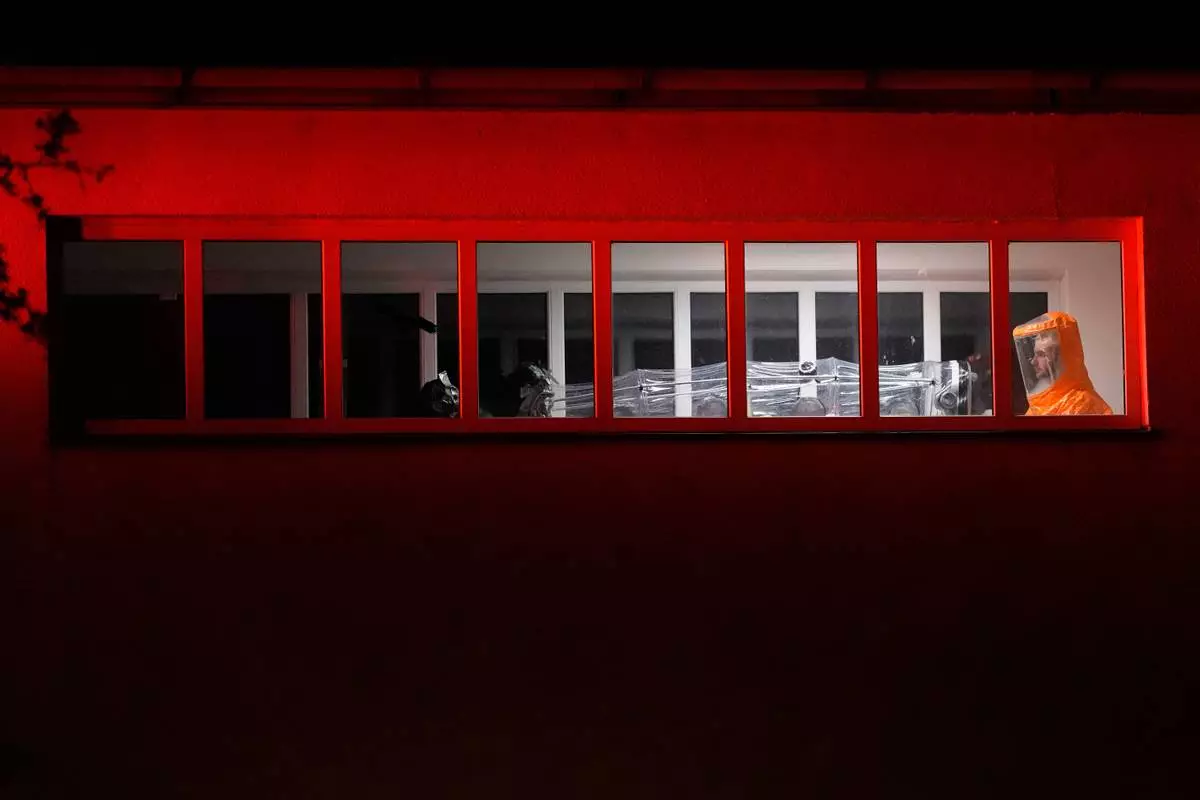
A U.S. doctor, who was in contact with people infected with Ebola in Uganda, arrives in a hospital in Prague, Czech Republic, Thursday, May 21, 2026. (AP Photo/Petr David Josek)
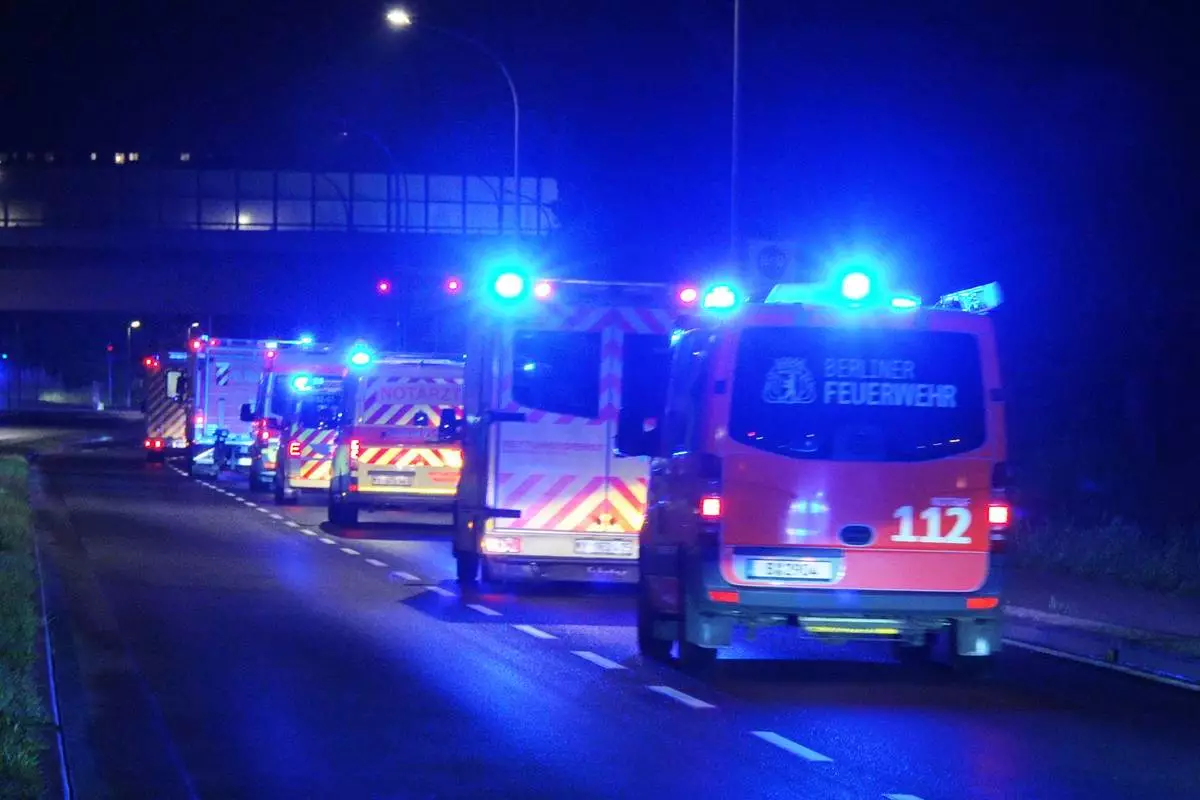
A convoy of emergency vehicles in Schönefeld, Germany, transports the family of a U.S. national who tested positive for Ebola in Congo, from the airport to where the patient is being examined in a special isolation ward of the Charite hospital in Berlin, on Wednesday, May 20, 2026. (Michael Ukas/dpa via AP)
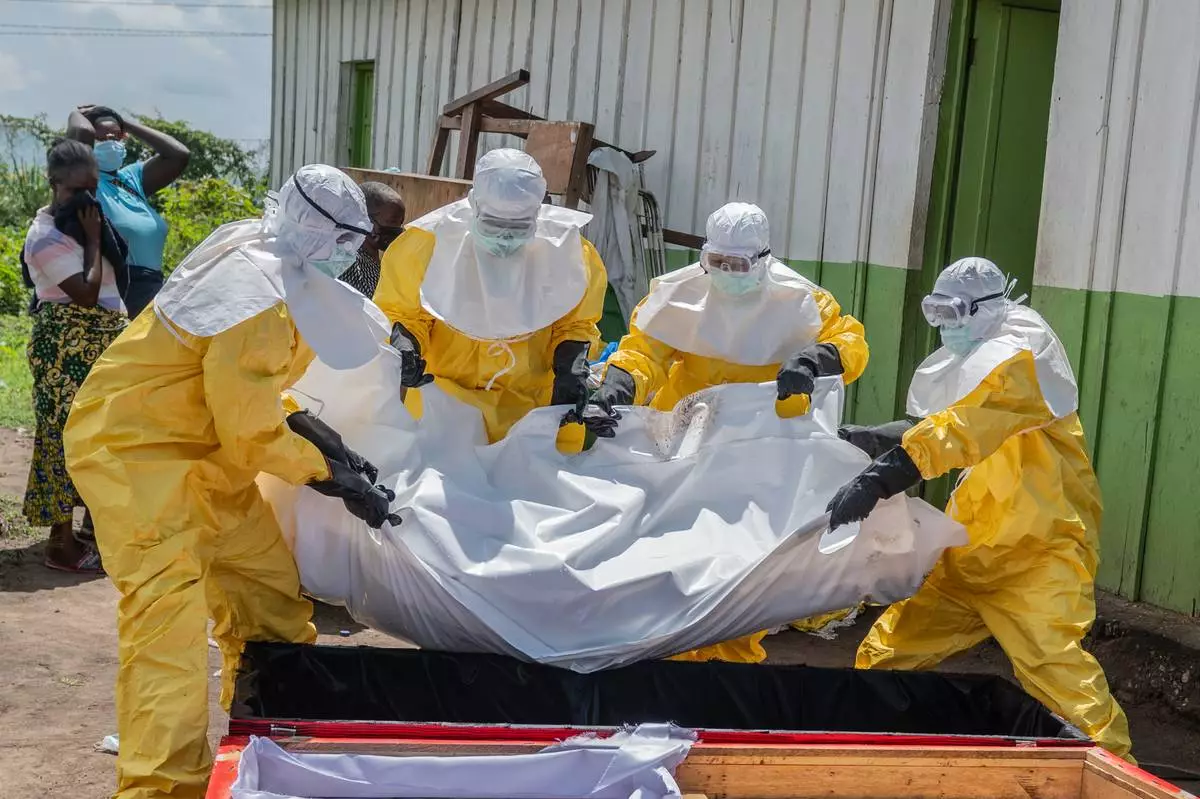
Red Cross workers carry the body of a person who died of Ebola into a coffin at a health center in Rwampara, Congo, Wednesday, May 20, 2026. (AP Photo/Moses Sawasawa)
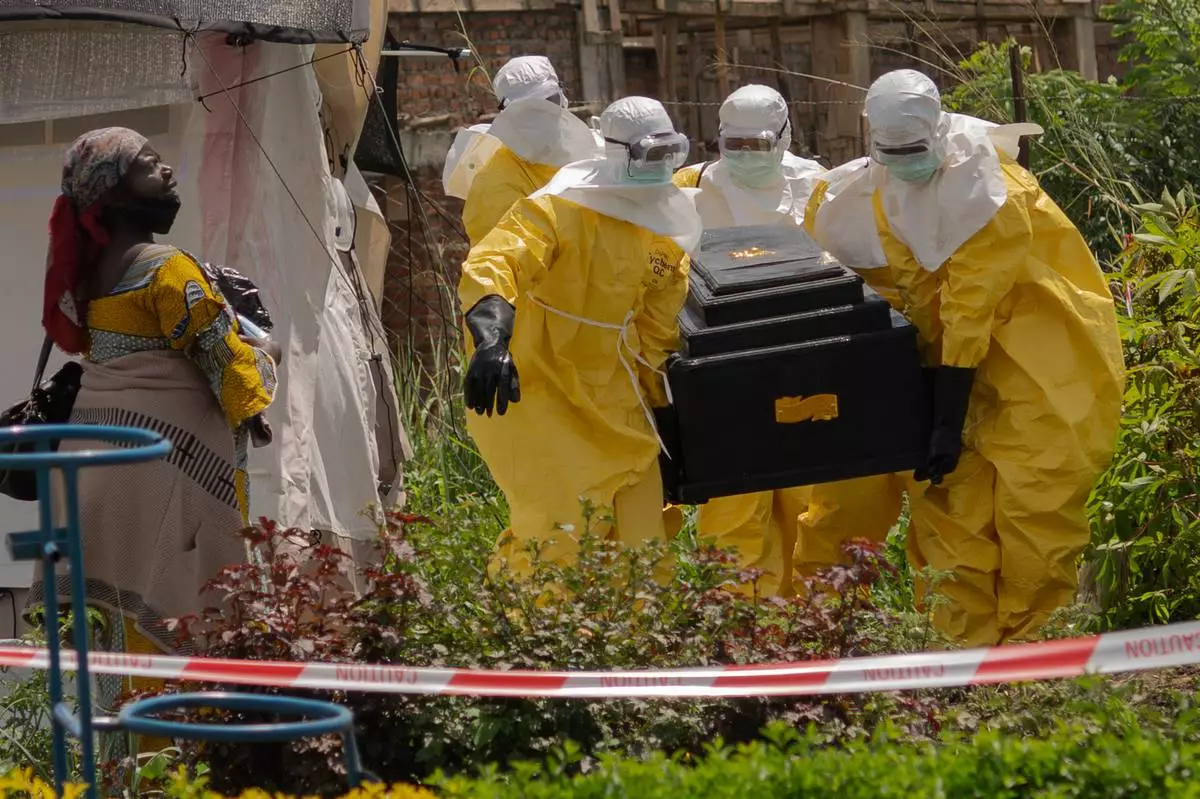
A woman cries as Red Cross workers carry the coffin of a person who died of Ebola from a health center in Rwampara, Congo, Wednesday, May 20, 2026. (AP Photo/Moses Sawasawa)