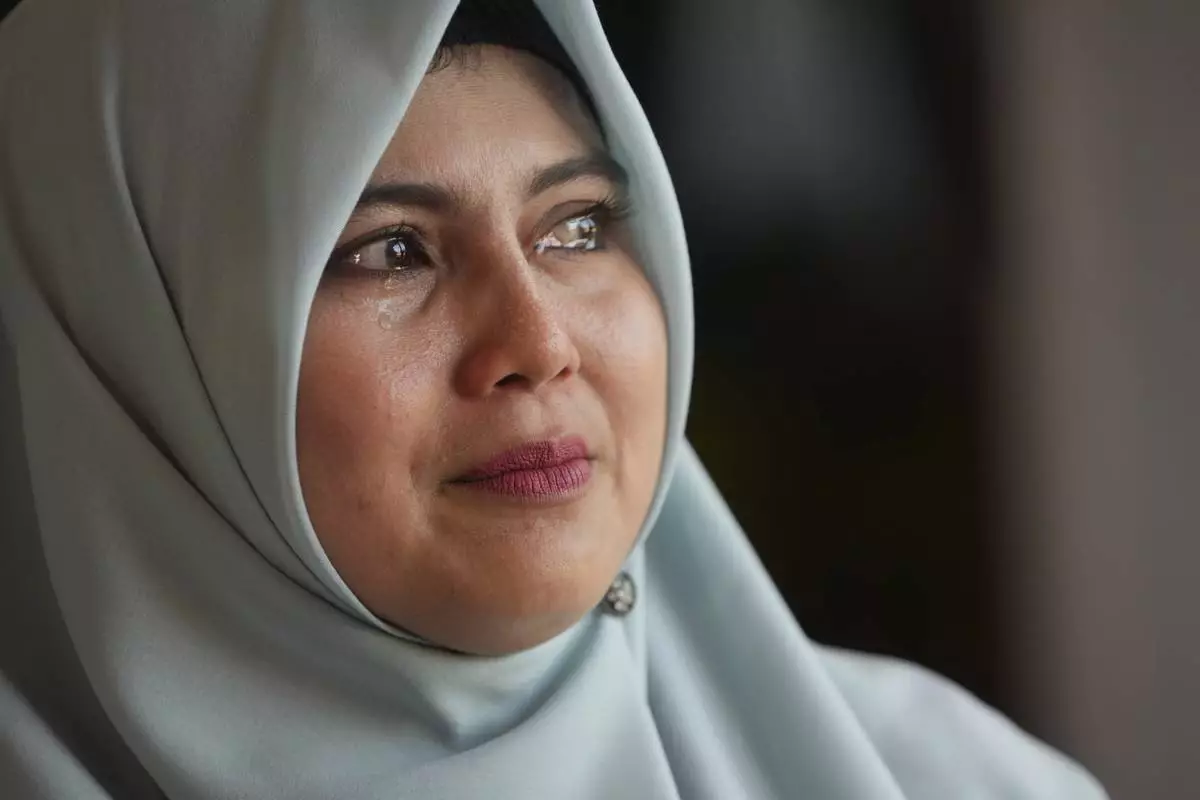
BANDA ACEH, Indonesia (AP) — Two decades after a catastrophic tsunami destroyed her village, Tria Asnani still cries when she recalls how she lost her mother while trying to escape the giant waves.
Asnani, now a school teacher, was only 17 at the time. Her father, who was a fisherman, never returned home from sea. She doesn't know how she survived. “I cannot swim. I could only rely on dhikr (Islamic prayer).”
Click to Gallery
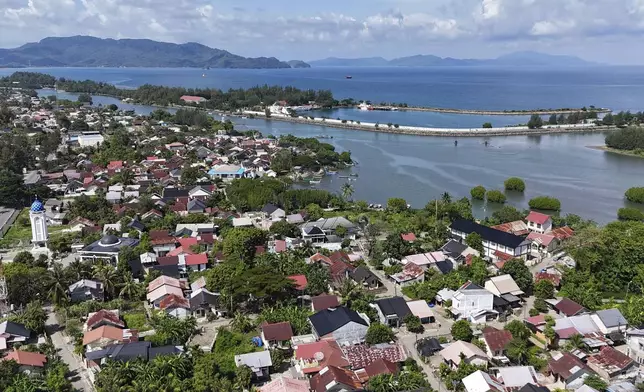
This aerial shot taken using a drone shows the now densely-populated Ulee Lheue village, one of the areas hardest hit by the Indian Ocean tsunami in 20024, in Banda Aceh, Aceh Province, Indonesia, Friday, Dec. 13, 2024. (AP Photo/Achmad Ibrahim)
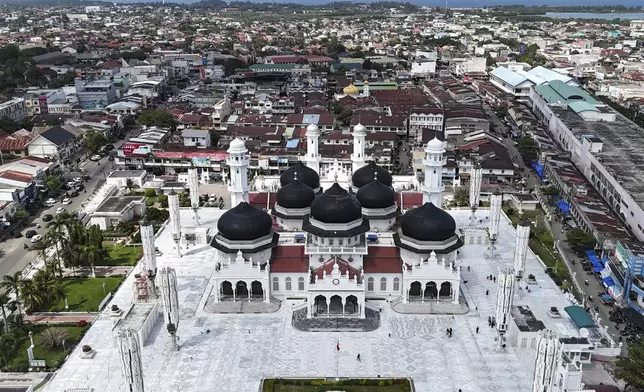
This aerial shot taken using a drone shows buildings at the business district surrounding Baiturrahman Grand Mosque which were badly ravaged by the Indian Ocean tsunami in 2004, in Banda Aceh , Indonesia, Thursday, Dec. 12, 2024. (AP Photo/Achmad Ibrahim)
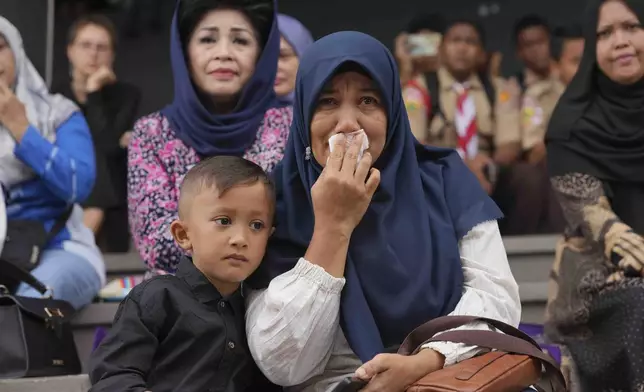
Muslina, a 43-year-old civil servant who is also a tsunami survivor weeps as she and her son Zayyan Firdaus Akmal watch a stage performance depicting the Indian Ocean tsunami in 2004, in Banda Aceh, Indonesia, Saturday, Dec 14, 2024. (AP Photo/Achmad Ibrahim)

Artists perform during a stage performance depicting the Indian Ocean tsunami during a commemoration of the 20th year since the killer wave ravaged Aceh's coastal areas, in Banda Aceh, Indonesia, Saturday, Dec 14, 2024. (AP Photo/Achmad Ibrahim)
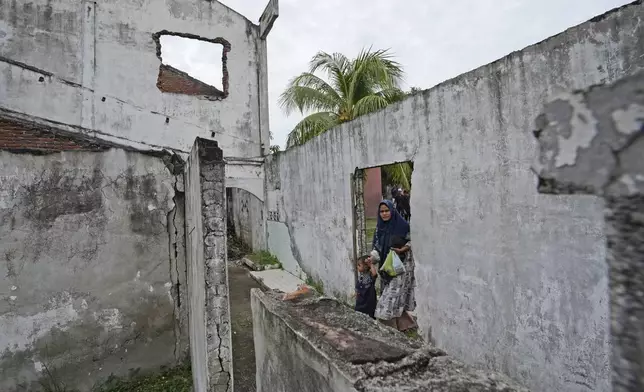
A woman walks trough an opening on the wall of a building badly damaged during the Indian Ocean tsunami in 2004 in Banda Aceh, Aceh province, Indonesia, Saturday, Dec 14, 2024. (AP Photo/Achmad Ibrahim)
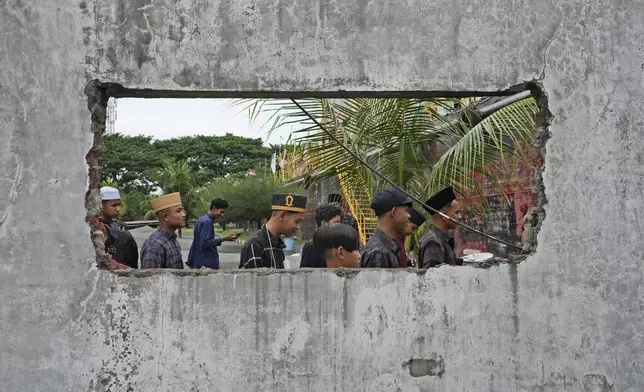
People are seen through a hole in the wall of a building damaged by 2004 Indian Ocean tsunami as they visit a giant barge housing a , a diesel power generator swept ashore by the killer wave, in Banda Aceh, Indonesia, Saturday, Dec 14, 2024. (AP Photo/Achmad Ibrahim)
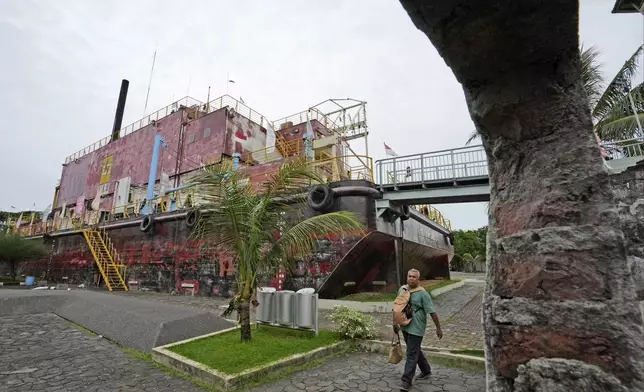
A man walks past a steel barge housing a diesel power generator swept ashore by the Indian Ocean tsunami in 2004 which is now preserved as a monument, in Banda Aceh, Indonesia, Saturday, Dec 14, Dec. 15, 2024. (AP Photo/Achmad Ibrahim)
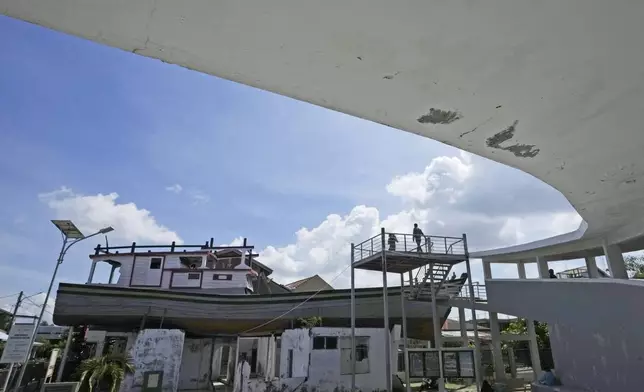
Visitors stand on a platform near a house on which a fishing boat landed after it was swept ashore by the Indian Ocean tsunami in 2004, now preserved as a monument, in Banda Aceh, Indonesia, Friday, Dec. 13, 2024. (AP Photo/Achmad Ibrahim)
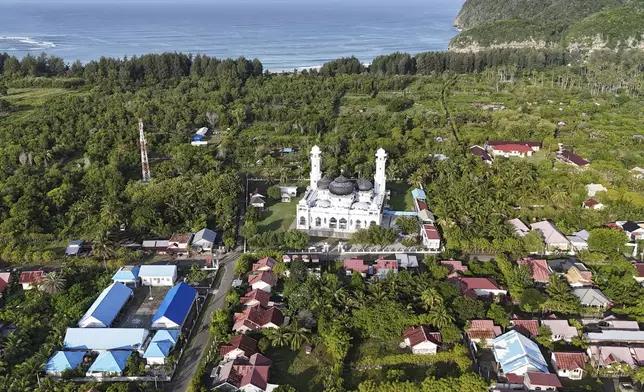
This aerial shot taken using a drone shows Rahmatullah Mosque in Lampuuk village, one of the areas hardest hit by Indian Ocean tsunami in 2004, in Aceh Besar, Indonesia, Thursday, Dec. 12, 2024. (AP Photo/Achmad Ibrahim)
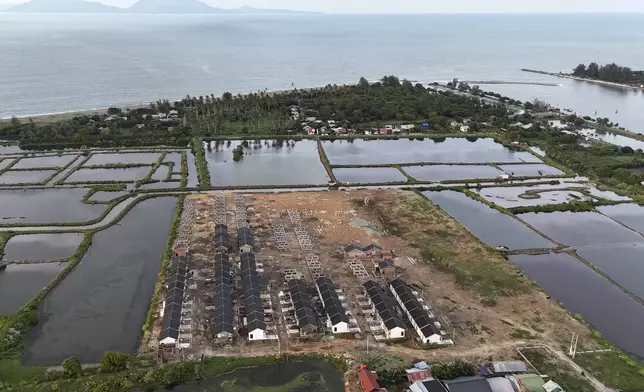
A housing complex is seen under construction near the waterfront area in Banda Aceh, Indonesia, Thursday, Dec. 12, 2024. (AP Photo/Achmad Ibrahim)
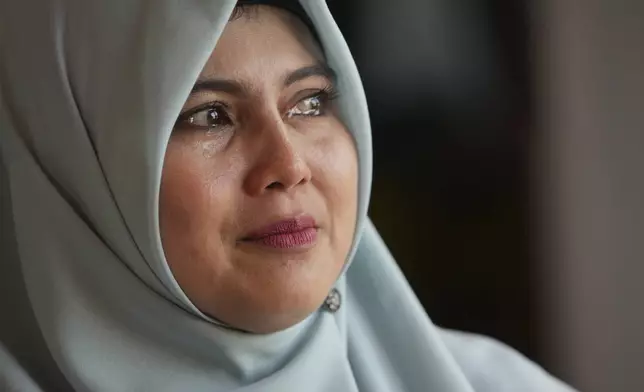
Tears well up in the eyes of Tria Asnani, a 38-year-old high school teacher teacher who is also a tsunami survivor, as he speaks with The Associated Press during an interview in Banda Aceh, Indonesia, Thursday, Dec. 12, 2024. (AP Photo/Achmad Ibrahim)
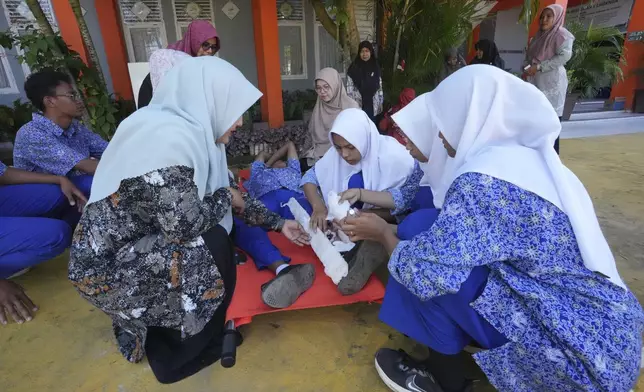
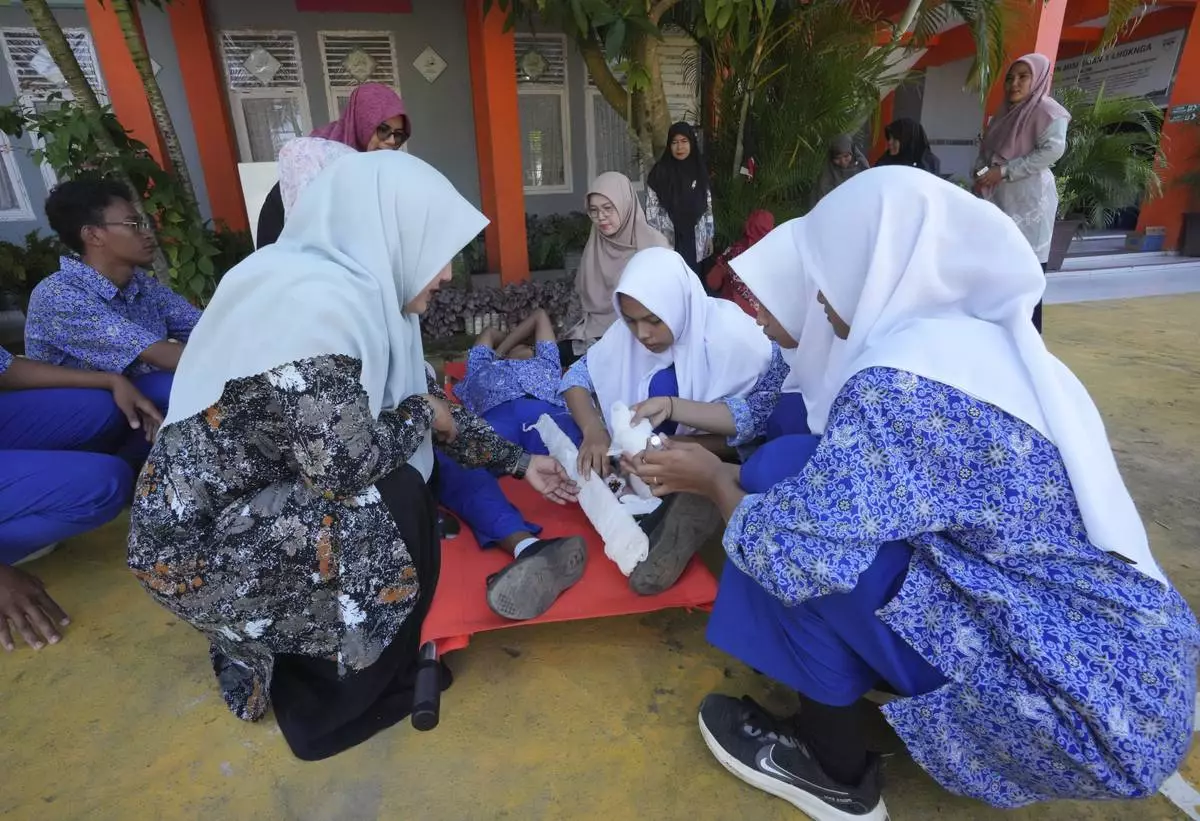
Tria Asnani, left, a 38-year-old teacher who is also a tsunami survivor, assists students to apply splints during an earthquake drill at a school in Banda Aceh, Indonesia, Thursday, Dec. 12, 2024. (AP Photo/Achmad Ibrahim)
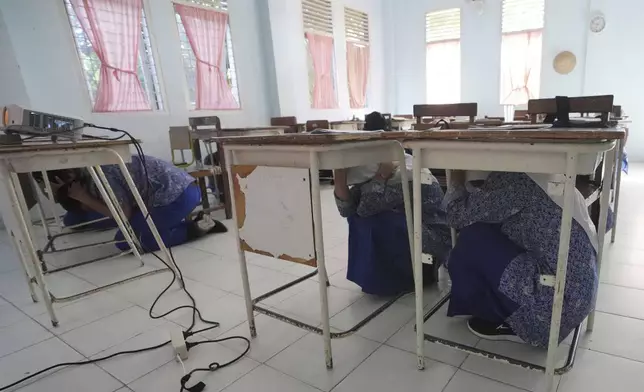
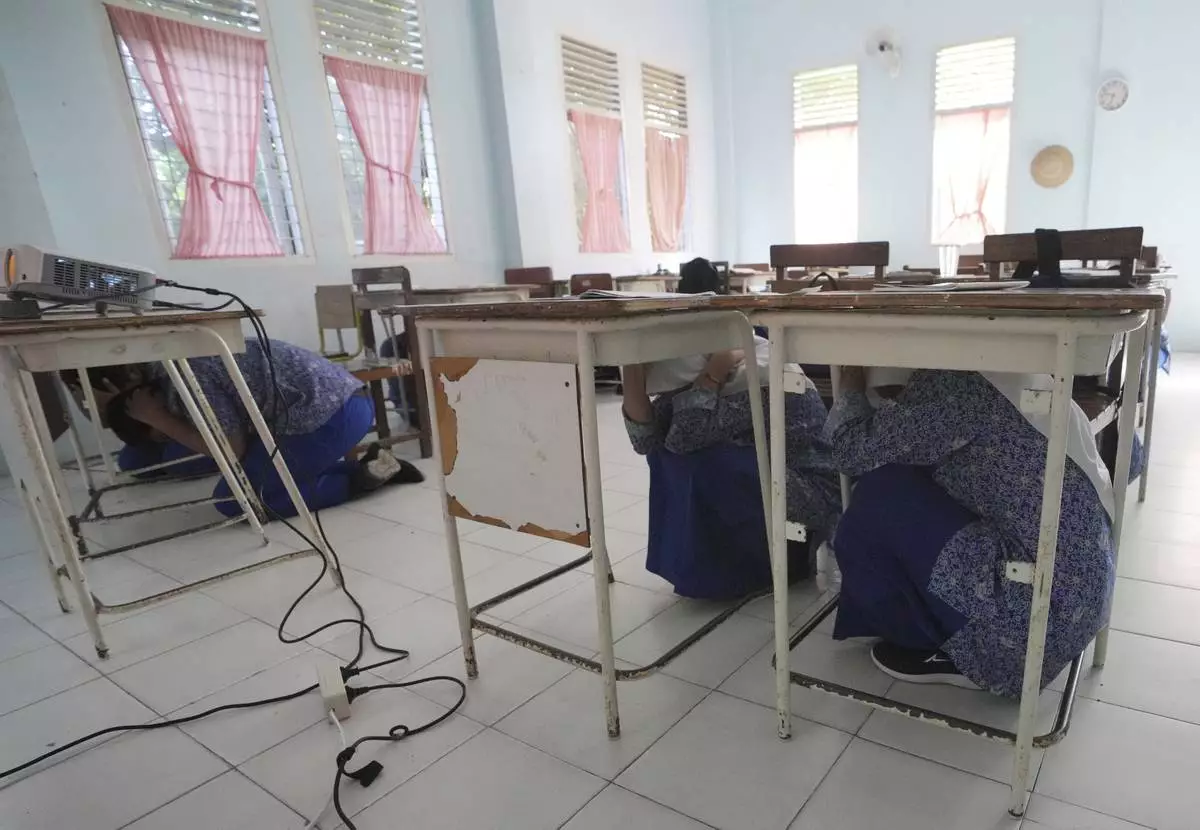
Students take cover under their desks during an earthquake drill at a school in Banda Aceh, Indonesia, Thursday, Dec. 12, 2024. (AP Photo/Achmad Ibrahim)
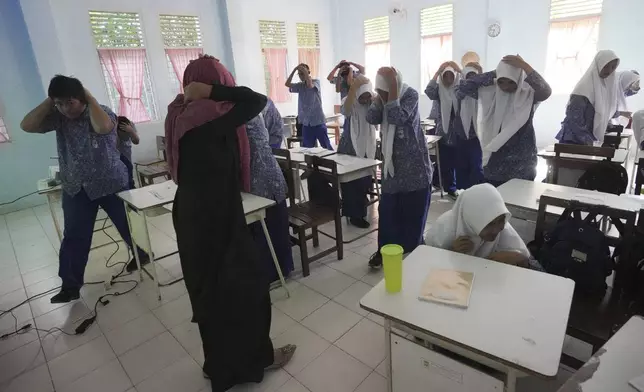
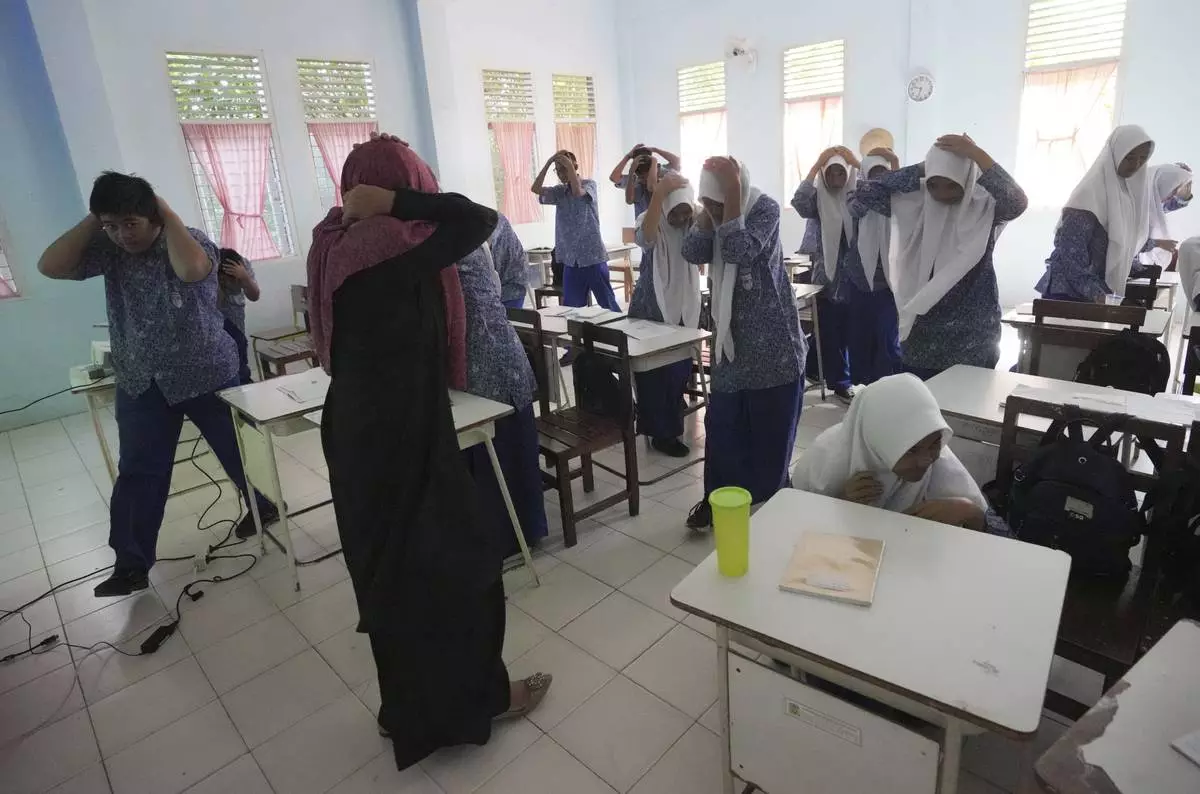
Students take part in an earthquake drill at a school in Banda Aceh, Indonesia, Thursday, Dec. 12, 2024. (AP Photo/Achmad Ibrahim)
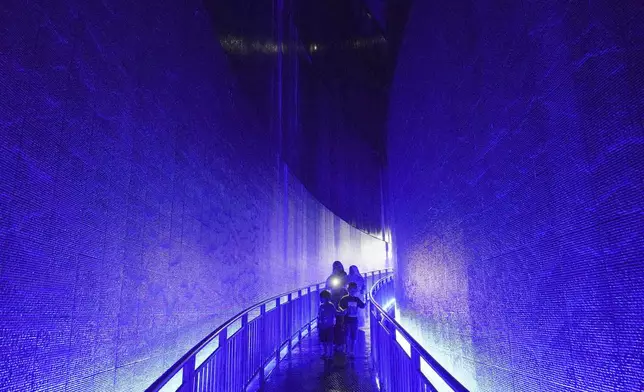
Visitors walks at the Tsunami Museum in Banda Aceh, Aceh province, Indonesia, Saturday, Dec 14, Dec. 15, 2024. (AP Photo/Achmad Ibrahim)
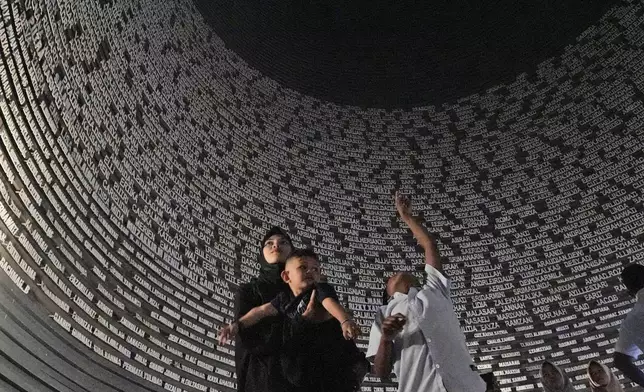
Visitors looks at a wall displaying the names of the victims of 2004 Indian Ocean tsunami, at the Tsunami Museum in Banda Aceh, Aceh province, Indonesia, Saturday, Dec 14, 2024. (AP Photo/Achmad Ibrahim)
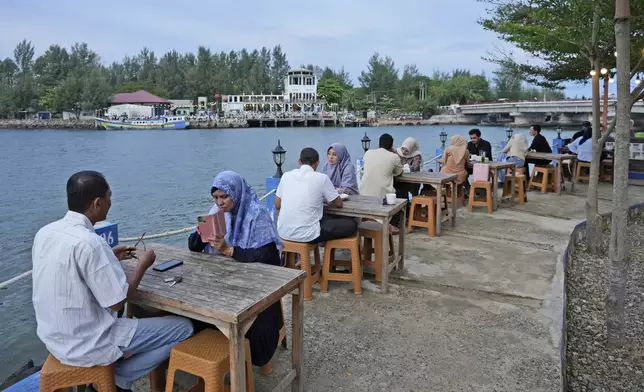
People sit at a cafe on the waterfront near Ulhee Lheue beach, one of the areas hardest his by the Indian Ocean tsunami in 2004, in Banda Aceh, Indonesia, Saturday, Dec 14, 2024. (AP Photo/Achmad Ibrahim)
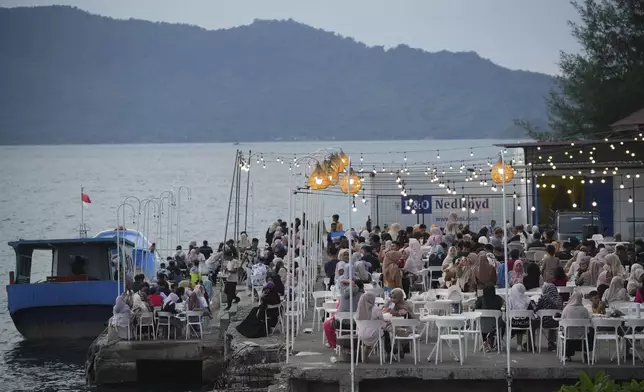
People sit at a coffee shop on the waterfront near Ulee Lheue beach that was one of the areas hardest hit by Indian Ocean tsunami in 2004, in Banda Aceh, Aceh Province, Indonesia, Saturday, Dec. 14, 2024. (AP Photo/Achmad Ibrahim)
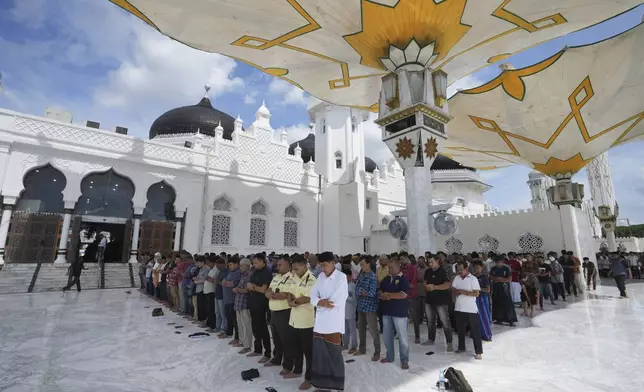
People perform a Friday prayer at Baiturrahman Grand Mosque in Banda Aceh, Indonesia, Friday, Dec. 13, 2024. (AP Photo/Achmad Ibrahim)

Participants prepare for the start of a 5km running event titled "Run for Life, Tsunami Memorial 2024" held to commemorate the 20th anniversary of the Indian Ocean tsunami, in Banda Aceh, Aceh province, Indonesia, Sunday, Dec. 15, 2024. (AP Photo/Achmad Ibrahim)
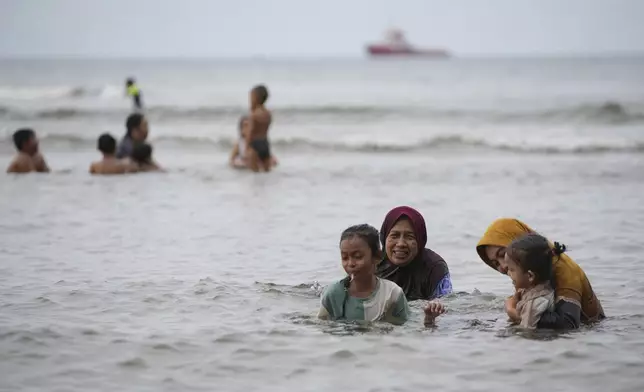
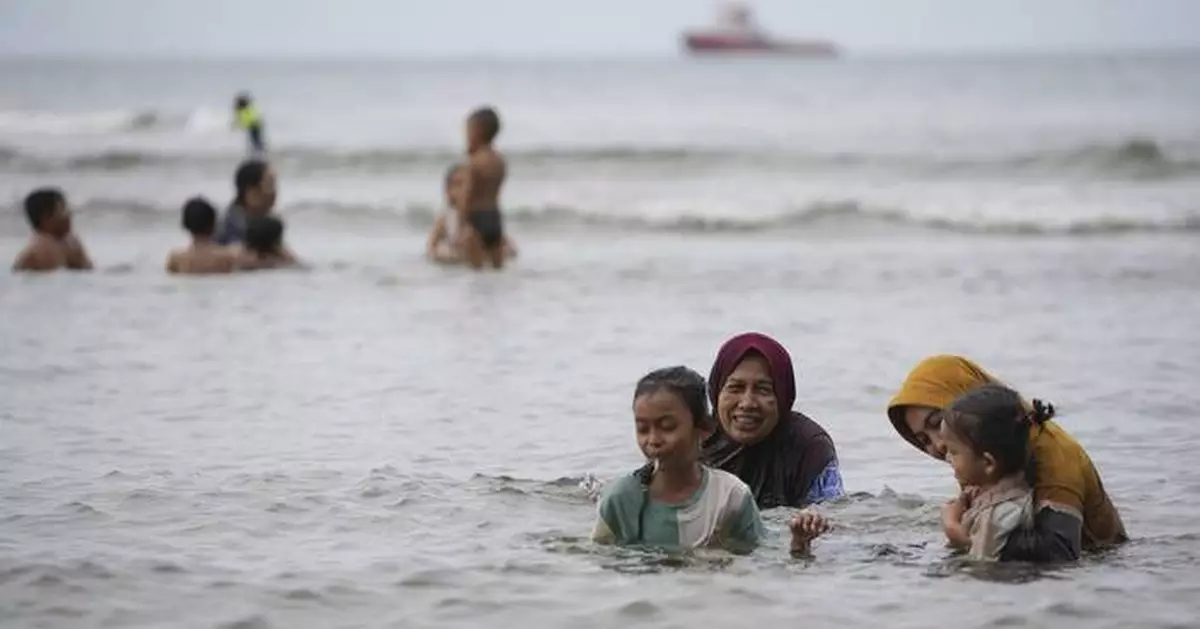
People play in the water at Ulee Lheue beach which was one of the areas hardest hit by Indian Ocean tsunami in 2004, in Banda Aceh, Aceh Province, Indonesia, Friday, Dec. 13, 2024. (AP Photo/Achmad Ibrahim)
On Dec. 26, 2004, a powerful 9.1-magnitude earthquake off the coast of the Indonesian island of Sumatra triggered a tsunami that killed around 230,000 people across a dozen countries, reaching as far as East Africa.
But Indonesia’s Aceh province, located closest to the earthquake’s epicenter and with 18 of 23 districts and cities located in the coastal line in the Northern side of Sumatra, bore the brunt of the disaster with more than half of the total death toll reported.
The worst-hit areas were in Aceh Besar and Banda Aceh, according to the Aceh Disaster Management Agency.
Asnani's Lampuuk village lies in a fishermen’s community in Aceh Besar, known for its white sandy beaches and turquoise waters. However, on that day, it was among the hardest hit, with waves more than 30 meters (98 feet) high which changed the coastline in Aceh and led to land subsidence after the earthquake.
Buildings by the coast were flattened to the ground except for Rahmatullah Mosque, 500 meters (1,600 feet) from the shore, and about 1 kilometer (0.6 miles) from Asnani’s house. The photo of the place of worship, left pretty much unscathed, later became iconic.
After the disastrous event, thousands, including Asnani, had to relocate to start afresh. She moved with her uncle to another region in Aceh to continue her studies. After she got married, she returned in 2007 to her parents' house which was rebuilt with assistance from the Turkish government and lived there for 10 years.
Many international donors and organizations poured in money to help rebuild the affected areas that lost schools, hospitals and basic infrastructure, made stronger than before the tsunami hit.
Tsunami and Disaster Mitigation Research Center at Syiah Kuala University in Aceh recorded more than 1,400 wrecked schools and about 150,000 students had their education process disrupted by the destructive waves in a report published in 2019.
Three “escape buildings” were also constructed in a relatively safer area to accommodate thousands of people if an earthquake and tsunami strike.
Across the province, memories of the tsunami can be felt almost everywhere.
The Aceh Tsunami Museum in Banda Aceh houses photos of the aftermath and vehicle debris, serving as a constant reminder of what was lost that day. Local authorities have also turned a former floating diesel-powered power plant barge that washed about 6 kilometers (about 4 miles) inland by the tsunami into another memorial place.
Both places have become the most popular tourist destinations in the area.
But development never stops and 20 years after the tsunami the Aceh coast is brimming with residential housing, cafes and restaurants, as well as tourism support facilities, while the hills in some areas from which people are currently being mined for sand and stone.
Fazli, the head of Preparedness in Aceh Disaster Management Agency, said that the government initially stipulated that there should be no activity up to 1 kilometer (0.6 miles) from the coast. Over time, many displaced fishermen returned to their original coastal homes, drawn by their livelihoods and ties to the sea, despite having received housing elsewhere.
He also said the agency has “provided the Acehnese people with information ” to deal with a potential tsunami. "People already know what to do,” said Fazli, who, like other Indonesians, uses a single name.
Siti Ikramatoun, a sociologist in Banda Aceh, said that despite years of recovery and rebuilding, the people of Aceh must stay vigilant.
“If people experienced (the tsunami), they may have an instinct to anticipate it. But those who do not have the experience, they won’t get what to do,” Ikramatoun said.
Various communities in Aceh commemorate the tsunami yearly along with the government and local authorities.
In Banda Aceh, art communities in early December spread disaster awareness through theatrical or musical performances that can be easier for people to follow and target all groups, including those born after the tsunami.
Muslina, 43, a civil servant, took her youngest son to the Aceh Tsunami Museum to watch one of the shows. She lost relatives and loved ones 20 years ago and she wants to make sure she always remembers them.
“Earlier my son asked me if there might be another tsunami when he grows up," she said. “I told him I do not know. Only God knows, but if there is a strong earthquake and the seawater recedes, we run, run, run to find higher ground.”
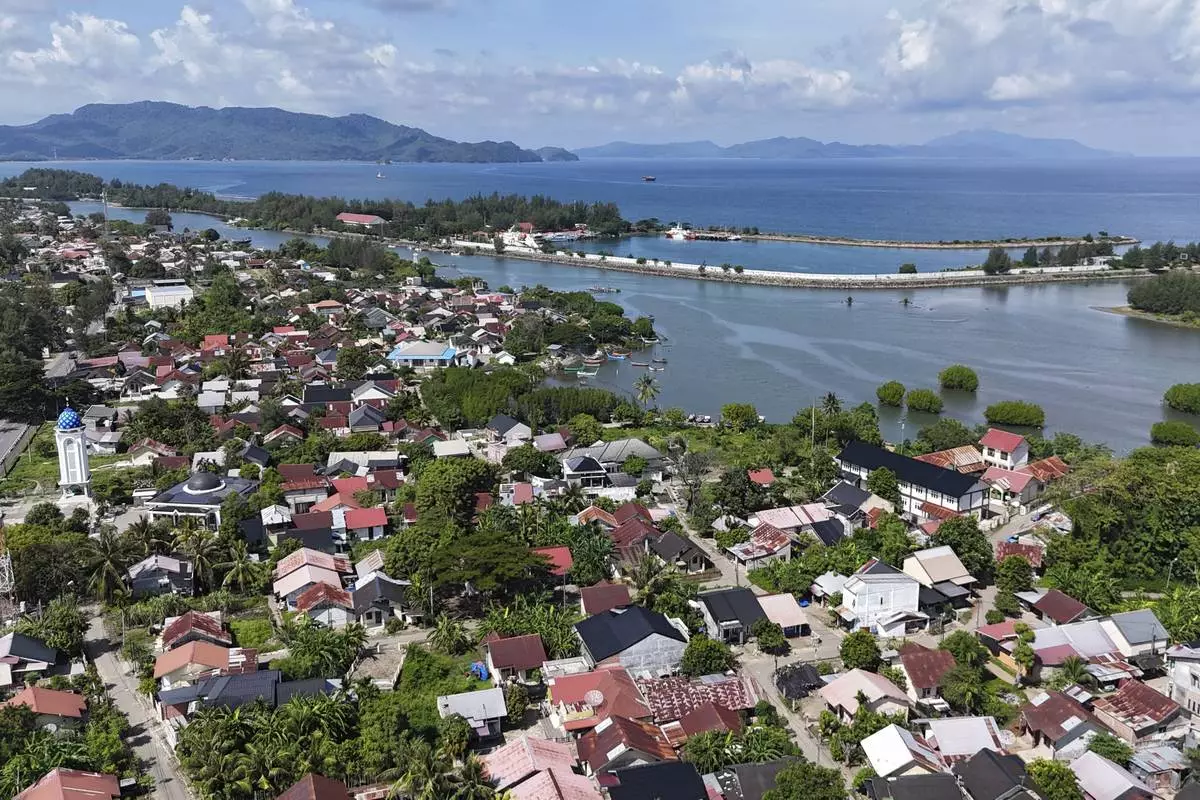
This aerial shot taken using a drone shows the now densely-populated Ulee Lheue village, one of the areas hardest hit by the Indian Ocean tsunami in 20024, in Banda Aceh, Aceh Province, Indonesia, Friday, Dec. 13, 2024. (AP Photo/Achmad Ibrahim)
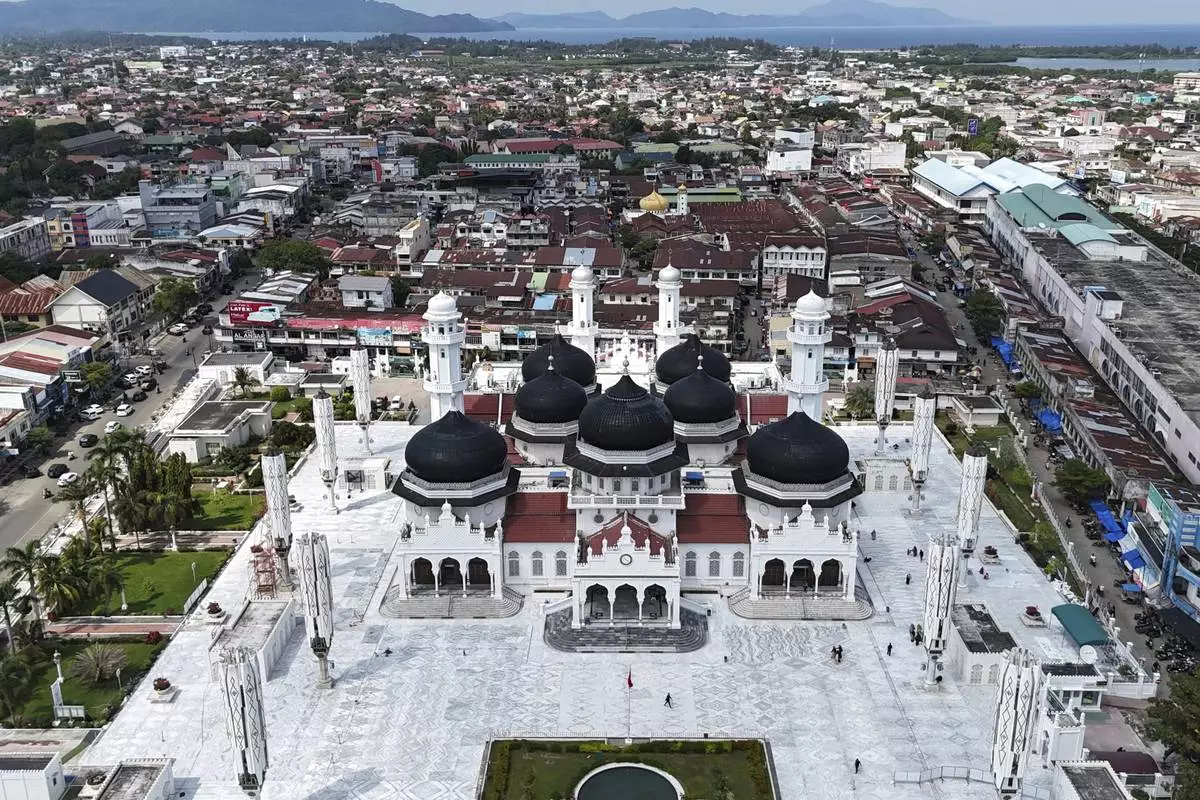
This aerial shot taken using a drone shows buildings at the business district surrounding Baiturrahman Grand Mosque which were badly ravaged by the Indian Ocean tsunami in 2004, in Banda Aceh , Indonesia, Thursday, Dec. 12, 2024. (AP Photo/Achmad Ibrahim)
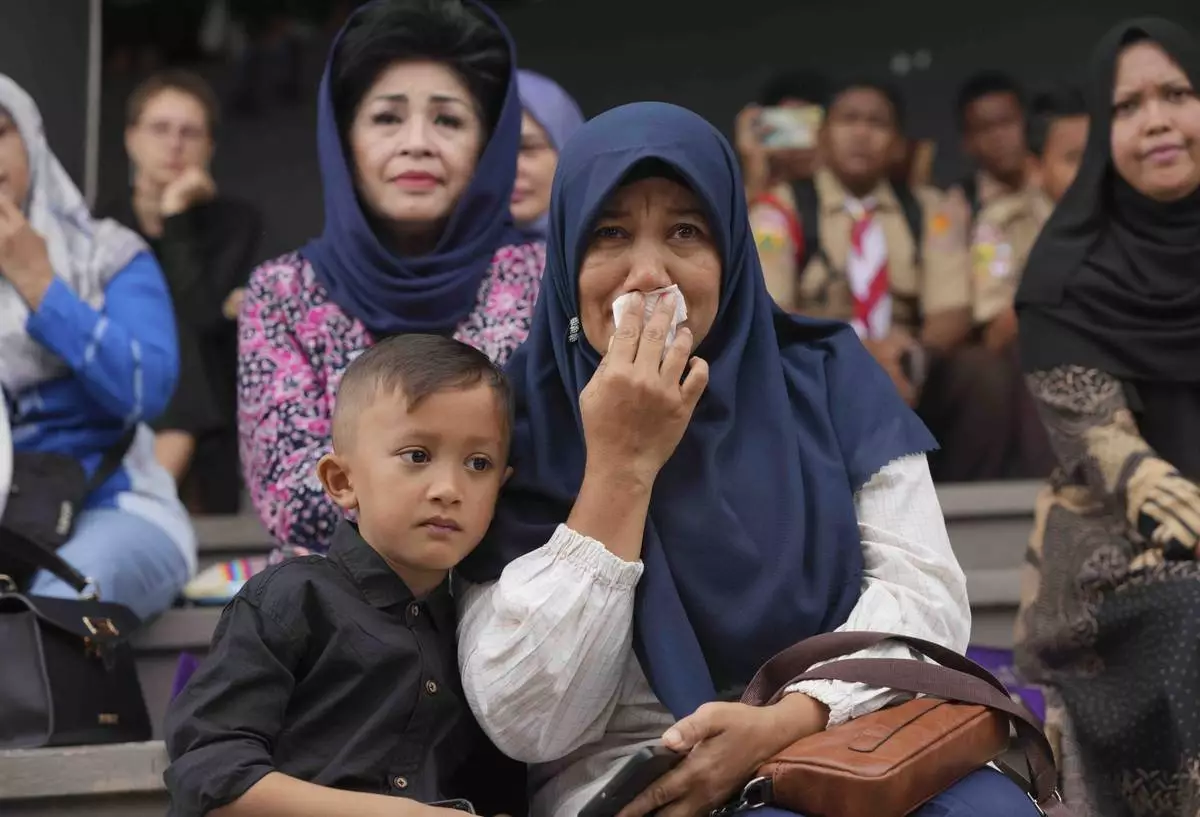
Muslina, a 43-year-old civil servant who is also a tsunami survivor weeps as she and her son Zayyan Firdaus Akmal watch a stage performance depicting the Indian Ocean tsunami in 2004, in Banda Aceh, Indonesia, Saturday, Dec 14, 2024. (AP Photo/Achmad Ibrahim)

Artists perform during a stage performance depicting the Indian Ocean tsunami during a commemoration of the 20th year since the killer wave ravaged Aceh's coastal areas, in Banda Aceh, Indonesia, Saturday, Dec 14, 2024. (AP Photo/Achmad Ibrahim)
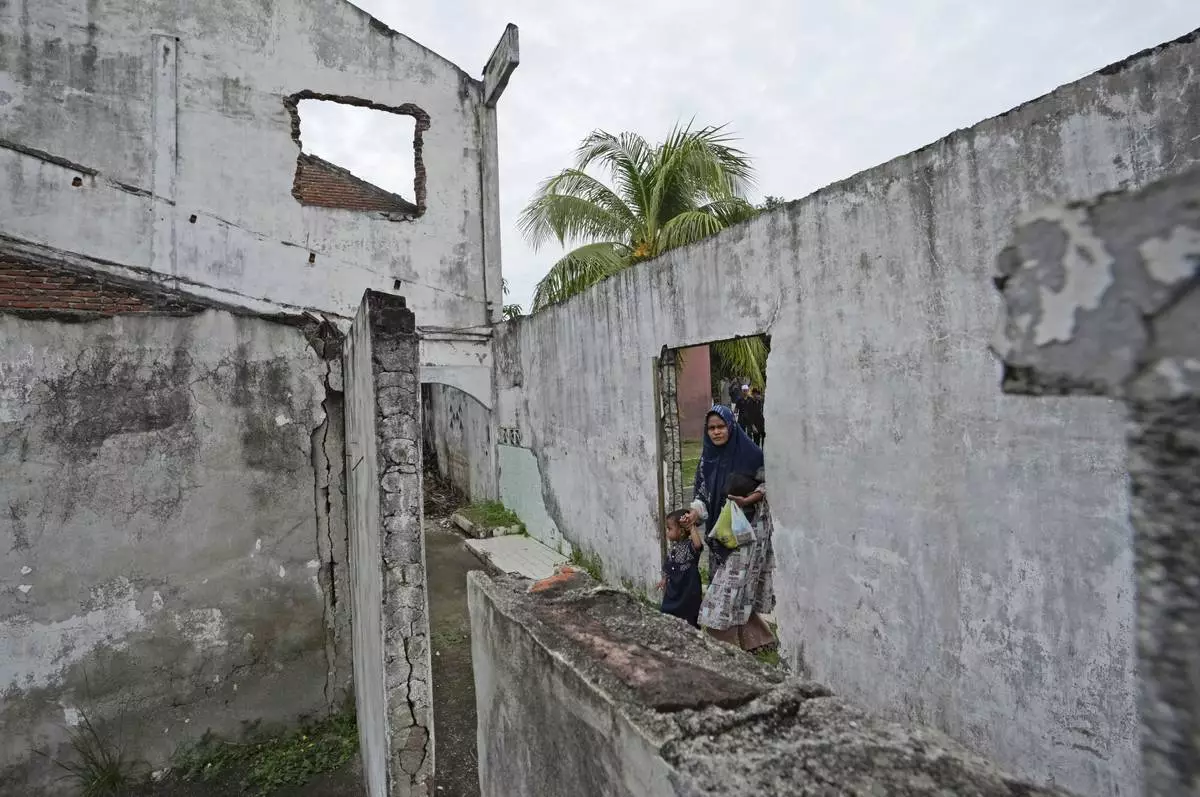
A woman walks trough an opening on the wall of a building badly damaged during the Indian Ocean tsunami in 2004 in Banda Aceh, Aceh province, Indonesia, Saturday, Dec 14, 2024. (AP Photo/Achmad Ibrahim)
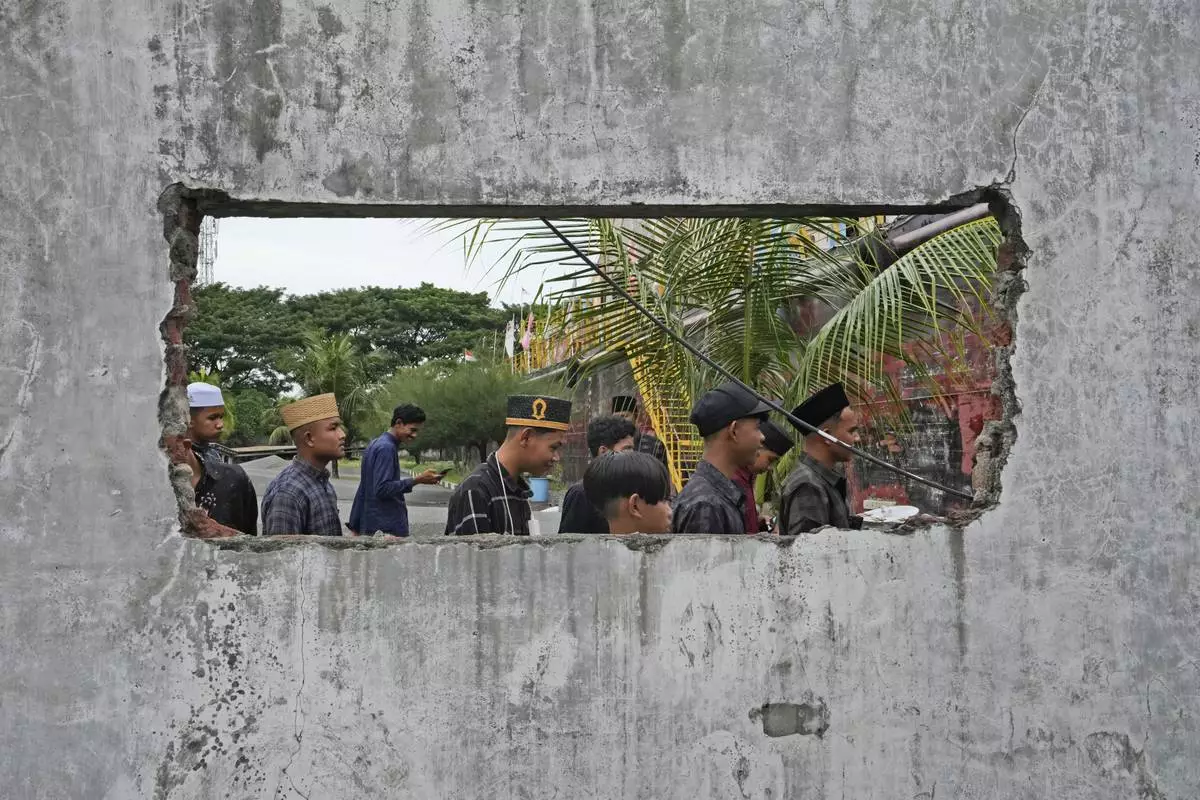
People are seen through a hole in the wall of a building damaged by 2004 Indian Ocean tsunami as they visit a giant barge housing a , a diesel power generator swept ashore by the killer wave, in Banda Aceh, Indonesia, Saturday, Dec 14, 2024. (AP Photo/Achmad Ibrahim)
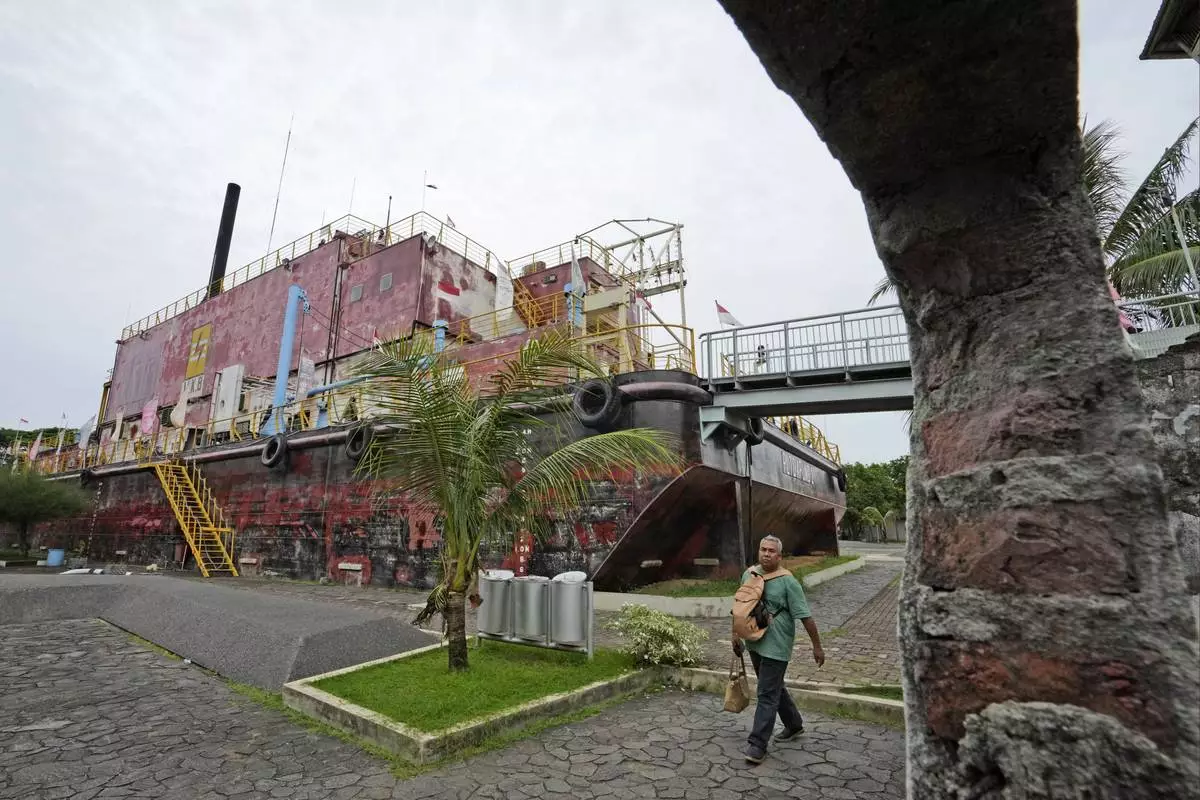
A man walks past a steel barge housing a diesel power generator swept ashore by the Indian Ocean tsunami in 2004 which is now preserved as a monument, in Banda Aceh, Indonesia, Saturday, Dec 14, Dec. 15, 2024. (AP Photo/Achmad Ibrahim)
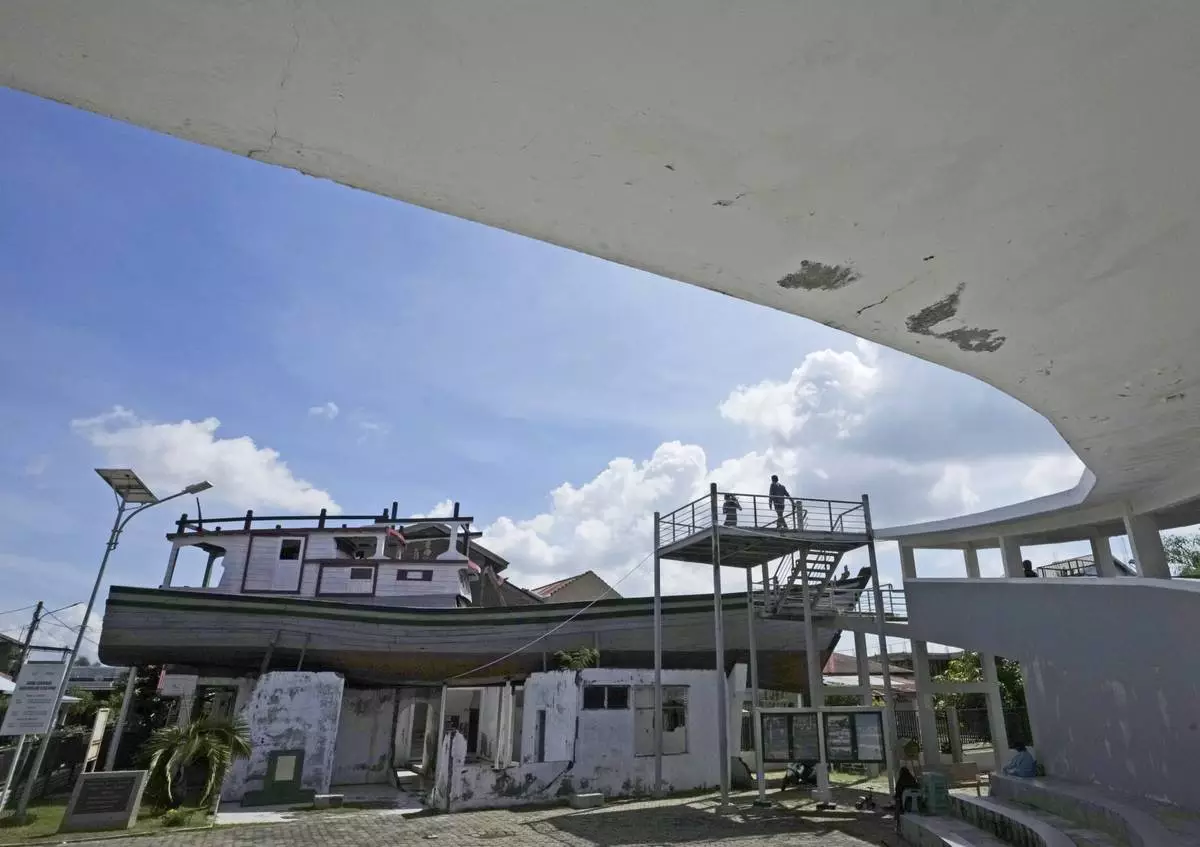
Visitors stand on a platform near a house on which a fishing boat landed after it was swept ashore by the Indian Ocean tsunami in 2004, now preserved as a monument, in Banda Aceh, Indonesia, Friday, Dec. 13, 2024. (AP Photo/Achmad Ibrahim)
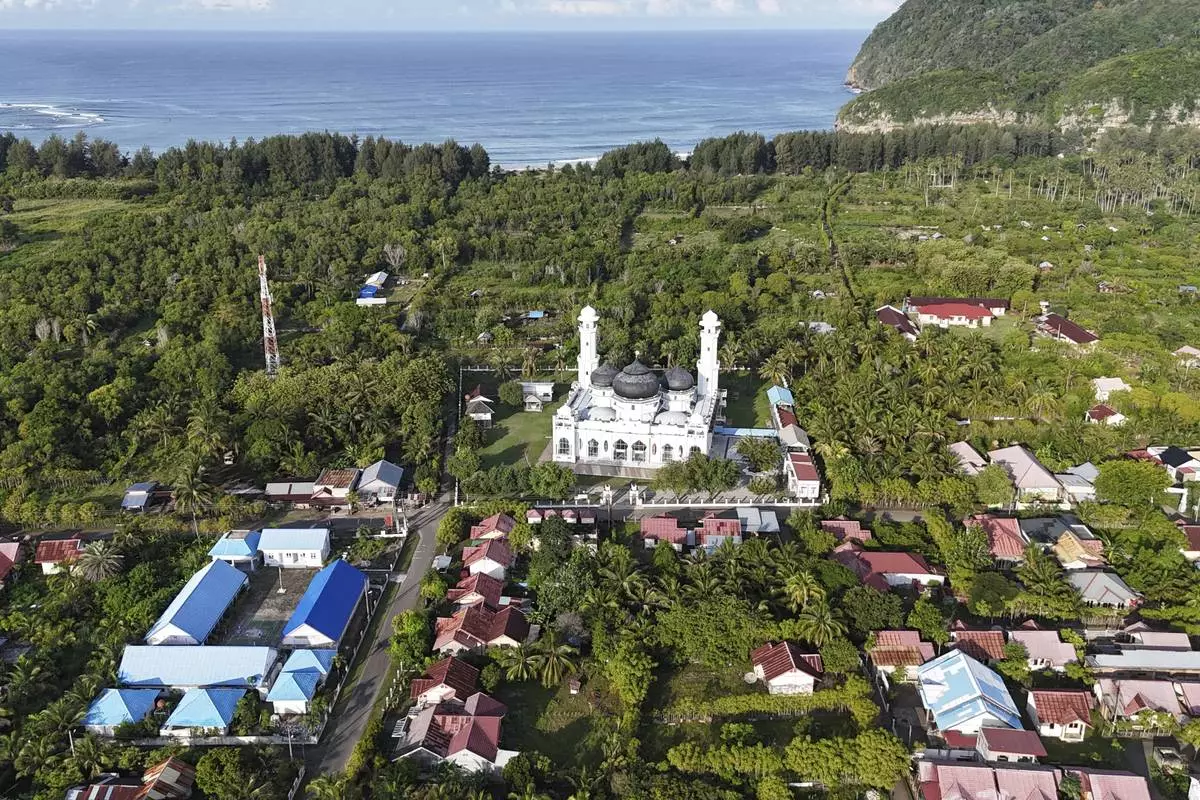
This aerial shot taken using a drone shows Rahmatullah Mosque in Lampuuk village, one of the areas hardest hit by Indian Ocean tsunami in 2004, in Aceh Besar, Indonesia, Thursday, Dec. 12, 2024. (AP Photo/Achmad Ibrahim)
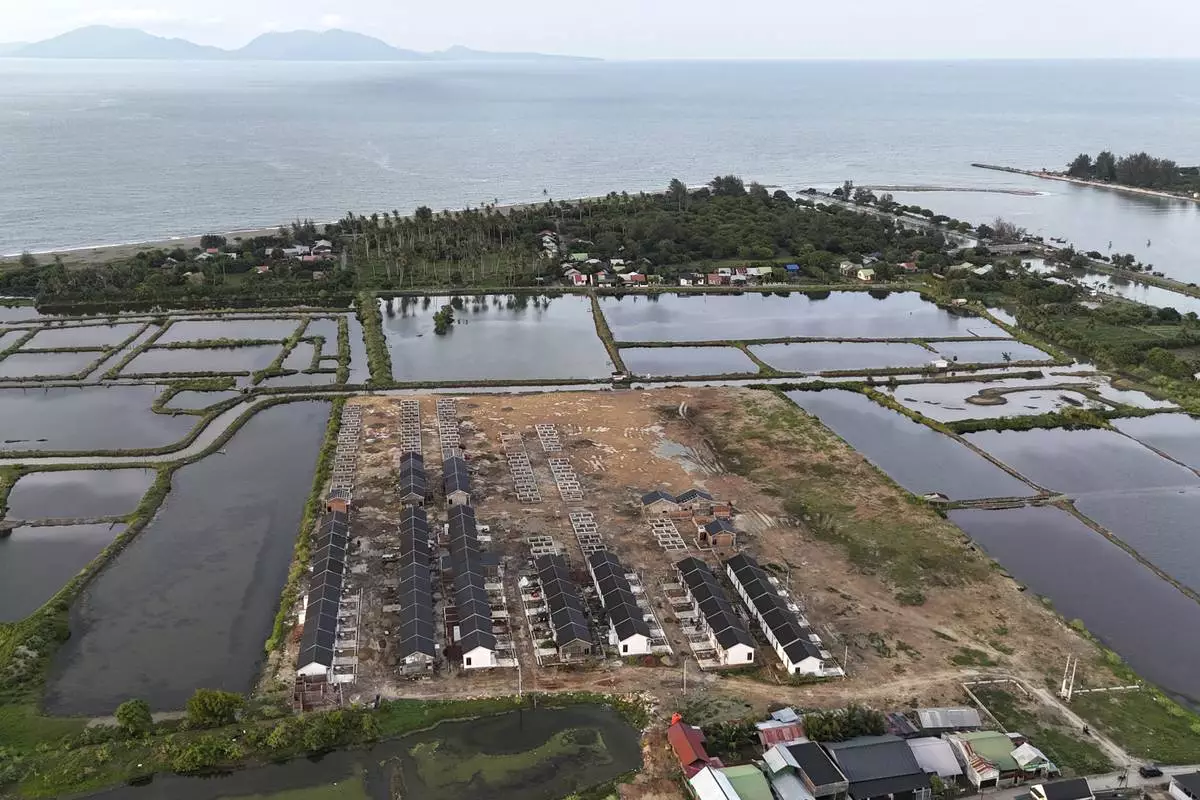
A housing complex is seen under construction near the waterfront area in Banda Aceh, Indonesia, Thursday, Dec. 12, 2024. (AP Photo/Achmad Ibrahim)
Tears well up in the eyes of Tria Asnani, a 38-year-old high school teacher teacher who is also a tsunami survivor, as he speaks with The Associated Press during an interview in Banda Aceh, Indonesia, Thursday, Dec. 12, 2024. (AP Photo/Achmad Ibrahim)
Tria Asnani, left, a 38-year-old teacher who is also a tsunami survivor, assists students to apply splints during an earthquake drill at a school in Banda Aceh, Indonesia, Thursday, Dec. 12, 2024. (AP Photo/Achmad Ibrahim)
Students take cover under their desks during an earthquake drill at a school in Banda Aceh, Indonesia, Thursday, Dec. 12, 2024. (AP Photo/Achmad Ibrahim)
Students take part in an earthquake drill at a school in Banda Aceh, Indonesia, Thursday, Dec. 12, 2024. (AP Photo/Achmad Ibrahim)
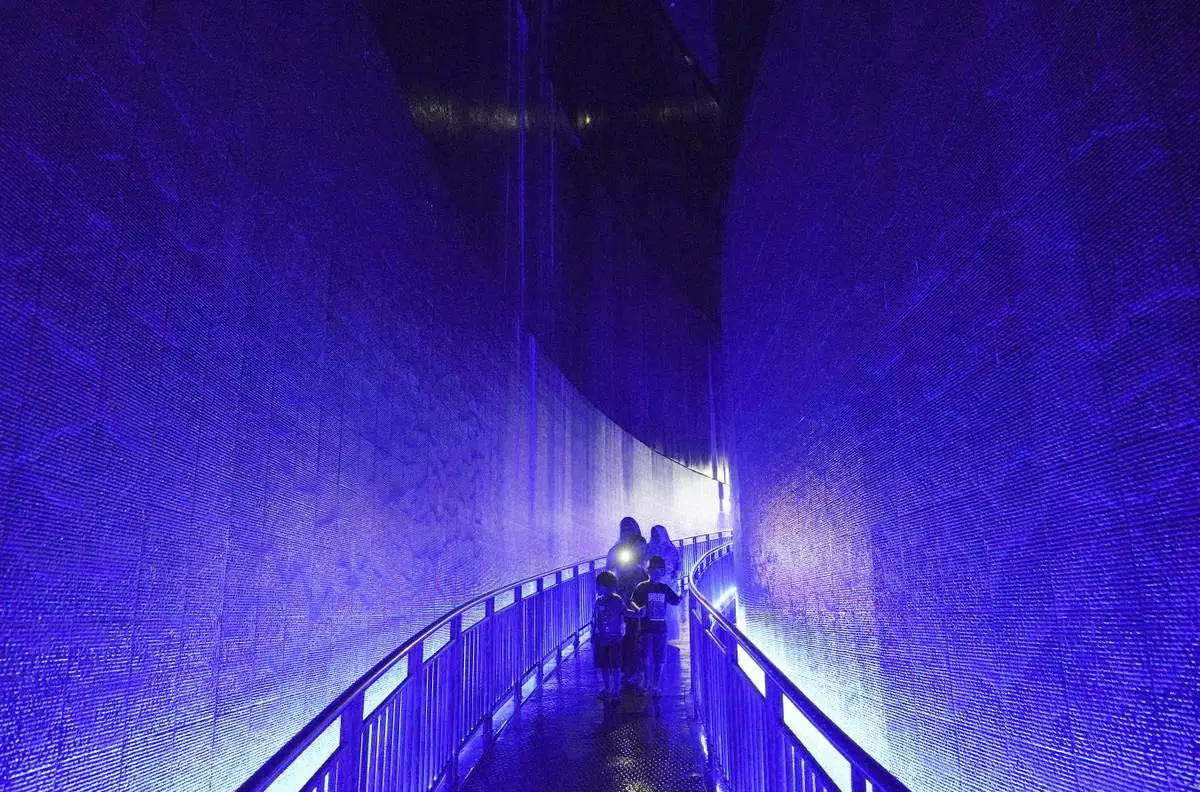
Visitors walks at the Tsunami Museum in Banda Aceh, Aceh province, Indonesia, Saturday, Dec 14, Dec. 15, 2024. (AP Photo/Achmad Ibrahim)
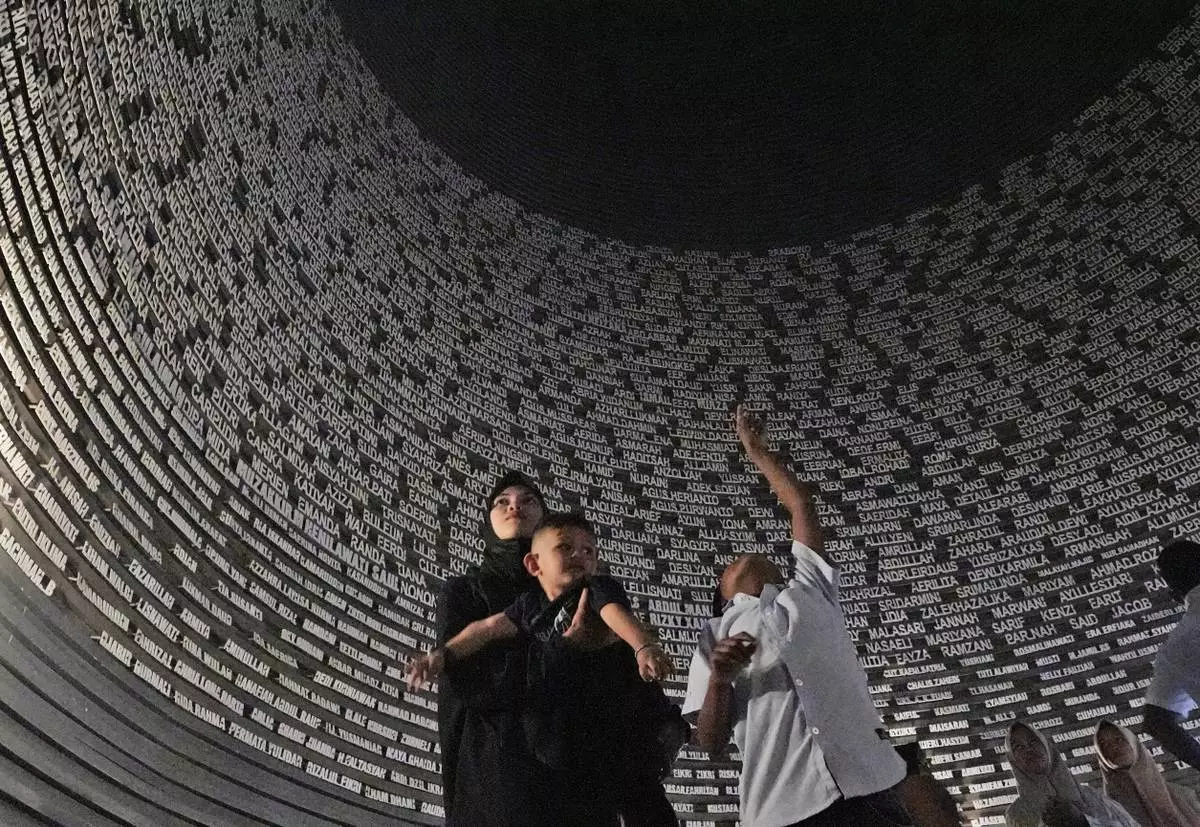
Visitors looks at a wall displaying the names of the victims of 2004 Indian Ocean tsunami, at the Tsunami Museum in Banda Aceh, Aceh province, Indonesia, Saturday, Dec 14, 2024. (AP Photo/Achmad Ibrahim)
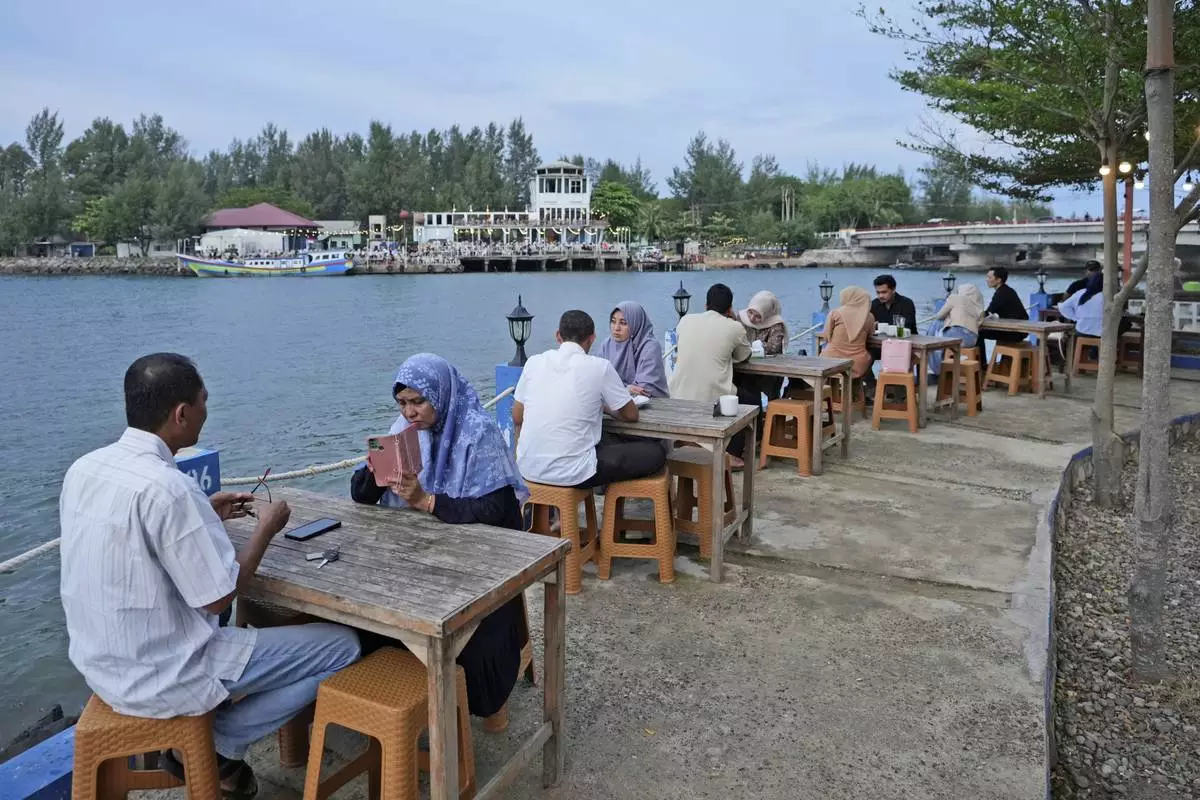
People sit at a cafe on the waterfront near Ulhee Lheue beach, one of the areas hardest his by the Indian Ocean tsunami in 2004, in Banda Aceh, Indonesia, Saturday, Dec 14, 2024. (AP Photo/Achmad Ibrahim)
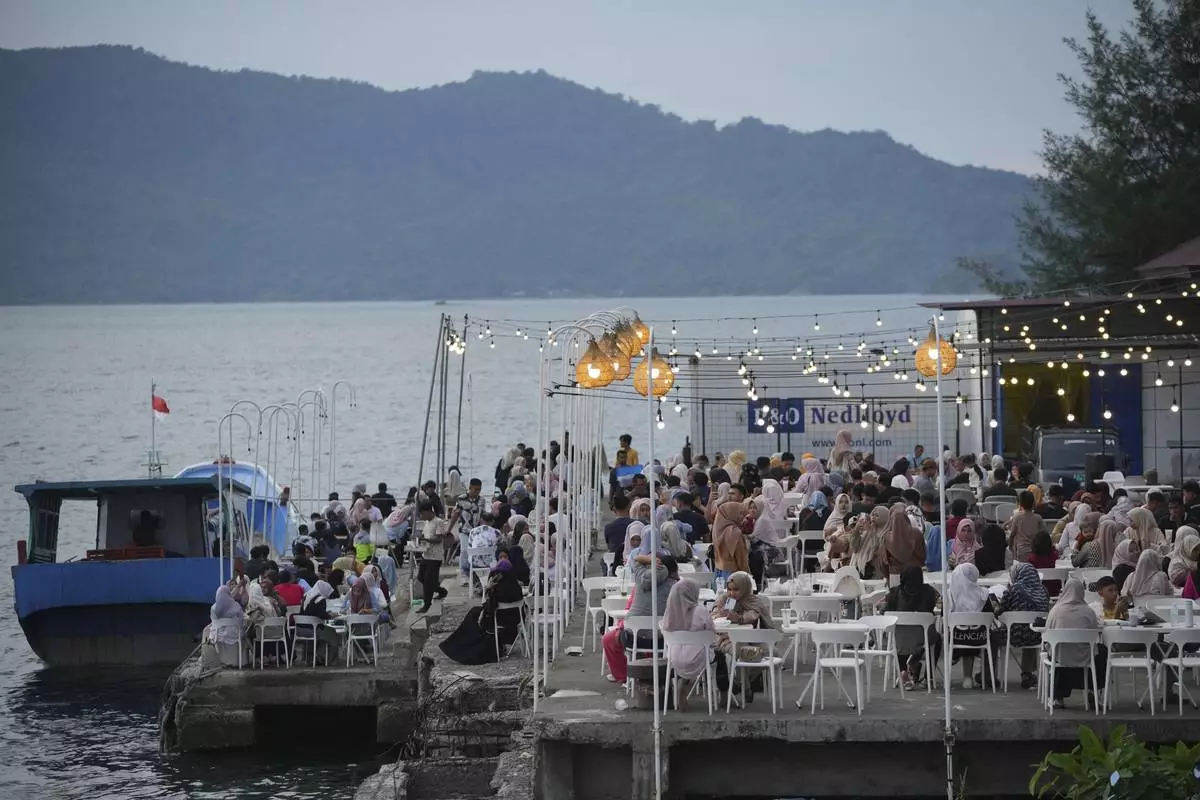
People sit at a coffee shop on the waterfront near Ulee Lheue beach that was one of the areas hardest hit by Indian Ocean tsunami in 2004, in Banda Aceh, Aceh Province, Indonesia, Saturday, Dec. 14, 2024. (AP Photo/Achmad Ibrahim)
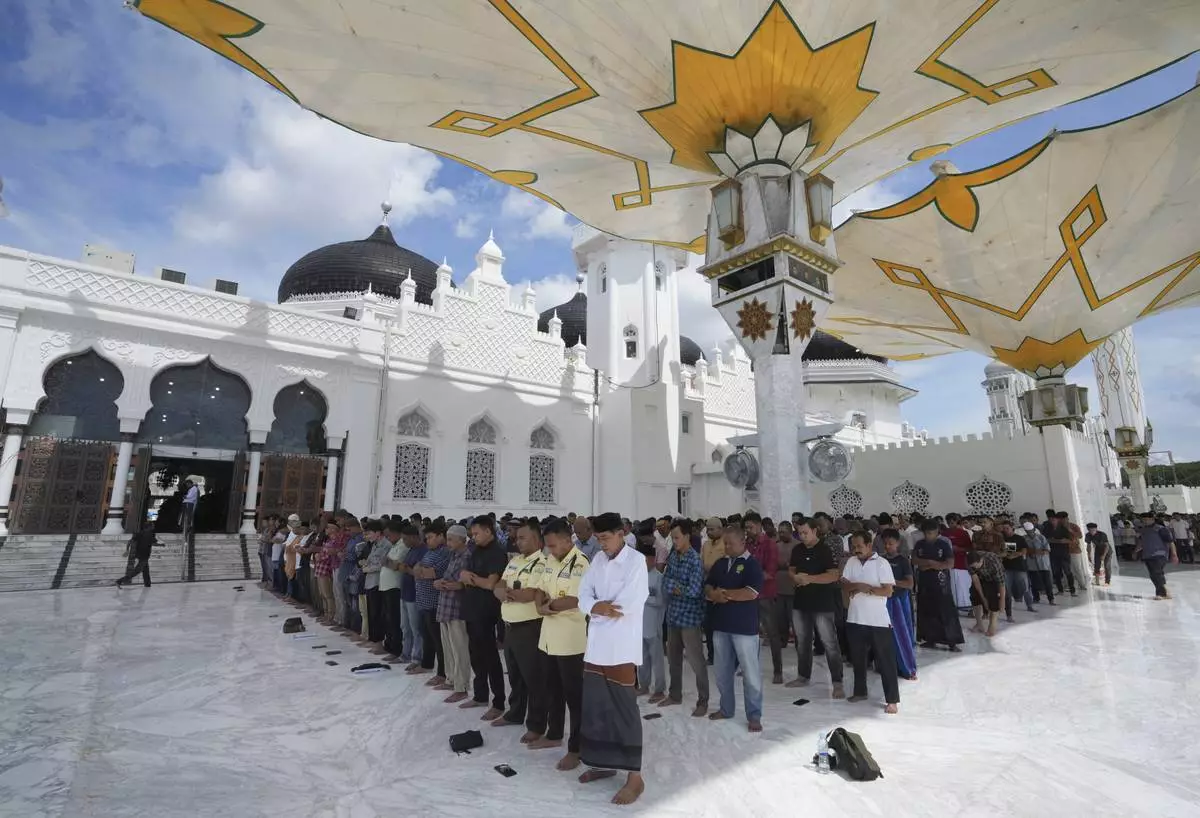
People perform a Friday prayer at Baiturrahman Grand Mosque in Banda Aceh, Indonesia, Friday, Dec. 13, 2024. (AP Photo/Achmad Ibrahim)

Participants prepare for the start of a 5km running event titled "Run for Life, Tsunami Memorial 2024" held to commemorate the 20th anniversary of the Indian Ocean tsunami, in Banda Aceh, Aceh province, Indonesia, Sunday, Dec. 15, 2024. (AP Photo/Achmad Ibrahim)
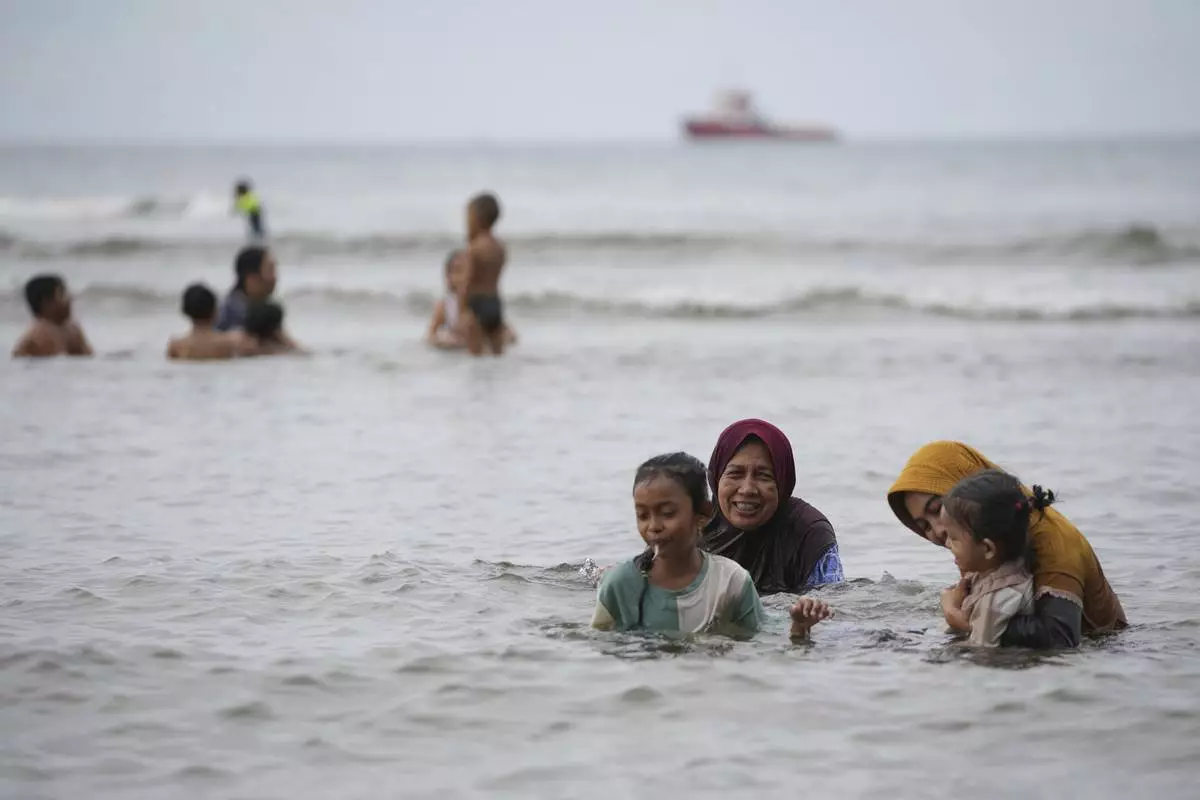
People play in the water at Ulee Lheue beach which was one of the areas hardest hit by Indian Ocean tsunami in 2004, in Banda Aceh, Aceh Province, Indonesia, Friday, Dec. 13, 2024. (AP Photo/Achmad Ibrahim)