U.S. President Joe Biden signed the National Defense Authorization Act (NDAA) for the fiscal year 2025 on Monday, which boosts the United States' military spending to 895 billion U.S. dollars, marking a 1 percent increase from the previous fiscal year.
This NDAA, passed by the Congress, outlines the Pentagon's annual budget and serves as a guiding document for the country's defense policy. The signing of the bill ensures continued funding for various defense programs, including military personnel, equipment procurement, and ongoing defense initiatives.
However, the decision to increase military spending has sparked controversy. Some members of the Congress have voiced concerns over the allocation of such a large budget amidst growing domestic challenges. Critics also argue that the defense budget has become a tool for large contractors to profit, rather than serving the needs of the nation.
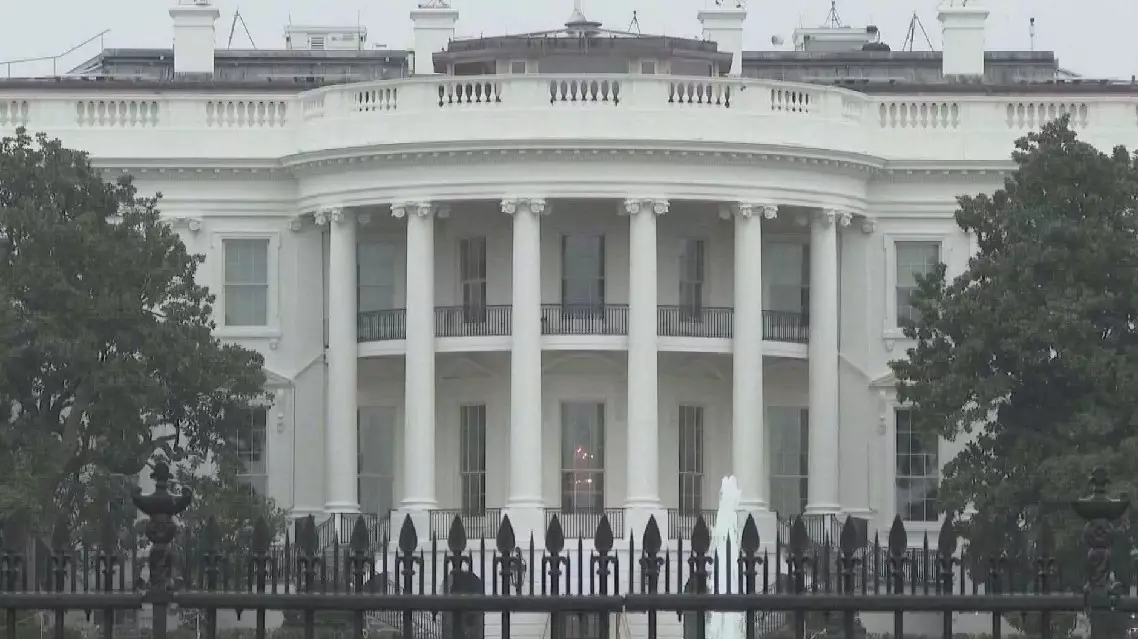
Biden signs 895 billion US dollar defense budget for 2025
Hungarians voted in parliamentary elections on Sunday, with about 8.1 million people eligible to cast ballots, according to the National Election Office.
Polls opened at 06:00 local time and closed at 19:00, with initial results expected late on Sunday evening.
Of the total, about 7.6 million voters were eligible to cast ballots in person at more than 10,000 polling stations nationwide, while some 500,000 were eligible to vote by mail.
Five parties or alliances are competing in the election. The latest opinion polls showed strong support for both Prime Minister Viktor Orban's ruling Fidesz-Christian Democratic People's Party alliance and the opposition Tisza party led by Peter Magyar.
Among smaller parties, the far-right Our Homeland Movement is seen as having a chance to enter parliament, while others, including the Democratic Coalition and the Hungarian Two-Tailed Dog Party, are widely viewed as unlikely to cross the threshold.
This election marks Orban's fourth parliamentary race since returning to power in 2010, with the outcome set to determine whether he can secure a fifth consecutive term.
Under Hungary's electoral law, parliamentary elections are held every four years. The Hungarian parliament has 199 seats, including 106 filled through direct elections in single-member constituencies and 93 allocated to parties that enter parliament. The party or alliance that secures a majority of seats has the right to form a government.
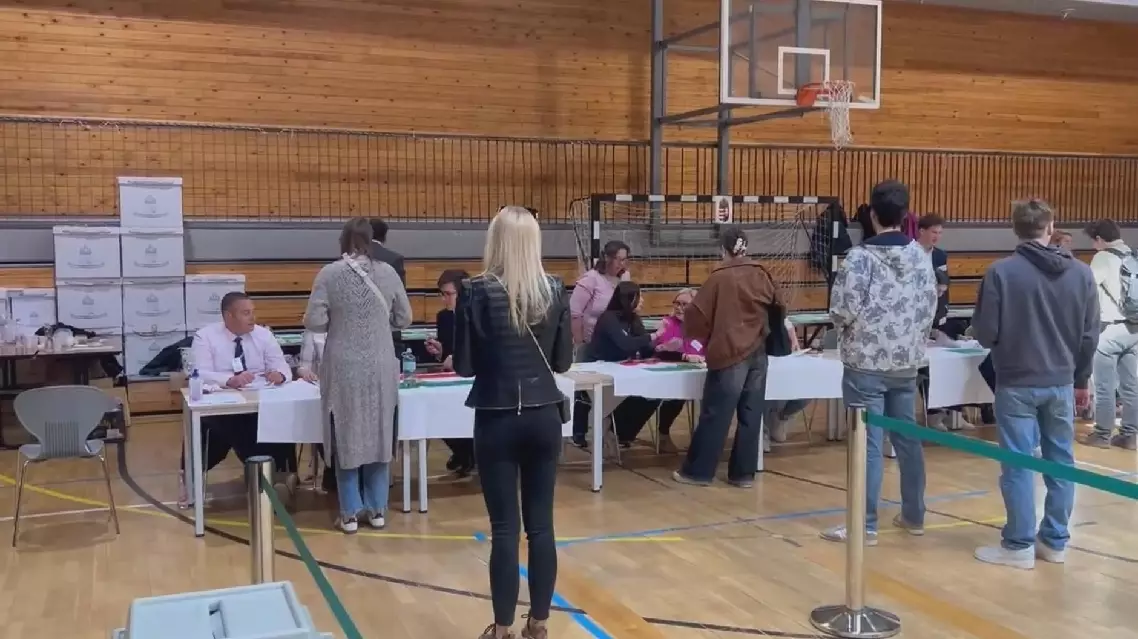
Hungarians vote in parliamentary elections