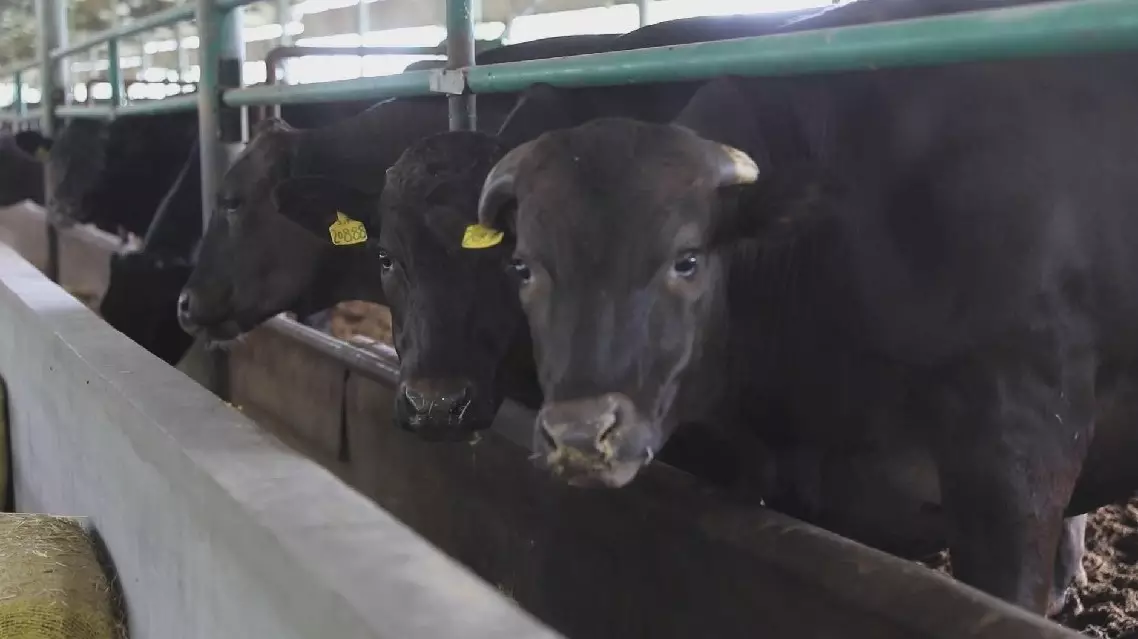
The safeguard investigation into imported beef is in line with the World Trade Organization (WTO) rules, and has played a role in stabilizing expectations for the domestic beef cattle industry, according to the China Animal Agriculture Association (CAAA).
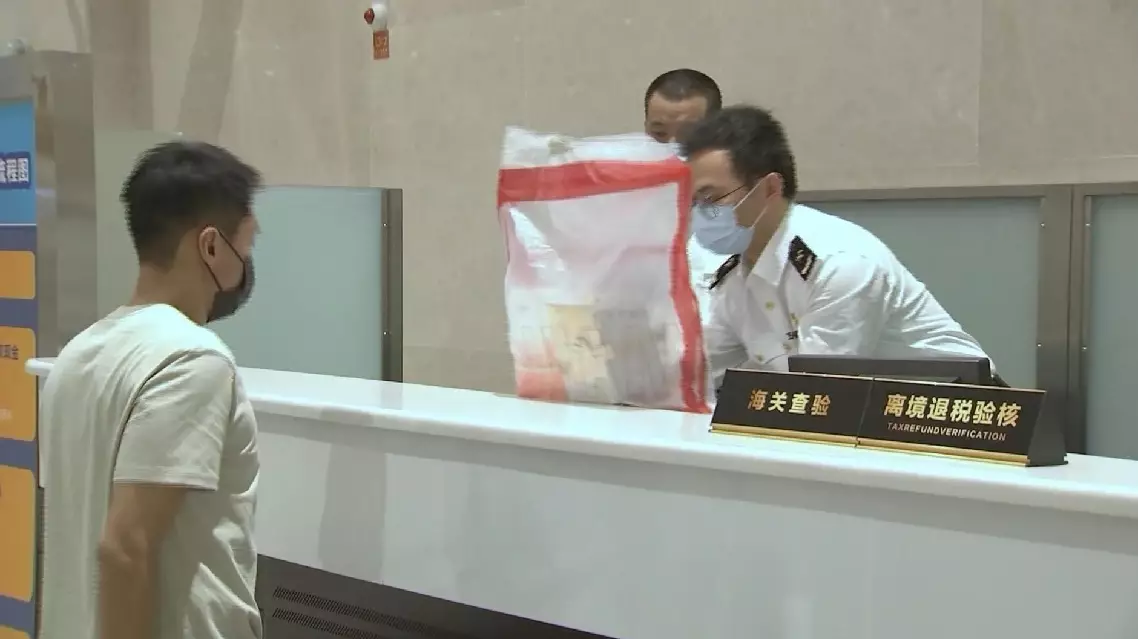
The investigation was launched on Friday in response to an application submitted by the CAAA and nine industry associations from major beef-producing regions on behalf of the domestic beef industry, the Ministry of Commerce said in a statement.
The application claims that the import volume of the product under investigation increased sharply in the past five years, with a growth of 106.28 percent in the first half of 2024 compared to the same period in 2019.
The probe will examine imported meat of bovine animals from January 1, 2019 to June 30, 2024. "Beef imports have surged since 2024, with 2.6 million tons imported from January to November, up 4.3 percent year on year. The large amount of imported beef has a serious impact on China's cattle industry," said Liu Qiangde, deputy secretary-general of the CAAA.
Under the impact of imported beef, prices of China's domestic beef and live cattle fell rapidly, with beef prices falling to their lowest level in nearly five years, and live cattle prices to their lowest level in nearly 10 years.
Data show that the average loss of a beef cow in November this year is more than 1,600 yuan (about 219 U.S. dollars), and the loss of more than 1,000 yuan has remained for eight consecutive months. More than 65 percent of farms are in loss.
According to the monitoring, the current base cow stock has been down more than 3 percent from the record high in June 2023, and the newborn calves from January to November this year are down more than 8 percent compared to the same period last year.
"If measures are not taken as soon as possible, the high-quality base cow groups that have been developed with great difficulty will face shrinkage, which will shake the foundation of the beef cattle industry. Therefore, we strongly call on the government to take control measures on imported beef to protect farmers' livelihoods and industry security. This is also a measure in line with WTO rules. The release of this announcement has played a role in stabilizing expectations for the domestic beef cattle industry," Liu said.
The investigation is expected to conclude within eight months, although it may be extended under special circumstances.
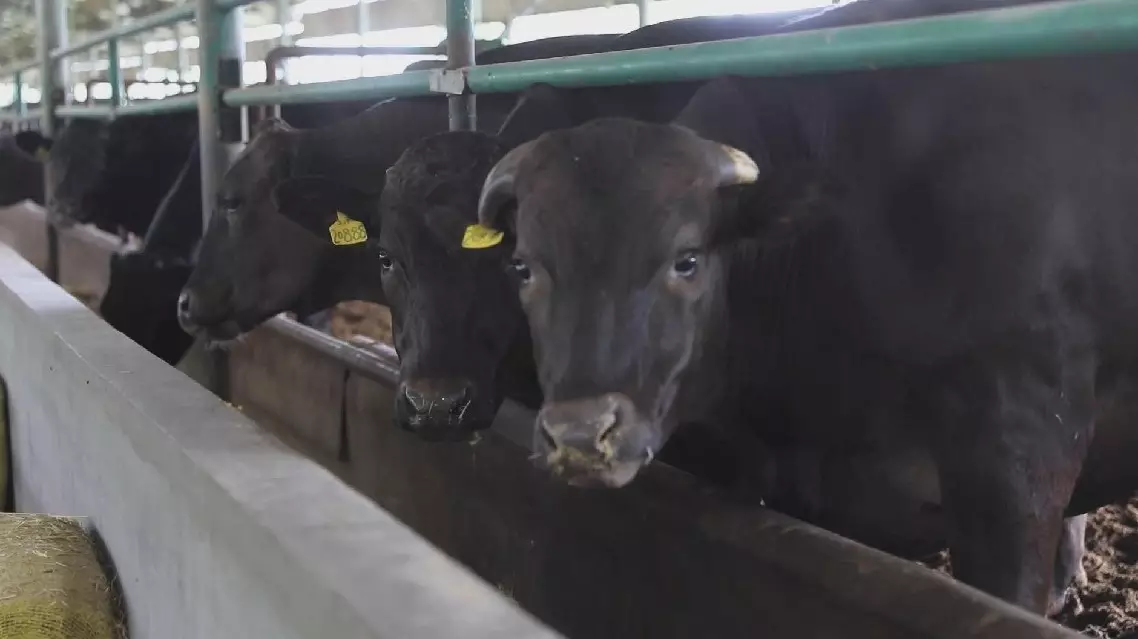
China's safeguard investigation into imported beef in line with WTO rules: animal agriculture association
China's safeguard investigation into imported beef in line with WTO rules: animal agriculture association