As the New Year and the Spring Festival approach, the gold market in Shenzhen City, south China's Guangdong Province, is experiencing a peak seasonal demand.
Shuibei market, a gold jewelry manufacturing and trading hub in Shenzhen, consumer flow and gold sales are both seeing a spike.
With international gold prices lowered recently, some traditional retail gold stores have seen prices drop below 800 yuan (more than 109 U.S. dollars) per gram.
At Shuibei market, gold prices even have come down to 622 yuan (more than 85 U.S. dollars) per gram.
The price drop, combined with the approach of holidays, has sparked a rush in the gold market.
On weekends, the market has been buzzing with activity, drawing crowds of eager shoppers.
"The foot traffic has increased by about 40 percent compared to last month. Especially on weekends, the crowd is so large that some salespeople struggle to keep up with demand," said Wu Qian, a gold retailer at Shuibei market.
Despite the price adjustment, consumers remain cautious about purchasing large-weight gold items.
As a result, small-weight gold jewelry has become more popular. Additionally, gold pieces featuring the snake -- the zodiac sign of 2025 -- are trending, with many wholesalers crowded with retailers from across the country.
"I'm here mainly to buy the 12 Chinese zodiac animal-themed bracelets, especially the ones featuring the snake. Besides that, I'll also be picking up related products like necklaces, pendants, earrings, and rings," said a retailer from southwest China's Sichuan Province.
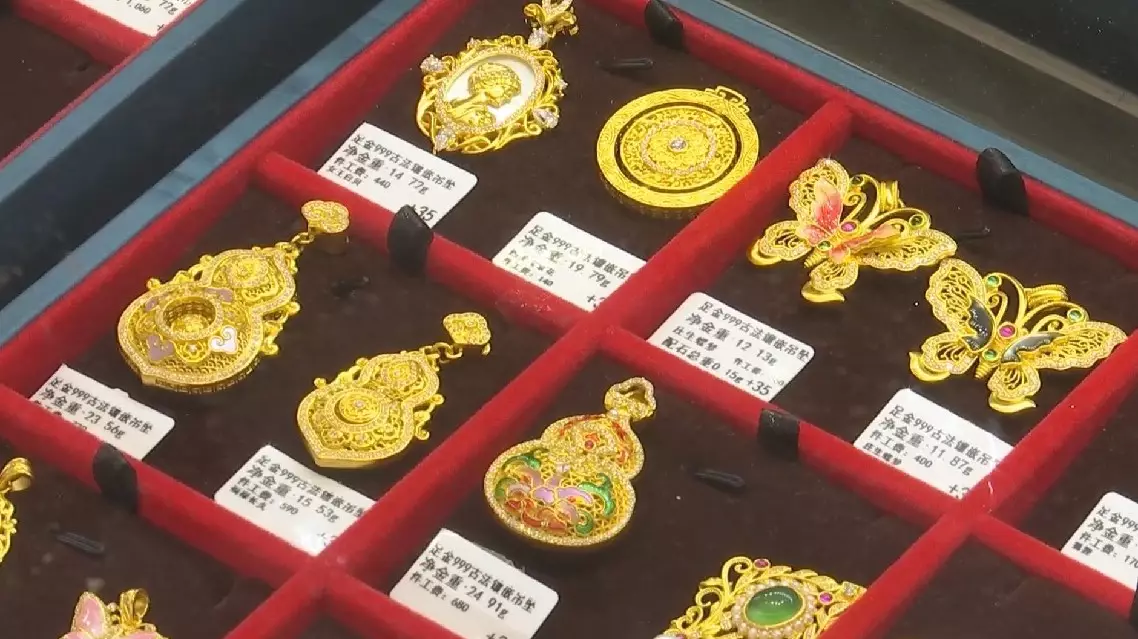
Shenzhen's gold market sees consumption upsurge
International observers have welcomed the recent summit between Chinese President Xi Jinping and U.S. President Donald Trump, calling deepened China-U.S. cooperation vital for global stability and positive development.
Xi concluded a three-day state visit to the United States on Friday, where he and Trump reaffirmed their commitment to a constructive, strategically stable relationship guided by fairness, reciprocity, and mutual respect.
In separate interviews with China Central Television, leaders and experts from around the world underscored that efforts to find a proper way for major countries to coexist not only benefit China and the U.S., but also inject much-needed stability and positive energy into global peace and development.
"And having that framework [for cooperation built on the constructive China-U.S. relationship of strategic stability] rolled out between China and the U.S. is really important. We know that type of relationship works and it's successful. So we have to ensure that we see more cooperation between states on a global basis," said Catherine Ardagh, Minister of State at the Department of Justice, Home Affairs and Migration, Ireland.
"After 11 years, President Xi is the first Chinese president to visit the United States of America. [For] the number of takeaways in this visit we see, as far as the outcomes, there are more than eight outcomes -- around eight outcomes are there. The world is looking toward this historic meeting," said Tahir Malik, head of the Department of International Relations, the National University of Modern Languages in Islamabad, Pakistan.
"So this mutual collaboration and respect between the United States and China sort of sets a standard for stability, growth and development. Certainly, the joint collaborations that the two presidents have set up for continual communication, I think, will be important," said Richard A. Black, the Schiller Institute's representative at the United Nations.
"Strong message of President Xi: The biggest investment of China is friendship, is cooperation, partnership, and not armed -- peaceful solutions for actually the world's problems," said Zijad Becirovic, director of International Institute for Middle East and Balkan Studies in Slovenia.
"President Xi Jinping's emphasis about sincerity and communication, coexistence as well as effective communication, is timely and I think we are heading for a stable world when these superpowers speak like that and continue coexisting," said Fabian Mutale, political analyst from Zambia.
Xi's visit was at the invitation of U.S. President Donald Trump. It followed Trump's state visit to China back in May.
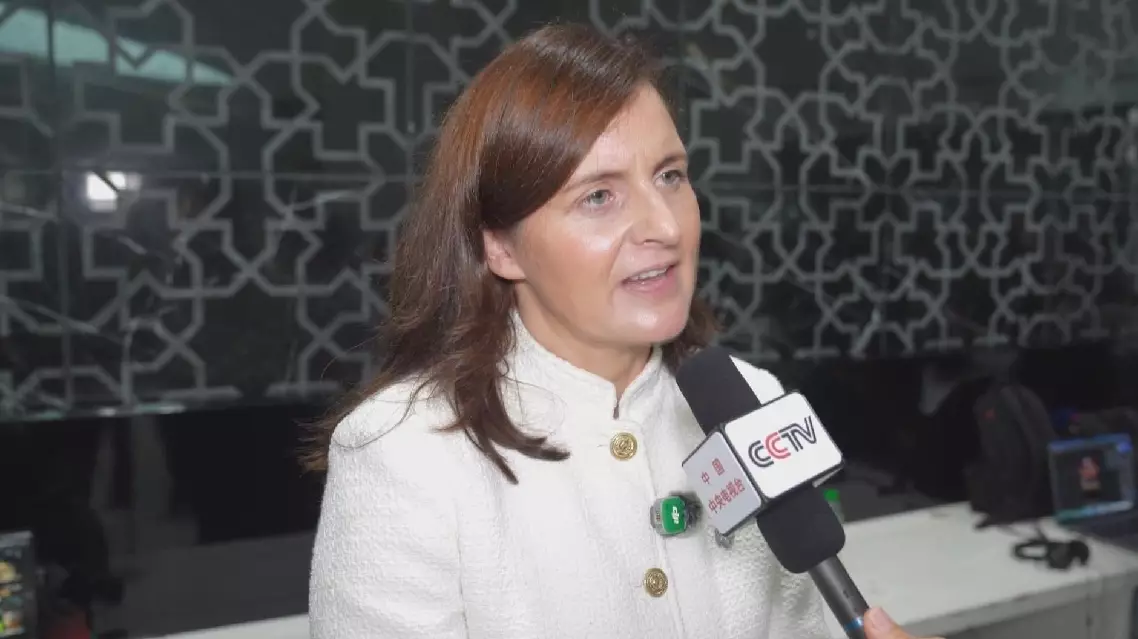
Xi’s U.S. visit boosts cooperation, world stability: international observers