Prototypes of the CR450 bullet train, with a test speed of up to 450 kilometers per hour and an operational speed of 400 kilometers per hour, were debuted in Beijing on Sunday, highlighting China's cutting-edge advancements in operational speed, energy efficiency, interior noise reduction and braking performance.
The CR450 is significantly faster than the CR400 Fuxing high-speed trains currently in service, which operate at speeds of 350 kilometers per hour.
Compared to its predecessors, the overall operational resistance of the CR450 will be decreased by 22 percent and its weight will be cut by 10 percent, according to China Railway.
The new prototypes are two CR450 models: the CR450AF and the CR450BF, both featuring an eight-car formation with four powered and four non-powered carriages, according to CRRC Corporation Limited (CRRC), China's leading train maker.
"The length of the locomotive has been extended from the original 12.5 meters to 15 meters, and the slenderness ratio of the entire train has also been adjusted with the main purpose to reduce its aerodynamic resistance," said Li Hongwei, deputy general manager of CRRC Changchun Railway Vehicles Co., Ltd.
The CR450 also introduces a new bogie enclosure design to minimize air resistance at high speeds, along with a streamlined low-drag, sharp-nosed front, aerodynamic windshields and lightweight materials.
"You can see the wheels here. Originally, the entire bogie of the CR350 was exposed, but now that of CR450 is fully covered by the shell structure. It aligns with the design philosophy of our advanced fighter jets, aiming to allow the train to operate more smoothly at high speeds," said Li Xufeng, general manager of the China Academy of Railway Sciences.
The train model prioritizes passenger comfort, offering a smooth and convenient ride. Through the application of integrated design, modular installation, and other methods, passenger space has been redesigned for added comfort and convenience, increasing cabin space by 4 percent.
"We have now employed some intelligent methods to relocate some of these power distribution facilities for undercarriage installation. Furthermore, we have implemented intelligent upgrades, streamlined numerous components, and increased the storage space for large luggage by 138 percent," added Nie Ying, a senior project engineer at CRRC Qingdao Sifang Co.,Ltd.
It also integrates advanced noise reduction techniques across different areas and frequencies, reducing interior noise by two decibels, compared to its predecessors.
These innovations are set to breathe new life into the global advancement of high-speed rail technology, according to the CRRC.
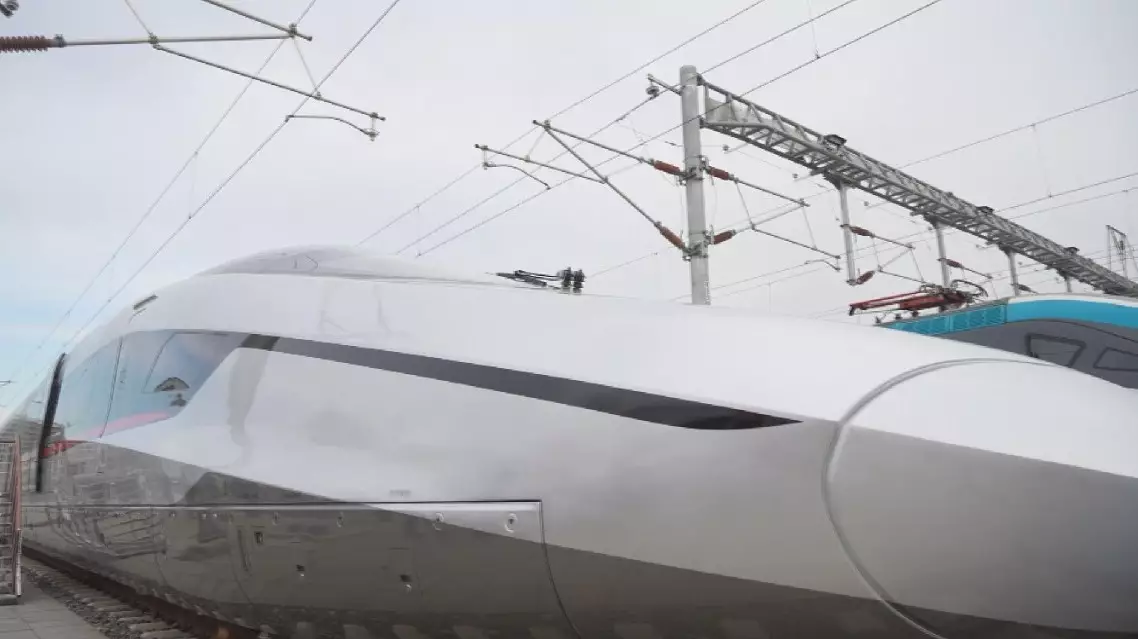
Prototypes of world's fastest high-speed train highlight China's advancements in rail technology
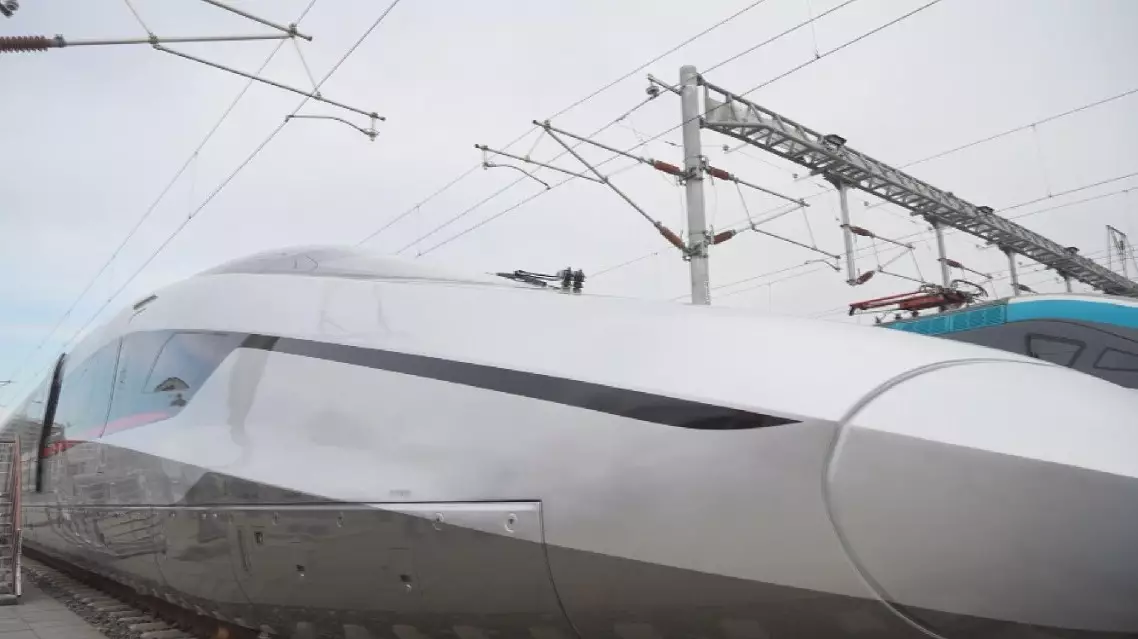
Prototypes of world's fastest high-speed train highlight China's advancements in rail technology