Futuristic fruit transportation has become a reality in the remote and rural regions of southwest China's Yunnan Province, where drones are being used to whisk fresh bananas safely down the mountainsides, helping to boost efficiency while also increasing local farmers' income.
This novel practice comes as part of China's push to develop its burgeoning low-altitude economy, which refers to a spectrum of economic activities occurring up to 1,000 meters above the ground level and includes civil and unmanned aerial vehicles (UAVs) such as passenger transport, cargo delivery and low-altitude flight operations.
Due to Yunnan's complex topography, transportation has long been a major problem, and though they typically produce good yields, bananas have traditionally always had to be carefully carried down the hilly terrain by people or on horses.
Banana grower Li Xianquan, who has also been transporting goods up and down the mountains in the city of Yuxi for some 20 years, believes that in the face of an aging workforce, the low-altitude economy could have a growing impact on people's everyday lives.
"Three drones can deliver about 700 bunches of bananas, which is about 24 tons. We need to make sure that we load a vehicle every day," he said as he was busily preparing another drone.
Li Zhengwei and his brother invested all their fortunes into a local banana base. Now he has mastered the process of drone transportation and can command calmly on site, with the drones now offering him a true birds-eye view.
"A bunch of bananas weighs about 40 kilograms. About 10 to 20 bunches are pulled on a rope, and they're delivered to the packing point," said Li.
He said that in the past, manual transportation caused too much damage to the peel of the bananas, which made it difficult for them to compete with the fresher-looking imported ones. Now, with the help of drones, he says the number of "bruised bananas" has been reduced by two-thirds.
"Without drones, we wouldn't be cultivating those bananas at such high altitudes. The elevated location contributes to their sweetness, but they were prone to getting damaged during transportation. But things are different now, because we have the cableway and drones," Li said.
Meanwhile, Li Xianquan revealed that the game-changing idea of transporting bananas with drones actually came about purely by accident.
"With the temperature dropping, I grew concerned about the bananas spoiling, leading me to hire someone to use drones for pesticide spraying. I discovered that the pesticide tank could hold 40 kilograms, the same weight as a bunch of bananas. I suggested replacing the tank with a bunch of bananas, and although the pilot initially refused, he eventually agreed to try it out. To my surprise, it worked. Subsequently, I piloted my own drone in the field and practiced dropping a bucket of water. It took me 37 days to master these skills in the field," he said.
At first, many in the larger banana bases thought drone transportation was unreliable, so Li started by contacting individual investors. A year later, he became the leader of a drone pilot team of more than 20 people and sold the truck that had been with him for many years and had previously carried his banana batches.
As word got around, some young people who had left their rural hometowns to seek out jobs further afield later returned to Yunnan. They were keen to engage in this new industry after seeing the surprising effectiveness of the drone banana transportation method and recognizing the potential economic opportunities it would bring them.
Among those who have been caught up in this new trend are 20-year-old Yang Junhui, who used to work as a solderer in an electronics factory in south China's Guangdong Province; and 22-year-old Yin Hengtao, who previously worked on a construction site in Guangdong. Not long ago, they saw a short video showcasing how drones were being deployed to transfer bananas in their hometown and decided to head back and try it out for themselves.
After a period of training -- and many hours of practice-- they soon got used to the daily life being drone pilots, spending up to 12 hours a day at the base manning their remote controls. The two youngsters are now ambitiously looking to expand the team, and Yin has already convinced a number of his friends to follow him into this newly-emerging profession. They are also looking for investors as they prepare to start their own company.
Li Xianquan said that the demand for drones across the entire transportation industry is increasing, and says that the relatively fast success in the adoption of drones to the banana sector shows that the sky could really be the limit -- with many even setting their sights on going truly global.
"The drone pilots are needed in many places. You would never have thought about that. In Jinghong City, there are drone pilots delivering bananas to Laos and Myanmar," he said.
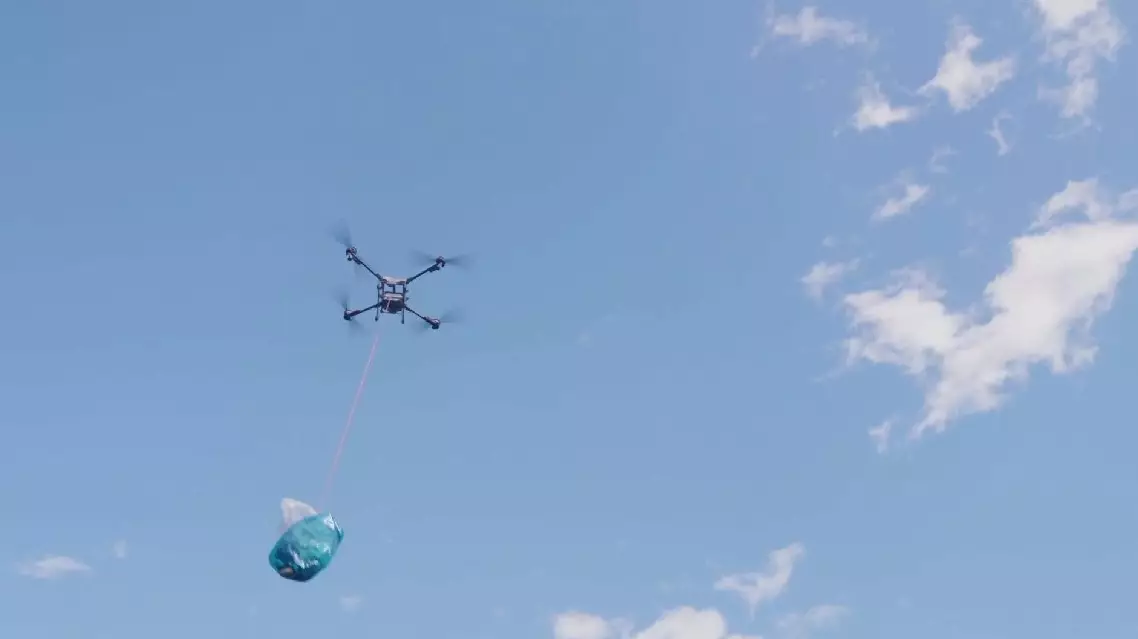
Futuristic fruit delivery becomes reality as drones transport bananas in Yunnan mountains