SEOUL, South Korea (AP) — A South Korean court issued warrants Tuesday to detain impeached President Yoon Suk Yeol and search his office and residence over allegations of rebellion in connection with his short-lived declaration of martial law.
It's the first time a warrant has been issued to detain a sitting South Korean president. But experts say there is little chance of detention or searches unless Yoon is formally removed from office.
Click to Gallery
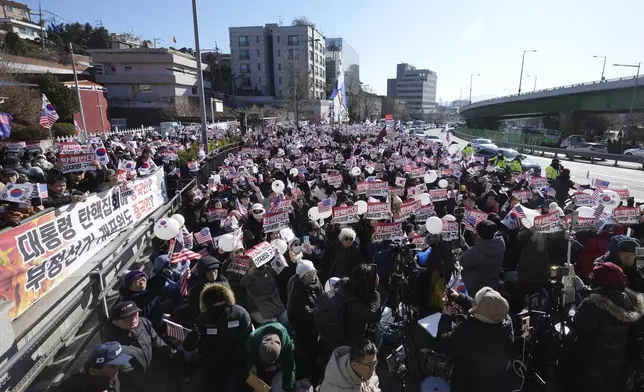
Supporters of impeached South Korean President Yoon Suk Yeol stage a rally near the presidential residence in Seoul, South Korea, Tuesday, Dec. 31, 2024. The letters read "Oppose Impeachment," and "Arrest Lee Jae-myung." (AP Photo/Lee Jin-man)
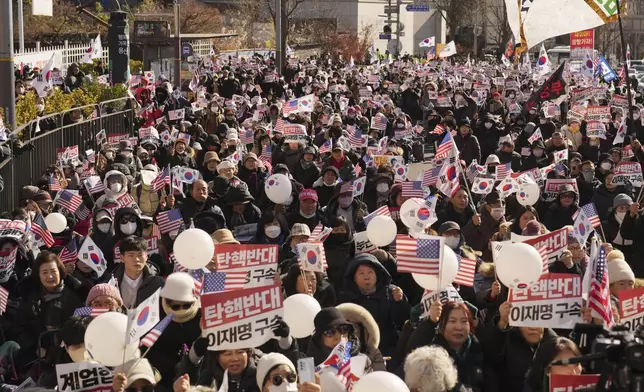
Supporters of impeached South Korean President Yoon Suk Yeol stage a rally near the presidential residence in Seoul, South Korea, Tuesday, Dec. 31, 2024. The letters read "Oppose Impeachment," and "Arrest Lee Jae-myung." (AP Photo/Lee Jin-man)
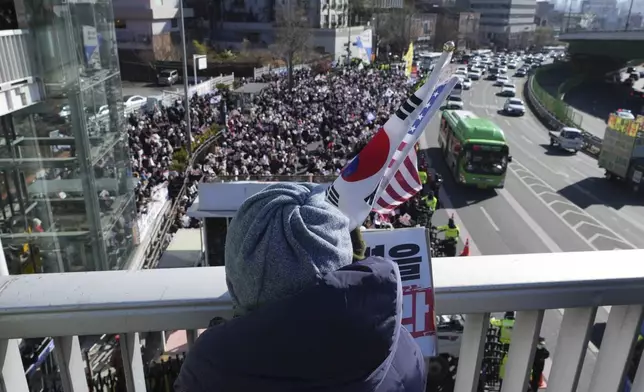
Supporters of impeached South Korean President Yoon Suk Yeol stage a rally near the presidential residence in Seoul, South Korea, Tuesday, Dec. 31, 2024. (AP Photo/Lee Jin-man)
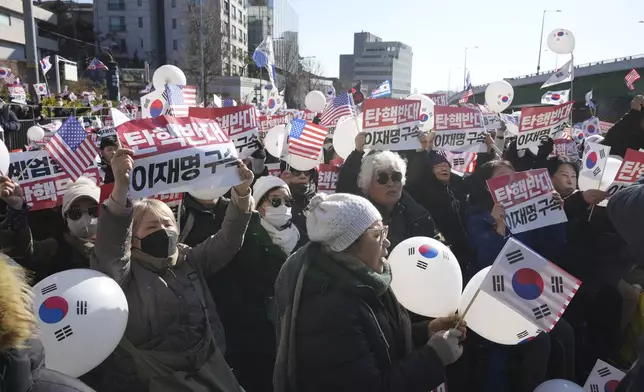
Supporters of impeached South Korean President Yoon Suk Yeol stage a rally near the presidential residence in Seoul, South Korea, Tuesday, Dec. 31, 2024. The letters read "Oppose Impeachment," and "Arrest Lee Jae-myung." (AP Photo/Lee Jin-man)
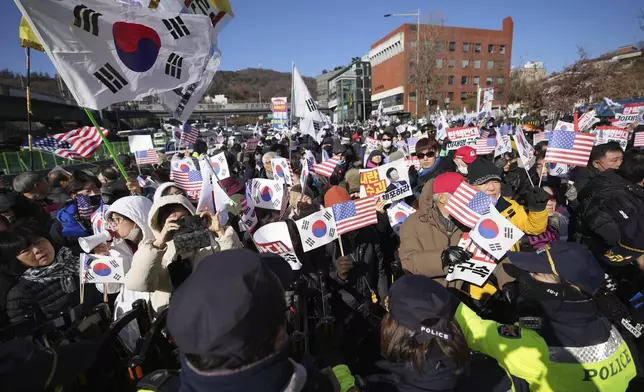
Supporters of impeached South Korean President Yoon Suk Yeol stage a rally after hearing a news that a court issued warrants to detain Yoon, near the presidential residence in Seoul, South Korea, Tuesday, Dec. 31, 2024. The letters read "Oppose Impeachment." (AP Photo/Lee Jin-man)
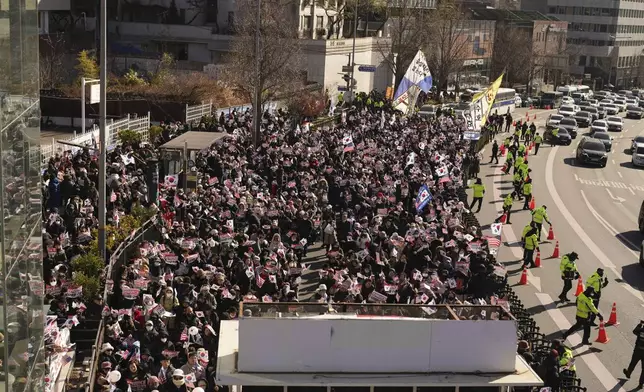
Supporters of impeached South Korean President Yoon Suk Yeol stage a rally near the presidential residence in Seoul, South Korea, Tuesday, Dec. 31, 2024. (AP Photo/Lee Jin-man)
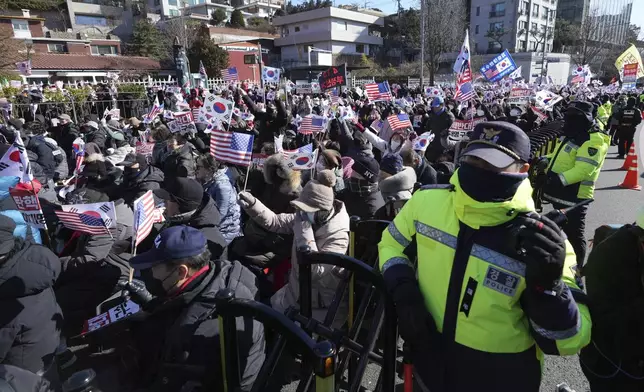
Supporters of impeached South Korean President Yoon Suk Yeol stage a rally after hearing a news that a court issued warrants to detain Yoon, near the presidential residence in Seoul, South Korea, Tuesday, Dec. 31, 2024. (AP Photo/Lee Jin-man)
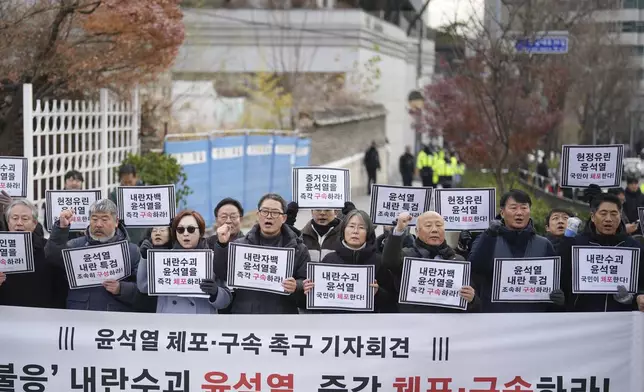
FILE - Members of civic groups shout slogans during a news conference demanding the arrest of President Yoon Suk Yeol near the presidential residence in Seoul, South Korea, on Dec. 17, 2024. The letters read "Immediately arrest Yoon Suk Yeol." (AP Photo/Lee Jin-man, File)
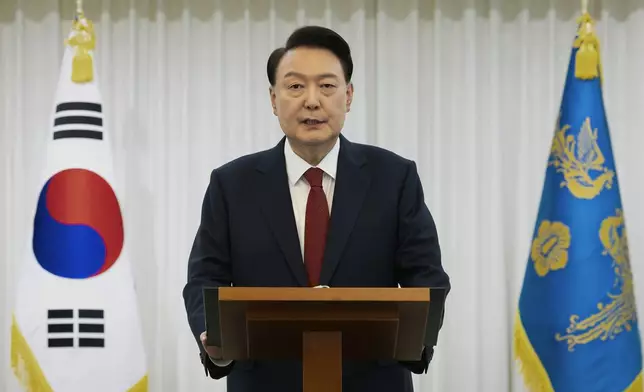
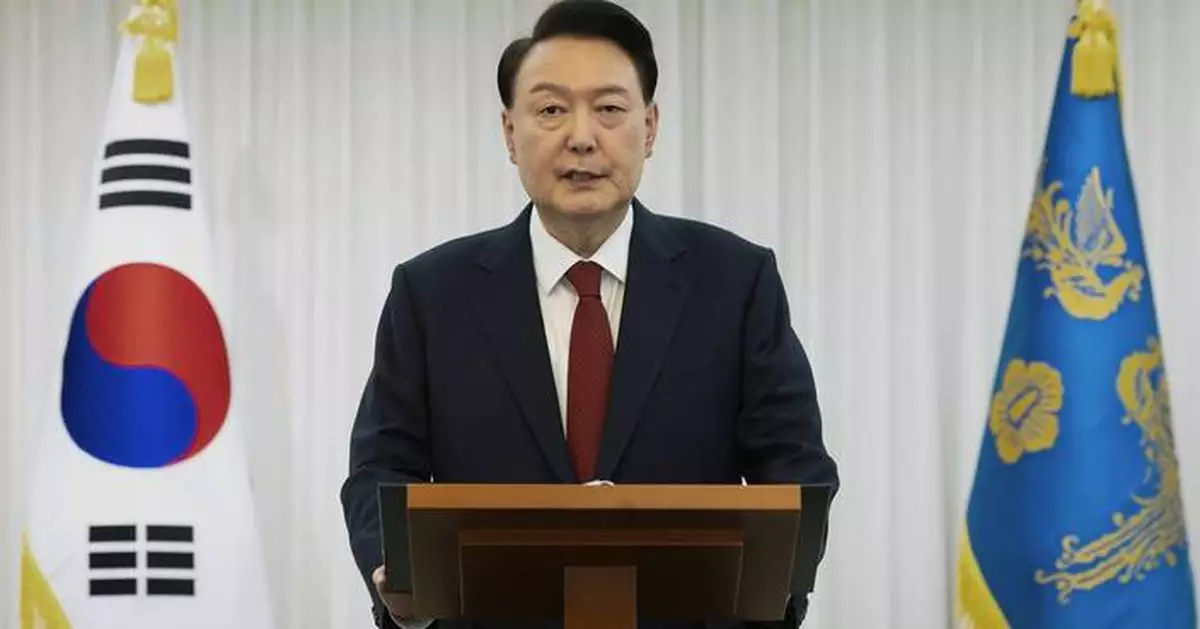
FILE - In this photo released by South Korean President Office via Yonhap, South Korean President Yoon Suk Yeol speaks at the presidential residence in Seoul, South Korea, on Dec. 14, 2024. (South Korean Presidential Office/Yonhap via AP, File)
The Seoul Western District Court issued warrants to detain Yoon and to search the presidential office and residence in central Seoul, according to a statement from the Corruption Investigation Office for High-Ranking Officials, which is leading a joint investigation with police and military authorities.
The agency says it's been investigating whether Yoon's Dec. 3 declaration amounted to rebellion.
Under South Korean law, the leader of a rebellion can face the death penalty or life imprisonment if convicted. Yoon has presidential immunity from most criminal prosecutions, but the privilege does not extend to allegations of rebellion or treason.
Yoon's powers have been suspended since the opposition-controlled National Assembly voted to impeach him on Dec. 14 over his imposition of martial law, during which hundreds of troops and police officers were deployed at the assembly. By law, a president in South Korea is allowed to declare martial law only during wartime or similar emergencies and has no right to suspend parliament’s operations even under martial law.
Yoon has argued his decree was a legitimate act of governance, calling it a warning to the main liberal opposition Democratic Party — which he has called “a monster” and “anti-state forces” — that has used its legislative majority to impeach top officials, undermine the government’s budget, and which he claims sympathizes with North Korea.
The Constitutional Court is to determine whether to dismiss Yoon as president or reinstate him.
Experts said Yoon is likely to ignore the warrants. He's already dodged repeated requests by investigative authorities to appear for questioning, and the presidential security service has blocked attempts to search his office and residence citing a law that bans raids on sites with state secrets.
Yoon Kap-keun, a lawyer for the president, called the detainment warrant “invalid" and “illegal," saying the anti-corruption agency lacks legal authority to investigate rebellion charges. The presidential security service said it will provide security to Yoon in accordance with the law.
The anti-corruption agency said it has no immediate plans on when it would proceed with the warrants.
“Unless Yoon voluntarily lets them detain him, there is no way to detain him,” said Choi Jin, director of the Seoul-based Institute of Presidential Leadership. “Should investigators have hand-to-hand fights with the security service?”
Choi said that investigators were still likely to visit Yoon’s residence to show they are strictly and fairly carrying out their work.
Park Sung-min, president of Seoul-based political consulting firm MIN Consulting, said the push for an arrest warrant is likely an attempt to pressure Yoon to cooperate with investigations.
Former President Park Geun-hye, who was thrown out of office in 2017 following an impeachment over a corruption scandal, also refused to meet with prosecutors while in office. She underwent questioning by them and was arrested after the Constitutional Court removed her from office.
Yoon's imposition of martial law lasted only six hours but triggered huge political turmoil, halting high-level diplomacy and rattling financial markets. Despite Yoon's deployment of troops and police, enough lawmakers managed to enter the assembly chamber to overturn it unanimously.
Yoon's defense minister, police chief and several top military commanders have already been arrested over their roles in the martial law enactment.
Yoon has claimed he wasn't trying to stop the functioning of the assembly, saying that the troops were sent to maintain order, and also denied planning to arrest politicians. But comments by now-arrested commanders of military units sent to the assembly have contradicted this claim.
Kwak Jong-keun, the commander of the Army Special Warfare Command, testified at the National Assembly that Yoon called on troops to “quickly knock down the door and drag out the lawmakers who are inside." Kwak said he did not carry out Yoon’s orders.
The country's political crisis deepened last Friday, when the Democratic Party and other small opposition parties voted to impeach acting President Han Duck-soo as well over wrangling over his refusal to fill in three justice seats at the nine-member Constitutional Court. Observers say adding more justices could increase prospects for the court's endorsement of Yoon's impeachment as that requires support from at least six justices.
The deputy prime minister and finance minister, Choi Sang-mok, has become South Korea’s new interim leader. On Tuesday, Choi appointed two new justices, saying he feels the urgency to resolve political uncertainty and national divide.
Choi's moves drew rebukes from both the ruling and opposition parties. The governing People Power Party accused him of surrendering to the opposition’s political offensive, while the main liberal opposition Democratic Party urged Choi to quickly appoint the remaining ninth justice.
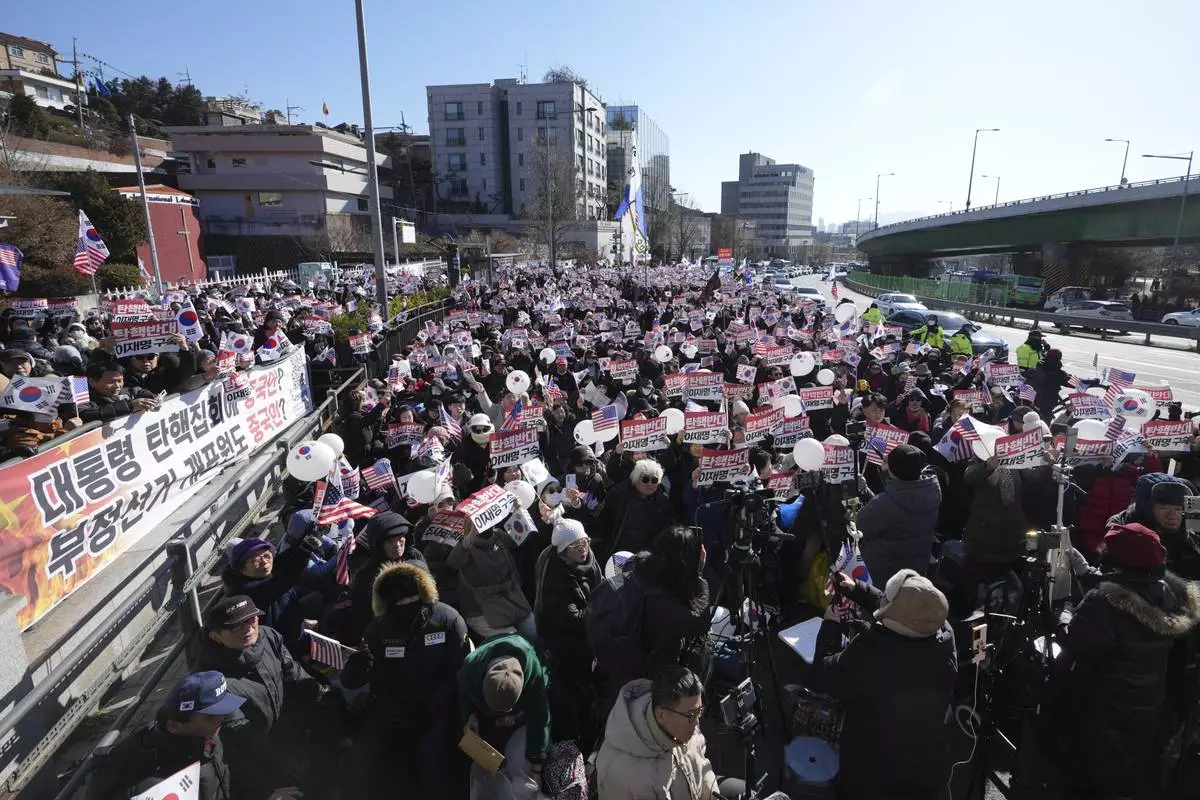
Supporters of impeached South Korean President Yoon Suk Yeol stage a rally near the presidential residence in Seoul, South Korea, Tuesday, Dec. 31, 2024. The letters read "Oppose Impeachment," and "Arrest Lee Jae-myung." (AP Photo/Lee Jin-man)
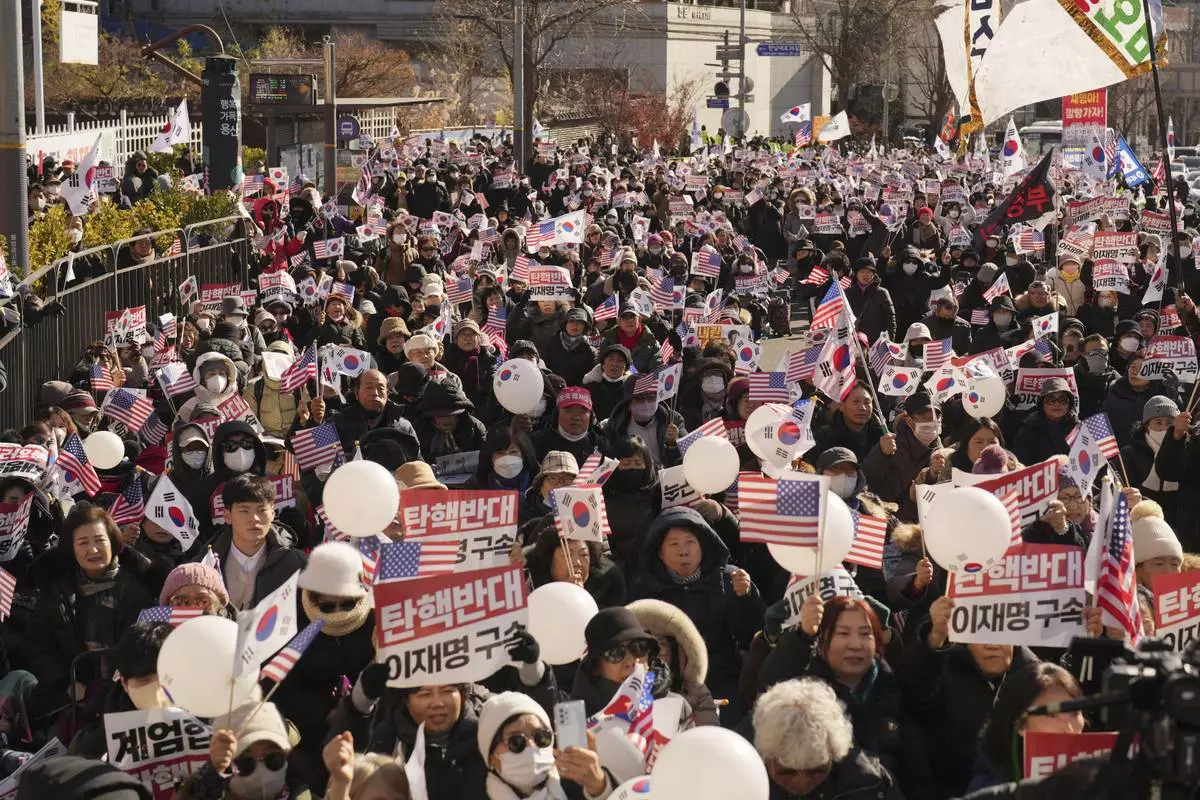
Supporters of impeached South Korean President Yoon Suk Yeol stage a rally near the presidential residence in Seoul, South Korea, Tuesday, Dec. 31, 2024. The letters read "Oppose Impeachment," and "Arrest Lee Jae-myung." (AP Photo/Lee Jin-man)
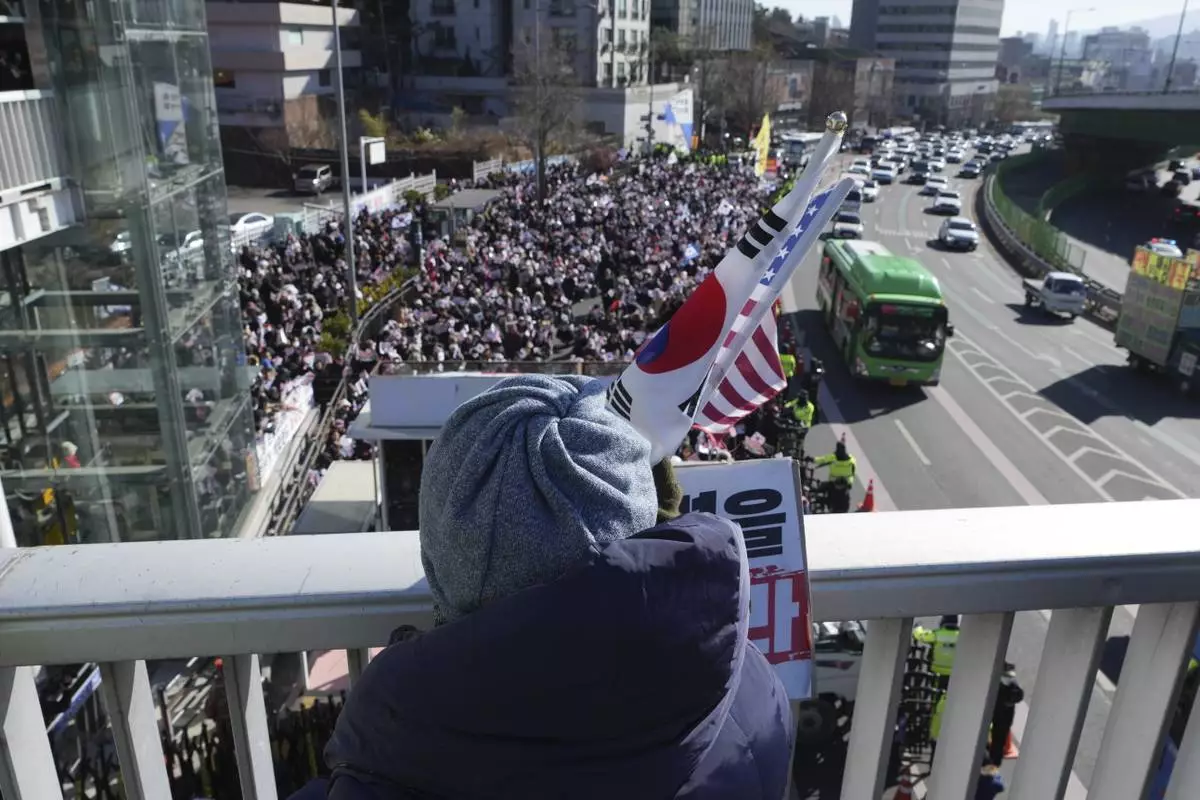
Supporters of impeached South Korean President Yoon Suk Yeol stage a rally near the presidential residence in Seoul, South Korea, Tuesday, Dec. 31, 2024. (AP Photo/Lee Jin-man)
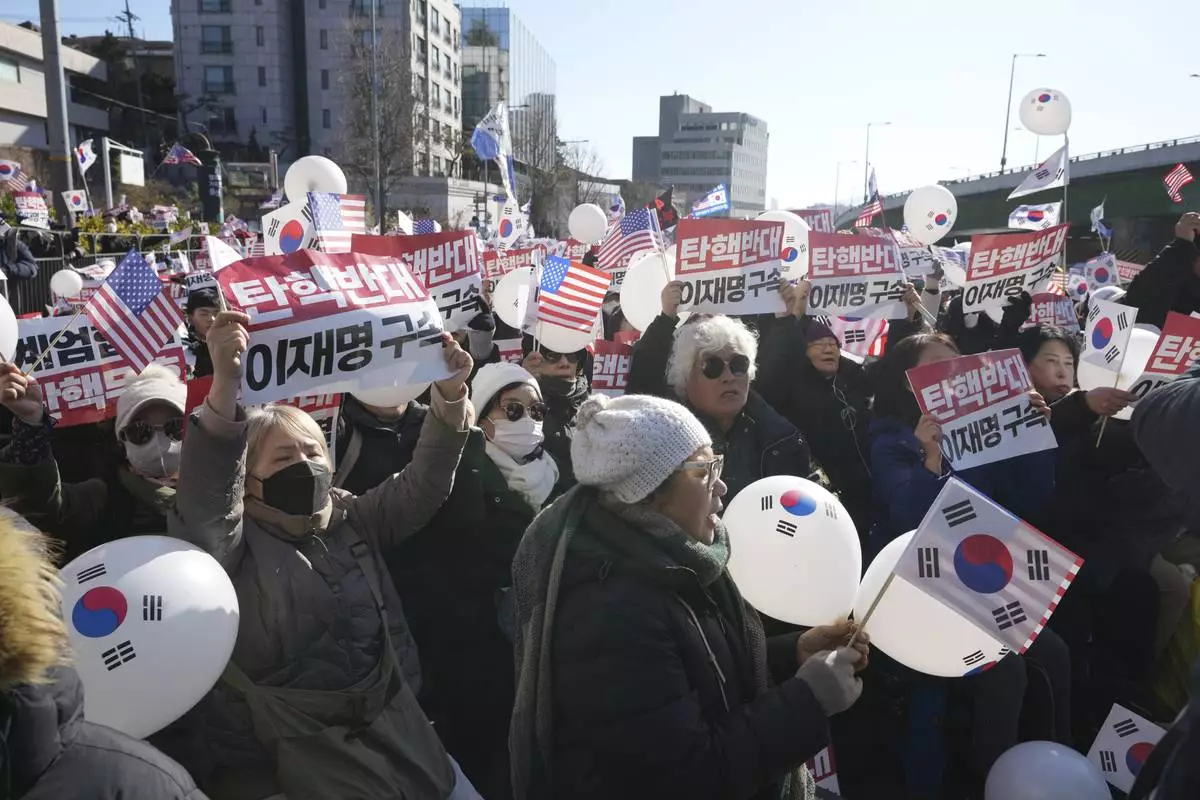
Supporters of impeached South Korean President Yoon Suk Yeol stage a rally near the presidential residence in Seoul, South Korea, Tuesday, Dec. 31, 2024. The letters read "Oppose Impeachment," and "Arrest Lee Jae-myung." (AP Photo/Lee Jin-man)
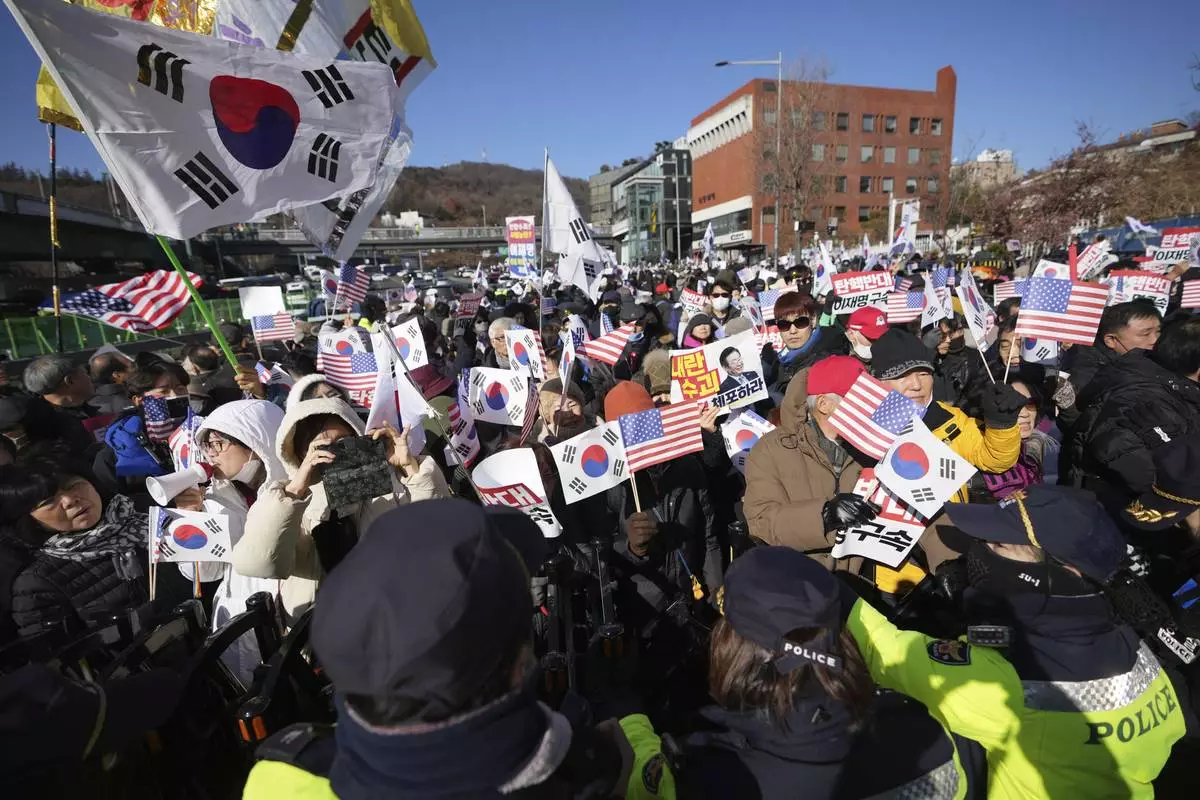
Supporters of impeached South Korean President Yoon Suk Yeol stage a rally after hearing a news that a court issued warrants to detain Yoon, near the presidential residence in Seoul, South Korea, Tuesday, Dec. 31, 2024. The letters read "Oppose Impeachment." (AP Photo/Lee Jin-man)
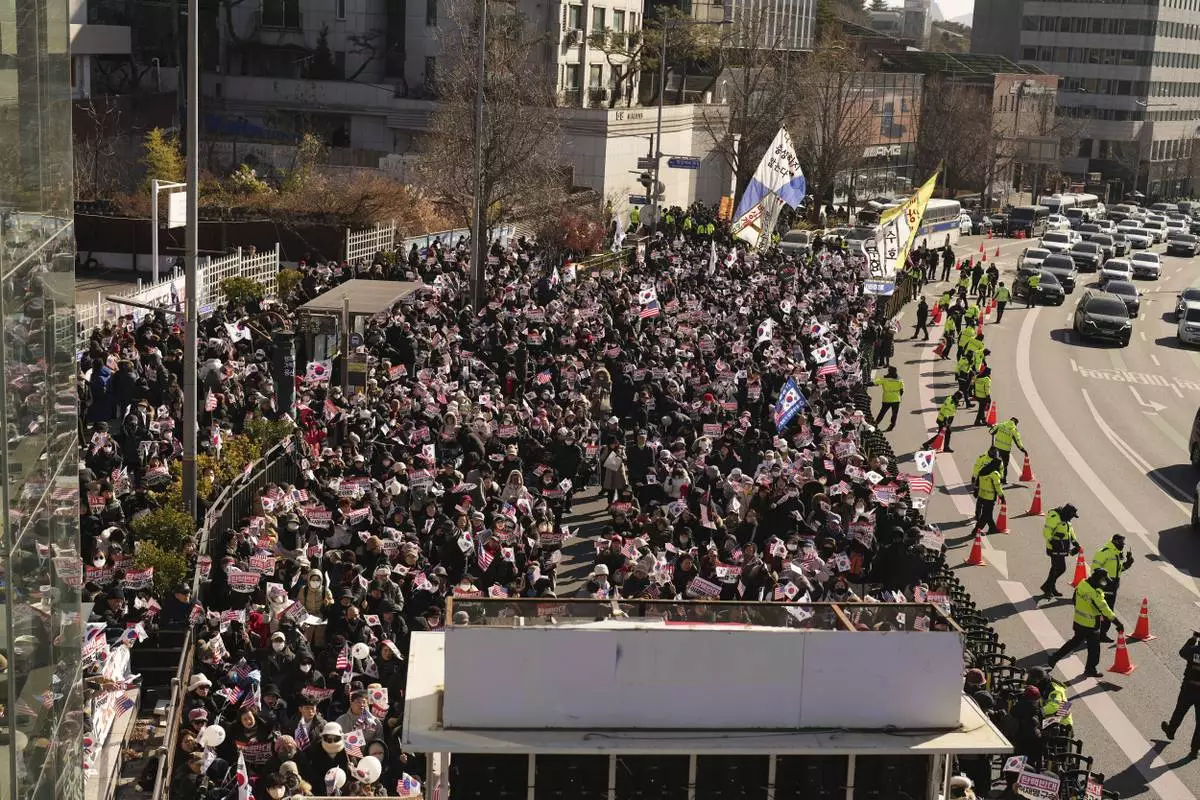
Supporters of impeached South Korean President Yoon Suk Yeol stage a rally near the presidential residence in Seoul, South Korea, Tuesday, Dec. 31, 2024. (AP Photo/Lee Jin-man)
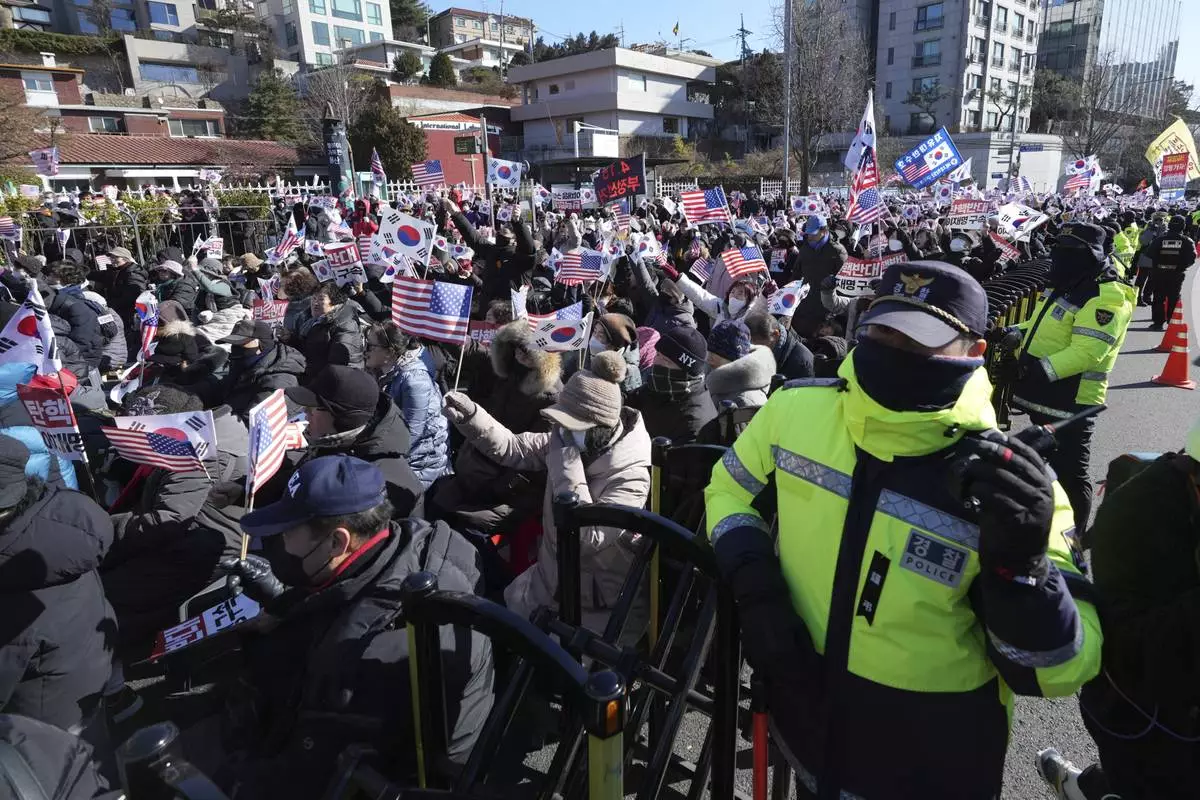
Supporters of impeached South Korean President Yoon Suk Yeol stage a rally after hearing a news that a court issued warrants to detain Yoon, near the presidential residence in Seoul, South Korea, Tuesday, Dec. 31, 2024. (AP Photo/Lee Jin-man)
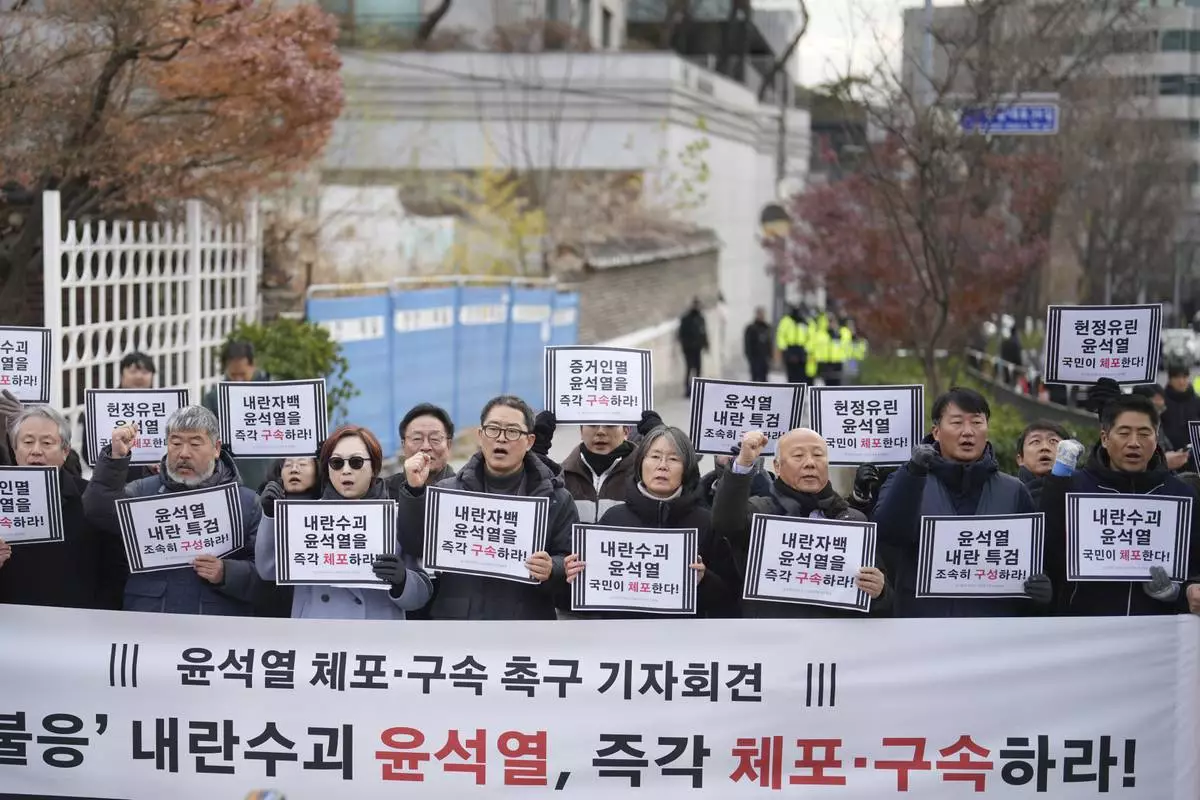
FILE - Members of civic groups shout slogans during a news conference demanding the arrest of President Yoon Suk Yeol near the presidential residence in Seoul, South Korea, on Dec. 17, 2024. The letters read "Immediately arrest Yoon Suk Yeol." (AP Photo/Lee Jin-man, File)
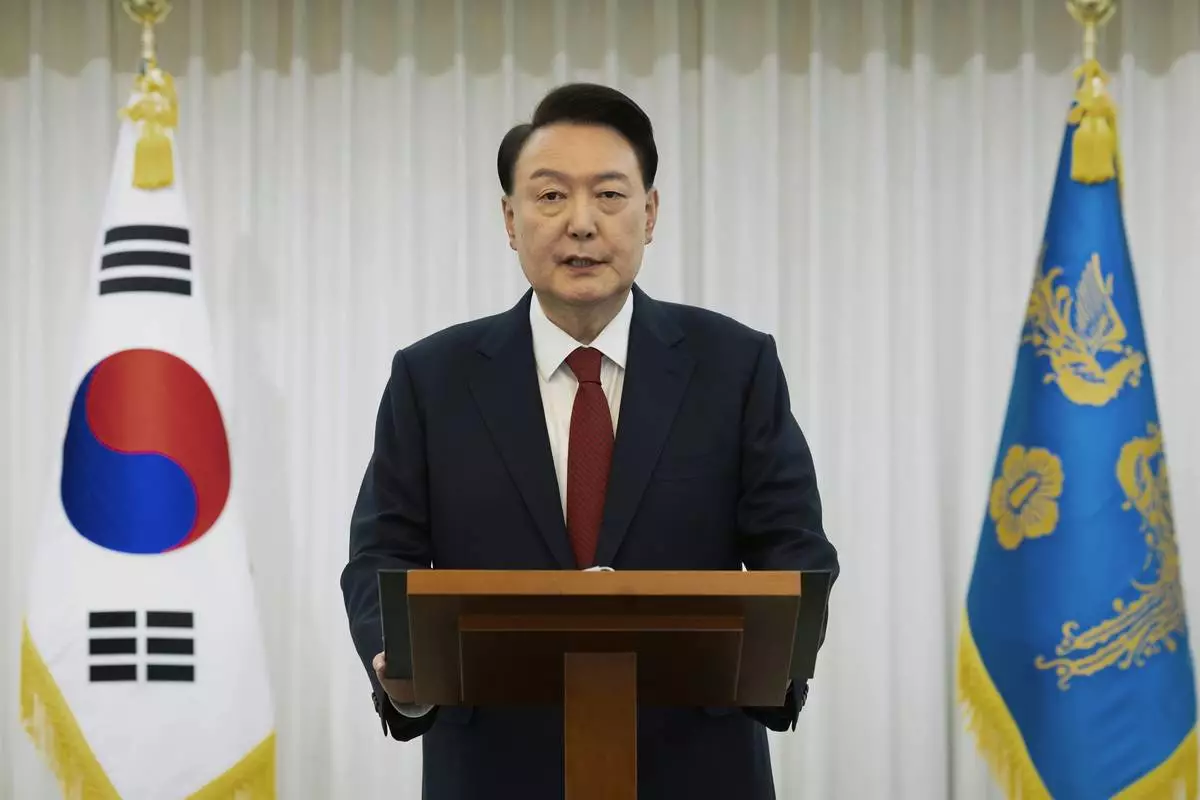
FILE - In this photo released by South Korean President Office via Yonhap, South Korean President Yoon Suk Yeol speaks at the presidential residence in Seoul, South Korea, on Dec. 14, 2024. (South Korean Presidential Office/Yonhap via AP, File)