Skip to Content Facebook Feature Image

Former U.S. President Jimmy Carter leaves lasting legacy in fostering China-U.S. relations

China

China

China

Former U.S. President Jimmy Carter leaves lasting legacy in fostering China-U.S. relations

2024-12-31 16:55 Last Updated At:17:07

Former U.S. President Jimmy Carter, who passed away at the age of 100 on Sunday, left abundant legacies of promoting positive relations between China and the United States, including advocating that uniting the two countries for peace and progress is far more important than their differences.

Jimmy Carter, who served as the 39th president of the U.S. from 1977 to 1981, died at his home in Plains in the southern U.S. state of Georgia. according to a statement issued by the Carter Center.

Carter was born on Oct 1, 1924, in the southeastern U.S. state of Georgia. He held the record as the longest-lived former U.S. president, outliving his two successors, Ronald Reagan and George H.W. Bush.

Following his term in office in 1981, Carter embarked on several visits to China, showcasing his enduring dedication to fostering positive relations that extended well beyond his presidency.

During his visit to China in 2014, Carter stated in an interview with the China Central Television (CCTV) that while many differences may arise between the United States and China in the future, what unites them for peace and progress outweighs what sets them apart.

"We knew that China and the United States had different culture, different ancient history, different form of government, different interest. We solved the differences. So, we anticipated that in the future, there would be many differences between our two countries. But we also realized, I think accurately, that the things that bind us together for peace and progress are much more important than the things that divide us one from another. And of course, the United States has always been very deeply involved in Asia and in the Western Pacific. It's not a new thing," Carter said.

Moreover, the former U.S. president highlighted that currently, the combined influence of countries including Brazil, Russia, India, China, and South Africa far exceeds that of the United States.

"We understand that in the past, after the World War II was over and particularly after the Soviet Union dissipated into Russian and 12 or so other countries, that the United States became the only world power that could be called a superpower. But now we see that the combined effect for Brazil and Russia and India and China and South Africa and other countries of much more important collectively than the United States," Carter said.

Former U.S. President Jimmy Carter leaves lasting legacy in fostering China-U.S. relations

Former U.S. President Jimmy Carter leaves lasting legacy in fostering China-U.S. relations

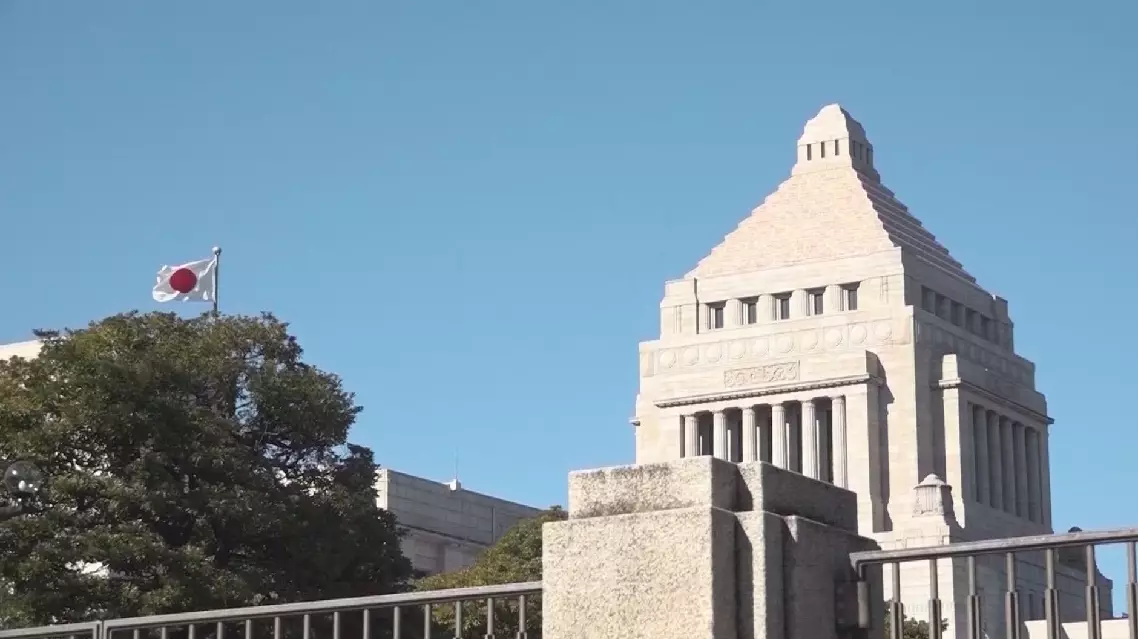
Japan's House of Representatives approved a bill to establish a national intelligence committee on Thursday, prompting widespread public questions and concerns. In March, the Japanese government approved a resolution to submit the relevant bill to the Diet, proposing a new intelligence mechanism centered on a national intelligence council with the national intelligence committee serving as its executive body.

According to the bill, the new committee will be tasked with coordinating "important intelligence activities" in areas such as national security and counter-terrorism, as well as "overseas intelligence activities" involving foreign espionage.

The bill also states that the committee's secretariat will "comprehensively coordinate" intelligence work across government ministries and agencies, with the authority to request that they share information.

The bill now moves to the upper house for review.

The bill and a series of reckless moves by the Takaichi administration have fueled deep public concern. Protesters gathered to voice their opposition to the legislation before its passage.

"Right now, the Takaichi administration is trying to drag Japan into war, through actions like promoting weapons imports and exports, provoking China, and failing to offer the apologies it should have made afterward. Against this backdrop, opposition voices are actually quite strong, but these remarks will be regulated. Once such a bill passes, not even opposing voices will be able to speak out. This is something I do not want to see," said a protester.

These grave concerns were widely echoed by other rally attendees, who said they cannot accept a string of radical moves by the Japanese government and the Takaichi administration, including the lifting of the ban on lethal weapons exports and the relentless push to amend Japan's pacifist constitution.

"Takaichi is forcing all of these moves through. Promoting this bill and lifting the ban on arms exports mean heading towards war," said another rally participant.

"I believe amending the Constitution is completely unacceptable. The Constitution is not something that members of the National Diet can revise on a whim, and it should never be revised in the first place," said another protester.

Japanese lower house approves bill to establish national intelligence committee, sparking protests

Japanese lower house approves bill to establish national intelligence committee, sparking protests

Recommended Articles