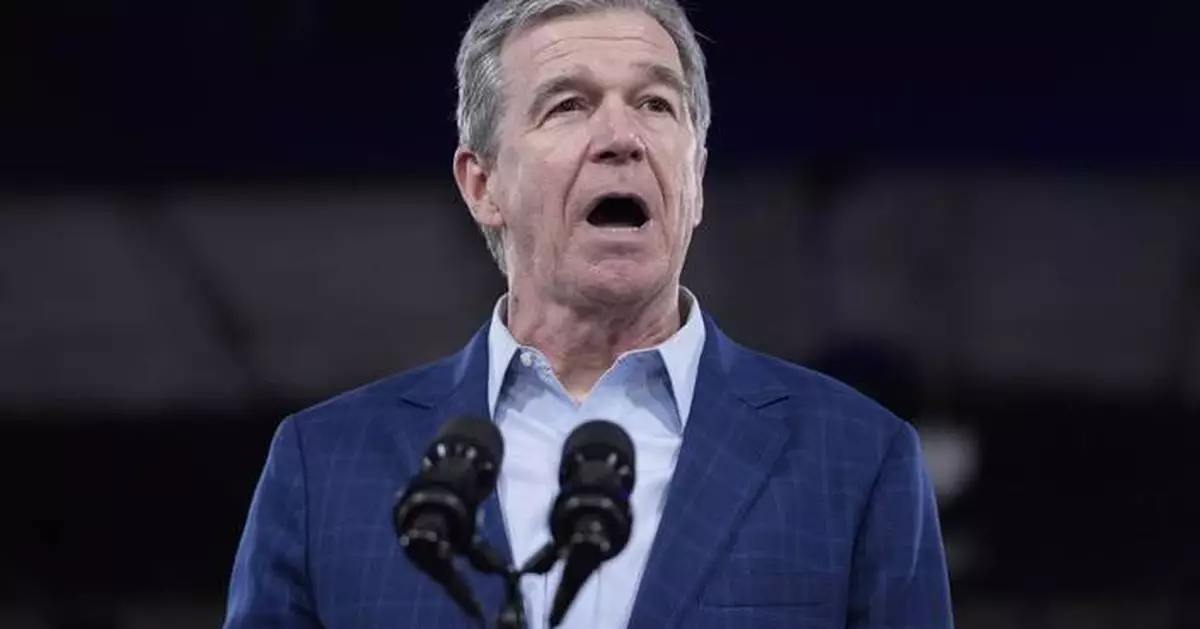
RALEIGH, N.C. (AP) — In one of his final acts in office, North Carolina Gov. Roy Cooper commuted the death sentences of 15 men convicted of first-degree murder to life in prison without the possibility of parole on Tuesday, reducing the state's death row population by more than 10%.
Cooper, who was barred from seeking a third consecutive four-year term, will give way to fellow Democrat Josh Stein on Wednesday when Stein takes the oath of office.
Cooper, who was previously the attorney general for 16 years, said his commutation decisions occurred following a thorough review of petitions offered by defendants and input from prosecutors and victims' families.
Before Tuesday, North Carolina had 136 offenders on death row. Cooper's office said it had received clemency petitions from 89 of them.
Cooper's office said it considered a variety of factors, such as a defendant's conduct in prison, the adequacy of legal representation and sentences received by co-defendants.
“These reviews are among the most difficult decisions a Governor can make and the death penalty is the most severe sentence that the state can impose,” Cooper said in a news release. “After thorough review, reflection, and prayer, I concluded that the death sentence imposed on these 15 people should be commuted, while ensuring they will spend the rest of their lives in prison.”
North Carolina is one of 27 states that have the death penalty as a criminal punishment, according to the Death Penalty Information Center, although governors in five of those states currently have placed executions on hold. While North Carolina is not one of those five, an execution hasn't been carried out in the state since 2006.
The number of defendants sentenced to death in North Carolina has also dwindled in recent years, as prosecutors have more leeway in state law to decide whether to try a capital case. Even after Tuesday's action, North Carolina has the fifth-largest death row by population in the country, according to the North Carolina Coalition for Alternatives to the Death Penalty.
Although some groups opposed to the death penalty have sought from Cooper a complete commutation for all on death row, they still praised him for what they called a historic act of clemency. State Department of Adult Correction records list 13 of the 15 receiving clemency as Black. The convictions dates for the 15 range from 1993 to 2011.
Cooper “joins the ranks of a group of courageous leaders who used their executive authority to address the failed death penalty,” Chantal Stevens, executive director of American Civil Liberties Union of North Carolina, said in a separate release. “We have long known that the death penalty in North Carolina is racially biased, unjust, and immoral, and the Governor’s actions today pave the way for our state to move towards a new era of justice.”
Cooper received national attention this year as he surfaced as a potential running mate for Democratic presidential nominee Kamala Harris.
Stein succeeded Cooper as attorney general in 2017. The Attorney General's Office participates in death penalty appeals.
Among the 15 receiving commutations on Tuesday include Hasson Bacote, who was convicted of first-degree murder in 2009 in Johnston County.
Bacote had been challenging his death sentence under the 2009 Racial Justice Act, which allowed prisoners to receive life without parole if they can show that racial bias was the reason for their death sentence. While the law was repealed in 2013, the state Supreme Court ruled later that most prisoners currently on death row could still use the law retroactively.
Bacote's recent hearing before a judge based on that law was considered a test case. Groups backing Bacote's litigation said Tuesday they still anticipate a ruling in his case because of the widespread public interest in the matter.
Another whose sentence was commuted is Guy LeGrande, who was once set to be executed in late 2006 before a judge halted it and later cited LeGrande's “severe mental illness.” He was convicted in Stanly County of the 1993 killing of a woman whose estranged husband offered to pay him a portion of life insurance proceeds.
Another death row inmate receiving clemency, Christopher Roseboro, was convicted of murder and rape in the death of a 72-year-old Gastonia woman in 1992.
Last week, President Joe Biden announced that he was commuting the sentences of 37 of the 40 people on federal death row, converting their punishments to life imprisonment.
Separately Tuesday, Cooper announced that he had commuted the sentences of two prisoners convicted of murder so that they are immediately parole eligible. One defendant has served 34 years, while the other has served 27 years.
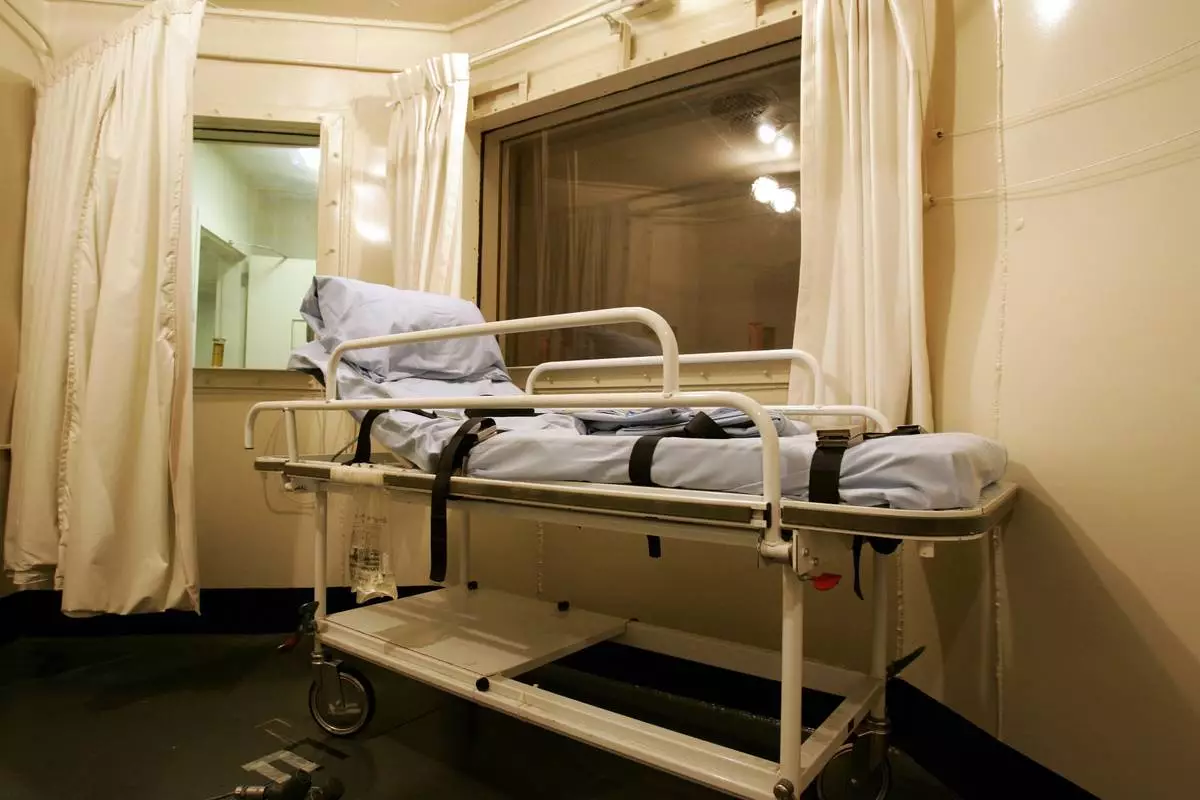
FILE - This May 2006 photo shows the execution chamber at Central Prison in Raleigh, N.C. (AP Photo/Gerry Broome, File)
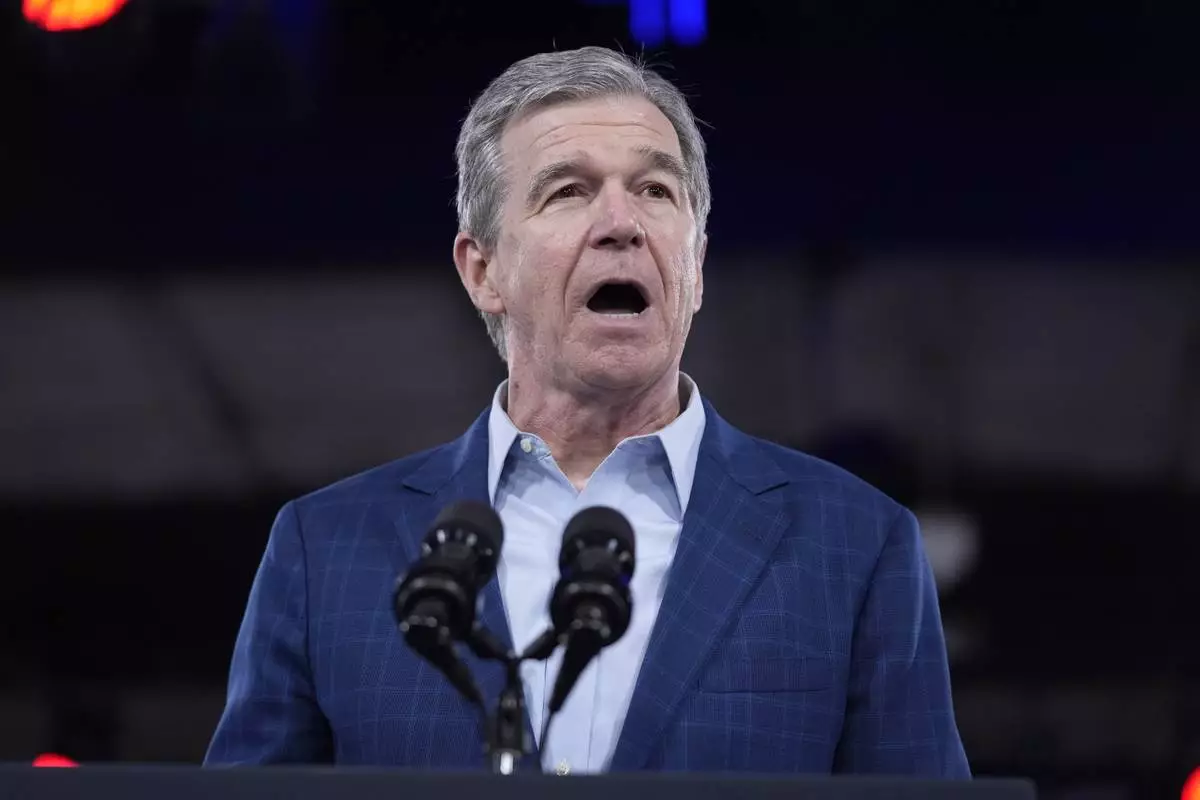
FILE - North Carolina Gov. Roy Cooper speaks at a campaign rally for President Joe Biden, Friday, June 28, 2024, in Raleigh, N.C. (AP Photo/Evan Vucci, File)
KYIV, Ukraine (AP) — More than 100 Russian drones targeted areas of Ukraine on Wednesday, President Volodymyr Zelenskyy said, hours after another barrage of civilian areas killed at least eight people.
“Russia continues its strikes and is doing so brazenly — deliberately targeting our railway infrastructure and civilian sites in our cities,” Zelenskyy said in a post on X.
Moscow’s attacks on its neighbor are unrelenting, even as Ukraine is emboldened by its recent military accomplishments and as U.S. President Donald Trump and Russian President Vladimir Putin said — without providing evidence — that the 4-year-old war could be approaching an end.
The overnight strikes targeted Ukraine's residential and railway infrastructure in the central Dnipro and northeastern Kharkiv regions, port infrastructure in the southern Odesa region, and energy facilities in the central Poltava region, according to Zelenskyy. On Tuesday, he said, 14 regions came under attack throughout the day.
“It is important to support Ukraine and not remain silent about Russia’s war. Every time the war disappears from the top of the news, it encourages Russia to become even more savage,” Zelenskyy said, in an apparent reference to the world's attention being gripped by the Iran war.
Trump said Tuesday said he believes Moscow and Kyiv will soon reach a deal to end fighting.
“The end of the war in Ukraine I really think is getting very close,” Trump told reporters as he left the White House for a summit in Beijing. “Believe it or not, it’s getting closer.”
Putin said in a speech last weekend that his invasion of Ukraine is possibly “coming to an end.”
Neither leader elaborated on what persuaded them about the possibility of peace in Europe’s longest conflict since World War II. U.S.-led diplomatic efforts over the past year to end the war have fizzled after making no progress on key issues, such as whether Russia gets to keep Ukrainian land it has seized and what can be done to deter Moscow from invading again.
Kremlin spokesman Dmitry Peskov indicated Wednesday that Moscow’s fundamental terms are unchanged, with Putin insisting that Ukraine pull its troops from the four regions — Donetsk, Luhansk, Kherson and Zaporizhzhia — that Russia illegally annexed in September 2022 but hasn't fully captured.
“At that point, a ceasefire will be established, and the parties can calmly engage in negotiations, which, incidentally, will inevitably be very complex and involve a lot of important details,” Peskov said.
Zelenskyy vowed to keep pressure on Moscow to make concessions in talks.
“We’re not giving up on diplomatic efforts, and we hope that pressure on Russia, together with negotiations in different formats, will help bring peace,” he said in a speech Wednesday in Bucharest, Romania, to representatives of countries on NATO's eastern flank.
“Sanctions are working, our long-range (drone and missile) capabilities are working, and every form of pressure is working,” he said.
Meanwhile, European governments are assessing the merits of opening talks with Putin. Europe has for years tried to isolate the Russian leader and punished his country with international sanctions.
The correlation of forces in the war has shifted in recent months. Ukraine has gone from pleading for international help with its defense to offering foreign countries its expertise on how to counter attacks, thanks to its domestically developed drone technology.
Ukraine’s long-range drone and missile attacks have disrupted energy facilities and manufacturing deep inside Russia, with three regions reporting strikes Wednesday. The Russian Defense Ministry said that its forces intercepted and destroyed 286 Ukrainian drones over Russian regions, the illegally annexed Crimean Peninsula, the Azov Sea and the Black Sea.
On the 1,250-kilometer (780-mile) front line, the advance of Russia’s bigger and better-equipped army has been slowing every month since October, according to the Institute for the Study of War.
Russia’s spring offensive has floundered, with Russian forces recording a net loss of territory last month for the first time since 2024, the Washington-based think tank said.
“Not only are Ukrainian defensive lines holding, but Ukrainian forces have managed to contest the tactical initiative in several areas of the front line even as Russia continues to lose disproportionate amounts of manpower to achieve minimal gains,” the ISW said Tuesday.
Hatton reported from Lisbon, Portugal.
Follow the AP’s coverage of the war at https://apnews.com/hub/russia-ukraine
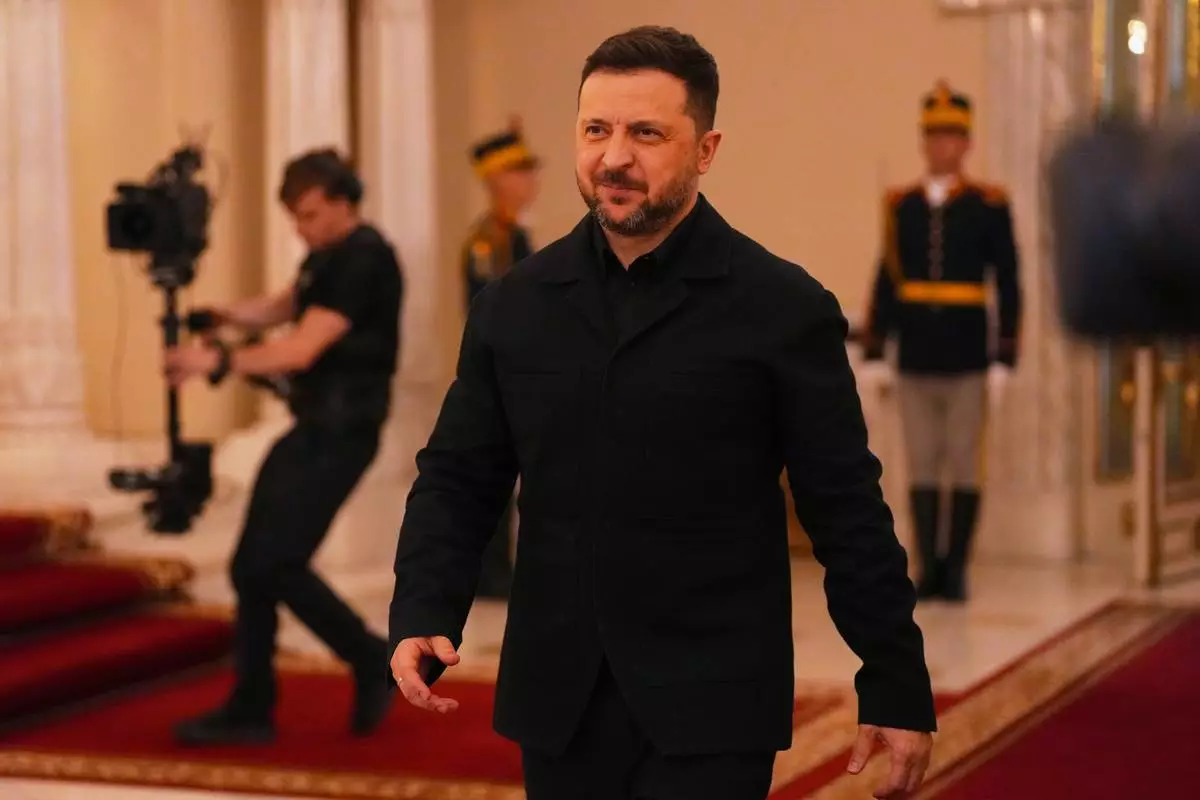
Ukraine's President Volodymyr Zelenskyy arrives at the Bucharest B9 summit held at the Cotroceni Presidential Palace in Bucharest, Romania, Wednesday, May 13, 2026. (AP Photo/Vadim Ghirda)
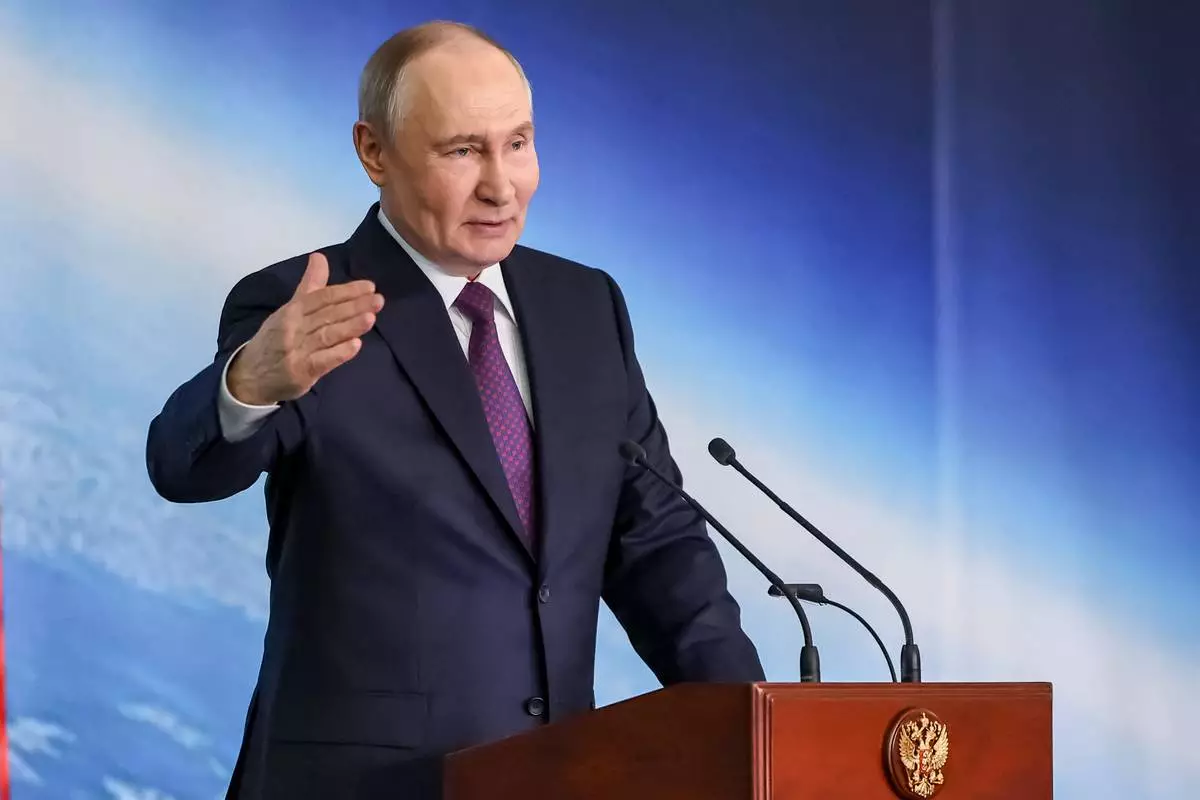
Russian President Vladimir Putin speaks at the awarding ceremony for the Order "For Valiant Labor" to employees of the Moscow Institute of Thermal Technology, part of the Roscosmos state space corporation, in Moscow, Wednesday, May 13, 2026. (Vyacheslav Prokofyev/Sputnik, Kremlin Pool Photo via AP)
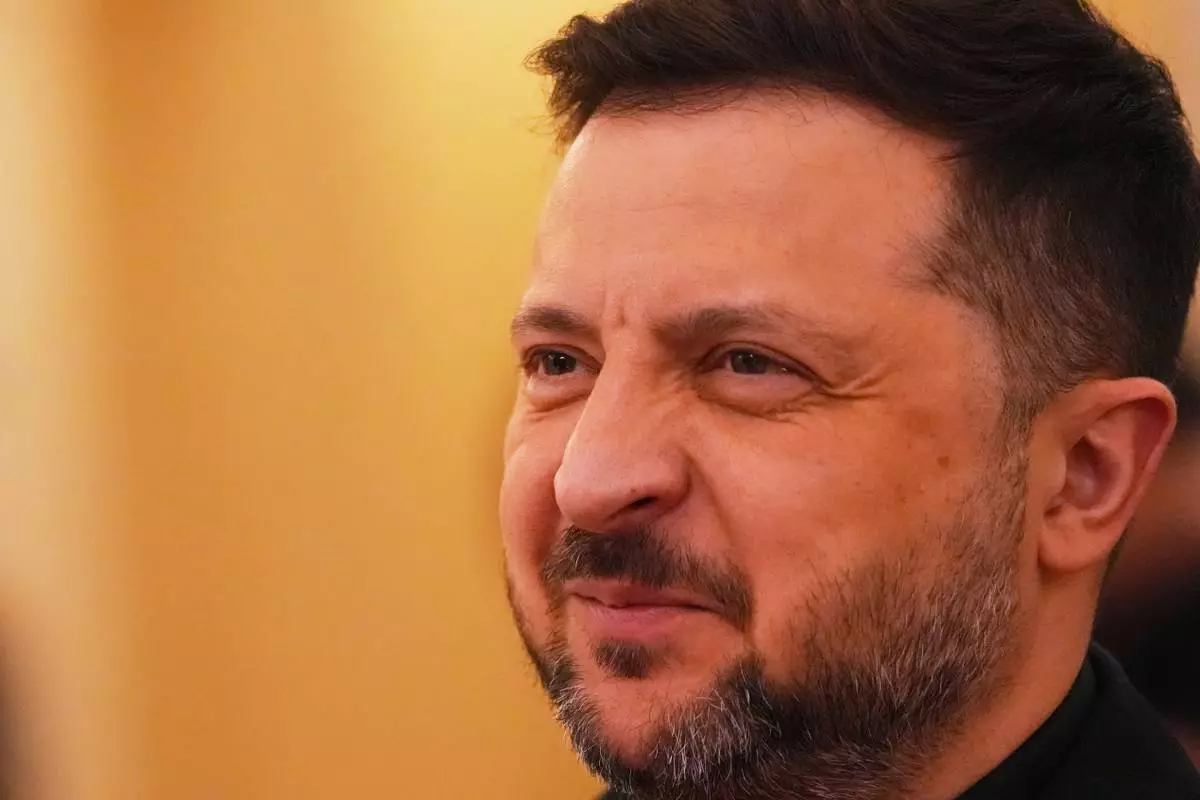
Ukraine's President Volodymyr Zelenskyy arrives at the Bucharest B9 summit held at the Cotroceni Presidential Palace in Bucharest, Romania, Wednesday, May 13, 2026. (AP Photo/Vadim Ghirda)
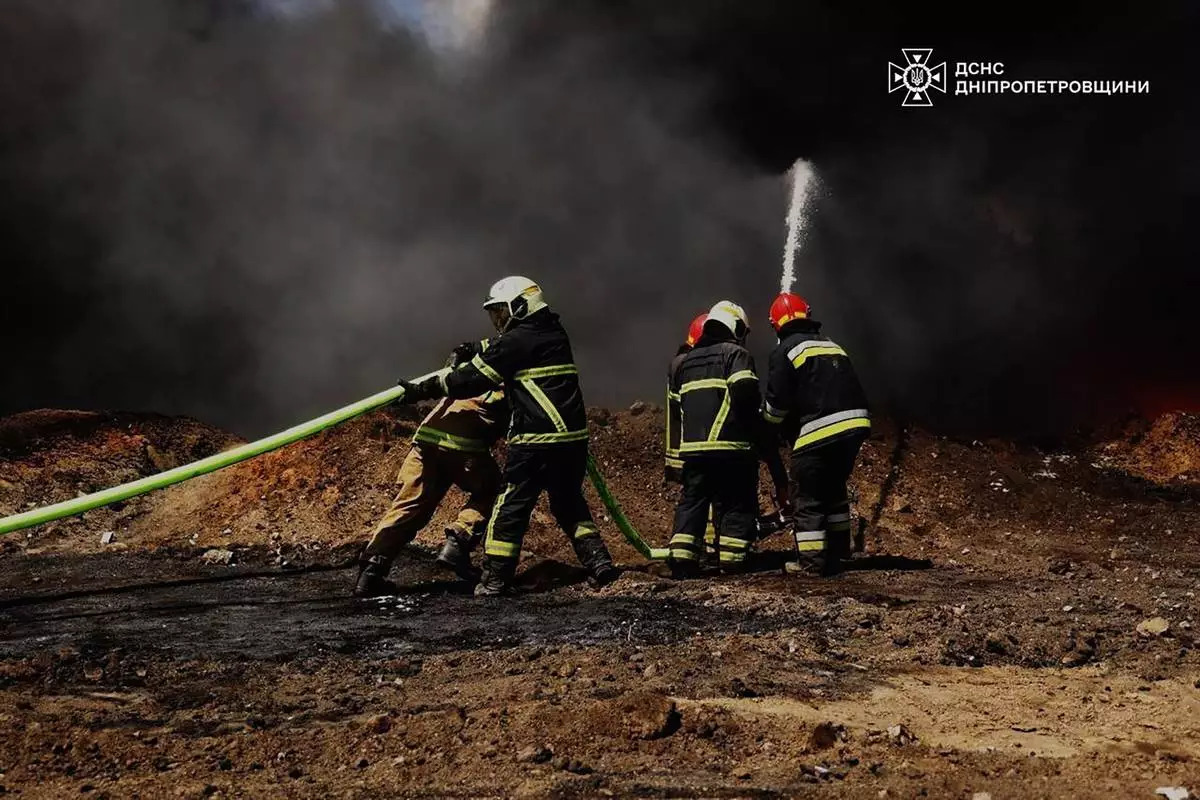
In this photo provided by the Ukrainian Emergency Service, emergency services personnel work to extinguish a fire following a Russian drone attack on a gas pipeline in Dnipropetrovsk region, Ukraine, Wednesday, May 13, 2026. (Ukrainian Emergency Service via AP)
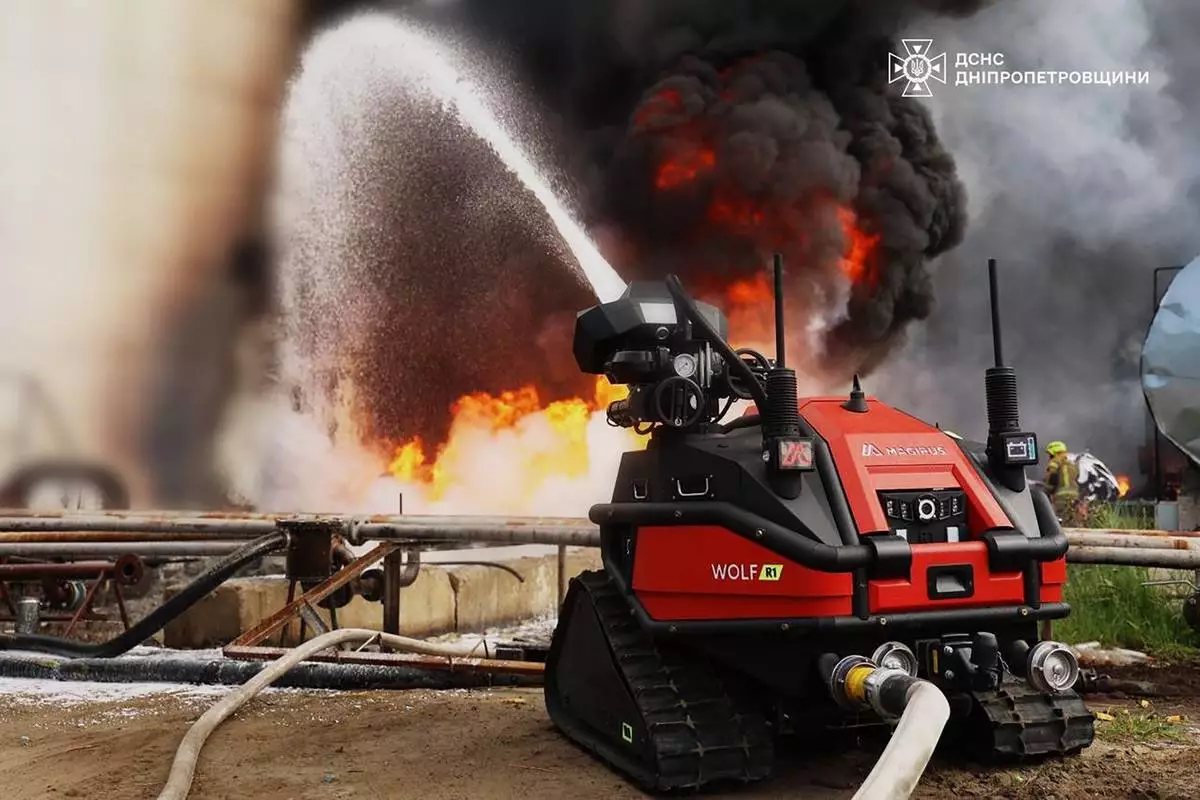
In this photo provided by the Ukrainian Emergency Service, emergency services personnel work to extinguish a fire following a Russian drone attack on a gas pipeline in Dnipropetrovsk region, Ukraine, Wednesday, May 13, 2026. (Ukrainian Emergency Service via AP)