Chinese companies are exploring new technologies to further advance the development of the country’s thriving new energy vehicle (NEV) market, said an executive of Contemporary Amperex Technology Co., Ltd. (CATL).
CATL, China's largest automotive lithium-ion battery maker, recently released a video of a car crash test conducted at a speed of 120 kilometers per hour. The video shows that the crashed EV did not catch fire or explode.
Hu Guoliang, Executive President of CATL, said that the global industry has been focused on pursuing energy density.
"The whole industry used to be chasing after wholly only the energy density, and a lot of events happening in the last two years, three years in Europe, North America gave us a little bit shock. CATL has to be in this field. Only competing in price is not the right way," Hu said.
As the world's leading battery maker, CATL accounts for approximately 37 percent of the global electric vehicle battery market.
Now, the company is no longer satisfied with simply offering lithium packs. It is developing new technologies to directly integrate battery cells within the chassis of vehicles.
A senior engineer at the company explained the technology, saying it will help reduce maintenance costs.
"It's clear you can see the electrical machinery, thermal management, generator, air-conditioning system and some other component. In the middle, lies the core part, which we call the energy storage. By dividing the chassis into three parts helps save costs in maintenance compared with integrated die-casting ones," said the engineer.
The battery and electronic systems are fully integrated into the chassis, which explains why visitors to China's auto shows are often seen trying to get a view underneath.
The development of this new technology was included in the company's battery roadmap as early as 2018. A year later, the company formed a dedicated team to work on it, with half of the research and development conducted in Shanghai.
"You see this facility that we invested here in Lingang, and the team of around 600 people are residing (are stationed) in Dishui Lake area. We started with hiring kind of the best talent from the Shanghai region and with huge experience from the automotive industry," Hu said.
In 2024, China became the first country to produce more than 10 million new energy vehicles in a single year, with one in every two cars sold being an EV. As the market continues to emerge, technologies are evolving at a record pace.
"Normally in development process of the traditional automotive, four years around is the total cycle that we need to develop a vehicle. And today in China, we see the development lead time is normally two years, and we are still trying hard to push with our product and platform. We hope we can push this and shrink the time to market to 12 to 18 months, depends on the application target," Hu said.
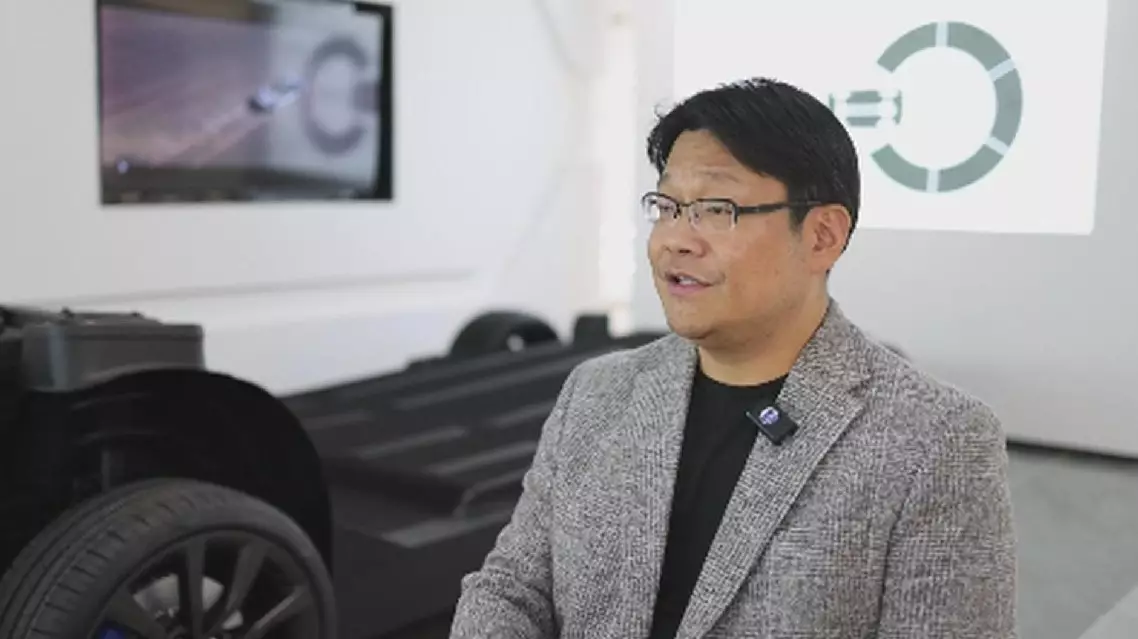
Chinese battery companies explore new technologies to boost NEV market
Chinese Foreign Minister Wang Yi, together with Sihasak Phuangketkeow, Thailand's deputy prime minister and foreign minister, held the third meeting of the Consultation Mechanism between the Ministers of Foreign Affairs of China and Thailand on Friday in Bangkok.
Wang, also a member of the Political Bureau of the Communist Party of China Central Committee, noted that this year marks the beginning of China's 15th Five-Year Plan and also the start of the new Thai government's governance.
Facing a volatile international situation, Wang said, China is willing to work with Thailand to give full play to the coordinating role of the foreign ministers' consultation mechanism guided by the strategic consensus reached by the two heads of state.
Both sides should join hands to advance their respective modernization processes, jointly practice genuine multilateralism, create a new golden 50 years for China-Thailand friendship, and make new contributions to promoting the solidarity and development of the Global South as well as regional peace and stability, he said.
Noting that China has always placed Thailand in an important position in its neighborhood diplomacy, Wang said China is ready to continue to be a reliable strategic partner of Thailand, support the new Thai government in leading its people to follow a development path that suits its national conditions, and promote the building of a more stable, prosperous and sustainable China-Thailand community with a shared future.
It is believed that Thailand will continue to resolutely support China's great cause of peaceful reunification, he added.
Wang also called on the two sides to maintain high-level exchanges, enhance political mutual trust, strengthen the alignment of development strategies and initiate the formulation of the new five-year action plan.
He said that both sides should intensify efforts to crack down on transnational crimes, completely eradicate gambling and fraud, strengthen multilateral collaboration and jointly implement the four major global initiatives.
China has always advocated resolving differences between countries through dialogue rather than force, Wang said, extending the hopes that Thailand and Cambodia will consolidate the ceasefire situation, resume bilateral contacts, resolve border disputes as soon as possible and maintain a peaceful and stable environment.
As a common friend of Thailand and Cambodia, China is willing to continue to build a platform for the two sides to rebuild mutual trust and improve relations, he said.
For his part, Sihasak said that Thailand will, as always, attach great importance to its relations with China, firmly pursue the one-China policy, and consolidate the political foundation of bilateral relations.
Thailand is willing to enhance high-level exchanges with China, deepen all-round cooperation in various fields such as connectivity, economy and trade, and combating online gambling and telecommunications fraud, and promote the continuous development of the Thailand-China community with a shared future.
He said that Thailand highly appreciates the four major global initiatives and is willing to strengthen multilateral coordination with China.
Sihasak expressed the appreciation for China's efforts in actively promoting peace talks and mediating the border dispute between Thailand and Cambodia, adding that he looks forward to China continuing to play a constructive role.
The two foreign ministers also exchanged views on the Lancang-Mekong Cooperation (LMC) and East Asia cooperation, and agreed to enhance coordination and cooperation to actively build an LMC 2.0, promoting the building of a Lancang-Mekong community with a shared future to a new level.
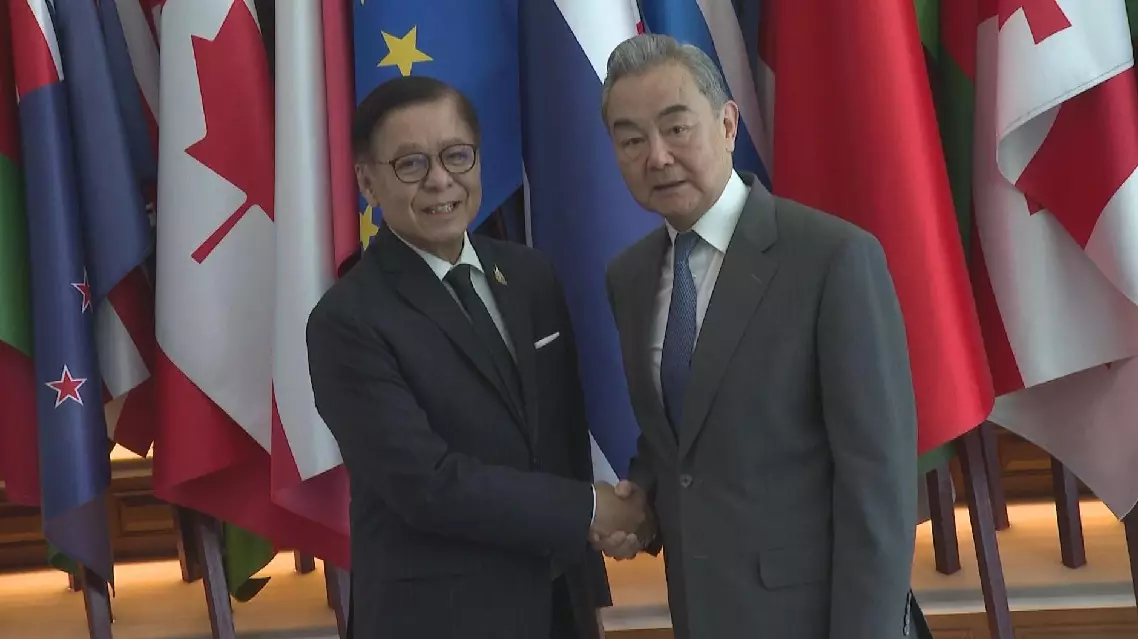
Chinese, Thai FMs hold 3rd consultation mechanism meeting