The construction of the Yebatan Hydropower Station, an important project for optimizing China's energy structure, is in full swing as the first generator stator was successfully installed on Wednesday.
The Yebatan Hydropower Station is located at the junction of Baiyu County in southwest China's Sichuan Province and Konjo County in neighboring Xizang Autonomous Region. With a total installed capacity of 2,240 MW, it will be the largest hydropower station on the upper reaches of the Jinsha River upon completion of its construction.
The 15.6-meter diameter stator, a core component of the hydropower generator, was lowered into the designated area on Wednesday, paving the way for the assembly of the first generating unit.
After completing following installation work such as bolt tightening, testing, and calibration, installation of the rotor and other turbine components will be commenced.
The project consists of a dam structure, a flood discharge structure and a water diversion and power generation system. It is expected to start operation of its first batch of generating units by the end of 2025.
"The Yebatan Hydropower Station, with the approval of its construction in 2016, presents unique challenges due to its high altitude, cold climate, ultra-high arch damming, high ground stress and large burial depth, and features large-span underground workshops. We've applied many advanced technologies and developed a smart management platform to ensure its construction quality. We aim to commission the first generating units by the end of next year," Liu Qiang, executive director of the Yebatan branch of China Huadian Corporation said on Tuesday.
The dam has been built to a height of 171 meters so far and will ultimately stand at 217 meters. It is China's highest-altitude double-curved arch dam hydropower station under construction.
Once operational, the Yebatan Hydropower Station is expected to generate an average of 10.2 billion kilowatt-hours of electricity annually, saving 3.99 million tons of standard coal and reducing carbon dioxide emissions by 7.37 million tons.
The clean energy generated will be transmitted to central China via the world's first large-capacity hydropower-photovoltaic hybrid DC transmission line -- the Jinshang-Hubei ±800 kV UHV DC transmission project.
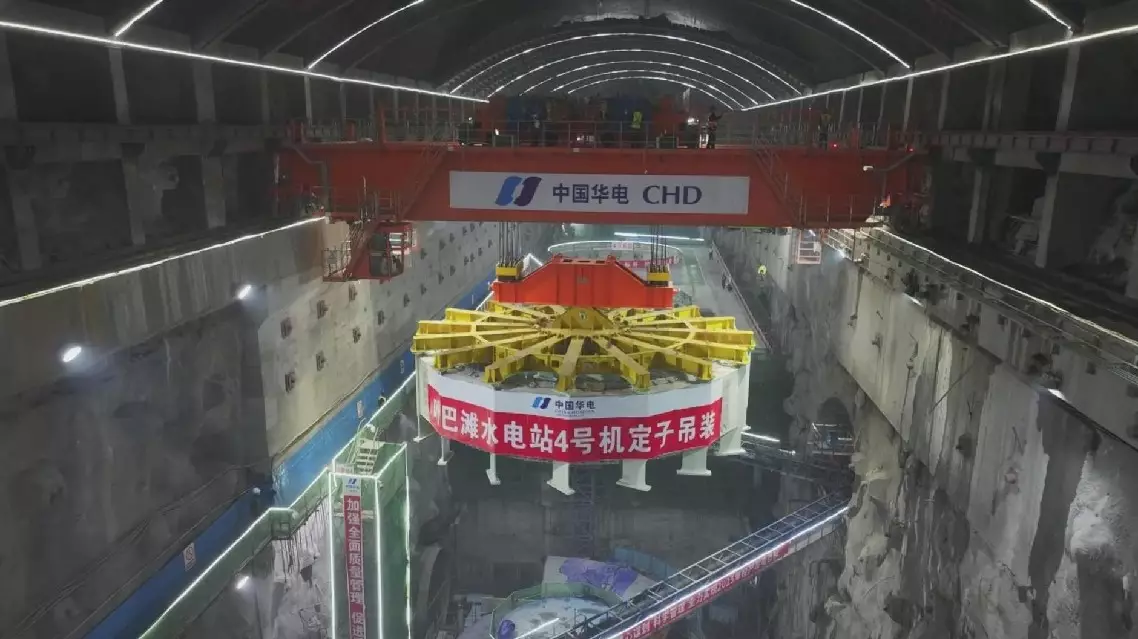
China's mega hydropower station completes installation of first generator stator
International figures have strongly criticized recent statements made by Japanese Prime Minister Sanae Takaichi, calling them a blatant violation of international law and an unacceptable interference in China's internal affairs.
At a Diet meeting on Nov 7, Takaichi claimed that the Chinese mainland's "use of force on Taiwan" could constitute a "survival-threatening situation" for Japan and implied the possibility of armed intervention in the Taiwan Strait.
The remarks, which challenge China's sovereignty, have drawn sharp rebuke from observers across the globe, who warn such actions threaten regional stability.
Ruben Guzzetti, director of the Argentine Institute of Geopolitical Studies, said that "a substantial body of prior documentation establishes that Takaichi's statements constitute undue interference in China's internal affairs and a violation of its sovereignty. This is now clear, and it represents a very significant threat to international peace."
Echoing this sentiment, David Monyae, director of the Center for Africa-China Studies at the University of Johannesburg, South Africa, contextualized the issue within historical memory.
"Given the history, the fascism and the damage that Japan caused, not just in China but the whole of Asia and the world during the Second World War, with all those atrocities, what we want is that Japan starts to recognize and starts stating clearly all the atrocities that it caused and to show a sign that it is reversing and it is not going to do what it did in the past. I think for Japan to bring back an imperialistic colonial mentality, it's something that is unacceptable," he said firmly.
The criticism also came from political figures. Tshilidzi Bethuel Munyai, a member of the National Assembly of South Africa, condemned the Japanese leader's statements as "reckless, absurd, and an act of transgression, blatantly undermining the deployed diplomatic achievements between the two countries."
"It erodes the foundation of political trust between China and Japan. It signals very reckless right-wing forces within Japan and the broader international community. By the way, China has firm resolve to safeguard the national sovereignty and as well as territorial integrity," said Munyai.
Amidst this international backlash, experts assert that China's demand for a retraction of Takaichi's remarks is fully justified. The consensus among critics is clear: such provocations undermine the foundations of international law and bilateral relations, and must be withdrawn to prevent further escalation.
Int'l voices condemn Japanese PM's remarks as unacceptable violation of China's sovereignty