At the Chengdu Research Base of Giant Panda Breeding, tiny panda cubs born in 2024 are exploring the world with curiosity, melting hearts with their playful demeanor and endearing appearance.
Footage captured at the base's Moonlight Delivery House offered a glimpse into the charming moments of these young creatures.
In one scene, a baby panda was taking slow, careful steps, with its round, fluffy figure resembling a sweet dumpling.
In another clip, an energetic bear practiced climbing down a tree, carefully moving its tiny paws in slow motion.
Most of 2024's panda cubs were born between July and September, meaning that these adorable little ones are still less than six months old.
Located in southwest China's Sichuan Province, the Chengdu Research Base of Giant Panda Breeding is a world-renowned institution for the conservation of giant pandas. The base is famous for its efforts in protecting and breeding giant pandas, red pandas, and other endangered wildlife exclusive to China, as well as for its educational outreach programs. It is now a major tourist attraction.

Adorable panda cubs capture hearts with clumsy charm
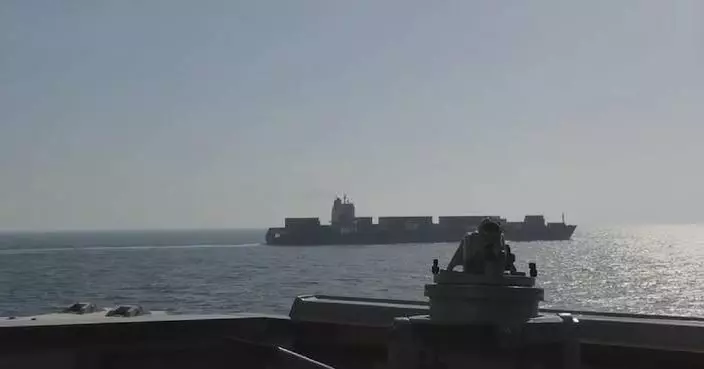
Iran has prepared a new law that will further tighten control over the Strait of Hormuz, including bans on Israeli-linked vessels, the Fars news agency reported on Sunday.
Mohammad Rezaei-Kouchi, chairman of the Iranian Parliament's Civil Engineering Committee, announced on Sunday that the draft law is nearing finalization.
According to details of the draft law, ships and cargoes connected to Israel would be completely prohibited from passing through the strait. Vessels from countries Iran considers hostile would require approval from the country's Supreme National Security Council.
Countries that have previously caused damage to Iran would be barred until they pay compensation.
The proposed rules would also require all vessels to pay transit fees exclusively in Iranian rials. Of the revenue collected, 30 percent would be allocated to strengthening Iran's armed forces, while 70 percent would be used to improve people's livelihood.
The moves come amid tensions between the United States and Iran escalated over the Strait of Hormuz.
Iran's Islamic Revolutionary Guard Corps Navy reimposed a blockade on the strait on Saturday, citing the U.S. failure to lift its naval blockade on Iranian ports in violation of a ceasefire commitment.
Bloomberg reported, based on shipping tracking data, at least 13 oil tankers turned back that day, and no vessels were observed transiting the strait on Sunday.
Iran has tightened control over the Strait of Horumuz since Feb 28, when it barred passage to vessels belonging to or affiliated with Israel and the United States after the two countries' joint strikes on Iranian territory.
The United States later imposed its own blockade on the waterway after peace negotiations with Iran in Pakistan's Islamabad collapsed.

Iran nears approval of new law to tighten control over Strait of Hormuz: official