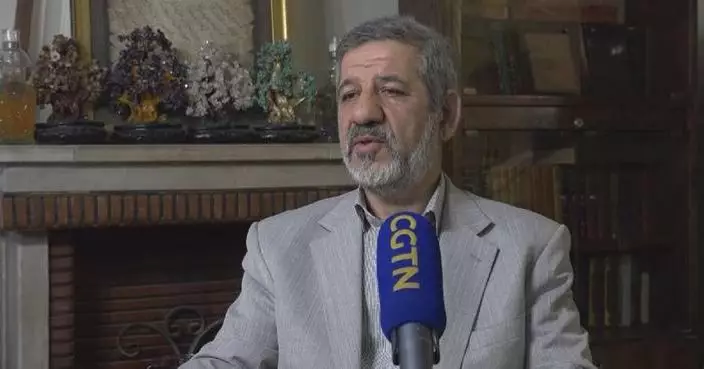
Iran's official news agency IRNA said on Sunday the country has rejected taking part in the second round of the peace talks with the United States, after U.S. President Donald Trump said new negotiations would take place in Pakistan on Monday evening.
"My Representatives are going to Islamabad, Pakistan -- They will be there tomorrow evening, for Negotiations," Trump wrote in his Truth Social post on Sunday.
Trump also said that the U.S. has offered a "fair and reasonable" deal, and if Iran reject the deal, the U.S. will "knock out every single Power Plant, and every single Bridge, in Iran."
Iran's absence from the second round of talks "stems from what it called Washington's excessive demands, unrealistic expectations, constant shifts in stance, repeated contradictions, and the ongoing naval blockade, which it considers a breach of the ceasefire," IRNA said in a post on its English account on social media platform X.
In another report published in Farsi, IRNA said reports released about the second round of peace talks between Tehran and Washington in Islamabad are "not true."
It described the reports released by the United States as part of a "media game and in line with the blame game" to pressure Iran, stressing that the U.S. "excessive, illogical and unrealistic demands, frequent changing of positions, constant contradictory remarks, continuation of the so-called naval blockade" have so far prevented the negotiations' progress.
IRNA added under the present circumstances, there is "no bright prospect" for fruitful negotiations.
On Feb. 28, Israel and the United States launched joint attacks on Tehran and several other Iranian cities, killing Iran's then Supreme Leader Ali Khamenei, along with senior military commanders and civilians. Iran responded by launching waves of missile and drone strikes targeting Israel and U.S. bases and assets in the Middle East, and exercising tight control over the Strait of Hormuz.
A ceasefire was achieved between the warring parties on April 8, which was followed by lengthy talks between the Iranian and U.S. delegations in Pakistan's capital Islamabad on April 11 and 12. After the peace negotiations in Islamabad collapsed, the United States imposed its own blockade on the waterway.
The Iranian and U.S. delegations were reportedly expected to hold another round of peace talks in Pakistan soon.
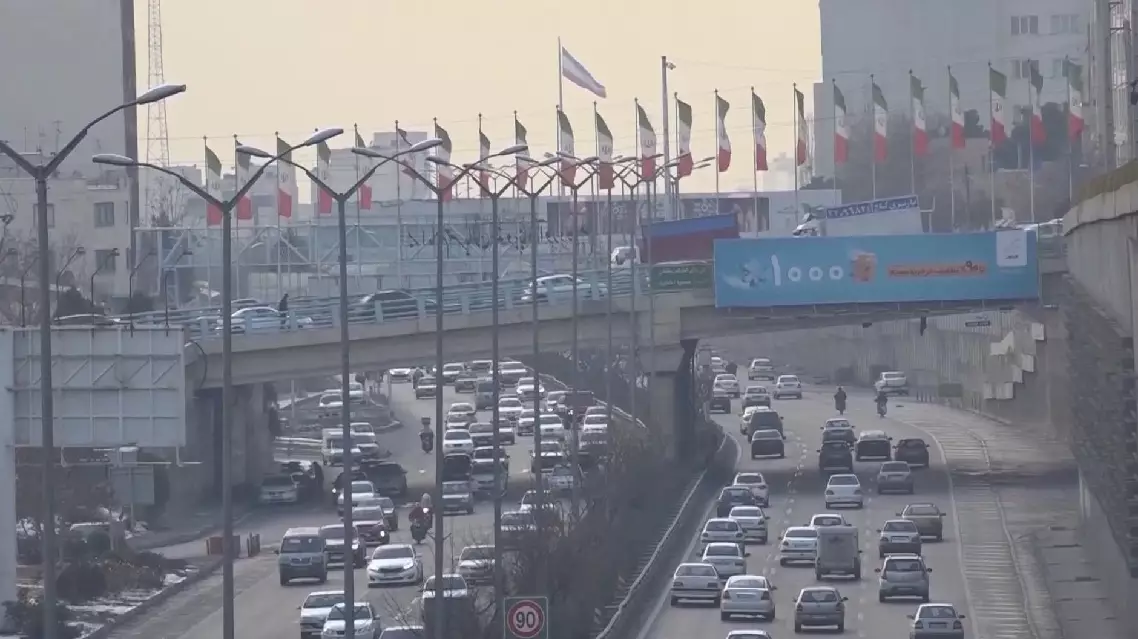
Trump affirms new round of talks in Pakistan while Iran rejects
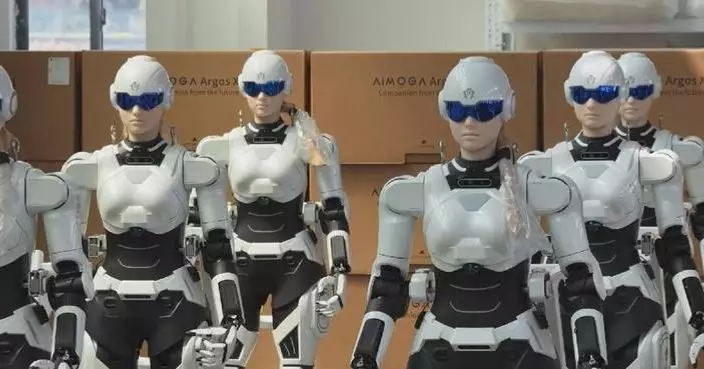
Honor's humanoid robot, Lightning, which swept the 2026 Beijing E-Town Humanoid Robot Half-Marathon on Sunday, is a natural extension of years of accumulation in consumer electronics technology, said its developers.
A leading smart device provider in China, Honor independently developed the model, which dominated the podium at the event as it was used by all three teams whose autonomous navigating robots ran the fastest times.
At the Honor factory in Pingshan District in Shenzhen City, south China's Guangdong Province, where robotics engineers developed Lightning. They said the robot's body design incorporates a simulation system that, through artificial intelligence algorithms, can iterate nearly 30,000 design schemes of varying sizes over three months. Complete and mature systems are also in place for battery, communication, and reliability verification.
"We built a simulation lab from scratch. For the robots, we digitize the entire design and put it into a computer. We have our own material library, which can meet the force, thermal, and chemical property demands for each component, under different environments and speeds. We've accumulated about 1000 kinds of materials. For example, if there's a risk with the robot's neck, we just need to change the material code from 001 to 002. Now, through our simulations, we only need one day to perform parallel calculations on 10 different designs, before creating a mold and verifying it in the lab," said Li Zheng, a senior engineer at Honor.
An autonomous robot capable of completing a half-marathon involves a complete industry chain, with core components including high-precision sensors, LiDAR, motors, operating systems, and control algorithms. The development of robotic marathoners have driven an increasing number of component enterprises to get involved.
Manifold, a tech firm established by newly-graduated PhDs, has developed a 3D spatial memory module, which can model an environment in real time and transform it into images that robots can understand. They said several robots running the half-marathon this year adopted their solution.
"Our device can operate within a one-kilometer tunnel with an error margin of only tens of centimeters. For robots, especially in the absence of GPS, this allows them to accurately determine their location. The underlying technology is a multi-sensor fusion technology that we developed in-house," said Qin Youming, CEO and founder of Manifold.
The Beijing Humanoid Robotics Innovation Center set up a training camp for the marathon event. Many university students came a month ahead of the event to develop and debug their technologies and algorithms based on open-source robot bodies, databases, and training platforms.
"These high-quality databases and highly open-source control algorithms are actually very helpful to us. We no longer need to build the house from the ground up, but can skip the most basic part," said Sun Jingyu, a student from Shandong University.
"Through this racing event, I believe we can make our robots more reliable and stable, while also supporting high-dynamic, high-load movements. This is crucial for robots' future application in both industrial, commercial and domestic scenarios," said Guo Yijie, head of the innovative humanoid department and the Marathon project of Beijing Humanoid Robot Innovation Center.
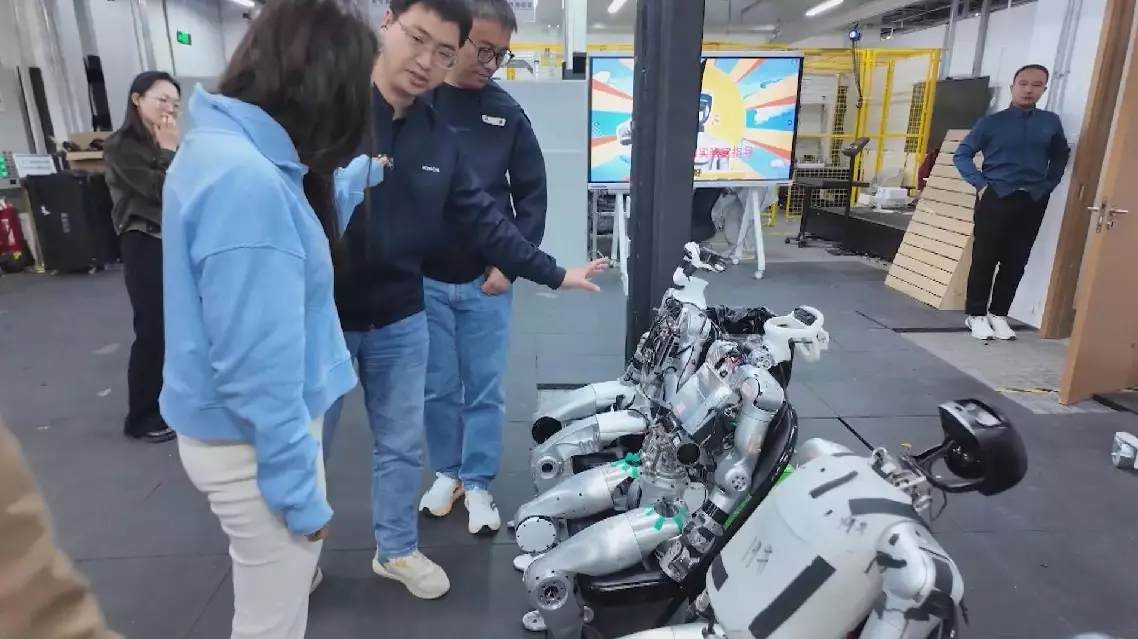
Engineers share development story behind Beijing humanoid half-marathon champion model