Iran's closure of the Strait of Hormuz is a "smart measure", a military analyst and former Islamic Revolutionary Guard Corps commander said on Saturday, adding that the IRGC has deployed AI-operated sea mines in the waterway.
The IRGC Navy said the Strait of Hormuz has been blocked since Saturday evening and will not reopen until the United States lifts its naval blockade of the waterway.
In a statement carried by its official news outlet Sepah News, the IRGC said that the move came after the United States violated its commitments under the two-week ceasefire, which took effect on April 8, and failed to end its naval blockade against Iranian vessels and ports.
The IRGC Navy urged all vessels and their owners to follow official updates on its channel and on VHF Channel 16, the international maritime distress, safety and calling frequency. It added that statements by U.S. President Donald Trump hold no credibility in the strait and the Gulf.
The IRGC warned that no vessel should move from its anchorage in the Gulf or the Gulf of Oman, and any approach to the strait would be deemed "cooperation with the enemy" and targeted accordingly.
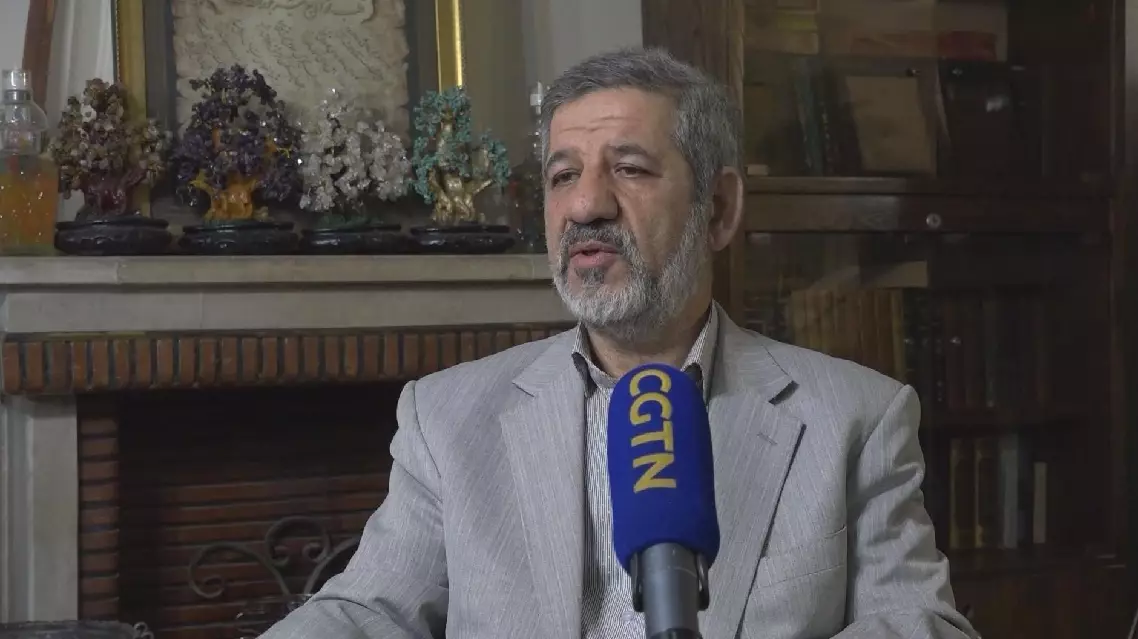
"Regarding the positions of the Islamic Republic of Iran, statements must be made with the approval of the Supreme Leader or through the Supreme National Security Council, which also operates under his approval. Concerning matters related to war, these fall under the supreme Defense Council, which likewise requires the Leader's authorization. With regard to negotiations, Dr. Ghalibaf, who represents both the system and the people, makes decisions, and so far, the Leader has stated that the Hormuz Strait should remain closed. This closure is considered a smart measure. It is open to friends and closed to our enemies. A new legal regime has also been defined for it. Those who purchase oil from us pay duties, and those who do not also have to pay duties," said Hossein Kanani Moghaddam, a military analyst and former IRGC commander.
Iran's Parliament Speaker Mohammad Bagher Ghalibaf led the Iranian delegation in the first round of talks in Islamabad with Washington.
Iran had tightened control over the strait since Feb. 28, when it barred passage to vessels belonging to or affiliated with Israel and the United States after the two countries' joint strikes on Iranian territory. The United States later imposed its own blockade on the waterway after peace negotiations with Iran in Islamabad, Pakistan collapsed.
Trump said Friday the U.S. naval blockade would "remain in full force," noting that the United States would not lift it until the country makes a deal with Iran. He then said Saturday that Iran cannot "blackmail" the United States with the strait.
Kanani Moghaddam said the Strait remains a strategically sensitive zone with established defensive capabilities.
"What I know is that the IRGC has already placed mines under the sea, which are remotely controlled and operate using artificial intelligence, and they can detonate them whenever they want," the former IRGC commander said.
Iran's Supreme Leader Mojtaba Khamenei said on Saturday the country's navy is ready to inflict "new bitter defeats" on the United States and Israel, according to the official news agency IRNA.
"From a military standpoint, the U.S. force posture is oriented toward an offensive operation, including amphibious and ground attacks targeting our infrastructure, islands, and ports. For this purpose, it is mobilizing all its assets and forces," said Kanani Moghaddam.
Closure of Hormuz Strait is "smart measure": former IRGC commander