Chinese robotic developers unveiled the country's first training dataset for embodied intelligent robots in recent days, advancing the robots' abilities to learn from various environments and perform complex tasks.
The training dataset was jointly released by the National-Local Co-built Humanoid Robot Innovation Center and the School of Computer Science at Peking University.
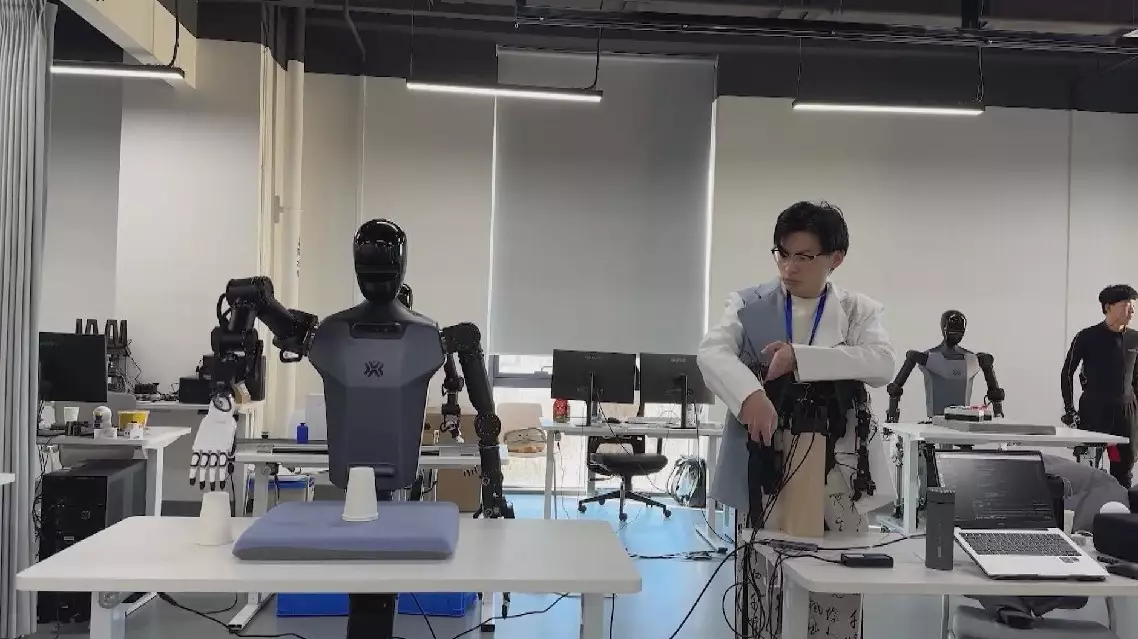
At Beijing's innovation center, robotic engineers use a hands-on approach to train embodied AI robots, employing remote control devices and motion-capture suits to teach them human-like movements and actions through interactive sessions.
The related data is then collected in real-time and used for further improvement and research.
Additionally, the center has built simulated environments that mimic real-world settings, such as retail stores, factories, and homes, to provide the robots with realistic training experiences.
The dataset contains data from 279 different task scenarios, involving different types of robots, like single-arm, two-arm, and humanoid robots. The dataset also records various robotic skills that can be applied widely.
It is the first universal dataset for embodied intelligent robots in China, and has been validated through model testing.
"The innovation center keeps collecting data on complex, long-term tasks. So far, we have hundreds of thousands of high-quality data records, mostly from real robot testing, along with some data from simulations and remote operations. In the future, the center plans to gradually release the dataset, covering more robots and the tasks they perform," said Wei Jiaxing, a staff member at the innovation center.
The quality of the dataset and its scale of application are key to training smarter robots, according to experts. Along with the dataset, evaluation standards have also been released, providing clearer guidelines on the requirements and quality of the robotic data.
China unveils groundbreaking training dataset for embodied AI robots
China has always been a reliable friend to Latin American and Caribbean countries and stands ready to work with regional countries, including Brazil, to further deepen and expand overall China-Latin America cooperation, Chinese Foreign Minister Wang Yi said on Monday.
Wang, also a member of the Political Bureau of the Communist Party of China Central Committee, made the remarks during the fifth China-Brazil Foreign Ministerial-Level Comprehensive Strategic Dialogue with Brazilian Foreign Minister Mauro Vieira in Beijing.
Wang said that in recent years, under the strategic guidance of the two heads of state, China-Brazil relations have become increasingly global, strategic and far-reaching in influence.
"Practical cooperation across all fields has been steadily upgraded, and the two peoples have never been closer," he added.
Wang said the two sides should fully implement the important consensus reached by the two heads of state, continue to advance the building of a China-Brazil community with a shared future, jointly counter various external challenges, and build greater synergy for each other's modernization drives and the unity and self-improvement of Global South countries.
Noting that China appreciates the Brazilian government's long-standing commitment to the one-China principle, Wang said China supports Brazil in safeguarding its national sovereignty, upholding independence and autonomy, and achieving greater development.
The two sides should advance exchanges and cooperation in culture, education, tourism, sports, sub-national areas, youth, media and other fields, Wang said, adding that it is important to strengthen communication and coordination under multilateral mechanisms including the United Nations and BRICS, earnestly implement the four major global initiatives, and promote the development of a more just and equitable global governance system.
Vieira stated that Brazil will always adhere to the one-China principle. He said Brazil looks forward to consolidating strategic mutual trust with China, deepening practical cooperation, cementing public support for bilateral ties, and achieving common prosperity.
Noting that both Brazil and China are important forces championing multilateralism and free trade, Vieira said Brazil is ready to work with China to enhance multilateral coordination, jointly advance the reform of the global governance system, uphold the authority of the United Nations, and promote international fairness and justice.
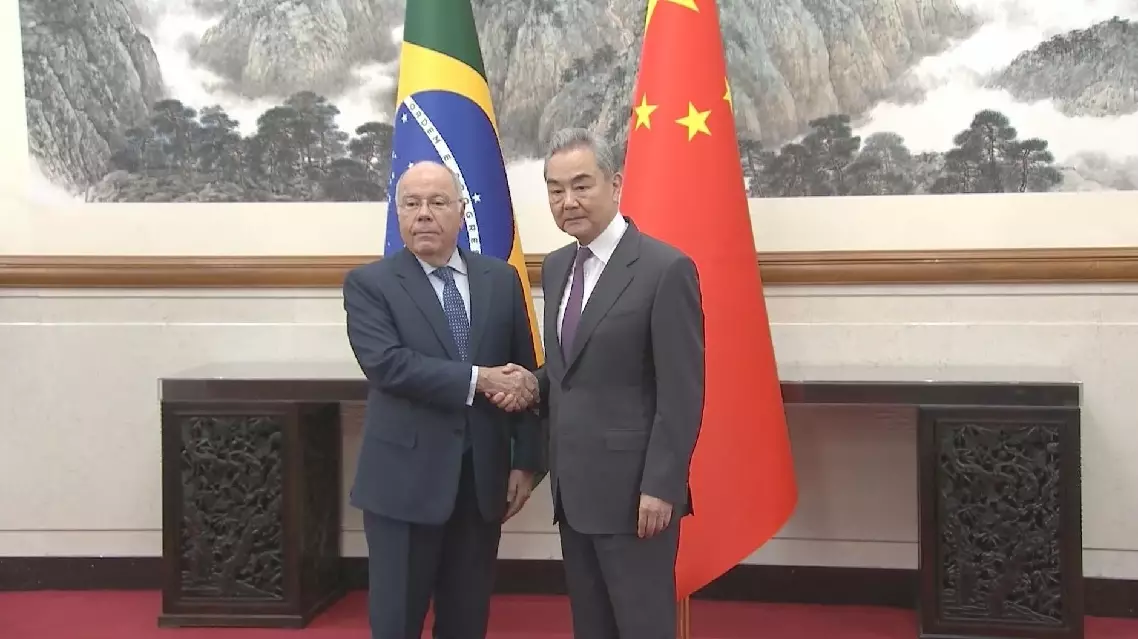
China ready to work with Brazil to further expand overall China-Latin America cooperation: Chinese FM
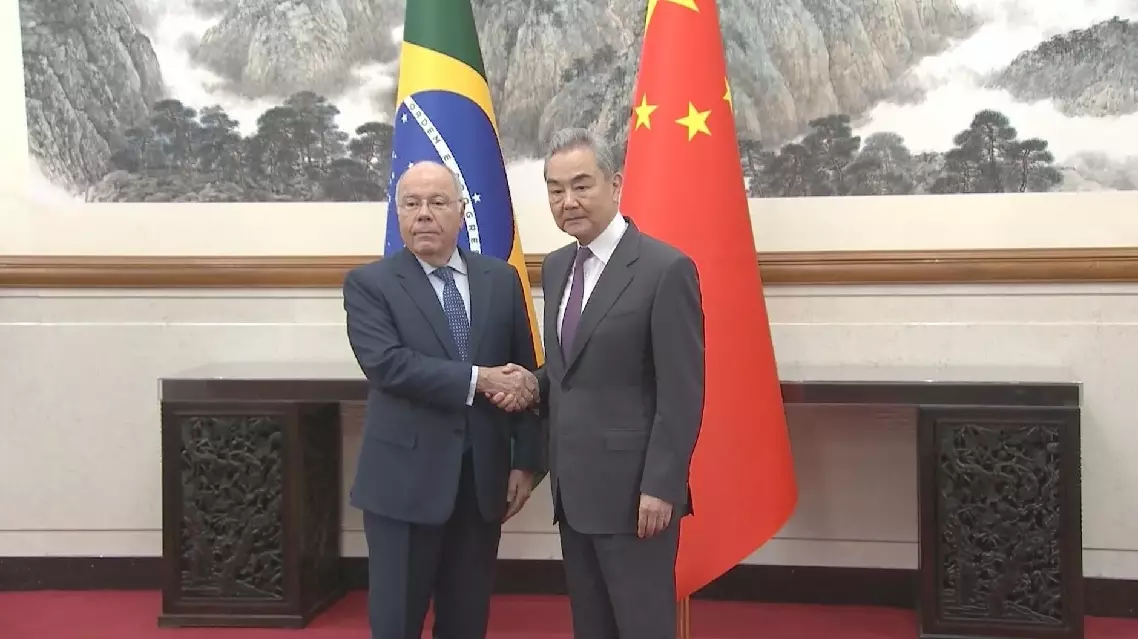
China ready to work with Brazil to further expand overall China-Latin America cooperation: Chinese FM