As the 2025 Spring Festival approaches, Chinese consumers are flocking to markets to purchase aquatic products and meat in preparation for the festive feasts, driving up sales ahead of a holiday that is deeply rooted in Chinese culture and tradition.
Located in eastern China's Fujian Province, the Fujian Strait Aquatic Products Trading Center in Fuzhou, the largest spot market for aquatic products in Southeast Asia, is witnessing a surge in trading volumes starting on New Year's Day, with trading activity expected to reach its peak ahead of the festival.
Covering an area of over 300,000 square meters, the center primarily serves as a wholesale market, with its sales network spanning across the entire country.
According to the market's manager, before Jan 1, approximately 3,000 trucks delivered products daily. In the past two days, the number has risen to 3,500 trucks, and it is expected to reach 7,000 trucks in the days leading up to the festival.
In Jinhua City in eastern China's Zhejiang Province, the beef and mutton market has also entered its peak season, with a significant rise in sales of both products at wholesale markets and fresh supermarkets.
"I bought a lamb chop to make mutton hot pot, which is good for health during this cold winter," said a customer.
The Spring Festival, or the Chinese Lunar New Year, falls on Jan 29 this year and the Spring Festival holiday will last until Feb 4. It is China's most important festival and an occasion for family reunion.
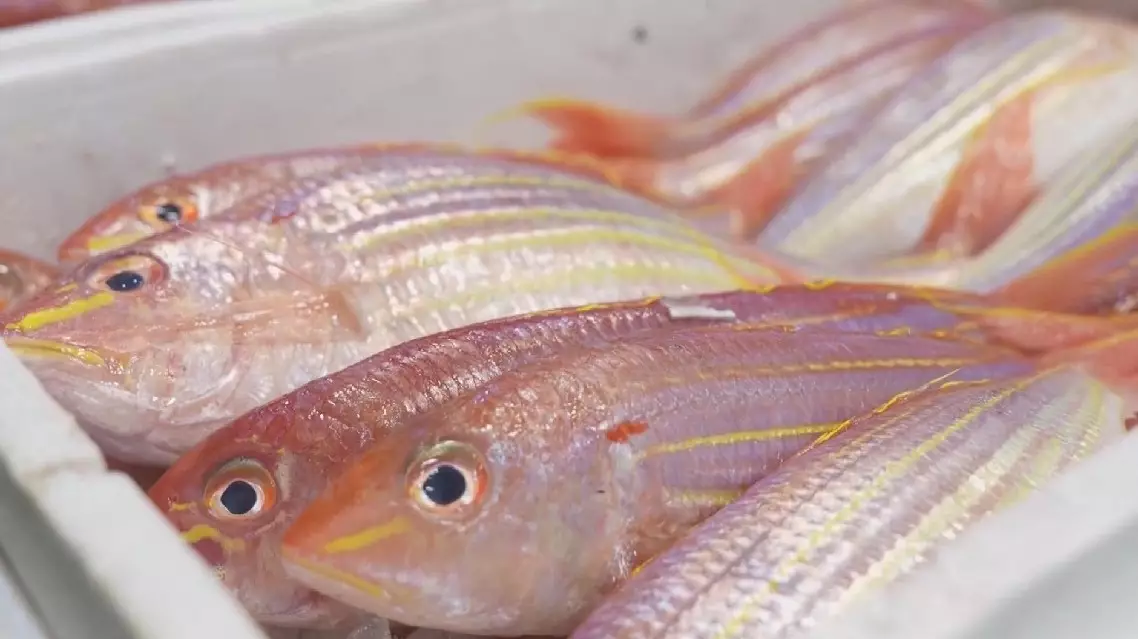
Sales of aquatic products, meat surge ahead of Spring Festival
Israel marked the somber third anniversary of the Oct. 7 Hamas attack that triggered the current round of conflict in Gaza, with national memorial events laying bare deep societal rifts across the country.
The divisions were evident in the anniversary commemorations, as many families of hostages and their supporters chose to skip government-organized ceremonies, arguing that the war had been prolonged for political gains.
"My family who lives in Israel would never go near a government ceremony, which is sad that even in grief we are so divided; the country is still so divided," said Julia, a Canadian visitor to Israel.
As government ministers took the stage in Jerusalem, the families chose to be elsewhere, including at "The Space Left Behind," an exhibition at the Peres Center in Tel Aviv showcasing personal belongings of those killed in the Oct. 7 attack and the war that followed.
"We are giving as much as we can to the families. I feel like the politics is coming between [us and] that exhibition, just because this is all for life," said Emek Keidar Juma'a, curator of "The Space Left Behind" exhibition.
"I have the feeling that I had when I went to Hostages Square. The support of the people in Israel, it's so exciting, and also here. And I see that people are reading and seeing Tal's item, and it's very exciting because they don't have to come. They choose to come in support," said Ela Haimi, a Gaza border resident, who lost her husband Tal in the October 7 attack.
The Hamas-led attack on southern Israel on Oct. 7, 2023, killed about 1,200 people and triggered a massive Israeli military campaign across Gaza that has killed, according to Gaza-based health authorities, more than 74,200 people. It subsequently expanded into fighting across the region.
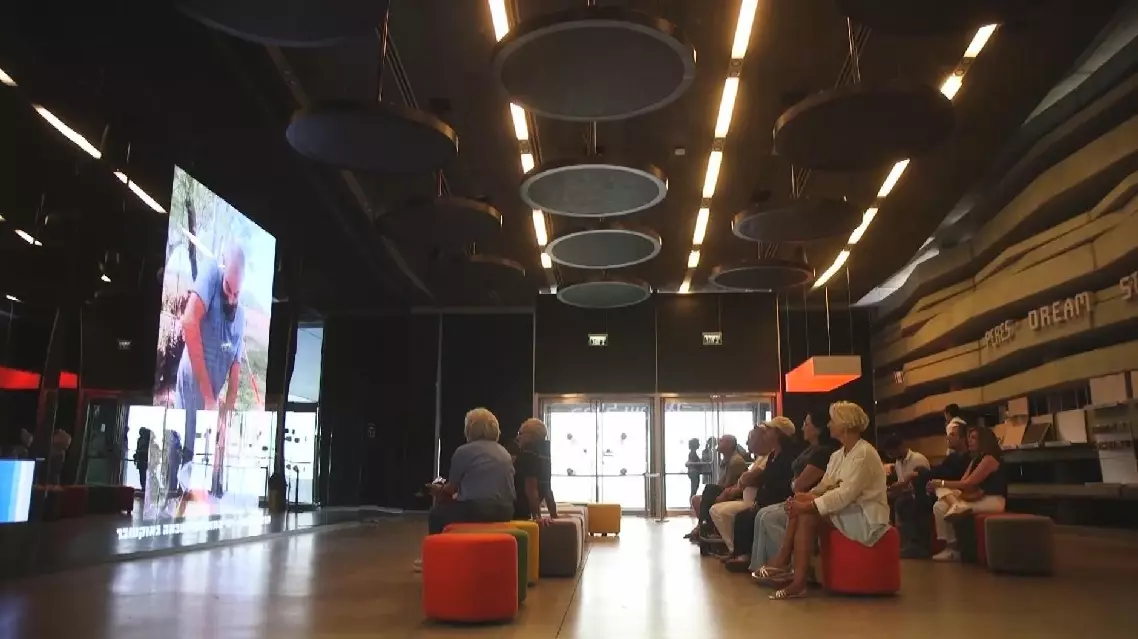
Israel marks third anniversary of Oct. 7 attack amid deep societal divisions