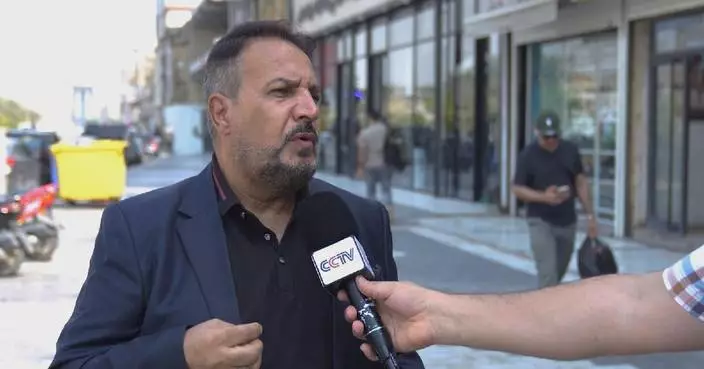
A German lawmaker has called for restart of the Nord Stream natural gas pipeline, as the halt of gas transit caused soaring energy prices in the European Union (EU) states.
The halt in Russian gas transit through Ukraine has heightened fears over supply shortages and soaring energy costs in Europe.
Both Ukraine and Russia announced the stoppage of Russian gas supplies through Ukraine's territory to Europe on Wednesday, pushing some EU countries to resort to costlier energy alternatives.
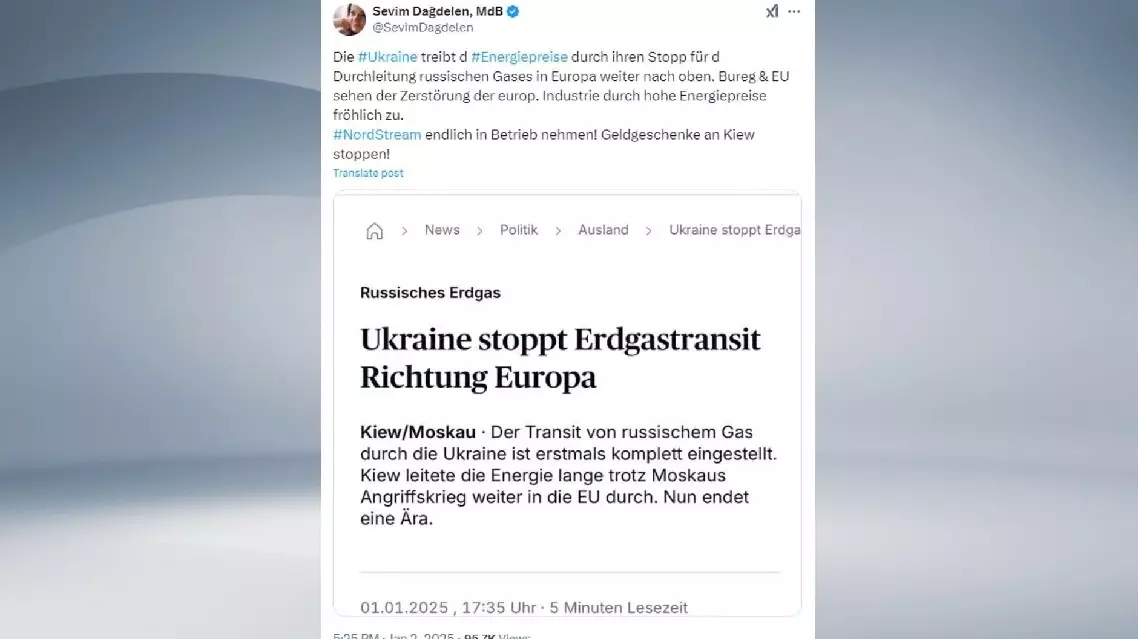
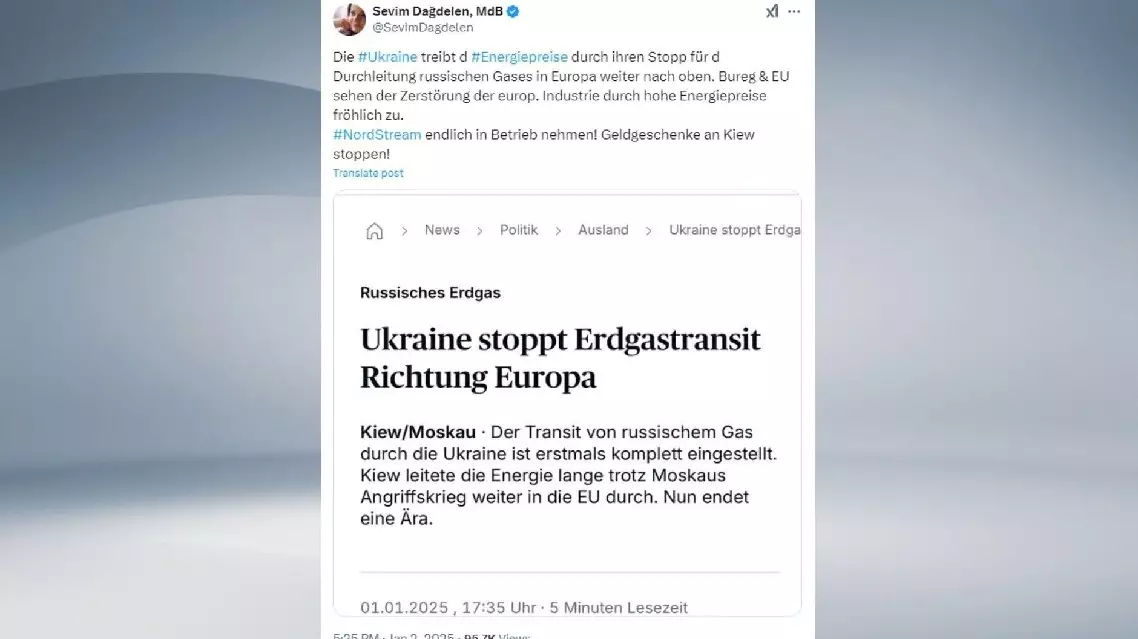
Sevim Dagdelen, left-wing Member of German Bundestag, wrote on her social media platform on Thursday that the halt of the transit of Russian gas in Europe further drives the energy price up, complaining that "the German government and the EU are happily watching the destruction of European industry due to high energy prices."
Dagdelen proposed that Germany should take immediate action to repair and restart the Nord Stream pipeline to alleviate the problem of natural gas shortages.
Dagdelen is not the first German lawmaker to call for the restart of the Nord Stream pipeline. Last September, Tino Chrupalla, co-chairman of the right-wing populist party Alternative for Germany, said that this submarine pipeline is the lifeline of German industry and that the Nord Stream pipeline must be repaired, restarted and protected.
On New Year's Day, European natural gas futures prices hit their highest level since October 2023 after Russia's natural gas supplies to Europe via Ukraine were stopped.
In addition, the supply cut has begun to affect many European countries, including Slovakia and its neighbor Poland.
Slovak Prime Minister Robert Fico on Wednesday said that the halt will have "severe consequences for all of us in the European Union (EU), but will not harm Russia."
Fico said that Slovakia stands to lose hundreds of millions of euros in gas transit fees, while its citizens will face higher gas and electricity bills. He criticized major EU nations for prioritizing geopolitical goals at the expense of smaller countries' interests and needs.
On the same day, Slovakia's gas importer, SPP, announced that it has contingency plans in place to ensure gas supplies through alternative channels, such as utilizing pipelines from Germany and Hungary. However, this will incur additional transit fees.
At present, Slovakia is considering taking retaliatory measures against Ukraine. The ruling coalition in Slovakia has reached a preliminary agreement to stop the supply of electricity to Ukraine and significantly reduce support for Ukrainian citizens in Slovakia. The government is expected to announce the decision next Tuesday.
Meanwhile, in Slovakia's neighbor Poland, some officials have proposed that if Slovakia cuts off the power supply to Ukraine, Poland is willing to transport electricity from its own power plants to help Ukraine through the difficulties.
In this regard, Lukasz Wojdyga, director of the Center for Strategic Studies of the Warsaw Enterprise Institute, pointed out that Poland's electricity production mainly relies on coal, and the additional emission costs it pays account for 60 percent of the energy price, making Poland one of the countries with the most expensive electricity prices in the European Union. If Poland is determined to help Ukraine fill the electricity gap, transmitting electricity to Ukraine will further increase costs, and ultimately the interests of its own consumers will be harmed, he noted.
German lawmaker calls for restart of Nord Stream pipeline
German lawmaker calls for restart of Nord Stream pipeline
A patriotically-named builder has spent more than a decade at the helm of a key construction project in Beijing, helping transform the former Shougang steelworks into a modern urban landmark which has gained global attention for hosting international trade fairs and even the Winter Olympics.
Zhang Guoqing, a project manager at the Shougang Construction company whose given name literally means "National Day" in Chinese, shared his story as the country celebrates the 77th anniversary of the founding of the People's Republic of China on Thursday.
One of the defining projects of the veteran builder's career has been working on the large-scale renovation of the former industrial site in the west of the Chinese capital.
When Zhang returned to the Shougang steelworks in 2015, the sprawling plant had been silent for more than four years, with its once sizzling furnaces going cold ever since steel production was relocated out of Beijing.
"The site still looked much as it had when the steel plant was running. But the windows were broken, the plaster was peeling, and abandoned equipment was covered in dust. Weeds had grown outside. There was no one around," Zhang recalled.
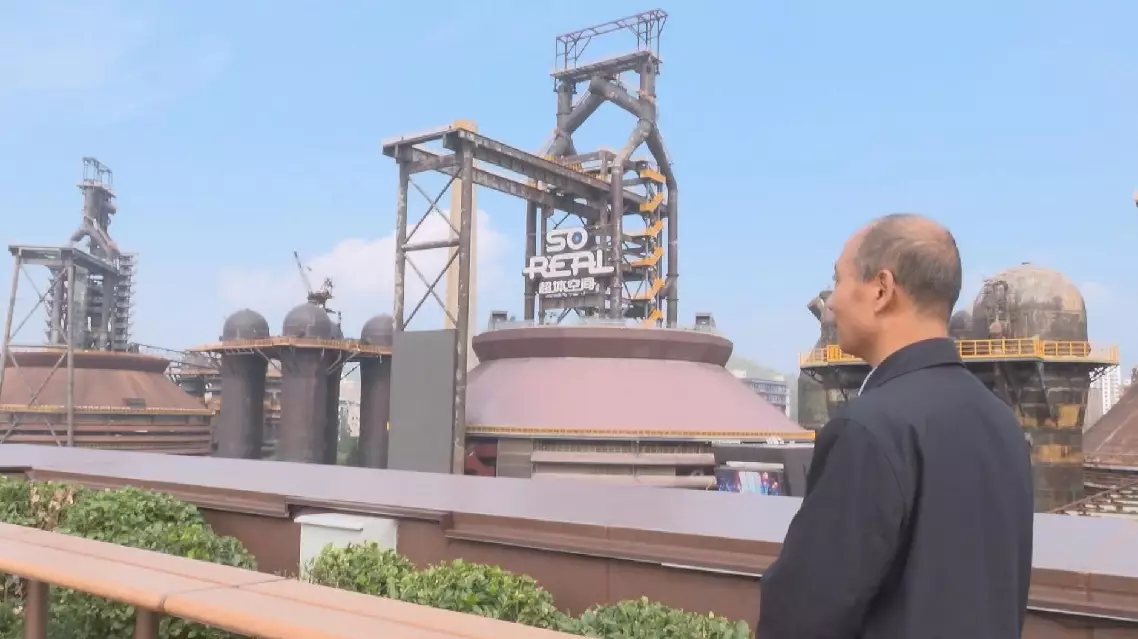
In the years that followed, the former steelworks has been gradually reshaped into the bustling new Shougang Park, retaining its rustic feel but with a modern makeover that has reinvigorated the whole area. Zhang has played a key role in this transformation as the site has become a much-sought after destination for major events, exhibitions, and even providing a unique sporting arena for an Olympic Games.
His projects have ranged from the stunning ski jump built for the 2022 Beijing Winter Olympics to the permanent venue for the China International Fair for Trade in Services (CIFIT), an annual event which gathers 100,000 businesspeople at the Shougang Park.
Back when the work started, there were few precedents for repurposing aging industrial structures on such a large scale. Zhang and his team had to develop new approaches along the way to handle this mammoth undertaking.
"When we renovated Blast Furnace No. 3, some of its components were badly corroded. We treated their surfaces to form a stable protective rust layer. That made them more durable while preserving as much of the furnace's original industrial appearance as possible," he said.
Today, the former steelworks has become a distinctive landmark in the city, with its industrial history preserved and providing a unique backdrop which draws visitors for exhibitions and international events.
"This is Blast Furnace No. 4. After the renovation, it became Hall 1 of the permanent venue for the China International Fair for Trade in Services. Look at this furnace shell. We gave it special treatment using a new coating technique to achieve this color and texture, while keeping it looking much as it did before," said Zhang.
The site holds many dear memories for Zhang, who cherishes every individual project and wants each one to stand the test of time. His commitment and dedication has meant long days on site and years of hard but rewarding work.
The Shougang Park project is seen by many as a metaphor for China's wider development, as it moves from the heavy industry of the past into a more modern and vibrant future.
Zhang is one of the many who has witnessed China's transformation and has left his own mark on its progress through his work.
He acknowledges there has always been a sense of patriotic pride through the name of 'Guoqing' or "National Day" given to him by his parents, which has spurred him on to the success.
"Since I was a child, I've wanted to become an industrial worker and contribute to the country's development. This name [given to me] has always encouraged me to keep moving forward," he said.
Patriotically-named builder helps transform former steelworks site into modern day landmark