Skip to Content Facebook Feature Image

Swiss-founded gallery in Shanghai becomes mainstay for contemporary Chinese art

China

China

China

Swiss-founded gallery in Shanghai becomes mainstay for contemporary Chinese art

2025-01-05 13:52 Last Updated At:14:07

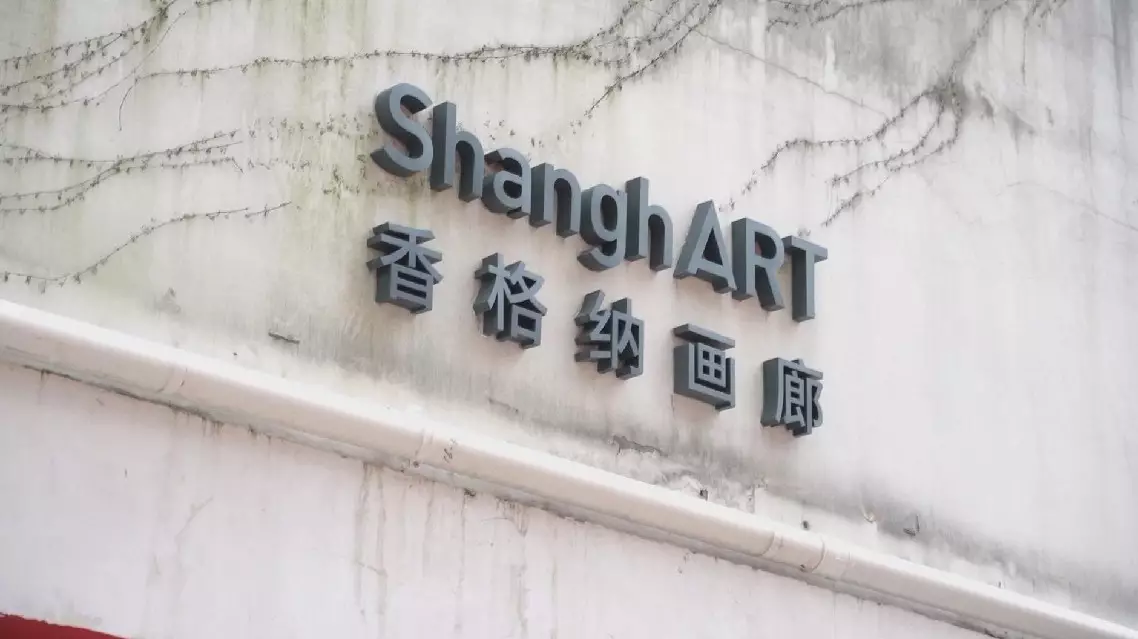
The growing popularity of contemporary art in Shanghai has driven foot traffic to galleries like ShanghART, where Swiss founder Lorenz Helbling has for decades striven to stay at the helm of the city's creative circuit.

Now a sought-after space for local artists to present their latest works, ShanghART opened in 1996 with humble beginnings in the corridor of the Portman Hotel, now the Portman Ritz-Carlton, in central Shanghai.

"The beginning was in a hotel and we were just there and open 12 hours a day, seven days a week, and waited till somebody comes," said Helbling, who first arrived in Shanghai in 1985 to study Chinese history and film at the city's prestigious Fudan University.

In the early 2000s, ShanghART moved to the now-iconic 50 Moganshan Road, also known as M50, a thriving contemporary art district located in the northwest of Shanghai's city center. Once a collection of dilapidated industrial factories, M50 has transformed into a fashionable hub for creative minds, with artists breathing new life into the old warehouses.

"Many artists were quite happy. I had a place here [where] they could show art. They thought that was ideal for the artist here in Shanghai, where each artist tries to find his own voice, his own way to express his ideas. So M50 was kind of ideal for that. Everybody could find a place that fits him. The freedom of having a gallery is just showing works you like. I think it's important and we'll stay around," said the gallerist.

M50 was underscored last year when China's Ministry of Industry and Information Technology (MIIT) recognized the district as a model case for the preservation and transformation of industrial heritage.

According to recent data, foot traffic in M50 surged by 77 percent year-on-year in the first quarter of 2024, with 20 percent of visitors coming from outside China.

As the city's art scene continues to evolve, ShanghART has become a preferred venue for many emerging and established artists. Contemporary Chinese artist Hu Xiangcheng has chosen the gallery for his latest exhibition, citing its deep cultural roots as the ideal backdrop for works that took years to complete.

"I really love this gallery. Back when there were still very few galleries in China, ShanghART was already serving the function of a gallery, helping connect the public with artists. It's a place for displaying and collecting artists' ideas. Contemporary artists have always paid attention to ShanghART because it has always been at the forefront of the art scene," Hu said.
Swiss-founded gallery in Shanghai becomes mainstay for contemporary Chinese art

Swiss-founded gallery in Shanghai becomes mainstay for contemporary Chinese art
NPC Deputies from east China's Jiangsu Province vowed to make greater contributions to the overall development of the nation after Chinese President Xi Jinping joined them in group deliberations on Thursday.

Xi, also general secretary of the Communist Party of China (CPC) Central Committee and chairman of the Central Military Commission, took part in the deliberation with his fellow deputies from Jiangsu during the fourth session of the 14th National People's Congress (NPC), China's national legislature.

During the discussions, deputies from various sectors shared their experiences and spoke on a wide range of topics, including agriculture, technological and industrial innovation, education and talent training, and rural governance.

"I felt extremely excited today to be able to meet face-to-face with the General Secretary and report to him on Huai'an's economic and social development over the past two years. In recent years, we have vigorously cultivated the development of the crayfish industry in line with the requirements for developing local specialty products. In Xuyi County, one-sixth of the population is engaged in this profession. When I reported to the General Secretary a moment ago, I shared some good news with him. The 'Xuyi No. 1' crayfish has achieved growth of more than 18 percent in both yield per mu (about 0.067 hectare) and individual weight. Crayfish farming has provided more employment opportunities for our labor force and promoted income growth for residents," said Shi Zhijun, secretary of the CPC Huai'an Municipal Committee.

"I reported to the General Secretary on the integration of technological innovation and industrial innovation. The General Secretary attached great care for Soochow University. For our emerging industries and future industries, one important focus is developing commercial aerospace. We are now working together with industry partners to address this issue, hoping that Soochow University will achieve coordinated development with Suzhou's social economy in the future, and make greater contributions particularly to developing new quality productive forces," said Zhang Xiaohong, Party Secretary of Soochow University.

"I reported to the General Secretary on the achievements our team has made in breeding wheat resistant to Fusarium head blight. We have successively developed highly resistant varieties including Yangmai 33 and Yangmai 53, covering two directions of high-quality wheat development. Chinese bowls must be filled with Chinese grain. We must continue our efforts to ensure stable growth of national grain production and guarantee food security," said Gao Derong, a researcher at the Institute of Agricultural Sciences for Lixiahe Region under the Jiangsu Academy of Agricultural Sciences.

"Today, I feel extremely honored and excited to report to the General Secretary on the changes and development of our Desheng Village over the years. The General Secretary inquired about Party organization building, industrial development, social development, and environmental governance. For rural areas, we must first develop industries so that people can benefit substantially from this process. Meanwhile, the building of civilized rural customs must be advanced in parallel," said Yang Hengjun, head of Desheng's village committee.

In the deliberation, Xi has called on economic powerhouses like Jiangsu to redouble efforts to gain experience in analyzing new situations and solving new problems.

Deputies say they will implement the General Secretary's instructions and strive to make new achievements. "Today, the General Secretary, on the one hand, spoke positively of Jiangsu's contributions as an economic powerhouse, shouldering heavy responsibilities during the 14th Five-Year Plan period. On the other hand, he put forward new requirements for Jiangsu in terms of developing new quality productive forces in line with local conditions to enhance economic resilience, and in continuously strengthening common prosperity for the people. As an NPC deputy, I will earnestly study and implement the General Secretary's important instructions upon my return, so that Huai'an's modernization process can advance on a more solid foundation," Shi said.

"Universities, especially research universities, as national strategic scientific and technological forces, must do well in basic research and application. As an important base for talent cultivation, we must establish mechanisms for integrated development of education, science and technology, and talent, and cultivate top innovative talents. We will implement the General Secretary's instructions through these efforts," Zhang said.

NPC deputies from Jiangsu vow to make greater contributions in national development

NPC deputies from Jiangsu vow to make greater contributions in national development

Recommended Articles