Last week, the crew aboard the Shenzhou-19 spacecraft conducted a series of in-orbit verifications for China's first space station intelligent flight robot, "Xiao Hang."
During the mission, astronauts utilized Xiao Hang alongside human-robot collaborative interaction software. This allowed them to carry out a variety of experiments related to human-robot spatial relationships, robot behavior characterization, and multimodal interaction technologies. The goal of these experiments is to help enhance mission efficiency by fostering a more effective interaction between astronauts and robotic systems.
In the field of space life sciences and human research, the crew made significant progress on the "biological effects of fruit flies under sub-magnetic environment in space and molecular mechanisms" experiment.
Last week, the crew successfully completed tasks such as collecting fruit flies, emptying their culture containers, and organizing samples. With careful attention, the "fruit fly family" has grown and may become the first species to achieve "three generations under one roof" on China's space station.
The astronauts also performed a series of detailed movement measurements and related experiments using precision motion measurement devices and experimental software.
Tests focused on fine motor adaptation, force control, and object weight perception. The results will assist ground researchers in studying the changes in fine motor control and the adaptive learning mechanisms of astronauts during long-term space missions.
In addition to these experiments, the astronauts used specialized software to test their emotional states and assess their emergency decision-making abilities while in orbit. This data will be crucial for understanding how long-term spaceflight impacts astronauts' emotions and decision-making skills in high-pressure situations.
In the realm of space technology and applications, the crew completed the installation of the fourth batch of microbial sampling module test samples.
Research on space microbial control technology plays a crucial role in understanding and preventing microbial contamination and corrosion issues aboard the space station.
Currently, the findings in this field have been applied to spacecraft design and material selection for various mission models. This includes evaluating the antimicrobial and antifungal properties of spacecraft materials in orbit, as well as verifying the service performance of these materials under space conditions.
In the field of microgravity physical sciences, the crew carried out routine tasks such as replacing experimental samples in fluid physics and high-temperature materials cabinets.
They also cleaned non-container experimental chambers and performed maintenance on axis mechanisms and electrodes.
The astronauts followed their planned maintenance schedule for life-supporting systems and other station equipment. They used specialized noise measurement tools to assess noise levels in different areas of the station, contributing to the ongoing monitoring of the station's acoustic environment. In addition, they carried out cleaning and organizing tasks to ensure a clean and efficient workspace.
After more than two months in orbit, the crew has maintained a regular exercise routine and undergone periodic medical check-ups.
Last week, astronauts completed ultrasound exams of their abdomen and muscles, bone density measurements, as well as electrocardiogram and blood pressure tests. They also conducted maximum isometric strength tests using resistance exercise devices to measure muscle strength during isometric contractions, which is crucial for assessing the functional state of specific muscle groups under fixed postures.
The Shenzhou-19 mission continues to make significant strides in both scientific research and technological advancements, paving the way for the future of human space exploration.
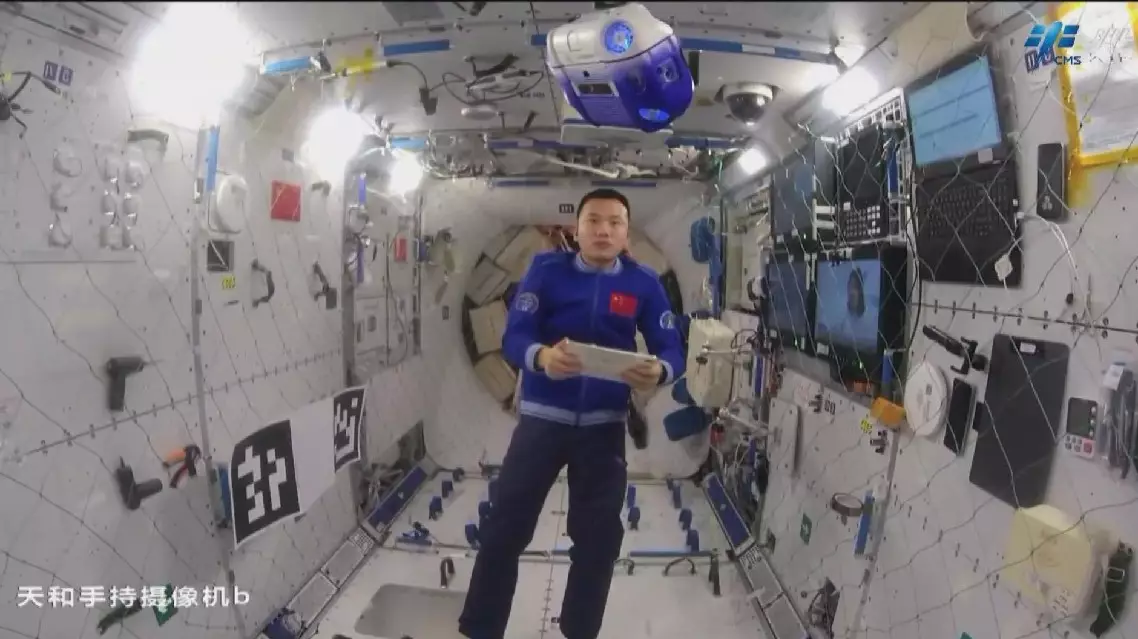
Shenzhou-19 crew carry out in-orbit verification of smart assistant
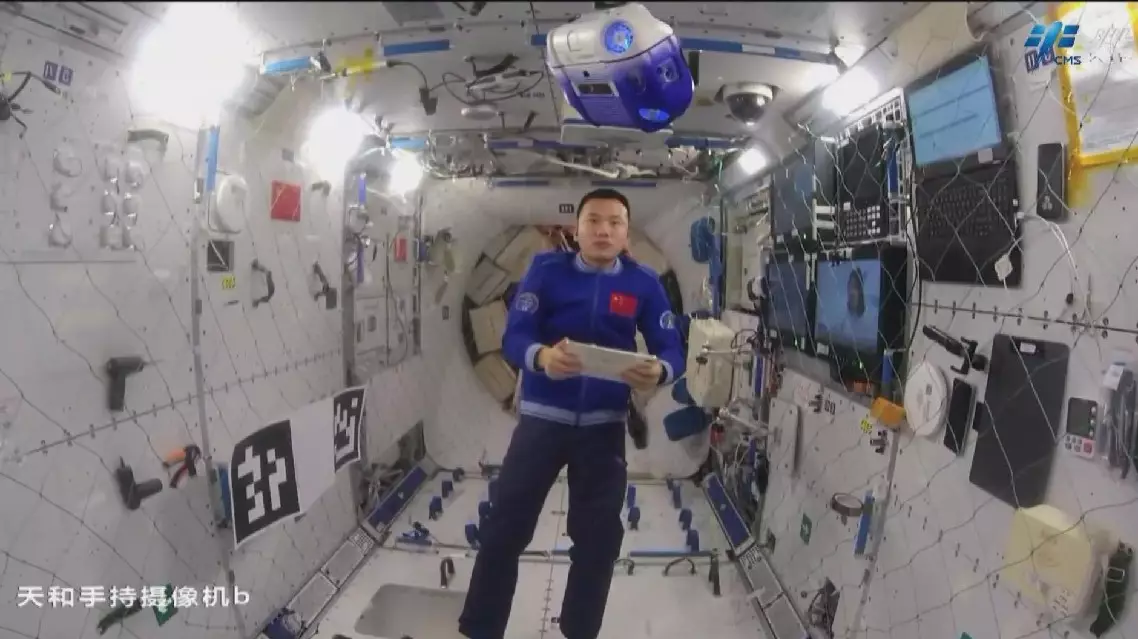
Shenzhou-19 crew carry out in-orbit verification of smart assistant