China launched its first optoelectronic fusion deterministic new computing network infrastructure in Nanjing City of Jiangsu Province in the east on Friday.
The development of the computing network infrastructure was led by the Future Network Innovation Team of Purple Mountain Laboratory. And it has broken through the bottlenecks of optoelectronic signal separation, high cost, high energy consumption, and low efficiency that all bedeviled the traditional network architecture.
"The first breakthrough was in key theories and algorithms, and the second achievement was that the transformation of these advanced theories and algorithms into a real product can serve the real economy," said Tao Gaofeng, vice president of Jiangsu Future Network Group.
The project is the first major national scientific and technological infrastructure in China's communications and information sector and has been included in the national strategic scientific and technological initiatives under the 14th Five-Year Plan period (2021-2025).
It is poised to be applied in fields such as intelligent manufacturing, smart cities, smart energy, and smart governance, offering a robust network ecosystem that enables AI to better serve a wide range of industries.
"We aim to build a network that cheaply, efficiently and securely connects enterprises and data, enabling them to train foundational models. On the other hand, once trained, these foundational models will be used to empower various industries," said Liu Yunjie, an academician of the Chinese Academy of Engineering and leader of the Future Network Innovation Team at Purple Mountain Laboratory.
The first phase of the project has covered nine cities in China, forming a huge pool of computing resources.
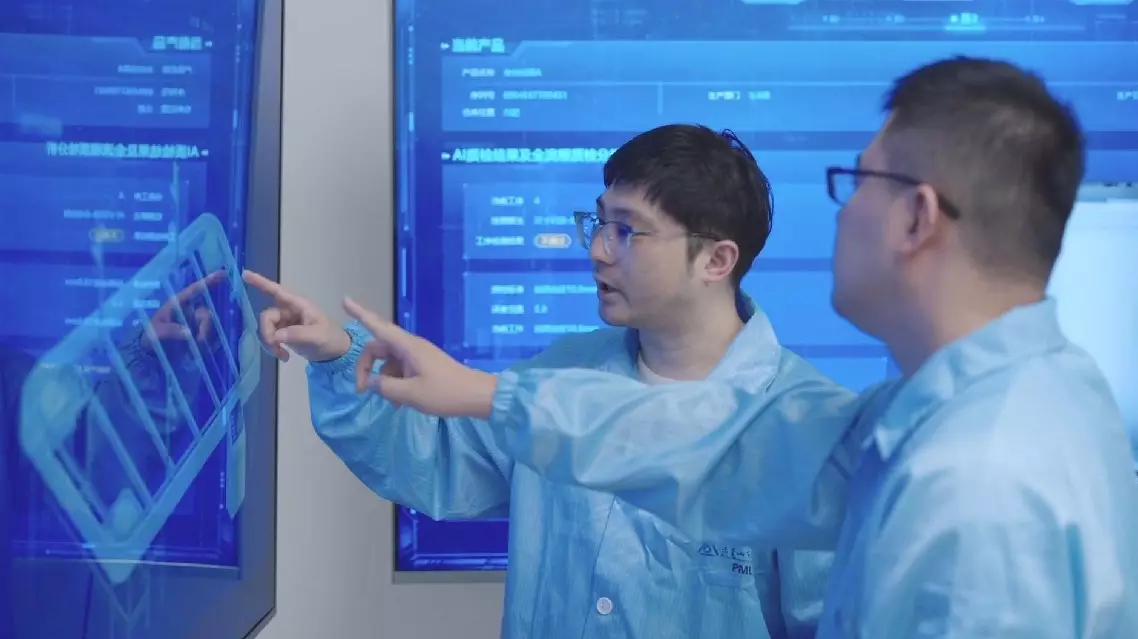
New computing network infrastructure to empower multitude of industries

Attempts to curb China's scientific and technological advancement are futile, a fact that has already been proven, said Kishore Mahbubani, former permanent representative of Singapore to the United Nations, in an interview aired Friday.
In an exclusive interview with China Central Television (CCTV) in Beijing, Mahbubani said he had stated this position in one of his articles published in the United States.
"Actually, I published an article, you know the two, I guess two leading journals in the United States on international relations. One is Foreign Affairs and the other is Foreign Policy. And last year I co-authored an article with two other co-authors, saying that all the efforts to stop China's scientific and technological development will fail. And it has failed always. You know, for example, the Soviet Union tried to prevent the spread of nuclear technology to China, China develops its own. The United States didn't want to share its technology on international space station with China. China develops its own space station. So clearly, efforts to stop China in the area of scientific innovation and technological development have failed. And so it'd be wiser for the West, including United States, to work with China other than to try and stop China seek development," he said.
Regarding China's progress on robots, Mahbubani said China is leading the world in the sector and hopes the country will share its expertise with the rest of the world.
"If there's one country that is preparing for the future well, it is China, because one in six human beings in the world is Chinese. But one in three robots in the world is Chinese, and one in two baby robots being born every day is Chinese. So China is producing far more robots than any other country is. So clearly it's preparing for the world of the future when we will have, for example, labor shortages, as you know, as you develop an aging society. So China is wisely investing in robots. But I hope that China will also share its learning and expertise with other countries. Also because the robots like that can also be helpful even to developing countries cause you can enhance the productivity of their populations, of their factories and so on so forth. So the world should be happy that China is leading the world in manufacturing, producing robots," he said.
Attempts to stop China's sci-tech development doomed to fail: former Singaporean diplomat