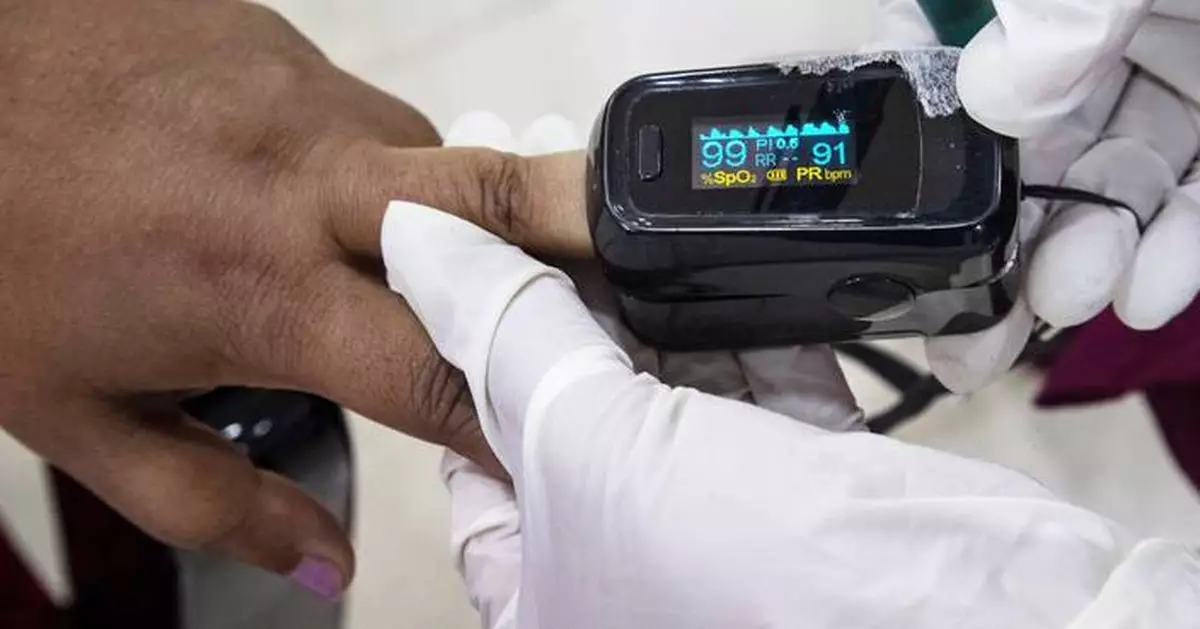
WASHINGTON (AP) — Makers of medical devices that quickly measure oxygen levels in the blood would have to gather extra data to show that their products work for patients of color, under a new federal proposal released Monday.
The Food and Drug Administration's recommendations apply to pulse oximeters, which are clip-on devices used in hospitals and medical clinics to ensure patients are getting enough oxygen. The FDA said it wants companies to conduct larger studies and include more patients from different racial groups.
By snapping a device onto a finger and then sending two wavelengths of light into the skin, the oximeter measures how much of the light is absorbed and estimates how much oxygen is flowing through the blood.
Oximeters were a critical part of emergency care for patients with COVID-19 during the pandemic. But several studies have suggested that darker skin pigmentation can sometimes throw off the accuracy of readings. In 2021, the FDA warned doctors about potential inaccuracies with oximeters after a study found the devices tended to overestimate Black patients’ oxygen levels, which could lead to delays in getting treatment and increased risks of death.
The issue has become a prominent example of the potential racial biases of medical technology, leading to multiple meetings and studies by FDA regulators since 2022.
The FDA’s draft recommendations, which are not binding, would make several changes to how companies are expected to test their devices, including:
— Enrolling at least 150 patients of different skin tones in clinical studies;
— Including at least 25% of patients with darker skin complexion in each study, up from 15% previously;
— Evaluating pigmentation of every study participant using at least two different methods, one based on a researcher's evaluation and another based on scientific, light-based measurement of melanin levels in the skin.
The FDA recommendations apply to only professional oximeters used in hospitals, doctor’s offices and other medical settings. The government doesn't regulate the vast majority of over-the-counter oximeters, most of which are considered “general wellness” devices by the agency.
The guidelines wouldn’t eliminate older devices currently used by doctors. But the FDA makes clear it expects to see new diversity data from manufacturers when requesting changes or updates to older oximeters.
Monday’s announcement is only a draft. The FDA said it will take public comments on its proposal for 60 days before beginning work on a final version.
The Associated Press Health and Science Department receives support from the Howard Hughes Medical Institute’s Science and Educational Media Group. The AP is solely responsible for all content.
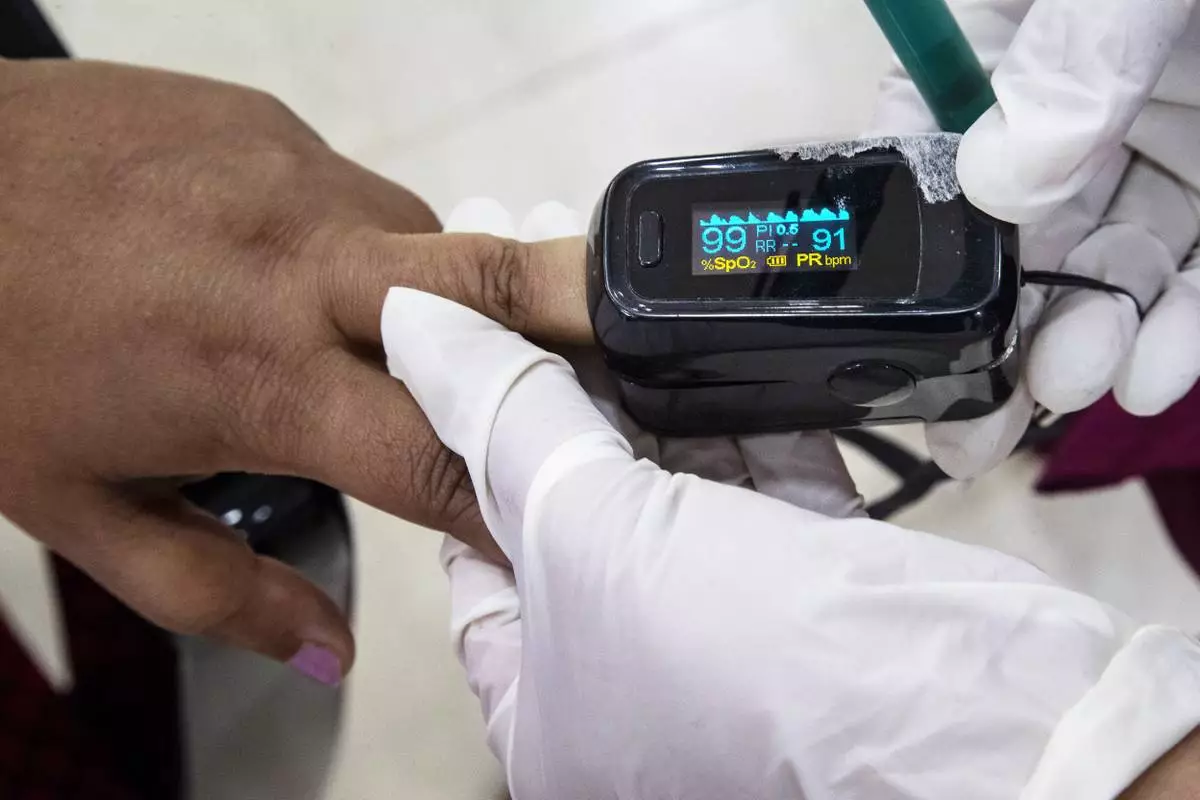
FILE - A health worker uses a pulse oximeter to check the oxygen saturation level of another after administering COVID-19 vaccine at a hospital in Gauhati, India, Jan. 21, 2021. (AP Photo/Anupam Nath, File)
LATAKIA, Syria (AP) — Clashes broke out on Syria’s coast between protesters from the Alawite religious minority and counterdemonstrators on Sunday, two days after a bombing at an Alawite mosque in the city of Homs killed eight people and wounded 18 others during prayers.
Thousands of protesters gathered in the coastal cities of Latakia and Tartous, and elsewhere. Officials have said that preliminary investigations indicate that explosive devices were planted inside the mosque in Homs, but authorities haven't publicly identified a suspect yet in Friday's bombing. Funerals for the dead were held on Saturday.
A little-known group calling itself Saraya Ansar al-Sunna claimed responsibility for the attack in a statement posted on its Telegram channel, in which it indicated that the attack intended to target members of the Alawite sect, an offshoot of Shiite Islam whom hard-line Islamists consider to be apostates.
Sunday’s demonstrations were called for by Ghazal Ghazal, an Alawite sheikh living outside of Syria who heads a group called the Supreme Alawite Islamic Council in Syria and the Diaspora.
An Associated Press photographer in Latakia saw pro-government counterprotesters throw rocks at the Alawite demonstrators, while a group of protesters beat a counterdemonstrator who crossed to their side. Security forces tried to break up the two sides and fired into the air in an attempt to disperse them. Demonstrators were injured in the scuffles, but it wasn't immediately clear how many.
Syria’s state-run television reported that two members of the security forces were wounded in the area of Tartous after someone threw a hand grenade at a police station, and cars belonging to security forces were set on fire in Latakia.
The country has experienced several waves of sectarian clashes since the fall of former President Bashar Assad in a lightning rebel offensive in December 2024 that brought to an end nearly 14 years of civil war. Assad, an Alawite, fled the country to Russia.
In March, an ambush carried out by Assad’s supporters against security forces triggered days of violence that left hundreds of people dead, most of them Alawites. Since then, although the situation has calmed, Alawites have been targeted sporadically in sectarian attacks. They have also complained of discrimination against them in public employment since Assad’s fall and of young Alawite men detained without charges.
During the rein of the Assad dynasty, Alawites were overrepresented in government jobs and in the army and security forces.
Government officials condemned Friday’s attack and promised to hold perpetrators accountable, but haven't yet announced any arrests.
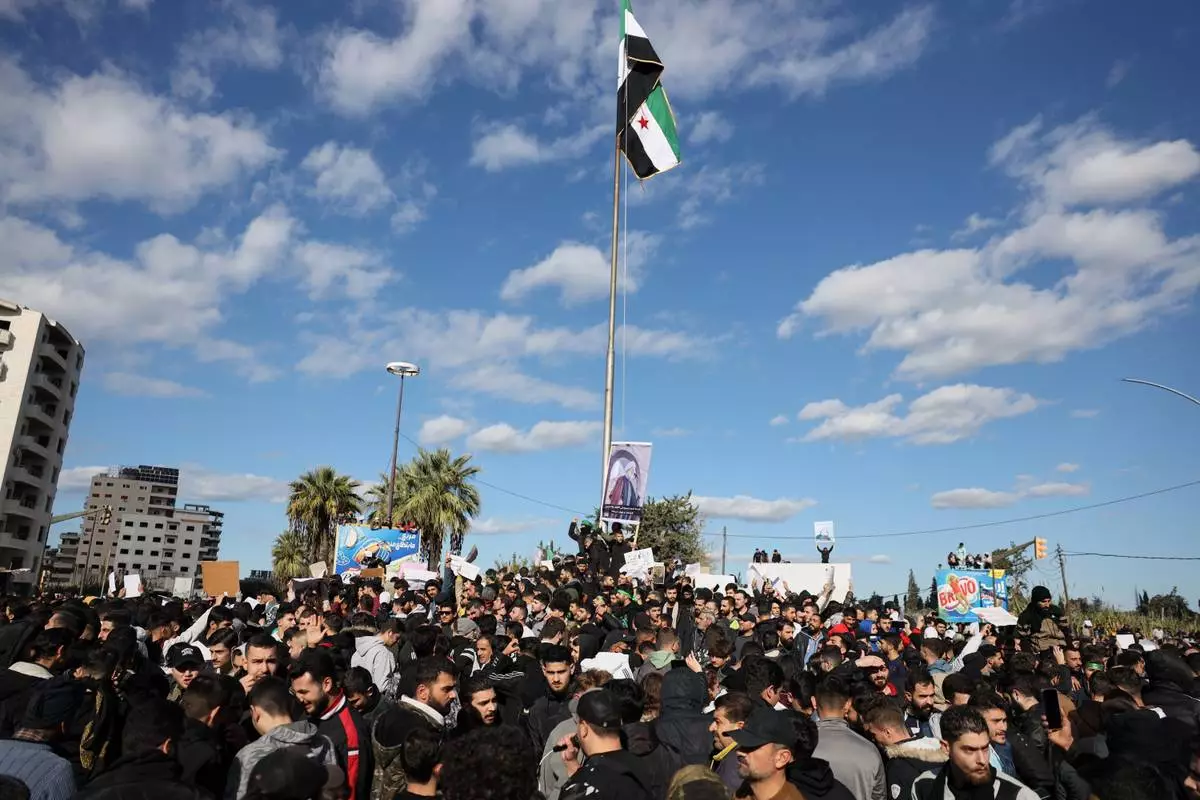
Protesters from the Alawite religious minority demonstrate two days after a bomb in an Alawite mosque in Homs killed eight people and wounded 18 during Friday prayers, in Latakia, Syria's coastal region, Sunday, Dec. 28, 2025. (AP Photo/Omar Albam)
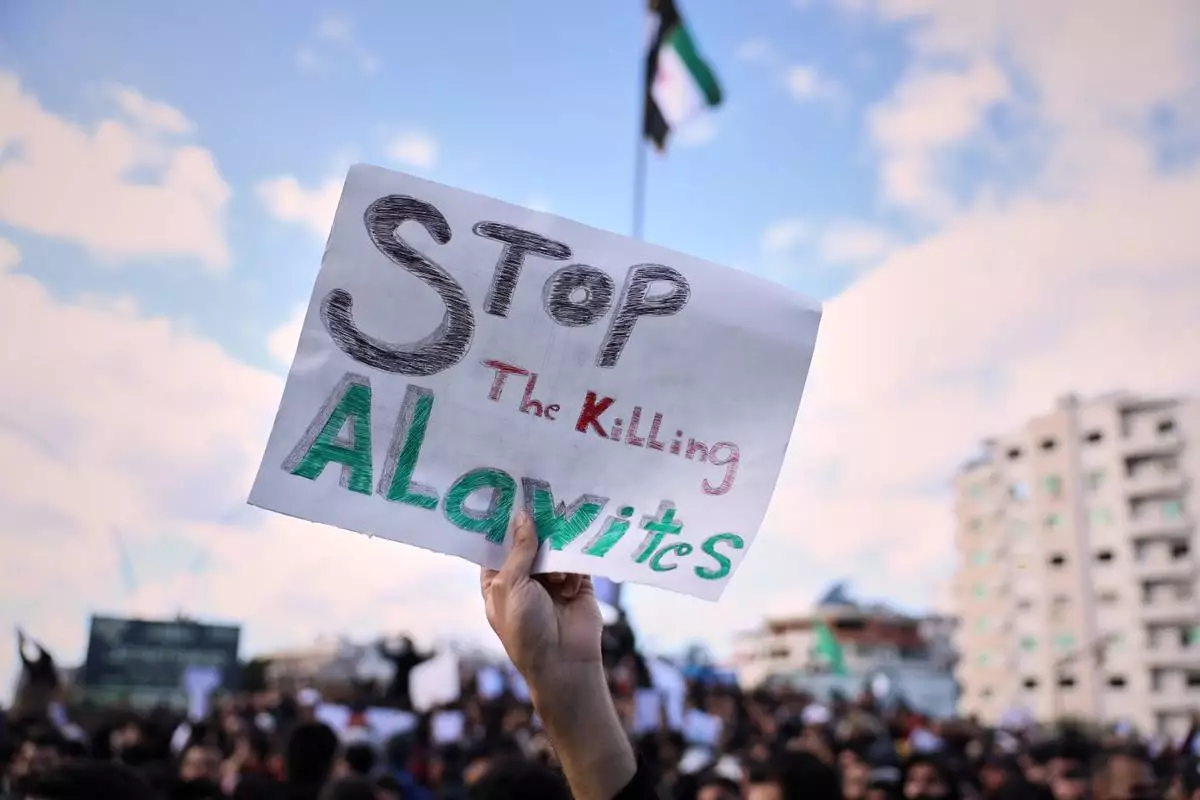
Protesters from the Alawite religious minority demonstrate two days after a bomb in an Alawite mosque in Homs killed eight people and wounded 18 during Friday prayers, in Latakia, Syria's coastal region, Sunday, Dec. 28, 2025. (AP Photo/Omar Albam)

Protesters from the Alawite religious minority demonstrate two days after a bomb in an Alawite mosque in Homs killed eight people and wounded 18 during Friday prayers, in Latakia, Syria's coastal region, Sunday, Dec. 28, 2025. (AP Photo/Omar Albam)

Counter-protesters chant pro-government slogans at Alawite demonstrators, two days after a bomb in an Alawite mosque in Homs killed eight people and wounded 18 during Friday prayers, in Latakia, Syria's coastal region, Sunday, Dec. 28, 2025. (AP Photo/Omar Albam)
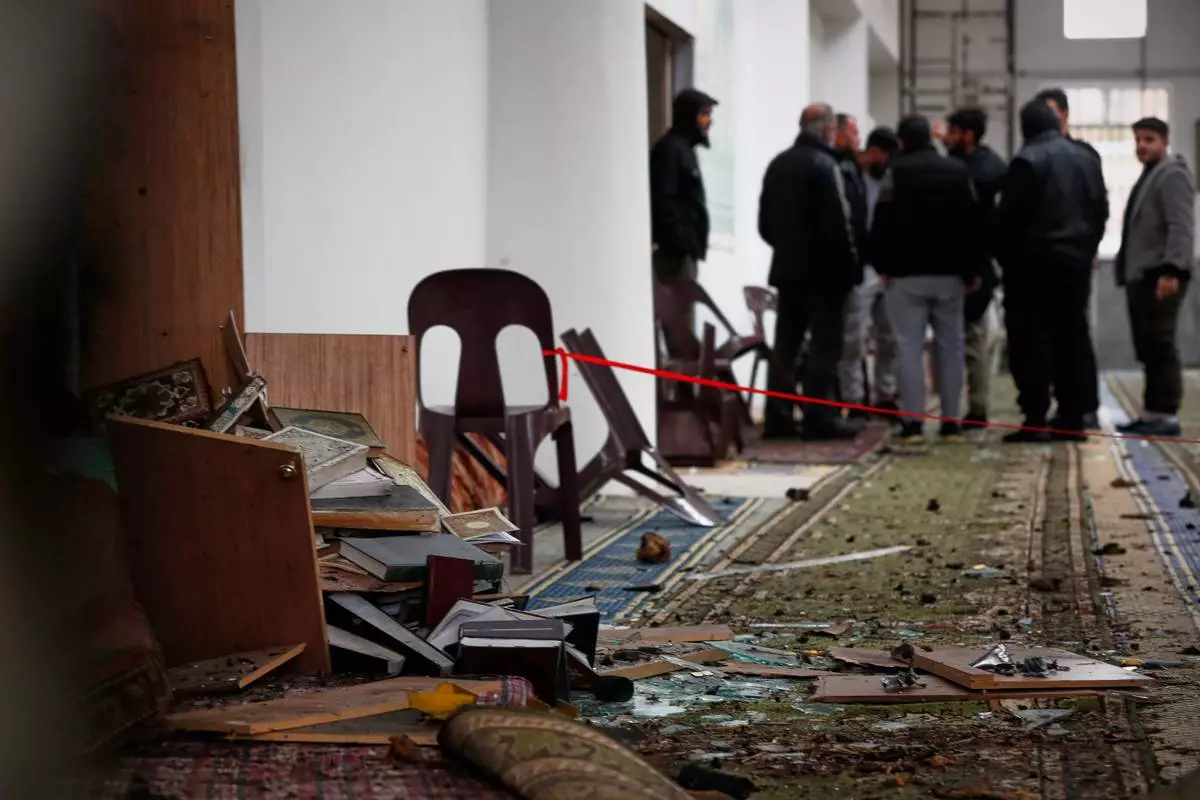
Syrian security officers inspect the site of an attack a day earlier at the Imam Ali bin Abi Talib Mosque in the predominantly Alawite Wadi al-Dhahab neighborhood of Homs, Syria, Saturday, Dec. 27, 2025. (AP Photo/Omar Sanadiki)
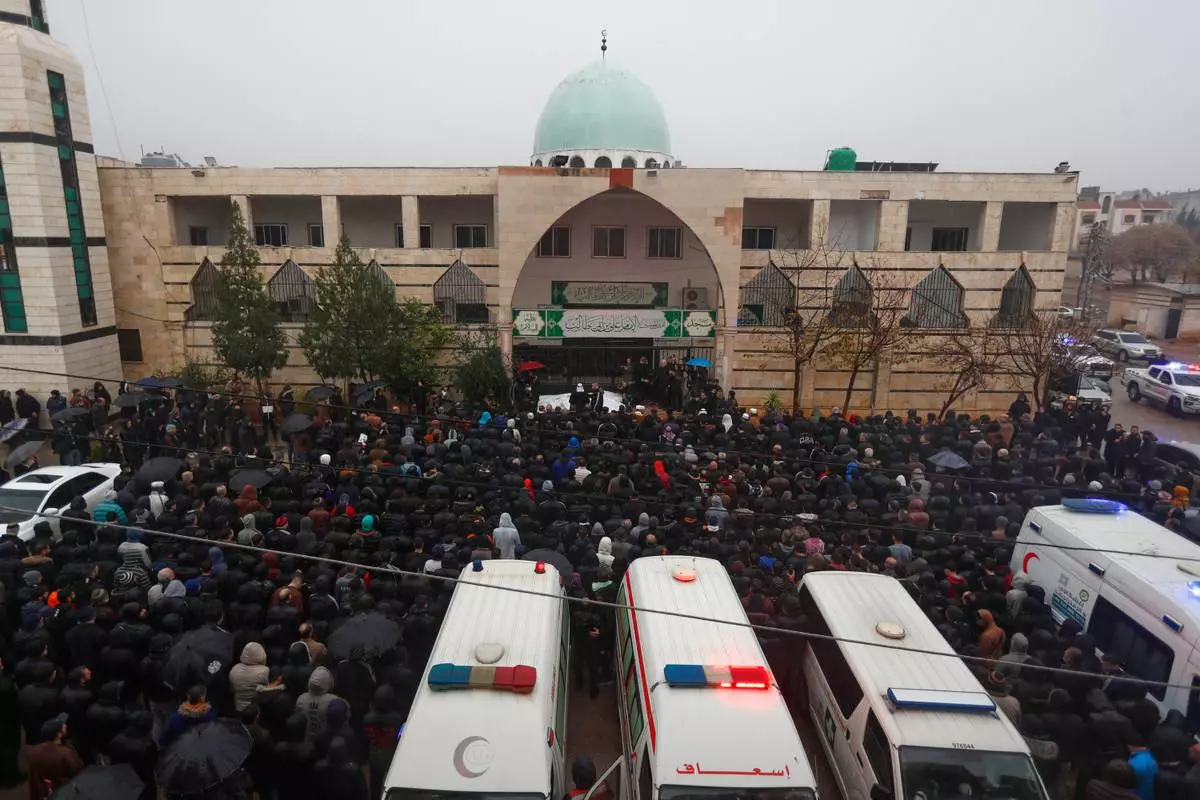
Mourners attend the funeral of victims of an attack a day earlier at the Imam Ali bin Abi Talib Mosque, outside the mosque in the predominantly Alawite Wadi al-Dhahab neighborhood of Homs, Syria, Saturday, Dec. 27, 2025. (AP Photo/Omar Sanadiki)