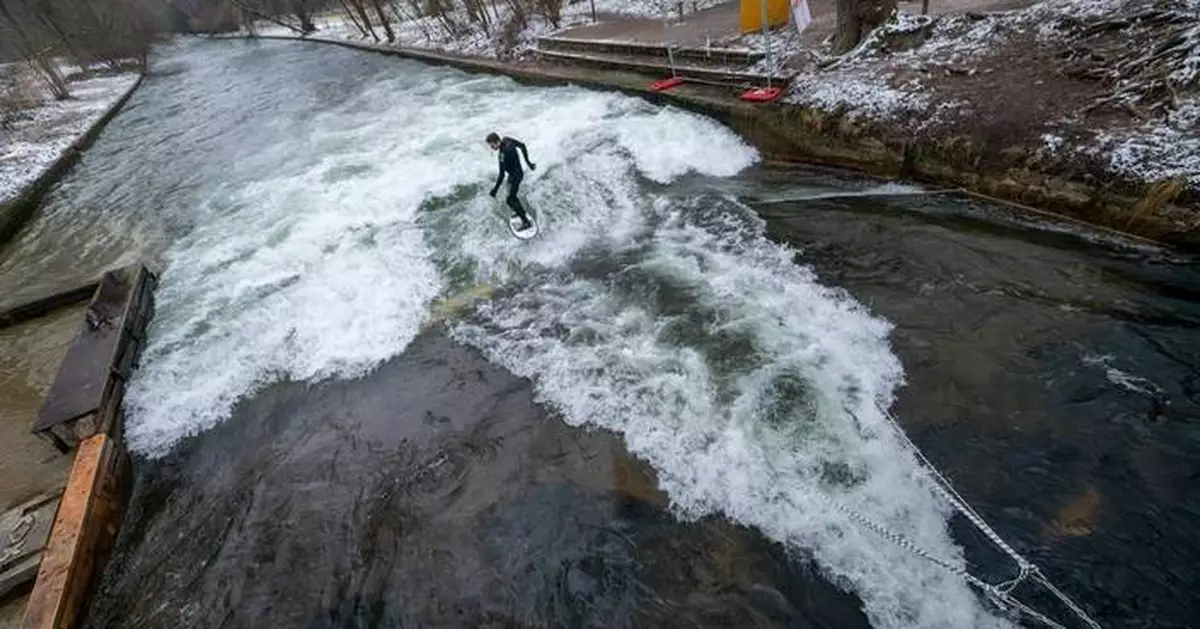
FRANKFURT, Germany (AP) — A debate over how to bring back surfing in Germany's landmark English Garden escalated on Sunday after city workers removed a beam surreptitiously deployed over Christmas to restore a surfable wave in the river that runs through the park.
For years, the site had been a hot spot for surfers and spectators because of the meter-high (three foot-high) wave created by the strong current of the Eisbach river. But the wave disappeared in October after city workers cleared away accumulated sediment, gravel and debris from the riverbed. That set off discussions between the city and the surfers on how to restore the wave.
The authorities were apparently not moving fast enough to suit at least some of the the surfers, who enjoyed several days of holiday surfing in wetsuits after unknown individuals deployed the beam across the river bed on Christmas Day. A banner on the adjacent bridge declared in English, “Just Watch. Merry Christmas!”
The surfers may have been stoked, but the city was not. The fire department moved in early Sunday morning, and the improvised structure and the wave were gone, the dpa news agency reported.
The city has urged patience and asked an engineering professor from the Munich University of Applied Sciences to advise on possible solutions.
Safety concerns became more prominent in May, when a 33-year-old surfer died after her board was caught underwater and she couldn't free herself from the attached leash. The city's climate and environment department said in a statement Sunday that the beam was “illegal and potentially dangerous.”
The department said that after the tragic accident earlier this year, “the city must not and cannot tolerate impermissible structures at the Eisbach wave.”
A Munich surfing association said on Thursday on its website that city authorities were imposing too many conditions on efforts to restore the wave and that the process has “stalled.”
A post on the IGSM surfing association website said that the city was imposing “ever more conditions and added demands” on the project, including indemnifying the city for any risks during a test period and procuring an engineering certificate that the adjacent bridge is strong enough to support fastenings to the wave device.
The association warns that the site “is not a wave for beginners and not a place to start with river surfing, even if one already has experience in the ocean." It warns of concrete blocks placed behind the wave as brakes on the strong current: “These are dangerous for inexperienced surfers because in case of an uncontrolled fall one is pressed against them by several tons of water and gets off at best with serious bruises.”
Rules for use include being a fit, experienced surfer and using a breakaway leash.
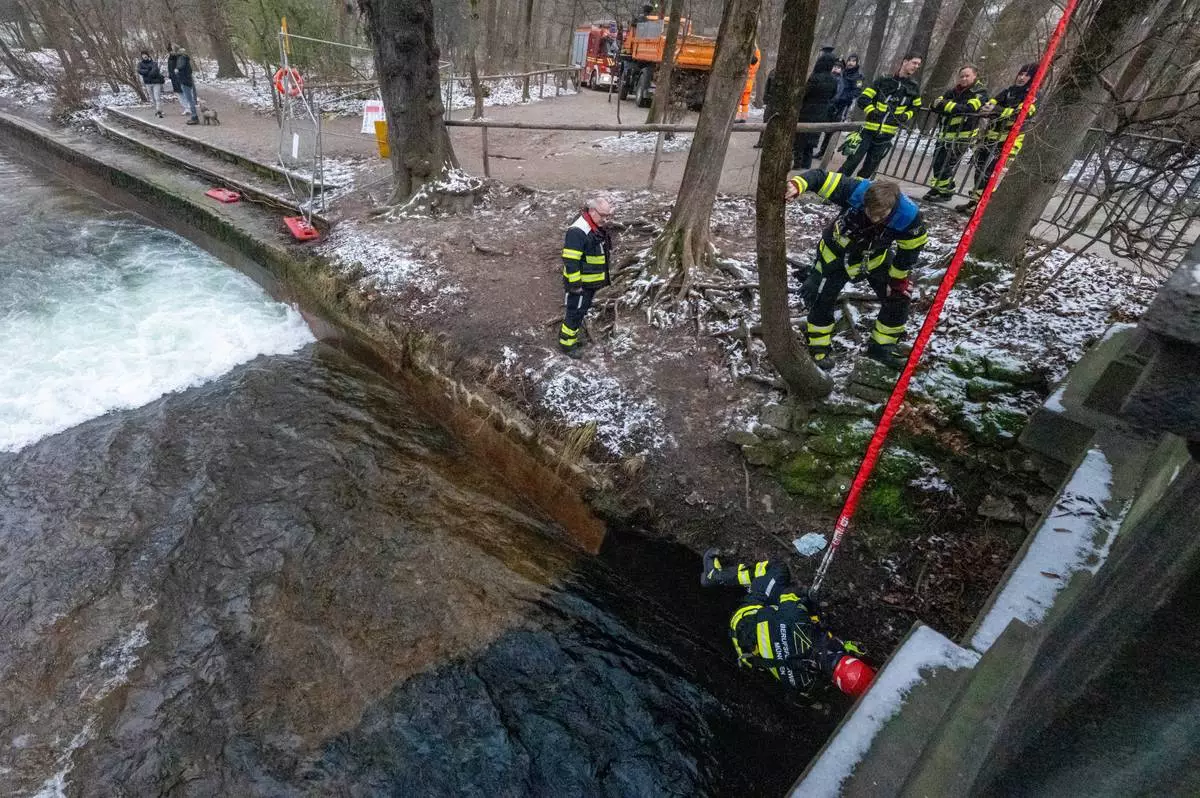
Fire department employees dismantle the installations and devices for an artificial wave on the Eisbach in Munich, Germany, Sunday Dec. 28, 2025. (Peter Kneffel/dpa via AP)
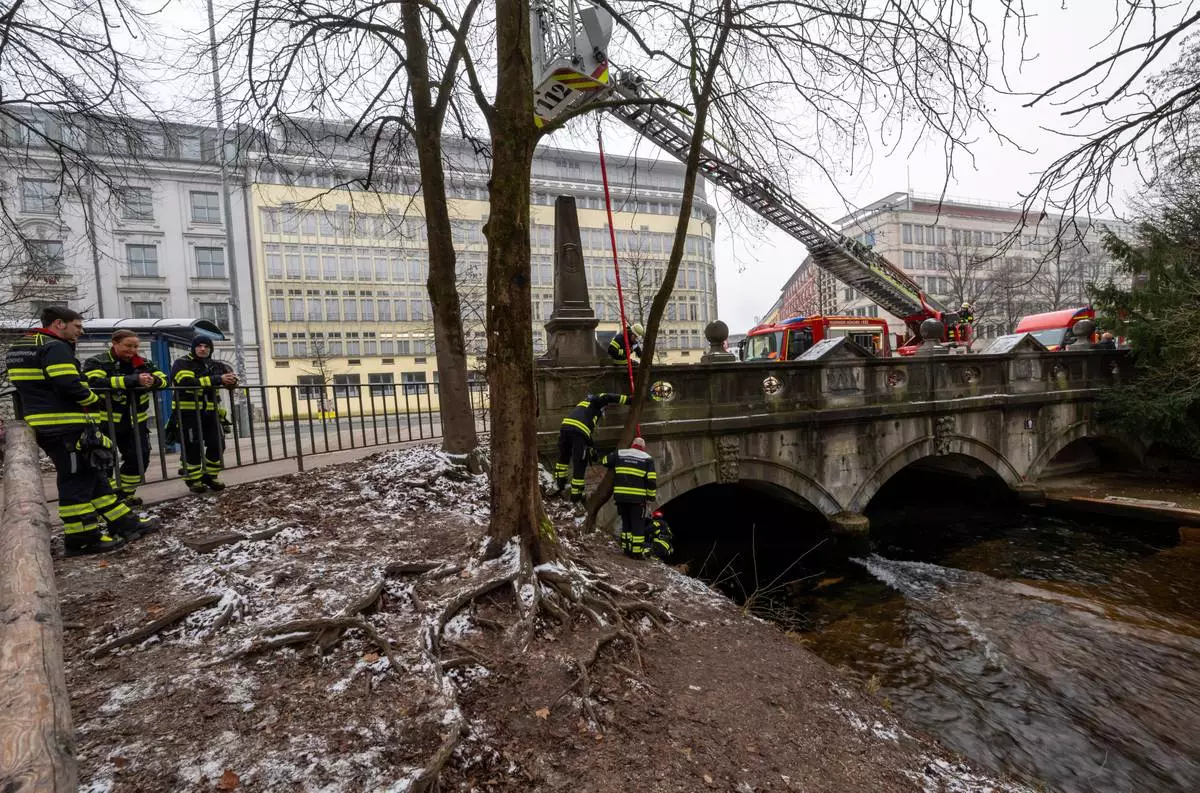
Fire department employees dismantle the installations and devices for an artificial wave on the Eisbach in Munich, Germany, Sunday Dec. 28, 2025. (Peter Kneffel/dpa via AP)
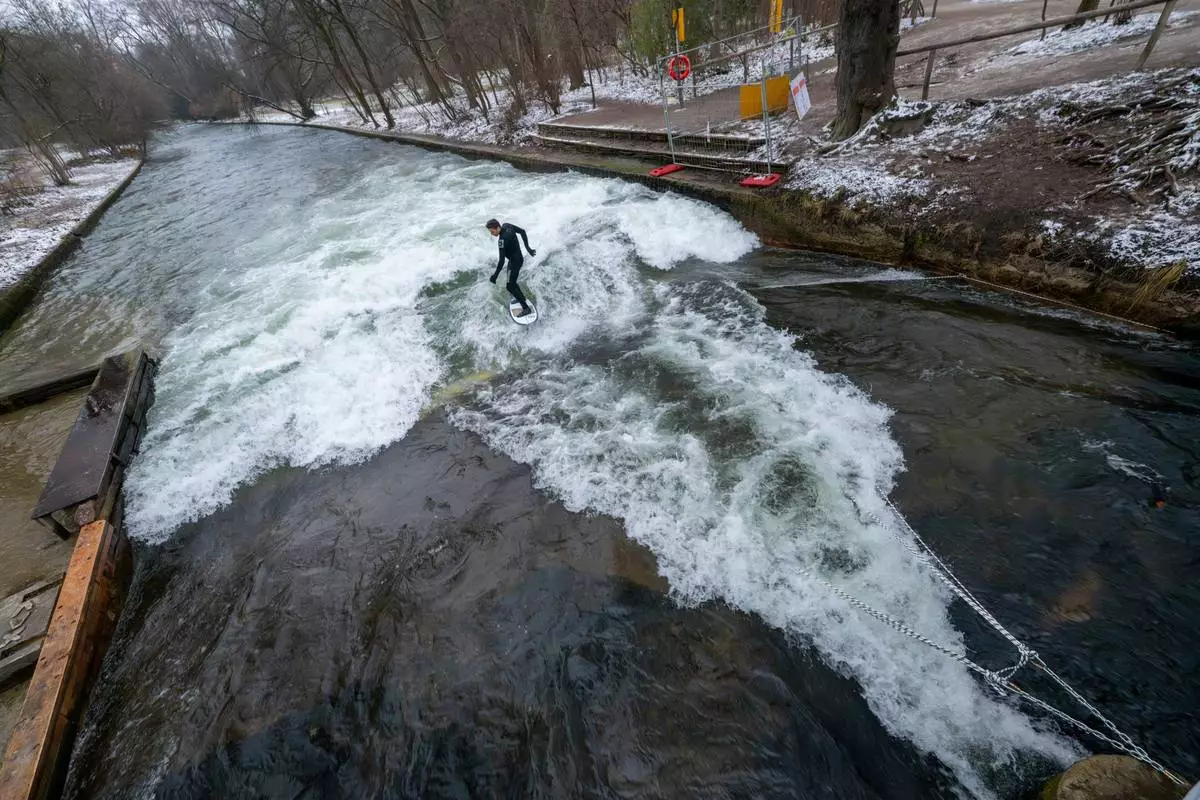
A man tries out the temporary Eisbach wave in the English Garden in Munich, Germany, Friday Dec. 26, 2025. (Peter Kneffel/dpa via AP)
TOKYO (AP) — Asian shares mostly dipped in Monday morning trading as worries continued about soaring oil prices and the potential for further escalation in the U.S. war with Iran.
The drops in Asia follow the deep declines on Wall Street last Friday that finished off a fifth straight losing week, its longest such streak in nearly four years.
Japan's benchmark Nikkei 225 slipped 4.5% in morning trading to 50,979.54. Australia's S&P/ASX 200 lost 1.2% to 8,417.00. South Korea's Kospi dove 3.2% to 5,264.32. Hong Kong's Hang Seng lost 1.7% to 24,519.63, while the Shanghai Composite shed 0.7% to 3,884.57.
Worries have been great in Japan and the rest of Asia about the effective lack of access to the Strait of Hormuz because of the war in Iran, as the region relies greatly on such access for oil shipments.
In energy trading, benchmark U.S. crude jumped $2.28 to $101.92 a barrel. Brent crude, the international standard, soared $2.88 to $115.45 a barrel. Before the war, brent had been price at about $70 to a barrel.
Investors are now bracing for the war to last for some time, which would likely set off inflation in global markets, and eventually may stunt Asia's economic growth.
“Although we do not expect the conflict to be protracted, we anticipate heightened volatility in the near term,” said Xavier Lee, senior equity analyst at Morningstar Research.
Oil prices are again climbing after momentarily easing when President Donald Trump extended a self-imposed deadline to “obliterate” Iran’s power plants to April 6.
On Wall Street, the S&P 500 fell 1.7% to close its worst week since the war with Iran began. The Dow Jones Industrial Average lost 793 points, or 1.7%, and fell more than 10% from its record set last month, while the Nasdaq composite sank 2.1%.
The S&P 500 is 8.7% below its all-time high set in January. Big Tech stocks were among the heaviest weights on the market, including Amazon and Nvidia.
All told, the S&P 500 fell 108.31 points to 6,368.85 last Friday. The Dow Jones Industrial Average dropped 793.47 to 45,166.64, and the Nasdaq composite sank 459.72 to 20,948.36.
In the bond market, the yield for the 10-year Treasury rose as high as 4.48% before pulling back to end last week at 4.43%. That’s up from 4.42% late Thursday and from just 3.97% before the war began.
In currency trading, the U.S. dollar inched down to 159.97 Japanese yen from 160.32 yen. The euro cost $1.1505, down from $1.1510.
Yuri Kageyama is on Threads: https://www.threads.com/@yurikageyama
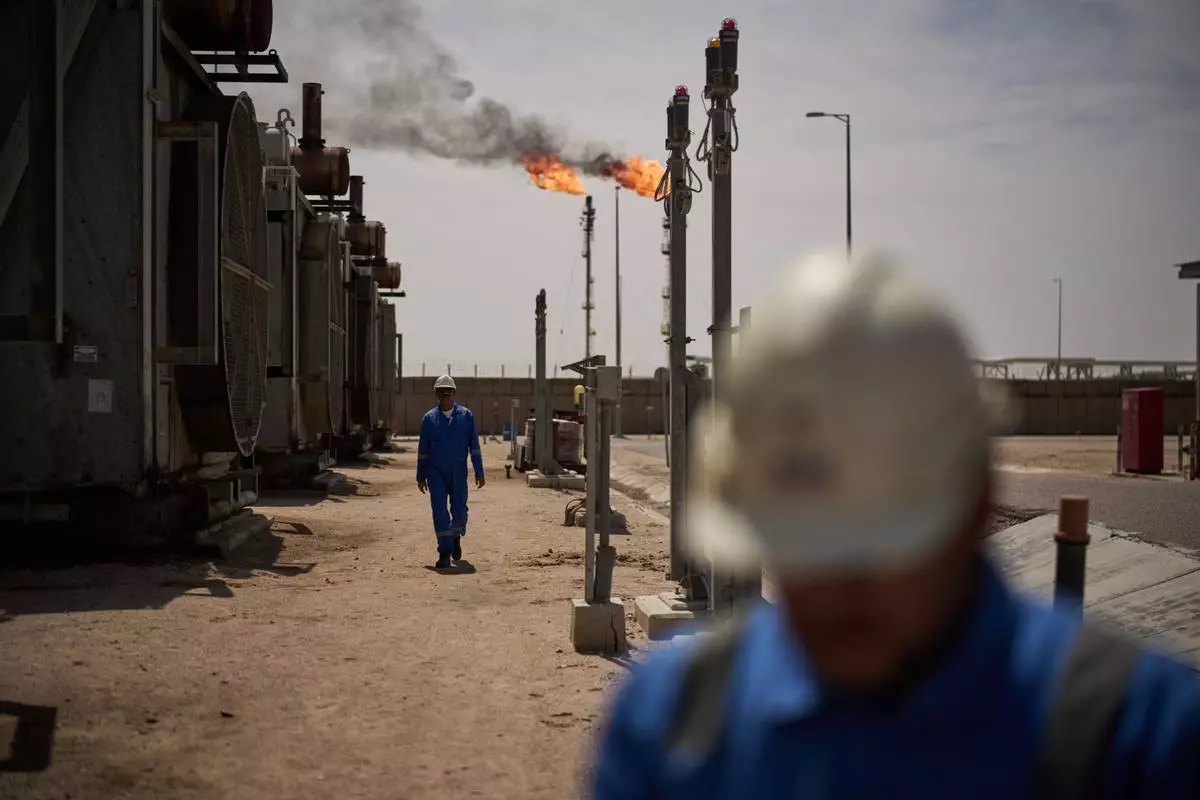
Workers walk in an area at a degassing station in Zubair oil field, whose operations have being reduced due to the Mideast war triggered by the U.S. and Israeli attacks on Iran, near Basra, Iraq, Saturday, March 28, 2026. (AP Photo/Leo Correa)
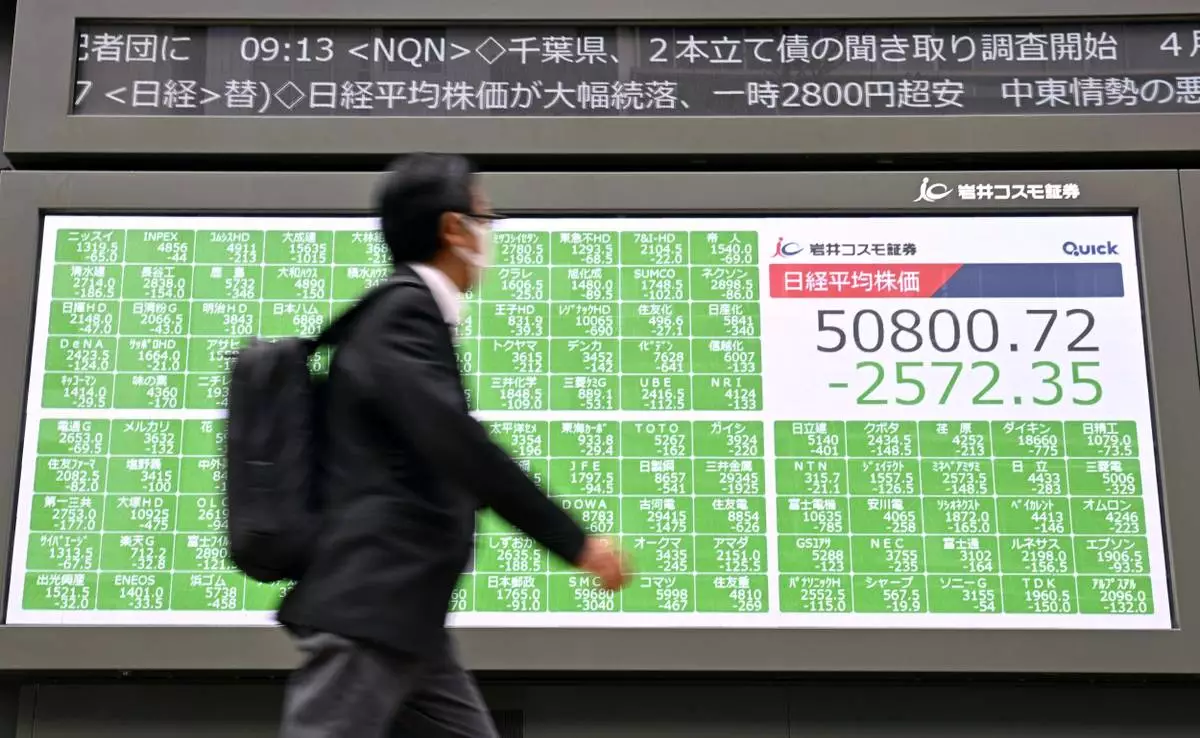
A person walks by an electronic stock board showing Japan's Nikkei index in Tokyo Monday, March 30, 2026. (Yusuke Hashizume/Kyodo News via AP)
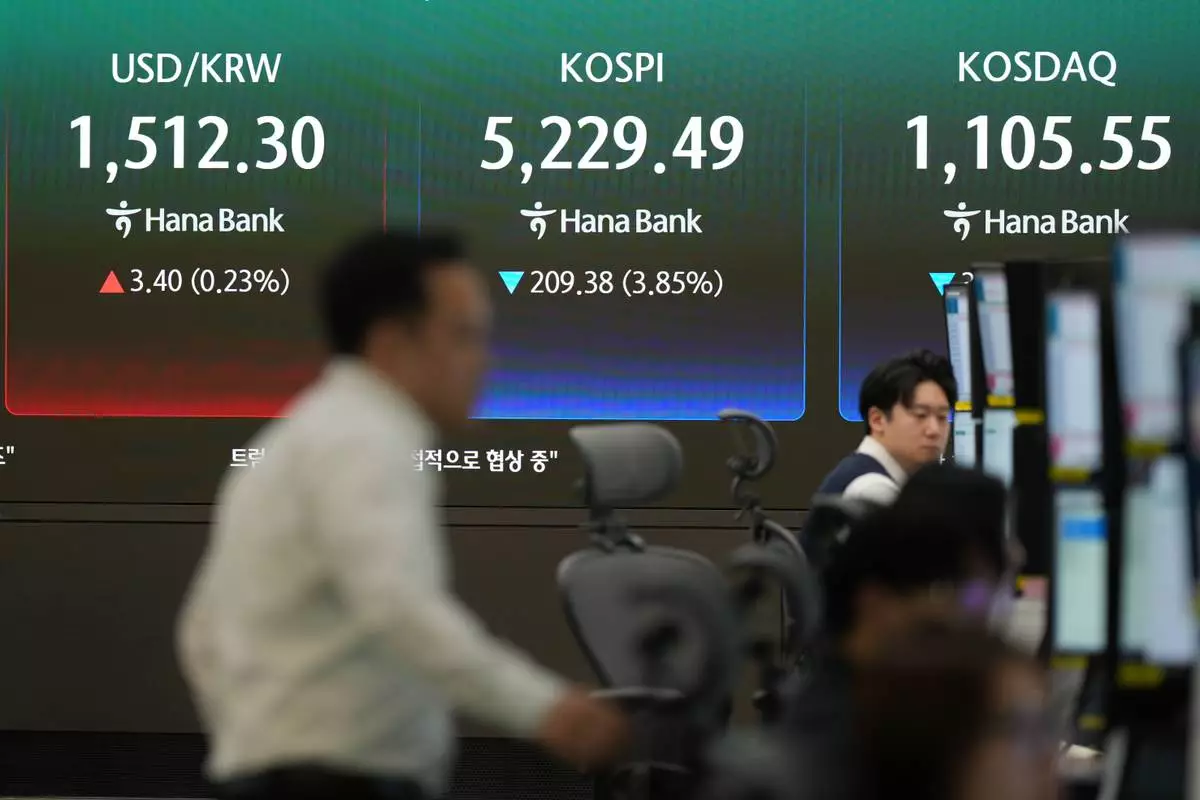
A dealer walks near the screens showing the Korea Composite Stock Price Index (KOSPI), the foreign exchange rate between U.S. dollar and South Korean won and the Korean Securities Dealers Automated Quotations (KOSDAQ) at a dealing room of Hana Bank in Seoul, South Korea, Monday, March 30, 2026. (AP Photo/Lee Jin-man)
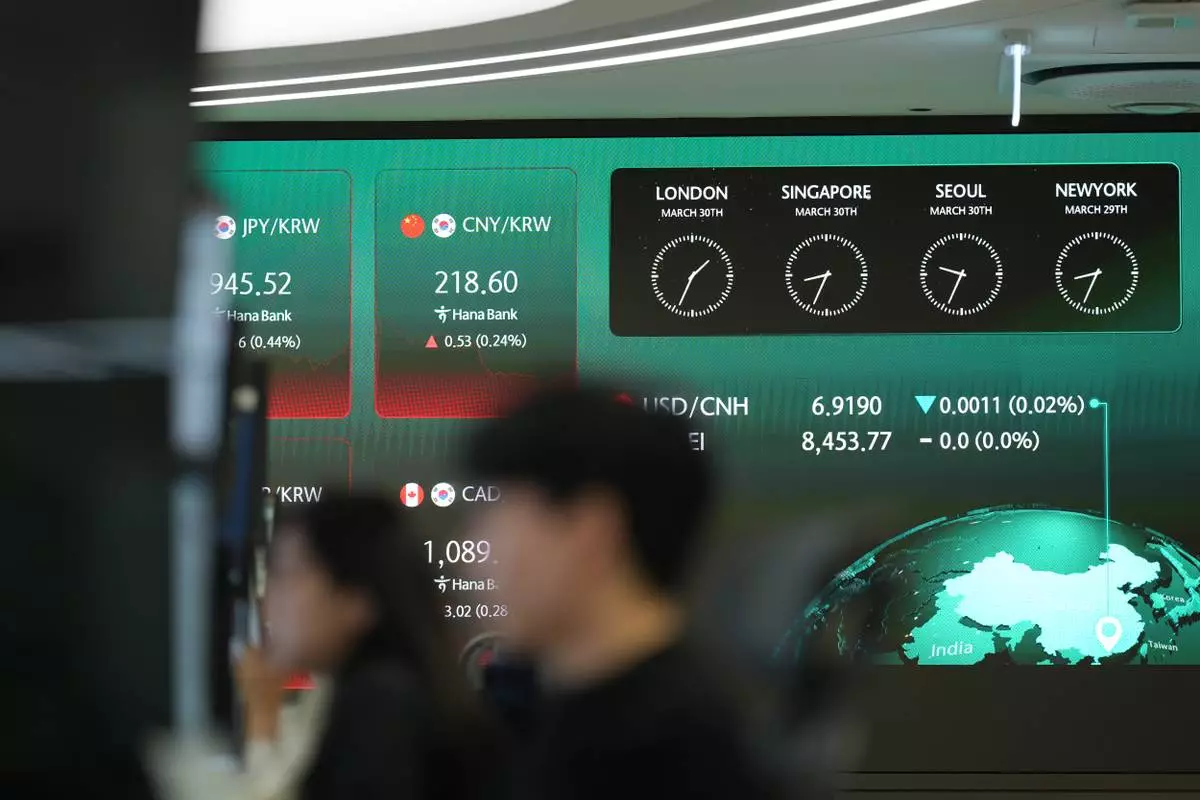
Dealers work near the screens showing the foreign exchange rates at a dealing room of Hana Bank in Seoul, South Korea, Monday, March 30, 2026. (AP Photo/Lee Jin-man)
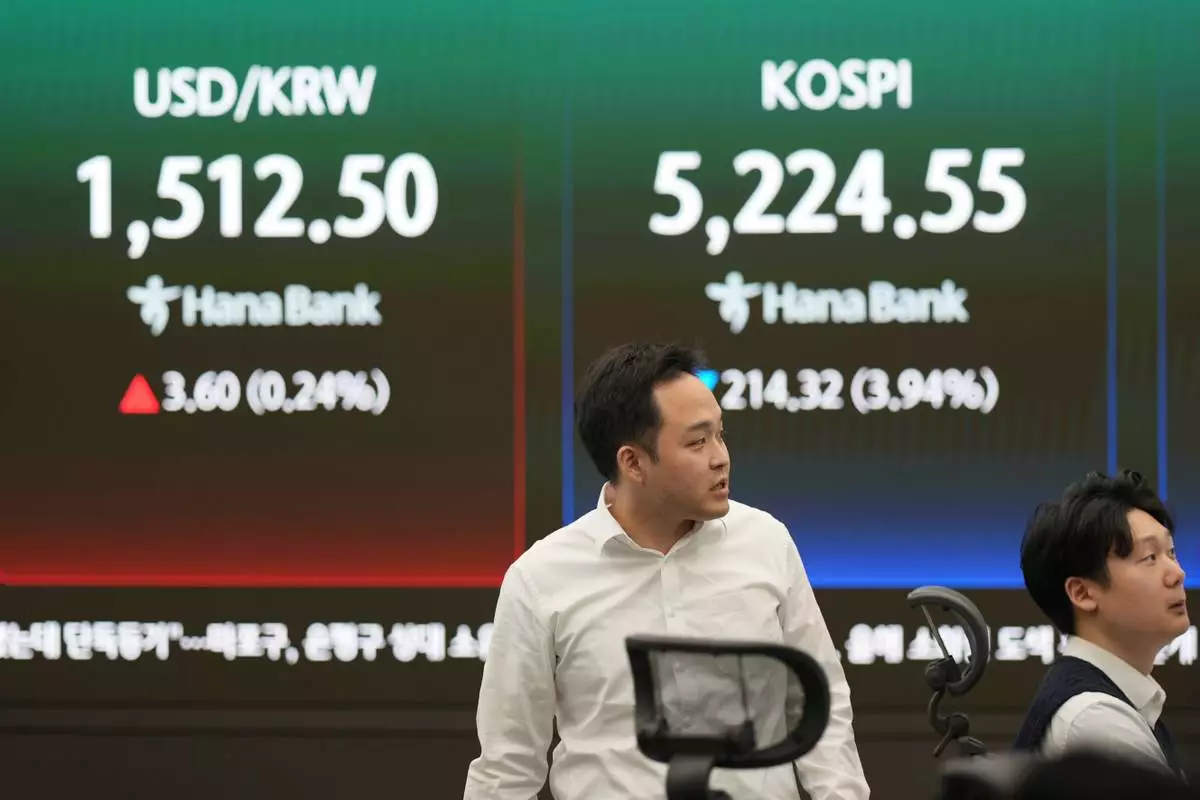
Dealers work near the screens showing the Korea Composite Stock Price Index (KOSPI), right, and the foreign exchange rate between U.S. dollar and South Korean won at a dealing room of Hana Bank in Seoul, South Korea, Monday, March 30, 2026. (AP Photo/Lee Jin-man)