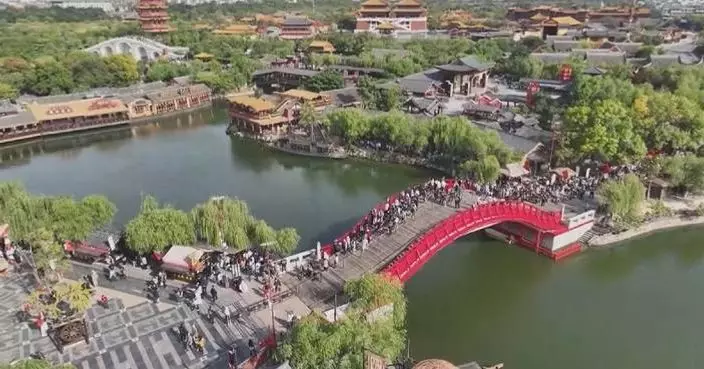
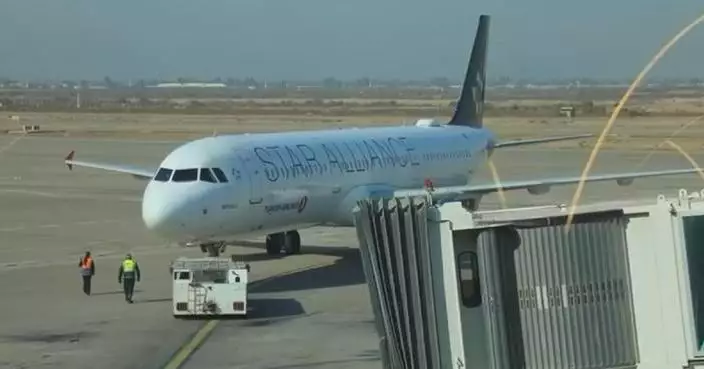
The high-speed railway connecting east China's Hangzhou City of Zhejiang Province and Hong Kong was put into use on Sunday, cutting travel time between the two cities to below seven hours. Departing from Hangzhou West Station at 15:10 BJT, the G99 train passes six stations before arriving at 21:56 BJT at West Kowloon Station in Hong Kong. Passengers only need to scan their Exit and Entry Permit at the station to finish cross-boundary inspection. "It takes just over six hours to arrive in Hong Kong, which is not that long. I have my Hong Kong-Macao Entry-Exit Permit, and all I need is to scan it on the machine over the counter," said Jin Siyu, a traveler taking the first train. To further facilitate travelers on the route, Hangzhou West Station now allows passengers to extend their Entry-Exit Permit with self-service machines.
"It takes around two to three minutes to finish (the extension) on this machine. But we can only provide extension services," said Chen Na, a staff member at the police station at Hangzhou West Station Hub, under the Yuhang District branch of Hangzhou City Public Security.
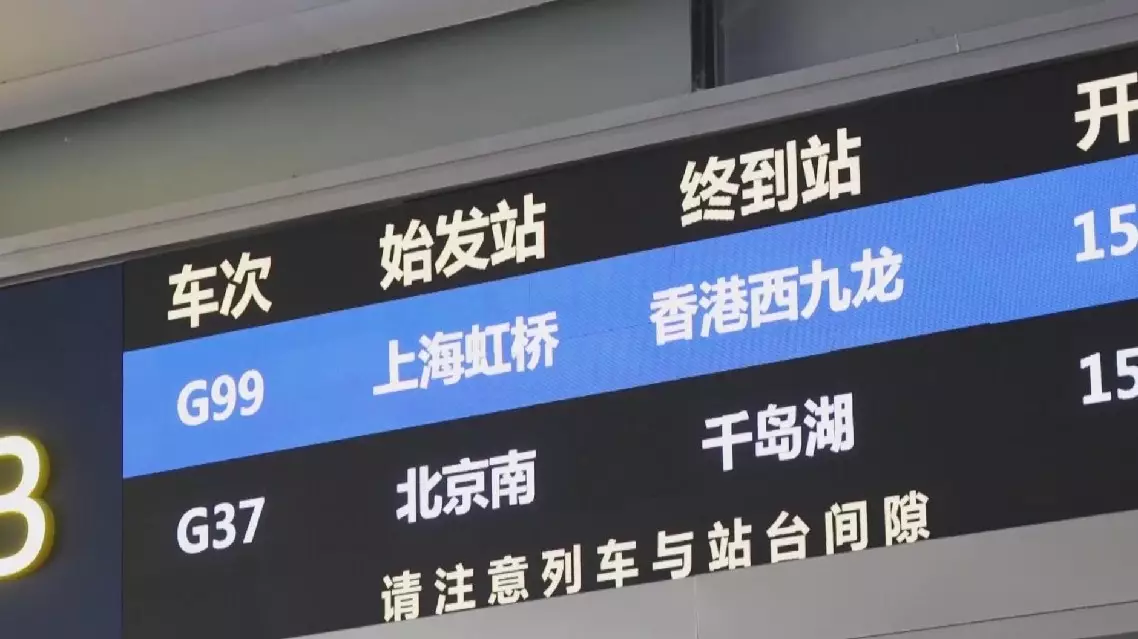
Railway connecting Hangzhou and Hong Kong begins operation
Some Japanese people said on Thursday that the government led by Prime Minister Sanae Takaichi must firmly uphold the pacifist constitution.
Their remarks came after French President Emmanuel Macron's visit to Japan from Tuesday to Thursday.
Attending a joint press conference with Takaichi on Wednesday, Macron emphasized that France and Japan have agreed on the importance of on the importance of quickly de-escalating the conflict in the Middle East and upholding international law.
Many saw this as a response to a strongly worded post by U.S. President Donald Trump on social media, which criticized France for refusing to cooperate with the U.S.-Israeli war on Iran.
Some locals in Tokyo expressed their opposition to Japan's involvement in any war, but said Japan could offer help when the conflict in the Middle East ends.
"I think that Prime Minister Takaichi could offer support, provided that we wouldn't get involved in an armed conflict, such as minesweeping operations at sea, as Japan has the best minesweeping technology in the world," said a resident in Tokyo.
"I'm not entirely sure what consequences will follow Trump's demands. There may be additional tariffs, among other things. Our constitution prohibits [Japan's] from getting involved in war, and Prime Minister Takaichi should uphold this principle," said another resident.
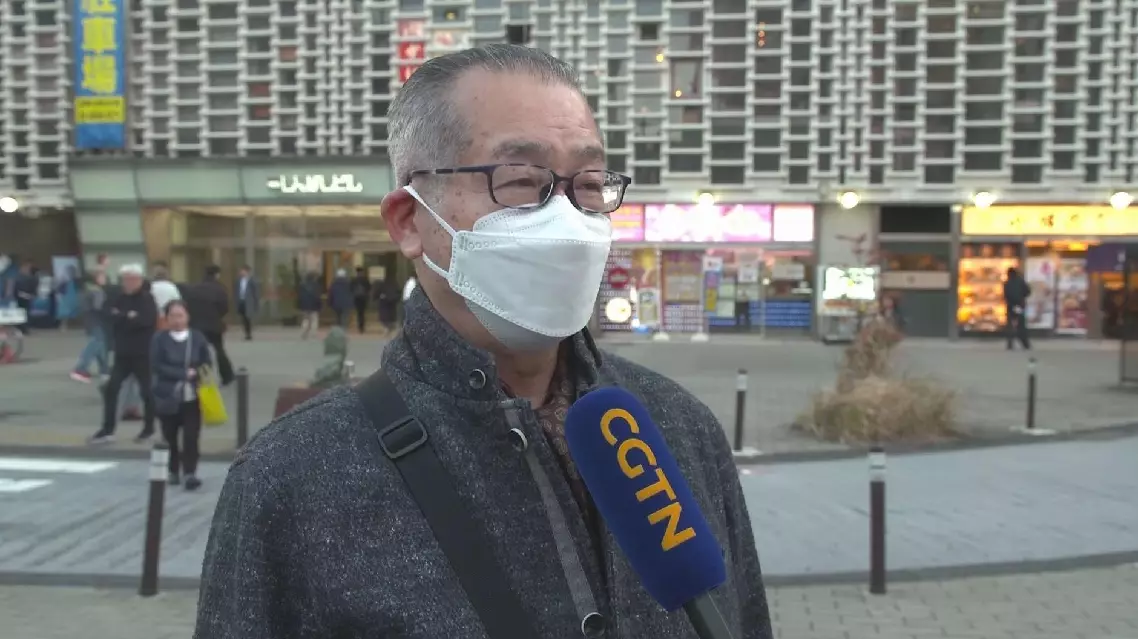
Tokyo residents urge PM Takaichi to uphold pacifist constitution